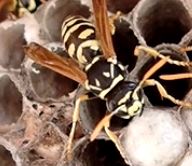
With the weather warming and the insects coming out in force, it’s time to start thinking about wasps (and what to do about them)
The time to start trapping wasps is now.
While winter isn’t quite done with us yet, we’ve had a good period of warmth recently. Wasps, as well as bears, are waking from their winter hibernation. I’ve seen a few queen paper wasps scouting for new nesting sites. With this in mind, if you want to control wasps in or around your property, the time to start is now. If you can catch and kill the wasp version of a queen, you’ll stop her whole colony from bothering you the rest of the summer. (A wasp queen is called a “gyne”, which means “woman” in ancient Greek. Gynes are…


Wasp control
I’d wanted to talk about how to read wasp body language this week, but that’ll be postponed. I couldn’t persuade any individuals to do threat displays this week – all live wasps were well-mannered, despite extreme invasion of their personal space. Most of the wasps I’ve seen around Trego are Polistes paper wasps. We have two main species here – the invasive European Paper Wasp (Polistes dominula) and the native Golden Paper Wasp (Polistes aurifer). In our area, Golden Paper Wasps peak in July, while the European Paper Wasps peak in August. While both are still around, I’ve been seeing…
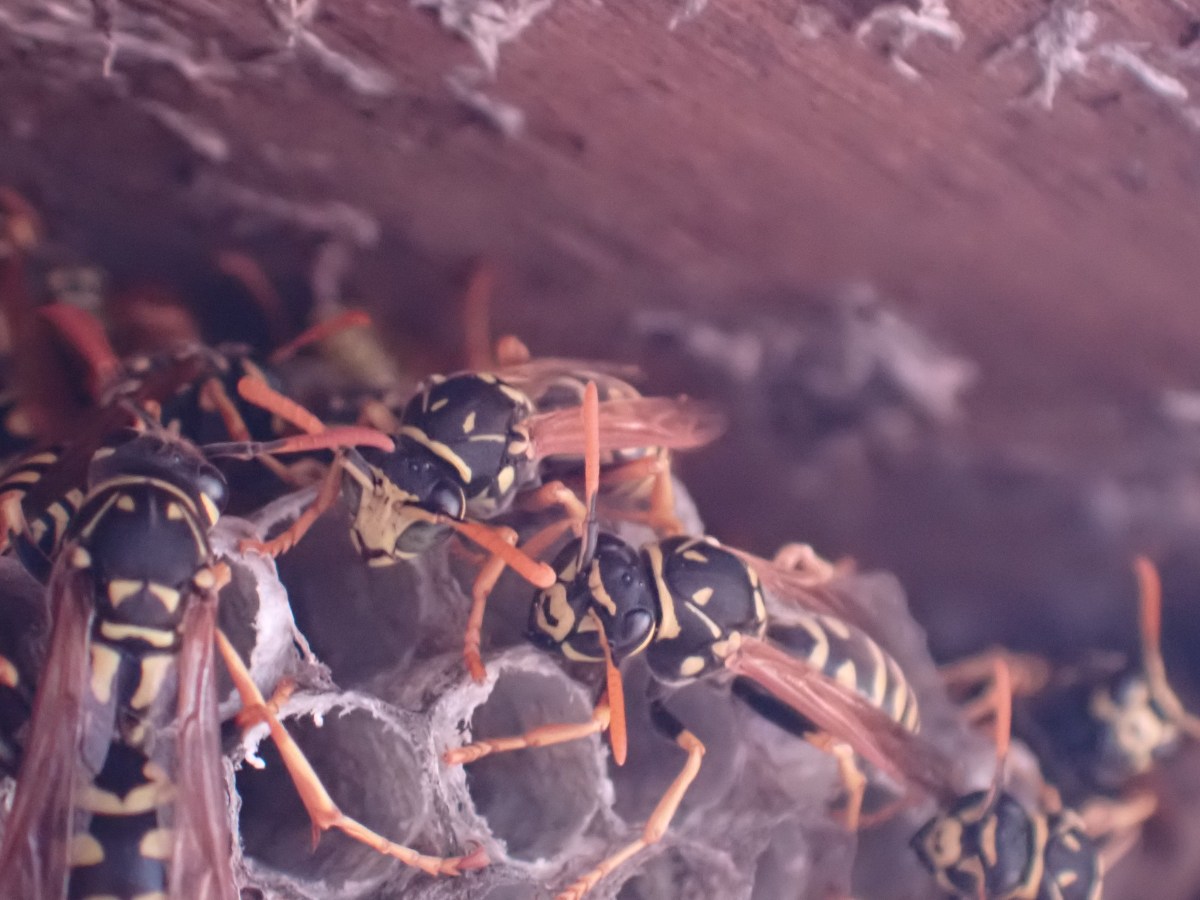
Paper Wasp Body Language
If you know what signs to look for when you meet a wasp, it’s easy to avoid being stung. Have you ever been buzzed by a bee or a paper wasp? They dive bomb you, fly close to your face, even collide with you, but without stinging? Those were probably sentries for a nest, trying to keep danger away. Sentry wasps can be stationed 10 to 20 feet away from the nest they’re guarding, and circle back to it from time to time. These wasps are the ones you’re most likely to come into conflict with. Yesterday, I went out…

Wasps… they’re not always out to get us.
What says midsummer better than unexpected wasp nests? Buzzing uncomfortably overhead, nests full to bursting with developing young. Dreadful things, right? What would you say if I told you that aggressive wasps (think of your stereotypical Bald Faced Hornets) aren’t the only kind out there? Even within a single species, there are a wide variety of levels of aggression. If a wasp is going to be aggressive to protect her nest, full of her offspring and her sisters’ offspring, she really has to go all out. If a wasp doesn’t give her all when driving potential threats away, chances are…

Ichneumonid wasps, imposing allies
Last Thursday I saw this lovely Ichneumonid wasp (pronounced ICK-new-mon-id, from Greek “Ιχνευμων” which means “Tracker”). Most of the time I see Ichneumonids, they’re on the sides of trees, ovipositing (laying eggs) in boring insect larvae. This one’s behavior was very odd indeed. As you can see, this particular Ichneumonid wasp was laying her eggs inside a freshly split piece of Douglas Fir … or rather, inside a boring insect inside the Douglas Fir. Curious to see what insect she was laying her eggs inside, I peeled away layer after thin layer of wood … … And after an inch…
 Trego's Mountain Ear
Leave a comment