On May 24, 1863, the citizenry of Bannack elected Henry Plummer as their sheriff. Henry was personable, had an excellent presentation of self, and was experienced in law enforcement. He had been elected sheriff in Nevada City, California, in 1856. The next year he was convicted of second degree murder, for killing an unarmed man – shades of Derek Chauvin and George Floyd. Henry did six months at San Quentin before California’s governor pardoned him.
“When Plummer arrived in Bannack, Montana, in October 1862, the people of the booming little mining town knew nothing of his record. With the Idaho gold fields beginning to give out, many of Plummer’s old partners in crime followed him to Montana. Plummer quickly reorganized his gang and called the motley band “The Innocents.” Skillfully maintaining his public role as an honest citizen, Plummer then managed to convince 307 inhabitants of Bannack to elect him sheriff in May of 1863.
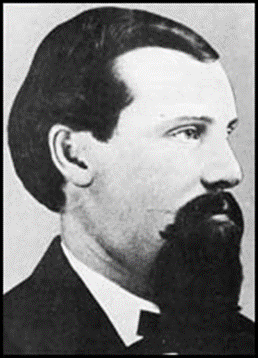
Henry Plummer
Plummer’s office of sheriff was the perfect cover for operating an effective and deadly criminal ring. Plummer provided his henchmen with information on the movements of gold shipments and ensured that they avoided capture. During the next six months, road agents ruthlessly terrorized the people of Bannack and the nearby town of Virginia City. To the dismay of the townspeople, Sheriff Plummer seemed unable to stop them. After more than 100 people were robbed or murdered, the settlers organized a vigilance committee of nearly 2,000 members in December 1863.
The Montana vigilantes destroyed Plummer and his gang in a surprisingly short time. Among their first victims was Erastus “Red” Yeager, who revealed Plummer’s complicity and the names of the other gang leaders before he was hanged. Early on a bitterly cold Sunday morning, January 10, 1864, the vigilantes arrested Plummer and two of his lieutenants. While his cronies swore and resisted, Plummer reportedly wept and begged to be spared, but to no avail. All three men were hanged at once on a Bannack gallows Sheriff Plummer had prepared for another. The vigilantes rode away, “leaving the corpses,” as one contemporary wrote, “stiffening in the icy blast.” By spring, all of Plummer’s Innocents were either dead or departed.”
Helena Vigilantes 1870
1863 was a time of strife and division – yet these early days of Montana were populated by people who preferred to travel the Bozeman trail to fight the war between the states. Draft dodgers maybe – but definitely not cowards or pacifists. Probably their nation’s divisions left a bit of skepticism about government’s ability to protect citizens from harm – there are still names like “Confederate Gulch” that reflect the divided loyalties. Even the name “Virginia City” has roots in the conflict – some wanted it named “Varina City” after the wife of Jefferson Davis. Wilbur Fisk Sanders, who prosecuted for the Vigilantes was a hard-core Unionist – but his co-prosecutor was pro-confederacy. Neither was so strong in their convictions as to stay in the conflicted areas and fight the war – though Sanders served the Union as a first lieutenant before resigning his commission in August, 1862 and departing for the peaceful Montana.
The Vigilante law was simple, as laid out in the bylaws of Virginia City: “It shall be the duty of members to attach themselves to some company and whenever any criminal act shall come to their knowledge to inform his Captain or Lieutenant of the same, when the officers so informed shall call together the members of his Company, (unless the Company has chosen a committee for such purpose) when they shall proceed to investigate the case, and elicit the facts and should the said company conclude that the person charged with any offense should be punished by the committee, the Captain or Lieutenant will first take steps to arrest the Criminal and then report same with proof to the Chief who will thereupon call a meeting of the Executive Committee and the judgement of such Executive Committee shall be final. The only punishment that shall be inflicted by this Committee is death.”
As I write, Attorney General Merrick Garland is cited
“Some have chosen to attack the integrity of the Justice Department,” Garland said Friday after a reporter asked whether Americans have “cause to be concerned” about the DOJ’s integrity. Garland said such criticism “constitutes an attack on an institution that is essential to American democracy.”
I couldn’t find a similar comment attributed to Henry Plummer. As a Montanan, my limited study of our state’s history shows me that when the legal system breaks down, it takes a long time (like a generation) to get it back.

 Trego's Mountain Ear
Leave a comment