It’s the gun I have most frequently traded off or sold – only to buy or assemble another one later on. This time, my carbine is a post-war manufacture, an Iver Johnson built in Arkansas, back in 1984 or 85. As you will note from the photo below, others have shared my appreciation for the carbine.
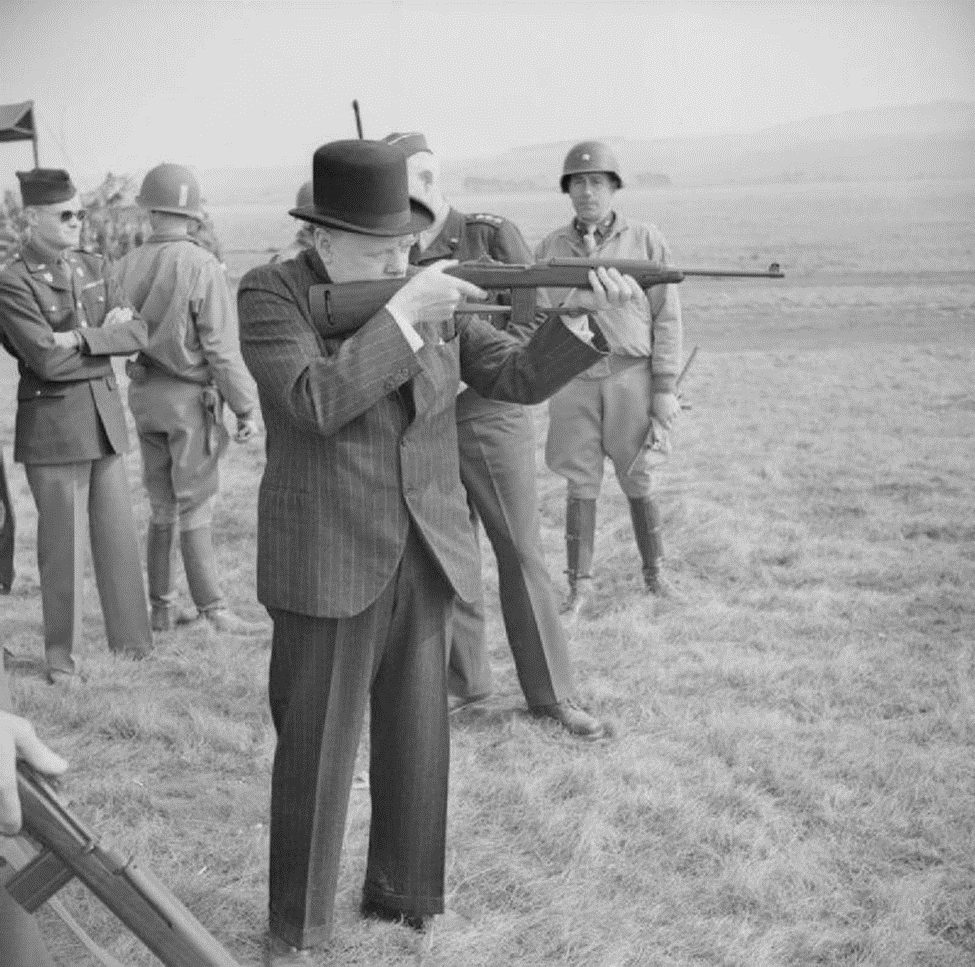
If you look at things from Robert Ruark’s perspective – Use Enough Gun – the carbine is kind of inadequate – which is probably why, over a lifetime, it has been my most traded off gun. There was always another one coming down the line – after all, over 6 million were manufactured during World War II. On the other hand, estimates of 20 million AR-15s privately owned in the US gives another way to look at the carbine – they aren’t making anymore, and I suspect the ones re-imported from Ethiopia will be the last returning.
Mine is a bit easier to sight since I replaced the traditional wood handguard with a metal stamping – probably because the stock is a bit short for me. Likewise, I’ve learned that a little glass bedding helps it group a little better. I had thoughts of entering one in a CMP 100 yard match – but I suppose that it just never made much sense. I’m not sure, but I suspect a lot of the carbine’s reputation for inaccuracy could be better attributed to poor marksmanship.
It’s light, easy to handle, and the cartridge is marginal for everything – which probably explains why it has been my most frequently traded gun. As I’ve gotten older, I’ve learned that shot for shot the little carbine just about matches the energy of the rifles that the Lewis and Clark expedition carried across the continent – and that isn’t a bad thing. It gives me a great appreciation for the Corps of Discovery when I realize that, with a 30 round magazine, I have as much firepower in a minute as the Lewis and Clark expedition did.
I suspect that I will keep the little Iver Johnson carbine. The cartridge produces just under 1000 foot pounds of muzzle energy (the Marlin 357 carbine checks in at just over 1000 foot pounds). While that seems a bit light for a rifle, I’ve listened to quite a few people who believe a 44 magnum is the right pistol to carry in Griz country – and that combination is in the same neighborhood.
My last carbine was built in Jacksonville, Arkansas, sometime between 1983 and 1986 – serial number dating kind of falls apart in those final years – on October 21, 1986, Iver Johnson filed for bankruptcy. By 1987, the remaining rifles were all marked AMAC instead of Iver Johnson. These markings show up on the first receivers made in Jacksonville, and apparently less than 500 were so marked – my carbine has this marking, but the serial number is over 2000 higher than the first Arkansas receiver. Apparently it sat, patiently, out of the way, until it was assembled.
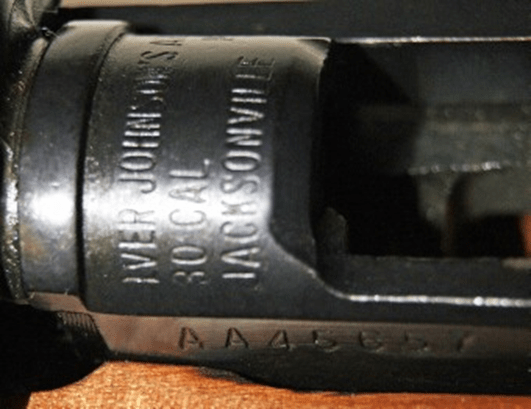
The rarity of the receiver stamp doesn’t give the rifle the value that a World War II original would have, nor the collector’s interest. Just a small rifle that functions well and is very easy to identify.
And it doesn’t have the traditional Iver Johnson Owl Head stamped anywhere on it.
 Trego's Mountain Ear
Leave a comment