When the old service station was built, the back of the building was set up as a separate barber shop. Kenny Gwynn had built things so that there was a space for Chet Apeland do do barbering as the boomtown grew rapidly and the workforce for the tunnel and the railroad relocation expanded geometrically.
The times were against it – this was the mid-sixties, and men went from frequent, short haircuts to infrequent long shaggy haircuts. As the song says, “Blame it on the stones.” The style went from flat top and crew cut to the moptop, and haircuts became less frequent. With less demand for haircuts, Chet went back to tasks that needed done on his ranch. With no barber present, someone (likely Howard Mee) made the decision to pull the wall and expand the retail area for the gas station.
The wall was structural – it’s removal caused the trusses to sag and, when Chuck Butler put sheetrock on the ceiling, it lasted briefly and then cracked.
As Wayne and I looked at the ceiling, it was obvious that we needed a support under the crack – so we cut the sheetrock and old paneling out, then, with plumbob and 20 ton hydraulic jack, proceeded to replace the structural wall that was taken after Chet realized that Trego’s new residents weren’t particularly interested in haircuts. Now, with the structural wall replaced, the ceiling is dramatically improved. It’s amazing how the old marks in the concrete floor matched the ceiling crack, and how close, without blueprints, the replacement wall matches the old one. We have added one door.
We’ll continue the remodeling – the outside walls – framed with 2×4 lumber – haven’t had enough insulation by today’s standards, so we’ll be framing in another 4-inch wall inside, then adding more insulation. We’ll replace the sink that was there in the barber shop days – though we have no idea if a barber or cosmetologist will ever want to operate in Trego.
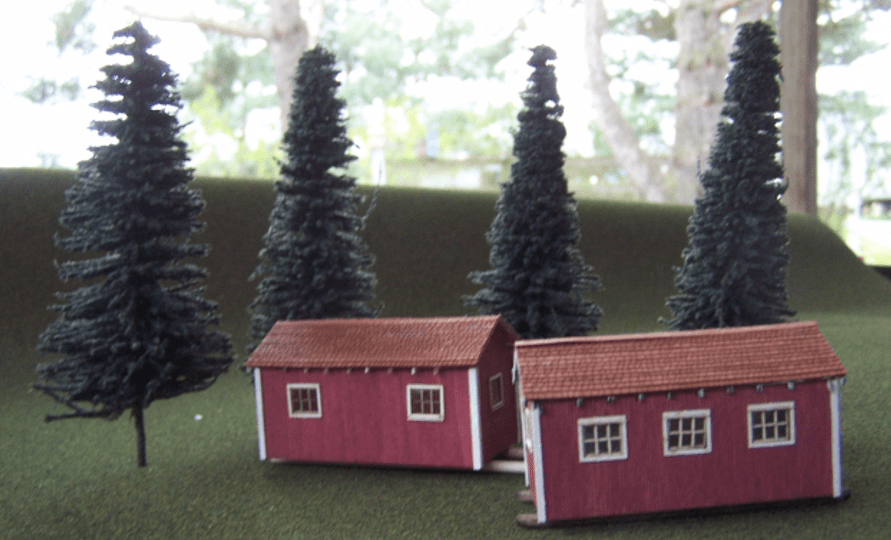
Along with the internal remodeling, we’ll be jacking up the old cookshack and rolling it about 20 feet to the south. It’s one of the last remnants of the logging camp days, and (assuming minimal rot in the skids it was built on) we’ll be taking on the task of removing the shelving (Dad used it for storing grocery commodities) and getting the walls back to how things looked when Timber was king. That task will be next summer. These model railroad cookshacks give an idea how the building looked originally – I’ll try to find the actual designs
Delayed maintenance is just another sort of debt – if it isn’t paid with labor and materials, destroying the historical buildings becomes a rational decision. Replacing the roof and getting rid of the leaks was the first step. Replacing the load-bearing walls was the second. On the other hand, the foundation or footings will be the challenge on the old cookshack.
 Trego's Mountain Ear
Leave a comment