Trego's Mountain Ear

"Serving North Lincoln County"

Author: EntomologistJed

  • Two bits on inflation.

    Two bits on inflation.

    Recently a friend explained the meaning of the phrase “two bits” to me.
    It means “25 cents”. He recalls hearing a song on the radio when he was young that went “two bits, four bits, six bits, a dollar”. While I was unable to find this song (the closest I came was a Florida state sports cheer), I did stumble on some more of the history behind the expression.

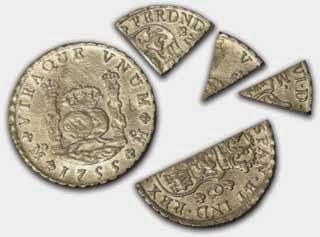
    Back when the Age of Discovery was still underway, many countries were basing their currency on the Spanish silver dollar. Spanish silver dollars were often cut into eight pieces (like the slices of a pie). These smaller pieces were used as coins worth fractions of a dollar. Thus the Spanish silver dollar coin was also sometimes called “a piece of eight”, as it could be cut into eight “reales” or “bits”.
    See the source image
    A silver dollar, as well as 4-bit, 2-bit, and 1-bit pieces.

    Many fledgling governments based their currency on the Spanish silver dollar. In 1792 the US government created a standardized currency for itself. The newly-founded U.S. Mint fixed the value of the American dollar to that of the Spanish silver dollar. When the first American quarter-dollars were minted, each was worth two 1/8 bits of a Spanish silver dollar.

    Of course, inflation happened, as it usually does, and the Spanish pieces of eight (or “pesos”) were made with less silver than older ones, and their size kept dropping. The same could be said of Mexican Pesos, which started out based on the Spanish silver dollar as well. Eventually America went off the gold standard as well.

    This brought the tune of “shave and a haircut (two bits)” to mind… Those words accompanying the tune date back to the 1930s… and provide us with an inkling of prices then.

    It’s hard for the younger of us to imagine that a quarter used to be worth that much.
    Nowadays I understand that a haircut tends to cost about $25.00 – one hundred times as much, in less than a hundred years.

    It’ll be interesting to see how much one costs five years from now.

  • Mushrooms abound!

    Mushrooms abound!

    It’s been a good couple weeks for mushrooms here – puffballs, many ready to be made into mushroom steaks, some already releasing spores, seeding future years’ mushrooms.

    A “Giant Puffball” that was a wee bit small to turn into steaks –
    left another week, it has ruptured, releasing tiny gray-brown spores.
    Tap a mature puffball, and it’ll send up a cloud of spores. Hence the name.

    And shaggy manes, good for eating fresh, or letting sit and turn into “mushroom ink”. The first time this happened to some shaggy manes we’d collected, I was devastated. Turns out that shaggy manes left sit for a half-week turn into a black inky sludge. It’s still good to cook with, and can make a pleasant sauce. While I might prefer fresh firm shaggies chopped up and sauteed in bacon grease… I do intend to improve my grasp of shaggy ink. After all – it’s a great way to store them, and doesn’t mind the freezer.

    A rather small Shaggy Mane.
    Note the dark spores on my palm – see how the gills take on a darker color at the fringes?
    Mature shaggy mane spores turn black.

    If you haven’t done so recently, go take a hike through some Forest Service land – it’s a good time to be sampling the local fungi. I’ve spotted oysters and chanterelles as well as puffballs. Just take care that those you bring home are safe as food. There’s a number I’ve not yet managed to identify.

    As the saying goes, all mushrooms are edible… some only once.
    Be responsible in your mushroom ID, and see to it that you can have leftovers tomorrow.

  • Our inchworms and their violent kin

    Our inchworms and their violent kin

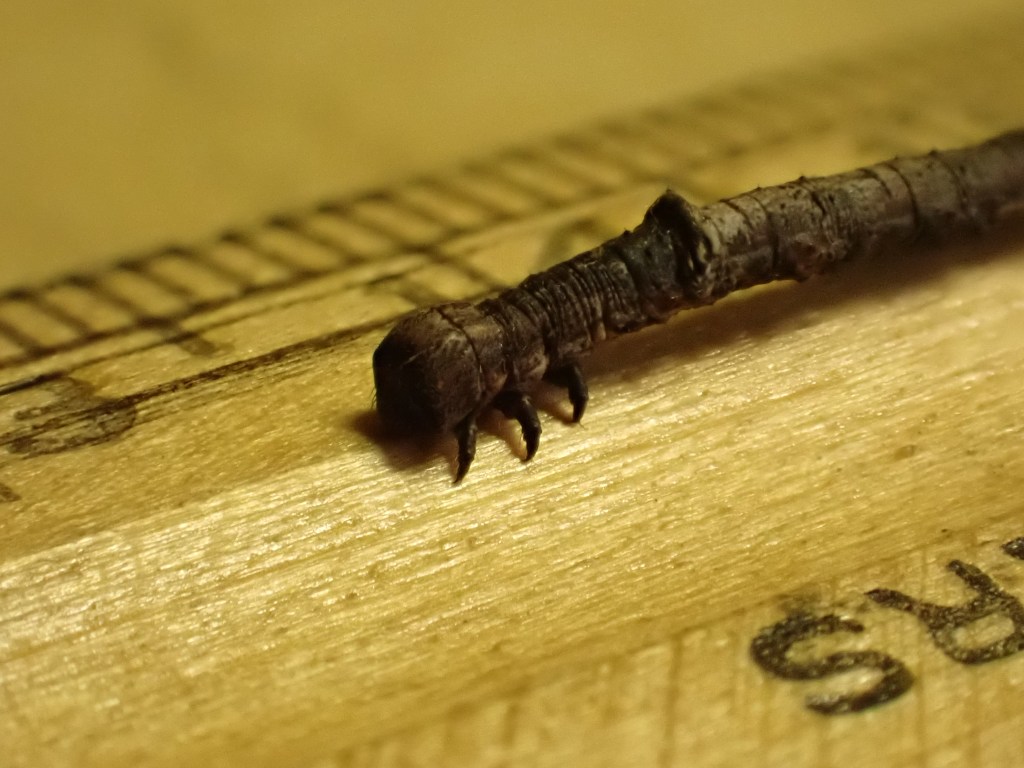
    Mike found this inchworm in the woods recently.

    Inchworms are moth caterpillars, specifically members of family Geometridae. Their family name means something like “the earth measurers”, after how they fold up and then stretch themselves out, like a surveyor’s measuring rope.

    As you can see, this little fellow nearly lives up to the name.
    About 6 millimeters too short, though.
    And its classic gait. – note that it has all three pairs of real legs right by its head, at the left. The footlike things on the right are just extensions of the abdomen.

    Ours around here aren’t all that interesting. They’re pretty standard caterpillars – standard herbivores, or opportunistic omnivores. And, like most larvae, they are very hard to identify beyond family until they molt to adulthood.

    Hawaii, however, has an interesting lineage of carnivorous inchworm caterpillars. The prevailing thought is that when the Hawaiian islands were first colonized by insects, few of those pioneering species were predatory. After all, carnivores require a healthy prey population to do well. As time went on, a certain group of inchworm caterpillars adopted a predatory role – after all, there wasn’t much competition.

    A good videoclip of an ambush hunter inchworm.

    As time went on, the caterpillars radiated into different species with different preferred prey and hunting tactics. Some mimic twigs, others mimic leaves. Some rely on ambushes alone, while others bind up their prey with silk before consuming them. The ones I first read about prefer hunting flies, while others eat things as strange as snails.

    Looking at a caterpillar move, it’s initially hard to fathom it ever moving with sufficient speed and dexterity to grab a fly, but amazing things can happen with time and the right selective pressures.

    And another brief video of one of the fly-hunting species.

    While we in the lower 48 do have a few omnivorous caterpillars, I’m not aware of any strict carnivores. Omnivory is easy to understand – say you have a passel of siblings all competing for the same leaves… sooner or later that sibling rivalry will result in somebody taking a bite out of a brother, and realizing that he’s pretty decent food.

    Many insect mothers lay extra unfertilized eggs, just in case some of the early hatchers are in the mood to eat potential siblings. Gives the slow larvae a bit longer to escape their hungry siblings.

  • Bears know that the apples are ready…

    Bears know that the apples are ready…

    It’s time to pick apples – at least according to the local wildlife. This weekend, we happened upon an adult black bear and her cubs munching on the apples down by the Trego railroad crossing in the wee morning hours.

    Bears aren’t too picky about ripeness. Like many mammals, they’re attracted to the smell of fermentation – (the smell indicates a fruit has the highest calorie content it’s going to get). As apples get ripe (and then overripe) they become even better bear attractants.

    Can bears become inebriated? Certainly! Glacier Park had a number of incidents back in the 80’s. Several railroad spills released thousands of tons of barley and corn. Buried by cleanup efforts, much of the grain fermented anaerobically, producing high volumes of alcohol. Upon emerging in the spring, bears promptly dug up the fermented mash, wish predictable consequences.

    While unattended grain can ferment well, fruit left to its own devices rarely produces enough alcohol to have an effect on large mammals. Bears may be in your apple trees in the near future, but at least you won’t have to worry about them being drunk and disorderly. Not from that, anyway.

  • On the sex lives of bandwing grasshoppers

    On the sex lives of bandwing grasshoppers

    I know that our grasshopper levels are higher than desirable at present, but today I caught one of my favorite types. A bandwing grasshopper, as opposed to their slantface and spurthroat kin (our most economically damaging grasshoppers here tend to be spurthroats).

    While beetles aren’t always the most discriminate of lovers… grasshoppers tend to be rather selective in their choice of partners.

    Bandwing grasshoppers have showy courtship displays – males fly, preferably into a breeze, staying fairly stationary but bobbing up and down. As they do this, they make clacking noises with their wings (entomologists call them “crepitations“), and show off their bright wing colors. Here’s a great example video of this behavior.

    Females come to admire the display and assess the performing male’s suitability as a sperm donor. Males, also attracted by the display, come and join in. After all, if other males are performing here, there must be some females nearby who might be interested in me!

    If the performing male(s) are sufficiently impressive, and have the right wing color, and the right clacking sound, an interested female will respond in kind. She’ll fly up, clacking her wings, before landing near a suitable spot for romance.

    On the ground she’ll make further investigation of her suitors – someone who looked appealing in the air might not on the ground. If not interested, she’ll hop away, and may raise her hind feet and brandish them threateningly at the suitor.

    If, however, her meets her standards, there are a variety of come-hither beckons, which vary from species to species. Common variants include moving the hind legs up or down, to provide better access to the abdomen. There may also be chirping noises, leg-stamping dances, and stroking with antennae.

    Mating time varies from less than half an hour to upwards of half a day, depending on the species.

    While I know that my fondness for grasshoppers is thought a bit odd, the Judeo-Christian god had a soft spot for them as well. When I see grasshoppers arcing over the fields like breaking waves, I hear the words of Joel in my head, and think of how terrifying the lord’s army of grasshoppers can be. “Σαλπισατε σάλπιγγι ἐν Σιών!”

  • Weird words: Petrichor, stone’s blood.

    Weird words: Petrichor, stone’s blood.

    Stepping outside after this weekend’s much-needed downpours, I was met with a familiar fragrance. The smell of the earth after rain, sometimes called “Petrichor”.

    This is a fairly modern word, cobbled together by a couple of scientists in 1965.
    It’s derived from two Greek word roots. Petra (πετρα) meaning “rock” and ichor (ιχωρ) meaning “blood”. But ichor is usually a special sort of blood – the juice that flows in the veins of a god or giant, perhaps a monster, not a mere mortal.

    Petrichor’s scent is strongest after rain beats down on hot, dry soil. When rain pummels the earth, it stirs up waste from tiny soil bacteria called Actinomycetes… tossing tiny particles of something chemists have named “geosmin” into the air.

    Interestingly enough, this same compound that brings us that lovely post-rainstorm aroma is also responsible for strong earthy flavors.

    It’s why catfish and other bottom-feeders can taste a bit muddy at times (especially when caught in hot weather). It’s also why fungi and vegetables can taste a bit earthy, even after being thoroughly washed. Personally, I’m fond of strong-flavored catfish and earthy beets and mushrooms, but to each their own.

    If you’re not fond of those earthy flavors, consider adding an acid during cooking (such as vinegar). This will cause geosmin to break down and give you less-fishy tasting fish or vegetables that taste less of dirt.

    On a more entomological note, mosquitoes are attracted to geosmin’s smell in preparation for laying their eggs. A number of entomologists and chemists are currently experimenting on traps using geosmin extracted from beetroot skins.

    I look forward to seeing how geosmin trap technology develops – but I suspect it’d be quite possible to come up with a homemade trap based on the same principles that’d work well. After all, if we can collect and destroy many mosquito eggs, we should see some dint in next years’ mosquito populations.

    There are few scents I’d rather breathe in.