


"Serving North Lincoln County"
The Eureka Community Players is starting a writers group, similar to the one that resulted in our evening of 10-minutes scenes called “The Waiting Room” last year. The initial meeting is Saturday, October 26th at 3:00 p.m. in the Glacier Bank Community Room. The goal is to again write scenes for a performance. The ECP is inviting interested people to participate.
For more information, contact Sharon LaBonty at 406/263-9209.
Eureka Community Players (ECP) have undertaken a new challenge: writing plays. On Sunday, March 24th, these plays will be presented in an anthology format. Called “The Waiting Room” – An Afternoon of 10-minute Scenes Written by Local Writers begins at 3:00 p.m. at the Timbers Event Center. In September 2023, The ECP hosted a workshop presented by Maud Powell entitled “Calling All Writers”. Maud founded the Little Apple Playwriters Guild, a collaborative playwriting group. Annually, they write and produce Anthologies of plays. Her workshop in Eureka was to engage writers and others in the process of writing plays…
Kyle G. Volk, University of Montana

Uncommon Courses is an occasional series from The Conversation U.S. highlighting unconventional approaches to teaching.
“Intoxication Nation: Alcohol in American History”
I wanted to get students excited about studying the past by learning about something that is very much a part of their own lives.
Alcohol – somewhat surprisingly to me at first – featured prominently in my own research on minority rights and U.S. democracy in the mid-19th century. As a result, I knew quite a bit about the temperance movement and conflicts over prohibition during that period. Designing this course allowed me to broaden my expertise.
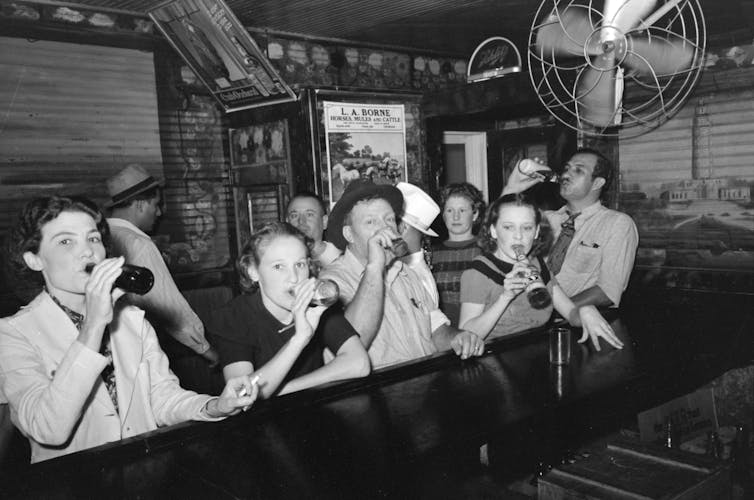
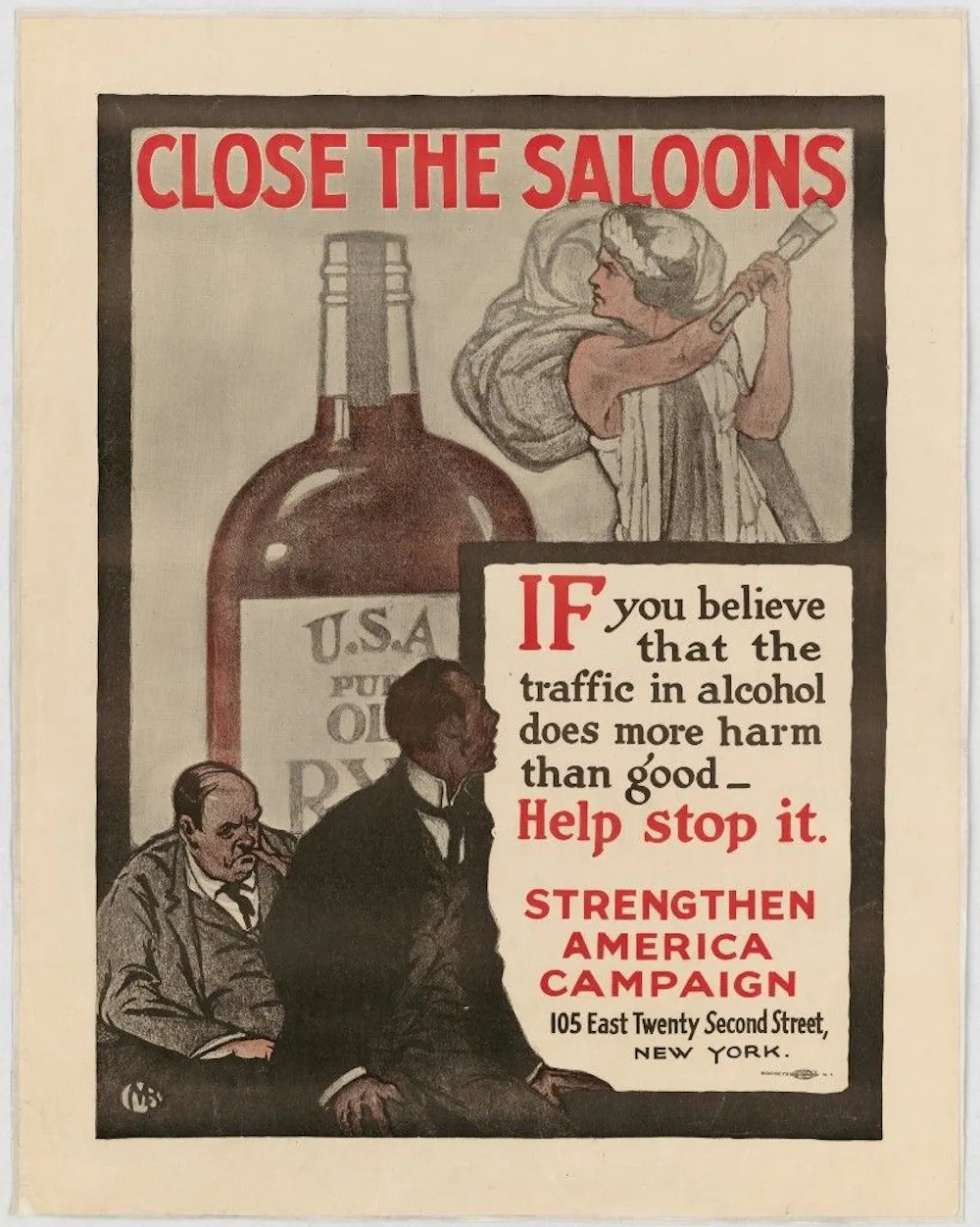
Prohibition is a must-do subject. Students expect it. But I cover several hundred years of history: from the 17th-century invention of rum – as a byproduct of sugar produced by enslaved people – to the rise of craft beer and craft spirits in the 21st century.
Along the way, I’m thrilled when students get excited about details that allow them to taste a more complicated historical cocktail. For example, they learn why white women’s production of hard cider was crucial to the survival of colonial Virginia. The short answer: Potable water was in short supply, alcoholic drinks were far healthier, and white men – and their indentured and enslaved workforce – were busy raising tobacco. It fell to women to turn fruit into salvation.
Alcohol remains a big and almost inescapable part of American society. But of late, Americans have been drinking differently – and thinking about drinking differently.
Examples abound. Alcohol producers, we learn, now face competition from legalized weed. Drinking levels rose during the COVID-19 pandemic, yet interest is declining among Gen Zers. The “wine mom” culture that brought some mothers together now faces mounting criticism.
And, of course, there’s the never-ending debate about the health benefits and risks of alcohol. Of late, the risks seem to be dominating headlines.
Alcohol has been a highly controversial, central aspect of the American experience, shaping virtually all sectors of our society – political and constitutional, business and economic, social and cultural.
Like any history course, this one aims to develop student’s analytical, written, research and verbal skills. In lots of ways, the topic is just a tool to get students to grow their brains. But I also seek to grow students’ critical awareness of the place of alcohol in their own lives. The course has also informed students’ paths after graduation – including some who wound up working in the alcohol industry or recovery organizations.
Kyle G. Volk, Professor of History, University of Montana
This article is republished from The Conversation under a Creative Commons license. Read the original article.
Eureka Community Players hosted their third annual cemetery tour this Sunday, at the Eureka Cemetery. Tours started in the early afternoon, with guides in period garb available to lead groups around the cemetery visiting ‘storytellers’ at the various gravesites.
Tours were fairly lengthy, but there were golf carts available for those who needed a bit of a assistance getting around the cemetery.
In the meantime, the Lincoln County Fairgrounds began the weekend by hosting the first of this year’s series of flea markets. This weekend, house plants, baked goods (supporting the local ballet group), and freeze dried goodies were available, in addition to more varied collections of miscellanea.
Weather proved warm, and the weekend pleasant for activities.
Michael E. Fossum, Texas A&M University
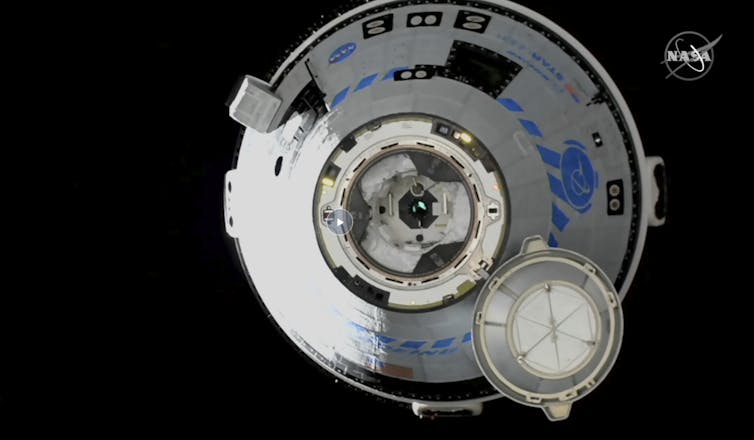
Boeing’s crew transport space capsule, the Starliner, returned to Earth without its two-person crew right after midnight Eastern time on Sept. 7, 2024. Its remotely piloted return marked the end of a fraught test flight to the International Space Station which left two astronauts, Butch Wilmore and Sunita “Suni” Williams, on the station for months longer than intended after thruster failures led NASA to deem the capsule unsafe to pilot back.
Wilmore and Williams will stay on the International Space Station until February 2025, when they’ll return to Earth on a SpaceX Dragon capsule.
The Conversation U.S. asked former commander of the International Space Station Michael Fossum about NASA’s decision to return the craft uncrewed, the future of the Starliner program and its crew’s extended stay at the space station.
NASA awarded contracts to both Boeing and SpaceX in 2014 to provide crew transport vehicles to the International Space Station via the Commercial Crew Program. At the start of the program, most bets were on Boeing to take the lead, because of its extensive aerospace experience.
However, SpaceX moved very quickly with its new rocket, the Falcon 9, and its cargo ship, Dragon. While they suffered some early failures during testing, they aggressively built, tested and learned from each failure. In 2020, SpaceX successfully launched its first test crew to the International Space Station.
Meanwhile, Boeing struggled through some development setbacks. The outcome of this first test flight is a huge disappointment for Boeing and NASA. But NASA leadership has expressed its support for Boeing, and many experts, including me, believe it remains in the agency’s best interest to have more than one American crew launch system to support continued human space operations.
NASA is also continuing its exchange partnership with Russia. This partnership provides the agency with multiple ways to get crew members to and from the space station.
As space station operations continue, NASA and its partners have enough options to get people to and from the station that they’ll always have the essential crew on the station – even if there are launch disruptions for any one of the capable crewed vehicles. Having Starliner as an option will help with that redundancy.

I do think Boeing’s reputation is going to ultimately suffer. The company is going head-to-head with SpaceX. Now, the SpaceX Dragon crew spacecraft has several flights under its belt. It has proven a reliable way to get to and from the space station.
It’s important to remember that this was a test flight for Starliner. Of course, the program managers want each test flight to run perfectly, but you can’t anticipate every potential problem through ground testing. Unsurprisingly, some problems cropped up – you expect them in a test flight.
The space environment is unforgiving. A small problem can become catastrophic in zero gravity. It’s hard to replicate these situations on the ground.
The technology SpaceX and Boeing use is also radically different from the kind of capsule technology used in the early days of the Mercury, Gemini and Apollo programs.
NASA has evolved and made strategic moves to advance its mission over the past two decades. The agency has leaned into its legacy of thinking outside the box. It was an innovative move to break from tradition and leverage commercial competitors to advance the program. NASA gave the companies a set of requirements and left it up to them to figure out how they would meet them.
I know Butch Wilmore and Suni Williams as rock-solid professionals, and I believe their first thoughts are about completing their mission safely. They are both highly experienced astronauts with previous long-duration space station experience. I’m sure they are taking this in stride.
Prior to joining NASA, Williams was a Naval aviator and Wilmore a combat veteran, so these two know how to face risk and accomplish their missions. This kind of unfavorable outcome is always a possibility in a test mission. I am sure they are leaning forward with a positive attitude and using their bonus time in space to advance science, technology and space exploration.
Their families shoulder the bigger impact. They were prepared to welcome the crew home in less than two weeks and now must adjust to unexpectedly being apart for eight months.
Right now, NASA is dealing with a ripple effect, with more astronauts than expected on the space station. More people means more consumables – like food and clothing – required. The space station has supported a large crew for short periods in the past, but with nine crew members on board today, the systems have to work harder to purify recycled drinking water, generate oxygen and remove carbon dioxide from their atmosphere.
Wilmore and Williams are also consuming food, and they didn’t arrive with the clothes and other personal supplies they needed for an eight-month stay, so NASA has already started increasing those deliveries on cargo ships.
Human spaceflight is excruciatingly hard and relentlessly unforgiving. A million things must go right to have a successful mission. It’s impossible to fully understand the performance of systems in a microgravity environment until they’re tested in space.
NASA has had numerous failures and near-misses in the quest to put Americans on the Moon. They lost the Apollo 1 crew in a fire during a preflight test. They launched the first space shuttle in 1981, and dealt with problems throughout that program’s 30-year life, including the terrible losses of Challenger and Columbia.
After having no other U.S. options for over 30 years, three different human spacecraft programs are now underway. In addition to the SpaceX Crew Dragon and the Boeing Starliner, NASA’s Orion spacecraft for the Artemis II mission, is planned to fly four astronauts around the Moon in the next couple of years.
These programs have had setbacks and bumps along the way – and there will be more – but I haven’t been this excited about human spaceflight since I was an 11-year-old cheering for Apollo and dreaming about putting the first human footprints on Mars.
Michael E. Fossum, Vice President, Texas A&M University
This article is republished from The Conversation under a Creative Commons license. Read the original article.
By Chelsea Deets
The Timbers Event center in Eureka, MT sponsored a moderated debate Friday evening between the three candidates for Lincoln County Commissioner in District three.
Doug Davies, Noel Duram, and Brian Phillips participated in a lively debate on Friday. The Timbers Event Center welcomed citizens of Lincoln County to listen to each candidate’s vision for the County Commissioner’s office for the coming years.
All three candidates stressed the importance of citizen participation in government. “Hold our feet to the fire, hold us accountable,” says Doug Davies. He goes on to explain that the County Commissioner’s office is more effective when the community alerts them to problems and concerns and makes their voices heard when it’s time to make decisions that work toward community goals.
Among the topics discussed, they also agreed there’s a need for infrastructure to accommodate unprecedented growth rates within the county, though they differ in their approach on how to accomplish these goals.
Our county growth plan was updated in 2019 when we expected 400 new homes. Instead, 1500 were built as people migrated to Montana during the pandemic. This puts a strain on the waste management system and county services currently in place.
Davies calls for an audit, saying we need better checks and balances on government spending and diversifying our economy.
“Reducing the budget means losing services,” says Noel Duram, reminding citizens the easiest service to lose would be the annex and the inconvenience that would cause. “It’s the income that’s the problem, not the spending.” Duram went on to explain that 75% of the land in this district is federal land and they pay a substantially lower property tax rate than the residents of the county. His plan is to seek increased tax rates for the government to make up the difference.
Brian Phillips states the government isn’t going to pay more taxes. He points out the disparity between the average family income for Lincoln County residents and the multiple pay raises elected officials have given themselves in the past. “We need to sever the tie between the Commissioner’s salary and the Sheriff’s.”
He went on to explain that while the county commissioner doesn’t need to be giving themselves a raise, the Sheriff’s office needs the money to attract and retain quality police to keep our community safe despite the growing populace. He also says the budget as it stands now is indecipherable, making transparency in government difficult.
After the moderator finished asking questions, members of the community were invited to speak. Citizens voiced displeasure over the lack of communication regarding the 16ac gravel pit and asphalt production creating a stench the surrounding residents must deal with daily. The candidates’ response indicated a need for community engagement while reminding citizens that it was a state rather than a county project.
One woman called Doug Davies out for a comment he made stating the MAGA movement was akin to the KKK. Doug Davies acknowledged the complaint and stated that as an elected official he would need to put his personal prejudices aside to work effectively with his constituents.
The debate gave Lincoln County residents much to think about before the November 2024 election.
 Trego's Mountain Ear