Trego's Mountain Ear

"Serving North Lincoln County"

Author: michaelmccurry

  • Warren Zevon – Rock and Roll Hall of Fame

    They brought Warren Zevon into the Rock and Roll Hall of Fame. I’m fairly certain that they brought Willie Nelson in last year, so I should have expected it – but I didn’t.

    Some of the singers I have enjoyed aren’t the real smooth types. Warren Zevon wrote words that told a story – and was basically the gunnie’s composer – “Roland the Headless Thompson Gunner”, and the serious title “Send Lawyers, Guns and Money”. I used to listen to “Desperadoes Under the Eaves” while trying to calculate how many men with crowbars on the San Andreas Fault it would take to lever California into the sea. After all, it was the eighties.

    I don’t recall him ever making it to Montana – but, like so many people I knew in Libby, it was mesothelioma that took him out in 2003. If you didn’t listen to Warren Zevon in the eighties or nineties, get on Youtube and listen to Roland the Headless Thompson Gunner and Send Lawyers, Guns an Money.

  • Report on Veteran’s Suicides

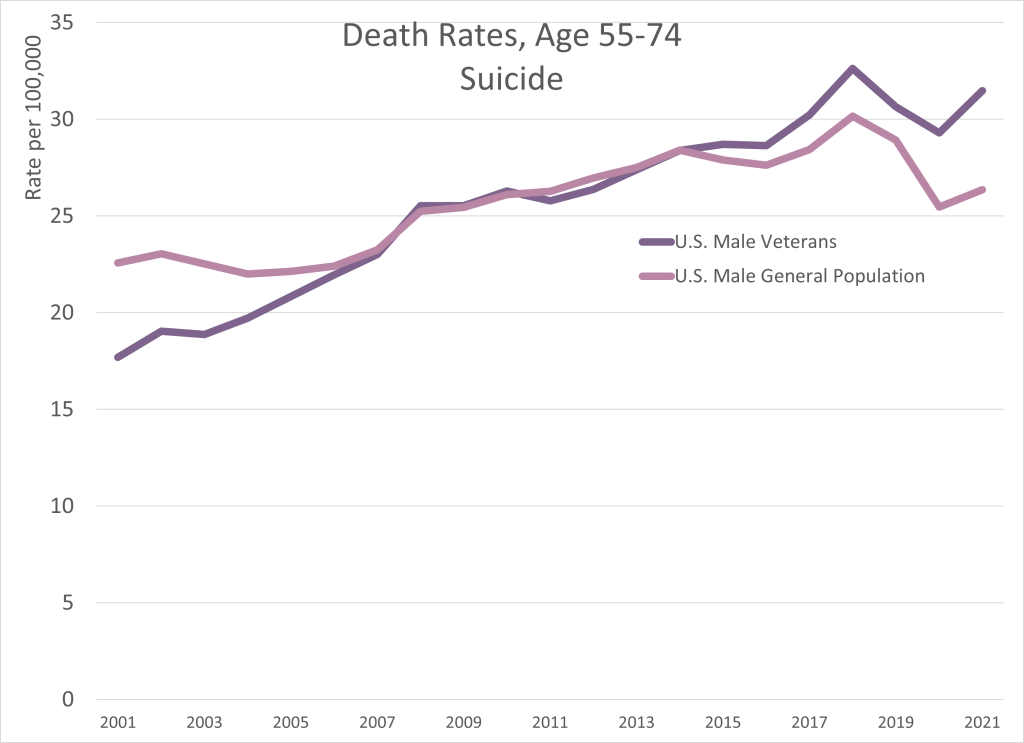
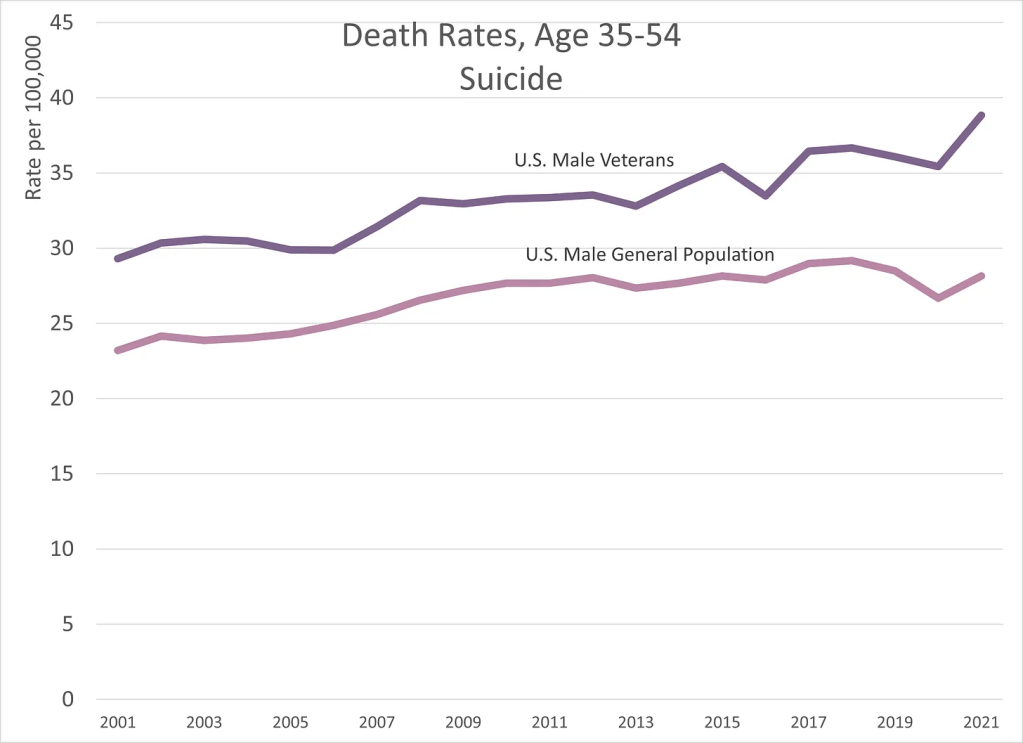
    Mary Pat Campbell has written an article based on the Veteran’s Administration most recent report on suicides. She’s an actuary, so I tend to take her work a bit more seriously than a lot of others. The article is at: https://marypatcampbell.substack.com/p/movember-2024-vet2erans-and-suicide?utm_source=substack&utm_medium=email For folks who need a bit of encouragement to follow the link, here are a few excerpts:

    This graph reflects the reality before I retired – from 2001 to 2015 veteran suicide rates (age 55 to 74) were actually slightly lower than the nation’s suicide rate:

    At my age, 75+, Veteran suicide rates are a bit lower than the general population:

    Campbell is worth reading – my excerpts will, hopefully, provide incentive to read the whole article.

  • John Buhmiller’s Rifle

    Last month, Rock Island Auction sold John Buhmiller’s African rifle (along with a lot of memorabilia). It’s on a large commercial Mauser action – and, frankly, not one of the Buhmiller rifles that interest me the most. I’d prefer to see the rifle he used at the end of his African hunting – either 470 or 500 magnum, built on a model 1917 Enfield action.

    The Mauser failed him once – he was running dry, dropped a cartridge in the magazine, and the controlled feed in the Mauser action jammed the rifle as the old man was running from an angry elephant. I admit, the Mauser makes a prettier custom rifle – but I heard the story forty years ago from Leonard Bull – who once hunted large game (and men) on the African continent. Leonard described the stock as ‘fence post ugly’ – so I suspect it might not sell for as much as the rifle that was sold in October.

    My own Buhmiller barrelled rifle is in 257 Roberts – built on a Springfield 1903 action. When Laird Byers was dying (the iron crab) he had his attendant call me – offering to sell the rifle for what he had in it. When Leonard Bull looked down the bore, he agreed that I did have a Buhmiller, and pointed out what he termed the ‘square cut’ rifling. Leonard was a Kenyan – Buhmiller’s hunting was in Tanganyika. Little things like national boundaries didn’t keep Africa’s big game hunters from meeting each other in the mid-1950’s.

    So what’s the relevance? John Buhmiller started making rifle barrels in Eureka, where he spent his working days in the rail road office, as a telegraph operator. My small caliber Springfield probably comes from those Eureka days – though the barrel may have been made in the early fifties before he moved operations to Kalispell. I’m guessing it was Eureka – by the Kalispell days he was stamping his name onto the barrels. Come to think of it, I don’t know if he was stamping the name onto barrels that wound up installed in P-17 Enfield actions.

    Buhmiller, as an old man, managed to make friends with Tanganyika’s equivalent of Fish and Game, and served that bunch, unpaid, hunting problem elephants that damaged crops and fields. He had a farmer who provided meals and housing, Tanganyika’s game department took all of the ivory, and life was good.

    Before Africa, Buhmiller was a competitive service rifle shooter, competing at places like Camp Perry. Even then, he was producing some of the world’s finest gunbarrels – though Leonard (who knew him only in his African days did look at my 257 Roberts and comment, “I didn’t know he made barrels in such small calibers.”

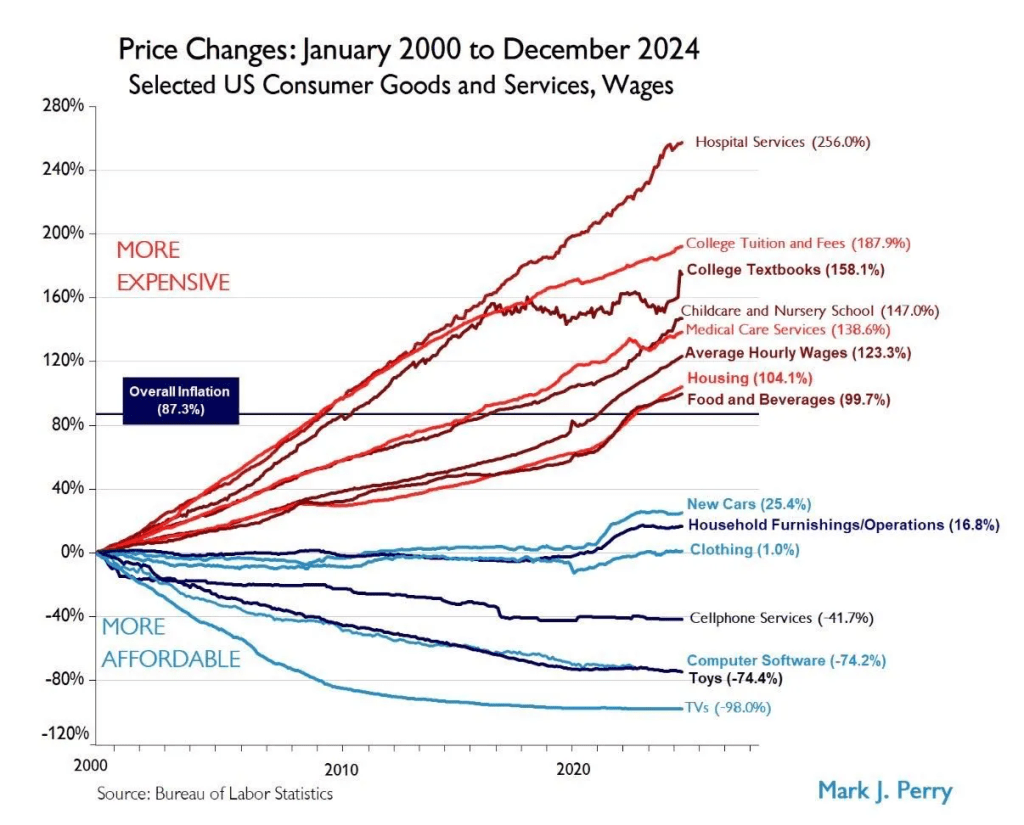
  • An Explanatory Graph

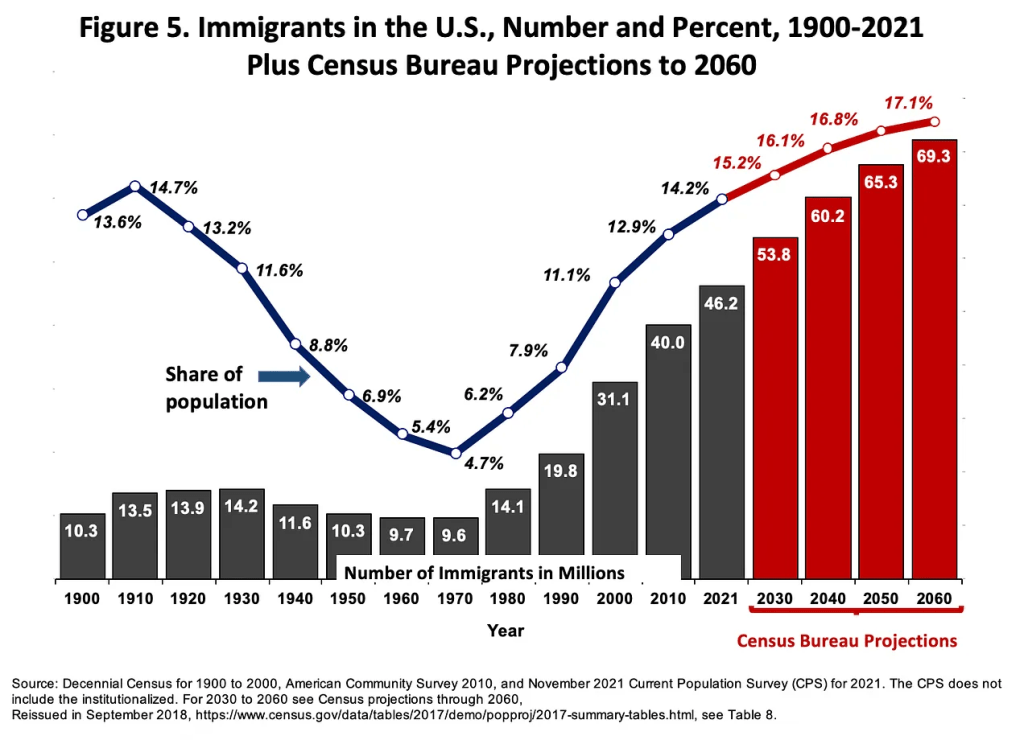
    As always, I find graphs and charts to be a fast way of getting information on trends. These are taken from https://yuribezmenov.substack.com/p/make-america-affordableagain on Lairwyn’s Linx. There are more than a few implications, and the format doesn’t require intensive study.

    There is a lot more information – and conjecture in Bezmenov’s essay – these graphs are good, but Yuri Bezmenov is worth reading.

  • SNAP Data by State

    Tyler Durden, at ZeroHedge, published an intriguing map covering the use of th Supplemental Nutrition Assistance Program by state. The article is at https://www.zerohedge.com/personal-finance/new-mexico-state-most-dependent-food-stamps – and I’m including some highlights to encourage people to follow the link and read the whole article.

    It starts with a description of how the map was developed from Visual Capitalist, and that it is based on 2025 data provided by SmartAsset. Here’s the map – and there is a lot more if you’ll take the time to follow the link.

    The thing that struck me was comparing this map with the map of the states and how they voted – whether Trump or Harris – as shown by RealClearPolitics:

  • Karl Marx Didn’t Start Communism

    The settlers on the Mayflower were committed to live communally (https://drcarolehhaynes.com/index.php/articles/culture/history/488-communism-rejected-on-thanksgiving ). “One of the more familiar stories in American history is the disastrous experiment in a communal social and economic structure in the Plymouth Colony from 1621-1623.  The communal lifestyle in the colony resembled a socialist society. 

    The colony’s storehouse, houses, gardens, and other improved land were all shared. No one could own private land or work at a private business because of their business deal with their investors. The colonists collectively cleared and worked the land. Many worked hard to provide for their families and lay up stores for the winter while others sloughed off, knowing they would receive equal shares from the single pot regardless of how little they worked. 

    Anger and resentment grew among those who did the lion’s share of the work so they became less willing to work. As a result, the colony could not produce enough food to feed everyone.

    After two years of living under communism, only a few of the original Plymouth colonists were still alive. By 1626, to avoid an extinction of the colony and provide a solution for repayment to their investors, a new system with private property rights and the right to keep one’s production — free enterprise – was implemented by Governor William Bradford, one of the signers of the Mayflower Compact and the second elected governor of the colony. Each family was assigned personal plots of farm land according to family size and the common storehouse was abolished. Immediately men and women returned to the harvest fields and produced a large harvest. 

    Land ownership became a priority of the early settlers. For more than 50 years colonial villages tried to survive under the common ownership system without success.”

    The basis for communal ownership among the Hutterites is often cited as Acts 2:44 “And all who believed were together and had all things in common.” And Acts was written a long time before Karl Marx.

    Frankly, “From each according to his abilities, to each according to his needs” sounds nice. The problem is that we elect leaders whose abilities are small, but whose needs are huge. New England was settled under communism, and succeeded only when the communal ownership was abandoned.