Trego's Mountain Ear

"Serving North Lincoln County"

Author: michaelmccurry

  • SCCY Is Gone

    Years ago, I used my Cabelas card points to buy a SCCY pistol that was on deal.  Half of the reason I bought it was the impressive warranty.  Then the doggone thing worked so well that I never used the guarantee.  The only problems I ever encountered were some ancient Egyptian ammunition that had been captured by Israel in the Six Days War (back in 1967) and stored poorly until they auctioned it off as military surplus.  When ammunition is over a half-century old, and has been stored poorly, it probably isn’t the pistol’s fault when it doesn’t fire.

    It isn’t a bad little pistol – but SCCY (which produced 987,075 pistols between 2017 and 2023 according to BATF) found itself sued by Rochester and Buffalo (New York) in 2022.  In 2024, SCCY learned that the company’s insurer didn’t cover this sort of liability.  (Another comment was that there were over 50,000 SCCY pistols recovered from crime scenes – I’m not sure what the time length was for this statistic).  Anyway SCCY went under the auctioneer’s hammer – and mine still hasn’t malfed.  I’m pretty sure I don’t have a warranty anymore.

    Mine looks like this:

    Other colors are (or maybe were) available – like this:

     The bright colors and the pastels never were my thing.  Neither was the newest model – the SCCY cpx-3 versions.  I’m old fashioned.  I like hammers, and the new versions solved the problem of a heavy trigger pull by replacing the hammer with a striker mechanism.  On my cpx-2, I can’t cock the hammer (double action only) but I can see it through a slot in the back of the slide.  And a long, hard trigger pull is the only safety on the pistol.  To be fair, the hammer isn’t cocked until the trigger makes it all the way back – so it’s really just as safe as the old double action revolver.  Safety aside – baby blue, bright orange, and pink just aren’t colors that belong on my sidearm.  If you feel differently, that’s fine.  

    Back to the striker versus hammer argument – my only striker fired pistol is a 1914 Mauser design.  It cocks every time the slide goes back, and the only protection is the safety.  One safety.  The old 1911 design (Colt, by John Moses Browning) with a hammer has a bunch of safeties.  Mauser had only one.  There have been a lot of changes to strikers over the past century – but I didn’t get my first semi-automatic until Browning’s design was almost 75 years old.  Since I’m now 75, I don’t expect to ever be comfortable with a striker fired semi-auto pistol.  Heck, I’m not comfortable with a concealed hammer single action.

    Anyway, SCCY is no more – and without that outstanding warranty, the prices on both new and used SCCY pistols seem to have dropped.  My own experience is simple – I have taken my magazines apart, and smoothed the rough edges.  They worked before, and I’m not certain they needed the smoothing – it’s something I learned at TSJC, and I do it more based on faith than science. 

  • School District 53 — Older Than Lincoln County

    School District 53 – Trego School – started in September of 1905.  I finally understand why it’s District 53 – it started when the community was still in Flathead County.  Matter of fact, Flathead County had only split from Missoula County in 1904. Lincoln County began in 1909 – 5 years later.  The lower numbers – such as Troy’s District 1 – are Lincoln County numbers. A lot was happening in 1904 – and the map of School District 53 showed another thing I hadn’t realized.  In 1905, there was no Fortine Creek.  The map clearly reads Edna Creek.  The dam running logs down to Eureka Lumber was built in 1904, and 1904 was the year for the first railroad mainline relocation.  The first main line, running back of Marion to Libby was replaced by a line running from Stryker, through Trego, Fortine and Eureka, then dropping into the Kootenai valley to run down to Libby.  (The second mainline relocation occurred along with Libby Dam).The map shows that railroad – and the predecessor of highway 93 – both running to the west of Dickie Lake.  No road shows where the highway now is to the east of the lake. Thinking on it, School District 53 was there before either Fortine or Trego received the communities names. Trego was a nameless construction boom town for the first time.  1904 brought the railroad relocation,  a new dam being built (on Edna Creek, before it was named Fortine Creek) and a new Ranger station was under construction at Ant Flat.  Small wonder that Flathead County got news of a new community that needed a school district ASAP.  It would be over sixty more years before the second railroad relocation and new dam (this one on the Kootenai) would repeat the situation to build a new school for District 53. When we get the copies of those old maps ready, we’ll add them to an article – but for now, it’s kind of neat to realize that School District 53 means that Trego school was created before Lincoln County – and the higher district number means that it was a Flathead County district and got the number from Kalispell.
  • A Pomeranian Pack

    When Yoshi (Sam’s dog) comes to visit, we wind up with a three Pom Pack. Yoshi has had a career as a service dog, Kiki was in a commercial puppy operation, and the Little Lass came to us as a mellow puppy who has no problem deferring to these two dominating older dogs.

    Today, the neighbor’s hound came to visit. She’s a nice little dog that just needs more attention than she gets at home – but to a Pomeranian, she’s big. Today though, the relationship changed. The little dogs set up an ambush for the young hound. Instead of barking, they concealed themselves alongside the pickup – and when the young hound arrived, the pack had arranged themselves so there were about 30 turkeys between the Poms and the arriving hound.

    Three Pomeranians gave full throat to their threatening barks and charged for the turkeys and the young hound. The little hound found herself in the midst of 30 turkeys erupting as 3 Pomeranians headed through the turkeys for the interloping hound. The hound let out a frightened howl and fled. The Poms stopped, and continued barking as the hound fled across the field and went home.

    It might have been coincidental – but it certainly looked like the Pomeranians planned for an attack where the turkey panic would enhance their own formidable charge. The little hound has been friendly – but from the Pomeranian perspective, she is big and steps on them.

  • Trego – The Hippie Years (and an occasional remittance man)

    If I were forced to set a date for the end of Trego’s boomtown years, it would be somewhere around 1970 or 71. First the tunnel was completed, then Koocanusa filled and the rails that had once connected the county along the Kootenai were picked up. The last construction project finished was highway 37, connecting Libby and Eureka. As the reservoir began filling, 37’s completion was less essential because there was a paved Forest Service road on the west side of the Kootenai – or Koocanusa. The boom ended with many of the construction boom workers moving north for jobs along the Alaska pipeline, and others becoming locals. Mike Brandon married Peggy Hilliker, went to work with a chainsaw in the woods, and became as much (or more) a part of Trego as any of his neighbors. Sam Chaney married Keith Calvert’s daughter, and lives his life on what remains of the Calvert ranch after the rails took so much away. But as the construction boom ended, Trego, like the rest of Lincoln County was left with a housing surplus. Through the seventies, the cheap housing of Trego, indeed all of Lincoln County, along with rapid population growth beginning in the Seattle area, was pressed into a new group of people.

    Anthropologists use the German term “volkswanderung” to describe the movement of groups across Europe during the fall of the Western Roman Empire. Those wandering groups were barbarian tribes who found a better, possibly easier life in declining Rome. Our ‘volkswanderung’, again comes with social change – rapid population growth in northwest Washington state, accompanied by rising land values and rents, followed by the migrations – in this case, gradually and eventually to Lincoln County. Unlike Europe’s ‘volkswandurung’, ours had a physical end to it – the Canadian line and Glacier Park meant that people couldn’t move further in search of cheaper living.

    To be fair, not every newcomer was a hippy – some were straight as they could be. But low cost rentals drew in the hippie lifestyle, and they were a bit more distinctive. Some of these new residents more closely resembled the classic ‘remittance man’ of the old west. (Wikipedia gives a description: “the “Remittance man” is defined in The Canadian Encyclopedia as “a term once widely used, especially in the West before WWI, for an immigrant living in Canada on funds remitted by his family in England, usually to ensure that he would not return home and become a source of embarrassment.” ) Relatively inexpensive land, often off-grid, provided a spot where families could set up the modern remittance man. Others made use of government support programs until 1996, when the Welfare Reform Act changed the game. Still others – probably more common – found places to buy and work on the local economy, little different than their neighbors with a possible exception of being a bit more likely to use ‘illicit chemicals’.

    Following Lincoln Electric’s member revolt in 1988, powerlines were extended up Edna Creek, resulting in fewer off-grid homes. While Lincoln Electric Cooperative’s return to expanding electric power was short-lived and incomplete, the Interbel telephone cooperative took expansion of telephone and internet services as part of their mission, and many homes that are otherwise off-grid are served by fiberoptic lines and have full modern communications.

    This is the time when Edna Creek and Butcher Creek lands were sub-divided, mostly into parcels that could be described as a portion of a section and sold without a survey. While fuel cell technology has not provided an acceptable alternative for these off-grid residences, solar panels have created a power source that has moved the off-grid homes and residences far beyond the typical home of 1945. Likewise, the portable gas and propane generators have improved the quality of life off-grid.

    This is the time when a single individual affected Trego’s composition – for most of the 20th Century, Trego’s growth and development was an outgrowth of national trends – in the late seventies and through the eighties, Al Luciano’s Land Store sold and financed parcels of land – particularly raw land around Butcher Creek.

    After the Great Timber Strike of 1917, Trego spent nearly a half-century regarded as a place filled with socialists and IWW supporting unionists (despite the fact that our only self-identified socialist was raising sheep). Butcher Creek has merely became the part of Trego that continues that external perspective – in a smaller area (or at least my conversation with a Whitefish resident suggests that to me).

    If I had to set a time when Trego’s Hippie Years began to end, I’d pick the middle of the 1990’s.

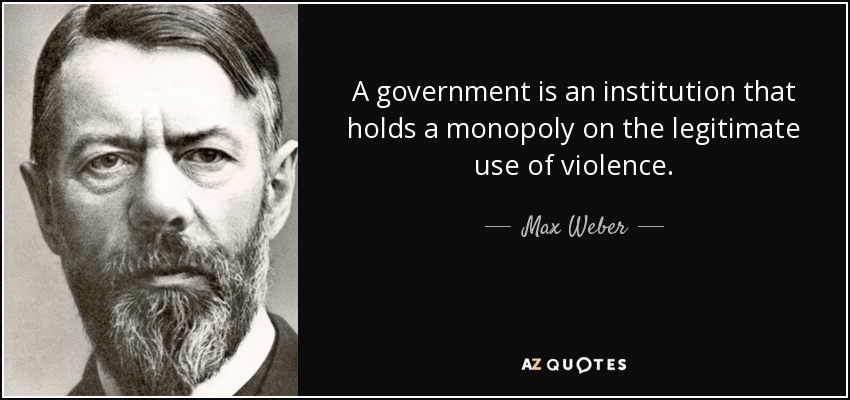
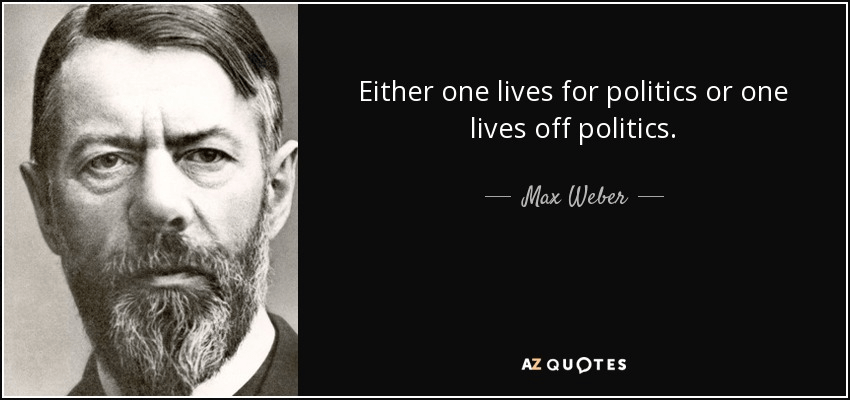
  • Max Weber on Government

    I am fundamentally a Weberian Sociologist – and some have claimed that Weber’s writings are merely a long-running debate with the ghost of Karl Marx. However you translate it, at the foundation, the base of my thoughts on society is that there is a hell of a lot of social conflict going on.

    In a democracy the people choose a leader in whom they trust. Then the chosen leader says, ‘Now shut up and obey me.’ People and party are then no longer free to interfere in his business.

    The great virtue of bureaucracy – indeed, perhaps its defining characteristic ~ was that it was an institutional method for applying general rules to specific cases, thereby making the actions of government fair and predictable.

    It is not true that good can follow only from good and evil only from evil, but that often the opposite is true.

    Politics means striving to share power or striving to influence the distribution of power, either among states or among groups within a state.

    The primary task of a useful teacher is to teach his students to recognize ‘inconvenient’ facts – I mean facts that are inconvenient for their party opinions.

    Politics is a strong and slow boring of hard boards.

    Daily and hourly, the politician inwardly has to overcome a quite trivial and all-too-human enemy: a quite vulgar vanity.

    The nation is burdened with the heavy curse on those who come afterwards. The generation before us was inspired by an activism and a naive enthusiasm, which we cannot rekindle, because we confront tasks of a different kind from those which our fathers faced.

  • La Nina Returns

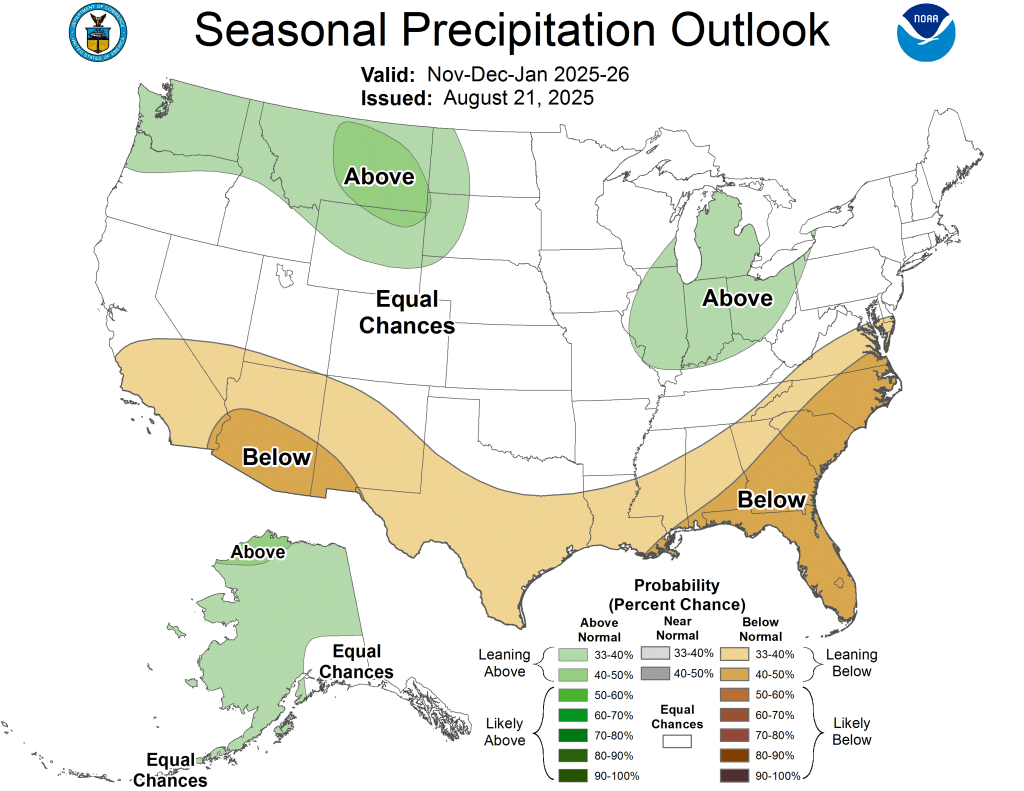
    The prediction is that the ocean currents off Peru will shift, and la nina will return. I learned 50 years ago that the little girl has a great influence on our local weather patterns – so I’ve shifted to NOAA to see what the predictions are:

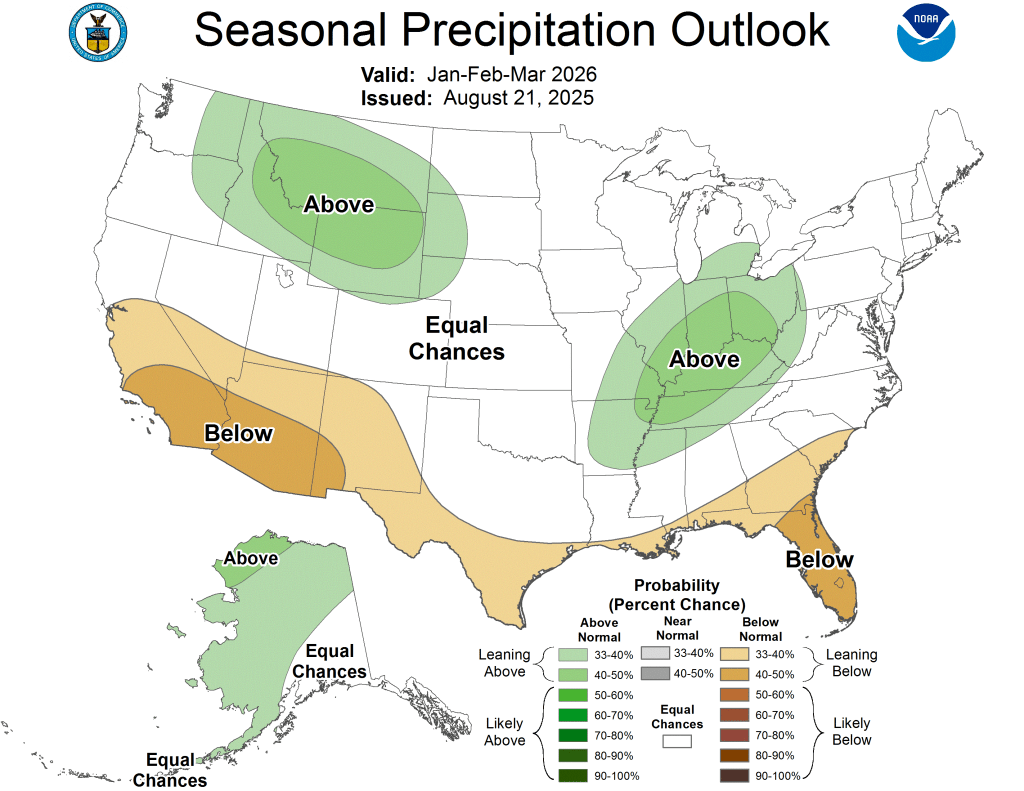
    And later in the winter, it looks like

    It makes me glad that I researched what part had failed that my 25-year-old snowblower was refusing to go forward – fixing it was a fairly simple task this summer. I suspect I will need it.