Trego's Mountain Ear

"Serving North Lincoln County"

Author: michaelmccurry

  • Artificial Intelligence and Natural Stupidity

    I’m looking at reports of Artificial Intelligence citing things as fact “that ain’t necessarily so.” The basis for scientific method is to test assertions, that we need to verify our beliefs – testability is the determinant. Time was that bad air was believed to be the cause of malaria – we now know it’s a Plasmodium that is spread by mosquitoes. There are times when common sense just doesn’t go far enough to predict how changing one thing will affect the whole.

    I recall the lessons of the Kaibab deer – a spot where reduced predators and domestic grazing competition allowed the deer population to grow to a level where they were starving. The first level interpretation was that reduced predation would result in more deer. True enough. The second level thought was that the greatly increased deer population would exceed the Kaibab’s food production. True enough – and matching Thomas Malthus essay. Still, eighty years after these more obvious results were observed, later researchers were discovering the long-term effects that the huge deer populations had on the area’s Aspen trees. Biological intelligence and natural ignorance can combine very effectively.

    There’s the example of anthropic climate change – the basic number can be calculated. A gallon of gasoline is equivalent to about 30,000 calories or 114,000 British Thermal Units. Since we’re using – or to use a more nuanced word, burning – about 100 million barrels of oil annually, those calories pretty well have to be warming the planet. That conclusion is fairly obvious for biological intelligence. It’s probably just as obvious to artificial intelligence. Likewise, it’s fairly obvious that, without humanity and our recent technological progress, we wouldn’t be burning nearly that amount of oil. The problem is figuring out how much it affects things and where. Natural stupidity stops the thinking process with a conclusion that this is horrible and we’re all going to die. We need more analysis to better understand how much threat anthropic global warming is – or, if it might combine with the farmable lands in Canada and Russia to provide huge food surpluses. I don’t have the answer – but I don’t believe Greta Thunberg understands the question.

    The strength of an Artificial Intelligence application is that it can review the literature on a topic with amazing speed. The weakness is that – so far, anyway – the application isn’t nearly so good at telling good data from bad. It’s not enough to be the fastest – you also need to be the most accurate – and Artificial Intelligence needs to be protected from natural stupidity.

    c
  • Mowing Hay

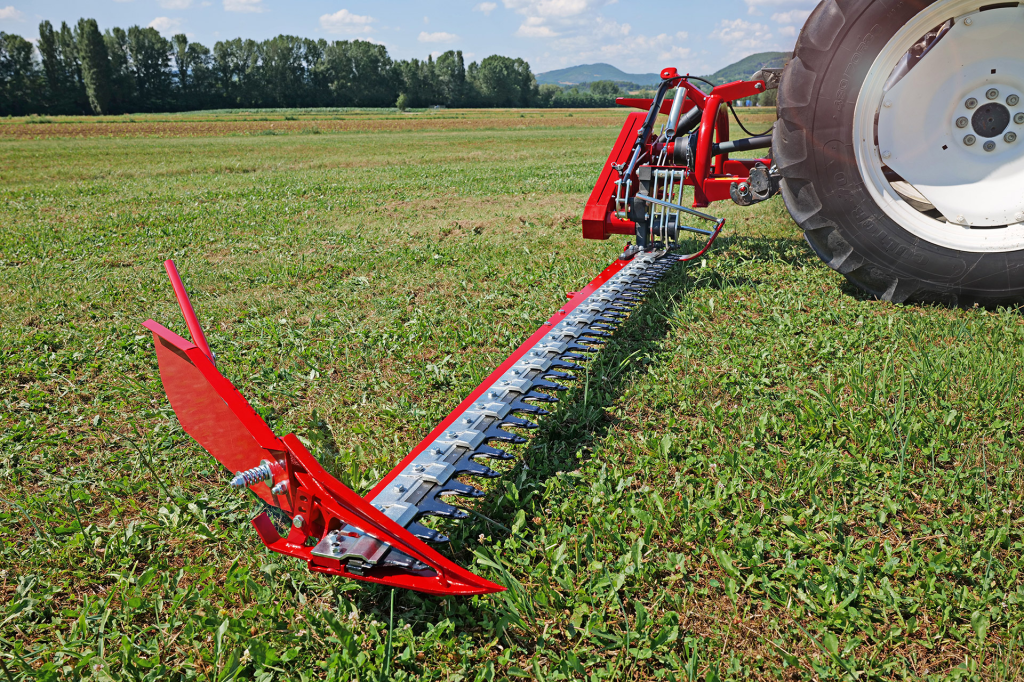
    I stopped mowing when a young hound decided to come close and check out the operation. A comment from Renata made me realize that most folks haven’t mowed hay, and haven’t seen, first hand, the danger a mower is to small animals. Then I thought of the differences in mowers, and what makes the old sickle bar mower more dangerous to small animals.

    Add the tall grass and alfalfa to this photograph, and it becomes obvious how the cutting blade is hidden from small animals – and many of us who have used one have had the experience of hitting a fawn with it. It’s less common to get a dog’s foot – but it can happen.

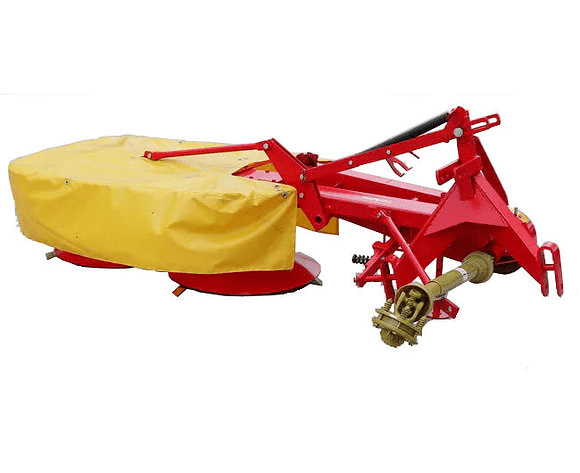
    I’m using a drum mower – and I suspect it’s a bit safer than the old sickle bar mower, but I’m not sure, and I’d much prefer to stop and waste a few moments than hurt a dog. Here’s what a drum mower looks like:

    The cutting takes place by 3 small blades that rotate quickly with the drum. It’s probably as dangerous to small animals – but the drums rotate quickly and are loud. The sound, added to the height of the mower, makes it a lot easier to see. Mine, has 2 drums, and covers only 4 feet to the right of my tractor – sickle bar mowers usually run 7 feet, and I’ve used 9 foot mowers – far harder to see into the tall grass and alfalfa we mow.

    I think it’s a good year when all the fawns get away. As an old man, I now watch for turkeys – small animals that weren’t there when I first mowed hay. So I got to meet a nice little hound as I mowed hay, and took a break to minimize the danger. I think the noise and the profile of the machine already minimize the risk – but coming to a complete stop until the little dog found something more interesting was in her best interest, and mine.

  • Fun With A Month-Old Knee

    Well, the knee replacement is 5 weeks old today. I can walk further than I could before the surgery – miles are again in my world. Not many, but some. I’ve been able to control the clutch for the past two weeks – took a drive down to Rattlebone with Renata – saw a great 6 point bull, and a ruffled grouse. The tractors all need a functional left knee for the clutch.

    Mowing hay has showed me that the soil water never was enough for a good hay year. The spots that are well sub-irrigated have thick, tall grass – but in the drier spots grass is pretty thin.

    I heard a lot of warnings that kneeling to work on things would be rough – but for me, its better than it was. Lucky, I guess. I can get down and get up fine – so now it is just a question of getting some leg strength back.

    I can’t look at this sort of surgery without gratitude for medical progress. The old census reports listed so many people as “cripple” due to the wear and tear that can be readily fixed today. I looked at the book “Doc” as I went through the recovery time – it tells of a physician in Ennis who was developing knee surgery in the Bozeman hospital about the time I started at MSU. It’s easy to be thankful. I’m off to continue mowing – next week I think I’ll walk the trail climbing the hill. Unfortunately, I’ll have to leave my old dog at the house – she can only handle short walks on the flat – but she approve of mowing the field so she can see better.

  • Some More Data And Memes

    I noticed this list of how much of the nation’s energy is used to keep the large data centers operating. The same article said that data centers account for 26% of Virginia’s electric use – and I suspect that Virginia’s use includes some massive data centers in Washington DC.

  • The Fourth Turning – My Homework While Recovering

    I’ve seen comments about ‘The Fourth Turning’ and how it is happening now – so I figured that I could read the books while I was laid up with the knee recovering. Neil Howe is identifies as a demographer – but his view is more based on cycles in history than statistics. Still, if he’s right, we’re in a time of great societal change. On the other hand, if his hypothesis is wrong, we’re still in a time of great societal change.

    The cycles that Howe sees are 80 to 100 year spans – and starting with the American Revolution, we’ve completed 3 and are moving onto the fourth cycle. On the other hand, three data points does not a theory make. It makes a hypothesis – but it’s the research question and the results that can turn a hypothesis into a theory.

    I had hoped for a bit more complete and rounded out theory. Instead, I found a hypothesis, based on the last 500 years, that every 80 to 100 years we get a major social change. It’s hard to say that doesn’t happen – but the transcontinental railroad and telegraph occurred about 160 years ago. The media reminds me that the atomic bomb was 80 years ago. I’ve watched computers go from huge mainframes to cell phones. The jacket blurb calls it a theory – but it looks like a hypothesis to me, and a hypothesis that resists testing.

    On the other hand, I watched the Young Sheldon DVDs while I was laid up, and the Lonesome Dove series. I liked Young Sheldon, and Lonesome Dove was an enjoyable repetition. So was Josey Wales. Maybe I should have stuck with entertainment instead of looking for socially relevant research.

  • We Have Documents of Different Quality

    I see that the phrase ‘undocumented’ is going out of fashion – and illegal alien is going back in. I suppose it’s like Shakespeare wrote about what’s in a word – if we accept the changed word, we accept a different reality.

    One of the words I understand is ‘mojado’. It’s a Spanish word that translates simply to ‘wet’. Always seemed a bit more polite than ‘wetback’ – it shows something when you insult someone in his own language. But I should get back to the topic – I have a US passport. I think that’s close to the highest quality of documentation one can have – though mine needs a new replacement before next year. My drivers license is of lesser quality – it specifically says “not for federal identification.” Still, it tells folks that the state of Montana trusts me to drive a car on public roads, and no traffic cop will put that same faith in my passport. A bill from Lincoln Electric, showing my street address, can be a supplement to either the drivers license or the passport. A voter ID card is another supplement.

    Citizens or not, we all have documentation. It’s just that some documentation is better than others. Time was when my drivers license could have a post office box number – but that wasn’t good enough to buy a pistol. It had to have a street address. I think that’s because we have a bunch of people who can’t figure out the rectangular coordinate system that has been federal law since 1785 – yes, that system was before the constitution. Still, that day I didn’t have good enough quality identification to buy a pistol. The folks at Cabelas insisted that my ID had to include a street address.

    I met a hitchhiker who was undocumented and homeless – he explained that his wallet was stolen in Oregon and, since he had no address, he was traveling to Vermont, to get a copy of his birth certificate and begin the process of recovering his papers.

    Still, generally speaking, there are very few who are undocumented. There are many who lack the quality of documentation they need.