While it’s certainly possible to measure wind speed with an anemometer, looking out the window is often good enough.
That’s because, back in 1805 Admiral Sir Francis Beaufort developed this handy scale for guessing wind speed based on the sort of observations that can be made out a window. As windspeeds increase, Beaufort’s scale starts to look positively superior to an anemometer. With my little handheld anemometer, I have to go stand out in the weather and hold it. Beaufort’s scale? I can make my estimate from the inside, a decided virtue.
This is probably one of my favorite charts for determining wind speed, but I haven’t found its origins yet.
While Beaufort’s scale isn’t going to be useful in all situations (a still summer’s day, when no fires are burning, for example), it’s still pretty handy. And, the times its most useful coincide nicely with the times I’d rather be indoors watching the storm instead of standing in it.
According to Beaufort’s scale, that little whirlwind we had last fall, having caused some structural damage, was probably somewhere between 55 and 60 miles per hour.
With roofing torn off, the wind was definitely more than a “Fresh Gale: Twigs and Small Branches broken off trees”. The next level, a “Strong Gale” has slates blown from roofs. While I’m no expert on roofing, the damage seems to be a bit worse than that. So, probably in the “Whole Gale”, or 55-60 range.
In that instance, using Beaufort’s scale seems far safer than standing outside with an anemometer, even if the machine would be more precise.
Figuring out the data to use is important. On May 9, 1864, Union General John Sedgwick said “They couldn’t hit an elephant at this distance” three separate times. After the third statement, he became the highest ranking Union officer to die in battle. He was missing a couple relevant pieces of information – first, the Confederates had snipers with Whitworth rifles, and second, at 800 yards, the Whitworths were making 12 inch groups – far smaller than an elephant.
It’s similar with Covid – each of us is like General Sedgwick, not knowing which piece of data is relevant, or even exists. Some data ties in blood types. I’m not certain it is data we can use. Death and age combine to give us the most solid data that we have – and it may be of some use. Statista provides this information, as of January 9. 2021, for the US.
Age
Number of Deaths
Under 1
34
1-4
21
5-14
55
15-24
510
25-34
2,196
35-44
5,742
45-54
15,558
55-64
38,830
65-74
70,230
75-84
90,744
85+
105,673
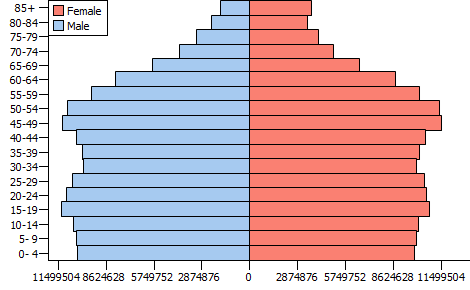
As you look at these numbers, it’s probably worth remembering that over 50 million Americans are over 65 years old – where most of the casualties are. Soon we’ll have the 2020 census, but until then the 2010 census data is usable – a bit low, but usable. The tragic loss of 55 kids under 4 comes from over 20 million population in the 0 – 4 age cohort. The 105,673 deaths of people 85 and over comes from a cohort of 5½ million.
If you want to calculate the years of life lost to covid, the social security life tables are available at: https://www.ssa.gov/oact/STATS/table4c6.html Still, we’re dealing with big data – and, as I realized when I was being treated for colon cancer, the most important thing about your life expectancy isn’t the number for your age, it’s which side of the median you’re on.
The data shows that Covid’s deadliness increases with the age of the person it infects. The data isn’t adequate to show either the probability of being infected or missing the virus. It’s easy to describe the statistics of the Spanish Flu – but most of the data was compiled and available by 1920. This article describes how Gunnison, Colorado isolated their way out of the Spanish Flu: Isolation worked well for Gunnison.
The folks at APM Research Lab have calculated out death rates by race – and their study is worth a look, despite the problem that race is more a social construct than genetically identifiable. Here’s some of their data (as of January 5).
“These are the documented, nationwide actual mortality impacts from COVID-19 data (aggregated from all available U.S. states and the District of Columbia) for all race groups since the start of the pandemic.
1 in 595 Indigenous Americans has died (or 168.4 deaths per 100,000)
1 in 735 Black Americans has died (or 136.5 deaths per 100,000)
1 in 895 Pacific Islander Americans has died (or 112.0 deaths per 100,000)
1 in 1,000 Latino Americans has died (or 99.7 deaths per 100,000)
1 in 1,030 White Americans has died (or 97.2 deaths per 100,000)
1 in 1,670 Asian Americans has died (or 59.9 deaths per 100,000)
Indigenous Americans have the highest actual COVID-19 mortality rates nationwide—about 2.8 times as high as the rate for Asians, who have the lowest actual rates.
Data is data. There’s not a lot of difference between Latino and White rates.
As I was retiring, the American Community Survey(ACS) was replacing the long-form Census questionnaire. There is merit to the argument that a survey can provide data that is as good as a form that one out of six people fill out – both are, after all, actually surveys. Still, as a rural sociologist whose primary duties were rural demography, I wasn’t comfortable with the American Community Survey results – the sampling size was too small.
Now, I can access data that compiles five years worth of estimates – so here is some data on Rexford, Eureka, Fortine and Trego, by zip code, in two separate five-year conglomerates:
2012-2016
Rexford 59930
Eureka 59917
Fortine 59918
Trego 59934
Total Population
566
4,425
584
562
5 to 9
21
282
34
52
10 to 14
35
305
22
49
Median (Average) Age
58.0
43.6
50.7
49.2
Per capita income
$22,377
$18,799
$21,203
$25,999
2015-2019
Rexford 59930
Eureka 59917
Fortine 59918
Trego 59934
Total Population
658
4,769
747
476
5 to 9
–
532
12
–
10 to 14
50
216
35
20
Median (Average) Age
56.0
46.8
47.2
60.4
Per capita income
$13,438
$22,867
$28,753
$26,671
The American Community Survey is a well-conducted survey. The data is correct, in both cases, within the limits of the survey. The small samples, however, can create some large swings and make the data less useful. I have been looking forward to reviewing the Trego data since I was selected to return the ACS survey. Trego’s median age went up 11 years. The population dropped by 15%. The youth population plunged. Meanwhile Fortine incomes increased by 36%, as Rexford plunged into the depths of poverty. All the survey data is correct – but sampling bias, due to the small number of participants, has given us data we can’t use.
I still prefer the old, time-consuming long form results over the ACS.
Yesterday, I read that US Life Expectancy had dropped by a full year due to Covid. I didn’t really think about it – I had taught about the drop in life expectancy accompanying the Spanish Flu, and had invented hypothetical plagues for student exercises in demography class. But when I had the full-year drop in life expectancy cited to me a second time, I realized that large numbers keep us from checking the math, even when the data is readily available. Here’s the basic math for checking the assertion, worked as we would have in the slide rule era.
The US population is just a little under 330 million. At present there are approximately 400,000 Covid deaths. Using the Social Security life expectancy tables was a good decision – the data is readily available to check your work . . . but we don’t need complex math to check the claim that US life expectancy will drop 1 year due to covid. It’s probably worth mentioning that life expectancy is a statistical thing, accurate for a large group but not particularly accurate for an individual. I’ve known people who lived past 100 and others who died at 14. At age 12, they had similar chances to live to old age.
To reduce US life expectancy by one year, Covid would have to take away 330 million years of life (remember, there are 330 million people. If each loses one year…)
This is possible, but to make the math easy, lets state the problem in millions to get away from the tyranny of large numbers. . We’re left with 330 for population, and 0.40 for deaths. To reduce US life expectancy by one year, we have to have 330 (million years of life) lost by 0.40 (million people).
US Population
Covid Deaths
330,000,000
400,000
330 million
.4 million
Checking the math is nothing more than setting up a word problem: How many years of life are lost for each covid victim? Can there be 330 (million) total years of life lost with 0.40 (million) deaths due to covid?
Well, 330 years of life lost divided by .40 is: 825 years lost per covid death. That implies the average Covid death deprives its hypothetical victim of 825 years of life. Since average life expectancy is now about 80 years, it looks like several orders of magnitude were lost in someone’s calculations. The old slide rule techniques still have value in checking one’s work.
The same day, another stats guy ran numbers showing that the average Covid death was 13 years early. That seems to have a bit more face validity – we can go to the charts that show death rates by age, develop percentages, and check his data against the tables – but I’m still making the math easy:
400,000 Covid deaths X 13 years = 5,200,000 lost years of life, or 5.2 million 5.2 million (lost years) divided by 330 million (population) = 0.0158 years of life expectancy per individual. 0.0158 X 365 (days in a year) = 6 day drop in life expectancy.
The availability of data makes it possible for demography to be a science for everyone, and not confined to university campuses.
Lincoln County offers opportunities to extract data in ways the folks who run things haven’t planned. For example, we have three county commissioners, elected at large, and representing the areas roughly in the county’s three high school districts.
Census data can be extracted by school district – so we know the population of each high school district. We’re still using the 2010 Census, but should be able to update soon. Likewise, on a state website, we can find the 2020 market value and taxable value for each high school district. Since the taxable value relates directly to county taxation, it isn’t hard to make a chart showing how much residents of each school district pay for county government.
Population
Market Value
Taxable Value
Taxable Value/ person
LCHS
6,260
$1,201,098,056
$17,042,130
$2,722.38
Libby
9,844
$1,030,779,916
$13,536,404
$1,375.09
Troy
3,583
$ 509,934,526
$ 6,912,824
$1,940.17
Total
19,687
$2,741,812,498
$37,491,358
$1,904.37
Intriguing – Troy residents provide taxes to Lincoln County at about the same rate as the county average. North County folks provide about 43% more taxes per capita than the county average, and Libby folks per capita county taxes is approximately 28% lower than the county average.
The area represented by the Lincoln County High School district has 31.8% of the county’s population, and provides 45.5% of the tax dollars that fund county government. Libby, where most of the county government occurs, has 50% of the county’s population, and provides 36.1% of the taxes that fund county government.
I guess it’s a question suitable for debate – is it better to receive more government than you pay for, or is it better not to receive as much government as you pay for?
When Lincoln County was created, it made sense – virtually all of the county drained into the Kootenai River, and the county was connected by river, rail and road. With Libby Dam and Lake Koocanusa, the county was split in two. On the other hand, the numbers suggest that secession might be a fiscally responsible alternative.
After the article on searching Lincoln County data, the question came in: “What if North Lincoln County was its own county?” The answer is available, but it takes the sort of personality that enjoys digging through data. Here’s a few facts that would describe the thought experiment that would be county 57. County 57, sharing boundaries with the Lincoln County High School District, would rank 31st in population…
There’s a long-term question of whether North Lincoln County gets fairly treated in county services. Back when the county was created in 1909, it made sense – everything drained into the Kootenai (except for Stryker, and driving 93 toward Kalispell makes it easy to see how that mistake was made.) Sixty years later, Libby Dam removed the towns along the Kootenai that were the middle of the county. …
I notice a bunch of folks claiming to know the difference between socialism, communism, and fascism – and some of the explanations suggest they never read the manifesto. So ride along with me for a condensed version of the manifesto.
First of all, Karl Marx studied capitalism – and saw that more and more capital wound up owned by very few people. Glance online, and see the cheerful pictures of Bezos, Gates, Zuckerberg, etc. It’s hard to argue with that observation. For sociologists, Marx came up with the basis of social conflict theory – he based it on economic class.
The ten points of the manifesto are:
Abolish private ownership of land and apply all land rent to public purposes.
A heavy progressive or graduated income tax.
Abolish all rights of inheritance.
Confiscate the property of all emigrants and rebels.
Centralize credit with a national bank with State capital and an exclusive monopoly.
Centralize State controlled means of communication and transport.
Extend factories and means of production (State owned); bring wastelands into cultivation, and improve the soil in accord with a common plan.
Equal liability of all to work. Establish industrial armies, especially for agriculture.
Combine agriculture with manufacturing industries; gradually abolish the distinction between town and country by a more equitable distribution of the population.
Free education for all children in public schools. Abolish child factory labor.
It’s important to remember that Karl Marx studied early capitalism and examined its flaws. He theorized that communism would eliminate those flaws. The contemporary socialism of the time was French Utopian Socialism – far different than today’s versions of socialism, and, with the relatively recent French Revolution, recognizing the concept of social conflict.
We could go farther – graduate seminars go into a lot more detail – but this is a condensed version, just to provide enough background to be able to call BS on the ignorant ideologues.


 Trego's Mountain Ear