Trego's Mountain Ear

"Serving North Lincoln County"

Category: A Science for Everyone

  • Is Demography Really Destiny?

    I’m looking at folks showing Russian, Ukrainian, and Chinese population pyramids, and ominously stating “Demography is Destiny.”  Of course I’ve been looking at Paul Ehrlich’s book The Population Bomb all of my student and professional life, and know what the population pyramid showed him in 1968 – and his interpretation sure as hell didn’t pan out.

    Ehrlich predicted famine because of the rapid population growth.  Politicians looked at 9.2% of the population over 65, and knew that the Social Security System would be solid forever.  After all, “Demography is destiny”, right?

    By 1970 – the year I turned 21 – the base of the pyramid showed where the trend was changing.  Lifespans had been increasing over the 20th century, and the 1970 pyramid showed that reproduction was slowing down.  Ehrlich had ignored the green revolution, and the politicians who could do simple math could realize that Social Security wasn’t going to be a cash cow.  We had passed the point where the Demographic Transition Model kicked in.  By the way – use PopulationPyramid.net to grab your own data – for years I’ve used spreadsheets to develop my pyramids, but these folks have put the data onto the net, helping make demography everyone’s science.

    By 2000, the population pyramid had lost most of the resemblance to a pyramid, and even the most ignorant congresscritters could see the threat to Social Security.  Did I mention that Ehrlich’s training is in biology, and that his dissertation was on butterflies? 

    I have no problem with the idea that “Demography is Destiny.”  The problem is that destiny is more readily observed in hindsight than in projecting today’s data into the future. 

    I’m a rural demographer – well ahead of the curve in my specialized areas, but my areas are rural US – the real specialized areas are Hutterite and Reservation populations.  I can make some projections from the Russian, Ukrainian, and Chinese pyramids – but they basically start with, “Gosh!  There are a heckuva lot of old people in these countries.  There should be plenty of work for the younger generations.”

    Seriously, go to PopulationPyramid.net, find the answers to your own questions.  In 1970, demography was based in the universities because their libraries held all the data.  Now, the data is online, and the science is open to everyone.  And I enjoy being able to share my science.

  • Climate Change: Technology and the Little Ice Age

    I like the term “Anthropic Global Warming” better than the generic “Climate Change.”  Living in an area that was covered by glaciers 15,000 years ago, I have ample evidence to convince me that climate changes – my challenge is quantifying how much is human caused and how much has natural causes.  And I like a term that defines the direction of change.

    English history – from the Roman occupation forward – provides records of a warm climate cooling off and entering what is termed “The Little Ice Age.”  There is a historical record of climate change, and, equally important to a Non-Malthusian demographer, the technological changes people developed to deal with the climate change is written down.

    Connections, by James Burke, offers this: “Among the earliest references to the change comes from the Anglo-Saxon Chronicles, kept by monks for the year 1046: ‘And in the same year after the 2nd of February came the severe winter with frost and snow, and with all kinds of bad weather, so that there was not a man alive who could remember so severe a winter as that, both through mortality of man and disease of cattle; both birds and fishes perished through the great cold and hunger.” (p157)

    Connections explores the connections between events and technical development.  It continues further down the page: “The chief stimulus to change was the need to stay alive through winters that became increasingly severe, as the monks had noted.  The first innovation that came to the aid of the shivering communities was the chimney.  Up until this time, there had been but one central hearth, in the hall during winter, and outside during summer.  The smoke from the central fire simply went up and out through a hole in the roof.  After the weather changed, this was evidently too inefficient a way of heating a room full of people who until then would have slept the night together.”


    Ultimate History Project: “Conisbrough Castle built in the 12th century has the earliest extant chimneys.”
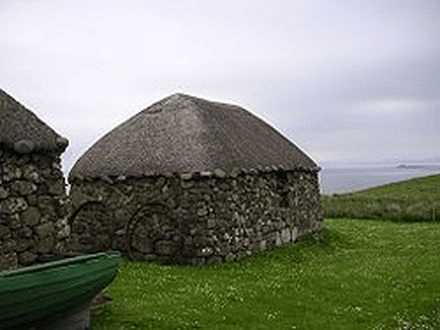
    Ultimate History Project: “Scottish Black Houses are named for the smoke seeping from their chimneyless roofs.”

    Page 159 continues:  “The building to which the new chimney was added had already begun to change in reaction to the bad weather.  The open patio-style structure had been replaced by a closed off building, built to withstand violent meteorological changes.  The new chimney, whose earliest English example is at Conisborough Keep in Yorkshire (1185) also produced structural changes in the house.  The use of a flue to conduct away sparks meant that the center of the room was no longer the only safe space for a fire.  To begin with, buildings were by now less fully timbered so the risk of fire was less, and the flue permitted the setting of the fire in a corner or against a wall. . . The hood on the fireplace prevented sparks from reaching the ceiling, and as a smaller room could more readily be heated than a larger one, the ceilings could now be lower.”

    “Two major innovations occurred by the fourteenth century, at the latest: knitting, and the button.  The earliest buttons are to be seen on the Adamspforte in Bamberg cathedral, and on a relief at Bassenheim, both in Germany, near Hapsburg around 1232.   The first example of knitting is depicted in the altarpiece at Buxtchude, where the Virgin Mary is shown knitting clothes for the infant Jesus.  Both buttons and knitting contributed to closer-fitting clothes that were better at retaining heat.”

    Buxtehude Madonna
    First Example of Knitting

    Burke’s books – Connections and The Pinball Effect are loaded with examples of how events are connected with technical development.

  • I Like Maps

    I Like Maps

    Projecting a globe onto a flat sheet of paper creates distortions, in the usual way (cylindrical projection), the distortions are the greatest at greater latitudes. This map includes a map of the nation’s actual area as well as showing the place in degrees of latitude and longitude- essentially, it reveals the degree of distortion in the projection.

    Because the distortions are greatest at the poles, the land masses near them appear much larger than they actually are.

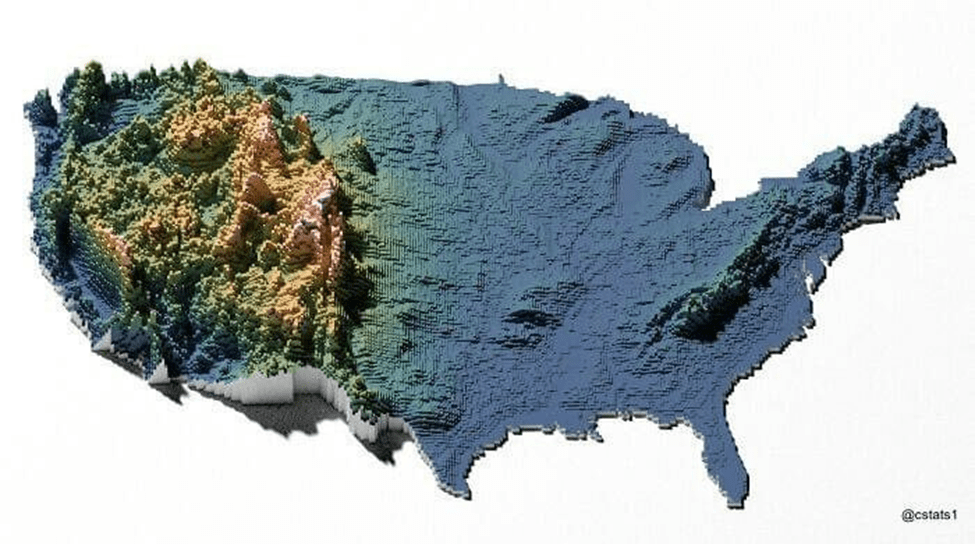
    This next map gives an appreciation of how much relief there is in the west.  The link to the article that includes many more maps is at the bottom – well worth clicking it and seeing more.

    More at https://www.thepoke.co.uk/2021/11/05/18-interesting-maps-to-change-your-perspective-on-the-world-around-you/?fbclid=IwAR1WbRF1sEdujzfaJviXZeGbmm6zAteH4mShq9Ttb9gOCSmR54NFaHraVFQ
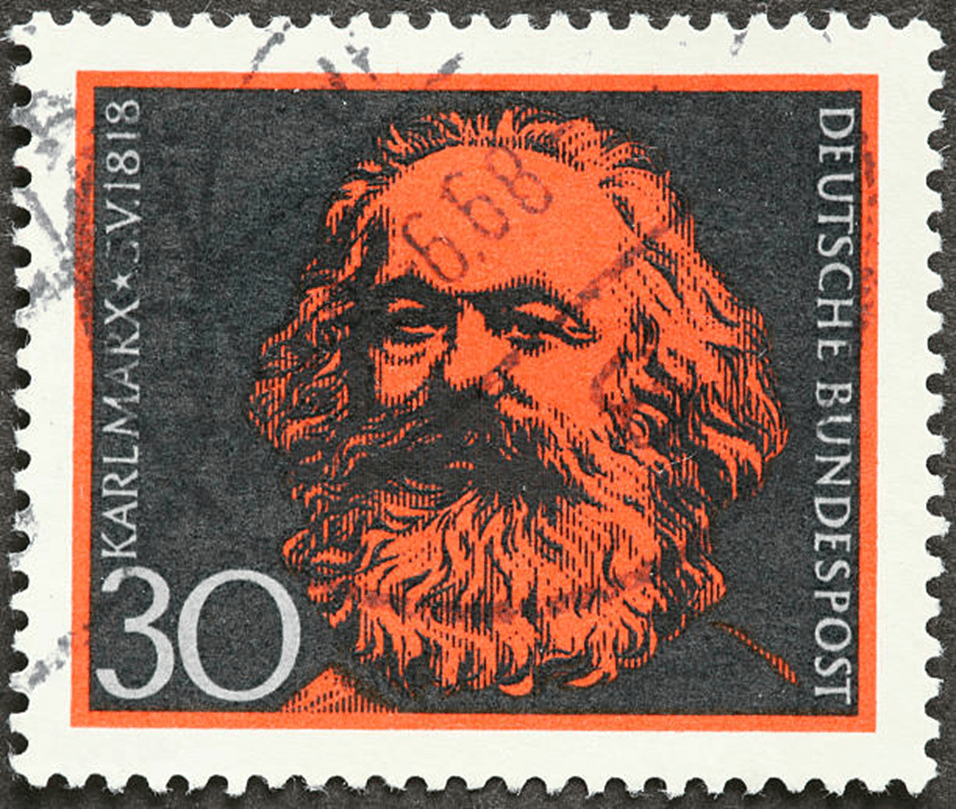
  • Thinking Karl Marx

    I suspect that today’s average leftist or socialist has left a bunch of Karl Marx’ writings unread.  The big thing to remember is that Karl spent a lot of years studying capitalism, identified a lot of systemic inequities, then proposed communism as an alternative.  Since the closest thing to his proposed communism at the time was the utopian socialist agenda, and utopian socialism wasn’t a major player, he didn’t have a lot of examples of the inequities that occur under socialism.

    I tend to look at things from a demographic perspective – and I do use Marx’ Social Conflict Paradigm.  As we look at Marx’ terms, and attempt to fit them in with today’s political parties, we find a spot where his structure doesn’t match today’s parties.

    Karl had divisions among the Bourgeoisie – the haute bourgeoisie and the petit bourgeoise.  Marx expected the concentration and centralization of capital would, sooner or later, put the petit bourgeoisie into the ranks of the working class (like the peasants would become the proletariat regardless of their attachment to the land.  The petit bourgeoisie basically hired laborers and worked alongside them.  The haute bourgeoisie on the other hand, didn’t work alongside the wage slaves they hired.

    So if I look at the folks who drive the game, Soros, Gates, Musk, Zuckenberg, Dorsey, Pelosi, etc. qualify as haute bourgeoisie, while Rand Paul as an MD is a great example of the petit bourgeoisie.  I think Donald Trump might be a better fit as a petit bourgeoisie than as one of the haute bourgeoisie – the top cutoff line is definitely well above a million dollars.

    The difference between the proletariat and the lumpenproletariat is the difference between the skilled and semi-skilled workforce and the chronically unemployed.   Marx studied capitalism – but, born in Prussia in 1818, lived under the late stages of feudalism instead of something more similar to our system where votes select the leadership.  The university system at the time was just beginning to break away from church dominance – Marx hypothesized about a more ideal social system during a time of tremendous social change.  There is a bit of irony in the fact that Karl Marx could complete a Ph.D. but never hold a job other than journalism.  We live in a time when many, like Marx, are highly educated but do not find particularly great employment.

    Marx saw the haute bourgeoisie, the petit bourgeoisie, the proletariat, and the lumpenproletariat.  He didn’t foresee the emergence of a highly educated class that crossed into all those four groups.  That intelligentsia with minimal capital is a fifth group that screws up Marx’ hypothesis – largely by taking jobs in the bureaucracies of government and education.  Max Weber studied bureaucracies after Marx died.  To understand Marx, we need to remember he wrote hypothetically of a world that he understood largely from his studies of capitalism.  The new educated class may not have the property to fit well with the petit bourgeoisie, but they give orders and make good incomes.

    So if we look at today’s politics, we see the left, the left – as home to an alliance of haute bourgeoisie and the lumpenproletariat – something that Marx’ dialectic did not predict.  While Karl did see the petit bourgeoisie learning that their best interests were shared with the proletariat, he never saw the petit bourgeoisie allying with the working class proletariats to become the dissatisfied republican voters.  The educated class that Marx didn’t consider can either give orders like the petit bourgeoisie, follow orders like the proletariat workers, or be fundamentally as hard to employ as the lumpenproletariat – but they tend to identify with the left. 

    Some of Marx’ writings and thoughts created a solid foundation for my own work.  I appreciate the good work he did.  On the other hand, he died 140 years ago.  There are many things he did not foresee – and a college educated proletariat subgroup is one of them.  The college educated lumpenproletariat was likely even harder for Marx to envision. 

  • The Petit Bourgeoisie Role in Irish Democracy

    Karl Marx thought the petit bourgeoisie would have a decisive role in the revolution – and I can’t think of better, more salt of the earth, examples of petit bourgeoisie than owner-operator truckers, farmers, and ranchers.  To Karl, the petit bourgeoisie were the small merchants, the self-employed artisans . . . folks who owned at least a part of their means of production.

    I’ve known quite a few owner-operator truckers, and met a whole lot more.  A CDL alone and the driver is a proletariat.  A CDL, with a down payment and a bank loan, and you’re looking at a member of the petit bourgeoisie.  The social distinction between proletariat and petit bourgeoisie isn’t hard to cross in the trucking business.  I doubt if there are a whole lot of haute bourgeoisie in the trucking industry, but the business converts the proletariat to petit bourgeoisie overnight.

    And truckers are near-natural participants in Irish Democracy – uncoordinated, wide-spread civil disobedience.  The multitude of regulations over the industry create awesome opportunities for civil disobedience.  The petit bourgeoisie with a restaurant has to stay put and conform.  The trucker, with 18 wheels, is harder to locate. 

    It is hard to think of an occupation more likely to bring Irish democracy into a political rally.  I have often listened to owner/operators who explained the need to keep two separate sets of books to make a living.  I recall the popularity of CB radios that announced where the bear was on the road.  I recollect radar detectors. “Irish democracy”  may be more pervasive among truckers than in Ireland.  And the Canadian government decided that they would need to quarantine for two weeks after crossing the US border.  If you look at populations (the old demographer talking here) about 70 percent of Canadians live further south than I do in Trego.  Somewhere around 85% of Canadians live within 100 miles of the US border.  Geography and demography have a lot of influence on where truckers drive. 

    Truckers – particularly owner-operators – are an occupation that can be described in Marxist terms.  A member of the lumpenproletariat with a commercial drivers license, a bank loan and a used truck moves into the petit bourgeoisie.  Equally important, if the truck goes and there is still money owed to the bank, he is back in the lumpenproletariat.  Close to the bottom margin of the petit bourgeoisie, the owner operator is in a position where carefully picking which regulations he (or she) observes makes the day more profitable.  The two week quarantine would end that trucker’s ability to make the payments on the truck.  Heck, a couple of hours beyond the legal allotment helps the bottom line.  Trucking is an industry that practices Irish Democracy during the good times.

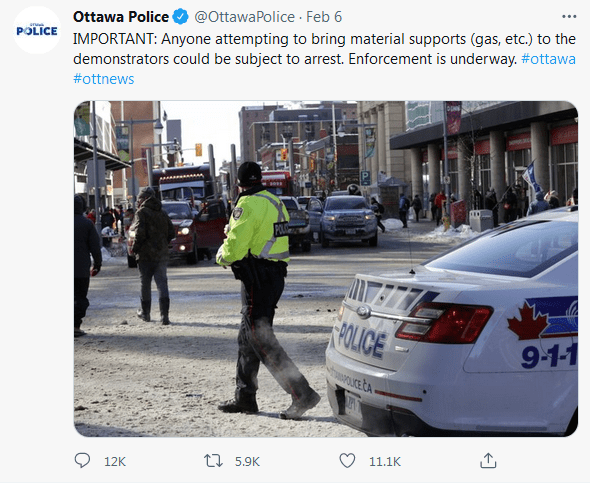
    So I’m watching my northern neighbors – they started with a Freedom Convoy driving to Ottawa, and now trucks and tractors have closed the main 24 hour crossing between Montana and Canada, over by Sweetgrass.  By Stalin era definitions, the petit bourgeoisie are right wing – so I can understand the cartoonist who labels the trucks fascist, and how the national media calls the convoy “right wing.”  Different ideologies have differing definitions. The libertarian sees a fascist as someone who comes up with, or enforces, rules that interfere with freedom. 

     It seems a bit strange that left-wing politicians turned out unable to use Marx’ definitions, class descriptions and the dialectic to see that the truckers were the social class, the industry, that could bring the protest to the capitol.  The small businessman with the restaurant, motel or grocery store is stuck in place.  Eighteen wheels and a diesel engine is a business that makes Irish Democracy more natural than compliance.

  • The Shadow Economy

    There are some confusing terms about the economy.  Household production fits in with the things that you do for yourself that makes life a bit better.  “Underground economy” and “shadow economy” refer to transactions that could be considered black market.  Some things – drugs, prostitution, stolen merchandise – are in the underground economy practically by definition.  Other items can be either in the regular economy or in the shadow economy.”

    “Italy also has a sizable underground economy, which by some estimates accounts for as much as 17% of GDP. These activities are most common within the agriculture, construction, and service sectors.”  This gives us the idea that it isn’t just an illegal immigrant involved.  The underground economy can include otherwise respectable citizens.”

    https://internationalliving.com/countries/italy/the-economy-in-italy/

    Household production isn’t mentioned in the analysis – but here, in northwest Montana, a single product provides an example – firewood.  It benefits me to report the money that comes in from firewood sales.  It helps me qualify as a farm, and make deducting expenses and depreciation possible.  As household production, it probably cuts down the cost of heat by $700 – $1000 each winter.  For others, it’s an underground economy, advertised on facebook, unreported to the government.  The definition and source follows:

    Investopedia puts the underground economy at 11 or 12% of the gross domestic product in the US. California’s Attorney General has an “Underground Economy Unit” and lists restaurants, janitorial work, the garment industry, retail, construction and car washes as the industries most impacted by wage theft. I don’t know – I recall talking about the US underground economy with a grad student.  With a student visa, he wasn’t allowed to work in the US – yet he had held a job somewhere in the southern US, in a business owned or managed by an Indian national, who sent the paycheck to his father in yet another country.  I think the term “wage theft” in that case would be accurate if you only looked at US records – and I doubt if it was reported to the IRS.

    The Institute of Economic Affairs uses the term “shadow economy” and describes: “The main drivers of the shadow economy are (in order): tax and social security burdens, tax morale, the quality of state institutions and labour market regulation. A reduction in the tax burden is therefore likely to lead to a reduction in the size of the shadow economy. Indeed, a virtuous circle can 
be created of lower tax rates, less shadow work, higher tax morale, a higher tax take and the opportunity for lower rates. Of course, a vicious circle in the other direction can also be created.”

    They go on to describe Denmark, where about half the population hires “shadow” workers.  Much of the “shadow economy” they describe is labor from people who have a regular job, performing a non-deductible service for other private parties.  The “shadow economy” is as much, or more, a place for our neighbors as for illegal migrants.

    “In Canada, Schneider (2005) found similar reactions of people facing an increase in indirect taxes (VAT, GST). After the introduction of the GST in 1991 in Canada, in the midst of a recession, the individuals, suffering economic hardship because of the recession, turned to the informal economy, which led to a substantial loss in tax revenue. Unfortunately, once shadow economy habit is developed, it is unlikely that it will be abandoned merely because economic growth resumes (Schneider, 2005). The People who engage in shadow economic activities may not return to the formal sector, even in the long run. This fact makes it even more difficult for policymakers to carry out major reforms because they may not gain a lot from the reforms.”

    https://www.usi.edu/media/3654690/Shadow-Economy.pdf

    Nearly 6 years ago, California passed legislation allowing legal marijuana sales – yet somewhere around 85% of the marijuana sold in California today is still in the “traditional” market – that’s right.  Despite having laws and a system that allows for legalized sales, the illegal market provides 5 times as much marijuana to users than the legal market.