Trego's Mountain Ear

"Serving North Lincoln County"

Category: Wildlife

  • Looking Back on Jedidiah’s First days in Trego

    Looking Back on Jedidiah’s First days in Trego

    Editor’s Note: It always surprises me when I think about it how recently we married and Jedidiah had his introduction to Montana’s wildlife. There’s a little one toddling about with us now when we go for walks, Yoshi has more gray to her muzzle, and my husband is considerably more comfortable with firearms.

    But it’s his story- so here is is, as he wrote it for me some years ago:

    This past week held the anniversary of my moving up to Trego to join my wife, Sam… As such, it also held the anniversary of my meeting the best firearm evangelists I’ve yet encountered.

    The bears.

    The two delinquent bruins, about a month before I moved up to Trego.
    Note the radio collar on the left bear – both have them.

    A year ago, I wrapped up my Masters Degree project, describing several new species of Kentucky cave beetles, and began the long drive out to Trego, MT. I believe it was the evening of my second day here in Montana that they introduced themselves…

    Just as Sam and I were settling in for the evening, we received a panicked phone call from her mother. She was sufficiently agitated for me to hear her some distance from the phone… As it turned out, Sam’s father, Mike, had stepped out onto the porch to shout at couple of gangly young grizzlies, encourage them to get a bit further from his house. But he had a little overweight Pomeranian who had other ideas – she sprinted out the door past him, intent on getting between him and the bears. Despite the size disparity, she startled those bears and made them run… And, as they were running, she pursued them, a good 300-some feet.

    Mike couldn’t let her be alone out there with them, so he ducked back inside, grabbed some slippers & the nearest firearm, and headed out after his wee beastie. It’s at this point in time that Sam’s mother called. Sam hurriedly grabbed the keys and produced a couple of guns. She passed me one which I straightaway handed back to her.

    At this point in my life, I’d never fired a gun before, and I’m somebody who believes in doing things well. I thought I’d have better combat utility with a walking stick, and took a promising one.

    So, off the two of us flew, leaving our own irate wee beastie behind us. Sam at the wheel, bouncing the truck down the old road to her folks. As we arrived the two young delinquent grizzlies were reconsidering their flight from a certain overweight Pomeranian… but they backed off as we raced up in the truck.

    Sam passed me her gun, and bailed out to catch the overweight Pomeranian (who refused to get behind Sam’s father), and we retreated back to her folks’ house. While Mike’s seven rounds of 22 weren’t great comfort with two bears at close range… it was a sight better than my walking stick.

    The next day we could see the bears from our house, as they enjoyed a neighbor’s water feature. It took about a week for Fish & Game to trap them, and all the while I was waking up to nightmares of bear home invasion. As soon as they were captured and removed from the area, I began learning to shoot. One could scarce ask for better motivation, and I practiced devoutly.

    Shortly after our first sighting of grizzlies this year, I had another dream about them staging a home invasion. This time, I was armed, and the dream ended much better for us. While I’d hate to have to shoot one, it’s nice to be capable of doing so, if need be.
  • The Pond is a Flight School

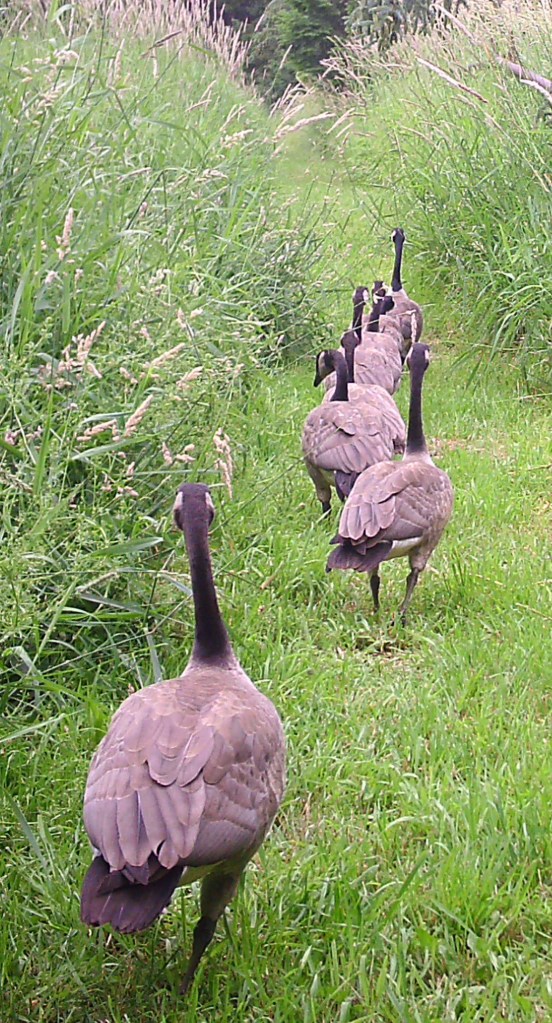
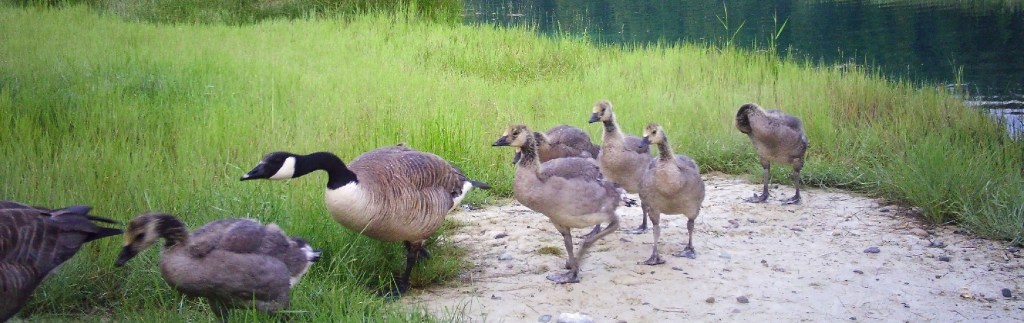
    This is my seventh year watching Gander raise goslings.  The first six years, it was Goose and Gander, but she was frail last year, and didn’t make it back.  This year, it was Gander and Sweet Young Thing . . . plus four of his older descendants and their mates.

    In the past, Gander has made solid efforts at training his goslings in formation flying – starting with water landings from the dock before they could fly.  Eventually, the formations tighten up – but this year is different.  First he trained this year’s goslings, then one hatch at a time he has been incorporating the grand-goslings into the flight.  It’s a small pond for 40 geese to land simultaneously.  He started ground landings when I mowed the hay – and it looked like raking the hay just added another training complication for his flight school.

    The youngest hatch are still on the pond – but I expect most of the geese will be gone by the end of the month, living on larger lakes, and then there will be the last landing and overnighter of fall, as the young geese make the final imprint that will lead them back to the pond next year.  Most won’t return, but some will return with their mates to raise their own hatches – returning in pairs where they left flying formations.

    There are seven little coots on the pond – they will probably make it . . . though the parental coots are about as far removed from Gander’s family responsibility as can be.  This year has been good for coots.  The Cinnamon Teal has four little birds following her.

    The blue heron has perched on the top of a Ponderosa pine – and I think the heron is the source of the small perch I see in the canal.  I think the perch in Rattlebone lay eggs in the grass along the shore, the scales on the heron legs attach a couple of fish eggs, they’re dropped in the pond . . . and most of the time the tiny perch becomes a snack for the little diving ducks.  Someday, there will again be fish in the pond – life finds a way.  When they do, the aeration will make their lives a little more secure in the winter.  The pond really does have too much shallow water.

    The multitude of geese increase the algae production – too much natural fertilization.  Last Fall I noticed a goldfish – I don’t believe the birds helped it along.  I figure someone decided the pond looked like a home for it – since I haven’t noticed any carp in the pond, I think that was an introduction that failed . . . or possibly a single large goldfish is working the algae.  If so, that fish has its work cut out for it.

    The last couple of years, the fluctuation between high and low water seems to be more than the resident muskrats could handle – but others will hike in and make the pond their own one day.  Life finds a way.  The crayfish are there – and I should probably set up some traps for the mini-lobsters.

    I think I get to pay the taxes on the pond, and do the maintenance to keep it going – but the owners are the frogs, the birds, the missing muskrats, the barely established fish that might, or might not, make it.

    The salamanders from the shoreline, the voles along the edge, swimming like their larger relatives the muskrats as they evade the small predators – the least weasels. The red winged blackbirds do their best to protect all nesting birds from eagles and ravens.  The nighthawks have hatched and are learning to fly and catch insects on the wing.

    Thoreau had Walden as a young man – my two acres of pond provide an old man a lot to watch.

  • Patches Pictures

    Patches Pictures

  • In Case You Missed It

    In Case You Missed It

    It’s that time of the year again- time to watch for frog eggs, listen for sandhill cranes, examine thatch ants and watch for salamanders.

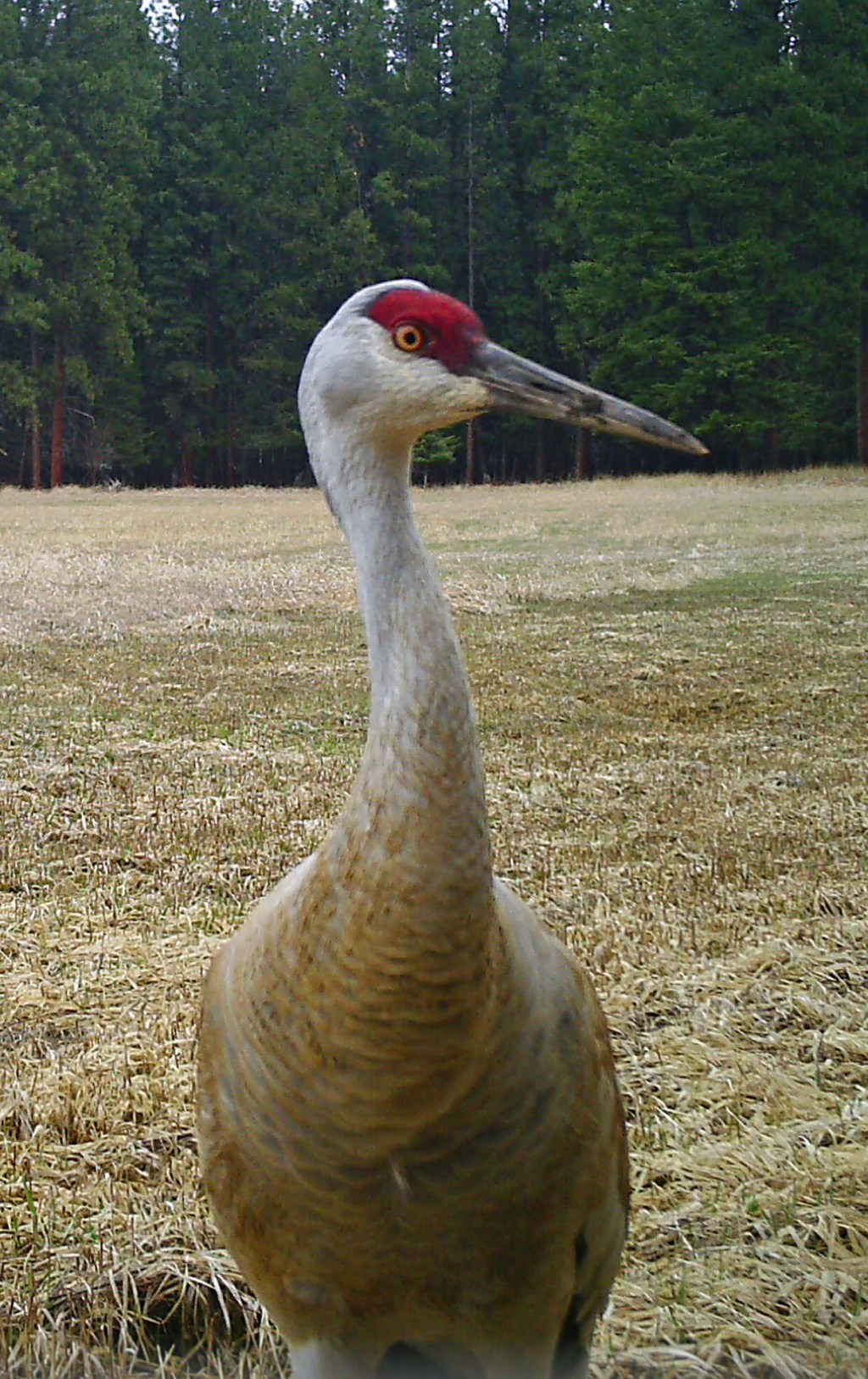
    Game Camera: Sandhill Cranes

    Perhaps you’ve heard the distinctive call of the sandhill cranes recently? -Patches We’re actually in at the very south edge of the breeding range for Sandhill Cranes. They’re not particularly picky eaters- they’ll eat snakes, frogs, insects, seeds… Often, we’ll see them in the spring, hunting frogs in shallow water.

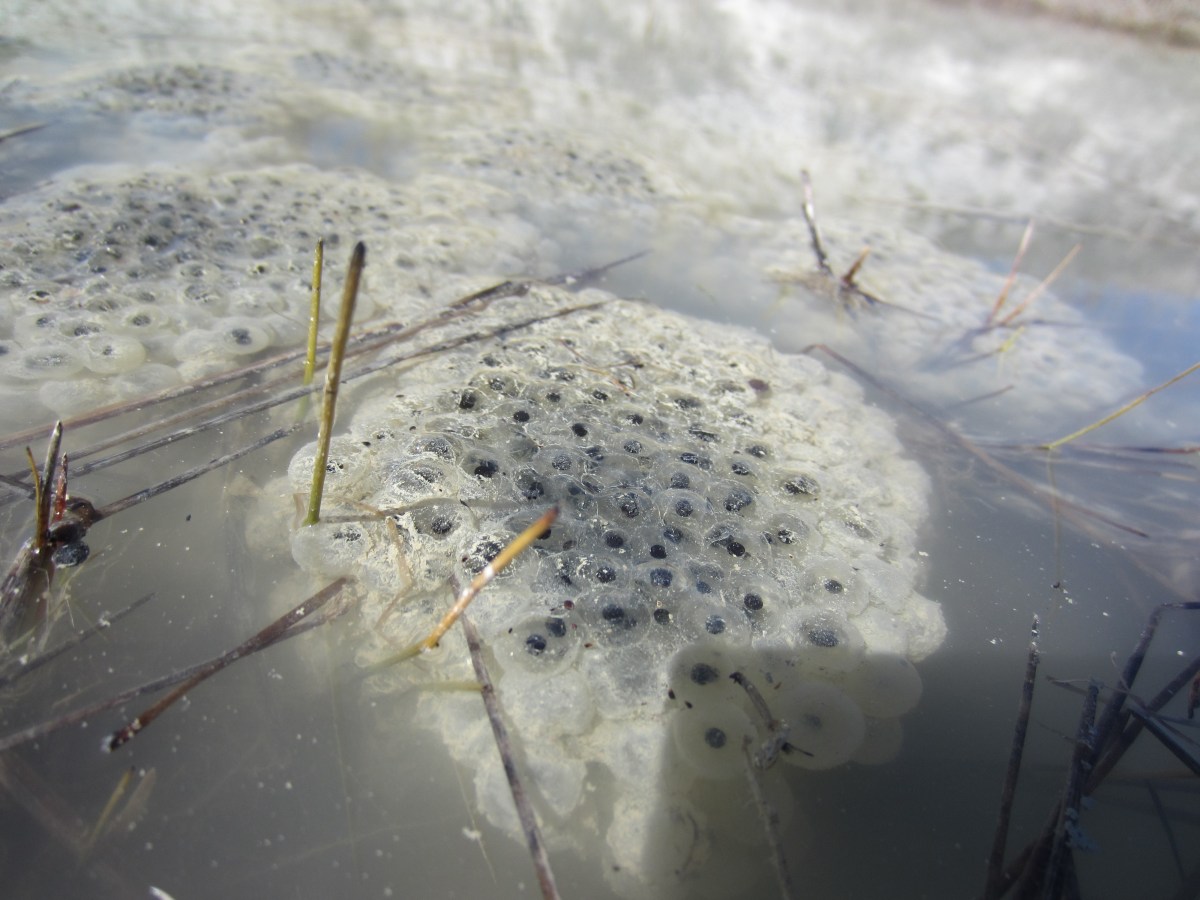
    Frog Eggs and Toad Eggs

    Spring seems to have finally arrived, and soon the pond will be full of little frogs. As it turns out, frog eggs and toad eggs are different, and far easier to tell apart than the tadpoles. Frog eggs typically form nice clumps. -this years batch are particularly muddy. Toad eggs, however, will generally be in…

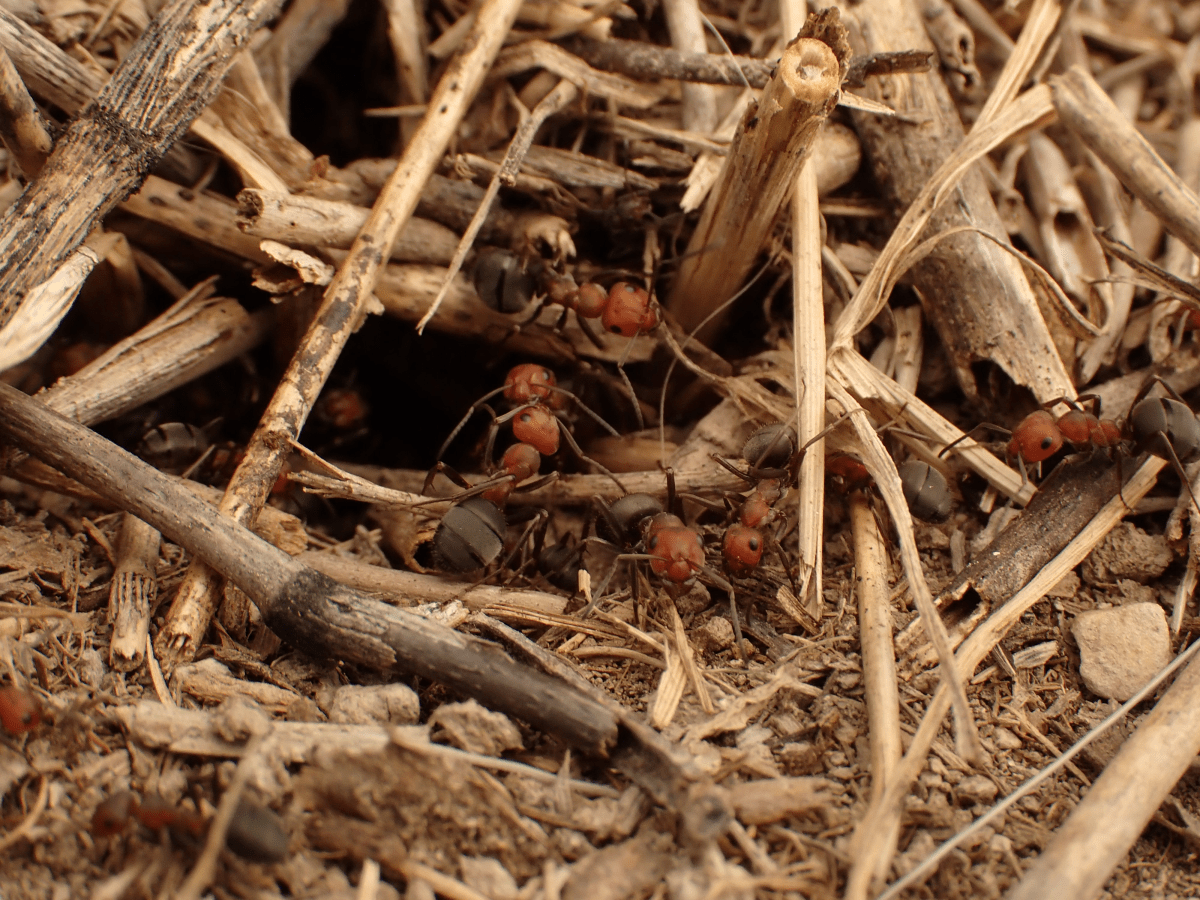
    Thatch Ants

    Our mound-building ants in this part of the country are Western Thatching Ants, Formica obscuripes.These ants are rather special because they generally have multiple active queens in a single colony – the young queens often help out and reproduce at home, instead of founding their own new colonies…

    Usually I don’t see Salamanders

    We seem to have made a good location great for salamanders – ours are long-toed salamanders.  Despite being in a near-perfect location for salamanders, most of the time we don’t see them.  The information is online- and the field guide does a pretty good job explaining why we see them rarely.  They’re classified as “mole”…

  • Piebald Deer

    Piebald Deer

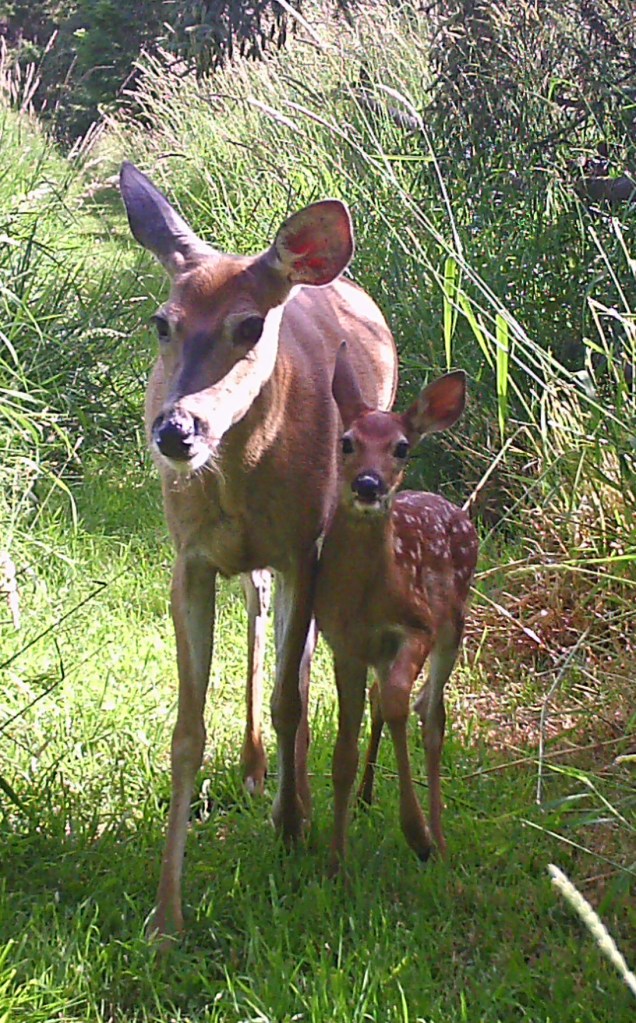
    A few years ago, we had a small piebald whitetail buck on the place.  He grew large enough to have spikes, then wandered off and didn’t return.  There can be a lot of reasons for a small buck deer not to return – wolves, coyotes, cougars and even human hunters – but one of my students from TSJC kept reminding me that the piebald coloring pattern is often associated with health problems

    Our little guy didn’t show health problems – but he was pretty much isolated.  I suspect he was rejected by some of the tough old does for looking different –

    Spot was never a particularly friendly little deer – but it was fun to have him where we were able to watch him.