Category: Wildlife
-

Wild Geese Have Flown
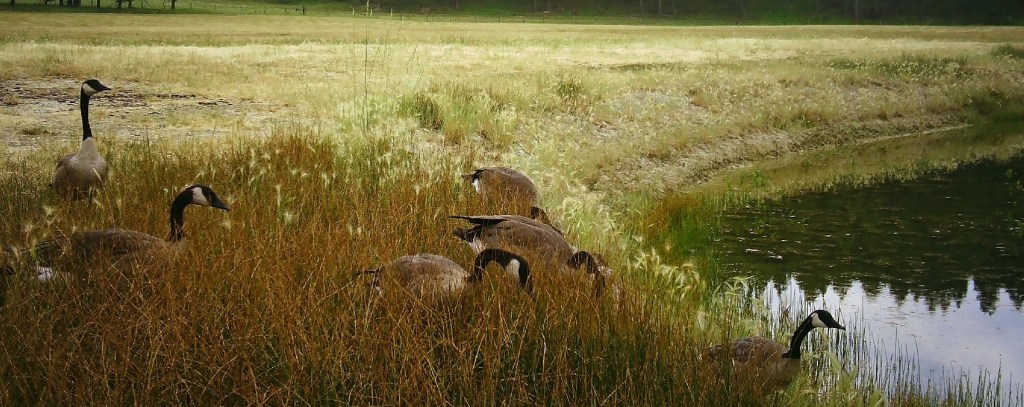
Another hatch of goslings have taken flight from the pond. In the flyway we saw huge numbers of Canada geese – here, we see a single pair, year after year, who are our Summer neighbors, and traffic slows to watch them.
Gander seems as strong and youthful as ever, but the years are taking a toll on Goose – the cold Spring months that she spends on the nest have aged her more She walks slowly, spends more time with her head held low, and leaves the flock leadership to Gander. Hopefully, she will winter easily and return to raise another flock next Spring.
They chose the pond because the island makes a safe nesting spot as soon as the ice goes out. They arrive early, to beat the competitors, with last year’s flock. This year, the hatching took two rainy days – Goose remaining on the nest, Gander on the goslings. Their parenting dedication is impressive.
July has been the month of flight training. Gander starts training them on water landings before they can fly, with flapping runs from the dock to drop into the water, move to swimming mode, and leave open space for their siblings. The next stage of flight training includes a walk into the mowed field, then a takeoff, circling until organized, and a water landing in the pond – repeated until everything is satisfactory. Eventually they move to landings on solid surfaces, then to forced takeoffs when he leads them close to the house and the small dogs. Then one day the flock flies off to other sites in the area, returning occasionally to the home pond.
-
Single Chick Flocks
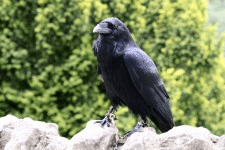
It has been a good year for raven hatchlings, as well as for Goose and Gander. The Montana field guide explains that egg dates for ravens are probably early in April, and that the young have been identified flying around Fortine as early as June 8. The typical clutch is 3 to 7 birds – and this year the adults and the young have been specializing in turkeys – eggs and chicks.
This year, Goose and Gander had their goslings hatch out over two rainy days – but they take parenting seriously, so Gander took over the hatchlings as Goose spent one more day on the nest until the hatching process was complete. This patriarchal assistance doesn’t exist among turkeys, where the males are content to strut and gobble. The two species may offer a lesson for humans.
We’ve watched ravens land in the salt lick with turkey eggs or fledglings. It is a reminder that nature is not gentle, and that reaching adulthood is a great accomplishment for prey species. I realized how rough it has been when I watched two turkey hens, each protecting the single chick they have left. One was just beginning to fly, and the hen flew to join it on a branch – three ravens were stalking through the grass, but when the small turkey goes airborne, it’s totally vulnerable. The other chick, not yet flying, had its mother stand her ground – she is actually capable of intimidating the young ravens. We’re accustomed to a pair or three turkeys consolidating their hatches into large flocks – this pair has only been able to protect 2 chicks from predation.
The geese and ducks don’t seem to be bothered by the ravens – they keep swimming and the ravens aren’t equipped for water landings.
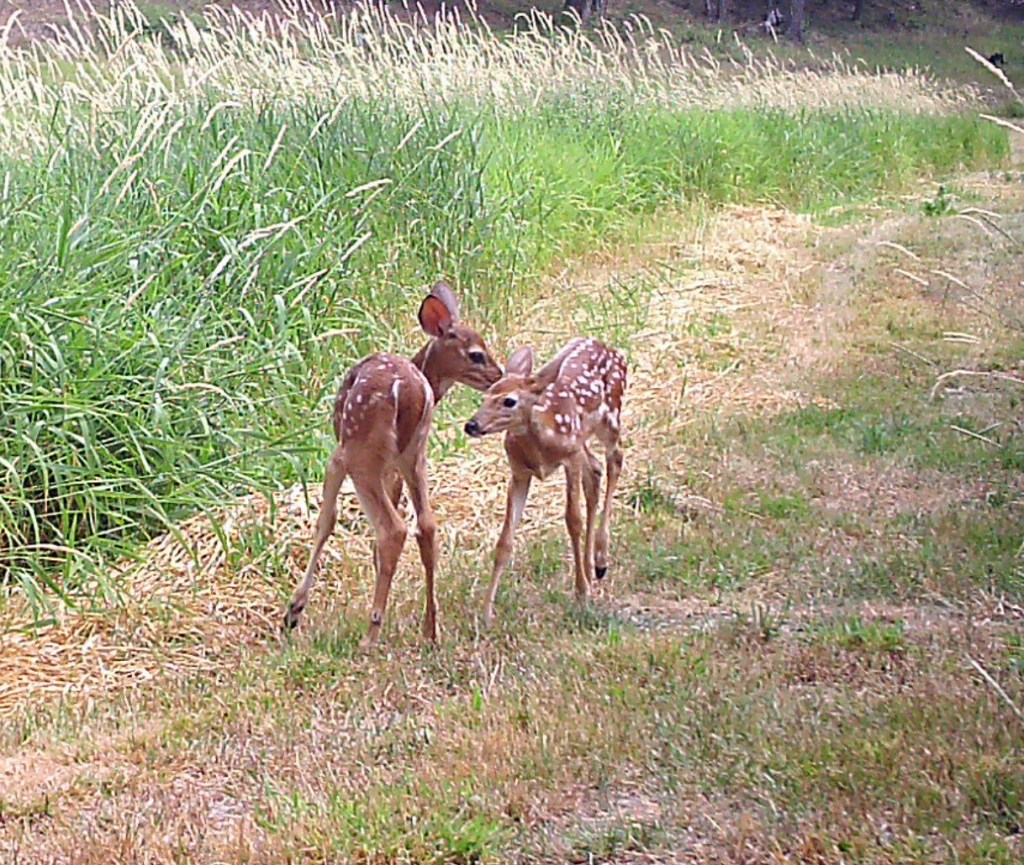
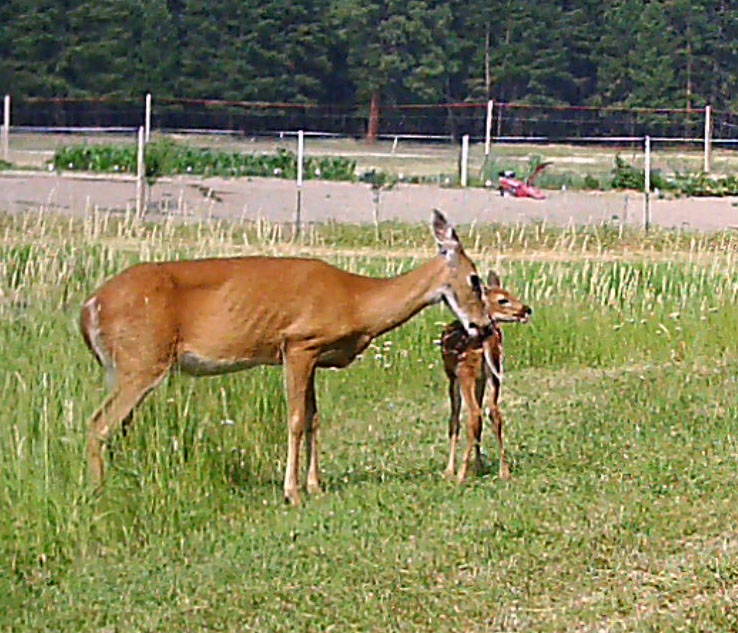
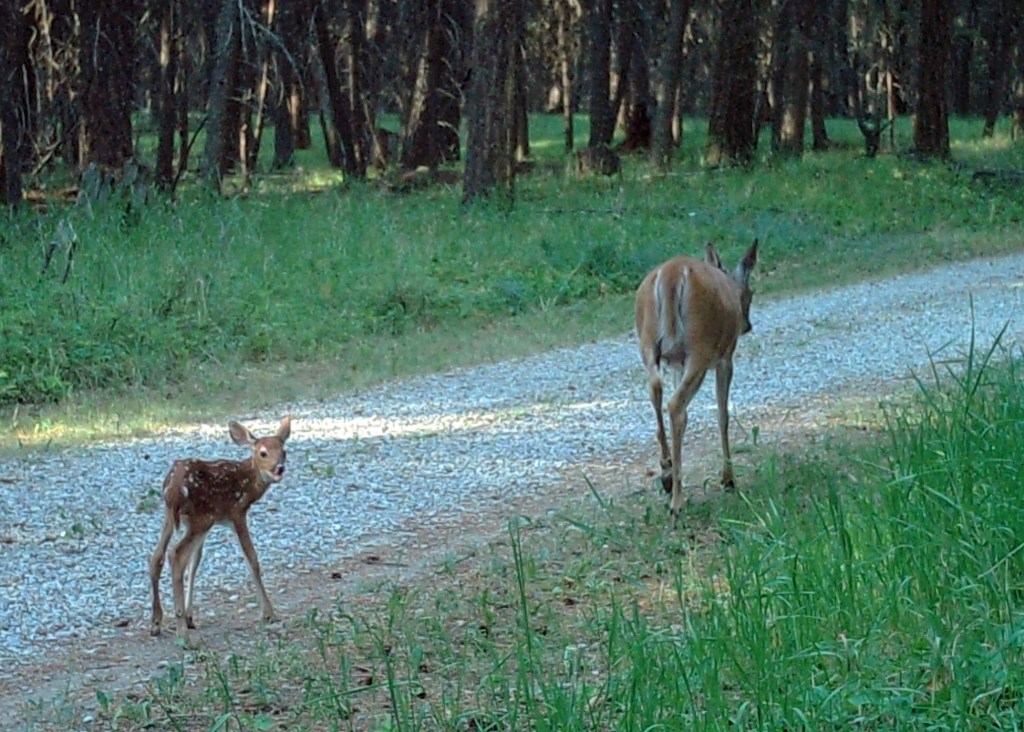
The ravens – old and young – are spending a lot of time in the tall trees along the edges of the field. Close to the house, they’re looking for robins, bluebirds and swallows. I haven’t seen any after the hummingbirds. As Spring brings fawns, it looks like the little dog and I will have to walk in the field to discourage the ravens from the fawns who are parked in the grass.








 Trego's Mountain Ear