Trego's Mountain Ear

"Serving North Lincoln County"

Category: Wildlife

  • Bear Hibernation Part II

    While I was working on black bears in the Yaak for my Masters degree, I had the pleasure of cooperating with Dr. Ralph Nelson from the Mayo Clinic in Rochester, Minnesota. Dr. Nelson was studying hibernation in bears for a variety of human-related reasons, not the least of which was to assist NASA with sending man to Mars. The theory was that if we could induce hibernation in people, we could therefore select astronauts that were somewhat rotund and put them to sleep for 6 months while we sent them off through space. Not only would this alleviate long periods of boredom, but it would also greatly reduce the amount of necessary resources such as food and fuel.

    Dr. Nelson had several black bears in captivity in Minnesota that he was studying and from which he collected blood and urine samples. He wanted to know if various parameters such as proteins and hormone levels were similar in wild bears. Dr. Nelson and one of his assistants joined me in the Yaak in March of 1988, where we entered the dens of a number of radio-collared bears that I was monitoring. We took snowmobiles to wherever the bears were denning, tranquilized them, and drew blood and urine samples for later analysis. To my knowledge, researchers have yet to identify what exactly triggers hibernation, but they have found a number of things that can be hugely beneficial for people.

    For one thing, bears are able to recycle their nitrogenous waste (urea) and reconvert it back into protein, or muscle mass. Bears have microbes in their gut that converts urea into a form of nitrogen they can use to make new amino acids, which are the building blocks of protein. Imagine doing nothing for 5 or 6 months and you still have the same amount of muscle as before!  This has huge implications for patients on dialysis, whose kidneys are failing and must have their blood cleansed (nitrogen removed) by a machine.

    Another thing they discovered is that bears do not experience osteoporosis, or weakening of the bones. Again, if you or I were bedridden for a couple of months, our bones would begin to weaken due to a loss of calcium. This is also a problem with space travel where astronauts do not put pressure on their bones due to a lack of gravity. Researchers have discovered that calcium lost from the bones of bears during hibernation is recycled and re-deposited, resulting in no net loss or strength!

    In order for bears to successfully hibernate and reproduce, they must put on very large stores of fat, which are then lost. This process is repeated yearly. Obese people with excess fat often exhibit problems with diabetes and heart disease. Again, bears exhibit no such issues. For patients exhibiting problems with gall stones, scientists have isolated a compound called Ursodiol, which is found in bear bile and is produced by the gall bladder. This compound has since been reproduced synthetically and is currently used by doctors to dissolve cholesterol-laden gall stones and to treat certain liver diseases.

    As time goes on, it is likely even more fascinating aspects of bear physiology will be discovered. It will be interesting to see what’s next!

  • Bear Hibernation (Part I)

    People are fascinated by bears for a variety of reasons, not the least of which is their ability to hibernate. Imagine an animal much like people in many ways, being able to crawl into a den for 5-6 months and remain there, without eating, drinking, urinating or defecating, the entire time. As if that wasn’t enough, females give birth to their young in January and nurse and care for them until they eventually leave the den in April or May.


    I began working on bears in 1976 in the North Fork of the Flathead under the guidance of Dr. Charles Jonkel and the Border Grizzly Project. In the 1980’s, I did my Master’s Degree on the effects of hunting on black bears in the Yaak. Part of my research involved entering the dens of hibernating black bears, tranquilizing them, and replacing their aging radio collars with fresh ones and gathering biological data. It was an aspect of my life I will never forget.


    For starters, when it comes to hibernation, it is important to first understand bear reproduction. Bears exhibit an interesting reproductive strategy called “delayed implantation”. Breeding occurs from late May to early July. The fertilized eggs of a female will cleave several times and form a blastocyst, but unlike most other mammals, the blastocyst remains free-floating rather than implanting in the wall of the uterus and developing further. The blastocysts remain free-floating until the female bear enters the den in the fall, usually late September or early October. At that time, the female bear’s body somehow senses if she has acquired sufficient fat reserves to not only sustain the mother for 6 months, but also allow the young to develop and then nurse them after they are born. If it has been a good year with lots of berries and the female has acquired a thick layer of fat, the blastocysts will then implant in the uterus and development begins. On the other hand, if it has been a poor berry year and an insufficient amount of fat has been accrued to produce and nurse her young while in the den, the blastocysts are simply resorbed by the female or expelled. This unique reproductive mechanism saves the female from wasting a lot of energy needlessly that might also jeopardize her life.


    Hibernation itself is a physiological term that involves much more than just sleeping. Breathing and heart rates slow considerably and body temperatures drop 10-12 degrees F. In “true” hibernators like chipmunks and ground squirrels, heart rates may drop to only a few beats per minute and body temperatures may approach freezing. They are very stiff and comatose and unable to defend themselves, if necessary. Also, they must arouse periodically to urinate and defecate. Because the heart rates and body temperatures of bears drop only moderately, many biologists assert that bears are not true hibernators. However, because they can give birth in the den and defend themselves if necessary, all without eating and drinking for 5-6 months, other biologists refer to them as the “ultimate” hibernator!

    -Tim Thier

  • My Goose Neighbors Are Back

    My Goose Neighbors Are Back

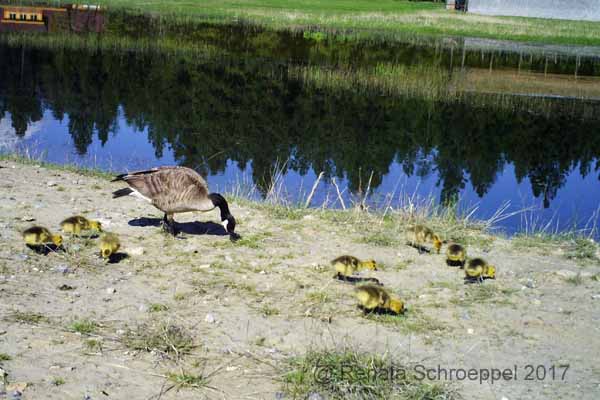
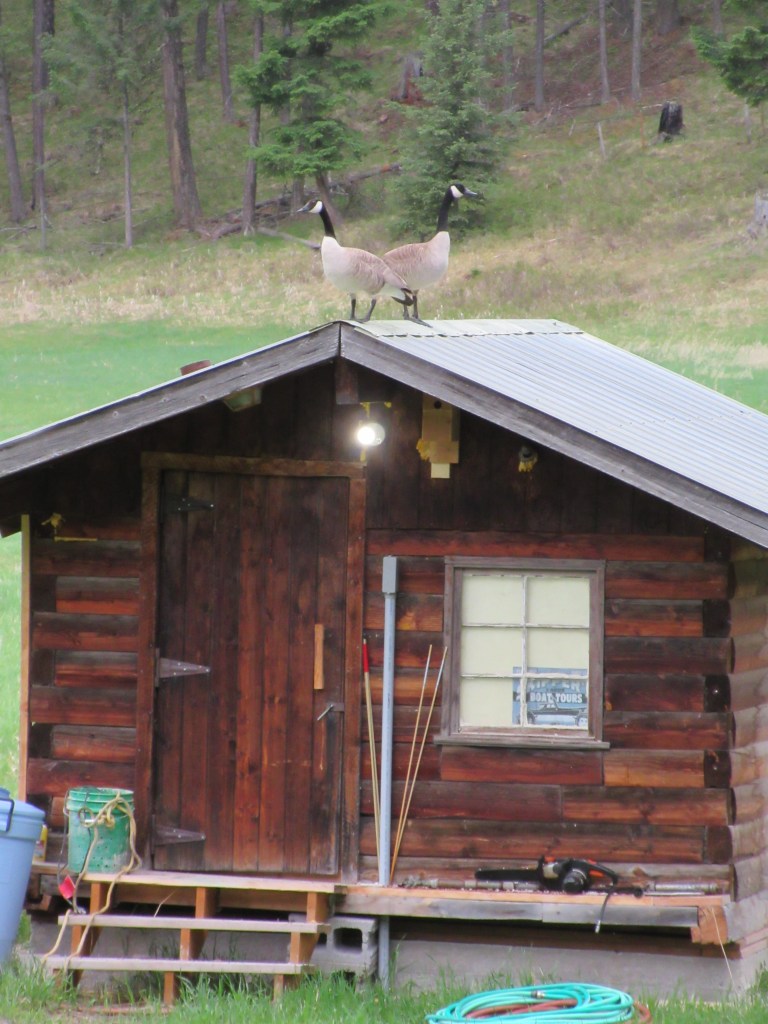
    First, Gander came by to check.  He and Goose are beginning their 7th year nesting on the island in the pond.  It’s a good spot for a goose nest because the water surrounding the island protects it from the coyotes and egg-raiders while the tall grass of the island makes great aerial camouflage for the nest.  He wasn’t happy, because there is still ice in the pond, and it seems that you really do have to be the first nesting goose to validate your claim.  He brought Goose along the second day – over the past seven years she has became a bit frail – so it is good to see them back again.

    Living in the flyway, I became accustomed to huge flocks of migrating geese – probably an appropriate way for a demographer to view a species.  Here, I watch a pair of geese, and their offspring, through the season.  Frankly, there are some lessons in morality and responsibility to be learned from my goose neighbors.

    Gander does the first recon alone anymore.  When they were young adults – call it the newlywed stage – they were inseparable, and hard to tell apart.  Gander has continued to grow, and is now an average size lesser-Canadian, Goose shows her frailty, and he works at minimizing her risks and exposure.

    Courting Geese- one of the goslings and a visitor

    With the nest unavailable, the two are hanging out in the Salina Wild Rye – good cover, close to the nest site, and, as soon as the ice melts, Goose will be back on her nest, hatching out another group of goslings.  Her first year, she led the flock on a hike around the pond, straight through the grass into an eagle that was dining on a road-kill cat.  Since 2015, Gander has taken responsibility for leading all the land trips.  That first year, as two eagles flew over the nest, Gander took to the air to divert them, then flew over me low, and made a couple circles as the eagles flew on away from Goose.  The next Spring, he decided to use me as part of his threat to a larger pair of geese that wanted the nest site.

    I’ve watched the Fall departure delayed and delayed for a gosling who could almost fly – working at getting four or five feet above the ground for 100 yard flights, but unable to soar like her siblings.  My floating dock is taken over early in the flight lessons to teach water landings before the goslings can fly.  I’m looking forward to seeing what I learn from geese this year.

    IMAGE CAMERA
  • Game Camera: They are Back!

    Game Camera: They are Back!

    The Not So Perfect Game Camera: They’re Back!

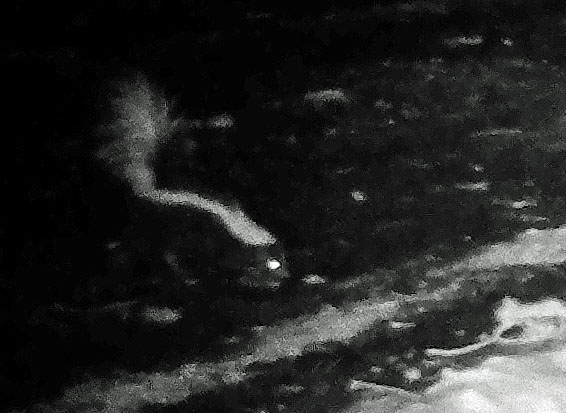
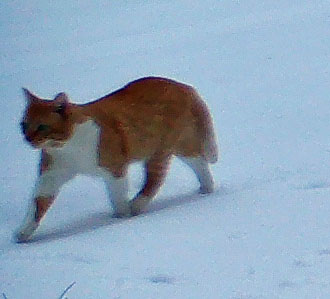
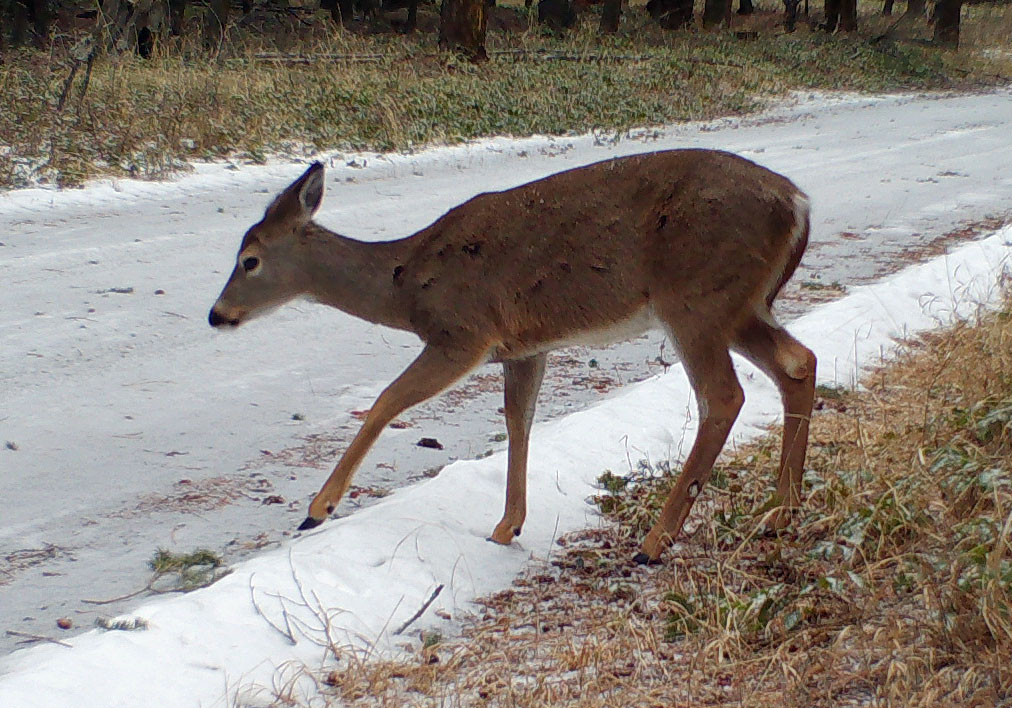
    Returning to the game camera line up for your viewing pleasure are striped kitties, otherwise know as skunks. Skunks have been absent for several months but have returned. Along with skunks featured this with week are feral cats and deer. -Patches

  • The Small Predators

    The Small Predators

    Sixty years ago, I prowled the field by my house with a single-shot 22, specializing in gophers – Columbia Ground Squirrels.  In the sixties, the war on gophers was the sort of thing that would have made Sadaam Hussein proud – rifle fire, traps, strychnine oats and compound 1080.  The rodent population would dip, but in the next couple of years, reproduction would bring the population back up.  Ten years ago, after the cancer, I walked through the grass – and in most of the places where I remembered ground squirrel colonies, I found only a few holes, and those unoccupied.

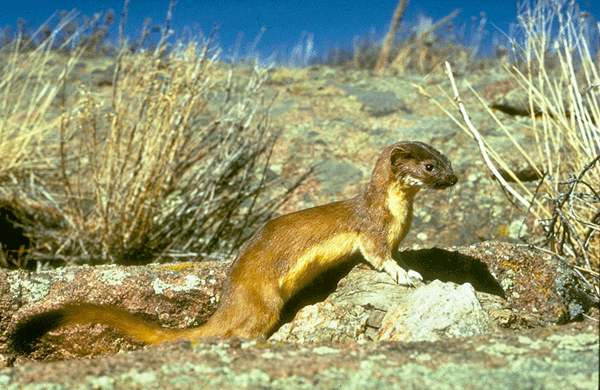
    Watching from the pickup, I realized the change – as Dad had reduced grazing, naturally the grass grew taller – and I watched a long-tailed weasel hunting the ground squirrel colony.  Five years later, as I started construction on the house, I encountered only two spots with ground squirrels – reduced grazing, and a better habitat for the small predators to hunt had changed the fields from being good gopher habitat to good weasel habitat.  I suspect the weasel population is larger now, but they’re a bit hard to count. It is amazing to see how effective and effortless the 21st century ground squirrel control is.

    Long-tailed weasel. Image Credit: National Park Service

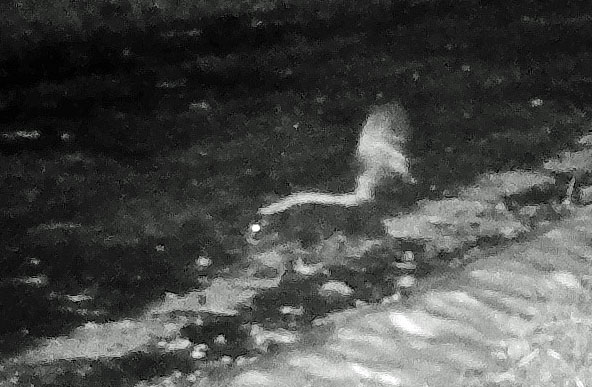
    Voles have replaced ground squirrels as the rodent in the field.  A couple feral cats hunt them – but I learned more about the small predators when I took the canoe into the pond to work on an aerator.  The tale has its tragedy – I was sixty-eight years old the first time I ever tipped a canoe.  Pushed back with the paddle, a least weasel ran up my arm and perched on my left shoulder, and into the water I went.  The tiny weasel didn’t so much as get splashed – he ran into the stern, back where the flotation foam was, and peeked out as I pulled the canoe to shore.  Cute little guy, and it was funny once I got over the shock and went back for dry clothes.  It is a bit embarrassing to tip a canoe when an animal weighing less than 3 ounces startles you.  Startles, surprises, you understand.  Not scares.  Definitely not frightens.

    I figured I should clean out the flotation block, and when I opened it up, I found 52 vole skulls.  The least weasel was living in the middle of the flotation foam – a well insulated home for the little guy, and from that base had been hunting voles through the winter and into the Spring.  Obviously the finest form of vole control available.  I am a bit more cautious taking the canoe out anymore – though without the element of surprise I really don’t believe a 3 ounce weasel can capsize me.  They are actually a cute little beast, as this picture shows.

    By Jerzy Strzelecki – Own work, CC BY 3.0,
    https://commons.wikimedia.org/w/index.php?curid=39183515

    I’ve also seen the short-tailed weasel here – another vole specialist, white with a black-tipped tail,  The field guides for all 3 weasels describe habitat as “Found in almost all land habitats near water.”  Obviously, with the ponds, we’re near water. It looks like ground squirrel control is actually easy – don’t trap the weasels, and don’t overgraze.  I can do nothing as well as anybody.

  • Chickarees, our local Pine Squirrels

    Chickarees, our local Pine Squirrels

    Two weeks past, Sandi Elster asked if I knew anything about our red squirrels. While I’ve spent some time with Pine Squirrels in other places, I’ve not had a chance to observe for an extended period of time here yet – the presence of dogs interferes with that. However, I have met them once or twice since moving to Trego, despite our little predator’s best efforts.

    In this neck of the woods, an American Red Squirrel is often called a “Chickaree” or a “Chicory”. My personal preference is for “Chickaree”, as the other spelling can also refer to a plant related to the dandelion – it makes a decent tea, and a rather sad coffee substitute, but isn’t the squirrel we seek.

    The pine squirrel most common on our place is the American Red Squirrel, Tamiasciurus hudsonicus. These are considerably smaller than the Fox Squirrels I grew up calling “red squirrels” in South Dakota. Additionally, the American Red Squirrel tends to prefer far more forested areas. Fox and Gray Squirrels (both in genus Sciurus) tend to do well for themselves in town, but Tamiasciurus pine squirrels seem to do better on the outskirts or away from towns.

    A summer picture of an American Red Squirrel from several years ago -it’s not often they pose so well.

    Pine Squirrels defend territories throughout the winter months, and when sufficiently established, they leave behind territory to their children, and children’s children.

    These territories focus on things called “middens“. These are basically large piles where squirrels have been processing pine nuts for generations. If a female is well-off enough, she may defend several middens, and may give control of some of them to her offspring, to help them get through the winter. If an American Red Squirrel doesn’t have a midden of its own by its first winter, it is unlikely to survive, so inheritances can be very important.

    Though it may come as a surprise to some, all squirrels seem to enjoy eating meat on occasion. They often visit carrion, both to feed on the flesh, as well as to gnaw on the bone (a habit more common in females – having kids makes calcium intake awfully important). While occasional and opportunistic, many squirrels hunt as well. As is the case in our voles, these small mammals agree that there are few better ways of convincing your annoying neighbors to move on than by devouring their little ones.

    John Muir had great regard for the Pine Squirrel, particularly the Douglas Squirrel, the western relative of our American Red Squirrel.