Trego's Mountain Ear

"Serving North Lincoln County"

Tag: Cats

  • No Resident Pack Anymore

    When we first built the house by the pond, we moved in with a pair of coyotes for neighbors.  He was a beefy built coyote – deep chested, and occasionally reported as a small wolf.  He wasn’t – just happened to have a blockier, larger size body than the typical coyote.  It was only after Renata got the game cameras set up for a year or so that we realized his consort was missing her left eye – and their hunting patterns always included him on her blind side.

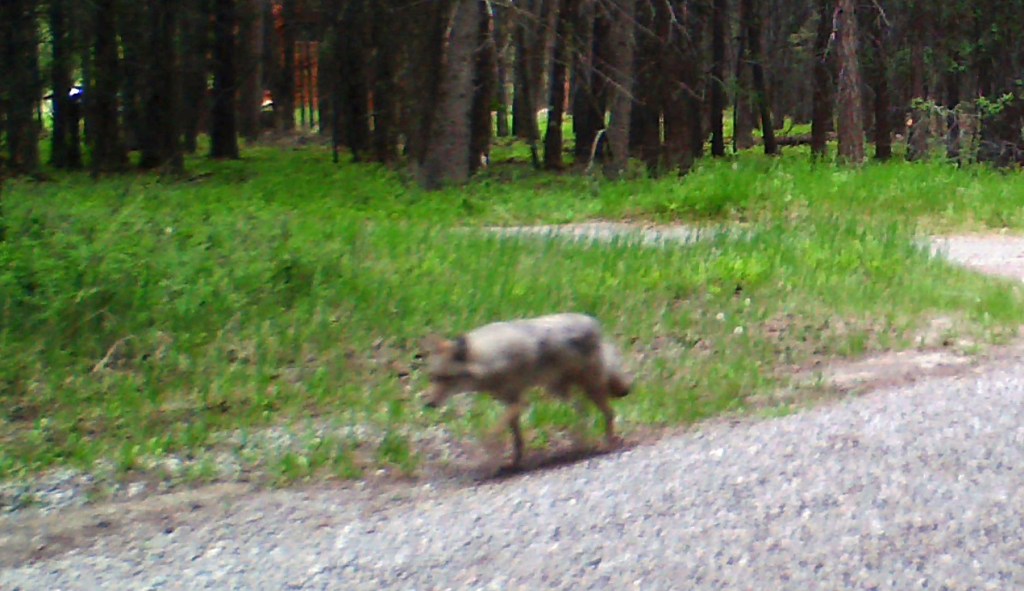
    Our old pair of coyotes are gone now – and they were good neighbors.  Don’t know if someone shot the old coyote, or if it was just old age and decrepitude that took the two from their home on the hill – but we no longer have local coyotes.  The pair  have been replaced by packs that come in from 3 directions – west, north and southeast.  The blessing of modern technology – trail cameras can provide a lot of information about where predators are coming from.

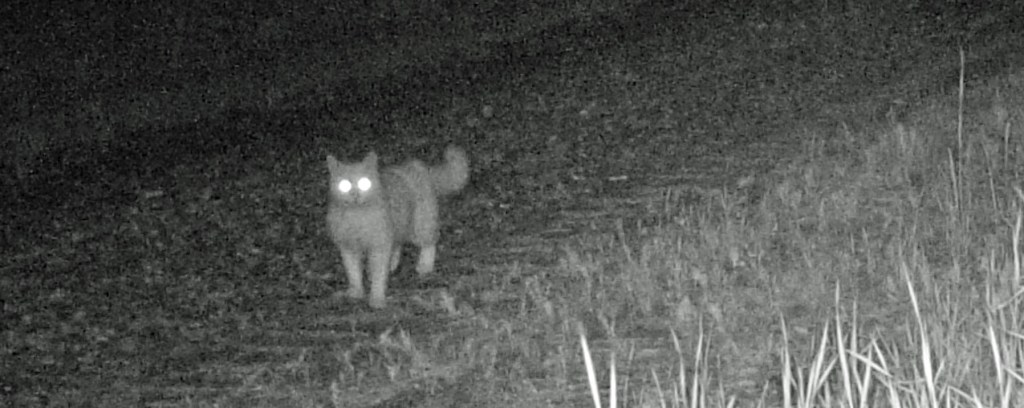
    We’ve had a feral cat population close by for years – living by the trailer court and north aways, and wandering from there to our field and to the school.  The trail cameras show that the three new packs are cat hunters.  Not a surprise – we lost one young house cat last year, but the trail camera leaves no doubt.  

    Before the feral cat population grew so large, the rodent population in the hayfield was fairly well controlled by resident weasels.  I suspect that the resident weasels were taken by the feral cats – for whatever reason, with the weasels gone, the vole population exploded.  The voles did enough damage to the fruit trees in the garden that I responded with bait stations to poison the voles.  

    I’m not real sure what the change in coyote population will bring – but 3 packs coming in to hunt cats is starting to make a big dent in the feral cat population.

  • A Rough Year for Fawns – and Skunks

    The first two fawns we saw this Spring were in the mouths of coyotes on the game cameras. It’s a data point, not necessarily proving any trend – but it does support my hypothesis. Coyote predation has changed – and here’s the story as I see it.

    For several years, we had a pack of two elderly coyotes on the hill. He was buff – several times I had folks who glimpsed him tell me of a wolf. I had better views – for some reason of his own, watching me on the tractor was a worthwhile activity for him. I don’t know why -with his deep chest there may have been a little bit of dog in his genetics. Makes no difference – he knew he coexisted with humans, and left the house and my little dogs alone.

    His consort was missing an eye – the sort of thing it takes a lot of observation and trail camera time to observe. When they hunted, he was invariably to her left. If she did any tractor watching, she picked better concealment than he.

    I don’t know what took out the old coyotes – it could have been someone with a rifle, but it is probably just as likely that it was old age. If he went first, the wild life would have had no place for her disability. For whatever reason, my small pack of neighborhood coyotes is gone.

    In the absence of a resident pack, the trail cameras show that we now are included in the overlapping ranges of 3 larger packs – one group comes from the north, a second from the southeast, and the third from the west. Where we once had a pair of coyotes making a living full-time, we now have over a dozen hunting on the edges of their expanded ranges.

    The prey species has changed – the trail cameras show that the new packs have all focused on feral cats. Non-ferals, too – we don’t know how Cream disappeared, but circumstantial evidence points to the west coyote pack. And the population of feral cats living in downtown Trego is declining on the trail camera. I don’t know which pack has developed a taste for skunks, but fewer skunks are showing up on the cameras (I can’t believe we would have three packs of skunk-eaters.) I suppose that reducing the skunk and feral cat populations does help keep the area free of rabies.

    I kind of miss the old pair of coyotes that coexisted well with us – on the other hand, an uncontrolled population of feral cats pretty much calls for something to start preying on them. Studies in Chicago show that coyotes keep cat populations confined to residential areas.

  • Feral Kittens

    Feral Kittens

    I glanced out the window this morning to see five feral kittens examining my woodshed.  I carried the first load to the deck this past week, so for the first time, the woodshed is accessible.  It makes a dry place, sheltered from the wind and rain, where the five will probably cuddle together and shelter – being close to the house, it includes the safety of being in a spot safer from coyotes and cougars.  From a survival concept, they’re making a good choice.

    I knew they were there.  I’ve watched their mother, in person and on game cams, as she has hunted in the trees and fields around the house for several years.  This long, hot, dry summer seems to have what she has needed to successfully raise a litter this year.  Now comes the winter – and the half-grown cats are exploring for options they may need in a season they have never experienced.

    In general, I like cats – and these little ferals demonstrate their species’ self-domesticating behaviors.  While the wooded area is showing fewer squirrels, the hayfield and edges of the pond are a smorgasbord of mice, voles and frogs that have also moved into a niche where human habitation has made their existence easier.  The ferals, preying on the nuisance rodents, may well improve my life.  Still, my experience with domestic cats, living indoors and moving into a lap to purr and be petted, makes me feel that these ferals are missing an important part of a cat’s life.

    I understand how the cuteness motivates people to feed the ferals. I’m a grownup.  I won’t do it.  But I’m tempted to put a couple of cardboard boxes in the woodshed.

  • On the Road and Around the Pond

    On the Road and Around the Pond

    Oh the Road & Around the Pond

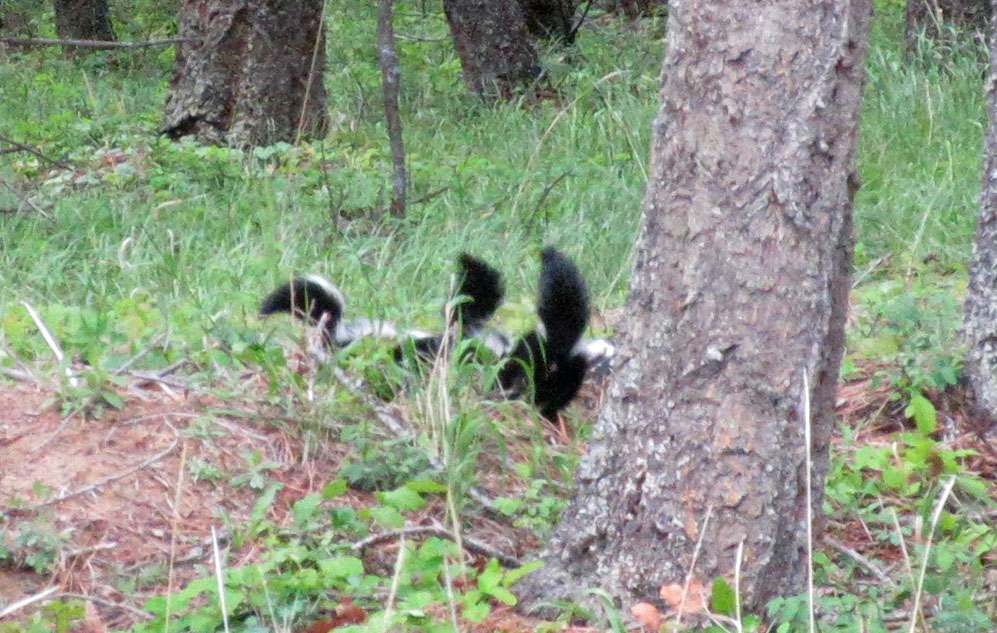
    This is an exciting time of year as we await the appearance of babies. We have does with rounded bellies. We have yet to see a fawn.  The fall burning of tree stumps around the yard resulted in holes and burrows that were not always filled before winter set in.  An opportunistic skunk moved into a burrow created by the removal of a tree root. Looking out the kitchen window we spotted 4 baby skunks. The babies are really cute but not particularly welcome.

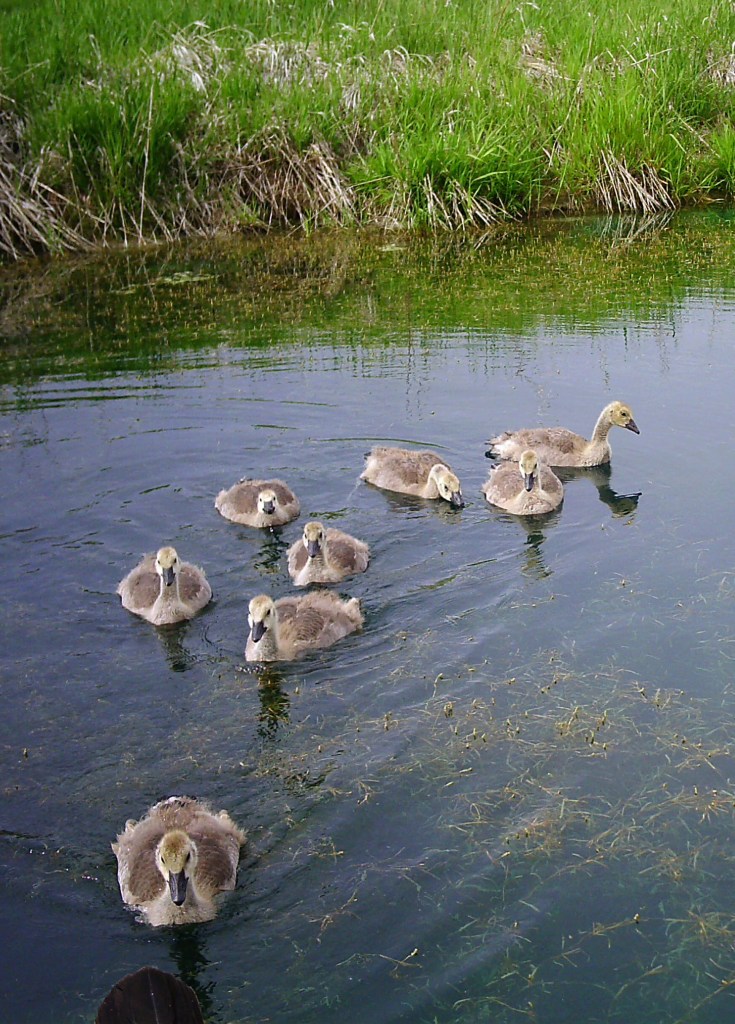
    He goslings are starting to color.  The ducks paused to finally get their portraits. We have spotted only a handful of tadpoles. Those tadpoles are steadily growing. The turtles are on the move and on the road. We noticed a neighbor stopping to carefully remove a turtle on the road to the safety of a grassed area.

    A pair of whopping cranes are occasionally stopping to hunt in the field. The coyote is hunting in the field and along the road. The feral cats are making regular treks along the road. -Patches

    (Ѝâ@½è’
    (Ѝâ@½è’
    P00[0:2] E[101:0895]G[320:0x64] BV[-12:0] IR[M]
  • Game Camera: They are Back!

    Game Camera: They are Back!

    The Not So Perfect Game Camera: They’re Back!

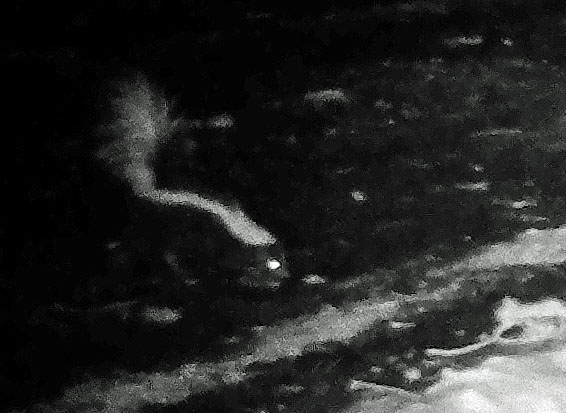
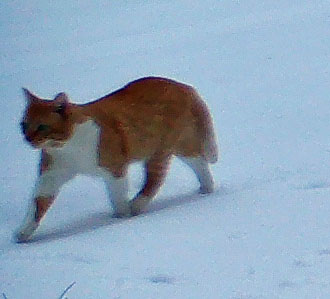
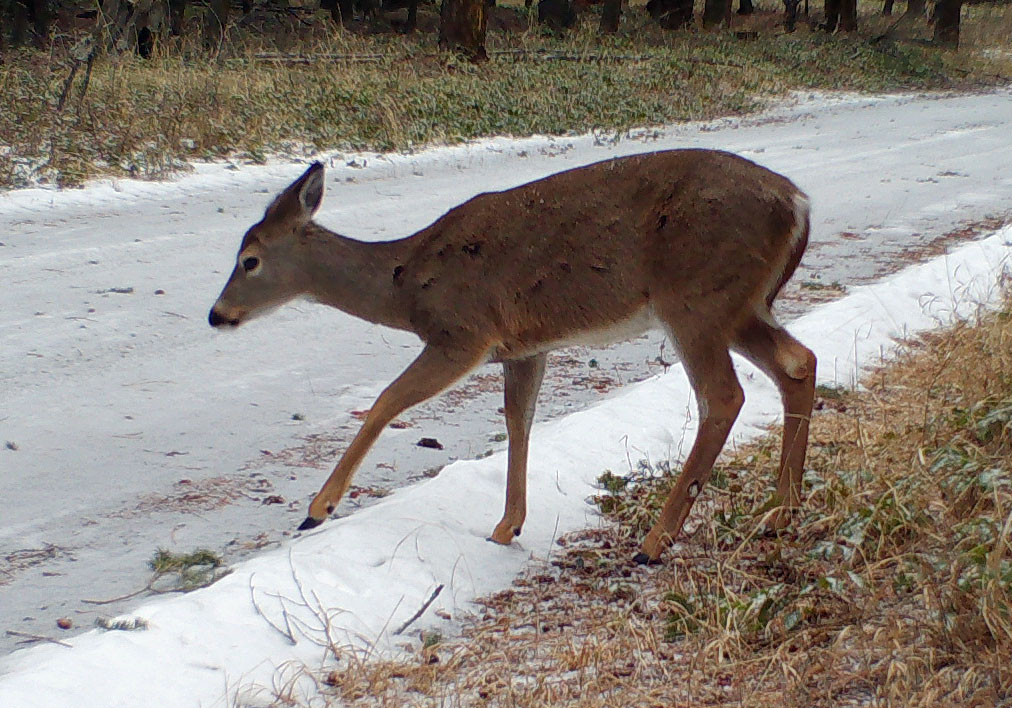
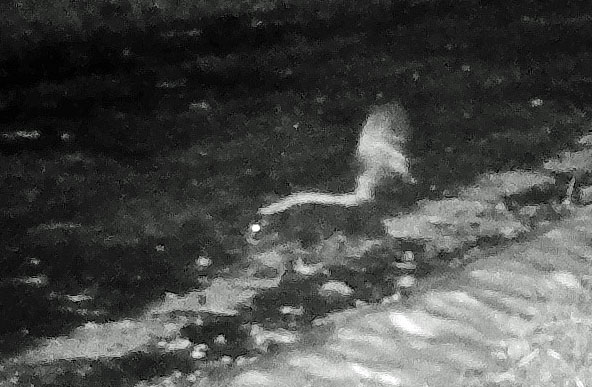
    Returning to the game camera line up for your viewing pleasure are striped kitties, otherwise know as skunks. Skunks have been absent for several months but have returned. Along with skunks featured this with week are feral cats and deer. -Patches