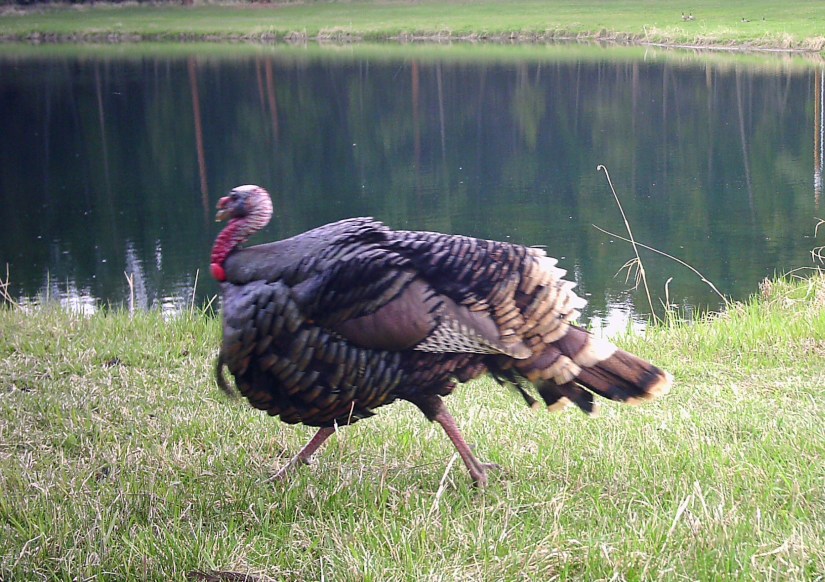
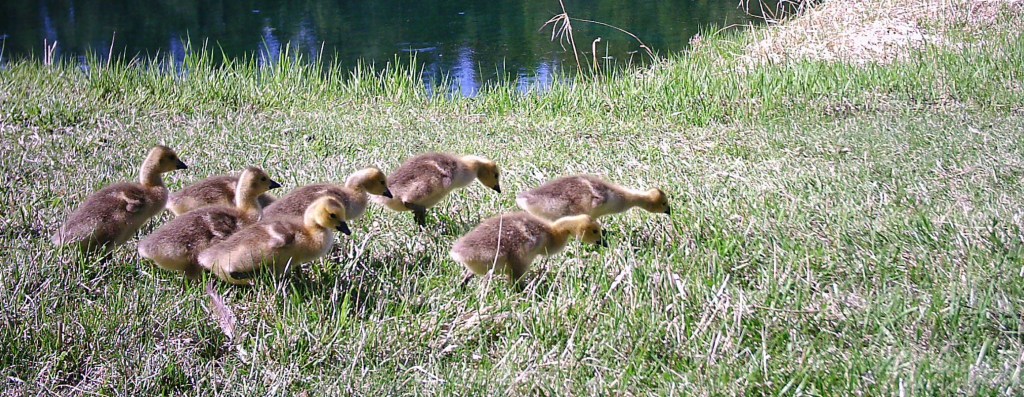
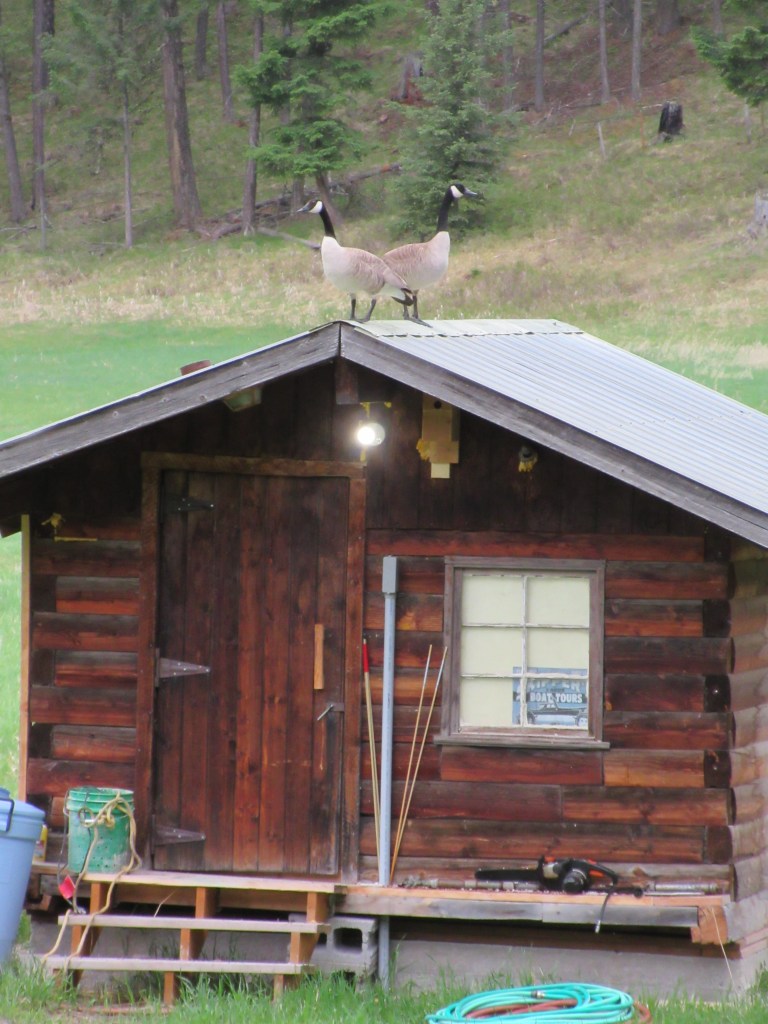
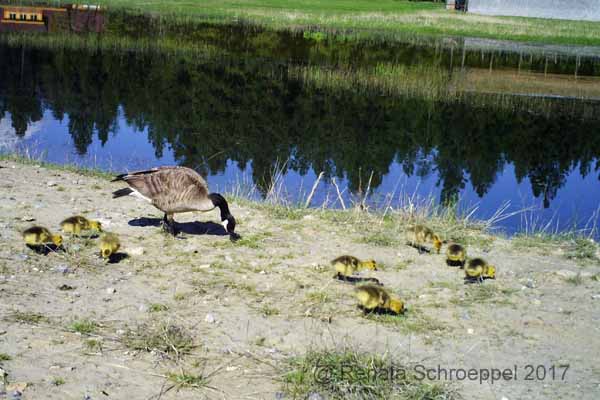
New on the game cam this week is a badger. The badger tends to be transitory with few Columbia grounds squirrels residing in the field to become dinner. The geese are being geese. The goslings are growing and hiking along the pond’s edge. The turkeys are being camera shy. The deer look like they need a good combing.-Patches
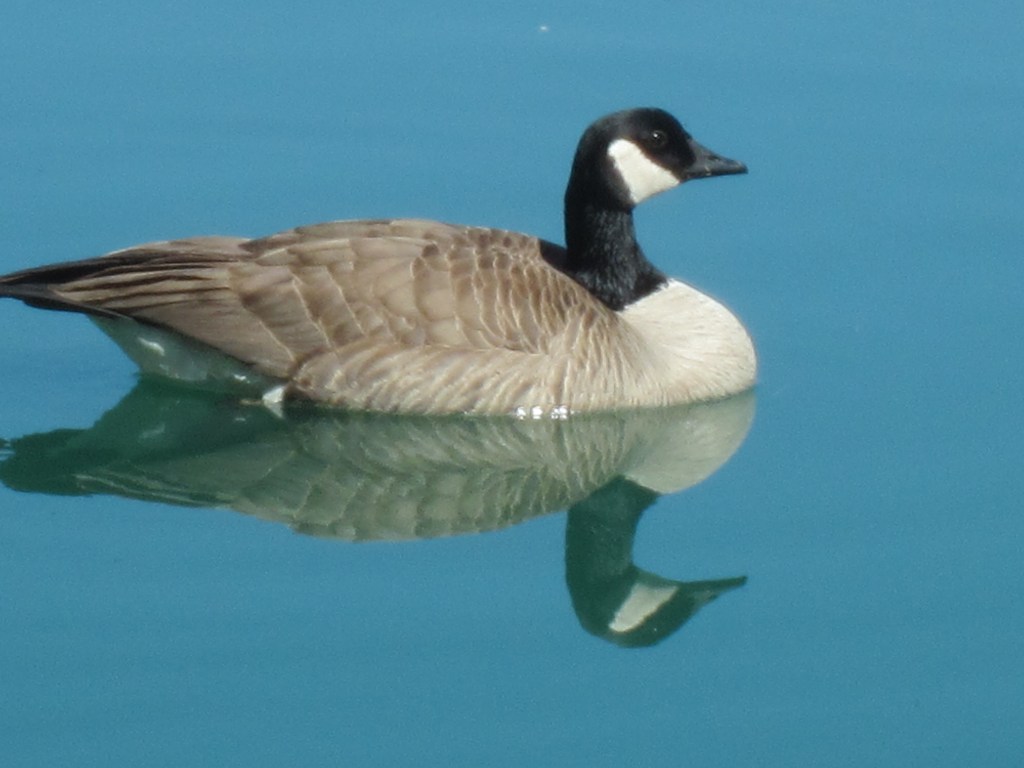
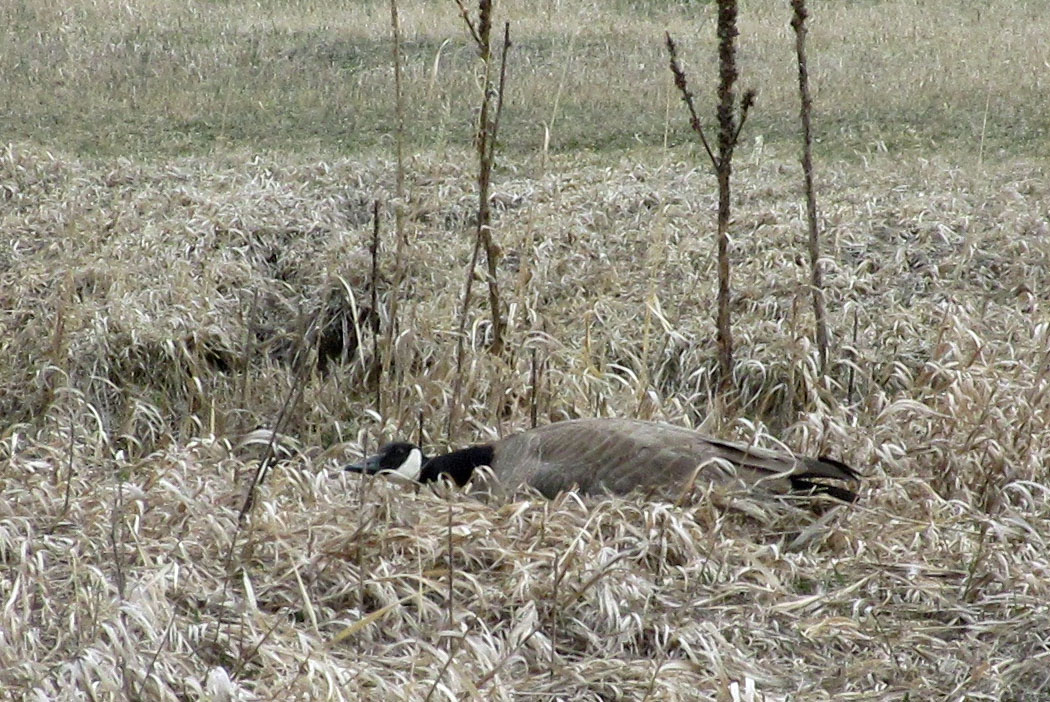
First, Gander came by to check. He and Goose are beginning their 7th year nesting on the island in the pond. It’s a good spot for a goose nest because the water surrounding the island protects it from the coyotes and egg-raiders while the tall grass of the island makes great aerial camouflage for the nest. He wasn’t happy, because there is still ice in the pond, and it seems that you really do have to be the first nesting goose to validate your claim. He brought Goose along the second day – over the past seven years she has became a bit frail – so it is good to see them back again.
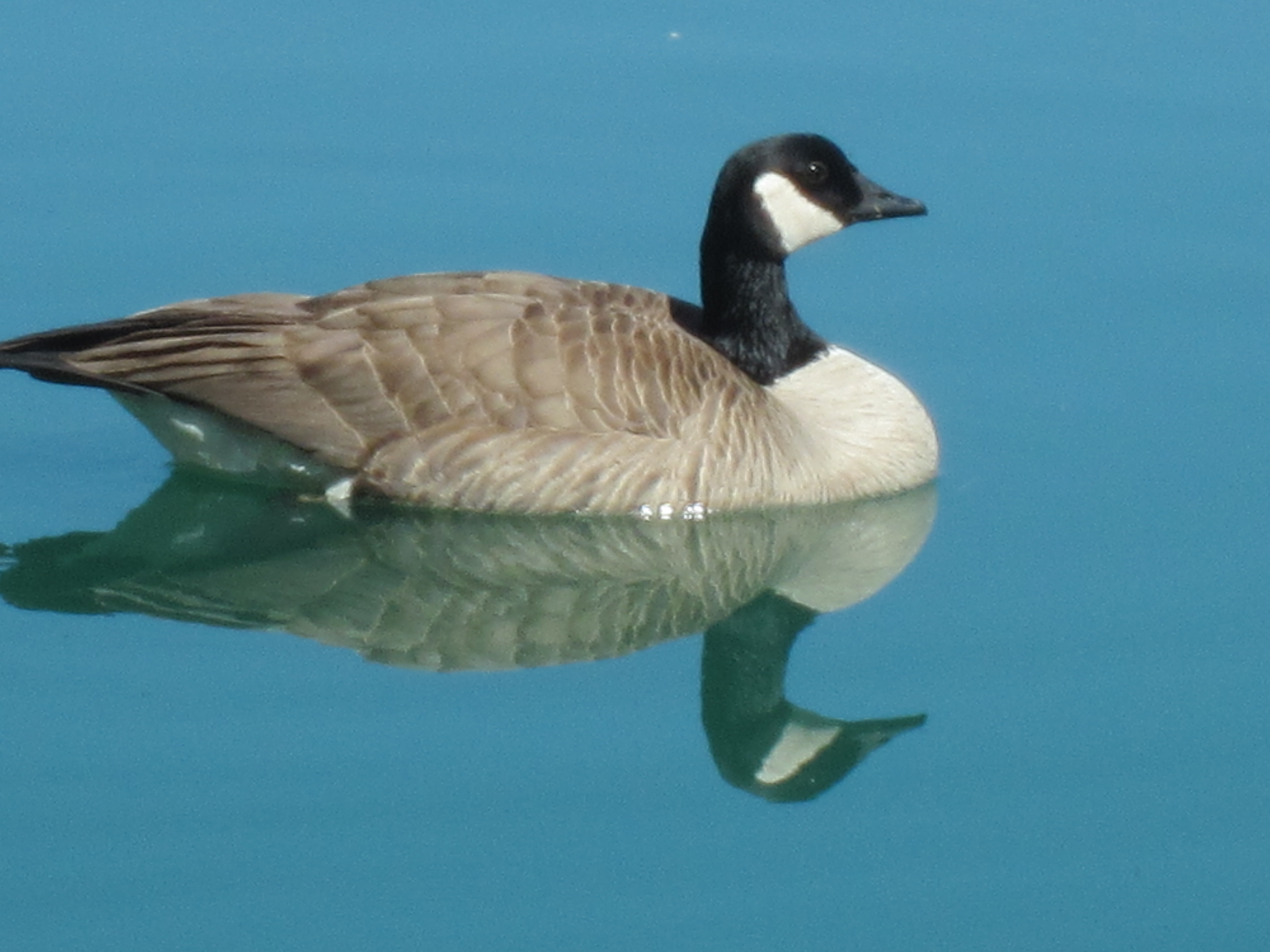
Living in the flyway, I became accustomed to huge flocks of migrating geese – probably an appropriate way for a demographer to view a species. Here, I watch a pair of geese, and their offspring, through the season. Frankly, there are some lessons in morality and responsibility to be learned from my goose neighbors.
Gander does the first recon alone anymore. When they were young adults – call it the newlywed stage – they were inseparable, and hard to tell apart. Gander has continued to grow, and is now an average size lesser-Canadian, Goose shows her frailty, and he works at minimizing her risks and exposure.
Courting Geese- one of the goslings and a visitor
With the nest unavailable, the two are hanging out in the Salina Wild Rye – good cover, close to the nest site, and, as soon as the ice melts, Goose will be back on her nest, hatching out another group of goslings. Her first year, she led the flock on a hike around the pond, straight through the grass into an eagle that was dining on a road-kill cat. Since 2015, Gander has taken responsibility for leading all the land trips. That first year, as two eagles flew over the nest, Gander took to the air to divert them, then flew over me low, and made a couple circles as the eagles flew on away from Goose. The next Spring, he decided to use me as part of his threat to a larger pair of geese that wanted the nest site.
I’ve watched the Fall departure delayed and delayed for a gosling who could almost fly – working at getting four or five feet above the ground for 100 yard flights, but unable to soar like her siblings. My floating dock is taken over early in the flight lessons to teach water landings before the goslings can fly. I’m looking forward to seeing what I learn from geese this year.
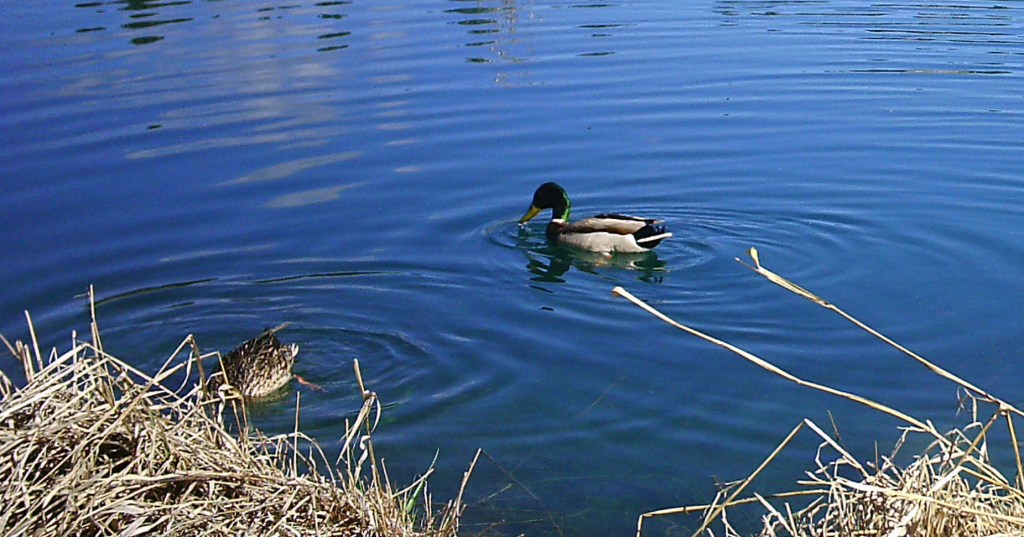
As the geese leave the pond for larger bodies of water and training for the larger migratory flights, we’re left with a few ducks, and the evenings provide aerial shows of insect eating birds. The swallows have been busy all summer removing mosquitoes and other insects. As the geese leave, the air over the pond gets a new batch of family groups – the nighthawks. Usually a pair of nighthawks show up flying with two offspring – this year one family has 2, the other family just one, so I watch 7 nighthawks banking and diving for insects. Two years ago, one family hatched 3, last year both families had 2. It is probably worth mentioning that they aren’t hawks – they’re nightjars, and related to the whip-poor-will. The Audabon link below includes their calls and is worth a visit.
A comment from facebook got me going back to Audabon for information – “We saw a lot of them when I was a kid, but we don’t see them now.” The field guide said, “Declining seriously in numbers in many parts of North America. Causes may include changes in land use and overuse of pesticides. In some areas, nighthawks nesting on gravel roofs have been targeted by increasing urban populations of crows, which eat the eggs.” Living in a spot that is pretty much ideal for nighthawks, I hadn’t realized the population was in decline.
They’re the last arrivals in the Spring – and I think ours nest on the hill overlooking the pond. Actually the term nest isn’t correct – she finds an open space, lays two eggs, and incubates them for 19 days. Then both parents take over feeding the little birds for 3 weeks – and they start flying in family groups, usually of four, harvesting insects. In another week or so, they will be southbound. My guess is that they cross the equator at the equinox, then arrive in the Argentine in time for the second Spring of their year. I’ll see them again in May.
Common Nighthawk, photo by Robert Bennets, National Park Service
In the flyway, I saw geese as population, as statistics – an appropriate way for a demographer to view any group. As a retiree, back in northwest Montana, I saw geese as neighbors on about 3 ½ acres of pond. Watching individuals, and then families, began in 2015.
Goose appropriated the island for her nest, and Gander made certain nothing shared it. In later years, mallards, teal and even coots would share the island’s safety for their nests – but in this first year, all other species were regarded as competition. When larger geese wouldn’t leave, Gander would come by the house, to get me to stroll along with him, making the interlopers uncomfortable, and regaining his domain.
Once, two bald eagles flew over her nest – and Gander took to the air to lead them away. I suspect they were more interested in finding road kill deer – but Gander was no less heroic in luring two predators away from Goose and her nest.
A week later, 7 goslings followed their parents into the pond. Gander led, Goose followed, grazing incessantly to make up for the starving time spent setting on the nest. The day came when she led the goslings right up to the spot where a bald eagle was eating a dead muskrat. The egalitarian parenting ended – five years later, I have never again seen Goose lead the flock – Gander leads, Goose brings up rear guard.
The parents molt as the goslings grow from fuzz to feathers, and then flight training begins. The first year, the straight drainage canal seemed an adequate place for takeoffs – on young goose at a time. The second year Gander discovered my floating dock, and would hike his pre-flight training goslings onto it, where they would jump from the dock to the water, learning landings before they learned takeoffs.












 Trego's Mountain Ear