I can’t claim to have a body free from tattoos. Mine came in 2009, when the radiation folks were zapping the body to kill off any remaining cancer cells. They added the tattoos to help sight in the radiation into the right areas. While my tattooing seems to have been successful, I still harbor some resentment – they should have at least given me a beer or two first.
I’m reading of a politician in Maine who got an SS tattoo while drunk in eastern Europe. That is the sort of bad judgement I can understand. His excuse was being a young, drunk soldier. I learned differently as a kid – Dad was retired Navy, CWO4 (Chief Warrant Officer) and spent a career at sea without tattoos, and as a small boy I saw lots of tattoos, and heard stories of the problems associated with them.
I think the petty officer with the big tattoo was named Carillo – but the story came to me at least 70 years ago, so their may be some factual flaws. Carillo’s story went back to 1941 – he was Guamanian, and had taken a month’s leave to visit his family on Guam. Yeah, that month – December, 1941. When World War II came to the US, he was an American sailor on Guam – and, lacking any other way of avoiding capture, ditched his dungarees for native apparel. Unfortunately, he had a tattoo showing the gunboat Panay on his chest.
In the 21st Century, the Panay is a mostly forgotten little ship – but in December of 1941, she was remembered by Americans and Japanese alike. https://military-history.fandom.com/wiki/USS_Panay_incident probably provides as good a link to the story as any:
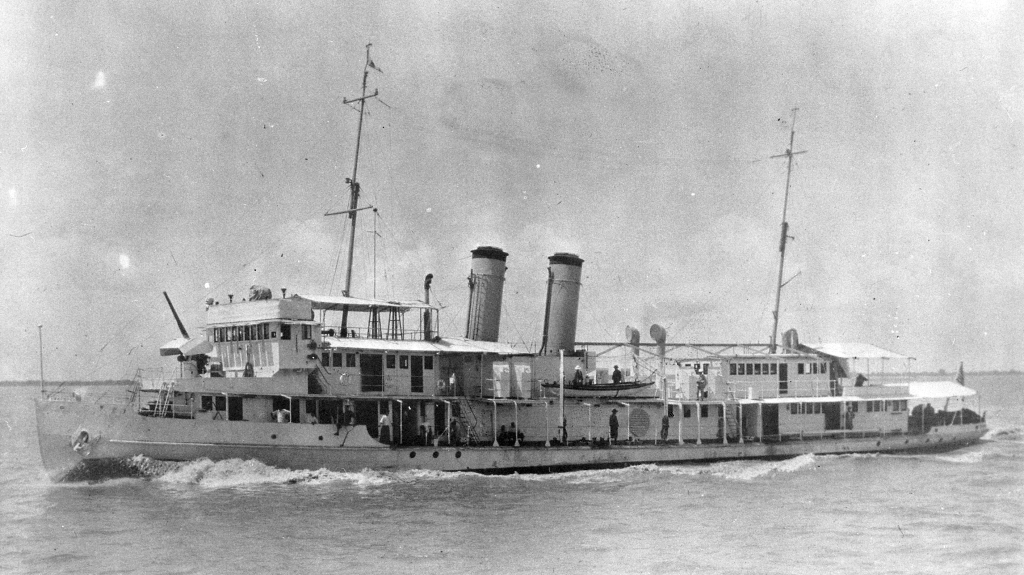
He had a picture of this little ship inked across his chest – and, as the article says “The USS Panay incident was a Japanese bombing attack on the U.S. Navy river gunboat Panay and three Standard Oil Company tankers on the Yangtze River near the Chinese capital of Nanjing on 12 December 1937. Japan and the United States were not at war at the time. The boats were part of an American naval operation called the Yangtze Patrol, which began following the joint British, French, and American victory in the Second Opium War.”
The old petty officer spent the war as a POW, and credited the tattoo. The end of his tale was the simple admonition “Never get a tattoo.” There have been tattoos with some appeal – a pig and a rooster tattooed on your heal was said to prevent death by drowning. I knew older people with blue numbers tattooed on their arms – tattoos that spoke of their time in German camps. Still, the old man’s admonition “Never get a tattoo.” held for my first fifty-nine years. And I still think that common decency should have included a shot of rum or a beer before they tattooed sighting markers on my belly.

 Trego's Mountain Ear