Trego's Mountain Ear

"Serving North Lincoln County"

Tag: School

  • Repost: Choices for Parents- but not for Schools or Taxpayers?

    Editor’s Note: This was originally published about a year ago (last March), but we’re publishing it again because the bill is coming due. We won’t know the amount until the school year is up and every school in the state has to figure out how much to bill other districts for, but permissive levy notices have gone out and tax payers are learning how this will impact their bill.

    One of the ‘Things Our Government Has Been Up To’ is House Bill HB203, which passed into law. It’s marketed as a bill about school choice, although Montana was already a state that allowed for out of district enrollments.

    One of the things it does, is that it makes it harder for schools to say no to out of district enrollment. “Perhaps the most compelling and direct impact of HB203 is that Montana public school districts will no longer have absolute discretion to deny applications for out-of-district attendance.” There are very limited circumstances in which the law will allow districts to reject out of district enrollment.

    More choice for parents? Not here. Our local schools have already been accepting out of district enrollments when they’ve been able to do so and meet the needs of the students. Less choice for school boards? Definitely. And for taxpayers…?

    The taxpayers of the district accepting students aren’t on the hook for funding those students (and really weren’t before, since the state distributes school funding based on enrollment anyway), but the donating school district can expect to contribute over a thousand dollars of tuition per leaving student.

    Will this impact district taxes and levies? Probably, especially in smaller districts where budgets run tight.

    Did it increase our choices for where to send our kids to school? No. Not here. Not for us. Did it turn our kids into dollar signs for other school districts? They already were, due to the state’s method of redistributing funds. But it’s increased the number that goes with the dollar sign.

    What did our local senator and representative vote? Yea.

  • Here’s what happens when a school is located near a cannabis dispensary

    Editor’s Note: Sometimes it is necessary to state, research, and publish the obvious. In this case, the obvious is that having a cannabis dispensary near a school is not a great thing. Unless there are more of them than google wants to admit to, the nearest one to Eureka Elementary is about half a mile.

    I’ll suggest anyone still feeling 100% comfortable with marijuana consider reading about marijuana induced psychosis and the differences between marijuana now and what it used to be.

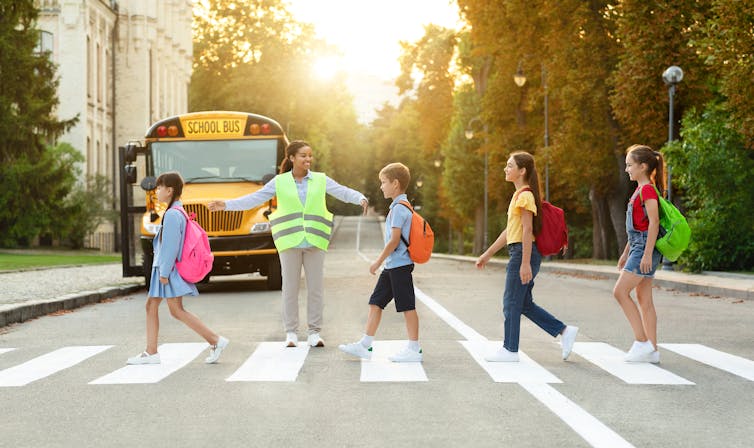
    Middle schoolers are more likely to walk to school than their younger and older peers. Prostock-Studio via Getty Images

    Angus Kittelman, University of Missouri-Columbia and Gulcan Cil, Oregon Health & Science University

    As more states legalize marijuana, researchers are examining the effects of legalization on society. Angus Kittelman, an assistant professor of special education at the University of Missouri-Columbia, and Gulcan Cil, a senior statistician at Oregon Health & Science University, decided to look at the effects of cannabis dispensaries being located near schools. They discuss their research in the following Q&A with education editor Jamaal Abdul-Alim.

    Is it bad when a school is located near a dispensary?

    Yes, it’s not good for a couple of reasons. When cannabis dispensaries are near middle schools, students are more likely to receive office discipline referrals for substance use. When students get sent to the office, they lose valuable instructional time in the classroom.

    Adolescent cannabis use is also associated with many negative health effects, such as poorer cognitive functioning and increased risks for developing mental health or substance use disorders. Students who use cannabis are also less likely to complete high school or go to college.

    With the legalization of recreational cannabis sales in many U.S. states, there are more cannabis outlets and greater access, which can be concerning for families and schools. In our recent study, for example, we found that the number of office discipline referrals for substance use increased in middle schools after legalization of recreational cannabis in the state of Oregon in 2015. But this increase was only when there were recreational outlets within a 1-mile radius of the schools.

    Middle school students receiving an office discipline referral for substance use is relatively rare. An average middle school had three to four referrals of substance use per year. But those near an outlet experienced a 44% increase after legalization and had one to two additional referrals on average each year.

    What’s causing the increase in referrals?

    Great question. We analyzed student substance referrals after excluding referrals for tobacco and alcohol. We observed increases in substance referrals in Oregon schools after the statewide legalization of cannabis in 2015, compared with the trends in similar states with no legal cannabis at the time. We then examined whether having a cannabis dispensary within a 1-mile radius was associated with an increase in referrals.

    We cannot say with certainty that the increase in all substance use referrals were from cannabis use. However, we know that cannabis is among the most common substances adolescents reported using. In a nationwide survey, for example, 8.3% of eighth graders reported using cannabis. That’s compared with 12% for vaping nicotine/tobacco and 15.2% for alcohol.

    Besides potentially providing easier access to the product, when there are more legal cannabis stores in certain neighborhoods – and increases in signs and flyers advertising for it – it may make kids ignore or downplay the health risks. Increases in exposure to cannabis marketing is associated with adolescents being more likely to use cannabis.

    Students often travel a mile or two to get to school. And those in middle schools are more likely to walk to school compared with students in elementary or high school. Therefore, even though adolescents are too young to legally buy cannabis themselves, having a cannabis outlet nearby makes it easier for them to obtain it from a friend or purchase it from a stranger.

    What can be done?

    Isn’t a 1-mile radius a rather large area?

    We recommend that school staff look for patterns in student discipline referrals for substance use. If the substance use is occurring in certain school locations, such as playgrounds, hallways or bathrooms, staff can then supervise these areas better.

    Schools may consider implementing proactive and preventive strategies to support students engaging in substance use. These can include having school counselors provide drug resistance skills training programs or programs that teach students how to manage emotions and to resist stressful situations.

    Angus Kittelman, Assistant Professor of Special Education, University of Missouri-Columbia and Gulcan Cil, Senior Statistician, Oregon Health & Science University

    This article is republished from The Conversation under a Creative Commons license. Read the original article.

  • Taxing for the Building Reserve Fund

    When we started the special levy for Trego School’s Building Reserve Fund, in 2021, the levy was 2.88 mills and raised about $5,000.  There are two reasons why a school needs a special levy for the building reserve – first, the building reserve doesn’t have to be spent during the fiscal year.  The fund can continue to grow and eventually have enough for the big ticket items (roofs seem to be a large expense when they need replacement.  The second reason – in Trego the School Major Maintenance Aid kicks in about $12,000 to go along with the $5,000 your taxes raise. 

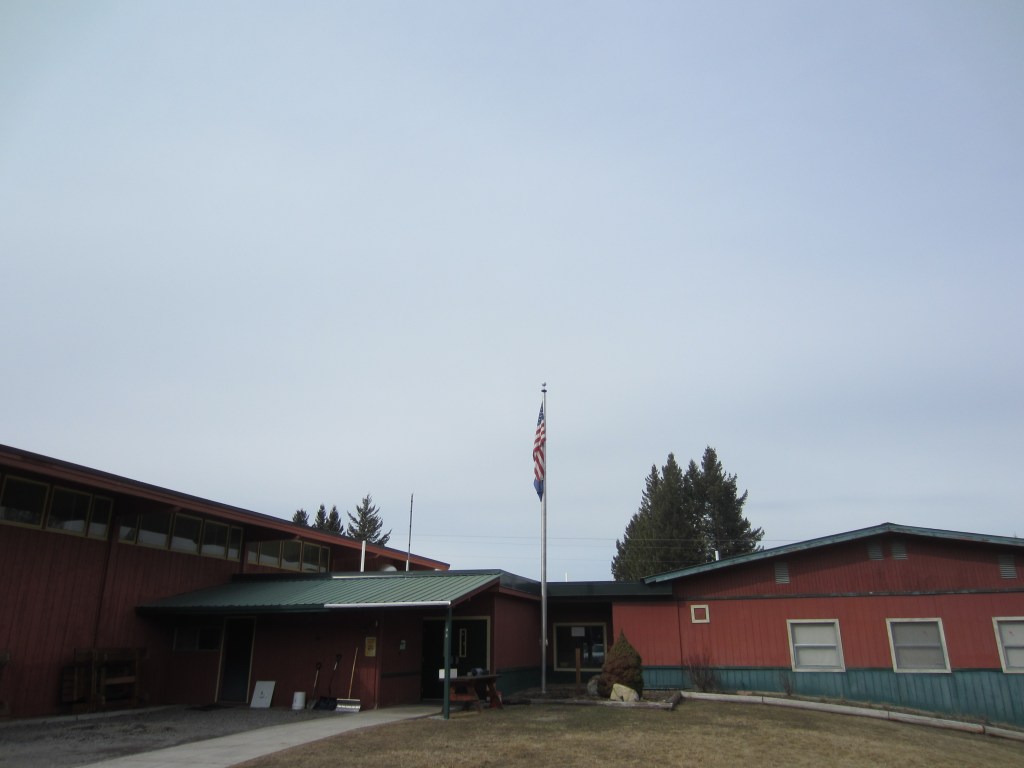
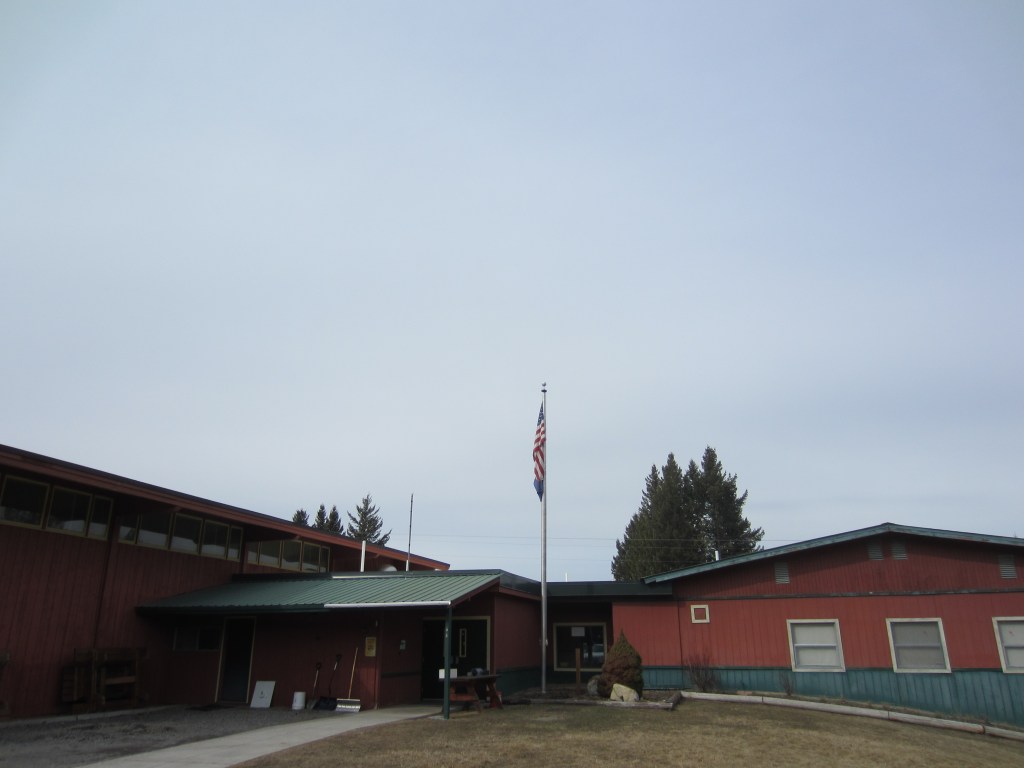
    When we can raise $17,000 for adding a tax levy that brings in $5,000 – it kind of makes sense.  Our Building Reserve Levy is a fairly new thing for Trego School – and hopefully, five or ten years down the road, when the building needs a major repair, the Building Reserve will cover it.  The school was federally funded as part of the impact funding when the tunnel and railroad relocation came in – but that was back in 1966.  The building is aging, and it seems more responsible to keep it in shape – the Federal government won’t come by with a new one again.

    In 2021, it took 2.88 mills to raise that $5,000.  Now, in 2024, the levy is down to 1.96 mills.  At first glance, the levy is down 32% – but that doesn’t speak to financial management.  The levy still raises about $5,000 – but the taxable evaluation of the land has increased, so a lower mill rate raises the same amount.  The problem with tax rates is that the figures don’t lie.

    I kind of like the building reserve – but just because the mill rate has gone down, the taxes stay the same.  And that’s OK if you take the time to understand how mills and tax levies work.

  • Choices for Parents- but not for Schools or Taxpayers?

    One of the ‘Things Our Government Has Been Up To’ is House Bill HB203, which passed into law. It’s marketed as a bill about school choice, although Montana was already a state that allowed for out of district enrollments.

    One of the things it does, is that it makes it harder for schools to say no to out of district enrollment. “Perhaps the most compelling and direct impact of HB203 is that Montana public school districts will no longer have absolute discretion to deny applications for out-of-district attendance.” There are very limited circumstances in which the law will allow districts to reject out of district enrollment.

    More choice for parents? Not here. Our local schools have already been accepting out of district enrollments when they’ve been able to do so and meet the needs of the students. Less choice for school boards? Definitely. And for taxpayers…?

    The taxpayers of the district accepting students aren’t on the hook for funding those students (and really weren’t before, since the state distributes school funding based on enrollment anyway), but the donating school district can expect to contribute over a thousand dollars of tuition per leaving student.

    Will this impact district taxes and levies? Probably, especially in smaller districts where budgets run tight.

    Did it increase our choices for where to send our kids to school? No. Not here. Not for us. Did it turn our kids into dollar signs for other school districts? They already were, do to the state’s method of redistributing funds. But it’s increased the number that goes with the dollar sign.

    What did our local senator and representative vote? Yea.

  • What Education Could Be

    What Education Could Be

    Imagine that you are a student. Fifth grade. You arrive at school and eat your breakfast with your classmates and your teacher. You know all of them, because it is a small school and you know everyone. Your teacher asks about your pets, your family, your hobbies because it’s a small class and your teacher knows you too.

    You and your classmates get into the bus- except, it isn’t actually a bus. It’s technically a class-3 school bus, which means it’s a van. It’s cozy, has seat belts, and it’s easy to talk to the people around you.

    Your teacher asks you if you know why pine trees shape their leaves like needles. And you listen, and you ask questions. Learning is a conversation, things pointed out as you drive by or when you stop to look at something more closely. Your teacher welcomes your questions and encourages your curiosity. Sometimes the answer to your question is known and sometimes it goes on the list of things to research later. The geological history of the area is written in the stones and in the shape of the mountains and now that you know what to look for, you can see it.

    You see ecosystems, in a pond, in a forest, in a meadow, and even on the moss covered rocks. You take samples of water and look at them under microscopes (the kind that use mirrors for light and require no electricity). You can see the stages of ecological succession; You can see the pioneer species that move in on bare stone, a pond that will one day become meadow, and a meadow that will one day become a forest. The future of the landscape is there and you can see it now.

    You see human history, too. Old fire lookouts, and the places that the roads once were, when they were traveled by wagons. You see dynamite scarring that came when roads were built, and you pass stump cultures from Christmas tree farming.

    You eat lunch back at school and your afternoon teacher joins you. Your afternoon is a vocational class. This trimester it’s Building Trades, and you are learning the basics of carpentry, plumbing, wiring and masonry. Last trimester was Culinary Arts and next will be Engineering.

    This could be Trego School. This is a glimpse of the future we want for the children of our community. We want them to have opportunity to learn how to do things, to ask questions, and to reach their potential as confident, capable adults.

    Help us build the future. Do you have a skill or a profession that would benefit the children of our community? Consider putting in an application at Trego School and applying for a Class-4 (vocational) teaching license.

  • On Graduation Day

    On Graduation Day

    This article is the board chairman’s speech for Trego’s graduation.  It comes after a year of strife and the board’s decision to move to a new model of education that recognizes the level of expertise and education that is present within our community.  The era of the single-classroom generalist teacher has passed.  We’ve recognized that our school will be better integrated into the community by accepting the 21st Century and hiring adjunct faculty to teach the specialized classes our students need as they move from 5th through 8th grades.  Call Shari at 882-4713 if you’re interested in being part of the team – you may have a great idea that hasn’t crossed our minds.

    Fifty-nine years ago, I graduated from Trego’s eighth grade.  The graduation speaker was a forester, who seemed to be directing his remarks to Marvin Osler, explaining that Osler Brothers Mill wouldn’t be there for his career.  He was right – as I drive by the old mill site, I see a Koocanusa Brewery building and sign where the Osler brothers once supplied dimension lumber to the nation.

    I graduated from a different building, with 3 classrooms down where the outside basketball hoops grow from the asphalt.  This school building came along three years later, as Trego became a boom town for the tunnel and railroad relocation projects. 

    I think of the sawmills that are gone – Ksanka, Osler Brothers, Tobacco River, Stevens, Owens & Hurst – and how the timber industry powered the economy in the valley.   Now, the Economic Research Service classifies us as recreational, government dependent and retirement destinations for the economic drivers. Trego school remains.

    A century ago, my mother was finishing the first grade at Trego.  I don’t know how much she learned, but I recall two stories.  The first was seeing a bear as she walked to school, and how her teacher didn’t believe her.  “There aren’t any bears in Trego.”  The second was a tale of technology – you see, toilet paper was a new technology in 1922, and that same teacher was teaching students to use that new technology.  One square per trip to the outhouse.  I don’t recall the teacher’s name – but I do recall the lesson that my mother didn’t accept.  I guess we could say that the teacher was preparing her students for the great covid toilet paper shortage of 2020.

    A century ago, Trego’s main industry was transportation – specifically transporting logs to Eureka from the old dam on the Dickinson place.  Picture if you can – the gates of the dam blasted open with a dynamite charge, and a crew riding that small flood filled with logs for the 20 mile trip to Eureka.  The dam was last used around 1954 – that industry is gone.  The one-room log school of the twenties burned.  Trego school remains.

    Marvin went on to become a teacher – he completed his master’s quite a while before I got mine.  Mom went on to nursing school in Spokane – along with the invasion of Guadalcanal, the Navy put a hospital in grass huts at Milne Bay in New Guinea.  Trego’s home industries were gone – but education pushed their way into future careers. 

    The eighth grade is the first big step.  When public education began, it was the step into the working world.  Now, it’s the step into high school.  Congratulations.  You are Trego’s final graduate of the old model.  It was a good system, serving the purpose of preparing young people for the working world.  Still, we probably should have made the change from the 19th century model at least 20 years ago.

    The students you’re leaving behind are going to enter a different world of education – and the first change will be learning from specialized teachers instead of generalist elementary teachers for fifth grade up.

    Our first goal is that our eighth grade graduates will have the opportunity to bring a credit in algebra and a foreign language credit with them as they enter high school.  Not everyone will pass high school algebra in the eighth grade – but if you do, that credit travels with you.  We’re looking at filling that fifth block with a foreign language that can travel with you to high school.

    The friends you leave can expect classes based on blocks and a trimester system.  Imagine for a moment, having a professional wildlife biologist teaching life science for thirteen weeks, then getting 13 weeks of Newtonian physics, followed by 13 weeks of earth science from a geologist.  The friends you leave behind will be moving into an exciting world that takes them further into the sciences.

    Social studies – this is my area . . . I became a sociologist and demographer – but next year, the friends you leave behind will move into social studies as well as history.  Think for a moment of 13 weeks specializing in Montana history . . . of 13 weeks learning enough economics that you could CLEP the first college course . . . CLEP?  College Level Examination Program – your friends might not learn enough at Trego to take the test and get credit – but I’m betting at least half of them would.  Between the blocks and the trimesters, your friends will have experts preparing them for high school.  In college, the teachers would be called adjunct faculty – coming in to teach what they are really, really good at teaching – subjects that they love.

    Math?  I spent 3 years with dear Mrs. Price – and may have moved ahead 3 months.  Picture a math program that includes the real world applications of surveying, of forestry, of statistics.  Math is power, math is fun – and next year, Trego’s students will be studying math in ways that use real world applications that make math fun and relevant.

    English?  Three teachers over a year let us have a teacher who loves grammar, a teacher who loves teaching speech and drama, and another who teaches writers.

    I haven’t even started on the afternoon half-blocks.  Picture a two-hour block taught by a professional artist on Monday, moving to Tuesday’s music class.  When I went to High School from Trego, band wasn’t an option for me – I hadn’t taken the required classes in Junior High.  We will be correcting that long-term omission.  Picture 13 weeks of learning electrical wiring, followed by another 13 weeks emphasizing solar energy.  I could go on – 3 trimesters and 5 blocks each week will let us offer fifteen artistic,  vocational and PE classes each year.  Who knows?  We may even rebuild the greenhouse and get some horticulture going.

    The 21st Century perspective offers opportunities.  We can’t out-Eureka Eureka.  Eureka has a century of experience at developing outstanding athletic teams.  We can’t out-Fortine Fortine – they still have their first school building in operation.  Our first burned down, and our second was dismantled by Tommy and LeeRoy.  We’re moving on to be the best Trego we can be.

    This summer will see some additions to the playground – centered around the idea of individual, life-long sports.  A combination frisbee golf and pitch and putt course will be set up – forms of golf that don’t require a lot of travel or expense (or break windows).  We’re looking at a cross-country ski course for our students – I’ll cheerfully admit that the ability to use cross-country skis kept me employed for six or seven years.  We’re talking about adding air-rifle training – all activities that qualify as PE and can be added to the afternoon half-blocks.

    Fifty-nine years between us – and we’re both examples of the old model.  That’s OK – previous graduates have shown that you can go anywhere from here.  The world will provide you a living – you just have to work every day to collect it.  Grab it with both hands – you’re the last of the old model.  From your peer, over 50 years in the past, my heartfelt “Congratulations.”  I envy the things that you will see.