Trego's Mountain Ear

"Serving North Lincoln County"

Tag: Wildlife

  • Watching Predators and Prey

    Off and on, I’ve been watching the interplay between predator and prey on this place for 65 year. In 1960, and through the mid-seventies, the hay field had a serious gopher (Columbia Ground Squirrel) population. A lot of the farm activities fell in my realm as I entered the teenage years – I recall poisoning the critters, first with strychnine, then with compound 1080. My most memorable year was the year when I caught a badger in a gopher trap. I saw she was a lactating female, worked the trap loose, cleaned all the traps from the field, and was surprised as hell the next day when she showed up to hunt gophers with me. The partnership lasted maybe six weeks – but is a memory to revisit – she had decided that gopher hunting could be a lot more successful when I assisted with the 22.

    Thirty years later – around 2000 – the gopher population dropped. With less grazing on the field, natural predators – a few weasels – were driving the gophers out. Apparently the gophers were more vulnerable to weasel predation than the voles were. Sam and I shot few ground squirrels in 2004 and 2005 when we visited my parents – the weasels controlled the population well over about 15 acres.

    By 2008, a feral cat population began growing in the trailer court a quarte-mile away. By 2017, I saw my last little weasel – feral cats were now the predator, controlling weasels, ground squirrels, and voles.

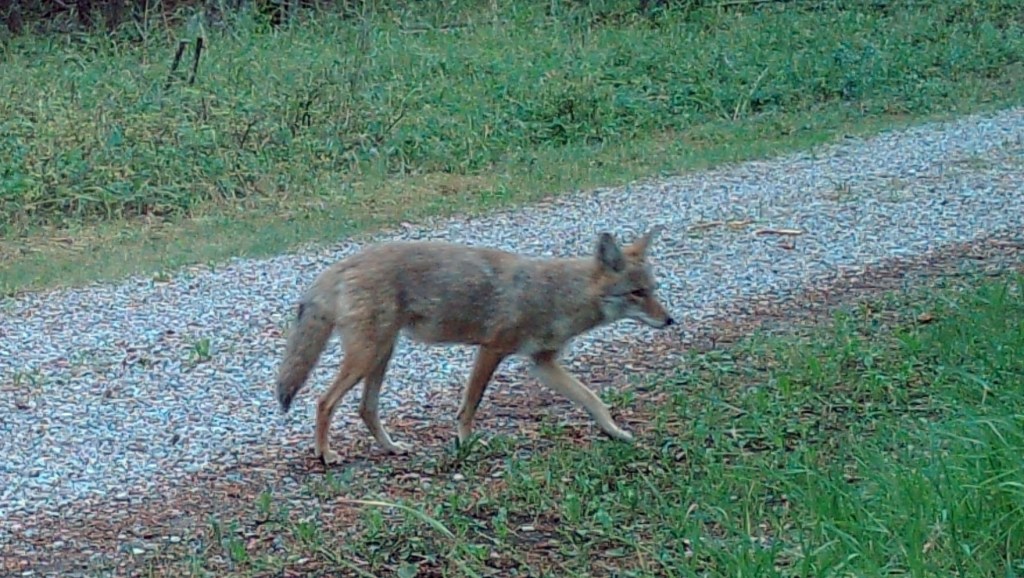
    So now, cats – whether feral or housecat – have became the prey species. When we built the house, we had a resident pair of coyotes that caused us no problems. They’re gone now – hopefully painlessly after living lives that caused us no problems. With the resident coyotes gone, three packs are edging into our place – the game cameras show one pack from the west, one from the north, and a third from the southeast. One pack has coyotes that specialize in hunting cats – the game cameras have shown coyotes walking down the trail with a cat in the mouth.

    Over time predators and prey roles can change. But you have to live quite a long life attached to the same piece of ground to notice it.

  • Climate Change and Screwworms

    The United States eradicated the New World Screwworm back when I was in high school. I’m reading about a guy in Maryland diagnosed with screwworm infection – but he had been in Honduras before the diagnosis. According to Scientific American https://www.scientificamerican.com/article/flesh-eating-screwworm-parasites-are-headed-to-the-u-s/ “The pest is marching northward at an alarming rate and has now moved some 1,400 miles from southern Panama to southern Mexico in about two years. Screwworms are disastrous for ranchers, whose cattle can become infected when the flies lay eggs in cuts or wounds, after which their resulting larvae burrow, or screw, into that flesh. The northernmost sighting is currently about 700 miles south of the U.S. border. ” For years, the NW Screwworm has been controlled by releasing batches of sterile male flies into the Darien Gap region – but that technique and location is no longer adequate. “That invisible wall holding the screwworm back has crumbled, however. “I don’t know how it got away so quickly,” says Maxwell Scott, an entomologist at North Carolina State University, who studies genetic methods to control populations of the fly. “There had to be some movement of infested livestock, particularly through the middle [of Central America]…. It just moved too fast,” Scott says about the swift speed of the screwworm spread. “

    I’m not particularly concerned about screwworms, since I live just below the 49th Parallel – but this old map does a fairly nice job of showing where the damned things could overwinter in 1952 – and the line correlates with a combination of altitude and latitude. In other words, our dates of first and last frosts may also show where the screwworm can overwinter.

    Pesky Little Critters https://peskylittlecritters.com/how-climate-change-influences-the-distribution-of-screwworm-flies/ concludes their article with “Climate change is reshaping ecosystems worldwide—including those influencing pest species like screwworm flies. Through rising temperatures, shifting humidity patterns, altered host distributions, and more frequent extreme weather events, the range and population dynamics of screwworms are changing.”

    It’s not a huge drama – but it is interesting that the actual effects of global warming may first be measurable in insect ranges.

  • A Rough Year for Fawns – and Skunks

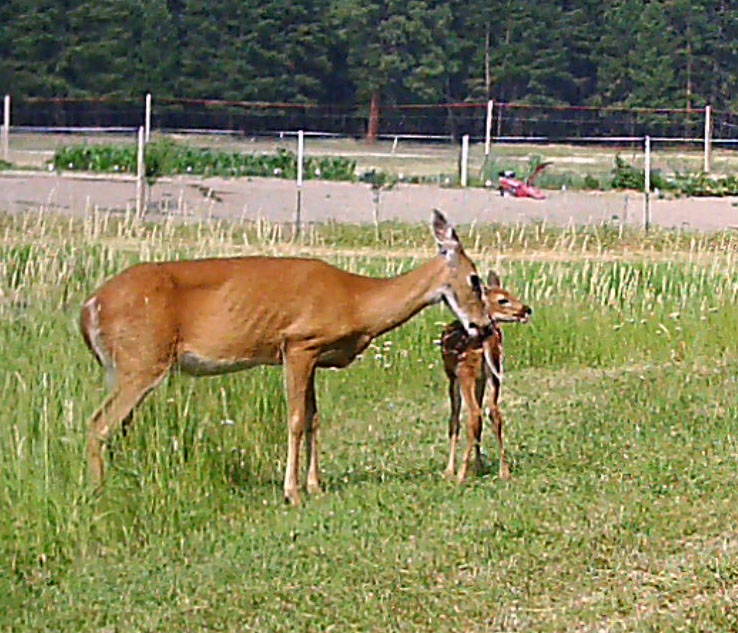
    The first two fawns we saw this Spring were in the mouths of coyotes on the game cameras. It’s a data point, not necessarily proving any trend – but it does support my hypothesis. Coyote predation has changed – and here’s the story as I see it.

    For several years, we had a pack of two elderly coyotes on the hill. He was buff – several times I had folks who glimpsed him tell me of a wolf. I had better views – for some reason of his own, watching me on the tractor was a worthwhile activity for him. I don’t know why -with his deep chest there may have been a little bit of dog in his genetics. Makes no difference – he knew he coexisted with humans, and left the house and my little dogs alone.

    His consort was missing an eye – the sort of thing it takes a lot of observation and trail camera time to observe. When they hunted, he was invariably to her left. If she did any tractor watching, she picked better concealment than he.

    I don’t know what took out the old coyotes – it could have been someone with a rifle, but it is probably just as likely that it was old age. If he went first, the wild life would have had no place for her disability. For whatever reason, my small pack of neighborhood coyotes is gone.

    In the absence of a resident pack, the trail cameras show that we now are included in the overlapping ranges of 3 larger packs – one group comes from the north, a second from the southeast, and the third from the west. Where we once had a pair of coyotes making a living full-time, we now have over a dozen hunting on the edges of their expanded ranges.

    The prey species has changed – the trail cameras show that the new packs have all focused on feral cats. Non-ferals, too – we don’t know how Cream disappeared, but circumstantial evidence points to the west coyote pack. And the population of feral cats living in downtown Trego is declining on the trail camera. I don’t know which pack has developed a taste for skunks, but fewer skunks are showing up on the cameras (I can’t believe we would have three packs of skunk-eaters.) I suppose that reducing the skunk and feral cat populations does help keep the area free of rabies.

    I kind of miss the old pair of coyotes that coexisted well with us – on the other hand, an uncontrolled population of feral cats pretty much calls for something to start preying on them. Studies in Chicago show that coyotes keep cat populations confined to residential areas.

  • Montana Moves to Control Burgeoning Wolf Population

    The Reintroduction of Wolves into Montana has been very successful, from only about 60 in the state in the 1990’s to estimates of over a thousand today. The State Government has recently passed a law to reduce the wolf population.

    Here’s Dean Weingarten’s writing on the topic:

    On 20 August, 2021, the Montana Fish & Wildlife Commission voted to follow the intent of bill SB315, passed by the legislature and signed into law by Governor Greg Gianforte, on 30 April, 2021. SB314 was passed with the goal of reducing the wolf population while maintaining a minimum of 15 breeding pairs or 300 wolves in Montana. The 15 breeding pairs or 300 wolves are mandated to keep the wolf in Montana from being re-listed as an endangered species by the Federal government.

    Re-listing would remove management of the wolf population from state control. The bill passed 62 to 35 in the House, 29 to 20 in the Senate, and was signed by Montana Governor Greg Gianforte on 30 April, 2021. From ktvq.com:

    After a public comment period that drew more than 26,000 comments, the Montana Fish & Wildlife Commission at its August 20 meeting adopted several changes to the 2021/2022 wolf hunting and trapping regulations.

    Changes include eliminating quotas, increasing the number of wolf trapping and hunting licenses allowed for individual hunters, extending wolf trapping seasons, and the allowance of snares for trapping wolves.


    Here is a summation of the rule changes, from a transcript of the Commission adoption of Wolf Harvest rules for 2021-2022.

    There is no quota for the number of wolves to be harvested. A review of the harvest by the Fish & Wildlife Commission is required when 450 wolves are reported as taken. Another review will be triggered whenever an additional 50 wolves are harvested.

    Wolf trappers are allowed a total of 10 wolves for the season. Wolf hunters have to buy a license for each wolf taken, with a limit of 10 licenses per hunter. There are limitations on what type of snares can be used. Spring powered snares are allowed on private land, but not on public land. Limitations on the snares used are designed to prevent the death of non-target species. Night hunting for wolves, with artificial lights and/or night vision devices, is allowed on private land.

    When wolves are harvested, the harvest is required to be reported to the Fish, Wildlife and Parks (FWP) within 24 hours. A review of the harvest will be triggered if a grizzly bear or lynx is captured in a snare or trap.

    In most parts of Montana, the wolf season will start on the first Monday after Thanksgiving to March 15. FWP is given the authority to delay the season start in those districts designated as Grizzly Bear Recovery Zones, but the season cannot be delayed later than 15 December, when most bears are expected to be denned up and hibernating. Grizzly Bear Recovery Zones are a small part of the state.

    From 2012 to 2019 the average annual wolf harvest in Montana was 242 wolves. In 2020, the harvest was 328 wolves. The wolf population in Montana has been estimated at 1200 wolves.

    The foremost wolf expert in the field, David Mech, suggested 50% of wolves over 5-10 months old need to be harvested each year to keep a stable population. Others suggested the number could be as low as 30%. From Wolf population dynamics (state of the art) p. 184:

    Mech (1970, 63-64) suggested that over 50% of the wolves over 5-10 months old must be killed each year to control a wolf population, basing his estimate on Rausch’s (1967) age structure data on over 4,000 harvested Alaskan wolves. Because these wolves were killed in fall and winter, the 50% kill figure would have been in addition to natural mortality from birth to 5-10 months of age. Keith (1983) reevaluated the proposed 50% kill figure by assembling data from several field studies. He concluded that the figure should be less than 30%, including a precautionary hedge. However, the data he used (Keith 1983, table 8) included populations that may have been stationary when 41% were taken, and declining populations with a 58%-70% take. These data do not conflict with the 50% figure.


    The Commission adopted the changes on a 3 to 2 vote. Elections have consequences. From mtpr.org:

    Pat Byorth voted against the proposal. Byorth is the only commissioner who is a holdover appointee from former Gov. Steve Bullock; the rest of the commission was appointed by Gov. Greg Gianforte. Byorth said the new measures run at odds to long-established hunting ethics and fair chase in Montana.


    If the commission is to follow the law, they need to reduce the wolf population. A harvest of 450 wolves would be a step in the right direction. To reach a harvest of 450 wolves, the commission loosened some of the many restrictions on wolf hunting and trapping.

    Whether the removal of those restrictions will be enough to reach the minimum goal of 450 wolves harvested will become known in the 2021-22 wolf season.

    The Wisconsin Natural Resources Board reached a similar conclusion to the Montana Fish & Wildlife Commission in 2021. The Wisconsin Board increased the wolf harvest goal in to 300, in an attempt to reduce the burgeoning number of wolves in the state.

    Grey wolves migrated from northern Alaska to what is now Canada, the lower 48 states, and South America about 10,000 to 13,000 years ago. The migration of man to the same area may have happened that late. There are persistent archeological indications man may have preceded the wolf by thousands of years.

    As long as the grey wolf has existed in most of Alaska, Canada, the lower 48 states and South America, they have been in competition with man for prey. Before the grey wolf became established, the dire wolf, the sabre toothed tiger, and the short faced bear became extinct. Many think man was the cause of that extinction.

    ©2021 by Dean Weingarten: Permission to share is granted when this notice and link are included. http://gunwatch.blogspot.com/2021/09/montana-moves-to-control-burgeoning.html

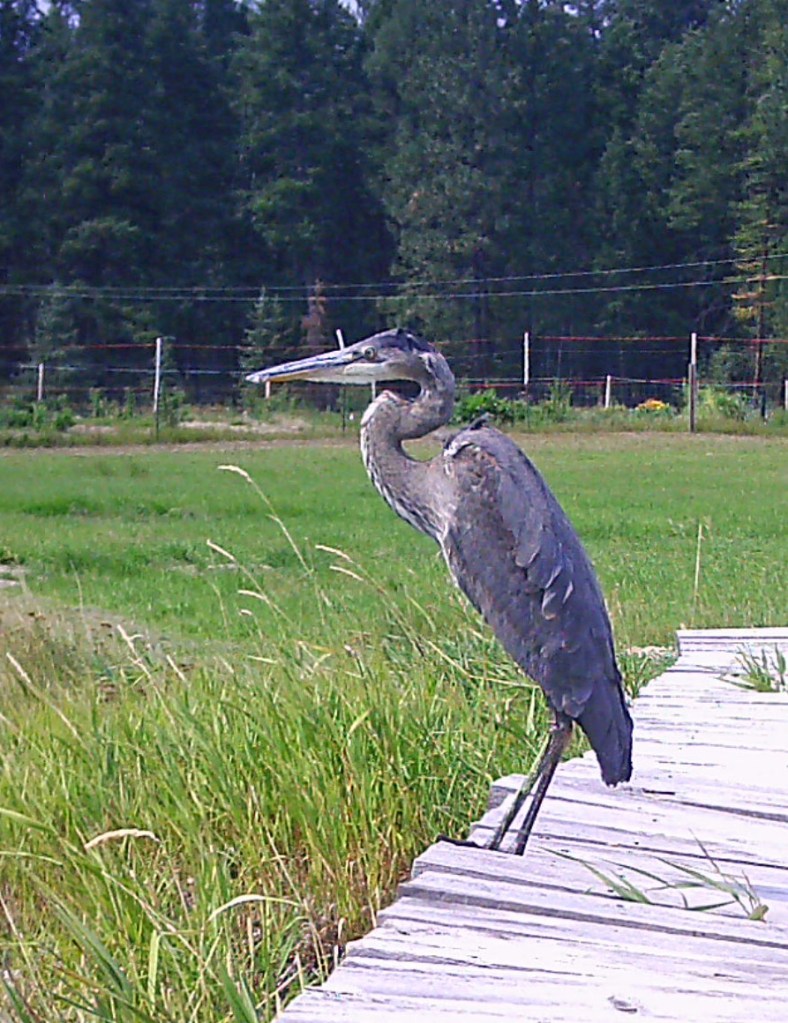
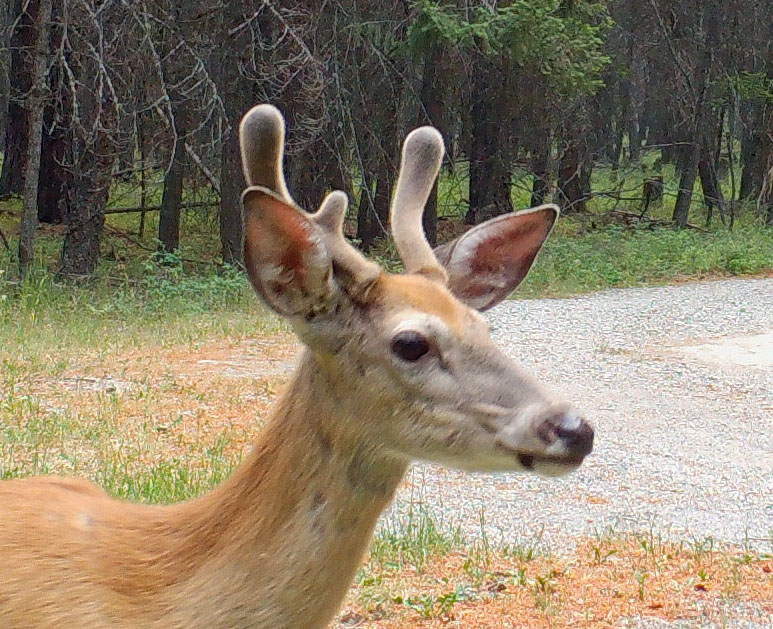
  • Patches Pieces

    Patches Pieces

    Eventually, all critters travel the driveway. Sometimes the game cam even catches them. A daytime appearance of the coyote on the driveway is unusual.  He is traveling the driveway most nights. All sorts of deer use the pond and driveway. I am not sure why it always seems to surprise me that skunks climb stairs.  The game cam caught one on the bridge step. For the last several days a blue heron has been hunting frogs in the pond.  So far no bear sightings on the game cam. But as the apples ripen, I expect we will see them around.