Trego's Mountain Ear

"Serving North Lincoln County"

Author: EntomologistJed

  • Knapweed, my current enemy.

    Knapweed, my current enemy.

    At this time of year, many hill-slopes have turned a sharp pink-purple color. Whether you’re in Glacier or driving along 93, you’ll see its flowers in the cuts alongside the road. Here in Trego proper, you can often find it in ditches, or there’s an abundant field of it downslope from the Trego Pub. Knapweed. It’s everywhere, and looking far healthier than anyone would like it to.

    Spotted Knapweed: note the black markings on the green, just below the flower blossom – these are the “spots”.

    Knapweed (Centaurea sp.) is a genus of invasive plant that plagues rangeland across western North America. Its seeds made landfall on the west coast, back in the early 1900s, possibly due to contaminated alfalfa seed. Now, over a century later, knapweeds flourish across America, from sea to shining sea, more successful than they were in their homeland of southern Russia.

    Thanks to the absence of the specialist insect herbivores that didn’t journey with it to the New World, and its bad taste, few things eat knapweed. And even if you are able to get something to eat it, with taproots reaching up to four feet deep, Spotted Knapweed is able to resprout with ease. Most knapweeds are only palatable to cattle early in their growing phase, quickly outcompeting grasses in overgrazed areas. To emphasize how terrible it can be in rangeland, feeding on Russian Knapweed may even prove fatal to horses.

    Several common native North American grasshoppers, notably the Red-Legged Grasshopper, feed on knapweed, but they weren’t effective at controlling it. Biocontrol began in the 1980s, with introduction of knapweed-specialist weevils, flies, and wasps. Over the past 40 years they’ve proven quite useful – if there are enough seed-head feeding insects, many fewer knapweed seeds are produced each year. It’s still not a quick fix – knapweed seeds can lay dormant in the soil for at least seven years.
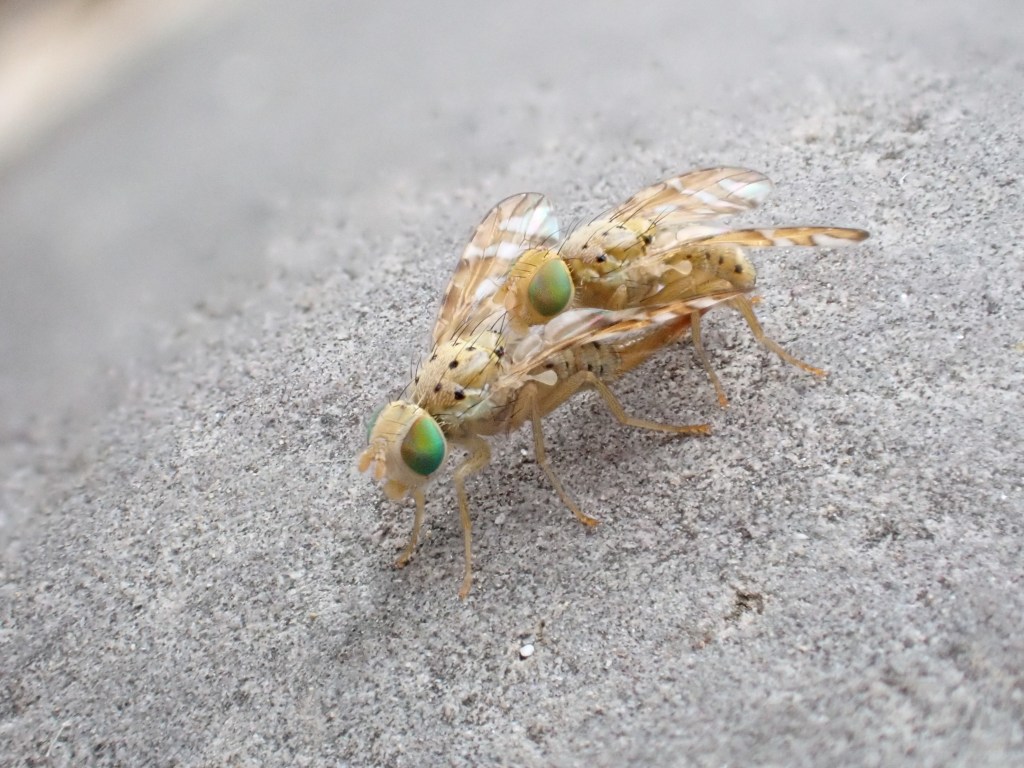
    The Knapweed Peacock Fly: introduced for biocontrol, its maggots destroy knapweed seedheads.

    These introduced bugs have done wonderful things. Knapweed is much less a problem than it once was, but biocontrol alone isn’t enough. If you happen to have knapweed on your property, the best thing you can do is to start spraying herbicide. I’ve been having decent success eliminating it with Milestone (Aminopyralid).

    As best I can tell, knapweed’s one virtue seems to be a high rate of nectar production – some folks enjoy making knapweed honey.

    What are your thoughts on knapweed? Have you ever tried knap honey?

  • Control of earwigs

    Are earwigs our friends or foes?

    That depends on the context.

    Earwigs are primarily scavengers of rotting plant material. They aren’t likely to damage your garden plants themselves. As omnivores, they often help control aphids, mites, and various pest insect eggs… and I’m more than willing to put up with them if it means fewer aphids.

    However, if your garden plants become damaged by other things (e.g. rot on cabbage leaves along the edges of Pierid caterpillar feeding), earwigs may contribute and make the damage worse. It’s not uncommon to find earwigs when shucking corn, often in the tassels, sometimes feeding on the corn itself. It’s rare for them to damage harder-skinned fruits such as apples (the skin tends to be too hard for them to get past on their own), but they may become a nuisance if fruit damage from birds is present.

    If you want your earwigs gone, I’m willing to provide a bit of advice. Try removing their shelters near your home (big rocks alongside the house, piles of old boards, wet mulch, pretty much anything decaying, etc.).

    Outside, earwigs can be trapped by burying small tin cans (pet food cans or tuna cans are the perfect size) or disposable cups level with the ground, and filling them with cheap cooking oil (leave at least an inch of space from the top). Earwigs and similar insect scavengers will try to feed and will fall to their oily deaths. Depending on your local wildlife, this may be an unwise tactic.

    If they’re inside the house, set up a trap of moist newspaper rolled into tubes, containing a small amount of bait (rolled oats, wheat bran or wheat germ). The main idea is to create a dark daytime shelter that the earwigs will like. Check your trap every two or three days. When opening your earwig traps, either bag and trash the whole setup… Or shake the earwigs into an empty container to give them to chickens as feed (the flock my folks kept loved eating them).

    If you want to wage more aggressive warfare against earwigs, consider using diatomaceous earth. This comes from ancient freshwater sediments rich in the sharp glass-like remains of tiny algae called diatoms. It controls insects by damaging their outer waxy layer, causing them to die from dehydration. Diatomaceous earth should be spread in areas earwigs are likely to cross, entrance points to your home and places where they are abundant. If in the garden, ring the bases of plants you are concerned for with it.

    If you want to go the chemical warfare route, both permethrin and carbaryl (Sevin) have forms that are safe for use around food plants. I would recommend using a bait rather than a spray poison, as it will kill fewer of your beneficial garden insects like ground beetles and lady beetles. If earwigs are your target, you should be putting down poison in the evenings, as they are primarily nocturnal, and that way you’ll waste less of your bait on non-target insects.

    Consider commenting below to let us know how your earwig control efforts are going!
    What other insects would you like to hear about?

    Next week: Wasps!

  • Earwigs. They’re everywhere, no?

    Just yesterday morning I found one curled up inside the handle of my razor.

    It’s been a good year for earwigs here, a rather moist spring. If you’ve got dead wood near your house or any other nice pile of decaying plants (even mulch), you’ve likely noticed them yourself.

    Perhaps you’ve heard that earwigs crawl into sleeping people’s ears to feed… people have been telling that story for quite a while! The name “earwig” comes from Old English: either from “ēarewicga” which means something like “ear wriggler” or “ēarewic” meaning “ear dweller”. I’m glad to report that earwigs don’t *actually* feed when they do this… but they are known to crawl into ears from time to time.

    All insects are crustacean refugees, you see. The first insect ancestors abandoned the rest of their crustacean kin to flee the water and its predators long, long ago. Though insects have lived on land for a long time now, moisture is still important for their survival. Insects have a protective wax layer that prevents water loss, but if this gets damaged it’s easy for them to dry out. Therefore, many insects prefer to be in a moist environment. Our ears can qualify, in the absence of better housing prospects. Today, straw mattresses being much less common than they once were, it’s unlikely that your ears will gain new tenants. Perhaps if you go camping and skip the tent…

    Now that we’re in the full heat and dryness of summer, earwigs may seek shelter inside our homes, often in damp, dark places. (Think of that pile of dirty laundry in your kids’ room, the wet spot under the sink, damaged potatoes in the pantry, etc). While they don’t hurt much that wasn’t already damaged, they may begin to harm roots on well-watered houseplants.

    Personally, I think that earwigs are beautiful. And remarkable – mother earwigs take good care of their offspring, something rather rare in non-social insects. They rotate the eggs, gently cleaning them of fungus, retrieve food for their young once they’ve hatched, and eventually lead the kids out of their burrow on foraging expeditions. Young earwigs play nicely with each other as well – the kids help feed each other when mom’s out.

    I’ve got a soft spot for good parents, human and insect alike.

    Next week – earwig pest control advice.

    What’s the strangest place you’ve seen an earwig?