Trego's Mountain Ear

"Serving North Lincoln County"

Category: A Science for Everyone

  • An IQ Too Low for the Military

    Jordan Peterson has a brief video on youtube describing the IQ cutoff the US military uses in recruitment. (Jordan Peterson | The Most Terrifying IQ Statistic)  He explains that the army doesn’t recruit for people who score below 83 because they can’t be trained. 

    I think he has simplified the explanation – the ASVAB is the military test.  While it is not technically an IQ test, it correlates closely.  I’m not about to fact-check Jordan Peterson on a technicality.  He explains that 10% of the population have an IQ below 83, and the chart shows that 11.5% of the population score 82 or below.  Definitely close enough for a short lecture.

    I think back among my students, and recall asking the slowest veteran I ever had in a class what he did in the army.  He replied he had been a gama goat driver.  The photo suggests that he probably had skills that would transfer to operating a rubber tired skidder – but probably lacked the forest experience.  My experience tells me that he would have been a good, reliable tail chainman on a survey party – but even at that time, electronic measuring devices were replacing the chains.

    All told, I think I understand why Jordan Peterson called it “The most terrifying IQ statistic.”  If he was close to correct – and I suspect he was – we’re looking at somewhere around one person in nine that can’t be trained to perform a minimum military job adequately.  I suspect the civilian world isn’t any more merciful.  Years ago, I had the privilege of knowing Doug.  The army had released him because of a low score – whether IQ or ASVAB makes no difference.  He was in his fifties, and remembered vividly the date when he learned he wasn’t good enough.  He made a living as a ranch hand, mostly working cattle, haying and fixing or building fences . . . he was conscientious and reliable at handloading ammunition, and a cautious, safe driver.  As I watched Peterson’s video, I realized how few jobs there are for folks like Doug.   There was a place for Doug in north central Montana, but few areas have that opportunity.  Doug couldn’t have made it in the urban technical world.   Anything that finds one person in nine untrainable is a terrifying statistic. 

  • Non-reproducible research

    About 20 years ago, I realized that I had a fairly unique opportunity to test the hypothesis that 4-H was strongest where it was multigenerational – 4-H members grew up to be 4-H leaders, and the program was strongest where the multi-generational membership was the most common. 

    I was working with 22 counties, and 4 of them had Extension secretaries with 30 or more years of experience, and full records.  Complete records is more challenging than you might think – when I worked as a County Agent, the records were in the basement, and a cracked sewer line helped me make the decision that they couldn’t be recovered.  Obviously, if I had only 4 counties out of 22, reproducing the research would be difficult at best.  On the other hand, if it didn’t get done in the next year, retirements would make it impossible to do once. 

    In 1950, 18% of rural youth belonged to 4-H, with the membership plateau ending in 1976 (Putnam 2000, Bowling Alone), with a 26% decline in membership between 1950 and 1997.  And I was listening to folks who told me that the problem was a shortage of volunteer leaders.  It looked like I could find the numbers in those 4 counties with the oldest secretaries. 

    I was on a roll – the secretaries showed that 151 4-H families had at least one parent who had been a 4-H member as a child, 78 families where neither parent had been a member, and the parents of 6 families could not be determined.  We defined 4-H members who had belonged to a club four years or more as persistent, and contrasted their statistics with first-year members.  None of the six families whose 4-H history couldn’t be determined had any persistent members, so the sample, while not particularly large, was clean.

    Well, the stats were simple – Chi square was calculated at 45.03, the probability of the distribution occurring by chance was less than 0.001.  The data supported the hypothesis that parental involvement in 4-H (as a club member) is the greatest single predictor of member persistence in 4-H.  Two thirds of the persistent members (4 years or more) had parents who had been 4-H members in their youth, while two thirds of the first-year members had parents who had not been 4-H members.   The kids most likely to drop 4-H were kids whose parents had not been in 4-H and were not 4-H club leaders. 

    The evidence was pretty solid that a multigenerational 4-H identity helped keep kids in 4-H – but it was equally solid that 4-H membership wasn’t random . . . it was hereditary, like the British nobility.    Still, making a conclusion about a national program from a sample of 334 people in 4 counties seems to be a stretch.  As I look at the Harry that was once an English prince, I wonder about researching the worldwide decline of royalty.

    Non-reproducible research isn’t necessarily bad research, and it can provide some interesting conclusions – but it is better when you know it’s non-reproducible from the beginning.

  • Economic Drivers and Housing Shortages

    Economic Drivers and Housing Shortages

    Back in 1960, Lincoln County was timber, mining and farming.  There was a fairly stable population, jobs were available, and both small and large ranches.  Along with the Corps of Engineers planning Libby dam, and looking at flooding the lands near the Kootenai, by the middle of the decade our communities became boomtowns, needing housing for the newcomers who would be working on the tunnel, the railroad relocation, the highway relocation, and Libby dam itself. 

    I was in high school – and Dad was looking at a trailer court, pretty much where the trailer court is today in Trego.  His advantage in negotiating with the company that had the contract for the tunnel was me being in high school.  Gail Tisdell, a classmate  who worked at Lynn’s Cafe over lunch hour, kept me informed about the company honchos lunch table discussions.  Long story short, we wound up with a trailer court built pretty much to the specifications they brought in from San Mateo.  Jack Price put in a trailer court down by the substation.  Up the creek were two more: Westwood Acres and S&S.  All told, Trego went from being virtually trailer-free to about 200 spaces in the course of a year. 

    Likewise, when the tunnel and the railroad relocation ended, so did the largest trailer courts.  Across the county, we had a surplus of trailer spaces that would last for decades.  Many weren’t built to those California standards – I recollect septic tanks built from laminated cull 2×4’s.  The materials were cheap, the construction sub-marginal, and a place that had once housed 50 families emptied and left to collapse.

    A half-century later, watching the ads and listening to people looking for housing shows me that we’re in a new housing situation.  Kind of a 55-year cycle – in 1910, all it took to resolve a housing shortage was an axe, a crosscut saw, a froe and a chisel.  In 1965, the spirit of capitalism moved in to develop trailer courts across the county as labor boomed in construction projects.  Now, we’re looking at a county that the USDA Economic Research Service lists as Government dependent. 

    It says something when your county’s largest economic drivers are federal and state government employment – the definition is that over 14% of annual earnings are from federal or state government jobs.

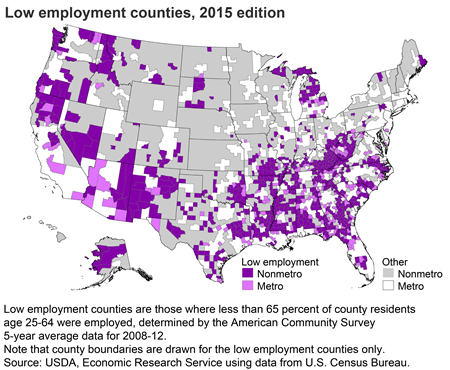
    Additionally, the ERS lists Lincoln county as a “low employment” county – and the definition is “less than 65 percent of county residents 25-64 were employed.”  The examples are often anecdotes instead of data – a friend from my youth, who hasn’t migrated out for work, explained that his highest paid years were in the seventies.  We’ve been migrating out for work, then returning, for several generations.  It makes a difference in the statistics. 

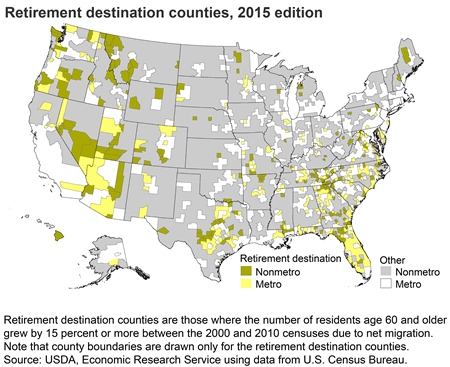
    If you note the classification as a retirement destination county – “where the number of residents age 60 and older grew by 15 percent or more between the 2000 and 2010 censuses due to net migration.”  Home building, home purchases, are a bit easier for folks who are moving in at the end of their careers.  Some of our retirees are returning.  Others, not originally from here, still have the same motivation – in both cases, “going home to a place he’d never been before” is somewhat appropriate.

    Anyway, watching the rental market shows that the world has changed.  An axe, saw and froe no longer combine with a strong back and a willingness to work to build a home.  There are safer, less regulated places for venture capital than building a lot of housing rapidly.  Young families compete with retirees – and it’s a lot easier to buy or build that second or third house when you’re holding the check for the house you sold in Oregon, or Washington, or California.

  • Time to Plant Alfalfa

    It’s time to plant alfalfa again.  I’m pretty sure that I last planted this field when I was in high school, in the mid-sixties, and it has run out.  But the world is a different place now, and many new varieties have developed in the past half-century.

    I like alfalfa – it gets a couple harvests each year, even here, and the seed germinates in soil temperatures from 40 degrees to 104.  The big challenge is a well prepared seedbed and avoiding the last Spring frost.  Then comes hoping for rain.

    About a century ago, someone decided the easy way to make a field here was dynamite – blasting a ditch that drained a lake and left only a pond.  It was an easy way to make a field, but the soil under the lake was glacial clay and silt, and the years had left it infused with calcium salts.  I don’t recall if the alfalfa I seeded back in the sixties was Vernal, Grimm or 9-19 – buying the seed was Dad’s responsibility, planting it was mine.  This time, I have the task of tillage – with a rototiller on the back of a tractor instead of a plow, and the task of selecting the variety of alfalfa.

    I’m looking to the east to find my alfalfa.  Not so far, just east of the Rockies where they have developed salt and water tolerant species to use in saline seeps.  My new variety should be able to handle the water table – it has both lateral and tap roots – and the calcium salts.  The rototiller is breaking up the moss that has moved into the meadow, demonstrating the compaction and reduced fertility.  Sometimes, decisions made a century ago still affect your options a hundred years later.

    I’ll be maintaining the half-acre of salina wildrye – a range plant native to Utah.  Mine descended from a pocketful of seeds I picked around 1980, planted in the salt lick, and left it for 30 years to handle the overgrazing.  It’s been successful, and Utah’s Extension Service describes it “Salina wildrye is fair to poor forage for livestock and game animals, being most useful during the early spring. It is used to a limited extent by upland game birds and songbirds. It is a rather poor erosion control plant in pure stands because of its bunchiness. The foliage is harsh and tough to the touch. Salina wildrye is quite resistant to grazing.”  My half-acre matches that description, but has the advantage that it thrives alongside the 49th parallel, and likes fine-textured soils.  

    After I get the first 3 acres of salt and water tolerant alfalfa in, I’ll be looking at the southwest and southeast corners of the field.  They’re up against the quarter line, and I’ll probably plant those edges into a herbicide resistant alfalfa – back to just deep roots, and an easier spot to control the occasional knapweed plant that the deer bring in.  The following year will be another small patch of the salt tolerant alfalfa. 

    Maybe the second childhood just means returning to small scale farming.

  • Measuring Forest Canopy

    Measuring Forest Canopy

    I like foresters – they have some fun tools.  In grade school, I learned how to use an increment borer to determine a tree’s age and it’s rate of growth.  Later, I learned how those tools, coupled with beams in cliff houses and other old dwellings in the American Southwest helped develop the specialized science of dendrochronology – determining dates by the study of growth rings in trees.  It turns out that it also provides a lot of information about past climate and weather.

    This week, I got my hands on a spherical densiometer.  It’s a simple little tool, designed to measure the density of the forest canopy.  Fits in a shirt pocket, and shows that it was developed by a forester in the correction factor – you multiply your count by 1.04.  Others might try for a 1:1 reading – but a forester deals with Scribner scale, Doyle scale and International scale for measuring logs, and knows that what is correct with one method gives a different answer if you change methods.  1.04 is close enough in forestry.

    I want to get a better handle on canopy because of a comment Joe Zacek made over 40 years ago in a conversation with Tim Wiersum.  Joe was a range scientist – one of the best – and Tim was trained as a forester.  They were closing in on a magic number in forest canopy figures . . . and figured that somewhere between 25 and 30 percent canopy would provide 100% of harvestable timber and 80% of potential grass.  I figured it was all a matter of sunlight – but as I’ve grown older, I’ve noticed that the open areas tend to have a bit more soil moisture in the Spring. 

    Other studies have been done on canopy (or crown density) and the spread of fires.  I’m certainly no expert, but using the densiometer on the old road shows me that a road that made a good firebreak 70 years ago isn’t anymore. 

    It’s a simple little tool – but if I can carry it in my pocket, improve grass growth, timber growth and fire safety, I’m going to enjoy using it.  A real forester might be better, but I’m happy with the tool. And things just might get better as I use it.

  • With the April Run We Could Make Solid Comments on Snow Pack

    My last year of snow surveys – 40 some years ago – was, in some ways, the hardest one. Jay Penney was out on medical leave with congestive heart failure, Tom Engel had transferred to Phoenix, and I was handling both the Flathead and Kootenai drainages with help from the Forest Service. I can’t say enough good about those guys – over six months, I’d meet a new sidekick daily, few that I’d work with twice, and only one screwed up a snowmobile – and I could still drive it out without a ski (the old Alpines had only one ski, and it didn’t take much of a blunder in reverse to break it off).

    In April I could confidently comment on the status of the snowpack. Then, telemetry was new. Today, we have a website and the graph does a good job of showing how the snowpack data gets a lot more solid at the end of March.

    This next graph does a great job of showing why the measurements are in snow-water equivalents instead of just the depth of snow.  The green peaks show individual snow storms, and how quickly the snow settles from the fluffy snowflakes.

    So where are we?  As of 04/03/21, these are the numbers.

    Snow WaterPercent of Average
    Stahl Peak27.0 inches78 %
    Grave Creek11.2 inches81 %
    Banfield Mountain13.7 inches77 %
    Hawkins Lake20.8 inches84 %
    Garver Creek 8.8 inches96 %
    Poorman Creek29.5 inches83 %

    If I were running the numbers, I’d say we’re on the light side of normal – but it isn’t my call. It is interesting to note that none of my measurements are left in the 30-year average.