Trego's Mountain Ear

"Serving North Lincoln County"

Category: Plants

  • Lilacs Blooming? Time to plant Beans (among other things)

    Lilacs Blooming? Time to plant Beans (among other things)

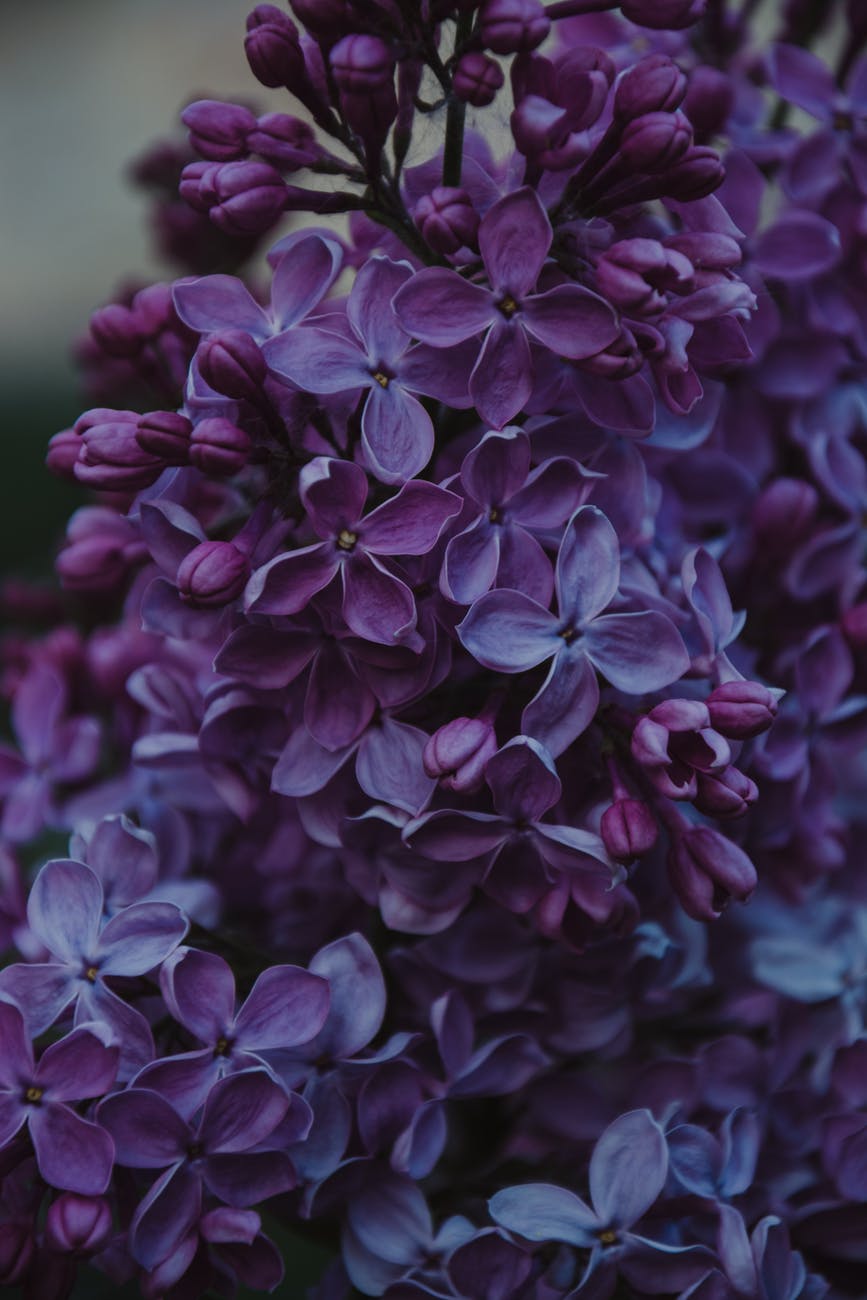
    I’ve noticed the lilacs beginning to bloom in Eureka, and remembered that the blooming time of lilacs corresponds to the planting time for some crops. They are an “indicator” species, as it were.

    The study of when plants bloom and other seasonal events (such as migration) is phenology. It can be used by observant gardeners to determine when to plant, even across different regions. Lilacs bloom at the same number of growing days, even when they do so at different dates.

    Beans, cucumbers, and squash should be safe to plant when the lilacs are in full bloom.

    The timing of lilac blooming (and leafing) was studied in-depth by a professor at MSU. We wrote about him last year.

    Montana’s Greatest Climatologist

    My one class in climate studies was about 40 years ago at Montana State University.  The professor was Joe Caprio . . . yeah, “The Father of Scientific Phenology.”  It’s interesting how many state climatologists make their starts as meteorologists.  Anyway, I was back in school, getting enough credits in ag engineering to qualify as a professional with SCS, and when I took his class on climate, and when he learned of my experience in snow surveys, it became Mike and Joe – a very honored Mike that was told “Call me Joe.” Dr. Caprio’s specialization and research was climate…

    Keep reading
  • Time to Plant Alfalfa

    It’s time to plant alfalfa again.  I’m pretty sure that I last planted this field when I was in high school, in the mid-sixties, and it has run out.  But the world is a different place now, and many new varieties have developed in the past half-century.

    I like alfalfa – it gets a couple harvests each year, even here, and the seed germinates in soil temperatures from 40 degrees to 104.  The big challenge is a well prepared seedbed and avoiding the last Spring frost.  Then comes hoping for rain.

    About a century ago, someone decided the easy way to make a field here was dynamite – blasting a ditch that drained a lake and left only a pond.  It was an easy way to make a field, but the soil under the lake was glacial clay and silt, and the years had left it infused with calcium salts.  I don’t recall if the alfalfa I seeded back in the sixties was Vernal, Grimm or 9-19 – buying the seed was Dad’s responsibility, planting it was mine.  This time, I have the task of tillage – with a rototiller on the back of a tractor instead of a plow, and the task of selecting the variety of alfalfa.

    I’m looking to the east to find my alfalfa.  Not so far, just east of the Rockies where they have developed salt and water tolerant species to use in saline seeps.  My new variety should be able to handle the water table – it has both lateral and tap roots – and the calcium salts.  The rototiller is breaking up the moss that has moved into the meadow, demonstrating the compaction and reduced fertility.  Sometimes, decisions made a century ago still affect your options a hundred years later.

    I’ll be maintaining the half-acre of salina wildrye – a range plant native to Utah.  Mine descended from a pocketful of seeds I picked around 1980, planted in the salt lick, and left it for 30 years to handle the overgrazing.  It’s been successful, and Utah’s Extension Service describes it “Salina wildrye is fair to poor forage for livestock and game animals, being most useful during the early spring. It is used to a limited extent by upland game birds and songbirds. It is a rather poor erosion control plant in pure stands because of its bunchiness. The foliage is harsh and tough to the touch. Salina wildrye is quite resistant to grazing.”  My half-acre matches that description, but has the advantage that it thrives alongside the 49th parallel, and likes fine-textured soils.  

    After I get the first 3 acres of salt and water tolerant alfalfa in, I’ll be looking at the southwest and southeast corners of the field.  They’re up against the quarter line, and I’ll probably plant those edges into a herbicide resistant alfalfa – back to just deep roots, and an easier spot to control the occasional knapweed plant that the deer bring in.  The following year will be another small patch of the salt tolerant alfalfa. 

    Maybe the second childhood just means returning to small scale farming.

  • Getting Ready to Plant

    Yesterday, I took the snowblower from the back of the Kubota, and took the snowplow from the front.  Today, I mounted the rototiller on the Kubota – I’m getting ready to plant alfalfa in the fields again.  There isn’t much left, and I think the last planting was when I was in high school.  It was harder then, using Dad’s old Oliver tractor, pulling a modified horse disc that still had the seat on it.  We did a couple years of barley then, to make sure the soil was adequately tilled.

    Forty years ago, I would have argued against the traditional 9-19 blend or vernal that was often the Trego norm, and gone with Ladak 65.  Still, old decisions affect today’s decisions.  The field was created a century ago, with dynamite used to blast a drainage ditch, drain the lake, and leave a hay field – back in the days when horse logging and river transportation was the way things were done.

    This time, I’ll be trying a different variety of alfalfa – salt tolerant, branching roots as well as tap roots, and more tolerant of wet soils.  My soil is glacial silt and glacial clay, and long on calcium salts.  Draining the lake a century ago still left groundwater – but there has been a lot of research and development on alfalfa since I was young.  It’s a bit more expensive – but if it works, it’s worth it.

    So I will start working the soil again with the tractor and the tiller – and each pass with the tillage instrument brings back comments from Jack Price, who brought the first tiller to his fields below the hill in the seventies.  Jack explained that the problem with using a plow in wet areas is that it wants to get the tractor stuck, while the rototiller wants to push the tractor ahead.  As I’ve encountered challenges in using the tiller, Jack’s comments about his learning to use a tiller keep coming back when I need them.  It takes a talent for teaching to deliver a lesson that returns over 40 years later.  Jack’s ability to teach was greater than I realized at the time.

    I recall hand-seeding the field with a whirlygig seeder, crossing the field with my previous footprints as a guide, then brushing a little cover over the seeds with a drag made of aspen, pulled by a draft horse that knew more about farming than I did.  I’m hoping this experiment with alfalfa works out.  I’m not sure I enjoy haying – but I do enjoy watching a healthy field of alfalfa grow.

  • A new batch of widowmakers

    A new batch of widowmakers

    The recent windstorms have left new widowmakers in the trees.  I spoke with a young neighbor who was hit by one, and left with a gash in the back of his head – and was reminded that they aren’t all that easy to see when you are dropping a tree.  It is a reminder of the blessings of wearing a hard hat – but even that isn’t a perfect solution.

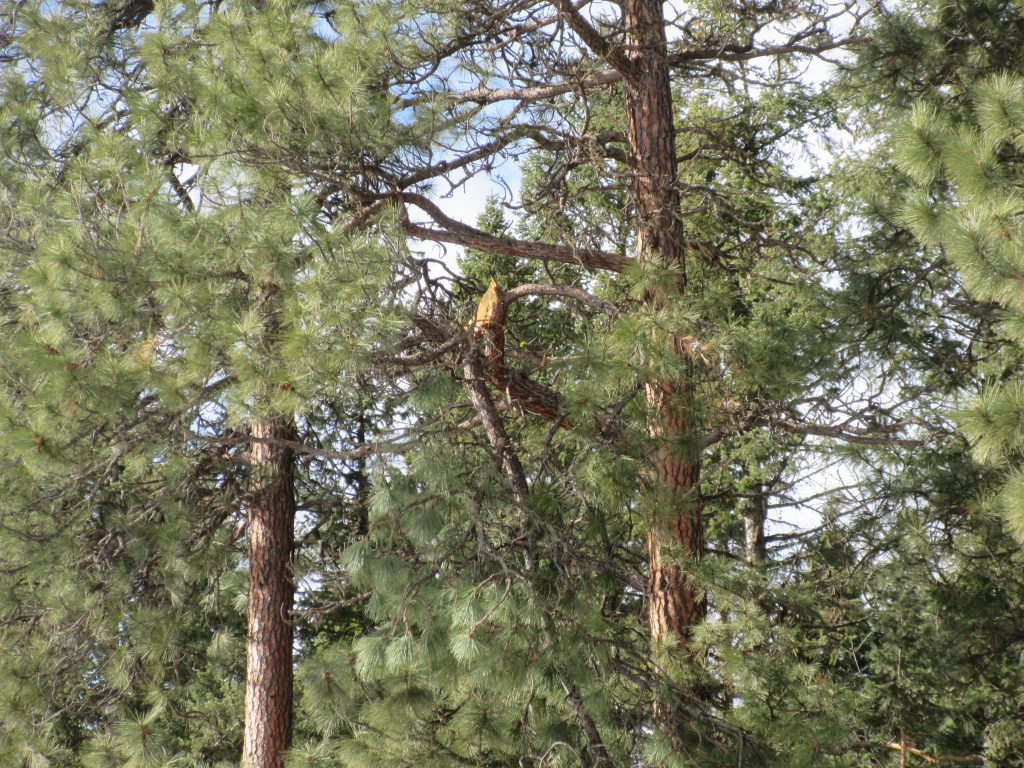
    Still wedged in the tree after nearly sixty years.
    A new widowmaker, needles still green.

    Not all widowmakers are new.  As I clean up blowdowns, thin crowded trees, and so on, I encounter one widowmaker that Dad warned me about when I was in my early teens.  Nearly sixty years later, it is still wedged into the tree, dried and seasoned, but still large enough to provide a fatal headache.  I can see how to drop the tree safely – but as the tree falls, I can also see where you don’t want to be when the widowmaker finally falls free.

  • Thinning in Winter

    Thinning in Winter

    When I start the chainsaw, I attract deer.  The inflow starts with a doe who learned, as a fawn, that my chainsaw meant there would be winter food near the house,  She shows up, with her yearling daughter and two fawns.  She often chooses to browse the mosses and lichens on the trees, as do the rest of her family.  The newer dependents usually just browse the needles – and they seem to come to dinner in their own family groups to minimize conflict.

    The place needs thinning.  The large stumps bear witness to the first logging – done around 1910, with smaller stumps showing a second, smaller harvest a little after the second world war.  Yet another scattered group of stumps shows where a man with a horse, a saw and a broadaxe could be in the crosstie business – opportunity, if hard work.  The other stump evidence shows the Christmas tree industry . . . and I wonder if we could have yarded Christmas trees along the old road in the sixties and seventies without the deer browsing destroying them. 

    I had a visitor comment, “You’re parking it out.”  I don’t see it that way – nearly 50 years ago, a forester taught me a simple principle – each acre will produce about the same amount of wood.  Spaced properly, the wood grows into harvestable logs.  Additionally, with the open canopy, it will produce about 80% of the grass that would grow on an open meadow.  Forest management pays, but takes a long-term perspective and consistent maintenance.  Others may think I’m parking it out close to the house – I think I’m still that same conservationist . . . though I left that career path almost 40 years ago.

    And I learn – doing my thinning mostly in the winter provides food for my semi-domestic dependents.  There is something pleasant about trimming branches on one end of a log while deer browse 15 feet further up.

    Apologies to our subscribers if you were notified about this article twice. An unfortunate result of working in the wee morning hours on little caffeine. We’re still only coming out on Tuesdays.

  • Festive Parasites

    Mistletoe is a classic Christmas decoration, which has always struck me as rather odd, considering that all varieties of mistletoe are parasitic plants. Depending on how bad the infestation is, mistletoe is quite capable of killing its host plants.

    There are many types of mistletoe (117 species globally, 5 species of dwarf mistletoe are common in Montana). While mistletoe have many different host plants, around here our mistletoe varieties tend to be specialists on conifers – I’ve spotted some local Western Dwarf Mistletoe, generally found on Ponderosa Pines.

    As for why we associate mistletoe plants with kissing?
    They’ve been plants of spiritual importance for quite some time. And with that come many attempts at medicine… don’t try these at home, folks.

    It’s easy to see why folks thought mistletoe might help fertility, though – Europe’s common mistletoe is an evergreen plant. It’s easy to find flourishing, clearly healthy and alive, even when all the deciduous trees are leafless. And think of how much more special the mistletoe would be thought, if it came from a type of tree held to be sacred, such as an Oak or an Ash.

    The Roman historian Pliny the Elder claimed that Druids used mistletoe gathered from sacred oak trees in their rituals, though there’s little enough proof of that… it’s a long time back, the druids didn’t keep written records, and Pliny isn’t without error. Similarly, in northern Japan, the Ainu people used mistletoe gathered from their sacred willow trees to try to encourage fertility, as well as cure ailments.

    In the great Roman epic, the Aeneid, the hero Aeneas is told to carry a golden branch of mistletoe with him on his journey to the underworld, so that he’ll be allowed to return to the surface world again. When there, he speaks with the dead, notably his father, and hears stories of how the Caesars will be his descendants.

    However, it’s most likely that mistletoe’s connections to our holiday festivities come out of its ties to Norse mythology.

    There’s a legend that the queen of the Norse gods, Frigga, went through all the world, making everything promise that it would not hurt her son, Baldr. You see, Baldr had recently begun to have visions of his death, and it is said that even gods find death a concerning prospect.

    Now Baldr was a god of summer, beauty, and peace – best loved of all the gods. All the world pledged their love for Baldr. Stout oak and ash trees promised that their wood would never harm Baldr, stone and metal, beast and people alike. All pledged that they would not harm Baldr.

    Loki, troublemaker of the gods, disguised himself as an old woman, and coaxed Frigga until she revealed the one thing she didn’t ask this of – mistletoe. She thought it too young, too weak a plant to harm Baldr, and hadn’t worried about asking it.

    After hearing this, Loki journeyed east from Asgard, home of the gods, until he came to the forests where mistletoe grew. There he found mistletoe, and taking a particularly healthy plant, fashioned it into a throwing dart, and came back to the gathered gods celebrating Baldr’s invulnerability.

    To test Baldr’s invulnerability, the gods held a celebration, and tried to harm Baldr with various weapons, lightly at first, then with more grievous and more grievous attacks. They delighted when nothing could harm Baldr, and believed that he had successfully cheated his visions of death.

    At the outskirts of the gathering stood Hodr, Baldr’s blind half-brother. Another god of the seasons, Hodr was a god of winter, and surviving dark and harsh times. Loki asked Hodr why he wasn’t joining in the celebrations, and Hodr replied that he didn’t have a weapon to use against Baldr, and even if he did, he couldn’t see to use it properly. Loki offered to help Hodr join in the fun, gave him the dart of mistletoe to throw, and even helped guide his hand… When Baldr was struck, and mortally wounded, Loki made himself scarce, leaving poor Hodr to be executed for the murder of his brother.

    The tale runs on, but the gist is that the Norse gods were unable to retrieve Baldr from the underworld. His mother, Frigga, wept, and her tears became the mistletoe berries. As Frigga was a goddess of love, marriage, motherhood and all things associated, mistletoe berries gained importance in treating infertility…

    Not that I’d suggest you try to do so. Most mistletoe varieties are somewhat toxic.