Trego's Mountain Ear

"Serving North Lincoln County"

Tag: Demography

  • Economic Drivers and Housing Shortages

    Economic Drivers and Housing Shortages

    Back in 1960, Lincoln County was timber, mining and farming.  There was a fairly stable population, jobs were available, and both small and large ranches.  Along with the Corps of Engineers planning Libby dam, and looking at flooding the lands near the Kootenai, by the middle of the decade our communities became boomtowns, needing housing for the newcomers who would be working on the tunnel, the railroad relocation, the highway relocation, and Libby dam itself. 

    I was in high school – and Dad was looking at a trailer court, pretty much where the trailer court is today in Trego.  His advantage in negotiating with the company that had the contract for the tunnel was me being in high school.  Gail Tisdell, a classmate  who worked at Lynn’s Cafe over lunch hour, kept me informed about the company honchos lunch table discussions.  Long story short, we wound up with a trailer court built pretty much to the specifications they brought in from San Mateo.  Jack Price put in a trailer court down by the substation.  Up the creek were two more: Westwood Acres and S&S.  All told, Trego went from being virtually trailer-free to about 200 spaces in the course of a year. 

    Likewise, when the tunnel and the railroad relocation ended, so did the largest trailer courts.  Across the county, we had a surplus of trailer spaces that would last for decades.  Many weren’t built to those California standards – I recollect septic tanks built from laminated cull 2×4’s.  The materials were cheap, the construction sub-marginal, and a place that had once housed 50 families emptied and left to collapse.

    A half-century later, watching the ads and listening to people looking for housing shows me that we’re in a new housing situation.  Kind of a 55-year cycle – in 1910, all it took to resolve a housing shortage was an axe, a crosscut saw, a froe and a chisel.  In 1965, the spirit of capitalism moved in to develop trailer courts across the county as labor boomed in construction projects.  Now, we’re looking at a county that the USDA Economic Research Service lists as Government dependent. 

    It says something when your county’s largest economic drivers are federal and state government employment – the definition is that over 14% of annual earnings are from federal or state government jobs.

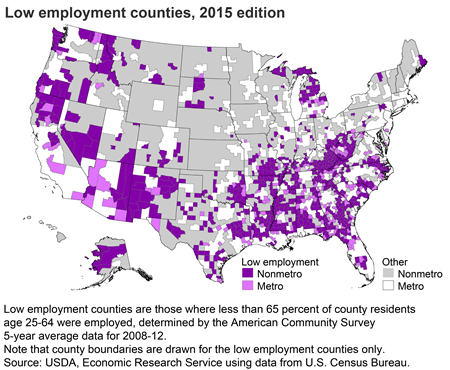
    Additionally, the ERS lists Lincoln county as a “low employment” county – and the definition is “less than 65 percent of county residents 25-64 were employed.”  The examples are often anecdotes instead of data – a friend from my youth, who hasn’t migrated out for work, explained that his highest paid years were in the seventies.  We’ve been migrating out for work, then returning, for several generations.  It makes a difference in the statistics. 
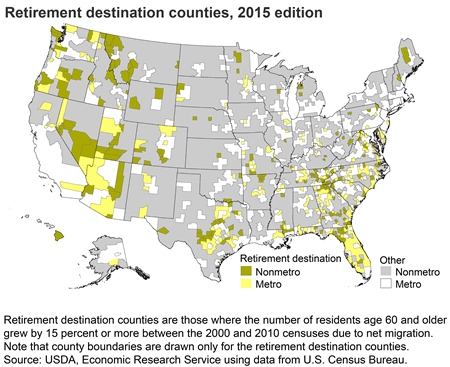
    If you note the classification as a retirement destination county – “where the number of residents age 60 and older grew by 15 percent or more between the 2000 and 2010 censuses due to net migration.”  Home building, home purchases, are a bit easier for folks who are moving in at the end of their careers.  Some of our retirees are returning.  Others, not originally from here, still have the same motivation – in both cases, “going home to a place he’d never been before” is somewhat appropriate.
    Anyway, watching the rental market shows that the world has changed.  An axe, saw and froe no longer combine with a strong back and a willingness to work to build a home.  There are safer, less regulated places for venture capital than building a lot of housing rapidly.  Young families compete with retirees – and it’s a lot easier to buy or build that second or third house when you’re holding the check for the house you sold in Oregon, or Washington, or California.

  • On trusting the experts

    I have changed the trapdoor into the crawlspace under my house.  The builder was, is, a better carpenter than I.  Yet over the past 4 years, I have never been satisfied by the trapdoor he built.  He has built many houses – but I have gone into the crawlspace many times, as I worked with the water lines.  Sometime during those trips below the main floor, my expertise on that particular part of the house surpassed his – and this winter, I realized that in order to do things right, I had to strip the trapdoor out, then rebuild it so that things would work better.  The fact that his skills in carpentry exceeded mine was irrelevant.  My understanding of the requirements of this particular trapdoor exceeded his.

    In my last job, I was accepted as an expert in demography.  And I can confidently state that expertise in demography requires understanding three things – births, deaths, and migration.  From those three inputs, I created models that projected future populations.  I’m looking forward to the publication of the 2020 Census, so I can see how closely my models matched reality.  Time was that demography needed a University’s library to find the data you need – now, an internet connection makes it possible to be an expert almost anywhere.

    P.O. Ackley, who started the gunsmithing program at Trinidad State always denied being a gun expert – and he basically wrote the book on the topic.  I’ve encountered several experts on guns, but never one with credentials equal to Ackley.  Perhaps one of the most important aspects of expertise is knowing how much you don’t know.   

    The covid pandemic has brushed alongside my expertise – disease has a definite correlation with death, and some relationship with migration.  Likewise, it brushes alongside the expertise of the medical doctor.  I’ve watched a pandemic handled by politicians and MDs (and there isn’t always a difference) with the implication that we need to follow the science and the experts.  The problem is, it’s easy to evaluate past data.  When it’s a new topic, and you’re looking at partial and fragmented data, it’s more of a challenge,

    At the onset of the pandemic, Fauci wasn’t recommending masks – by June he was.  He’s changed his numbers several times on herd immunity and vaccinations.  I would prefer experts who were consistent and correct – but I have built a better trap door that works with the data I have. 

  • Death Rates by Country

    Death Rates by Country

    One of the more useful publications to compare nations is the CIA World Factbook.  While we tend to think of the CIA as secret agents, a lot of them are data geeks crunching numbers.  The data they develop about each country is impressive, and like the US Census, the CIA sets the standard for the most accessible and reliable information.  When I started using it, I needed a land-grant college library.  Now, I click World Factbook.

    National death rates in 2018 ranged from 19.3 per 1000 in South Sudan down to 1.6 per 1000 in Quatar.   The reasons vary – a higher median age (Japan is 48.36) combined with healthy living and good health care can still have relatively low death rates (Japan was 9.9 in 2018).  The explanation is Demographic Transition theory – in the old days we had high birth rates and high infant/youth mortality.  The second stage occurred with health care improvements – birth rates remained high, but death rates dropped.  Stage 3 showed lower birth rates and death rates continuing to drop, but more slowly.  The fourth stage maintains the lower birth rates, but in an aging population the diseases change – in the US, the big killers are heart disease and cancer.

    Lesotho, in Southern Africa, has the second highest death rate – high infant mortality (44.6 deaths per 1000 births), the world’s second highest HIV rate.  A dozen years ago, I first encountered https://www.worldlifeexpectancy.com/ and the website gets increasingly useful.  It isn’t that the covid is so insignificant in Lesotho, it’s that Diarrhea is so much more prevalent.  Click the link – and check out the demographic factors for your own country.  In the US, it shows life expectancy changes since 1960:

    US life expectancy from World Life Expectancy

    The personal computer has taken demography from being a science that need a major university’s library facilities in my undergraduate days into being a science with the data available to a Fortine resident who has insomnia at 3:00 am. 

  • When the official data isn’t good data

    As I was retiring, the American Community Survey(ACS) was replacing the long-form Census questionnaire.  There is merit to the argument that a survey can provide data that is as good as a form that one out of six people fill out – both are, after all, actually surveys.  Still, as a rural sociologist whose primary duties were rural demography, I wasn’t comfortable with the American Community Survey results – the sampling size was too small.

    Now, I can access data that compiles five years worth of estimates – so here is some data on Rexford, Eureka, Fortine and Trego, by zip code, in two separate five-year conglomerates:

    2012-2016Rexford
    59930
    Eureka
    59917
    Fortine
    59918
    Trego
    59934
    Total Population5664,425584562
    5 to 9212823452
    10 to 14353052249
    Median (Average) Age58.043.650.749.2
    Per capita income$22,377$18,799$21,203$25,999
    2015-2019Rexford
    59930
    Eureka
    59917
    Fortine
    59918
    Trego
    59934
    Total Population6584,769747476
    5 to 953212
    10 to 14502163520
    Median (Average) Age56.046.847.260.4
    Per capita income$13,438$22,867$28,753$26,671

    The American Community Survey is a well-conducted survey.  The data is correct, in both cases, within the limits of the survey.  The small samples, however, can create some large swings and make the data less useful.  I have been looking forward to reviewing the Trego data since I was selected to return the ACS survey.  Trego’s median age went up 11 years.  The population dropped by 15%.  The youth population plunged.  Meanwhile Fortine incomes increased by 36%, as Rexford plunged into the depths of poverty.  All the survey data is correct – but sampling bias, due to the small number of participants, has given us data we can’t use.

    I still prefer the old, time-consuming long form results over the ACS.

  • Easy Math but Fake News

    Yesterday, I read that US Life Expectancy had dropped by a full year due to Covid.  I didn’t really think about it – I had taught about the drop in life expectancy accompanying the Spanish Flu, and had invented hypothetical plagues for student exercises in demography class.  But when I had the full-year drop in life expectancy cited to me a second time, I realized that large numbers keep us from checking the math, even when the data is readily available.  Here’s the basic math for checking the assertion, worked as we would have in the slide rule era.

    The US population is just a little under 330 million.  At present there are approximately 400,000 Covid deaths.  Using the Social Security life expectancy tables was a good decision – the data is readily available to check your work . . . but we don’t need complex math to check the claim that US life expectancy will drop 1 year due to covid.  It’s probably worth mentioning that life expectancy is a statistical thing, accurate for a large group but not particularly accurate for an individual.  I’ve known people who lived past 100 and others who died at 14.  At age 12, they had similar chances to live to old age.

    To reduce US life expectancy by one year, Covid would have to take away 330 million years of life (remember, there are 330 million people. If each loses one year…)

    This is possible, but to make the math easy, lets state the problem in millions to get away from the tyranny of large numbers. .  We’re left with 330 for population, and 0.40 for deaths.  To reduce US life expectancy by one year, we have to have 330 (million years of life) lost by 0.40 (million people).

    US PopulationCovid Deaths
    330,000,000400,000
    330 million.4 million

    Checking the math is nothing more than setting up a word problem: How many years of life are lost for each covid victim? Can there be 330 (million) total years of life lost with 0.40 (million) deaths due to covid?

    Well, 330 years of life lost divided by .40 is: 825 years lost per covid death. That implies the average Covid death deprives its hypothetical victim of 825 years of life.  Since average life expectancy is now about 80 years, it looks like several orders of magnitude were lost in someone’s calculations.  The old slide rule techniques still have value in checking one’s work.

    The same day, another stats guy ran numbers showing that the average Covid death was 13 years early.  That seems to have a bit more face validity – we can go to the charts that show death rates by age, develop percentages, and check his data against the tables – but I’m still making the math easy:

    400,000 Covid deaths X 13 years = 5,200,000 lost years of life, or 5.2 million
    5.2 million (lost years) divided by 330 million (population) = 0.0158 years of life expectancy per individual. 
    0.0158 X 365 (days in a year) = 6 day drop in life expectancy.

    The availability of data makes it possible for demography to be a science for everyone, and not confined to university campuses.

  • Vaccination by the Pyramid

    Vaccination by the Pyramid

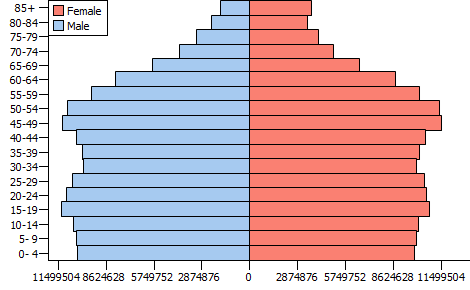
    The term “population pyramid” goes back to a time when plotting populations by age really did produce a triangle, with a large base of young people and each older age cohort narrowing, until there were very few at the top.  As diseases became more controlled, and birth control entered the picture, the population pyramids changed shape,  The pyramid below is for the US in 2010.

    (Data from http://www.proximityone.com/chartgraphics.htm )

    Now, if we look at covid death rates by age cohort, Florida’s governor released survival rates back in September:

    The numbers for the age cohorts are below – no need to extrapolate from the bars in the pyramid.  We’ll just take the complement of the survival rates, assume the vaccine is 100% effective, and calculate the potential lives saved in each cohort.

    AgePopulationDeath RateLives Saved by Vaccination
    70+22.8 million5.4%1,502,967
    50-6985.8 million0.5%429,045
    20-49127.5 million0.02%2,550
    0-1983.3 million0.003%250
    The Death Rate is 100% minus the survival rate for each age group. Lives Saved by Vaccination is the population of the age group multiplied by the death rate.

    If everyone over the age of 70 were vaccinated (and the vaccine worked perfectly) 1,502,967 Lives would be saved. If everyone under the age of 20 were vaccinated, 250.

    No editorializing here – just simple addition and multiplication with data from the census.  I know where I would put the first vaccinations if I had a limited supply.