-
I am fundamentally a Weberian Sociologist – and some have claimed that Weber’s writings are merely a long-running debate with the ghost of Karl Marx. However you translate it, at the foundation, the base of my thoughts on society is that there is a hell of a lot of social conflict going on.
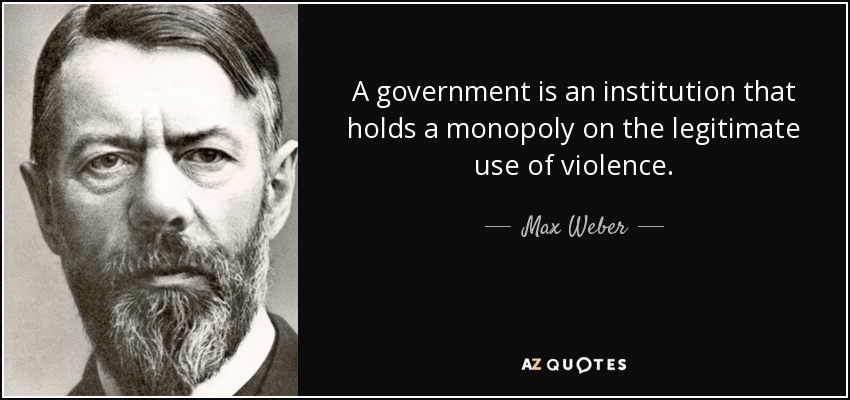
In a democracy the people choose a leader in whom they trust. Then the chosen leader says, ‘Now shut up and obey me.’ People and party are then no longer free to interfere in his business.
The great virtue of bureaucracy – indeed, perhaps its defining characteristic ~ was that it was an institutional method for applying general rules to specific cases, thereby making the actions of government fair and predictable.
It is not true that good can follow only from good and evil only from evil, but that often the opposite is true.

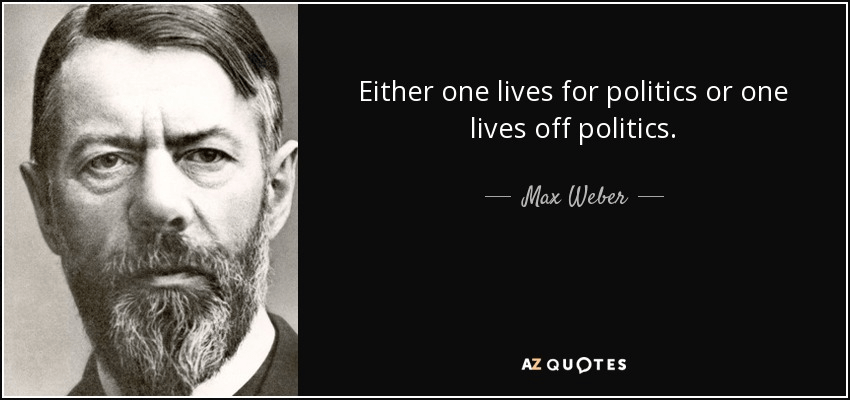
Politics means striving to share power or striving to influence the distribution of power, either among states or among groups within a state.
The primary task of a useful teacher is to teach his students to recognize ‘inconvenient’ facts – I mean facts that are inconvenient for their party opinions.
Politics is a strong and slow boring of hard boards.
Daily and hourly, the politician inwardly has to overcome a quite trivial and all-too-human enemy: a quite vulgar vanity.
The nation is burdened with the heavy curse on those who come afterwards. The generation before us was inspired by an activism and a naive enthusiasm, which we cannot rekindle, because we confront tasks of a different kind from those which our fathers faced.
-
The prediction is that the ocean currents off Peru will shift, and la nina will return. I learned 50 years ago that the little girl has a great influence on our local weather patterns – so I’ve shifted to NOAA to see what the predictions are:
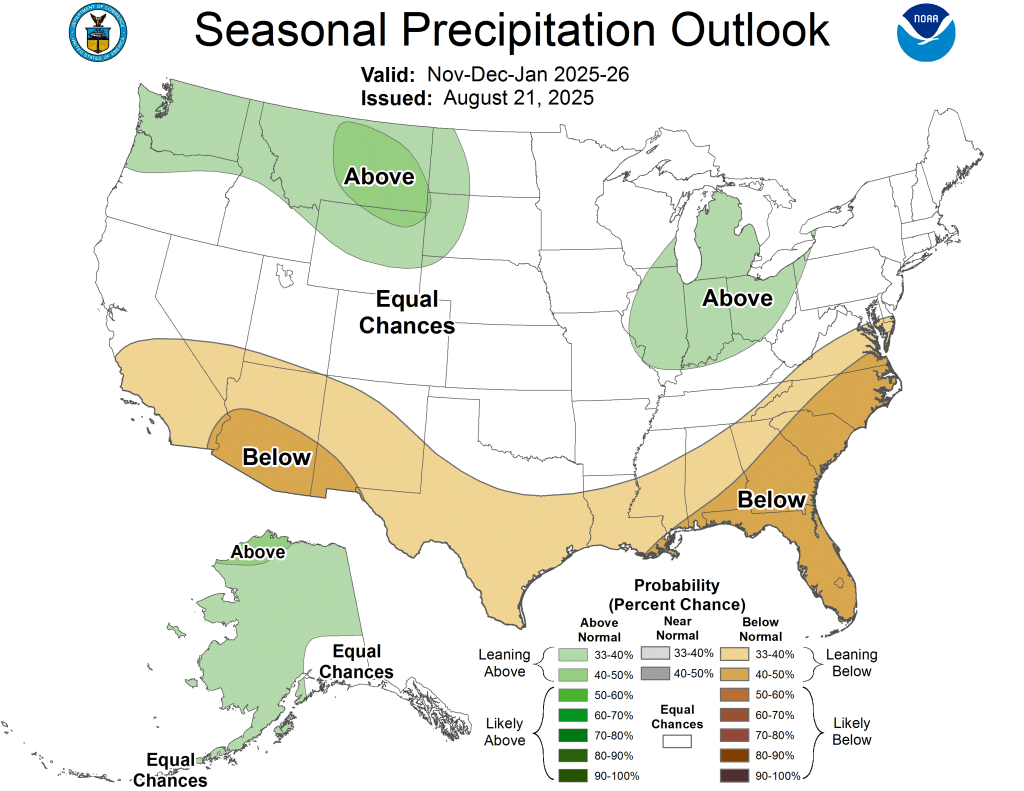
And later in the winter, it looks like
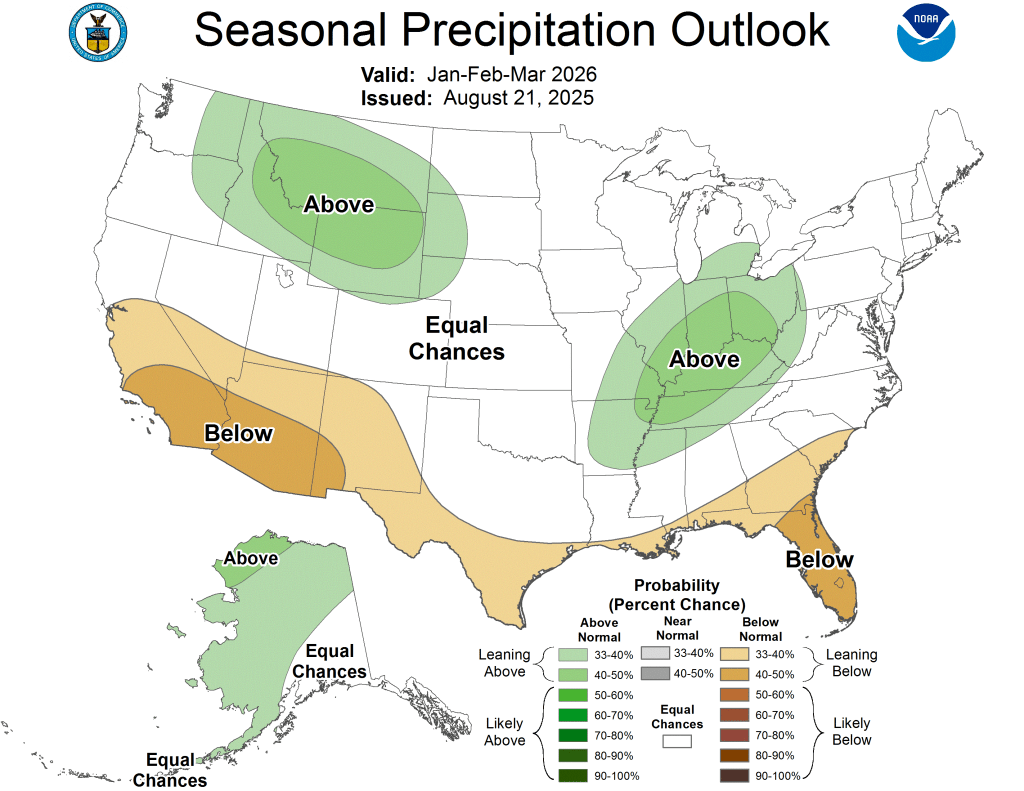
It makes me glad that I researched what part had failed that my 25-year-old snowblower was refusing to go forward – fixing it was a fairly simple task this summer. I suspect I will need it.
-
Rudyard Kipling wrote the poem “Cleared” in 1890, ‘in memory of the Parnell Commission.’ I don’t know if Parnell wrote “Though I regret the accident of Lord F Cavendish’s death I cannot refuse to admit that Burke got no more than his deserts” and was signed “Yours very truly, Charles S. Parnell”. or if the statement was a forgery. Like today, the 1880’s were a time of political conflict and violence – in the UK as well as the US Kipling wrote “The charge is old”? — As old as Cain — as fresh as yesterday; Old as the Ten Commandments — have ye talked those laws away? If words are words, or death is death, or powder sends the ball, You spoke the words that sped the shot — the curse be on you all. a time of great political disagreement and violence. Anyway, Kipling’s poem deals with violence 140 years ago – yet, despite the differing locations and details seems current today. It’s a short read:
Help for a patriot distressed, a spotless spirit hurt,
Help for an honourable clan sore trampled in the dirt!
From Queenstown Bay to Donegal, O listen to my song,
The honourable gentlemen have suffered grievous wrong.
2
Their noble names were mentioned—O the burning black disgrace!—
By a brutal Saxon paper in an Irish shooting-case;
They sat upon it for a year, then steeled their heart to brave it,
And “coruscating innocence” the learned Judges gave it.
3
Bear witness, Heaven, of that grim crime beneath the surgeon’s knife,
The honourable gentlemen deplored the loss of life!
Bear witness of those chanting choirs that burke and shirk and snigger,
No man laid hand upon the knife or finger to the trigger!
4
Cleared in the face of all mankind beneath the winking skies,
Like phœnixes from Phœnix Park (and what lay there) they rise!
Go shout it to the emerald seas—give word to Erin now,
Her honourable gentlemen are cleared—and this is how:—
5
They only paid the Moonlighter his cattle-hocking price,
They only helped the murderer with counsel’s best advice,
But—sure it keeps their honour white—the learned Court believes
They never gave a piece of plate to murderers and thieves.
6
They never told the ramping crowd to card a woman’s hide,
They never marked a man for death—what fault of theirs he died?—
They only said “intimidate”, and talked and went away—
By God, the boys that did the work were braver men than they!
7
Their sin it was that fed the fire—small blame to them that heard—
The “bhoys” get drunk on rhetoric, and madden at a word—
They knew whom they were talking at, if they were Irish too,
The gentlemen that lied in Court, they knew, and well they knew.
8
They only took the Judas-gold from Fenians out of jail,
They only fawned for dollars on the blood-dyed Clan-na-Gael.
If black is black or white is white, in black and white it’s down,
They’re only traitors to the Queen and rebels to the Crown.
9
“Cleared”, honourable gentlemen! Be thankful it’s no more:—
The widow’s curse is on your house, the dead are at your door.
On you the shame of open shame, on you from North to South
The hand of every honest man flat-heeled across your mouth.
10
“Less black than we were painted”?—Faith, no word of black was said;
The lightest touch was human blood, and that, you know, runs red.
It’s sticking to your fist to-day for all your sneer and scoff,
And by the Judge’s well-weighed word you cannot wipe it off.
11
Hold up those hands of innocence—go, scare your sheep together,
The blundering, tripping tups that bleat behind the old bell-wether;
And if they snuff the taint and break to find another pen,
Tell them it’s tar that glistens so, and daub them yours again!
12
“The charge is old”?—As old as Cain—as fresh as yesterday;
Old as the Ten Commandments—have ye talked those laws away?
If words are words, or death is death, or powder sends the ball,
You spoke the words that sped the shot—the curse be on you all.
13
“Our friends believe”?—Of course they do—as sheltered women may;
But have they seen the shrieking soul ripped from the quivering clay?
They!—If their own front door is shut, they’ll swear the whole world’s warm;
What do they know of dread of death or hanging fear of harm?
14
The secret half a county keeps, the whisper in the lane,
The shriek that tells the shot went home behind the broken pane,
The dry blood crisping in the sun that scares the honest bees,
And shows the “bhoys” have heard your talk—what do they know of these?
15
But you—you know—ay, ten times more; the secrets of the dead,
Black terror on the country-side by word and whisper bred,
The mangled stallion’s scream at night, the tail-cropped heifer’s low.
Who set the whisper going first? You know, and well you know!
16
My soul! I’d sooner lie in jail for murder plain and straight,
Pure crime I’d done with my own hand for money, lust, or hate,
Than take a seat in Parliament by fellow-felons cheered,
While one of those “not provens” proved me cleared as you are cleared.
17
Cleared—you that “lost” the League accounts—go, guard our honour still,
Go, help to make our country’s laws that broke God’s law at will—
One hand stuck out behind the back, to signal “strike again”;
The other on your dress-shirt-front to show your heart is clane.
18
If black is black or white is white, in black and white it’s down,
You’re only traitors to the Queen and rebels to the Crown.
If print is print or words are words, the learned Court perpends:—
We are not ruled by murderers, but only—by their friends.
-
I’ve known that they come in different sizes – but I never did the minimal research to be able to recognize and name them.
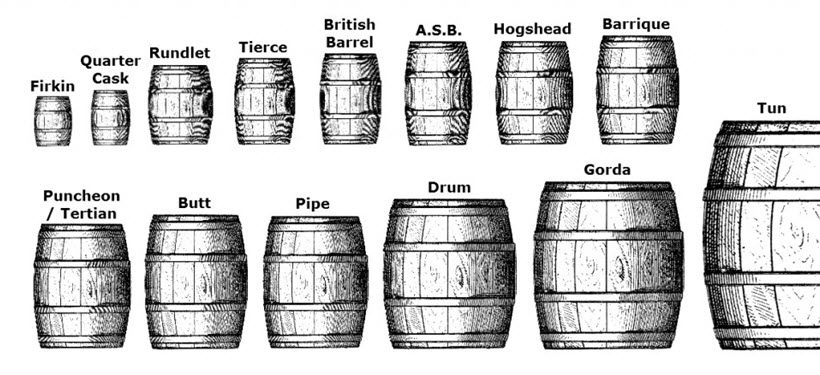
The talent required to build these watertight wooden barrels was once fairly common. Humbling.
-
If you look at the back of a Mercury dime, you will see the fasces, a bundle of sticks around an axe (well, you will see it if the coin isn’t too worn, Mercury dimes haven’t been made since 1945).

Please note that the dime illustrated has a 1916 date. The word fascism apparently came into use in Italy, and the year was 1921. Obviously, the fasces on the dime weren’t connected with fascism.
The word ‘fascist’ is thrown around loosely – largely because the Stalinist Communists used it against both the real fascists (Hitler and Mussolini) and any capitalist they wanted to tar with the same brush. The only people who weren’t fascists to the Soviets were fellow communists.
Benito Mussolini described fascism as “the marriage of corporation and the state.” I can’t say that Benny invented fascism, but he did start the first fascist government. Anyone remember that, in his second month as President, Barack Obama fired Rick Wagoner, CEO of General Motors? Fascism focuses on putting the nation first. Anybody remember red caps that say “Make America Great Again”? Fascism calls for total control by authoritarian leaders. Can anybody recall some of the extreme controls that came with Covid? Like Newsom activating California’s Guard to work with covid tests?
Fascism promotes a strong, centralized government, ran by an authoritarian leader. Barack Obama, despite having fired the CEO of General Motors, doesn’t qualify as Fascist. Biden, despite leaning toward authoritarian, doesn’t qualify. Donald Trump – despite the red caps that say “Make America Great Again” doesn’t hit all the bases. It’s easy to find one aspect of each president where he touched on one of the aspects – but none of them meet all of Mussolini’s criteria, and Stalin’s criteria were never correct.
Mussolini, with coauthor Giovanni Gentile, wrote The Doctrine of Fascism. It’s only 33 pages, and Benny the Moose was a decent writer – it isn’t a hard read. If you think about calling someone a fascist, it’s available at https://dn721808.ca.archive.org/0/items/mussolini-archive/The%20Doctrine%20of%20Fascism%20Benito%20Mussolini.pdf
-
One of the unwritten tenets of demography is that the future will belong to those who are there – and the only ways of being there are to be born or to migrate. This chart reflects birth and political stance:

Birth rates vary across our nation – I recall a conversation where an attorney, working for planned parenthood, believed that abortion was equally common on the Reservations of South Dakota. It wasn’t – good data was available, and South Dakota is predominately white with Native being a strong second. Birth rates among the Natives are higher. The chart above shows that birth rates among conservatives are higher.
The future belongs to those who are there. Immigration can tilt the equations.
-
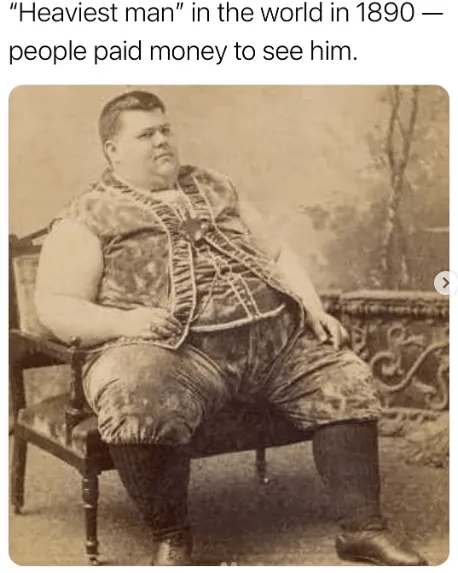
Sometimes a photograph and its date does say more than 1000 words.
-
1960 is the time when I can start to describe details of Trego’s history – the people and the technology. Off and on, from 1960, I was there to see it. On our trip moving up, I was expected to direct Mom to the place – but what is now Ant Flat Road was new, and the exit had changed. We drove to Dickey Lake and then followed that road (still the same).
The Peters family moved to Trego around 1955 – and Mary Louise still lives on their ranch 70 years later. She’s been here for most of Trego’s history. In 1960, Trego was basically a strip, running up Fortine Creek, with places running up other creeks.
Technology was changing. While Jack Cheevers drove a 4×4 Jeep pickup, and Edgar Nelson had a 1953 Dodge Power W2agon, Frank Davidow drove the community’s first modern four-wheel drive – a pale blue Ford pickup Virgil Newton and Alfred McCully opted for Volkswagen Beetles. Electricity had arrived in time for the fifties – and television, in the form of a repeater on the mountainside, brought 2 channels to Trego. It was some sort of cooperative venture. Then the early sixties brought in telephones – first in party lines, followed quickly by single lines.
A glimpse of the people that affected the community in the mid-sixties – the school board members who brought in the new school were Yolanda Nordahl, O.V. McCurry and Earl Meier – Yolanda Vizzutti’s marriage to Paul Nordahl was arranged by her father. Earl Meier was, so far as I know, the last Trego Valedictorian at LCHS. O.V. McCurry, like Jack Peters, Jack Price and Robert Openshaw were World War II veterans looking for their farms. Jack Cheevers, a few miles up the creek, ran sheep and was the community’s sole socialist (maintaining a connection with the early IWW unionists. Leona Ritter, the school clerk, was married to Walt Ritter, stepson of Octav Fortin, the last link to the original rancher. Again, relatively typical people dealing with social change to keep it from overwhelming their community.
Again, outside forces brought change to Trego and most of Lincoln County. Libby Dam removed forever the Kootenai River communities. Trego grew, practically overnight, with over 200 trailer homes added to house the folks working on the tunnel.
The railroad relocation changed Trego utterly – most of the small ranches were cut by the new rails, and reduced cattle numbers left what were once marginal commercial ranches down to a handful of cattle. The entire strip of land along Fortine Creek now hears the sound of the freights, the whistles at each crossing – and new, smaller places across the tracks provided more places to live. Fortine Creek Road went from gravel to paved. The school board, anticipating the population impact got another acre from the Opelt family and saw a new, federally funded school go in. Kenny Gwynn built a service station, and Howard Mee operated it. Keith Calvert went for a tavern at the Westwood Acres trailer court. The post office went from being a small, contract post office in the Trego Mercantile to getting it’s own postmaster. The Ranger Station moved to Murphy Lake, and Ant Flat, after 60 years, took a secondary Forest Service role. The mid-sixties changed Trego.
Unlike the rest of the county Trego became closer to the county seat – a paved road over Elk Mountain, following the new railroad down Wolf Creek, then through the lower stretches of Fisher River brought Libby 8closer. Filling Lake Koocanusa, eliminating the small towns along the Kootenai, effectively left Eureka more isolated from the county seat. That change would affect how the county operates over the next half-century.
Next: The Hippy Years
-
I’m no expert on international politics or Venezuela – but I have been there once (Hugo Chavez was in charge then, and I was a college professor working with the departments of State and Defense – I was just as happy to be confined to the airplane as the Venezuelans were to order all people with US passports not to be allowed off the plane). At the same time, I had a student who was dual citizenship (Venezuelan father and mother re-married) whose father was trying to convince her that moving to Venezuela would be better than staying in the US. How things have changed since 2008.
My father was in Venezuela before the second World War – the US Navy had contracted with Standard Oil to provide survey work, and Dad was paid at ‘Venezuelan Exchange’. If I recall correctly, he was making $93 per month instead of the regular sailor’s pay of $21 per month. I guess I was raised knowing that there was a lot of money in Venezuelan oil, and the girl’s father confirmed it when we visited at her graduation.
As near as I can tell, we have 3 destroyers, a cruiser, and 3 amphibious assault ships cruising off Venezuela (Navy Times) and the other day they sunk an open boat – apparently loaded with drugs and 11 Tren de Aragua gang members. The deal is, the boat was in international water – so the legality of the strike may well be questionable. Ah, well, John Paul Jones was called a pirate when the Ranger raided Whitehaven.
Apparently, our President put a 50 million dollar bounty on Venezuela’s President Madero – while that’s twice what the bounty was on Osama bin Laden, the inflation calculator shows that it takes $1.83 today to buy what a single dollar bought in 2001. 82 percent inflation in those 24 years. Venezuela’s navy has 42 ships – and may not be particularly capable on blue water.
If we are getting close to qualifying as piracy it is probably a good idea to change from a department of defense to a department of war
Want to tell us something or ask a question? Get in touch.

Recent Posts
- Getting Alberta Oil to Market
- Parties On Economics
- Thus Spake Zarathustra – One More Time
- Suspenders
- You Haven’t Met All The People . . .
- Play Stupid Games, Win Stupid Prizes
- The Ballad of Lenin’s Tomb
- An Encounter With a Lawnmower Thief
- County Property Taxes
- A Big Loss in 2025
- Thinking of Clovis
- I Started The Year With Optional Surgery

Rough Cut Lumber
Harvested as part of thinning to reduce fire danger.
$0.75 per board foot.
Call Mike (406-882-4835) or Sam (406-882-4597)
Popular Posts
Ask The Entomologist Bears Books Canada Census Community Decay Covid Covid-19 Data Deer Demography Education Elections Eureka Montana family Firearms Game Cameras Geese Government Guns History Inflation life Lincoln County Board of Health Lincoln County MT Lincoln Electric Cooperative Montana nature News Patches' Pieces Pest Control Politics Pond Recipe School School Board Snow Taxes travel Trego Trego Montana Trego School Weather Wildlife writing
 Trego's Mountain Ear