Trego's Mountain Ear

"Serving North Lincoln County"

Tag: Trego School

  • Part-Time Science Position Available at Trego School

    Part-Time Science Position Available at Trego School

    Trego School is accepting applicants to teach a four hour science class, once a week, to the upper grades. While most teaching contracts run the entirety of the school year, that isn’t necessarily the case for this one. Trego School is operating on a trimester system, which means that an applicant could choose to teach for a single trimester. At four hours a week, and thirteen weeks in a trimester, that means a commitment of 52 hours.

    Who’s qualified? Anyone licensed to teach the subject to the relevant grades. As it happens, this means anyone with an elementary license for grades k-8, as well as anyone with a secondary (high school license) for grades 5-12. In the case of the high school license, the area of endorsement must correspond to the classes taught.

    Out of state license? Shouldn’t be too much of a problem. Montana’s Office of Public Instruction should be making it easier to obtain a Montana Teaching License for those licensed to teach in other states.

    Retired Montana Teacher? Anyone receiving a retirement from Montana’s Teacher Retirement System can be paid up to $21,400 a year by a public school without interfering with their retirement.

    What could you teach? The state of Montana provides teaching standards for Life Science, Earth and Space Science and Physical Science. It would be quite reasonable to expect a trimester devoted to each. Large districts typically divide those into a year of earth science, a year of life science and a year of physical science. Why? Those classes are taught by the same teacher each year, someone who specializes in the topic. Trego school is using the same approach- each class taught by someone who specializes. And, unlike the model of the large districts, this approach is effective in a multi-grade classroom.

    Experience tells me that the same standards can be met in more than one type of class. Earth Science standards might be met in an astronomy class, which begins with the big bang and ends with the formation of planets and the processes that shape them. A class detailing earth’s geological history might meet the same standards. Life Science standards can be met with an introductory biology course, but a class on evolution will naturally include cell biology and ecology as well. The interconnected nature of life science means a variety of classes can teach those standards. Short answer? Teach the class you love to teach.

    Why have a part-time teacher? We ask a lot out of elementary teachers. We license them to teach students from kindergarten up to the eighth grade- and those two age groups have considerable differences. Then, if that’s not enough, we license them to teach every subject; Art, PE, Science, Math, English, Social Studies- for every grade! Allowing teachers to focus and dive deep into a single area keeps teachers from being spread too thin and lets them teach the subjects they love.

    Interested in Applying? Contact Shari Puryer (clerk@tregoschool.org) for more details and to pick up a copy of the District Application.

  • The Sign is Returning

    The Sign is Returning

    Last year, we noticed the removal of the Trego School Sign. The removal occurred because the estate of Mr. Leroy Mee paid the school the remaining value of the lease in order to end the lease.

    From Last Year: The Original Lease

    Why is the Sign Gone?

    As you may have noticed, the Reader Board for Trego School, situated between the community hall and the post office, is no longer present. So what happened? Some History: In June of 2016, Trego School entered into a lease agreement with Leroy Mee, allowing the school to place the Reader Board on Mr. Mee’s property. The term of the lease was ten years, at a rate of $100 per year. The school paid the full $1000 in 2016. Earlier this year, the Montana Department of Labor Safety and Health received an anonymous complaint about the…

    Keep reading

    Some time later, a new location was found and a new lease signed. There were no costs to the school for the new lease, beyond the time/materials required to put up the sign.

    Last Year: About the New Lease

    The Sign Will Return

    Earlier this month, we reported on the removal of the Trego School reader board, and noted that the board was looking into options for a new location. Last week’s meeting included a new lease for the reader board. This time, there will be no expense to the school beyond the time and materials to put…

    With spring here, the holes have been dug, and the board has arrived. Keep an eye out for the return of the sign.

  • Trego Excerpts from the Small School Survey

    Looking at where your school ranks in comparison with others is important.  Montana’s Small School Alliance conducted a survey of small schools, and we’ve excerpted where Trego ranks in certain specific categories.  Here they are, with some explanations for abbreviations.  Many of us speak fluent English, but are not fluent in bureaucrat.

    Taxable Value per ANB – $84,491 – pretty much the median.  Still, this category needs an explanation, and then the explanation needs a second explanation.  ANB is an abbreviation for Average Number Belonging.  Since that doesn’t really explain anything, consider this to be taxable value per student (it isn’t but it’s close enough).

    General Fund Budget wo SPED – $190,972 – #20 out of 33.    Since the median is 16 or 17, 20 is pretty close to the center of the pack.  SPED is an abbreviation for Special Education – and for a small school, SPED can really affect the budget.  There are two ways SPED affects the budget – generally, somewhere around a sixth of the students qualify for SPED.  That’s the group statistic.  Then the individual student can qualify as needing very little, or a great deal.  It’s easy to see why the survey took SPED out of the calculation – if it were left in, the survey would be apples and oranges.

    Cost per ANB to General Fund Budget wo SPED – $7,638 – right at the median.  Basically cost per student, excluding SPED.

    General Fund Reserve as percentage of General Fund – 8.45% – third from bottom.   This number isn’t a great surprise – it’s only in the past couple of years Trego’s school board has even started on a building reserve fund.  Reserves are important, but need to be used at times.

    2021-22 Guaranteed Tax Base – $0 – a dozen of the 33 surveyed schools tied for bottom.  I’m not sure this is a bad place to be.

    Over Base Budget – $43,038 – 20th of 32 – still very close to the median.

    Over Base Mills – 20.38 – median.

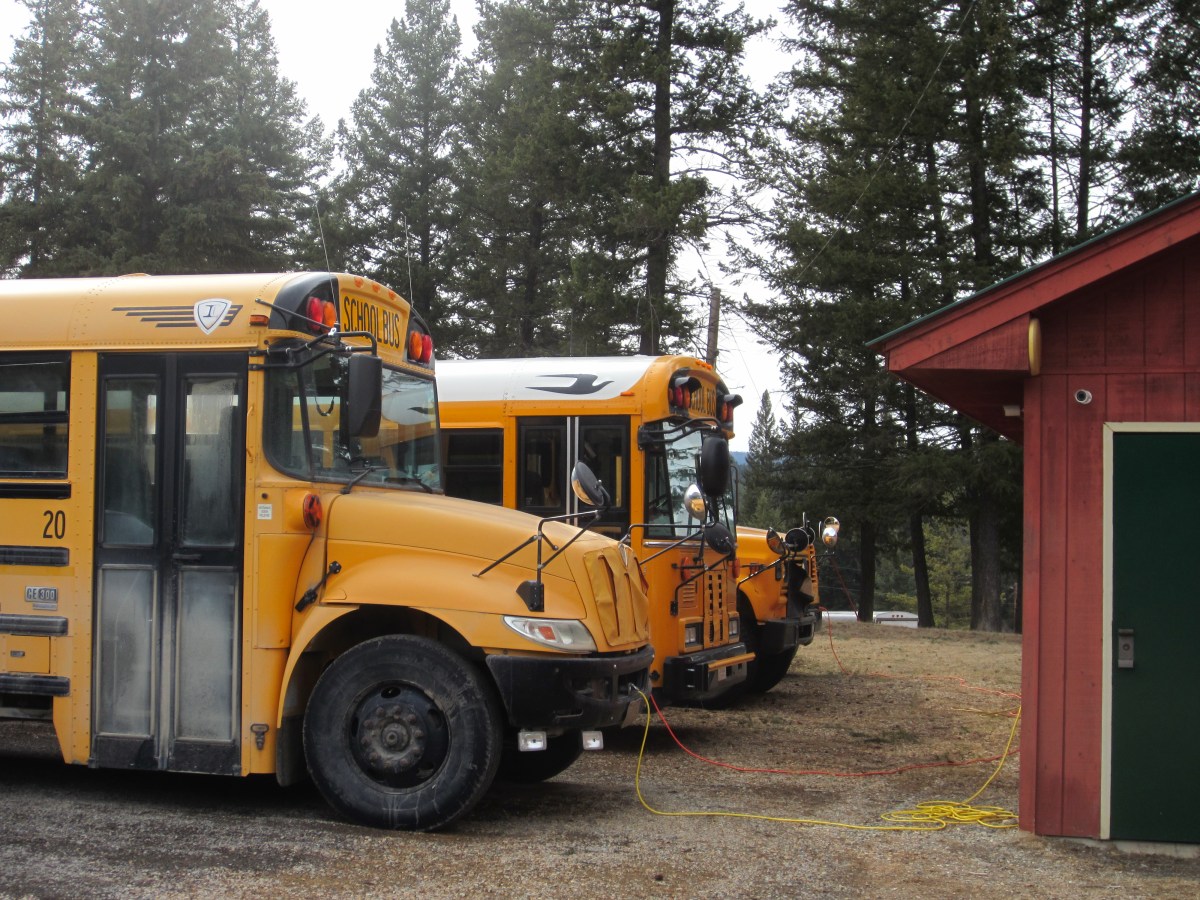
    Transportation Budget per ANB – $1,960 – fourth from top, more than double the median.  This category shows Trego with high expenses to bring students to school.  Just the statistical placement of this category shows that it needs to be reviewed.  It may just be the remote nature of the district, but it may also mean alternatives need to be examined.

    SPED personnel -17th out of 32 – another median.  Remember that SPED can be a statistical artifact – if it turns out to be 10% or 25% eligibility, opposed to 16%, the general statistic isn’t the controlling one.

    Teachers Salaries as percent of General Fund – 59.81% -6th from top.  This means in the top 20% in this category. 

    Teacher/Enrollment Ratio – 5.55 students per teacher – 27th lowest ratio of 31 schools.  This is probably a good thing from an education perspective.  From an economic perspective, a slightly higher ratio might be appropriate.

    Base Teacher Salary – $32,000 – median.  (For 2022-23, the base salary is $33,920.

    Average Teacher Salary – $36,909 –  31st of 41- a figure that is in the bottom quartile because none of our teachers have longevity – remember, it wasn’t that long ago that we only had 4 “ANB”.

    School Clerk – low in survey $15, high $45.64 per hour, Trego $20 per hour.  Trego is about in the middle.

    Bus Driver – low in survey $12.85, high $27.58 per hour.  Trego is $18 per hour.  Since the entire transportation program merits examination, this probably deserves a glance too – but is close enough to the median that it seems unlikely to be driving the transportation budget up.

    Curious? Want more information? Barring confidentiality issues, school information is typically very public, as it is publicly funded. Contact the school clerk if you have any questions, or just want to learn more.

  • School Maintenance and “Out of the Box” Thinking

    Time on the school board has brought building maintenance and neglect thereof to my mind.  Unfortunately, the only school that has done a respectable job is Fortine.  Here at Trego, we received a new school at Federal expense in the mid-sixties so that the community would be capable of serving the many kids who came in with parents working on the tunnel and railroad relocation.  Fifty years went by without establishing a building reserve fund or a maintenance schedule.  A new building doesn’t need much maintenance – but planning for maintenance, scheduling maintenance, and having a building reserve to pay for maintenance keeps from having to call for a special levy and passing a bond.  We have started the building reserve fund – but it should have been started at least 25 years earlier.

    It’s easy to defer maintenance.  There is always someone who needs money for a different purpose – and the building stands quietly when it is short-changed.  I have a lot of respect for the school boards that stay conscious of the fact that it’s cheaper (in the long run) to maintain the school than go to the voters to authorize a bond to build a new one. 

    So I’m reading the Tobacco Valley News, and I notice that we’re not alone – Rebecca Nelson’s article (p5, V62, I42) tells of Eureka’s woes:

    “Mepham said he believed the bond wouldn’t have passed, but that the district absolutely needs new buildings.  “To put all our money into one K-4 building with the idea that someday we’re gonna get some more money and put it into the junior high, that’s good in theory, but the bottom line is, that means the junior high would have to make 20 more years in the condition it’s in.” he said.

    Mepham reminded the board of a 2007 facilities report which he said essentially put the junior high as the worst facility in Montana, with the elementary close behind.  Now the most urgent needs are for a boiler at the junior high and a roof for the high school, each with a price tag of at least a quarter of a million dollars.  “We’re going to nickel and dime this district to death.” he said.”

    Tobacco Valley News, article by Rebecca Nelson

    That’s an interesting choice of words – the purpose of a building reserve fund is to accumulate nickels and dimes so that the school can have the funds to pay for maintenance projects as they are needed – without passing special levies.

    Mepham acknowledged the restrictions of the elementary district’s bonding capacity and rising construction costs, and suggested it might be good to think outside the box and make use of the higher bonding capacity of the high school district, to build a new high school and junior high and remodel the current high school as an elementary.”

    Tobacco Valley News, article by Rebecca Nelson

    I’m not sure that turning Lincoln County High School into an elementary is out of the box thinking. There was a boiler in the building when I attended LCHS, and I have a strong suspicion that folks thought outside the box and made use of the higher bonding capacity of the high school district then remodeled my old school into Eureka Middle School.  If I’m reading the tea leaves correctly, Superintendent Mepham wants to get the taxpayers of Trego and Fortine to help pay for a new high school so that the old one can go to replace the unmaintained buildings in Eureka.  Sweet Jesus, Mepham, can’t you even bring a box of chocolates first? 

    Darris Flanagan’s book: Eureka Montana Standing the Tests of Time, on p.20 tells of the origins of this “outside the box” scheme: “In 1955 a new grade school was built.  A major administration change occurred in when a joint board with LCHS and Roosevelt Grade School operating together just as they still do today.  Voting is complicated with Trego and Fortine board members voting only when an item concerns the high school.”

    I think that translates something like “The LCHS board members from Eureka can outvote the two from Trego and Fortine.”  It’s good to get a little bit of a heads-up before they come to us with a tax levy for a bigger bond. 

    Flanagan also pointed out “In 1955 a new grade school was built.”  That’s less than a dozen years older than Trego.  I’m not sure that we shouldn’t be looking at building a high school in Fortine – they have a record of maintaining their buildings.

  • Trego’s 99-Year Lease

    Trego’s 99-Year Lease

    Part of Trego School’s playground was leased to the school in 1960 in return for water.  It makes a lot more sense if we go back in time and figure out what was going on in the fifties.

    Electricity was new, and the closest telephone was at Osler Brothers sawmill, just north of Mud Creek.  The general land price at the time was $30 per acre . . . less if you weren’t looking at the more desirable downtown Trego locations.

    From the documents, it looks like the school got electricity, drilled a well, added wiring and plumbing to the school, and then thought “a bigger playground would be nice.” The neighbors to the north, Bill and Madeline Opelt thought “Water would be nice.”  So a trade was made – in return for a 99 year lease for an acre of playground – relatively flat – the school would provide water for 99 years to the Opelt family, their heirs and assigns. 

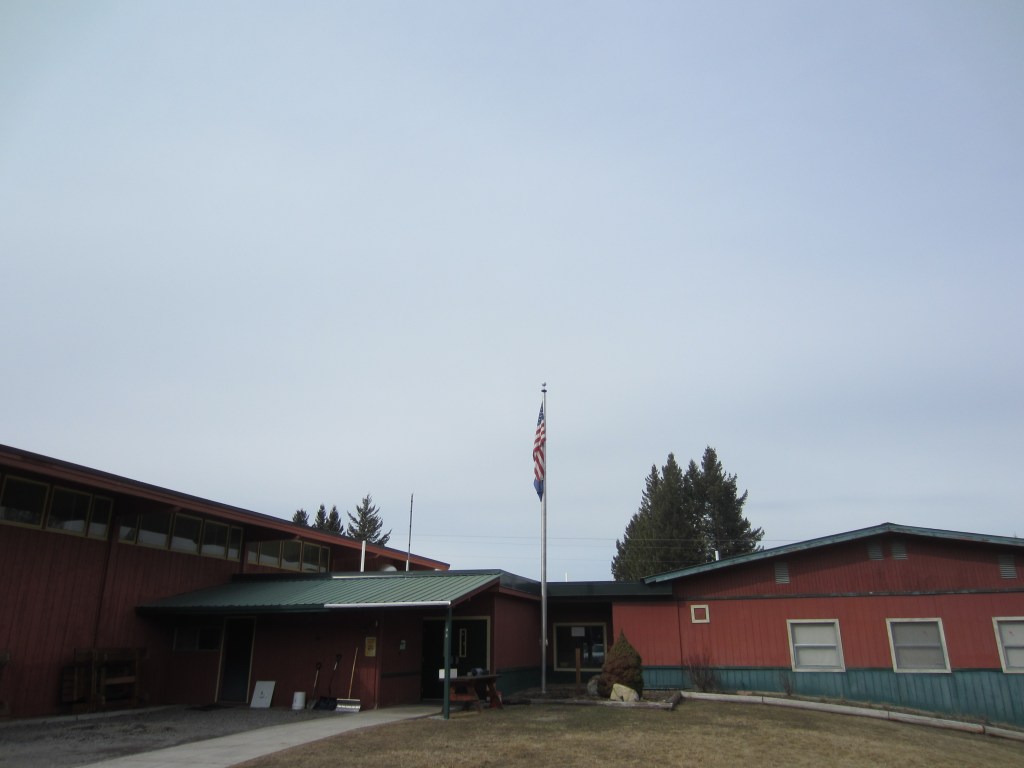
    Trego School is on a 4.64 acre (rectangular) parcel. The area the school leases (highlighted yellow) is about .9 acres. The playground is located behind the school and includes swings, a slide, monkey-bars and several large tires, painted and partially buried

    Originally, the water went to the horse trough, not the house.  Bill had three elderly work horses that he called appaloosas – while they had the spots, they were definitely draft horses, and I didn’t realize the history that they represented for years – until I took a job at Chinook, near the Bear’s Paw Battlefield, and learned of the glorious military efforts of the Montana State militia at that location.  As near as I recall the story, the militia was tasked with running off the Nez Perce horse herd . . . and once they got them moving, drove them southeast to Billings or some such location, and sent them through the auction.  The Nez Perce mares were crossed with draft stallions, and provided work horses across Montana.  Bill may not have known the whole story, but he was right – his horses were descendents of the Nez Perce Appaloosas.

    I could end the story there – Bill wasn’t interested in putting the water indoors.  He explained how he had a deep hole under his outhouse, with even deeper poles under each corner, and nobody could tip it over.  It wasn’t an argument that I would have used – but I was raised around flush toilets and kind of bigoted.  Bill later lost his vision – as I recall he took a fall after cataract surgery.  He was one of our last veterans of World War I.

    It looks to me that on January 22, 2059, much of the school’s playground will go back to the assigns of the Opelts. 

  • Prioritizing School Decisions

    Prioritizing School Decisions

    I’ve noticed articles about school board activities in different parts of the nation.  As I have thought about things, I’m tempted to alter Clauswitz’ quote – “Everything in war is very simple, but the simplest thing is difficult”

    I came on to Trego’s school board when we had 4 ANB – that’s an abbreviation for Average Number Belonging.  It’s defined in 20-9-311 in Montana Codes Annotated.  It means we were just about out of business.  A couple years later, we have the school back in business, but even the simplest thing is difficult.  Here’s where you learn to count students and figure out funding.

    Deciding what to do as a school board member is very simple – but the way a school functions makes the simplest of things difficult.  I’ve developed a priority list to help make decisions.

    1. Is this decision in the student’s best interest?
    2. Is this decision in the school’s best interest?
    3. Is this decision in the community’s best interest?
    4. Is this decision in the employees’ best interest?
    5. Is this decision in the board and board members’ best interest?

    The students’ best interests come first.  My own priorities are that learning needs to be enjoyable and that academics comes first among student activities.  I see room for athletics and special events – but those are secondary.  A simple thing, made difficult by conflicting or undecided priorities.

    The school, as a local institution, and building comes second.  Our school at Trego was built in the mid-sixties, to Corps of Engineers standards.  It has lasted a half-century without a fund dedicated to a planned maintenance schedule.  I’ve seen century-old schools in good shape in their second century, and 50 year-old buildings demolished due to poor maintenance.   Our facility was built by an earlier generation, and needs to be maintained for the future.  A simple thing – but the building has no voice and maintenance can always be put off until later.

    The Trego community and residents who fund the school come third. Don’t take this out of context because the staff comes fourth.  If they aren’t working for those first three priorities, we have a problem.  Teachers, janitor, cook, clerk, bus driver are all needed.  This is the personnel management spot, where conflict and strife combine to make even the simple things difficult.

    Board members individually and as a group have the lowest priority.  We are unpaid and ideally the positions should be sought as a civic responsibility. 

    Everything that comes before your school board is very simple – but even the simplest thing is difficult.