There’s a truth most people don’t sit with long enough:
We have not known a full decade of peace since 1942.
Not once.
What we call “peace” has, more often than not, been a pause—an intermission between conflicts, a moment to breathe before the next chapter of tension unfolds.
1940s – The World Is Rewritten


World War II didn’t just end in 1945—it reshaped the entire global order.
Out of its ashes rose two dominant powers: the United States and the Soviet Union. Old empires faded. New alliances formed. The United Nations was created with the hope of preventing future wars—but even in its founding, the next conflict was already taking shape.
Peace, as it turned out, would be complicated.
1950s–1980s – The Cold War Era


The Cold War wasn’t “peace.” It was tension stretched across decades.
The Korean War drew in global powers almost immediately after WWII. Then came Vietnam War, where ideology and influence were fought through blood and terrain.
Meanwhile, the world stood on edge during the Cuban Missile Crisis—arguably the closest humanity has come to nuclear war.
During this time, NATO and the Warsaw Pact solidified two opposing blocs. The United States and Soviet Unionweren’t just countries—they were competing visions of how the world should function.
There was no decade of peace here. Only a balance of fear.
1990s – A Brief Illusion


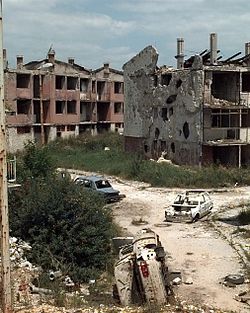
The fall of the Soviet Union seemed like a turning point.
For a moment, it looked like the world might finally exhale.
But conflict didn’t disappear—it shifted.
The Gulf War erupted almost immediately. The Balkans descended into violence during the Yugoslav Wars. Instability spread through regions that had been held in check by Cold War power structures.
A new global reality emerged: one superpower dominance by the United States—but no true global peace.
2000s–2020s – The Age of Endless Conflict


The attacks of September 11 attacks marked the beginning of a new kind of war.
Not nation versus nation—but ideology, networks, and insurgency.
The wars in Afghanistan and Iraq stretched across decades. Terrorism became global. Conflict became decentralized.
At the same time, new powers rose.
China emerged as an economic and military force. Russia reasserted itself on the world stage, culminating in the Russian invasion of Ukraine. Regional tensions simmered across the Middle East, Africa, and Asia.
We are no longer in a two-power world.
We are in a multi-polar one—where conflict is constant, even if it isn’t always declared.
What This Means
For over 80 years, the world has not experienced a full decade without significant conflict somewhere on the globe.
That changes how we should think about “peace.”
Peace is not the default state of humanity.
It is not something that simply arrives and stays.
It is fragile. Temporary. Hard-won.
And perhaps most importantly—it is often misunderstood.
Because what we call peace…
has, for generations now, simply been the quiet between wars.
Leave a Reply