-
Sometimes the questions are enough to get you thinking – this time it was “What caliber pistol is best for bear country. It got me thinking – we’ve seen a lot of changes in what constitutes enough gun since Lewis and Clark came through Montana almost 220 years ago.
The phrase, “Use Enough Gun” comes from Robert Ruark, who did a lot of his hunting in Kenya. By his standards, William Clark probably used barely enough gun. His personal rifle for the first trip crossing North America was a 36 caliber flintlock. If memory serves, it was re-rifled when the expedition spent the winter in Oregon – which suggests it got a lot of use. Still, I’d figure it was about as powerful as a hot 38 special.

The other expedition members were using refurbished 1792 contract rifles and muskets – the rifles were 49 caliber, probably using a 48 caliber round ball – probably somewhere around 750 foot pounds of muzzle energy . . . a little less than that paragon of power, the M1 carbine. It seems a little strange to realize that, in terms of muzzle energy, the whole Lewis and Clark expedition couldn’t match an M1 carbine with a 30 round magazine.

It gets easier to understand how they could put 10 bullets into a Grizzly, then run into the Missouri River to get away. Lewis and Clark may have been using enough gun when they left Ohio. By the time they reached the Great Falls of the Missouri, they definitely weren’t using enough gun.
Glancing at Cartridges of the World, I see that the Sharps “Big Fifty” had a muzzle energy of 1630 foot pounds with a 335 grain bullet, and 1920 foot pounds with a 473 grain bullet. This cartridge fed the buffalo gun into the 1870’s – and it seems only fair to contrast it against the thirty-thirty’s muzzle energy of 1902 foot pounds with a 150 grain bullet.

I suspect the folks in the Lewis and Clark expedition would have enjoyed having the choices we have today as to what to carry in bear country – whether it’s spray or a sidearm.
-
A half-century ago, I encountered the phrase that “the difference within a race is greater than the difference between races.” Experiences since then have tended to support that view – particularly in the field of genetics. Twenty-three and me assures me that a bit over 2% of my genome is due to ancestral Neanderthals – typical of folks with northern European ancestry, and non-existent in the sub-Saharan folks.
The fossil record in Australia and New Guinea was primed and ready to show the Denisovan component as the genetic record was decoded from a finger bone. That, plus the Neanderthal remains and tools on a couple of Mediterranean islands show that mankind was going to sea long before the species became H.sapiens sapiens.
I’m a sociologist – my training is to look at the differences between people being cultural, a result of learned behavior rather than biological. Color seems one of the least significant differences – we’re products of our upbringing, our culture, our education systems. Still, we seem to be moving into an era where we will be noticing biology’s effects on human behavior as well as cultural and social influences.
The geneticist folks have it figured that blue eyes showed up somewhere around 10,000 years ago – I figure that actually means the trait showed up and reproduced enough that blue eyes are fairly common today. Heaven only knows how many traits showed up, were unsuccessful in the mating game, and disappeared. Light skin color (more or less white) shows up about 6 or 7,000 years ago – whether in Europe or East Asia. This is 21st Century data – unknown when I started my studies.
Sociobiology (E. O. Wilson) is a field of biology that looks to explain human behavior in terms of genetics and evolution. The Wikipedia entry says “Within the study of human societies, sociobiology is closely allied to evolutionary anthropology, human behavioral ecology, evolutionary psychology, and sociology.” My training is in cultural ecology and sociology, so I am more a student in my reading here – though a student with training in research methodology. Suffice to say, the concept has face validity. On the other hand, so does examining behavior as I’ve learned half a century back. I suspect I have to be cautious in which premises I accept and reject.
Wiki’s entry “Studies of human behavior genetics have generally found behavioral traits such as creativity, extroversion, aggressiveness, and IQ have high heritability. The researchers who carry out those studies are careful to point out that heritability does not constrain the influence that environmental or cultural factors may have on those traits.” seems to support Murray’s observations in Human Diversity The Biology of Gender, Race And Class.
At the beginning of Ch. 14, Murray writes: “I focus on the genomics revolution in this chapter because it will have broader direct efforts on social science than will developments in neuroscience. To do quantitative neuroscience research, you need to be a neuroscientist and have access to extremely expensive equipment such as MRI machines. The results of the research will inform a variety of social science questions, but the work won’t be done by social scientists. In contrast, the products of the genomics revolution, especially polygenic scores, will be usable by social scientists with no training in genomics by the end of the 2020s in the same way that IQ scores are used by social scientists with no training in creating IQ tests.”
He cites Plomin as he explains “Clinical psychology will move away from diagnoses and toward dimensions. One of the revelations of recent research is that polygenic scores are normally distributed, thereby demonstrating that genetic risk for psychological problems is continuous. There is no gene that moves a person from normal to psychologically disordered. In fact, the words “risk” and “disorder” no longer have the same meanings they once did.”
Murray cites three conclusions (p.294):
- Human beings can be biologically classified into groups by sex and by ancestral population. Like most biological classifications, these groups have fuzzy edges. This complicates things analytically, but no more than that.
- Many phenotypic differences in personality, abilities, and social behavior that we observe between the sexes, among ancestral populations, and among social classes have a biological component.
- Growing knowledge about human diversity will inevitably shape the future of social sciences.
It’s been a great time for a sociologist. I’ve been able to stand on the shoulders of giants and see further because of their research, and the next generation, with tools unimagined when I began, will move my chosen science further from the methodologies that granted doctorates and professional powers to folks who developed classification criteria by consensus.
-
I just got my primary ballot and noticed the extreme lack of candidates. On both ballots there are plenty of positions with one candidate or no candidate at all. If you can only vote for one candidate, is it an election?
The following are running unopposed:
- Michael Cuffe for State Senator
- Niel A. Duram for State Representative
- Jim Hammons for County Commissioner
- Robin Benson for Clerk and Recorder/Auditor/Assessor/Surveyor
- Darren Short for Sheriff
- Steven Schnackenberg for Coroner
- Marcia Boris for County Attorney
- Taralee McFadden for County Superintendent of Schools
- Sedaris Carlberg for County Treasurer
- Mathew Cuffe for District Court Judge
- Jay C Sheffield for Justice of the Peace
There is no candidate for public administrator. The only races with multiple candidates will be for United States Representative, for County Commissioner (district 1), for Supreme Court Justice #1, and for Supreme Court Justice #2.
In short, there were multiple candidates to vote for in only 25% of the races.
When was the last election?
It feels a bit odd to be asking “When was the last time there was an election?” about something local. As a kid, I sort of assumed that elections happened everywhere in our country, as scheduled, and it was only foreign countries that lacked elections. Unfortunately, it’s a question worth asking. About the Trego School Board, certainly. Last year, we were writing about vacant school board positions, and the need to get an application in to the school clerk, for an election to be held in May. That’s what should happen (every year). What actually happens (and not just on…
-
With the primary ballots available (due back by June 7th), it’s become evident that we can expect more candidates elected by acclamation, since 69% of the races are candidates running uncontested.
Some of our previous comments on local elections:
Be Nice to the Candidates
I can claim that I am an elected school trustee. So can the school board members in Fortine and Eureka. Yet I (and probably most of them) was elected by acclamation. There may be a more politically correct way to describe it – but the reality is that I was elected without anyone voting for me. A lot of school trustees share that reality – but I don’t believe it is a good situation. The challenge is that, on far too many local boards and commissions, we have the same situation. When a candidate can be elected by acclamation, without…
Keep readingUncontested Elections
What do you call it when only one person runs for office? An uncontested election. It seems like this must be a bad thing, and also that it is increasing in frequency. Is it? It seems, given the explanation about removing term limits at the last Interbel Meeting, that the situation is at least increasing in the telephone cooperatives. Watching the local school board shows a similar trend. How common are they by state? The data’s a bit hard to find- but at least some of it is out there. According to ballotpedia.org in 2020, 100% of Wisconsin’s local elections…
Keep readingConsolidated Polling Increases The Cost of Voting in Person
It’s only about four and a half miles from downtown Trego to the Volunteer Fire Department for Fortine, which is where we used to go to vote. Going into Eureka (as per that letter we all received from the county) will increase the distance by about thirteen miles (according to google maps). The distance I am supposed to travel to vote just got multiplied by a bit over 3. Of course, I live in downtown Trego, which means that my distance increased less than most. Looking at a map, it looks like the furthest up Fortine Creek Road are now…
Keep reading -
The weather is warming and the first ticks have been spotted. We’re fairly fortunate in the limited number of tick-borne illnesses common to our area, but they’re still worth watching for, and not just for us. Like humans, dogs can get a variety of tick-born illnesses:
- Rocky Mountain Spotted Fever
- Lyme Disease
- Canine Bartonellosis
- Canine Ehrlichiosis
- Canine Anaplasmosis
- Canine Babesiosis
- Canine Hepatozoonosis
Tick diseases in Montana
Spring has sprung, and our first ticks are out and about.When folks start talking about illnesses transmitted by ticks, the first to come up almost always seems to be Lyme Disease. While Lyme Disease is the most common tick-borne disease among Montanans, you don’t need to worry about picking it up around here – it…
How to tell spiders and ticks apart
This past week, some folks in our community Facebook page wanted to know if something was a tick or a spider. The comments section got a bit heated, and the offending post seems to have been censored. There were differing opinions, as there often are on such things, and opinions held with no shortage of…
-
Max Weber developed most of the theory on bureaucracy – he viewed it as a rational method to improve efficiency . . . and in many ways, he was correct. Still, it was Max who described the final evolution of bureaucracy: “It is horrible to think that the world could one day be filled with nothing but those little cogs, little men clinging to little jobs and striving towards bigger ones – a state of affairs which is to be seen once more, as in the Egyptian records, playing an ever-increasing part in the spirit of our present administrative system, and especially of its offspring, the students. This passion for bureaucracy … is enough to drive one to despair. It is as if in politics … we were deliberately to become men who need “order” and nothing but order, become nervous and cowardly if for one moment this order wavers, and helpless if they are torn away from their total incorporation in it. That the world should know no men but these: it is such an evolution that we are already caught up, and the great question is, therefore, not how we can promote and hasten it, but what can we oppose to this machinery in order to keep a portion of mankind free from this parceling-out of the soul, from this supreme mastery of the bureaucratic way of life.”
As I started reading social theory, I got hung up on Weber – a conflict theorist who was accused of arguing with the ghost of Karl Marx (and Karl’s is not a bad ghost for the sake of argument) who favored the rationality of the bureaucracy, yet recognized the horror it could inflict.
A half century after Max Weber’s widow put his work into print, Jerry Pournelle produced The Iron Law of Bureaucracy: “In any bureaucracy, the people devoted to the benefit of the bureaucracy itself always get in control and those dedicated to the goals that the bureaucracy is supposed to accomplish have less and less influence, and sometimes are eliminated entirely.” Unfortunately, my experience with bureaucracy has tended to support Dr. Pournelle’s observation.
Current applications of Weber’s approach to bureaucracies and management can be seen at: https://harappa.education/harappa-diaries/max-weber-theory-of-bureaucracy/ and it is probably easier than reading the original Max.
Still, if we look at the Iron Law of Bureaucracy in terms of local government and services, we can see how it works. Seventy-five years ago, Lincoln Electric began with people – possibly imperfect people – who believed in bringing electricity to their part of rural America. It wasn’t just a job, it was a mission. Just fifteen years later those same believers brought telephones to rural people. It was a mission. InterBel developed one more mission – bringing the internet to our rural area, and that cooperative maintains at least some of the mission orientation. Over at Lincoln Electric, the employee and board focus is more on maintaining the bureaucracy, with the original goals outdated and forgotten – despite the number of neighbors who live off the grid. It’s a natural bureaucratic tendency – Pournelle’s Iron Law
If we look at the public school system, we see where the local school board has been largely replaced by the professional bureaucrats housed in the Office of Public Instruction. I have a feeling that there is a sub-species of teacher that lusts after a bureaucratic post. The old joke, when school boards had more power, went “Be kind to your D students – before you retire, you’ll be working for them.”
It’s not the only joke that suggests the educational bureaucrats – I think it was George Bernard Shaw who wrote “Those who can do. Those who can’t, teach.” It didn’t take long for the addition: “Those who can’t teach, teach teachers.” A while later the harsh phrase came “Those who can’t teach teachers administrate.” Somewhere in these jests is hidden the Office of Public Instruction.
The Economic Research Service shows that Lincoln County’s economy is government dependent. I suspect that means we have a lot of bureaucrats.
-
It’s actually possible to make paper from a wide variety of things. Humans have been making paper, or things like paper for a very long time -two thousand years or so. Paper originally was made of old rags, not wood pulp.
Making paper by hand is perfectly doable, if a bit tedious. The process is essentially the same, no matter the material. Dry, cut, cook (simmer, really), blend, and then use a screen to pull out some of the paper pulp. Dry.
The cooking process is done to break down the fibers, often with chemical assistance. That said, it isn’t strictly necessary, though chemical additives might reduces the blending time. Blending thoroughly is important.
It doesn’t have to be pure grass clippings- in fact, for the first time making paper, recycling old paper scraps is the easiest. That said, paper making seems to be possible with most forms of fibers- I once had students do so with packing peanuts.
Air drying generally works fine, though modern paper mills will use heat of some sort for the drying. Homemade paper doesn’t have the additives that make it shiny, easy to write on, or long lasting. It also typically lacks the clay that can be used to make a firmer paper.
I’ll admit that paper making falls into the category of things I classify as both neat, and not worth the effort of doing a second time.
-
Critical theory is a form of sociological theory. It’s not my chosen theory – I’m pretty much a positivist, the kind of guy who likes numbers to support his hypothesis. The basic premise of critical theory is that it isn’t enough to research dispassionately, the researcher must work to change society.
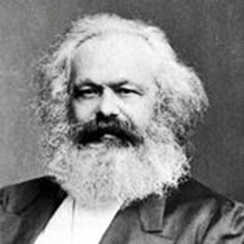
“The philosophers have only interpreted the world, in various ways. The point, however, is to change it. Karl Marx, Eleven Theses on Feuerbach
My goal has been to describe what I studied, possibly to infer causality when I could, but not to change the world. I have worked with people who want to change the social institutions they study – but despite whatever intellectual arrogance I have, I’m not so confident that my way is the best way for everyone. I guess that engaging in critical theory just takes more confidence and ego than I have.
There are aspects of critical theory that I accept – Horkheimer wrote of liberating people “from the circumstances that enslave them.” Critical theory looks at ideology as causing the problems that call for liberation. I’m not a fan of any particular ideology – I believe that scientific method offers the best way to study the world around me. I believe I can learn from my students, and I have. But even the Special Services motto – de oppresso libre – fits in with critical theory. It’s not a bad approach – it just isn’t the one that best fits me.
Feminism is critical theory – it’s just over a century ago that the 19th amendment gave women the right to vote. My grandmother would have been past 30 before that happened. In Marx’ words, “the purpose is to change it.” I’m not particularly convinced that Karl Marx was much of a feminist – but I can see where my preferred methodology of looking for numbers didn’t provide such solid answers. Leaving women as second-class citizens was simply wrong – any man who has raised a daughter knows that. If you look at the war between the states – the historical record pretty much implies that Robert E. Lee and Stonewall Jackson both recognized the wrongs of slavery, yet fought for a system, an ideology if you like, that wanted to perpetuate the institution. I’m not a critical theorist – but there are aspects to critical theory that I cannot reject – despite the fact that the numbers aren’t there.
Pablo Freiere in his Pedagogy of the Oppressed brought critical theory into teaching – traditionally, teaching is done with the teacher front and center, treated as the authority. Pablo thought that there were times when the teacher should learn from the students – and I have learned a lot from mine.
Critical theory starts with the assumption that systems produce an unsatisfactory quality of life, and that the masses are the victims of oppression. If the masses are happy, it’s because the system has deluded them. The masses are assumed to be the helpless victims of the system. The elite are viewed as so powerful that they are responsible for all the social problems.
Power structures are seen as systems of control. The dominant ideology is seen as causing all social problems (I can’t really tell how critical theory is distinct from an ideology – it seems to have the same characteristics.
If I look at critical race theory, it assumes that racism is normal and needs to be called out, to be noticed. As I commented earlier – if I can’t use numbers, I’m not comfortable using the theory. I’m not really sure how this theory applies on other continents. I do believe I could find data to test the theory in the US – taking South Dakota, New Mexico, Oklahoma and Montana data regarding American Indian/Police encounters and contrasting the Black American/Police encounters in other parts of the nation (in Montana, for example, American Indians are a higher percentage of the population than Blacks are in California – the data that can test the theory exists.
-
I’ve been watching monetary inflation since 1976 when I voted for Jimmy Carter. I still don’t give Jimmy full credit for that spate of inflation – Nixon made the call that the US dollar would no longer be backed by gold in August of 1971.
1968 had been an interesting election – I recall the unhappy observation “Nixon, Humphrey, Wallace – three strikes and you’re out.” The picture below brought back memories of a happier time, when I would add a million dollar Zimbabwe bill to a retirement card, so that my retiring colleagues would be millionaires as they left the university. Ten bucks bought all the Zim million dollar notes I needed for a slew of retirement receptions.

Now the thing about inflation is that it taxes savers, and can move into being a tax on investors. If we look at the value of gold during the California Gold Rush – 1849 – it was $18.93 per ounce. That same value held through the Virginia City days, and basically took Montana from wilderness to statehood. In 1920, gold finally topped $20 per ounce. When Franklin Roosevelt was elected President, gold was at $20.69 per ounce – the next year, 1933, it was $26.33. In 1934, it went to $34.69.
A couple of old Winchester catalogs, from 1900 and 1916, suggest that my Grandfather paid about $19.50 or a little more for his 1894 32 special rifle. A glance online suggests somewhere close to $1,200 dollars today. As I write this, gold is going for $1890.35 – roughly 100 times higher than when the rifle was made in 1902 along with the new, more powerful 32 special. The cost of the rifle hasn’t kept up with gold. Inflation or not, it’s kind of nice to look off the front porch and see the spot where my grandmother got a four-point in 1922.
At that turn of the century, land here was still available for homesteading – land here in Trego had little value. Thirty dollars per acre was still a norm for accessible land in the 1950’s. It’s another basis for calculating inflation – and if memory serves, Lee Harvey Oswald was paid 85 cents per hour in 1963.
Median family incomes were somewhere around $500 per year in 1900, and had risen to about $3,300 by 1950. Still, that half century was a time of many new developments and a greatly improved living standard. Part of the change was that people could buy more – much like during our more recent inflationary times – along with the inflation of the eighties came the personal computer, the compact discs, video players etc. Technical advances reduced the impact of inflation.
There is a certain irony in Putin’s decision to tie the Russian ruble to the value of gold. Since that decision the ruble has gone up 6% compared to the US dollar. He’s kind of the anti-Nixon, creating a stronger currency instead of a weaker one. I guess that inflation often boils down to a handful of government officials making the decision to print more money. I have a hunch inflation helps the folks who get the new dollars a lot more than it helps those who are trying to hang on to the existing dollars.
-
One of the advantages of social media is that folks with different views post their different opinions. One of the disadvantages is that those different opinions come from different – often very different – locations.
Let’s take climate change opinions for a simple example – I live just a touch south of the 49th parallel and a little over 3,000 feet above sea level. Simple facts are that raising the sea level by a couple hundred feet isn’t going to affect my place. Getting another three weeks of growing season is a positive thing for my garden. If I were living in Paramaribo, just a little north of the equator and about 6 feet above sea level, my perspective would be different. My greatest risk is wildfire – in Paramaribo even the dry season is rainy.
One of the readily available measurements of population is the percentage of foreign-born residents in a community. In San Francisco, 34.4% of the population were born outside the United States. Statewide, 26.9% of California residents were born outside the US. Here in Lincoln County, Montana 2.6% of our population are foreign born (and I suspect half of those are Canadian). It makes for a different point of view.
Race? I live in a state where most of the population is white, and the second largest group is American Indian (6.6%). Contrast that with Washington DC, where the Black population is 46.4% (compared to Montana’s 0.6%). West Virginia somehow has the lowest percentage of foreign born residents and the lowest percentage of American Indian population. Maine (94.6%) is the whitest state. I have a hunch that who your neighbors are might affect your viewpoint.
18.7% of Montana’s population is over 65 – and five states are even higher. Just 11.1% of Utah’s population is over 65. (29.5% of Utah is under 18). Who you see around you affects your perspective. More information is available at indexmundi.com
Washington DC has the nation’s highest median household income – $92,266 . . . but it is skewed by race. The median for Black households is $42,161, while the white median is $134,358. Montana’s median household income was $65,712. Mississippi came in last at $45,081.
West Virginia has the highest home ownership rate – 74.6%, while Montana’s rate is 69.7%. Home ownership rate in Washington DC is around 42.5%.
Just a few spots where we can look at how our locality affects how we perceive the universe.



Want to tell us something or ask a question? Get in touch.

Recent Posts
- A Few Charts and Trends
- The Density of Water Explains When Dickey Lake Freezes
- Watching Iran
- The Quality of Numbers
- Robert Treat Payne Had Traveled To Greenland
- 75 Years Ago in New York
- Recovery Time for a Retiree
- Venn Diagram and DSM
- When Castro Was Cool
- You Have To Beat Darwin Every Day
- Computer Repair by Mussolini
- Getting Alberta Oil to Market

Rough Cut Lumber
Harvested as part of thinning to reduce fire danger.
$0.75 per board foot.
Call Mike (406-882-4835) or Sam (406-882-4597)
Popular Posts
Ask The Entomologist Bears Books Canada Census Community Decay Covid Covid-19 Data Deer Demography Education Elections family Firearms Game Cameras Geese Government Guns History Inflation life Lincoln County Board of Health Lincoln County MT Lincoln Electric Cooperative Montana nature News Patches' Pieces Pest Control Politics Pond Recipe School School Board Snow Taxes Teaching travel Trego Trego Montana Trego School Weather Wildlife writing
 Trego's Mountain Ear