-
Frost heaves – back when I was teaching engineering uses of soils 40 years ago – were explained by osmosis, compression and fine-grained soil. So think clay, or even better, glacial silt as your fine-grained soil. For compression, remember that just ten or fifteen thousand years back there were some thick glaciers on top of our soil. For osmosis, think of the difference between rain water, or snow melt, and the groundwater with it’s calcium salts under my field. And glacial silts tend to have a lot of exchangeable ions.

The textbook phrase was “If a fine-grained soil, especially a clay, has been compressed, it will normally take in water upon reduction in compressive loading. In many cases this intake of water may be attributed to osmosis. The pore water already in the soil is assumed to move into regions of higher concentration between the particles. More water is drawn into the soil in this process and gradually the water content of the mass as well as the soil volume are significantly increased. . . It has been observed that under certain conditions, when the ground freezes, the surface of the ground rises. This is termed frost heaving. Calculations show that in many cases the amount of heave is far more than can be accounted for by the expansion of water on freezing. It is therefore assumed that additional water must be drawn into the freezing zone.” p.84, Hough, Basic Soils Engineering 1967
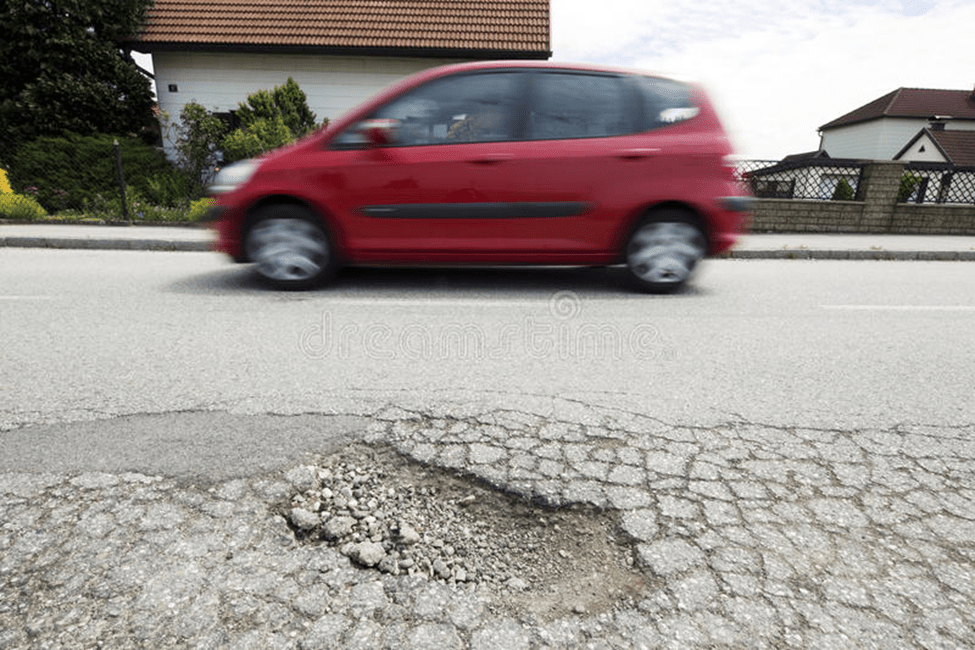
In areas that lack our fine-grained soils, frost heaves aren’t so obvious. On our roads, the places that once had extreme frost heaves – I remember a particularly bad one that was in front of the Apeland ranch on 93 – were over excavated and the fine materials replaced with sand and gravel – so that osmosis could not occur.
-
As a kid, I read quite a few books that had British authors. Most of the time, I understood what they had written. Fortnights gave me a bit of a problem – but I figured out that meant two weeks. Furlongs weren’t much of a problem – an eighth of a mile is 220 yards on either side of the Atlantic – but their currency was downright confusing. About 50 years back, they went over to 100 pence equaling a pound – but the old books still contain the confusing old system. I picked up this explanation from Glen Filthy – an Alberta blogger – http://filthiestbox.blogspot.com/

-
I’ve worked in a system where school rankings were always in the background – in my world, MIT and Cal Tech were always at the top, then the Ivys, moving down to a sub-Ivy League bunch that rated above my land grants, and then lower tiered schools ending at community and junior colleges.
Spending a bit of time on the school board has me watching the next level – high schools. I’m patiently waiting to see how the ACT scores place our local schools – but until that data is released, other scores exist.
US News rates high schools – I was familiar with their college rankings (there is something humbling about working with a couple that are recognized above the place that employs you). So I checked their website to see where Lincoln County High School ranked.
“Lincoln County High School is ranked 63-85th within Montana. The total minority enrollment is 14%, and 54% of students are economically disadvantaged.”
US NewsWhitefish was #2. Glacier was #12. Flathead #16. Libby #33. Columbia Falls #37. Thompson Falls #48. LCHS tied with Troy – between 63 and 85, at the bottom of the ranked high schools.
Niche also ranks LCHS. The numbers require a bit of thinking – how can the state champions score 90th in the state in the category “best high school for athletes in Montana”? (I think I’ve figured it out, but my hypothesis needs more data – while boys athletic participation is rated average, girls participation is rated at very low) One of the upbeat rankings was the faculty – number 34 in the state, with an A- rating on the school’s report card. On the other hand, academics are rated at C+ . . . a bit hard to reconcile with a teaching staff that is rated at A-. Administration was rated at B, and food at B+ (hard for me to understand, but back when I went to school Mrs. Grace Cuffe ran the kitchen).
They did point out that “In Eureka there are a lot of bars.” I suspect the reviewers didn’t understand the cultural aspects that accompany the nickname “Tijuana del norte.” Ah, well, one day soon we can expect to see the ratings based on ACT results.
I’ll be glad when we can see ratings for Trego – 3 years ago, when I got on the board, we were down to 4 or 5 students. Now we’re right around 30 students in 8 grades, and getting close to a spot where there are enough students in a class that scores can stay confidential.
-
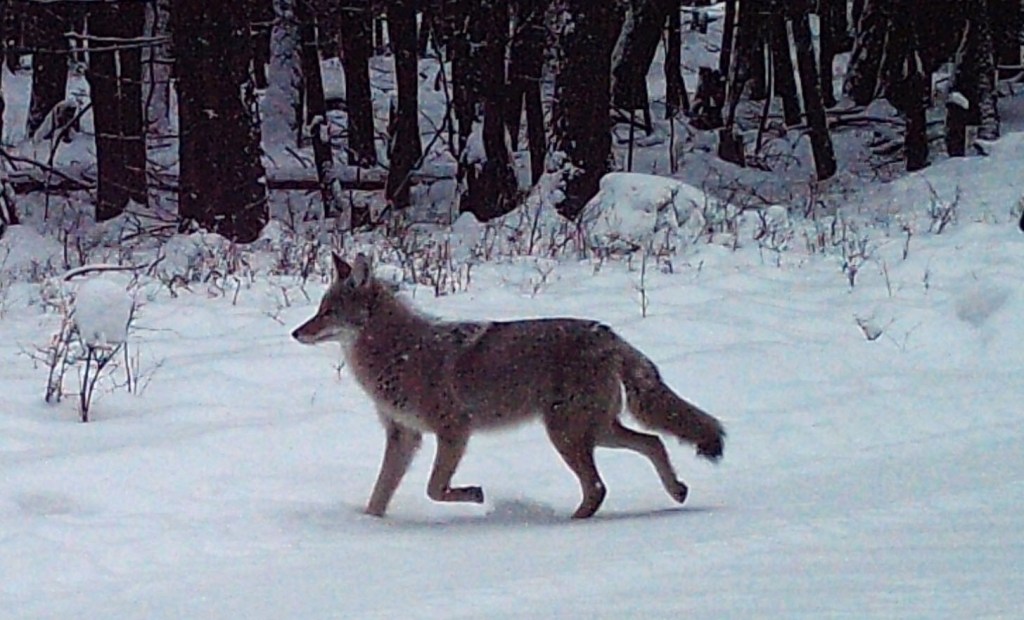
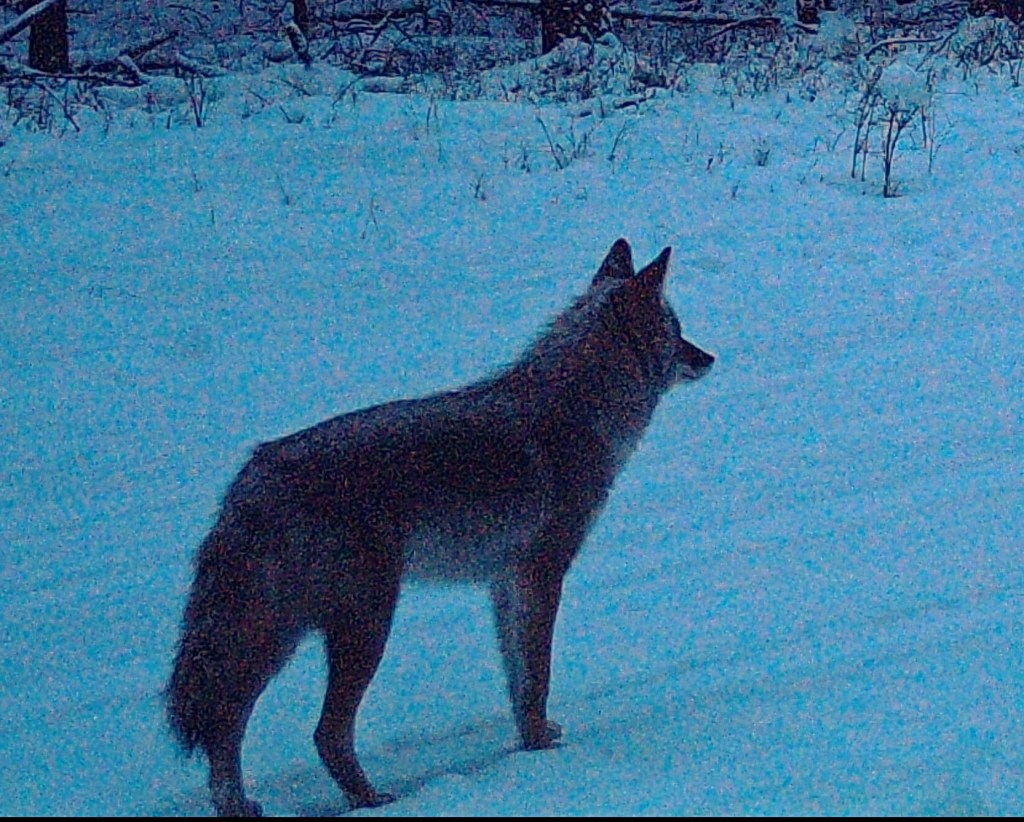
Recently, the coyote(s) has been on the road almost every day. Presumably hunting the turkeys. The deer are gathering in groups. -Patches
-
When I returned to Trego, an old friend suggested that I look at building off-grid, with the comment “Lincoln Electric isn’t a co-op anymore, it’s just another power company.” In a way, he was correct – cooperatives rarely last beyond a couple generations before becoming bureaucracies run with more attention to the employees wants than the members. To me, that wasn’t as important as the fact that the infrastructure of Lincoln Electric is all around me. The presence of the infrastructure is of greater value.
Still, my community can be divided between folks who are on the grid and those who are not. The decision to be on grid is fairly easy for me – 160 acres, and the most distant spot from a power line is ¼ mile. That’s a different calculation than someone who is two miles or more from the line. Real estate folks stress “Location, location, location” and they are correct. Location can be a creek. It can be a view. Or it can be proximity to the infrastructure – in town, water comes through the meter, cell phone service exists, and the power lines are even closer than mine. The decisions are simpler.
As I write this, I’m thinking about a fire up Edna. My guess is that his tax bill includes the same $50 for the TFS fire department that mine does . . . but my fire protection is within a half-mile. My phone line hooks through Interbel. I have a six or seven mile advantage in emergency service, and it’s a phone call away. We have different levels of challenges in land ownership. The first – totally on-grid and in-town – is cash oriented. A monthly check buys the needed services. Still, it can be exclusionary in case of disability, job loss, or poverty. It’s polar opposite is off-grid on the mountainside. All the needed elements are brought in regularly by the land owner – and I recall an old rancher a half-century ago who described it as “When me and the bank had the ranch down in . . .”
Off-grid isn’t for the weak – and I probably lost 30% of my physical ability in surviving colon cancer. I still think it was a fair exchange to continue living. My neighbors off grid have to be in better shape – if nothing else, they have to keep the 4×4 running to bring in the necessities. Broken ribs or a leg in a cast are a greater problem. At forty, most of them could handle the effort of being off-grid easily. At 70, or 80, the margin isn’t there.
The Economic Research Service has the classifications: “The 2015 County Typology Codes classify all U.S. counties according to six mutually exclusive categories of economic dependence and six overlapping categories of policy-relevant themes. The economic dependence types include farming, mining, manufacturing, Federal/State government, recreation, and nonspecialized counties. The policy-relevant types include low education, low employment, persistent poverty, persistent child poverty, population loss, and retirement destination.” We fit in a couple – we’re recreation, government dependent, low employment and retirement destination.
Those types do not fit well together. The recreation dependence raises land values beyond their productivity – as does retirement destination. Government dependent and low employment translates to having a lot of government jobs and a lot of unemployed. I’ve looked at recreation dependent and retirement destination counties on paper – basically the real estate prices increase, and affordable housing diminishes. Add in the low employment, and affordable housing gets hit harder.
Living off-grid has made the hit less obvious here than in many recreation-dependent counties. In the south end of the county, corporate timberlands have been the norm. Here, in the north end of Lincoln County, more remote areas, unserved by the electric co-op, have provided the alternative. Still, living off-grid requires more individual effort – the body declines. Tasks that were easy at 40 become challenging at 60 or 70. The margin narrows with each passing year.
Back in the late 90’s, I knew an old guy who had built his place down the Kootenai from Libby while he worked at the sawmill. He asked me to review his situation in case his math was wrong. It wasn’t. As he reached his mid-eighties, his retirement COLAs hadn’t kept up with the increased taxes and insurance on the beautiful spot he had built in his spare time. I couldn’t argue with the economics of his decision – sell the recreation spot on the river and move to Chester, Montana. I agreed, the people in Chester have always been nice when I stopped there. There are some nice places offered at low prices in population loss counties. Still, it seems an awful thing to see people pressed to leave their communities by disabilities and rising prices.
-
With snow and ice season well and truly upon us, it seems like the first thought to mind when considering travel is the state of the roads. Good? Bad? Clear? Icy?
An inquiring mind has a few options.
- Facebook: There are Facebook groups dedicated solely to road reports, and if the timing is right, one can find a post by someone who just traveled the same path.
- The Travel Info Map: has nice, color coded details for the entire state. Covers major highways.
- Web Cameras: These are useful for a look outdoors without actually having to look out doors. I often check the Dickey Lake Camera from the Travel Info Map, although Eureka has its own and there are several down in the Flathead.
There isn’t a really good source, other than people who’ve been out and about, for roads like Ant Flat and Fortine Creek Road. They just aren’t big enough to make it onto the Travel Info Map. Some good internet research (and some luck) can tell you all about the roads in Eureka, the trip down towards Whitefish, and the condition of the roads within Whitefish and Kalispell. The usual sources aren’t as much good for the (very) local roads.
That said, it’s often my experience that the first few miles after leaving home are the worst for driving.
-
Long ago, when I studied research methods, a quarter of the page was dedicated to showing the four ways to explain the world around us: Philosophy, Religion, Ideology and Science.
Philosophy includes logic – mostly the rules of inference that allow the practitioner to derive conclusions from true premises. The only challenge there is making sure the premise is true, and that you think really well. Philosophy precedes scientific method. Still, philosophy is not the method we use to select the people who rule.
Religion basically proceeds from faith and revelation. It probably precedes philosophy as well as scientific method. Despite that early start, the first definitions I find are from anthropologists and sociologists in the 19th century. Time was when people believed that kings ruled by the grace of God. That seems to have gone out of style.
From a sociologist’s perspective there are political ideologies and epistemological ideologies. It’s kind of hard to look at ideologies without recognizing that Karl Marx basically wrote the definition – that ideology results from the means of production in a society – and then came up with his own political ideology. Of course Karl didn’t come up with the only political ideology. A political ideology is based on a belief about how society should work and the best method for achieving that ideal arrangement.
If we use Marx’ perspective, the war between the states was basically an ideology based war. The abolitionist ideology wound up dominating the Union, while an ideology (based on the means of production) that supported slavery as the best method for maintaining things dominated the confederate states. There is more to Karl Marx than the Communist Manifesto – though it takes more reading than the average socialist finds necessary.
So far as ideologies go, I prefer the libertarian perspective. If I’m ever drafted to run the country, I’ll do my best to ruthlessly leave folks alone. Karl Marx identified a capitalist ideology and developed a socialist/communist ideology – along with developing the social conflict paradigm that is useful as can be in explaining how society works. The problem is, his benign communist ideology included leaders who preferred totalitarian rule – just as fascism and national socialism melded cronyism with capitalism to support totalitarian rule. Different ideologies brought both to aboutthe same place.
Science is a method of analyzing a problem, developing a research question, testing that question, and coming up with an explanation. I don’t need to have faith or revelations, I don’t have to have a belief of how society should work, and I don’t need the sort of rigor that philosophy requires. Science requires skepticism – and yet, at the end of the research, causality is inferred, not proven. Kind of like the steps in philosophy – but the experimental method gives checks as we move toward inferring causality.
Ideology contaminates science if we research toward a predetermined end. Lamarckism – the heritability of acquired characteristics – was agreeable to Soviet ideology, and handicapped their biological sciences. There is always someone wanting to substitute the revelation and faith of religion for the skepticism and methodology of science. One of the finest discussions and studies I have been involved in was a series of weekly meetings on the idea of intelligent design. I’m not qualified to evaluate intelligent design as to its religious soundness – but after we spent about 8 weeks hashing it out, we arrived at the conclusion it isn’t good science. It assumes the answer – and a scientific hypothesis must be falsifiable.
Somehow, it seems a little odd that the varying ideologies – developed as emotional or habitual choices of the best method to run a society – wind up as the method we use to select our political leaders.
-
If you never bat against a good pitcher, it’s easy to think you’re a Yankee. We learn where we fit by the challenges we face. I recall Jay, who taught math at TSJC. Jay was a quarter century older than I, and evaluating where he was – commenting that he was second-rate. In the science building, at a rural junior college, we could have that sort of illusion. We weren’t the major league competitors in academia. Frankly, claiming second-rate status was too long a reach – the first-rate teams were at MIT and Cal Tech . . . and they were far away and above.
On the other hand, down the hill in the gunsmithing department, there were people who had demonstrated first-rate skills. One held the distinguished rifleman badge. Another had represented his country at the Olympics 3 times – never scoring gold, silver or bronze – but three trips to compete at the Olympics isn’t shabby. I shot against them (and others) in service rifle. First time I ever used an AR-15 . . . a borrowed rifle, and my goal was just to qualify for the DCM Garand. Kind of proud of that fifth place finish – but without Harold and Leonard for first and second, I would have been competing with my peers.
I enjoyed shooting – but competing with a couple of outstanding shooters – in high power centerfire and metallic silhouette – let me know where I rated. I knew who was better, and accepted that I was a third-rater who, on a good day, might finish in style. Jay, who never really tested his performance against the best, thought himself second-rate . . . and never was. There may have been a dozen faculty members who could use the calculus, and Jay was second of the crew (and better than I) but it was a small pond. Our gunsmithing department had recruited from a different, deeper pool.
In a nation populated by over 300 million people, it’s hard to qualify for the first team. In major league baseball, there are 30 teams, limited to 26 active players each (they can have up to 40 on contract). That’s somewhere between 780 and 1,200 major league players at any given time. I remember listening to a radio interview with Edgard Clemente, who was playing for the Sioux Falls Canaries – he had gone down in class from the Colorado Rockies. (Roberto Clemente was his cousin) Edgard, in 2005, talked about how great it was to be able to make a living playing baseball – few of the Canaries ever make it into the majors. Listening to his interview as I drove the highway put Edgard Clemente into my memories – a baseball player who loved his game, even as his career had peaked.
There are 32 major league football teams – each limited to 53 players on the roster. Just under 1700 people at any given time. It gives a bit of perspective about a high school athlete’s chance to make the big time. The Bureau of Labor and Statistics identifies 1.7 million post-secondary teachers in the US – the statistics show that a high school kid is a lot more likely to have a career as a college professor than a professional football or baseball player. The academic career lasts longer, though that number includes the “minor league players” like Jay.
And there are other spots – I have no problem pointing out that Joe Biden has outstanding political talents. He may well go down as the worst president ever (though I believe Buchanan will be hard to beat). His record holds the unforgivable academic sin of plagiarism. Still, Joe has gotten a lot more votes over his lifetime than I ever will – only 45 other men have been president of the US. Slow Joe is a first-rate politician, whether you approve of him or not. May not be a good president, or even human being, but he is a first-rate politician. Even the losing presidential candidates are mighty fine politicians.
If you spend your whole life playing T-ball, a room filled with participation trophies doesn’t teach as much as one time at bat with a major-league pitcher.
-
It’s that time of the year again, or rather the temperature is that low again. Strange pillars of light in the sky? Ice pillars, or light pillars, form under conditions of very cold temperatures.
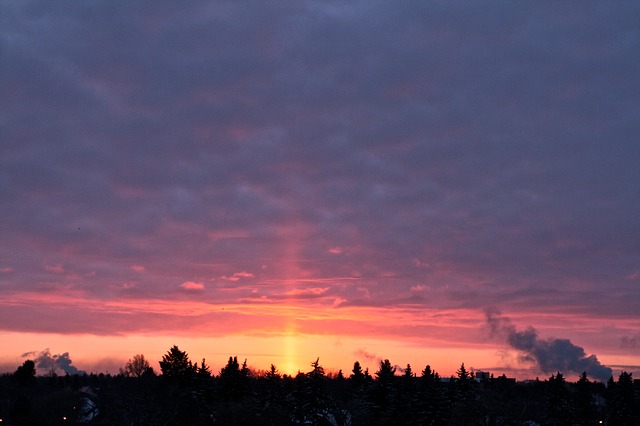
Edmonton, Canada -not my photo, I wasn’t about to stay out in the cold long enough to take one! They are caused by light being reflected by crystals in the atmosphere, and careful observation of them can actually provide some insights about the weather. The source of the reflected light can be anything from the sun to streetlights. Color will vary depending on the light source.
Since these require very dense, cold air, with many ice crystals, they are common in polar regions.
-
In case you missed it:
Do you get all the Government you pay for?
The area represented by the Lincoln County High School district has 31.8% of the county’s population, and provides 45.5% of the tax dollars that fund county government. Libby, where most of the county government occurs, has 50% of the county’s population, and provides 36.1% of the taxes that fund county government.
I guess it’s a question suitable for debate – is it better to receive more government than you pay for, or is it better not to receive as much government as you pay for?



Want to tell us something or ask a question? Get in touch.

Recent Posts
- Voting Yourself In
- A Few Charts and Trends
- The Density of Water Explains When Dickey Lake Freezes
- Watching Iran
- The Quality of Numbers
- Robert Treat Payne Had Traveled To Greenland
- 75 Years Ago in New York
- Recovery Time for a Retiree
- Venn Diagram and DSM
- When Castro Was Cool
- You Have To Beat Darwin Every Day
- Computer Repair by Mussolini
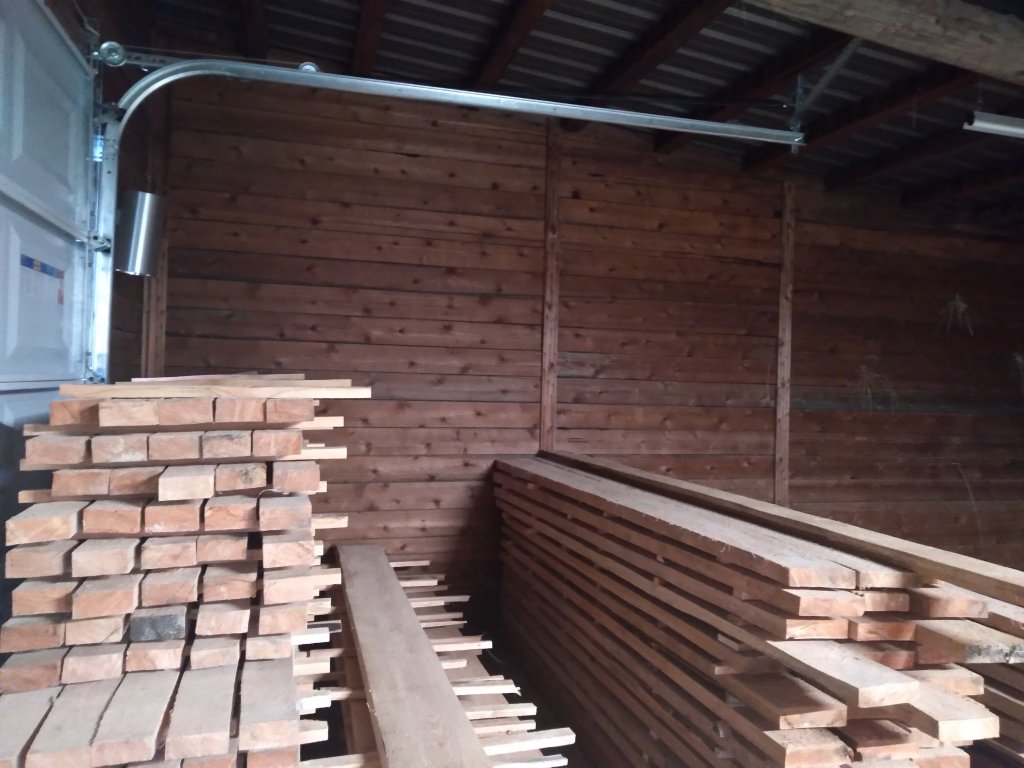
Rough Cut Lumber
Harvested as part of thinning to reduce fire danger.
$0.75 per board foot.
Call Mike (406-882-4835) or Sam (406-882-4597)
Popular Posts
Ask The Entomologist Bears Books Canada Census Community Decay Covid Covid-19 Data Deer Demography Education Elections family Firearms Game Cameras Geese Government Guns History Inflation life Lincoln County Board of Health Lincoln County MT Lincoln Electric Cooperative Montana nature News Patches' Pieces Pest Control Politics Pond Recipe School School Board Snow Taxes Teaching travel Trego Trego Montana Trego School Weather Wildlife writing
 Trego's Mountain Ear