-
I’m looking at reports of Artificial Intelligence citing things as fact “that ain’t necessarily so.” The basis for scientific method is to test assertions, that we need to verify our beliefs – testability is the determinant. Time was that bad air was believed to be the cause of malaria – we now know it’s a Plasmodium that is spread by mosquitoes. There are times when common sense just doesn’t go far enough to predict how changing one thing will affect the whole.
I recall the lessons of the Kaibab deer – a spot where reduced predators and domestic grazing competition allowed the deer population to grow to a level where they were starving. The first level interpretation was that reduced predation would result in more deer. True enough. The second level thought was that the greatly increased deer population would exceed the Kaibab’s food production. True enough – and matching Thomas Malthus essay. Still, eighty years after these more obvious results were observed, later researchers were discovering the long-term effects that the huge deer populations had on the area’s Aspen trees. Biological intelligence and natural ignorance can combine very effectively.
There’s the example of anthropic climate change – the basic number can be calculated. A gallon of gasoline is equivalent to about 30,000 calories or 114,000 British Thermal Units. Since we’re using – or to use a more nuanced word, burning – about 100 million barrels of oil annually, those calories pretty well have to be warming the planet. That conclusion is fairly obvious for biological intelligence. It’s probably just as obvious to artificial intelligence. Likewise, it’s fairly obvious that, without humanity and our recent technological progress, we wouldn’t be burning nearly that amount of oil. The problem is figuring out how much it affects things and where. Natural stupidity stops the thinking process with a conclusion that this is horrible and we’re all going to die. We need more analysis to better understand how much threat anthropic global warming is – or, if it might combine with the farmable lands in Canada and Russia to provide huge food surpluses. I don’t have the answer – but I don’t believe Greta Thunberg understands the question.
The strength of an Artificial Intelligence application is that it can review the literature on a topic with amazing speed. The weakness is that – so far, anyway – the application isn’t nearly so good at telling good data from bad. It’s not enough to be the fastest – you also need to be the most accurate – and Artificial Intelligence needs to be protected from natural stupidity.
c
-
I stopped mowing when a young hound decided to come close and check out the operation. A comment from Renata made me realize that most folks haven’t mowed hay, and haven’t seen, first hand, the danger a mower is to small animals. Then I thought of the differences in mowers, and what makes the old sickle bar mower more dangerous to small animals.
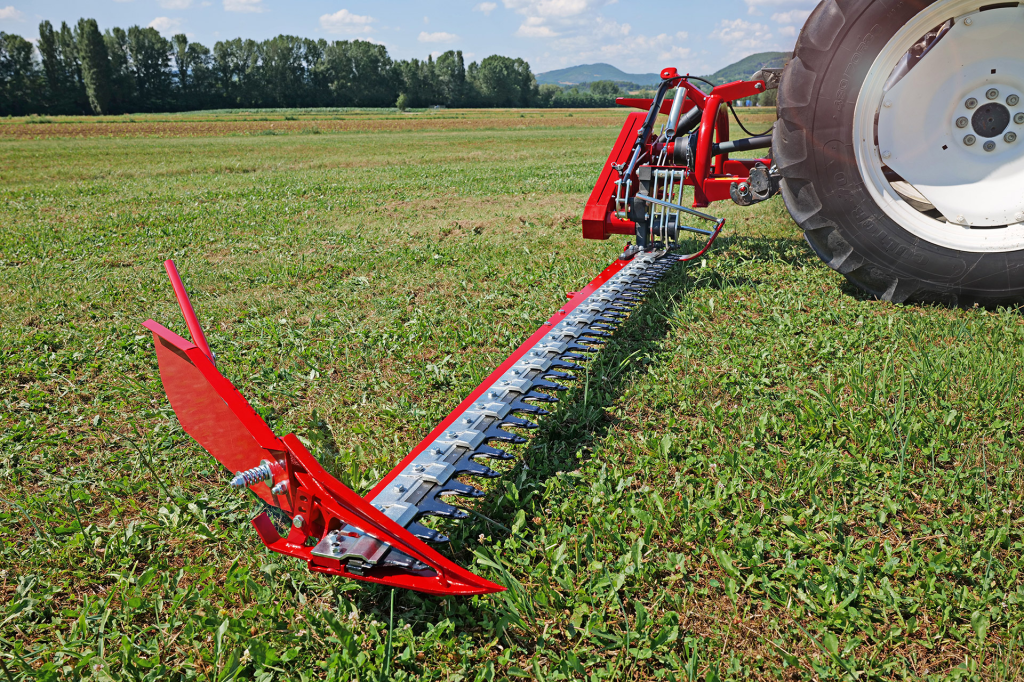
Add the tall grass and alfalfa to this photograph, and it becomes obvious how the cutting blade is hidden from small animals – and many of us who have used one have had the experience of hitting a fawn with it. It’s less common to get a dog’s foot – but it can happen.
I’m using a drum mower – and I suspect it’s a bit safer than the old sickle bar mower, but I’m not sure, and I’d much prefer to stop and waste a few moments than hurt a dog. Here’s what a drum mower looks like:
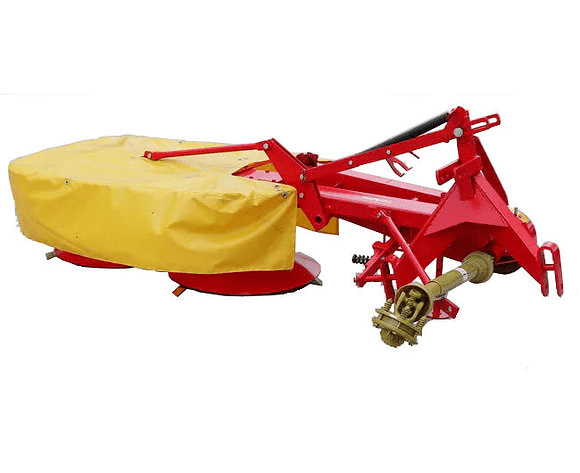
The cutting takes place by 3 small blades that rotate quickly with the drum. It’s probably as dangerous to small animals – but the drums rotate quickly and are loud. The sound, added to the height of the mower, makes it a lot easier to see. Mine, has 2 drums, and covers only 4 feet to the right of my tractor – sickle bar mowers usually run 7 feet, and I’ve used 9 foot mowers – far harder to see into the tall grass and alfalfa we mow.
I think it’s a good year when all the fawns get away. As an old man, I now watch for turkeys – small animals that weren’t there when I first mowed hay. So I got to meet a nice little hound as I mowed hay, and took a break to minimize the danger. I think the noise and the profile of the machine already minimize the risk – but coming to a complete stop until the little dog found something more interesting was in her best interest, and mine.
-
Well, the knee replacement is 5 weeks old today. I can walk further than I could before the surgery – miles are again in my world. Not many, but some. I’ve been able to control the clutch for the past two weeks – took a drive down to Rattlebone with Renata – saw a great 6 point bull, and a ruffled grouse. The tractors all need a functional left knee for the clutch.
Mowing hay has showed me that the soil water never was enough for a good hay year. The spots that are well sub-irrigated have thick, tall grass – but in the drier spots grass is pretty thin.
I heard a lot of warnings that kneeling to work on things would be rough – but for me, its better than it was. Lucky, I guess. I can get down and get up fine – so now it is just a question of getting some leg strength back.
I can’t look at this sort of surgery without gratitude for medical progress. The old census reports listed so many people as “cripple” due to the wear and tear that can be readily fixed today. I looked at the book “Doc” as I went through the recovery time – it tells of a physician in Ennis who was developing knee surgery in the Bozeman hospital about the time I started at MSU. It’s easy to be thankful. I’m off to continue mowing – next week I think I’ll walk the trail climbing the hill. Unfortunately, I’ll have to leave my old dog at the house – she can only handle short walks on the flat – but she approve of mowing the field so she can see better.
-
I noticed this list of how much of the nation’s energy is used to keep the large data centers operating. The same article said that data centers account for 26% of Virginia’s electric use – and I suspect that Virginia’s use includes some massive data centers in Washington DC.


-
I’ve seen comments about ‘The Fourth Turning’ and how it is happening now – so I figured that I could read the books while I was laid up with the knee recovering. Neil Howe is identifies as a demographer – but his view is more based on cycles in history than statistics. Still, if he’s right, we’re in a time of great societal change. On the other hand, if his hypothesis is wrong, we’re still in a time of great societal change.
The cycles that Howe sees are 80 to 100 year spans – and starting with the American Revolution, we’ve completed 3 and are moving onto the fourth cycle. On the other hand, three data points does not a theory make. It makes a hypothesis – but it’s the research question and the results that can turn a hypothesis into a theory.
I had hoped for a bit more complete and rounded out theory. Instead, I found a hypothesis, based on the last 500 years, that every 80 to 100 years we get a major social change. It’s hard to say that doesn’t happen – but the transcontinental railroad and telegraph occurred about 160 years ago. The media reminds me that the atomic bomb was 80 years ago. I’ve watched computers go from huge mainframes to cell phones. The jacket blurb calls it a theory – but it looks like a hypothesis to me, and a hypothesis that resists testing.
On the other hand, I watched the Young Sheldon DVDs while I was laid up, and the Lonesome Dove series. I liked Young Sheldon, and Lonesome Dove was an enjoyable repetition. So was Josey Wales. Maybe I should have stuck with entertainment instead of looking for socially relevant research.
-
I see that the phrase ‘undocumented’ is going out of fashion – and illegal alien is going back in. I suppose it’s like Shakespeare wrote about what’s in a word – if we accept the changed word, we accept a different reality.
One of the words I understand is ‘mojado’. It’s a Spanish word that translates simply to ‘wet’. Always seemed a bit more polite than ‘wetback’ – it shows something when you insult someone in his own language. But I should get back to the topic – I have a US passport. I think that’s close to the highest quality of documentation one can have – though mine needs a new replacement before next year. My drivers license is of lesser quality – it specifically says “not for federal identification.” Still, it tells folks that the state of Montana trusts me to drive a car on public roads, and no traffic cop will put that same faith in my passport. A bill from Lincoln Electric, showing my street address, can be a supplement to either the drivers license or the passport. A voter ID card is another supplement.
Citizens or not, we all have documentation. It’s just that some documentation is better than others. Time was when my drivers license could have a post office box number – but that wasn’t good enough to buy a pistol. It had to have a street address. I think that’s because we have a bunch of people who can’t figure out the rectangular coordinate system that has been federal law since 1785 – yes, that system was before the constitution. Still, that day I didn’t have good enough quality identification to buy a pistol. The folks at Cabelas insisted that my ID had to include a street address.
I met a hitchhiker who was undocumented and homeless – he explained that his wallet was stolen in Oregon and, since he had no address, he was traveling to Vermont, to get a copy of his birth certificate and begin the process of recovering his papers.
Still, generally speaking, there are very few who are undocumented. There are many who lack the quality of documentation they need.
-
Most of the protests I see are in Whitefish. Sometimes I drive by protests at Eureka’s historical village – but those are relatively infrequent, of short duration, and generally, I know they happened because I see photographs and comments on Facebook. Facebook provides an improvement over the sixties – where you can look to see who is protesting in the security of your living room, instead of attending and being dragged into a counterprotest.
I still recall the counterprotest at a Viet Nam protest – most of the protesters were walking down the street (and inexperienced) while trying to chant in unison “Hey, hey, LBJ, How many kids did you kill today?” Some of the ‘heys’ ran into the ‘J’s – I recall thinking that some of our schools must not have taught how to sing rounds. And through it all, an old woman (probably younger than I am now, and less than 5 feet tall) was hopping up and down chanting “You’re all cowards.”
When I drive through Whitefish, I occasionally encounter abortion protests in front of (what I assume is) a clinic. Sometimes the car in front of me, or the car I am meeting, responds with horn blasts and flipping the protestors off. Sometimes the protestors get friendly waves. Often, a single female stands quietly across the street.
Once, returning home from Kalispell, I saw a demonstration outside the Border Troll offices – people dressed casually, with a sign that I read as “Free Beer.” Remember, I was driving, so misreading the sign is more understandable – as I got closer, I realized that two letters were obscured by a light pole, and that the sign actually read “Free Beaker.” I have no idea why Beaker needed freedom, nor why Beaker was incarcerated.
On the other hand, free beer might be a way to attract more participants at protests.
-
The Depression came early to northwest Montana – including Eureka and Trego. This section of Trego’s history is fragmented – while I met and knew people who had the information, I was young and not inclined to write the histories their stories covered. This section is important – but I am hoping that other people will provide more details.
Again, Trego’s history is a story not of great men, but of social trends. Basically, the Great Depression hit Trego and Eureka early – when the big mill in Eureka shut down. Instead of a major employer driving logs down Fortine Creek, stacks of hewn ties, and ties milled by small mills, began to stack up near the railroad sidings – instead of the single large employer, it was individual entrepreneurs, often owning only a double-bit, a broad axe and a crosscut saw. By 1931, small sawmills had pretty well replaced these low investment entrepreneurs.
Wylie Osler explained the tie shack as housing – the switch ties (longer) went to the back wall, while regular length ties went for the sides and the front, leaving enough space for a door. Stories told of tie hacks who could turn out a hundred ties in a day – a 7 inches per tie, a dozen ties could stack up and make a seven foot wall, so a day’s work would produce a crude cabin that could be disassembled and sold when the tie hack moved out. Unfortunately, I didn’t make notes of what those older neighbors said when I was a kid. I remember mention of the Pinto Swede – but not what his accomplishments were. The name “Wobbly” Johnson tells its own story about membership and believing in the Union – the Industrial Workers of the World.
The sawmill camps had standardized bunk houses and cook shacks – we still have a couple stashed close to the old service station (it was 1966 construction, but the logging camp buildings were of a previous era). The camp numbers and names remain attached to locations that were once remote. Today, the best examples of the buildings associated with logging camps are sold to go with model railroads.
There’s a shift in the population that began in the mid-1930’s. The influx came from the prairies, several families from the area around Great Falls. The post-World War II influx came in from 1945 to the early sixties. Octav Fortin’s family (direct line and collaterals) gradually diminished – I recall two Fortine girls and a boy in Trego school in 1960, but by 1963 (when I graduated 8th grade, the name Fortin(e) was gone.
Those middle years showed School District 53 responding to the needs of the community in an unusual manner. Homes and stump ranches stretched up the creek, and the roads were mostly dirt. During this time, District 53 included a school at Stryker, an Edna Creek School, and a Swamp Creek School, along with Trego School. Before electrification (1948) it was more effective to build a one-room school than run the long bus routes of our modern era.
Stryker was accessible by road, and had a railroad crew working there (still does, but the priorities have changed). The railroad employment, school, and Post Office kept the small town in the loop. (Stryker school closed in the late 1950’s, Edna Creek school after the end of World War II) The record is incomplete here because Trego School burned – and was replaced, complete with electricity, running water, and flush toilets after Lincoln Electric brought power in.
Any information that can fill the missing spaces between 1925 and 1950 will be appreciated.
Next Chapter: Electricity, Modernity, and a Boomtown Again
-
I was sent to Sunday School as a small boy. I’m fairly certain my parents believed it was part of a process to civilize the young – but at the other end of life, as an old man, I’m realizing that it taught me about areas that have been filled with strife and conflict since the dawning of civilization. In general, my Sunday School lessons showed that the mid-east is an area with a long record of strife, war and conflict.
Gaza, as I recall, was the place where Samson went to see a girl, and left town ad midnight, taking the gates to the city with him. At age seven, I wasn’t real sure what he was doing with the girl, but I was definitely old enough to realize that he was violating the code of the west: leave all gates as you find them. It’s downright un-neighborly to haul a guy’s gates – and gateposts- to the top of the next hill. I could understand how Samson had PO’d the town elders.
Later in the Samson story, I learned how the guy got a haircut, was weakened, and the local constabulary gouged out his eyes. It left me cautious about haircuts for years, and thinking that some folks just don’t have any sense of humor about people who mess with their gates. At 75, I’m not sure that Sunday School was intended to teach me to leave all gates as you found them.
On the other hand, there was the way the Israelites were treated in Egypt. The story didn’t totally make sense. When I hashed my way through it, and figured it out, I came up with the idea that the Israelites came down on irrigated cropland with their sheep and goats, and that the Egyptians’ courts sentenced them to labor to make up for the damages the sheep did to the wheat fields. That still makes sense to me.
There was a bit of a problem in keeping tribes straight as a little heathen in Sunday School – I didn’t know any Philistines – but I knew quite a few Filipinos. Tough little bastards. I came out of that lesson knowing that Samson had kicked ass on 10,000 Filipinos. Probably not the intended lesson – particularly since I liked the Filipinos I knew.
So I’ve never been surprised by wars and atrocities in the mid-east. And I don’t expect any of the players to wear white hats. The record they showed me in Sunday School suggests that staying out of the middle east, and making a specific effort to avoid Gaza, makes for a healthier, happier life.
-
About a dozen years ago – just as I was starting to look into retiring – hog production facilities in Minnesota began blowing up. I had moved from Extension to the department, so it wasn’t really my topic – but it was interesting. The first correlation I heard was the change in feed – from the total grain to dried distiller’s grains. Folks were looking for an explanation, for the Pig Bang Theory. Some of the explosions killed 1500 pigs in a single incident. It was pretty easy to figure out what was exploding – something in the hog wastes was creating natural gas and hydrogen sulfide. But it was a problem.
The Smithsonian covered the topic ((https://www.smithsonianmag.com/science-nature/mysterious-exploding-foam-is-bursting-barns-124424083/ ) back in 2012. “Why these explosions happen is well understood. As manure ferments, it releases methane gas, which bubbles to the surface of the pit. Normally this methane doesn’t pose a risk. The gas seeps out of the pit, and the barn’s ventilation fans carry it away. But when thick, gelatinous foam covers a manure lagoon, the methane can’t rise. The foam acts like a sponge, Jacobsen says, soaking up the gas. Jacobsen and his colleagues have collected foam samples that are 60 percent methane by volume. When a farmer disturbs the foam by agitating the manure or emptying the pit, the methane gets released all at once. In barns without adequate ventilation, the concentration of methane can quickly reach the explosive range, between 5 percent and 15 percent. A spark from a fan motor or a burning cigarette can ignite the gas. An explosion in southeastern Minnesota raised a barn roof several feet in the air and blew the hog farmer, who was on his way out, 30 or 40 feet from the door.”
Nautilus (https://nautil.us/the-curious-case-of-the-exploding-pig-farms-234669/ ) explained the solution: “With no known cause for foaming manure, there’s no going at the root of the problem. The best short-term solution farmers have come up is antibiotics. Rumensin 90, an antibiotic normally used to prevent bloating in cattle, has been repurposed to prevent gas in pig manure pits. It works, though no one knows why. Scientists have hypothesized that shifts in the microbial community—either from DDGS feeding or from another cause—may have a role in foaming manure as well.”
So near as I could understand it, the shift to feeding dried distillers grains created a situation where the natural gas could build up, and adding the equivalent of cow tums to the ration stopped the explosions (or I moved further from Minnesota, Iowa and swine production and quit hearing about it).
Want to tell us something or ask a question? Get in touch.

Recent Posts
- Getting Alberta Oil to Market
- Parties On Economics
- Thus Spake Zarathustra – One More Time
- Suspenders
- You Haven’t Met All The People . . .
- Play Stupid Games, Win Stupid Prizes
- The Ballad of Lenin’s Tomb
- An Encounter With a Lawnmower Thief
- County Property Taxes
- A Big Loss in 2025
- Thinking of Clovis
- I Started The Year With Optional Surgery
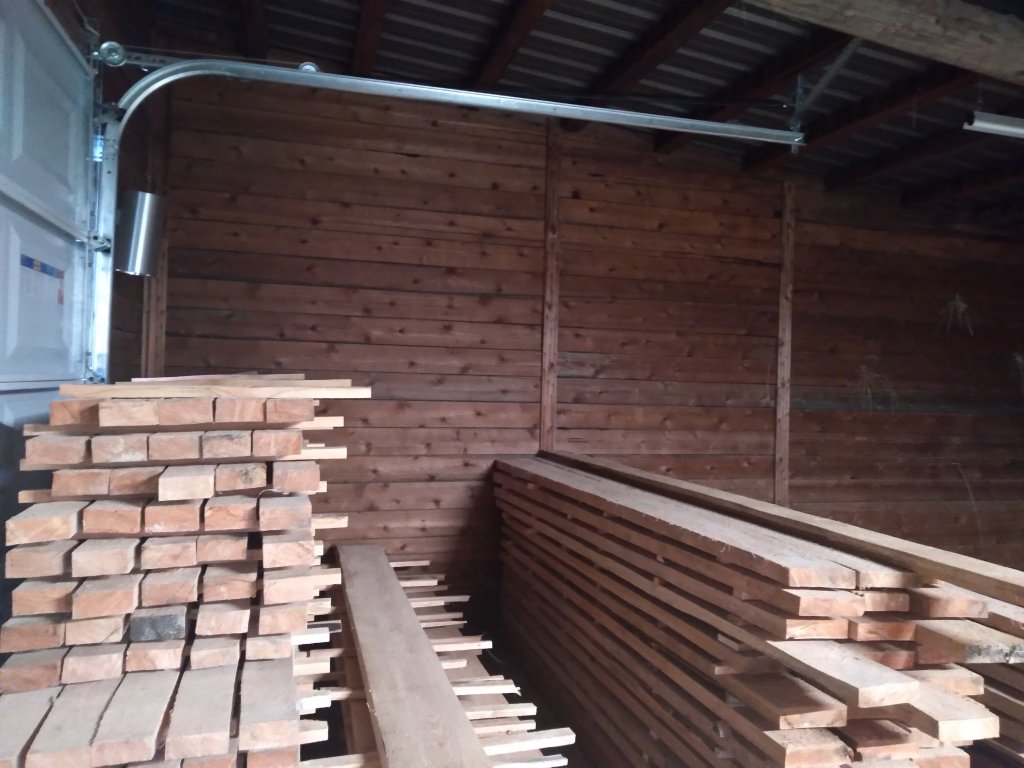
Rough Cut Lumber
Harvested as part of thinning to reduce fire danger.
$0.75 per board foot.
Call Mike (406-882-4835) or Sam (406-882-4597)
Popular Posts
Ask The Entomologist Bears Books Canada Census Community Decay Covid Covid-19 Data Deer Demography Education Elections Eureka Montana family Firearms Game Cameras Geese Government Guns History Inflation life Lincoln County Board of Health Lincoln County MT Lincoln Electric Cooperative Montana nature News Patches' Pieces Pest Control Politics Pond Recipe School School Board Snow Taxes travel Trego Trego Montana Trego School Weather Wildlife writing
 Trego's Mountain Ear