-
I have the habit of looking for low mileage older cars. That’s why my two main rigs weren’t made in the 21st century. The Talon is a 1995 with 65K miles on the odometer. The Suzuki Vitara is a 1999, that has just rolled past 90K. My last trip out with it, in the darkness before 8:00 am, and with bright lights close behind me, I clipped a deer’s right hind leg – cracked the edge of the plastic grill and left a small dent in the right fender. I don’t enjoy denting my cars – particularly when lights from the rear, close to my bumper, are a fellow driver’s way of saying I should speed up in deer country.
My wife drives the “new” car – it’s a 2009 Chrysler PT Dream Cruiser – built in this century. It has a device to tell when the air pressure in a tire gets low. It reported a lot of low tire pressure – I had to inflate the tires to 40 psi to turn the light off. Then I started researching. For the car to monitor tire pressure, it takes a small battery operated device in each tire. After 16 years the batteries probably are a bit tired. I can get new sending units, with new batteries through Amazon for $16 each. I suspect that to make things work right I probably need four for the summer tires and four more for the winter tires. That’s $128 plus the cost of taking each tire off the rim. For years I’ve made do with a tire pressure gauge. I’m still making do with a tire pressure gauge, but I have an annoying light on the dash – not to mention tires that were ran overinflated until I figured out that it’s another spot where modern technology and I aren’t particularly compatible.
It got me to realizing – I drive cars that were built in the previous millennium. Not just the previous century, but the previous millennium is just as accurate, and shows that I am definitely driving old cars. The state of Montana thinks that because of my advanced age they only need to give me a drivers license that’s good for four years at a time. The bastards may be correct.
-
I can, and occasionally do, put the letters Ph.D. behind my name. I know what the letters signify – and I just saw a commentary that Canada and Mexico have both elected leaders with Ph.D. behind their names, while the US has Trump.
So let’s look at what the letters Ph.D. actually imply – that I have done original research in a satisfactory manner while supervised by a Ph.D. holding faculty member. That’s all the title actually tells of what I, or anyone else who holds the Ph.D. has accomplished. I take some quiet pride in the fact that current researchers are still citing my dissertation – but that isn’t a necessary part of getting the letters behind your name. And, despite the fact I feel good about those citations, there aren’t nearly so many people citing the dissertation as read this blog. Most dissertations are filed away and never cited.
Einstein’s dissertation was “A New Determination of Molecular Dimensions.” In his thesis, he developed a methodology for calculating Avogadro’s number from the Brownian motion in sugar water. It was original research – which means that nobody had done it before. It was good quality research. But when we associate Einstein with research, we tend to recall his later research – the spot where he quantified Energy as equal to mass times the square of light speed. The point being, we don’t recall Einstein because of his first piece of original research.
Generally speaking, whenever someone tells you “If you want to know about X you should read my dissertation.” you probably don’t want to read it. The document represents several years work, and we tend to think of our dissertations as important – but most are not.
Research for a Master’s degree doesn’t need to be original. It doesn’t even need to be done – a Master’s can be awarded just for coursework. If there’s no thesis, the degree is called a terminal masters, not qualifying for admission into a Ph.D. program. (My M.Ed. was a non-thesis masters, so I had to research and write a separate thesis to make up for the lack of a thesis.)
Jill Biden’s Ed.D. thesis is available online (all 137 pages) at https://www.documentcloud.org/documents/20407101-jill-jacobsbiden_dissertation/ and can be downloaded without cost – the title is Student Retention at the Community College: Meeting Students’ Needs. It is nice to have this available to help people understand what can go into a doctorate.
We (the United States) elected a guy with a Ph.D. to the office of President once – well, actually twice, over a century ago. Woodrow Wilson, Ph.D. Once he was elected, he segregated the federal work force. I don’t have any evidence that he belonged to the KKK – but they missed a great prospect if they didn’t recruit him. His dissertation – from back in 1885 – it titled “Congressional Government” and describes the government of the United States. There is nothing in Woodrow Wilson’s dissertation that you can’t get out of a high school government text.
-
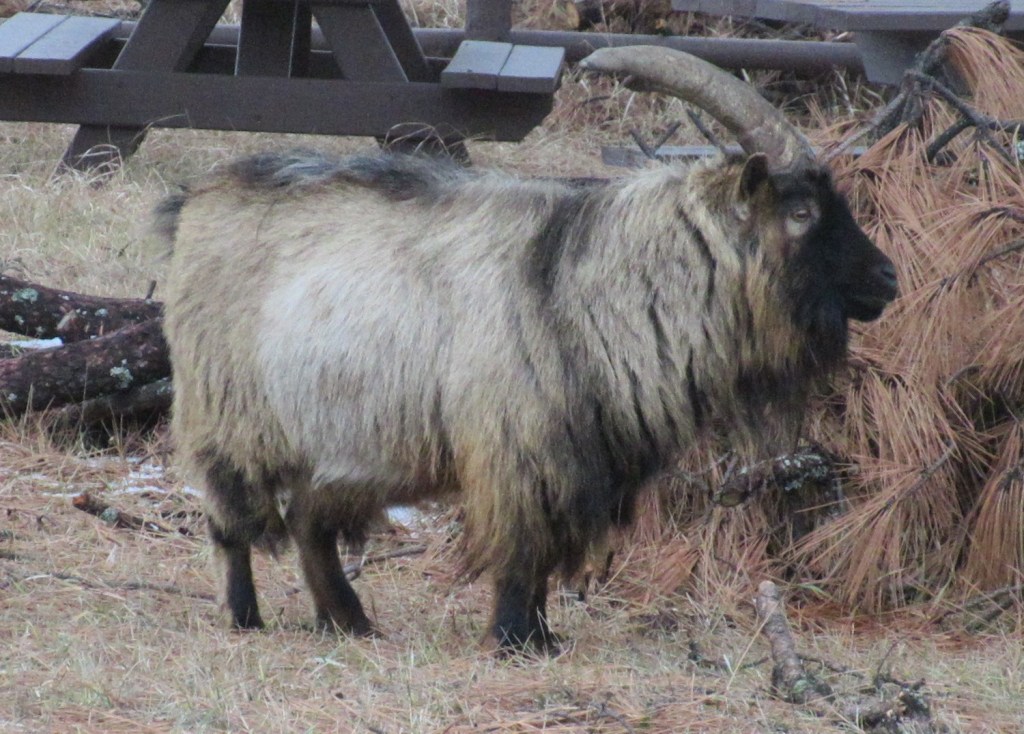
The things I don’t know about goats would fill books. But it has been great watching my community spontaneously move into action, small group by small group to do something about two shaggy goats that moved onto the Ant Flat Ranger Station just in time for the Christmas season.
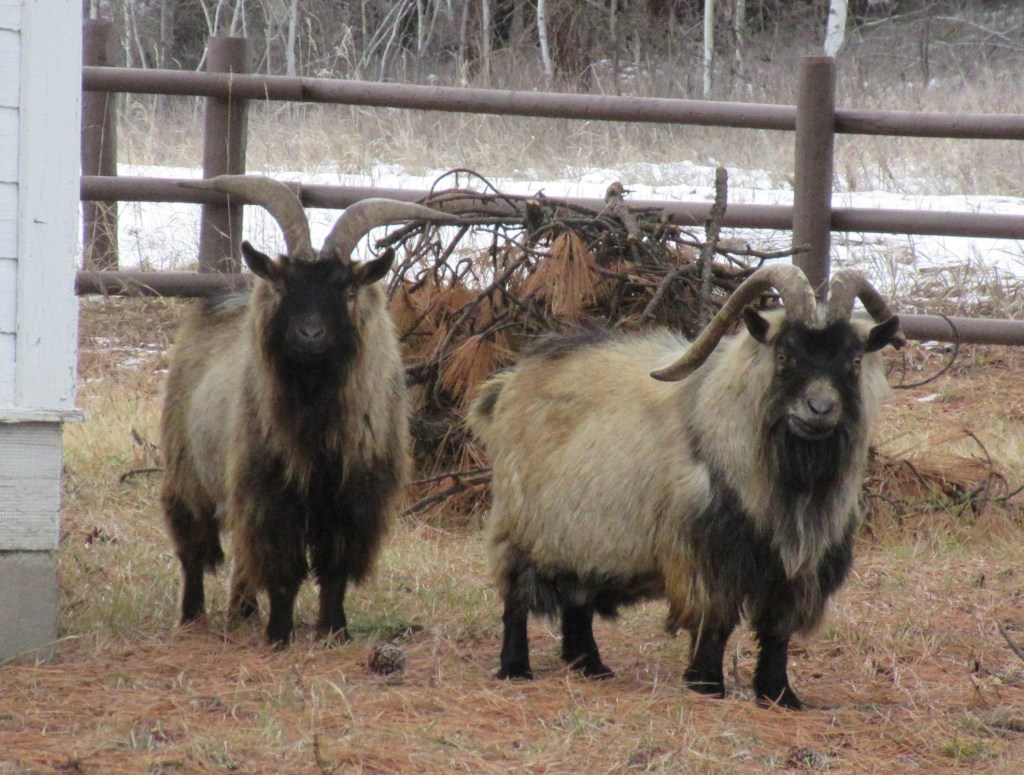
In some ways their rescue was a bit of a comedy – first the challenge was finding the owner who had lost them, then the assumption was that they had been abandoned. Then the explanation – they had been wandering on their own for most of the year. Renata and I drove down to see them – the long, shaggy coats testified that they had been on their own for a long while. When I stepped out of the car and walked toward them, they ran around the building – but when I turned back to the car, they followed. However long they’ve been on their own, the pair remembered that humans are good creatures.
And I watched the informal organization on the Trego, Fortine, Stryker Facebook page. First it was folks searching for an owner, folks bringing goat snacks to the old Ranger Station. Then the annoyance at animals being abandoned – and finally the individuals coming forward with determination, a pickup and horse trailer to rescue the goats.
The rescue didn’t go smoothly – one goat was captured and hauled to a safe place – which left the other alone. Some of the folks who had been following the goats started to chime in on the errors. Now I wasn’t part of the rescue – or of the critics of the rescuers – but there is a little that I do know about goats:
First, goats are herd animals. A lone goat is not a happy goat. Same as cows and horses, they are social animals. Second, goats are easier to catch when you let them catch themselves. Third, a goat’s pupils are different than ours – they’re kind of like horizontal rectangles. It makes for absolutely fantastic peripheral vision. The book tells me that, without moving their heads, they can see in 340 of a circle’s 360 degrees. A cat’s vertical pupils help the cat to succeed as an ambush predator. The goat’s horizontal pupils make them downright difficult to ambush or sneak up on.
Facebook reads like the second goat was captured by a couple of women who brought their own goat along – demonstrating to him that they are trustworthy. The photo shared on Facebook showed some pretty respectable ropes around him after he had been caught.
But the story isn’t about the goats – the story is about the high quality of our neighbors. These are people who will go the extra mile because a couple of goats don’t have a home. These are the same people who will rescue kittens and elderly dogs – in spades. I live in a good neighborhood with good neighbors. I didn’t see anyone calling on the government to fix the problem – I saw people who observed animals in distress, chose to act, and by the time they were done, two goats have a home for new year. They may have been homeless at Christmas – but my hat’s off to the neighbors who took the initiative to get the goats a home for their future.
-
There are many spots in history where you can start Montana’s story – I’m looking for the spot where the Montana Attitude starts. Leslie Fiedler, in his 1949 essay about the Montana Face touched around it – but missed the moment and the incident.
Our origin includes Meriwether Lewis (whose Apron resides with Montana’s Grand Lodge in Helena) and Colter’s Run – John Colter, who mustered out from the Corps of Discovery early, who stayed in the mountains to begin the beaver trade, and who left Montana in 1810 and died a couple of years after returning to civilization (well, St. Louis, Missouri).
Even in grade school, I learned that the Custer legend didn’t pan out – but Custer barely made it into Montana before screwing up at the Little Big Horn. But his poor decision occurred after the Montana perspective began to develop.
Go back in history – and remember that Lewis and Clark passed through, Colter expanded on what they had mapped, but in the middle of the War Between the States, men from both North and South moved to Montana. And, in 1863, men from both sides came together for the funeral of William Bell. Bell, dying of natural causes, asked that he might receive a Masonic funeral. Seventy-six of his lodge brothers showed up for that funeral, and the realization hit, that while the criminals held the Sheriff’s office, they had the organization with a group of fraternity brothers that they could trust. (The seventy-six attending the funeral, plus the deceased William Bell totaled 77 – the final number of the Vigilantes 3-7-77. The blending of North and South wasn’t free of strain – Bozeman still has two separate Masonic Lodges, one originally formed of Confederates, the second Unionists.)
At any rate, the Montana Attitude begins with the organization of the Vigilantes – who, in a couple of months, organized, hanged the crooked sheriff, and restored law and order. With an origin like that, a fundamental mistrust of government – as personified by Sheriff Henry Plummer – and the willingness to confront that government, is kind of engrained in the collective psyche of Montana.
The next incident occur with Montana’s Acting Territorial Governor – Thomas Francis Meagher. Before President Andrew Johnson sent him to Montana, Meagher had used a horsewhip on an editor who criticized him (in New York, as I recall). As Montana’s acting governor, he threatened to repeat that behavior on the editor of the Virginia City paper. The editor responded with the invitation “Pistols for two and coffee for one?” I’m not real certain as to the date, but obviously it was before July 1, 1867, when Meagher disappeared from the deck of a steamboat at Fort Benton.
While Meagher, who was appointed Territorial Secretary, filled the position of Governor, he also ran up the territory’s debt to pay the militia – I recall reading of that debt being recently paid off shortly before I graduated grade school (though I may have been reading an old book).
In those three formative years, Henry Plummer set an example that made Montanans skeptical about trusting local government, while Governor Meagher showed us that state government was willing to incur a debt that would take most of the next century to pay off, as well as attempting to censor the press. I still kind of like Meagher, but if he was pushed off the steamboat, the perp may have had the idea that he deserved it. There’s a reason why Montanans tend to mistrust government – though I’m not sure today’s journalists would be ready to send the “Pistols for two and coffee for one?” response to the governor.
-
It’s the week before Christmas. Fifty years ago, I was on a Ski-doo Alpine, making the January Run. It was a partial run – mostly for the purpose of rewinding the clockwork recorders that measured the height of the antifreeze solution as deeper snows compressed the snow pillows (a snow pillow is a rubber bladder, filled with antifreeze – I measured a lot of them, but rarely saw one).
It’s a different world now – instead of pushing twin tracked snowmobiles up Grave Creek to sample Weasel Divide, then sample Stahl Peak and rewind the pillow, I can download the measurements from my armchair. Today, the only need for snow surveyors is to visit the site, and provide the measurements that allow the correlations with the (longer established) snow course. The real iron men of snow surveys were the generation before me – they did it all on skis and snowshoes.
So, in memory of the job that once brought me envy (“You really get paid to ride snowmobiles?”) Here’s what the data recorder has to say about Stahl Peak today:
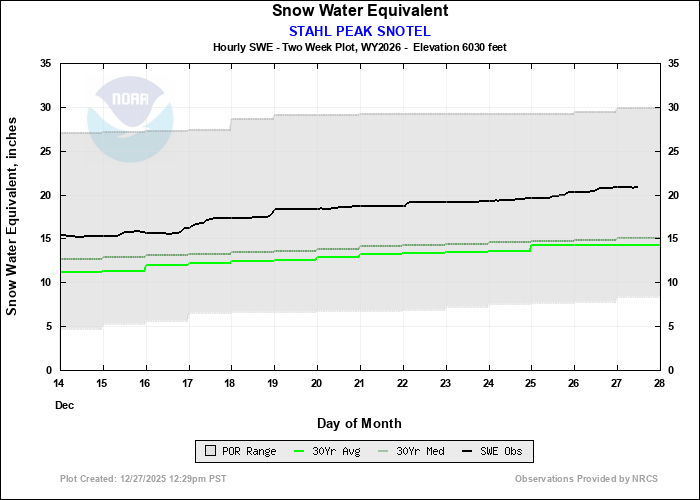
I like the chart – and the long-term data (for the last 30 years – it really does make me feel old to see that my measurements from 50 years ago, are so far in the past that they’re not included. But even a half century ago, I had learned that climate, like weather, changes – it’s just slower to change).
6 Hour
SWE Change
(inches)12 Hour
SWE Change
(inches)24 Hour
SWE Change
(inches)48 Hour
SWE Change
(inches)1 Week
SWE Change
(inches)0.00 0.00 0.50 1.20 2.40 Daily Statistics
Latest Observation is 20.90 inches which is 147 % of average
Note: The Median/Average is based upon the 30 year period 1991 to 2020.
The Min/Max is based upon the Period Of Record (POR).So, at this time, the snowpack on Stahl is about 150% o the average. If you click on the NCRS site, you’ll see where the Kootenai basin sits:
Basin
Site NameElev
(ft)Snow Water Equivalent Water Year-to-Date Precipitation Current
(in)Median
(in)Pct of
MedianCurrent
(in)Median
(in)Pct of
MedianKOOTENAI RIVER BASIN Banfield Mountain 5580 6.8 6.2 110 19.5 10.3 189 Bear Mountain 5460 16.8 18.8 89 47.4 31.8 149 Garver Creek 4250 3.3 4.7 70 15.2 9.0(24) 169 Grave Creek 4350 3.0 5.2 58 28.8 14.3 201 Hand Creek 5030 3.6 3.9 92 11.6 7.2 161 Hawkins Lake 6460 14.3 9.8 146 25.8 15.2 170 Poorman Creek 5050 8.8 11.4(22) 77 46.1 25.9(22) 178 Stahl Peak 6040 20.9 14.2 147 27.1 18.2 149 Basin Index (%) 104 168 The percentages are impressive – but there is a lot of winter yet to come. I don’t have data based on the Bouyoucos blocks we once measured to show how much moisture is stored in the soil at the sites – but I’d bet the soil moisture is at 100% capacity too.
It’s a pleasant thing that the data is so readily available anymore.
-
For folks who don’t know, Dad retired from the Navy as a CWO4 – Chief Warrant Officer. Most of his neighbors here didn’t really understand what a warrant officer was, and he didn’t make it easier for the questioners when he would explain “Jesus Christ was a Carpenter’s Mate.” Folks who had served around warrant officers understood and accepted the comparison. At the time he retired, CWO4 was the top warrant officer. Dad and Ed Ruhl both retired as CWO4 – Ruhl was Marine Corps and had one day of seniority on Dad.
One of our conversations touched on the conditions of his retirement – that he could be called back in the Navy needed his skills, or if he violated civil law or UCMJ to embarrass the Navy. The conversation was a long time ago, and kind of in passing – perhaps driving down the road. Mark Kelly wouldn’t be in the crosshairs of an investigation had he been in the passenger seat paying attention to the old boatswain.
Instead of having a deck division to supervise, Kelly had an airplane to fly, then went on to become an astronaut. I wish I had Dad to comment on Kelly’s situation – not for an analysis of whether Kelly did right or wrong – I’m sure Dad would have looked at his video appearance as foolish at the least. I’d like to hear Dad’s analysis of how a Navy officer could retire as Captain – with the bird on his shoulders – and still either not be aware of the circumstances governing his retirement, or somehow figure that the rules just don’t apply to him. Somehow, the CWO4 knew the situation when he retired, and the Captain did not. There are a lot of times when I still wish I could telephone Dad and get something he said years ago clarified. Most times it isn’t something on the national news that makes me feel that way.
-
I’m accustomed to white Christmases since I was ten years old. Admittedly, I spent a few Christmases south of a projected Mason-Dixon line – but it was at 6,000 feet elevation. Most of the time, as I recall Colorado, I remember that mountains are neat, but altitude sucks. There, I lived at 6,000 feet and looked out at Fisher’s Peak (9,633 feet). Driving north, I’d see Pike’s Peak (14,115 feet). Here, I live at about 3,200 feet and look at Mount Marston (7,340 feet). Life is good – lower elevations, like Libby and Troy have the flooding. My challenge is that nature leaves me firewood and logs to cut and move.
This year, with wet soils and high winds, we’ve had a lot of blowdown – which will give me plenty to do next spring and summer. The Douglas fir has generally pushed over at the roots, while the Ponderosa pine have tended to snap 20 or 30 feet in the air. The larch, with their needles dropped for the winter, generally stand undisturbed. The leave tree selection will be larch first, P. pine second, D. Fir third. I think the spruce are pretty much gone, but I will try to save the one remaining aspen.
This Christmas is above freezing, despite NOAA’s projection of cooler than normal. I see a couple of goats down at the old Ranger station – when I stopped to complete my doubletake, they approached the car – I think the message they were trying to convey was “We’re a pair of really nice, really cute goats, and we’re feeling abandoned.” Empty handed, they left me my space – but I think they would have followed me home if I had a bucket and some oats. I note that someone has rescued one of the pair – hopefully they’ll get the other soon. A single goat is a lonely goat.
On the 23rd, there was a two vehicle wreck, with injuries up above us on Fortine Creek Road. Like Highway 93, we have a lot more traffic now than years back, and it’s the same road as it was in 1967.
Anyway, Merry Christmas, and a Happy Easter Bunny to all.
-
2Sam asked for my HK-4. It’s been the small pistol that slides onto my belt, never gets in the way, and always functions. And I realized as I removed the 22 barrel, put in the 32 ACP barrel, and moved the firing pin to centerfire – I have to explain the quirks. Knowing the pistol’s weakness, and keeping an eye on the recoil buffer, has made it my ultra-reliable light belt gun for the last 40 years – but I can’t just pass on the gun and share the memories – I have to pass on the skills of maintaining the HK-4. Fortunately, Youtube has videos of changing calibers – and mine has only 2, 22LR and 32ACP. No problem there. The challenge is finding new recoil buffers – less than 52,000 HK-4 pistols were made, and the last one went out of the factory in 1984.
Fortunately, the fourth caliber was 380. I’ve never had a 380 barrel, and that’s a good thing. The buffer functions well in 32 – but the increased recoil of the 380 tears it up. That means that several 380 users have began using laser cutters to build replacement buffers. So long as replacement buffers are available, I think the pistol will be functioning well when it turns 100 fifty years from now.

I’m wondering if I should order one now, and tape it to one of the original boxes? The boxes tell me that the pistol was originally issued to a West German Border Troll, named Lamke, back in 1973. It’s been an American civilian piece a lot longer than it was German.
The Ruger, made in 1958, is even older. While it is still being made, it’s now in the 4th variant, while mine is so old the grip frame doesn’t have an identifying number. The biggest problem in it’s future is that the magazines are old and the new ones don’t fit. Fortunately, there are articles on how to modify new magazines to fit. A few years ago, a new hammer strut support was developed that retrofits to the old pistol. While I haven’t needed one, adding one to it now will probably make the pistol easier to clean and reassemble for someone in the future. They’ve been good to me, and it’s time for me to make sure the unseen maintenance continues.
-
I was reading the Bugscuffle Gazette, and saw an article about outsourcing your security. The author was looking at how long it took the Aussie cops to get to the shootings at Bondi – and it turned out four were right there on the beach, and they were keeping under cover as a couple of half-assed jihadis shot about 20 people. He stressed that one of the shooters had a bolt gun (4 shots), while the other had a pump shotgun. The one with the pump gun was the one neutralized by a middle-aged bystander.
The author mentioned the Uvalde police – where the crew hung around outside the school as a jerk shot up kids. Then he stressed that you can’t afford to outsource your security.
The author explained “If the government is going to take the right of self-protection away from the citizens, then it is incumbent on that government to actually, you know, provide protection. If the government can’t provide that protection, then get out of the citizen’s way.
This is what happens when you out-source your personal security to the government.“
So I got to thinking about Montana History, as it started in Bannack and Virginia City. There, the baddies were the police. The good guys were the Vigilantes. Nobody read Miranda rights – the phrase was “Men, do your duty.” Outsourcing security to a government police force does seem to provide more options for the bad guys and better treatment. Vigilantes, lacking jails and jailers, tended toward more permanent solutions.
I’m in Trego – I figure it takes (on a good day) about 20 minutes to get a cop out here from Eureka. That will be close to an average – if the dispatcher radios and there is an office at milepost 168, it will probably be a little less. If the officer is north or west of the big town, it can be a little longer. Somehow, I don’t believe that my neighbors have outsourced their security. There may be a gun-free home in Trego – but it isn’t the way I would bet.
-
This year, I walked out with the Sandvik, my daughter and her family, to harvest a Christmas tree from one of the many blowdowns around the place. It’s an activity to continue with the little boys.
I’m not sure that Remi understood the idea of a Christmas tree – he’s at the stage of developing a vocabulary, he understands what a tree is (he kept pointing out a 16 inch DBH Ponderosa as his choice), but melding the concept of Christmas and tree together is still an advanced concept in linguistics.
We took several trees – one was a touch flat sided because of one branch that had broken in the fall, the other was a beautiful 6 – full branches, like we used to drag out and sell when I was young and Christmas trees were a part of the ranch operation. It was squashed flat and frozen – but the warmth of the house will let the tree stand in glory for a few days beyond the wind storm that took it to the ground.
Still, Remi was developing a different concept for the Christmas tree – along with the tree, his small hands were filled with equally small branches – holiday treats for his browsing goats. I think that Remi’s interpretation of the Christmas tree as a treat for his goats may extend the spirit of Christmas into March or April.
Want to tell us something or ask a question? Get in touch.

Recent Posts
- Suspenders
- You Haven’t Met All The People . . .
- Play Stupid Games, Win Stupid Prizes
- The Ballad of Lenin’s Tomb
- An Encounter With a Lawnmower Thief
- County Property Taxes
- A Big Loss in 2025
- Thinking of Clovis
- I Started The Year With Optional Surgery
- We Still Have The Basic Rule
- Not Made in This Millennium
- What Ph.D. Means
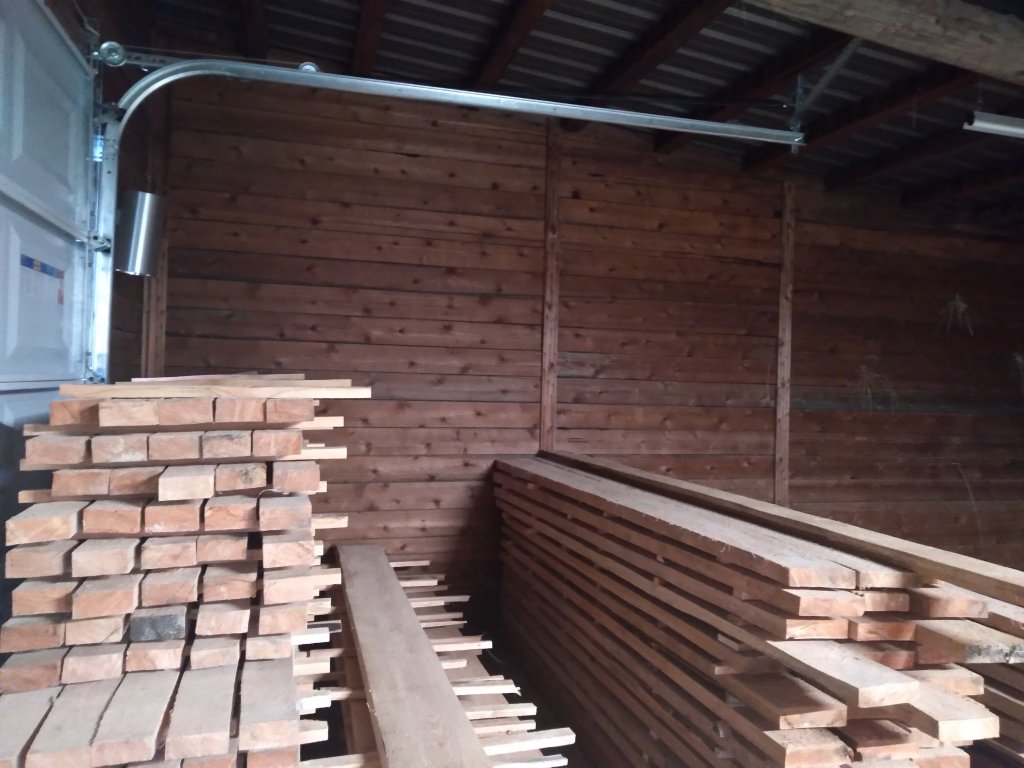
Rough Cut Lumber
Harvested as part of thinning to reduce fire danger.
$0.75 per board foot.
Call Mike (406-882-4835) or Sam (406-882-4597)
Popular Posts
Ask The Entomologist Bears Books Canada Census Community Decay Covid Covid-19 Data Deer Demography Education Elections Eureka Montana family Firearms Game Cameras Geese Government Guns History Inflation life Lincoln County Board of Health Lincoln County MT Lincoln Electric Cooperative Montana nature News Patches' Pieces Pest Control Politics Pond Recipe School School Board Snow Taxes travel Trego Trego Montana Trego School Weather Wildlife writing
 Trego's Mountain Ear