-
This year, I walked out with the Sandvik, my daughter and her family, to harvest a Christmas tree from one of the many blowdowns around the place. It’s an activity to continue with the little boys.
I’m not sure that Remi understood the idea of a Christmas tree – he’s at the stage of developing a vocabulary, he understands what a tree is (he kept pointing out a 16 inch DBH Ponderosa as his choice), but melding the concept of Christmas and tree together is still an advanced concept in linguistics.
We took several trees – one was a touch flat sided because of one branch that had broken in the fall, the other was a beautiful 6 – full branches, like we used to drag out and sell when I was young and Christmas trees were a part of the ranch operation. It was squashed flat and frozen – but the warmth of the house will let the tree stand in glory for a few days beyond the wind storm that took it to the ground.
Still, Remi was developing a different concept for the Christmas tree – along with the tree, his small hands were filled with equally small branches – holiday treats for his browsing goats. I think that Remi’s interpretation of the Christmas tree as a treat for his goats may extend the spirit of Christmas into March or April.
-
I read these statistics, posted in response to a New York Times article: Public School: 40% of kids bullied, 30% sexually harassed, 34% read at grade level, $18K a year.
Homeschoolers: 0% bullied, 0% sexually harassed, 99% read above grade level, $1000 a year. I don’t know how solid his statistics were – but it got me pondering on the problems of education.
About the same time, I read Joel Graves’ commentary on Home School – and Joel’s thoughts were not a lot different than mine when we first started publishing the Ear. Still, I was younger then – I had 4 years experience teaching and heading the ag department at a junior college. As I moved to different experiences teaching – the next six years were in the Academic Reinforcement Center, followed by years of Extension education, and culminating in time as graduate faculty, I gained a lot of experience with people whom their education system had failed. Emphasize that phrase: Their Education System had failed them. These weren’t people who had failed – most were high school graduates. Some held a bachelor’s degree. The problem is that, often, public education needs the support of other forms of education – Extension education, such as 4-H is one example, while education at home is another. Vocational education is another form. Back to my point: at a number of different levels of post-secondary education, I dealt with students who had been failed by their education systems.
I recall a young woman – a high school graduate with a tested IQ of 108 – who read at the beginning third-grade level. That 108 IQ says she was ahead of 70% of the population – yet the public school from which she graduated failed her for at least ten years (third grade through twelfth). She hadn’t failed – she walked through the high school graduation.
I remember Gerald – my student for over a year – he had graduated high school (to be fair, not in Montana) but was unable to do math without a calculator, and even with a calculator couldn’t get the order of operations correct. I failed at correcting the problem.
My list could go on – but when students graduate high school without being able to read or do simple algebra, the educational system has failed them. I recall a carpenter, a dropout, who used his framing square to perform his mathematical calculations. It seems fairly obvious that he found a way of compensating for his math weaknesses through Vocational education – whether shop class or on job – that Gerald never found in a math class. On the other hand, Ray has a BS in animal science – but his Extension education experience in 4-H rounded it out so that over a lifetime he could retire with a respectable herd of beef cattle and a decent-sized ranch. He needed both the formal training at the Land Grant plus the 4-H experience.
I recall taking my GRE test – the woman seated next to me (a teacher) needed to score at the 25th percentile to be admitted to her graduate program. She had already taken the GRE twice without achieving that score, and had completed all of her coursework. Obviously, her schooling had failed her.
So I fully understand that public school can fail to educate students while going on to graduate them. One of the problems I see with Extension education occurs when the market sale becomes more important than the 4-H education. Home school can be bloody awful – what can you learn if your teacher is an ignorant idiot and you keep that same teacher for a dozen years? On the other hand, Home schooling can be fantastic – it depends on the parent and the kid. Vocational education offers a second way to support the classic 3 R’s as well as a potential career for kids who aren’t on an academic track.
I spent 4 years teaching Freshman and Sophomore classes – some vocational, some academic. I spent 6 years in academic reinforcement at a community college – that’s teaching college students what they didn’t learn in high school. I don’t know how to break down my Extension career – I served as an agent, administrator and a specialist, and everything crossed over. And I ended a career as a specialized sociologist usually teaching senior and graduate classes. I did work a bit with a variant on home school – my daughter was interested in quantum physics and couldn’t get the information she wanted from the high school. I checked out books and read, so that we could discuss quantum as we drove.
During those many years, I met more students who had been failed by the system than failed at the local high school. I’ve seen parents make a decision to pull a kid out of school and do a bad, or at least incomplete, job of teaching at home. I’ve seen high schools that graduate students and never worry that their students’ ACT scores leave their school ranked in the bottom third. The system and parents combine to fail the kids more frequently than the kids fail on their own.
In my perfect world, every kid would have the opportunity for Vocational education. I had planned to finish high school with 4 vocational classes taught by Harry Donaldson. It didn’t work that way – I finished with 3 or 4 academic classes taught in the morning, and working every afternoon. The first Fall semester I took a drafting class – and was acing the tests and flunking the homework. The only constructive criticism I received was “WRONG SCALE!” written in red. I dropped the class. Years later, when I was looking at my drafting equipment, I realized the bookstore had included an architect’s scale in the package for an engineering class. My instructor didn’t explain the difference. If I had taken Harry Donaldson’s mechanical drawing class, I would have been trained to catch the problem myself. I dropped a class to avoid an F – and taking Harry’s class would have made me successful.
So I see a lot of point-source opportunities to fail students. I’ve described an intelligent young woman whose reading teachers spent ten of her twelve years of school failing to teach her to read, but she still graduated on schedule. I’ve watched Connie Malyevac teach others the math that they missed in high school – and every student deserves a Connie to help fill the potholes in their education. I’ve learned that a parent can read incomprehensible physics books, and stay 15 minutes (or less) ahead of his daughter, and see the success of her graduation with a Phi Beta Kappa pin. I’ve seen students from Dave Peterson’s “slow class” go on to graduate from college and move on to a career of teaching high school. The standard expectation of Vocational education – that academics aren’t for everyone – provides an alternative.
My prescription? I have seen our public schools fail too many students. Despite that, I believe our public schools should be education’s foundation. (I do believe that there is a staffing problem that needs resolution when a school is below the mean for years and years – and that does need to be addressed instead of ignored.) I want parents to be active in their kids’ education (I recall that the teachers had other parents than Renata and I that they felt could have benefitted more from parent/teacher conferences; and I recall one who was stymied by Renata’s question, “Exactly which part of your math class won’t she need when she goes on to college?”
I believe in 4-H – yet I think that there is a lot more Extension education in an entomology project than in selling a market steer. Same thing for sewing and cooking projects.
Every youngster deserves to learn by doing – which is the big part of vocational education.
I want remedial education – early. I am less than impressed by special education that is prescribed late and relies on paraprofessionals to put in a certain amount of hours on the weakness. We measure success in touchdowns, not practice yardage.
To sum it up – we do not need to look at education as public education or home school. We need public education, supported by home education, supported by Extension education, plus Vocational education, plus other forms of education (formal or informal) that are available in the communities. To focus on just one form of education is to provide a situation where that single education system can, and frequently will, fail the students.
-
Time was when I would catch a cold and work my way through it – a certain amount of misery, but no lost productivity. That time seems to be gone. As I recover from this last plague and contagion, I recall the words of Leon Trotsky: “One of the most surprising things in life is the sudden realization that one has become old.” I’ve reached that epiphany – though not with a life so much on the margin as his. My favorite variant of his quote is: “Old age is the most unexpected of all things that happen to a man.” Somehow, I have found old age, it is unexpected every morning, and each task I undertake that reveals a new, or a slightly greater infirmity that is as unexpected to me as it was to Trotsky.
Today I noticed a Facebook post from an Idahoan who decided to contrast the long-term precipitation records on Bear Mountain and Rattle Creek with the recent events that led to floods on Keeler Creek and Rattle Creek. When I reviewed the records he shared, I found that he didn’t go back far enough to show the year when Jay and I had to go past Bear Mountain, and down Rattle Creek to get the snow measurements for Idaho – access was no longer possible from the west.
I was nervous about Rattle Creek – my avalanche safety class at Snow Survey Training was taught by a guy who had made his reputation in an avalanche trap called Rattle Creek – and, having heard his warnings, I wasn’t really at ease about the opportunity. Getting in through Keeler Creek was a challenge – shovel the snowbank down to a spot where we could ford the creek, park the snowmobile in shallow water, shovel a new ramp up through a five or six foot snowbank as quickly as possible, and repeat about a dozen times until we left the washed out road and arrived at the Bear Mountain snow course. From there, follow the map over the mountain, and proceed down to Rattle Creek snow course. It was a cake walk – I should have realized that, since we regularly sampled Bear, all of the Rattle Creek hazards were below that snow course. The security of that part of the trip was unexpected.
When we returned to the road that Keeler Creek had washed out, we encountered a half-dozen recreational snowmobilers – the trails we had shoveled up the snowbanks were good enough for our twin-track Alpines – but the lighter machines had a rougher time. Funny to realize that the data from one of my tougher runs is now ancient history, and doesn’t show up on the readily accessed records.
The trip taught me that, while the snowfall and precipitation around Troy and Libby is every bit as intense as what we see on Stahl Peak, we’re lucky that our valleys are a bit higher, our mountains are a little higher, and Fortine and Grave Creeks do not share the same peak runoff times. They have it rough when winter floods hit the low country in south Lincoln County. Libby Dam has definitely served it’s flood protection purpose this past few days. But I never expected to be around when my snow measurements became ancient history.
-
A while back I listened to a woman explain that she holds three college degrees. I’m fairly certain that meant associate’s, associate’s, associate’s. My own three are bachelor’s, master’s and doctorate. Generally speaking, under our American system, we only refer to the highest degree held, so the lower two degrees are kind of assumed to exist. Jane Goodall holds a Ph.D. (from Cambridge) but no lower degrees – the British system is a bit different than ours. Dr. Goodall’s researched and published books on chimpanzees were, essentially, all of her college career. I know that her Ph.D. is more prestigious than mine – and that her single degree is a lot more than three associate’s might be.
The Russians have a degree above the Ph.D. – but it is granted upon successful defense of the dissertation. Under our system, the dissertation and its defense are the final part of the Ph.D. A student who has completed all the coursework for a Ph.D. but has not submitted and successfully defended a dissertation is termed ABD – all but dissertation. ABD is not a degree, and in many ways can be kind of a bad thing. In order to start the dissertation, I had to have substantially completed my coursework, and passed my comps (comprehensive exams). If you don’t pass the comps, you have invested several years in education that you won’t get credit for. Had I failed my comps, I would have walked away with a second non-thesis masters. That’s kind of like having 2 heads – unusual, but not generally helpful to a career. I would like to have a quiet beer with Neil DeGrasse Tyson and learn exactly how he came to have his second Masters.
Doctorates aren’t equal – the order in which they are given at a University graduation is the only spot where I know you can see the difference in status. Generally speaking, the Ph.D is an academic research degree, while the MD, Juris Doctorate, and Ed.D. are professional degrees. Only time I got to observe this was when my daughter got her Bachelors – the new Ph.D holders went through the line first. The next week, the MDs and JDs began a lifetime of larger paychecks.
Then we can go to the Associates’s degrees – an Associate of Applied Sciences is a vocational degree, while the Associate of Arts or Associate of Science is generally the first two years of a bachelor’s program. It is quite possible to have 3 separate Associate’s degrees and never take a class with a 300 or 400 number.
-
I’m tired of anti-Semites. As I look back on 75 years, I’ve been blessed to somehow find several friends. Not necessarily people who see the world the same way as I do, but generally good people. Several of those friends have been Jews. None have been anti-Semitic. That will not change – hating a person because of skin color, or religion, etc. just isn’t right.
When I was a young man, some of the older generation had the forearm tattoos – from Auschwitz. They are gone now, but during the sixties and seventies, there was a time when my consciousness of the Holocaust was rudely brought to the front of my mind by a tattoo forced upon someone before 1945. The Hamas and Isis types have more in common with the Nazis than with me. And it makes me wonder about the narrative, the story that has convinced them.
I’m remembering Bob Mendelsohn – my teacher, my colleague, my friend. His tongue-in-cheek description of Nick’s Hamburger shop in Brookings – where cheese was added to a burger as a condiment, not cooked with the burger, thus maintaining a kitchen he could regard as kind of Kosher. When Bob retired, he moved from secular college professor to studying the religion he was born to, and eating according to Jewish teaching. He described how he missed deli ham sandwiches. Bob was a Jew who loved Christmas – the trees, the decorations, the songs. He’s gone now, but part of his lessons included leaving the campus – there is nothing less needed than a retired professor.
I recall Trinidad, Colorado – when I was there, volunteers from the local Catholic church were doing maintenance work on Temple Aaron – the town’s Jewish population was too old to do the work. There was no publicity – just younger neighbors helping maintain the synagogue that their older neighbors could no longer accomplish. That’s the way to treat people.
In Suriname, I saw Paramaribo’s mosque and synagogue adjacent to each other – here’s what it looks like there:

Somehow, I want a world where the tolerance I saw in Suriname is the norm.
-
It’s an unpleasant lung and sinus infection. It goes well with asthma to cut down what I can do – yet this time, the disease vector was my grandson. Somehow, the sickness is kind of mitigated by that – it didn’t come from some anonymous student passing through the hallway in an unseen cloud of microbes.
This time, I got Remi while I was working on the old service station – and despite the illness, I had the joy of giving him the rolling magnet to pick up nails. I may feel a bit crummy – hell, I do feel crummy – but I have the memory of the toddler rolling the magnet, and smiling with every click as a nail was pulled up and magnetism overpowered gravity. He doesn’t have the words yet – but in another ten or twelve years, there’s going to be a discussion about physics with his mother. I may or may not be there to see the interest in physics develop – but I was there when he discovered that magnetism can overpower gravity. It is enough to make the illness an insignificant cost.
As my daughter took an interest in physics, and moved into quantum, I checked out books on the topic – studying to stay along with her for the next conversation, often in the car as we would drive home. It brought home thoughts to me – the realization that the power of probability combined with chemistry to make elegant experiments, while some atoms manage to stay out of the reaction. 99.9% purity is close enough for what we need – and things happen consistently.
So I look forward to the next lessons, as the little guy discovers that pieces of copper, aluminum and lead are immune to the power of his magnet. I look forward to his learning of the special aspects of ferrous metals – and possibly moving on to the relationship of a compass to the planet he inhabits. A stuffy nose, sore throat, and congested lungs are a small price to pay for being the grandfather that sets the lessons in motion.
-
Folks look at my old Ruger pistol, and see it as a Mark I. It isn’t. Made back in 1958, the markings show that it left the factory as a Ruger Standard Pistol, then fell into the hands of Jim Clark at Shreveport, Louisiana.
I never met the man – but Jim Clark was a national champion in Bullseye, and built fantastic guns. This photo of Clark’s Ruger comes from the NRA program ‘I have this old gun’:

Mine looks about the same – and has always been a lot more accurate than I am – or ever was. At 76, I’m not so steady as I once was – but I have just found (and ordered) New Old Stock Pachmayr grips for the old pistol – I’ll stash the old Herrett target grips, set the pistol in a holster (the match grips make it uncomfortable for belt carry), and I will see how it works for carrying around the place. Age makes hitting well a bit harder, but we shall see. The sights are still visible, the trigger is good, and while the muzzle brake on a 22 seems a bit of an overreach, I’ve had it for years.
Some might warn me that a 22 isn’t enough gun for bear. Frankly, having encountered a couple of Grizzlies up close and personal, I don’t believe anything you can hang on your hip is enough gun. Second, my walks are usually on the place – my pistol is more for protection of my little dogs – and they have threats that are less formidable than Grizzlies. Third, as a teenager and a young man, I took 10 black bears with my 22 single shot, and three with my High Standard revolver. So I don’t believe I’m particularly undergunned with my 67 year old Ruger.
Some folks tell me that Rugers dominated Bullseye back when my pistol was converted from a Ruger Standard pistol to a Clark converted match gun. In Clark’s hand, that was so. My memory tells me that High Standards, Colts and Brownings led the scoring more often. Anyway, as I age, and presbyopia makes it harder to keep a sight picture, and weakness makes me less steady, it’s good to give a different job to a tool that I have trusted for years.
-
Somehow, 160 years after the war between the states, there are a lot of people who have forgotten (or never learned) that the Republican party that nominated Abraham Lincoln wasn’t exactly a capitalist. It has been fun to look at Lincoln’s writings, and quotations. I never wrote a test asking students to identify whether the author was Lincoln or Marx – but I kept these quotes on hand in case I ever decided to write an extremely tough test.
“Labor is prior to, and independent of, capital. Capital is only the fruit of labor, and could never have existed if labor had not first existed. Labor is the superior of capital, and deserves much the higher consideration.” Abraham Lincoln
“We all declare for liberty; but in using the same word we do not all mean the same thing. With some the word liberty may mean for each man to do as he pleases with himself, and the product of his labor; while with others, the same word many mean for some men to do as they please with other men, and the product of other men’s labor. Here are two, not only different, but incompatible things, called by the same name – liberty. And it follows that each of the things is, by the respective parties, called by two different and incompatible names – liberty and tyranny.” Abraham Lincoln
“A commodity has a value because it is a crystallization of social labor. The greatness of its value, or its relative value, depends upon the greater or less amount of that social substance contained in it; that is to say, on the relative mass of labor necessary for its production.” Karl Marx
“Labor, being itself a commodity, is measured as such by the labor time needed to produce the labor-commodity. And what is needed to produce this labor-commodity? Just enough labor time to produce the objects indispensable to the constant maintenance of labor, that is, to keep the worker alive and in a condition to propagate his race. The natural price of labor is no other than the wage minimum.” Karl Marx
“All that serves labor serves the Nation. All ^ that harms labor is treason to America. No line can be drawn between these two. If any man tells you he loves America, yet hates labor, he is a liar. If any man tells you he trusts America, yet fears labor, he is a fool. There is no America without labor, and to fleece the one is to rob the other.” Abraham Lincoln
“And, inasmuch [as] most good things are produced by labour, it follows that all such things of right belong to those whose labour has produced them. But it has so happened in all ages of the world, that some have laboured, and others have, without labour, enjoyed a large proportion of the fruits. This is wrong, and should not continue. To [secure] to each labourer the whole product of his labour, or as nearly as possible, is a most worthy object of any good government.” Abraham Lincoln
“Capital is dead labor, which, vampire-like, lives only by sucking living labor, and lives the more, the more labor it sucks.” Karl Marx
“Capital is only the fruit of labor, and could never have existed if labor had not first existed. Labor is the superior of capital, and deserves much the higher consideration.” Abraham Lincoln
“The product of mental labor – science – always stands far below its value, because the labor-time necessary to reproduce it has no relation at all to the labor-time required for its original production.” I didn’t say I would give all of the answers – figure out who this sounds most like.
-
Most of my information, my knowledge, is second hand. I know Venezuela exists because I have been there – but my knowledge of Viet Nam comes from other people, their spoken stories and written ones. The world is too big to have a preponderance of experience.
I’m looking at the photographs and videos posted on the internet about the flooding in south Lincoln County. My first-hand information is from floods down Libby way in the 70’s and 80’s when I worked for the Soil Conservation Service. My second-hand information is from people taking pictures with cell phones and drones yesterday and today. It’s a lot more relevant than my first-hand information. The change in technology though – that is impressive. I recall driving down to Libby with my 35mm camera, and vividly recall calling Oly Euland at the state, to fund a flight to get photos of the flood before it receded, the weather turned cold again, and snow covered all the damage.
My first-hand knowledge won’t do anyone any good. Although there may be a chuckle at the expense of a landowner on Callahan Creek, who saw my government truck as I was photographing the flood, came up to me, said something nice about the government doing well to get there so quickly, then cursed me when I responded to his question of “You have a check for me, right?” with “No.” It was interesting to meet a man who went so quickly from compliments to curses.
For the folks who are looking at Lincoln County being declared an emergency – up a Trego, we’re a little damp, but fine. Down Libby way, they’re at about 2,100 feet above sea level. Troy is about 1900 feet. We’re at 3,100 feet. The general rule is that you lose 5.2 degrees Fahrenheit for every 1000 feet of elevation increase. (That’s second-hand information, too – someone better than I did the calculations) Troy (well, actually where the Kootenai leaves Montana for Idaho) is the lowest point in Montana. That low elevation makes Libby and Troy very susceptible to flooding during winter thaws. On the other hand, there’s a big advantage in having Libby Dam, where the Corps of Engineers can crank the flow down and minimize the Kootenai’s impact on the flooding.
-
It was a day that wound up highly scheduled – which is unusual for a retired guy. Renata had a dental appointment at 9:15, mine was at 10, and then we wound up with babysitting duties for the youngest grandson. Despite hanging out in the dentist’s reception room for a couple of hours, he was close to being the perfect baby – until it was time to get into the carseat and go home. Then it became howling time.
I grabbed the infant and carseat and headed out to load him up. He didn’t quiet – so I turned on the radio. No channel, just extra loud static. I tried all the buttons. Just extra loud static – so I stuck in Kris Kristofferson. I did get rid of the static, but it was still at maximum volume. Well, I’m hard of hearing, Renata blew an eardrum with this last cold – so we drove home, sounding like 1970, as Kris sang at full volume about the Silver Tongued Devil, and Don’t Tell Me How the Story Ends, until we got home and hit the big switch.
Nathaniel hadn’t tried to compete with Kris and the broken radio. He had gone to sleep, possibly recognizing that an infant’s lungs were overmatched. Or maybe he just likes Kristofferson.
When the rain slacked off from the veritable downpour, I went outside, popped the hood, and pulled the fuse. I can again drive in relative silence. The only problem is that, without the radio, I don’t have a clock in the car. I think it’s going to be worth it.
Want to tell us something or ask a question? Get in touch.

Recent Posts
- Thus Spake Zarathustra – One More Time
- Suspenders
- You Haven’t Met All The People . . .
- Play Stupid Games, Win Stupid Prizes
- The Ballad of Lenin’s Tomb
- An Encounter With a Lawnmower Thief
- County Property Taxes
- A Big Loss in 2025
- Thinking of Clovis
- I Started The Year With Optional Surgery
- We Still Have The Basic Rule
- Not Made in This Millennium
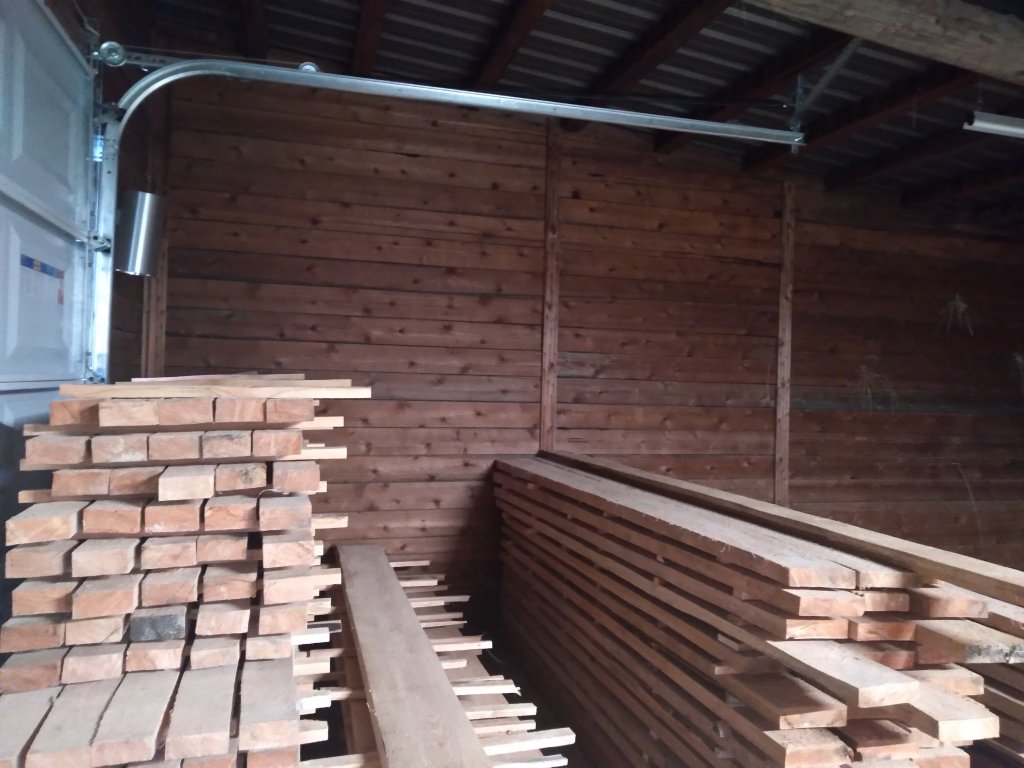
Rough Cut Lumber
Harvested as part of thinning to reduce fire danger.
$0.75 per board foot.
Call Mike (406-882-4835) or Sam (406-882-4597)
Popular Posts
Ask The Entomologist Bears Books Canada Census Community Decay Covid Covid-19 Data Deer Demography Education Elections Eureka Montana family Firearms Game Cameras Geese Government Guns History Inflation life Lincoln County Board of Health Lincoln County MT Lincoln Electric Cooperative Montana nature News Patches' Pieces Pest Control Politics Pond Recipe School School Board Snow Taxes travel Trego Trego Montana Trego School Weather Wildlife writing
 Trego's Mountain Ear