-
I’ve reached an age where complaining about a gerontocracy is complaining about my own generation – but the problem is worse now than when I was younger. Joe Biden leaves the White House at 82, Donald Trump goes in at 78. In the Senate, Mitch McConnell steps down as Senate Minority leader at a month shy of 83. The youthful Charles Schumer moves back into the Minority Leader role at 74. Nancy Pelosi has stepped down from the Speaker’s role, but she’s hanging on as an 84 year-old representative.
And I remember the saying that the good die young. If true, it says a lot about our ruling class. Too old, entirely too old. PEW says the median age in the Senate as it starts in 2025 is 64.7 – the last start was 65.3. The House is a little younger – 57.5. PEW shows the spread in this chart:

The article is worth reading at: https://www.pewresearch.org
There are some fairly strong arguments that Ronald Reagan was showing signs of Alzheimers when he was elected to his second term in 1984. It seems obvious that Joe Biden spent the last four years limited by his dementia – though, to be fair, Biden never was the sharpest knife in the drawer.
Two senile presidents in my lifetime – and, since I’m not dead yet, let me add “so far.”
-
It looks to me that the New York court has disarmed Trump. I’m sure that New York is more stringent on laws about felons and firearms than Montana, and Montana’s laws confuse me a bit:
Unlawful Possession Of Firearm By Convicted Person
45-8-313. Unlawful possession of firearm by convicted person. (1) A person commits the offense of unlawful possession of a firearm by a convicted person if the person purposely or knowingly purchases or possesses a firearm after the person has been convicted of:
(a) a felony for which the person received an additional sentence under 46-18-221;
(b) an offense under the law of another state or of the United States that is equivalent to an offense that when committed in Montana is subject to an additional sentence under 46-18-221; or
(c) a felony for which the person is currently required to register for the sexual or violent offender registry.
(2) A person convicted of unlawful possession of a firearm by a convicted person shall be imprisoned in a state prison for not less than 2 years or more than 10 years.
(3) A person who has been issued a permit under 45-8-314 may not be convicted of a violation of this section.
I checked out 46-18-221, and Trump’s felony convictions in New York don’t violate that code. So, in my incompetent legal opinion, I figure Trump can go hunting in Montana. Keep in mind, I am not an attorney nor have I ever played the part on TV. Professionally, I have only had to know Article 2, Section 1, Clause 3 – the enumeration clause. I’m pretty good with it, but it doesn’t apply.
There’s something a little weird when New York can disarm the man who travels (or stays home) with a bevy of armed secret service agents and the briefcase with the nuclear codes. Just noticing, you understand. As Kipling noted in “Cleared” – “we are not ruled by murderers, but only by their friends.”
And yet, it seems to me that Montana is a bit more understanding than most states – Trump’s conviction is about as non-violent as can exist, and no one seems to have been harmed. I’m sure associating with Stormy Daniels wasn’t one of his brightest ideas – but paying the woman to keep her mouth shut over a one night stand doesn’t seem to harm anyone.
So I’m pleased to live in a state where the legislature hasn’t been so careless as to strip away rights from the President and other non-violent felons. And if my legal interpretation is wrong, let me know and we can hassle our state representatives and senators.
-
The first two graphs are taken from Five key trends in education spending, teacher salaries, staffing and test scores – Reason Foundation – The article is worth clicking and reading.
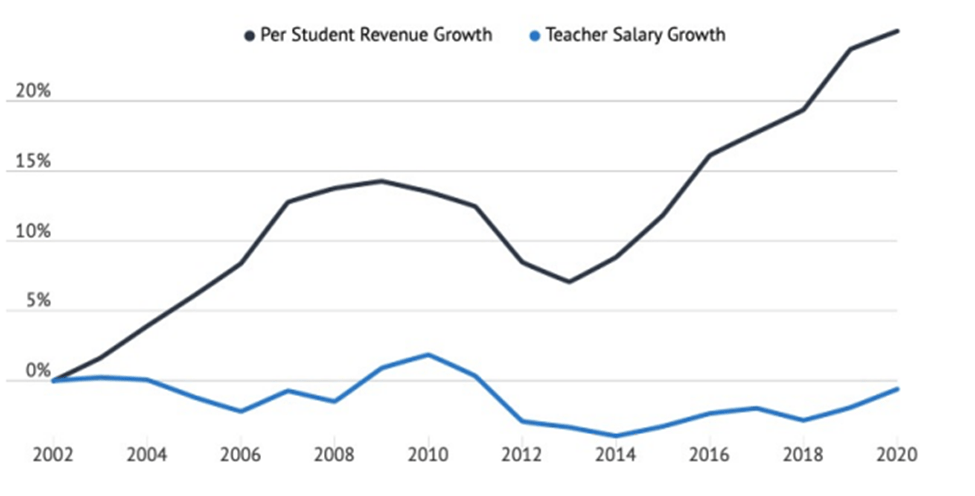

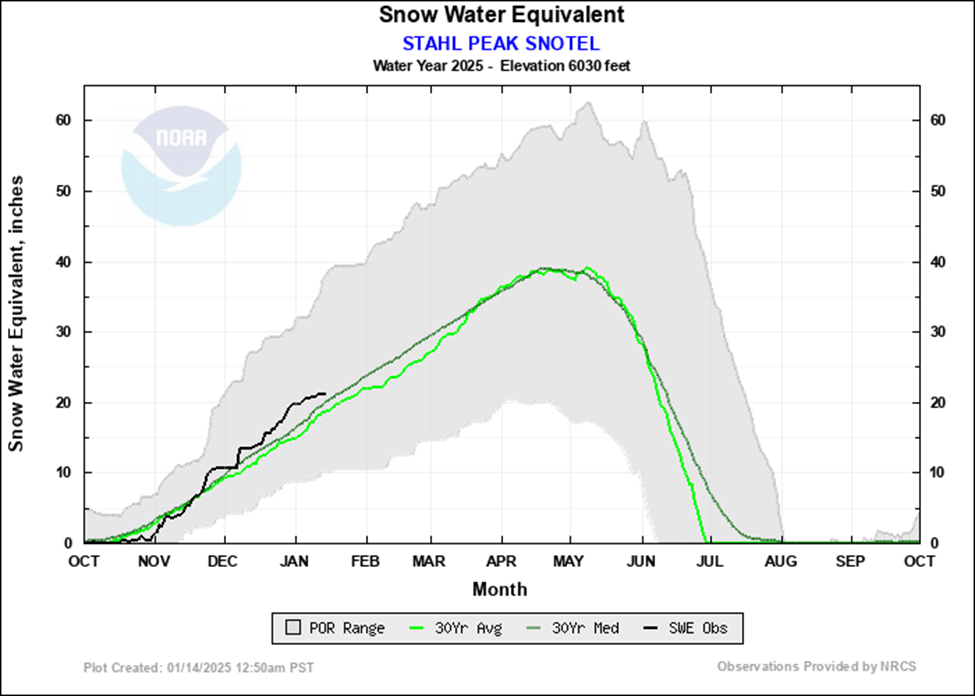


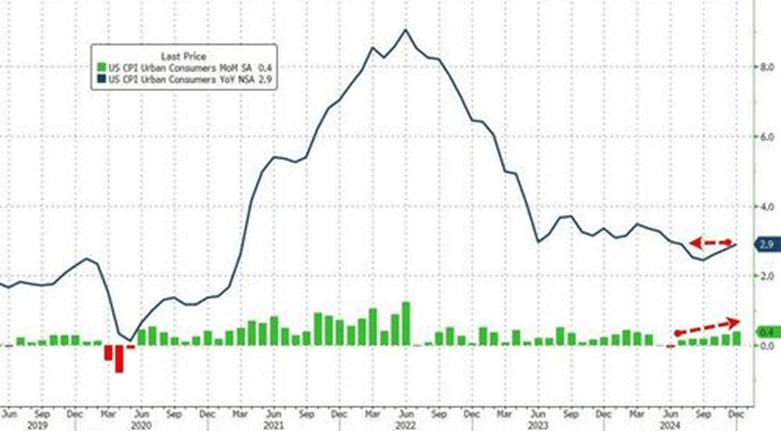

-

The lunar south pole’s terrain is rugged, and it can reach extreme temperatures. Michael Karrer/Flickr, CC BY-NC Jesse Rhoades, University of North Dakota and Rebecca Rhoades, University of North Dakota
The U.S.’s return to the Moon with NASA’s Artemis program will not be a mere stroll in the park. Instead it will be a perilous journey to a lunar location representing one of the most extreme environments in the solar system.
For the Artemis program astronauts, walking on the Moon will require new ways of thinking, the latest technology and innovative approaches to improve boot and spacesuit design.
The Apollo program’s journeys to the Moon 50 years ago were all to the milder, equatorial regions of the lunar surface, where the coolest temperatures reached -9 degrees Fahrenheit (-23 degrees Celsius).
In contrast, the Artemis missions are designed to take astronauts to the Moon’s extreme polar regions, where temperatures can reach -369 degrees Fahrenheit (-223 degrees Celsius). Apollo-era equipment designed for short-term stays in a moderate zone will not be enough for extended stays in this new, more hostile region.
At the University of North Dakota we focus on biomechanics, the study of human movement. Our research explores the effects of extreme environments on human movement patterns and gait, and our lab conducts research that we hope will one day help astronauts explore the Moon while protecting their body.
New boots for the Moon
Of all the equipment astronauts need to explore the Moon, one of the most critical pieces is the boots they’ll use for extravehicular activity – when they step outside their spacecraft and bounce across the lunar landscape. These boots have to hold up to the harsh environmental conditions unique to the lunar south pole.
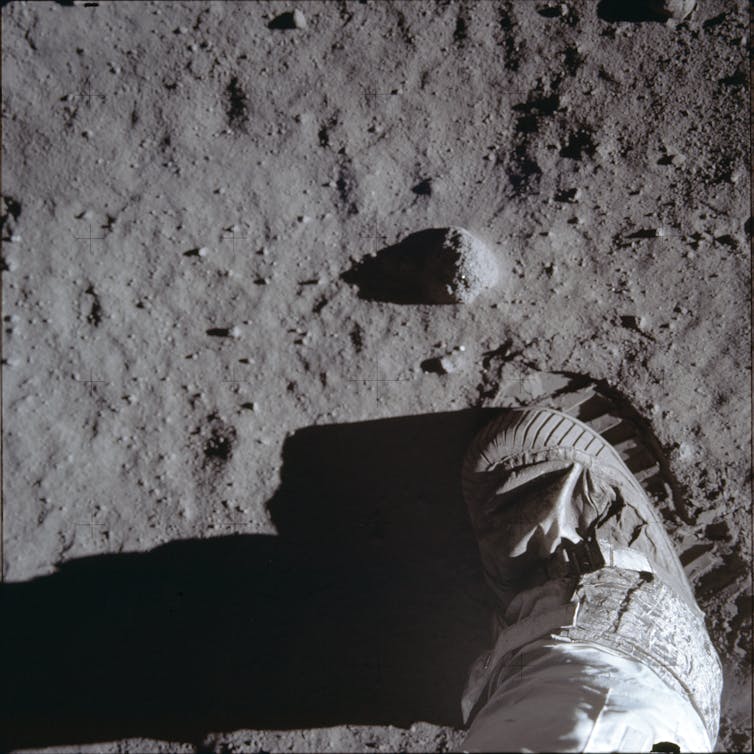
The Apollo program represents the last time humans stepped onto the lunar surface. Edwin ‘Buzz’ Aldrin/NASA via AP Since the lunar poles are much colder than other lunar regions, the boots will need to retain heat effectively. The current iteration of the lunar boot uses a rigid thermal plate, which is typically integrated into the sole of the boot. The plate is solid and does not bend or flex. These plates were not used during the earlier Apollo missions.
While it’s necessary to keep astronauts’ feet warm, this addition to the boot prevents the footwear from flexing. The stiff sole restricts the foot’s natural movement, specifically the joint at the big toe, called the the metatarsophalangeal, or MTP, joint. The MTP joint bends and flexes to facilitate normal walking and running gait patterns.
The windlass mechanism
As you walk, the MTP joint allows your big toe to extend forward. Extension of the big toe triggers a mechanism in the foot that converts the flexible landing foot to a ridged pushing foot when you’re about to push forward to step. This mechanism allows the foot to become rigid and support your body weight through your step. Kinesiologists call this mechanism the windlass mechanism. https://www.youtube.com/embed/0eVcnXcunss?wmode=transparent&start=0 The windlass mechanism helps propel your foot forward while walking.
The windlass mechanism isn’t well studied – particularly under lunar gravity. If this mechanism is vital for walking around on the Moon, it could be a problem that the boots keep an astronaut’s feet from bending.
There are a million little details that have to go right for a Moon mission to succeed – how much flex is in the sole of the boots explorers use is just one that could ultimately influence their health on the Moon.
While an astronaut should be fine over the short term – days or weeks – once astronauts are staying on the Moon for months, they could develop a foot injury that might affect other parts of the body.
Kinesiologists like to examine the human body as a kinetic chain. This is to say, if you hurt part of your lower body, your upper body takes on the load of many of its functions. An issue that begins in the foot may affect the way a person walks and stands, causing further injury up the kinetic chain, through compensatory mechanisms.
So, the kinetic chain describes how an injury in the lower body could cause chronic injury in several other joints further up the body.
As NASA works on sending astronauts back to the Moon, researchers will need to learn more about lunar gait to understand how the foot reacts while moving around under lunar gravity. What they learn will aid designers as they continue to perfect spacesuit designs.
Jesse Rhoades, Associate Professor of Education, Heath & Behavior, University of North Dakota and Rebecca Rhoades, Researcher in Education, Health & Behavior, University of North Dakota
This article is republished from The Conversation under a Creative Commons license. Read the original article.
-
The Eureka Community Players are having their annual meeting at Glacier Bank, Tuesday January 14th at 6pm.

The meeting agenda is as follows:
INTRODUCTION:
- Sign-in
- Minutes – November 5th
- Financial Report – Sam
- Bills
COMMITTEE REPORTS:
- Membership Committee – Ethel, Chair; Krysten, Kelley
- Grant Committee – Margaret, Chair; Sharon, Sam
- Theatre Committee – ___________, Chair; Adrian, Jim, Jessie
- Publicity Committee – Sharon, Chair; Danica, Heather, Elianne, Margaret, Sam
- Fund-Raising Committee – Rachel, Chair; John, Sharon, Lisa
SPECIAL COMMITTEE REPORTS:
- Cultural Treasure Project – Lori
- Cemetery Tours – Shianne
- Scholarship – Lisa
- Workshops / Writers Group – Sharon
- Chorus – Margaret
- Art Show – William
OLD BUSINESS:
- Fall Play – Adrian and Margaret
NEW BUSINESS:
- Fund-Raiser
- Review of Year’s Events
- Ad Sales Start in March
- Writers’ Group Play – March 23
ANNUAL MEETING:
- Election of Officers / Appointment of Committee Chairmen
- Set Calendar / Events
- Adopt Annual Budget
CLOSING:
- Next Meeting: February
- Adjournment
-
In case you missed the community meeting, this past Sunday at the TFS Community Hall, Diane Carlton who arranged for the meeting, has handily provided a summary document as well:
Notes from the first, quarterly Trego, Fortine and Stryker
Community Town Hall Meeting. January 12, 2025. 3:00 – 5:00 pm
Many thanks to Terry Groesbeck for providing the synopsis notes. I’ve
done a bit of tidying where needful but she did such an excellent job, I’ve
left the notes largely as is. I have thoughts and noodles of my own but this
is such a large document as is, I might post those in a separate post. The
meeting went well but there are some concerns.
Also, as noted in the presentation notes, the attendees voted to hold a
regular town hall meeting at a quarterly interval, for the members of the
Trego, Fortine and Stryker community. Other county communities are
encouraged to do something similar and while we will not ask noncommunity members to leave so long as we have enough room in the hall
for our community members, I will only advertise the meeting on our
community BB and the TFS Community Hall site.
The Meeting Synopsis:
The agenda and then a presentation was given by Diane Hackett Carlton.
(see the end of this document for the agenda and presentation.)
Then Noel Duram, our new District 3 Commissioner was given time to
speak. Here are notes on his information:
County Commissioner Noel Duram introduced. (3:30p)
ND: 50-60 years ago we dumped our trash in the woods or burned it; what’s still left is glass and cans; more plastic is being dumped today (which doesn’t decompose).
Eureka is a transfer station, not a landfill.
Libby has an expansion going on which must follow DEQ rules. Cost is $2.1 Mil to operate both the Libby and Eureka landfills (before associated costs).
Taxes pay for $1.9 mil of that cost ($150 per household).
Some of the missing money is provided for from the Lincoln County budget.
There is concern about corporate entities taking over our disposal needs.
In order to keep trash amounts to a minimum, we need to encourage recycling and not dumping so much cardboard.
Our container needs have increased (i.e. Trego from 8 to 12 units); we have growing pains as local populations are increasing.
Don’t dump things that can’t be compacted! Cardboard must be flattened.
Too difficult for Evergreen to assess what they will be picking up.
Our County site attendant is picking up the overflow and excess debris that Evergreen is responsible for. A breach of contract ND claims there is nothing we can do anything about out of concern Evergreen will simply walk away and not provide any services.West Kootenai is open 7 days/week and gets hauled 2x/week. This is true for the Upper Yakk site.
All Evergreen trucks come up from Libby and return to Libby. (We are not able to dump at Kalispell as it is in a different county.)
ND said there is a $35/month curbside service that is available “in town.”
Even with curbside service there will still be a possibility of having wildlife problems.
ND advised us that we were very close to not having ANY green box service as of 11/09 if Evergreen didn’t agree to the new contract.
Evergreen is the only available provider because of MTPSC (Montana Public Service Commission) restrictions.
ND claims that there is no way to force our will on the system; that we need to work with them over the next two years.
We can’t hold Evergreen for breach of contract as they will probably back out. (Tell us to “pound sand”) Waste Management company covers the rest of the State.
In the meantime, we need to come up with a long term solution. We need another service available and in place if we force our hand on Evergreen.
Noel has said that he will be in support of the County attendants and will not allow them to be abused.
He’s seen violators dumping construction debris and appliances. This is illegal dumping and while Evergreen, per the contract, is allowed to pick those things up, likely they will not. We need to help discourage our neighbors from this activity. He is for the reporting of illegal dumping to Noel Duram. There will be a sign at the green boxes with his contact information.
Evergreen can’t dump an overflowing container. Don’t overflow the containers! Apparently equipment can no longer dump into the trucks trash that is overflowing the containers or is not compactable, and the drivers are forbidden to do so.
If there is no room to dump your trash in the containers on the day you go to do so, Noel Duram tells us we should take our trash back home and try another day.
Sometimes the gates don’t open exactly on time but give them a break if they don’t open/close on time. Even if it’s inconvenient to you.
Overall, solid waste is a growing problem in the county. One idea is to get an incinerator but we can’t compromise air quality. Noel is checking out other countries’ methods and trying to implement them here.
The floor was then open to questions and comments. All asked of or directed to Noel
Duram.
Name? :Why is cardboard filling up landfill? Who is handling?
$2.1 million seems excessive. Need to explain “growing pains”; haven’t we had green boxes for 11 years?
ND: This is year 1 of contract; not year 11 It’s 11 years we have had the Trego site. (Note: This is incorrect. It states quite clearly in the contract that this is a 2-year extension of the old, 10-year contract and that this year, 2024-2025, is year 11 and that the second year, year 12 is 2025-2026. We have had 10 years to know what kind of trash we are tossing and how much.)One truck died in Eureka on Friday so it affected the schedule.
We have paid separately for cardboard recycling.
Noel reviewed and presented the balance sheet amounts for landfill for last year.
Our old green boxes that we owned have been amortized (those that were not salvageable) or acquired by Evergreen (2 and which are at the Libby Landll for carcass deposits by hunters.)
Kelvin Stinger: We need time to adjust to the new system. (comment only)
Lee Egebratten: Should we maybe consolidate Trego and Fortine sites?
ND: If Evergreen doesn’t agree we can’t ….?? Doesn’t know if closing one of sites will help but probably won’t happen until 2-year contract is up.
Sharon Wood: We have tried to reduce our waste; we don’t want to store garbage so why can’t we take it to the green boxes 7 days a week and have it picked up 3 days/week? Are we being punished? We still create the same amount of trash that we did before the contract changed.
ND: There will still be problems if gates are open 7 days/week and we only pick up 3 days/week. Noel claims that the boxes will ll in between hauling dates and would leave citizens with an inability to dump trash once that occurred. (There is some disagreement with that comment.)
Doreen Mee: Maybe we should have transfer boxes instead of 4-yard dump trucks.
ND: Thinks that is a good idea and is looking into it. However, we still need to build a site to accommodate transfer boxes so we don’t handle our trash multiple times.
Name?: Can we change the dates? What do we do if it’s overowing? What to do with cardboard
ND: Break down your cardboard; call someone when they’re overowing; or go to Fortine or Eureka if necessary (DO NOT put on ground and do not put on top). Or take the trash back home.Erwin Dreissen: Was the $150/year fee meant to cover the hauling?
ND: It’s more of an average because there are sometimes no households and sometimes multiple households on one property tax bill. You need to get involved with your commissioners and vote for who you want to make the change. (This was an obscure comment and didn’t really answer the question.)Jim Carlton: Talked to Letcher about $150/year being inadequate. Keeping garbage at your home can be dangerous and there are potential liability issues if someone is mauled by a bear because you can’t haul. We can address a bond issue and not deal with contract issues. (The bond idea was never acknowledged by Noel Duram but should be discussed.)
ND: Noel claims that other counties don’t have the same problems as we do. 75% of Lincoln County is Federally owned; our taxes are based on 8% of land area. Noel (personally) has been managing his trash but there are more people and more bears. We are stuck with the current contract so we need to reduce and manage our waste.
Nancy Wilkins: Auditors say DOR is not updating property tax information. (Quoted some references. I have a document she provided and will try to get that uploaded, later.)
ND: No one wants to have taxes updated after they build something; we know some records are incorrect but are working on correcting that.Rob __?: Cardboard issue – is cardboard being recycled or just transferred?
ND: Bundled and transferred to Libby.Todd Swan: Fire Dept has been provided the DOR information and there is a way to find out who is not paying for services. It will take some volunteers to go over the data sheets as DOR apparently will not assign anyone to do that.
Andrew (TFS FD): Worried about summer influx and people who can’t get to dumpsters will burn trash and start forest res or just toss the trash anywhere or over the fences when gates are closed. Suggested a 4-day service (Fri-Mon).
ND: May not be able to amend contract; can present to Evergreen and ask but probably won’t happen until November. (This means we are in for a hellish summer resident/tourist season in the meantime. The current schedule and boxes cannot possibly manage the increase in trash during that time frame. This was an honest observation that seems to have been brushed
aside.)
Name (Eureka)?: Has seen what Canada does and they seem to be managing ne. (It seems to be a type of transfer truck or station (?) that has openings in which one puts one’s trash. It gets compacted and then hauled off at intervals.)
ND: Agreed with that and said we need to look into that.
L. Hoffman: Did Evergreen give solutions for when pickup falls on a Holiday?
ND: Contract dictates how they will adjust for holidays; call Noel if you have a problem. He mentioned he would be willing to open gates on holidays since the attendant would have those
days off.
Diane: Can we have a volunteer sign up for open/close of site?
ND: No, but you can help attendant pick up trash around dumpsters any time you wish.
Tillie: Thanks for being our Commissioner; works for Friends of TFS Fire Dept.; knows that lots
of people are not paying their fair share.
ND: As he nds violators on the tax issue, he calls them on it.
Karen (Food Bank): Are we losing one day of pick up at the dumpsters? Please ll dumpsters responsibly. (Others who do this community outreach are pointing out that there is trash that needs to be dumped on those days and there is no place to store that trash unless it is left at the TFS Community Hall. Where would it be left? Who will come dump it on Sat?)
ND: We have asked questions and will be finding out answers.
Diane Carlton (wrap-up): 4:55p Would like to do Town Hall meeting every other month or every quarter with agenda items that need to be addressed by local politicians. Per show of hands; should be quarterly.
Adjourned at 5:00pm. -
Anger is like pain. It’s unpleasant, but informative. If you’re in pain, the logical course of action is to figure out why, and decide whether or not you can do something about it in the future. It’s a stimulus that demands a response.
Anger is very similar. If you’re angry, the question to ask is ‘why’, and ‘can I do something about this situation?’. Like pain, anger often indicates that something is wrong. Like pain, it isn’t something to be wholly avoided, nor taken as an injunction for action without thinking. But it bears consideration.
Feeling angry tells us things. It tells us that something in the world is not as we would like it to be. More than that, though, anger often tells us that we feel we are being treated badly or unfairly.
If you’re angry about the situation around the green box site, for example, it’s worth considering the reason. Are their people in our community who simply cannot make the designated drop-off days? Almost certainly.
Are there one-off reasons for more of us to be in that situation? Absolutely. Holidays reduce available days, bad weather, car trouble, simple life events can occupy further days.
Are you angry because the situation is unfair? Maybe so. Maybe being forced to risk increased conflict with bears because of arbitrary trash days that you had no input in deciding is a reason to be angry.
Or perhaps you feel you, and your neighbors are being talked down to? Patronized by people who feel that they, not the community, must make the decisions that are best for us and for our families.
If you’re angry, it’s worth considering the reason.
But that’s only the first step. Anger can be a call to action. It’s true that sometimes the action must be internal, to accept that which cannot be changed. But it isn’t always.
By all means, be angry. Be angry at politics. At politicians. At government bureaucrats insulated from any consequences from the harm their bad decisions cause.
Be angry. And then do something.
-
Italian manufacturers began shipping black powder replica revolvers to the US in 1958 – one of the first to get into production was Aldo Uberti, and since he didn’t have a manufacturer’s license he was partnered with a guy named Gregorelli. These early replicas -1851 Navy Colts – were copies of an original, that (according to the story I heard) had been smuggled in to Italy by an American Army officer, and was returned as a box of spare parts along with the first batch of replicas sent to Val Forgett of Navy Arms.

They were popular, and sold well during the centennial observation of the war between the states. That means we have over 60 years worth of Italian made replica pistols in the US – and it’s kind of nice to be able to tell how old that revolver that looks like new actually is. My most recent purchase looks like it hasn’t been fired since it was proofed back in 1982. My first was proofed in 1973 – and it shows that it has been carried and fired quite a bit.
So the first place I found a list of proof marks and dates was on the Howell Arms page – FAQ | Howell Arms . The list is good, but my old revolver showed me it wasn’t perfect – my proof mark is XX9 – the list has it down as XXIX. The guys proof-testing the revolvers were Italians, and they had no problem using the Arabic 9 instead of the Roman IX.
They started with Roman Numeral I in 1946 – but we’re not likely to find any replicas marked before 1957, so my chart starts then:
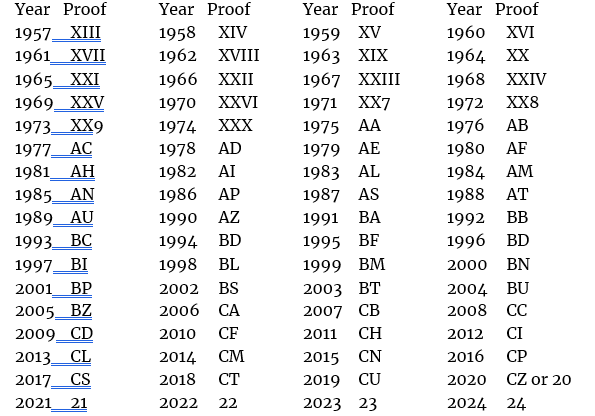
And it looks like they have a proofmark system going now that will last until 2099 with no need to type in a longer chart. These marks are found on the lower right side of the frame.
There is a great article on the beginnings of the replica revolver production at The Birth of the Reproduction Percussion Revolver Industry – very much worth reading.
-

A SpaceX Falcon 9 rocket with its Crew Dragon capsule launches from Cape Canaveral, Fla., in January 2024. Chandan Khanna/AFP via Getty Images Benjamin L. Emerson, Georgia Institute of Technology
Curious Kids is a series for children of all ages. If you have a question you’d like an expert to answer, send it to curiouskidsus@theconversation.com.
Why does a rocket have to go 25,000 mph (about 40,000 kilometers per hour) to escape Earth? – Bo H., age 10, Durham, New Hampshire
There’s a reason why a rocket has to go so fast to escape Earth. It’s about gravity – something all of us experience every moment of every day.
Gravity is the force that pulls you toward the ground. And that’s a good thing. Gravity keeps you on Earth; otherwise, you would float away into space.
But gravity also makes it difficult to leave Earth if you’re a rocket heading for space. Escaping our planet’s gravitational pull is hard – not only is gravity strong, but it also extends far away from Earth.
Like a balloon
As a rocket scientist, one of the things I do is teach students how rockets overcome gravity. Here’s how it works:
Essentially, the rocket has to make thrust – that is, create force – by burning propellant to make hot gases. Then it shoots those hot gases out of a nozzle. It’s sort of like blowing up a balloon, letting go of it and watching it fly away as the air rushes out.

On July 16, 1969, a Saturn V rocket sent Apollo 11 and three American astronauts on their way to the Moon. Heritage Images/Hulton Archive via Getty Images More specifically, the rocket propellant consists of both fuel and oxidizer. The fuel is typically something flammable, usually hydrogen, methane or kerosene. The oxidizer is usually liquid oxygen, which reacts with the fuel and allows it to burn.
When going into space and escaping from Earth, rockets need lots of force, so they consume propellant very quickly. That’s a problem, because the rocket can’t carry enough propellant to keep thrusting forever; the amount of propellant needed would make the rocket too heavy to get off the ground.
So what happens when the propellant runs out? The thrust stops, and gravity slows the rocket down until it gradually begins to fall back to Earth.

A rocket provides the spacecraft with a sideways push (right arrow), gravity pulls it toward Earth (down arrow), and the resulting motion (red arrow) puts the spacecraft into orbit (yellow path). ESA/ L. Boldt-Christmas Fortunately, scientists can launch the rocket with some sideways momentum so that it misses the Earth when it returns. They can even do this so it continuously falls around the Earth forever. In other words, it goes into orbit, and begins to circle the planet.
Many launches intentionally don’t completely leave Earth behind. Thousands of satellites are orbiting our planet right now, and they help phones and TVs work, display weather patterns for meteorologists, and even let you use a credit card to pay for things at the store or gas at the pump. You can sometimes see these satellites in the night sky, including the International Space Station.
Escaping Earth
But suppose the goal is to let the rocket escape from Earth’s gravity forever so it can fly off into the depths of space. That’s when scientists do a neat trick called staging. They launch with a big rocket, and then, once in space, discard it to use a smaller rocket. That way, the journey can continue without the weight of the bigger rocket, and less propellant is needed.

The launch of a SpaceX Falcon 9 rocket from Cape Canaveral, Fla., in May 2024. The rocket carried 23 Starlink satellites into low Earth orbit. Joe Raedle via Getty Images But even staging is not enough; eventually the rocket will run out of propellant. But if the rocket goes fast enough, it can run out of propellant and still continue to coast away from Earth forever, without gravity pulling it back. It’s like riding a bike: build up enough speed and eventually you can coast up a hill without pedaling.
And just like there’s a minimum speed required to coast the bike, there’s a minimum speed a rocket needs to coast away into space: 25,020 mph (about 40,000 kilometers per hour).
Scientists call that speed the escape velocity. A rocket needs to go that fast so that the momentum propelling it away from Earth is stronger than the force of gravity pulling it back. Any slower, and you’ll go into an orbit of Earth.
Escaping Jupiter
Bigger, or more massive, objects have stronger gravitational pull. A rocket launching from a planet bigger than Earth would need to achieve a higher escape speed.
For example, Jupiter is the most massive planet in our solar system. It’s so big, it could swallow 1,000 Earths. So it requires a very high escape speed: 133,100 mph (about 214,000 kilometers per hour), more than five times the escape speed of Earth.
But the extreme example is a black hole, an object so massive that its escape speed is extraordinarily high. So high, in fact, that even light – which has a speed of 370 million mph (about 600 million kilometers per hour) – is not fast enough to escape. That’s why it’s called a black hole.
Hello, curious kids! Do you have a question you’d like an expert to answer? Ask an adult to send your question to CuriousKidsUS@theconversation.com. Please tell us your name, age and the city where you live.
And since curiosity has no age limit – adults, let us know what you’re wondering, too. We won’t be able to answer every question, but we will do our best.
Benjamin L. Emerson, Principal Research Engineer, School of Aerospace Engineering, Georgia Institute of Technology
This article is republished from The Conversation under a Creative Commons license. Read the original article.







Want to tell us something or ask a question? Get in touch.

Recent Posts
- Computer Repair by Mussolini
- Getting Alberta Oil to Market
- Parties On Economics
- Thus Spake Zarathustra – One More Time
- Suspenders
- You Haven’t Met All The People . . .
- Play Stupid Games, Win Stupid Prizes
- The Ballad of Lenin’s Tomb
- An Encounter With a Lawnmower Thief
- County Property Taxes
- A Big Loss in 2025
- Thinking of Clovis
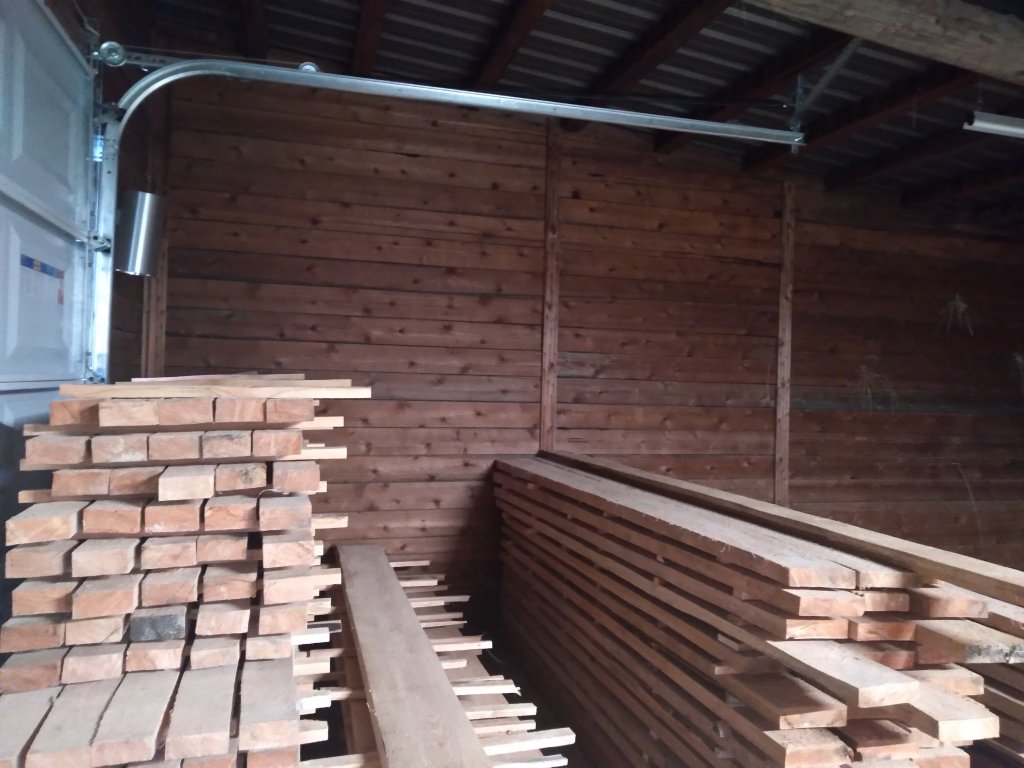
Rough Cut Lumber
Harvested as part of thinning to reduce fire danger.
$0.75 per board foot.
Call Mike (406-882-4835) or Sam (406-882-4597)
Popular Posts
Ask The Entomologist Bears Books Canada Census Community Decay Covid Covid-19 Data Deer Demography Education Elections Eureka Montana family Firearms Game Cameras Geese Government Guns History Inflation life Lincoln County Board of Health Lincoln County MT Lincoln Electric Cooperative Montana nature News Patches' Pieces Pest Control Politics Pond Recipe School School Board Snow Taxes travel Trego Trego Montana Trego School Weather Wildlife writing
 Trego's Mountain Ear