-
With a year of successful economic policies behind him, The Economist (magazine) has moved into looking at what Javier Milei is doing right in Argentina. The interview is at https://archive.is/vtTyo

I kind of like it when the head of a nation says “My contempt for the state is infinite.”

- Life without freedom is not worth living.
- Never embrace the idea of socialism.
- I prefer an uncomfortable truth to a comfortable lie.
- For that, you need to be prepared and wage the cultural battle every day.
- There will be a fiscal adjustment of 5 points of GDP that will fall on the public sector.
- There is no night that is NOT defeated by the dawn.
- We must stop thinking as slaves. We must think as free men.
- Viva la libertad carajo.
- Don’t get caught by that nefarious phrase that where there’s a need, there’s a right.
- If printing money would end poverty, printing diplomas would end stupidity.
-
I read an article (U.S. math scores show ‘devastating’ decline ) that told how US students’ performance in math is in a dive. Here’s the graph:

When I started teaching in Trinidad, Colorado, the first term I had to take a Vocational Education class. The motto for VE 590 seemed to be “If the student hasn’t learned, the teacher hasn’t taught.” It made sense to me – learning can occur without a teacher, but teaching can’t occur without a student learning. When I got on the school board and shared this thought, I learned that there were teachers who disagreed.
My program was vocational – in two years, I was expected to train competent technicians. The biggest challenge – the spot where the students who didn’t make it hit the wall – was mathematics. I could teach the applications, the applied math – but I relied on good middle school and high school teachers to have done the job several years before me. This sort of graph bothers me.
I learned other things in my vocational ed class – the instructor really believed that, since my program was in the agriculture department, my students should be in FFA. On the other hand, one lady explained the slogan in culinary classes – “always remember that it’s the cook who has the knife.”
A 2022 report from ACT that I read said that the average GPA had risen from 3.17 in 2010 to 3.36 in 2021. It stressed that the highest increase – a full tenth of a point – occurred between 2018 and 2021. Grade inflation has been a challenge for years, and a satisfactory solution hasn’t occurred.
-
I have been splitting wood with my Monster Maul for the better part of fifty years. It’s solid, still works good, and I don’t think they make them anymore – at least the new similar units I see online have shorter handles. Mine looks like this:

Like I said, it works fine. It’s just that, at 75, I don’t. A bit of arthritis at the base of the thumbs leaves me feeling like I have two sprained wrists when I swing it. The neuropathy that came along with surviving cancer means I have to swing it 8 or 10 times before it splits the stove wood. So I finally gave in and bought a powered wood splitter.
My wife helped with the market research – but I didn’t get one with all the bells and whistles. Just your basic, everyday, run of the mill, imported from China wood splitter – it looks something like this:

That’s the photo on the website where it’s advertised. 7 horsepower, 10 tons of force, and now that the power is coming from a gasoline engine, with no arthritis or neuropathy, I’m splitting logs into smaller pieces again. I didn’t realize that with the physical decline I was accepting bigger pieces that made feeding the stove more – much more – challenging.
Somehow, my chainsaws got harder to start. Years ago, I picked up a little Stihl Easy2Start – it’s too small to be a serious chainsaw, but it is easy to start. Jed picked me up a Harbor Fright battery saw – and it’s not bad, but two batteries are good for somewhere around a half of a pickup load of firewood. I think it’s the same problem that electric pickups have – it just takes too much weight in batteries to get all the work I want it to do done. My grammar checker doesn’t like that phrase, but I’m writing about tools that make it easier to get tasks completed.
A full description of Stihl’s Easy2Start feature is at STIHL Easy2Start™ Product Technology & Features – I’m not sure I understand everything that makes it work, but I suspect all I need to know is that it works for me.
Since I’d liked my Stihl 250 before the compression got stronger than my arm, I stopped by Eureka Hardware to see if they had anything like that in an EZ start version. They did. I brought this little darling home:
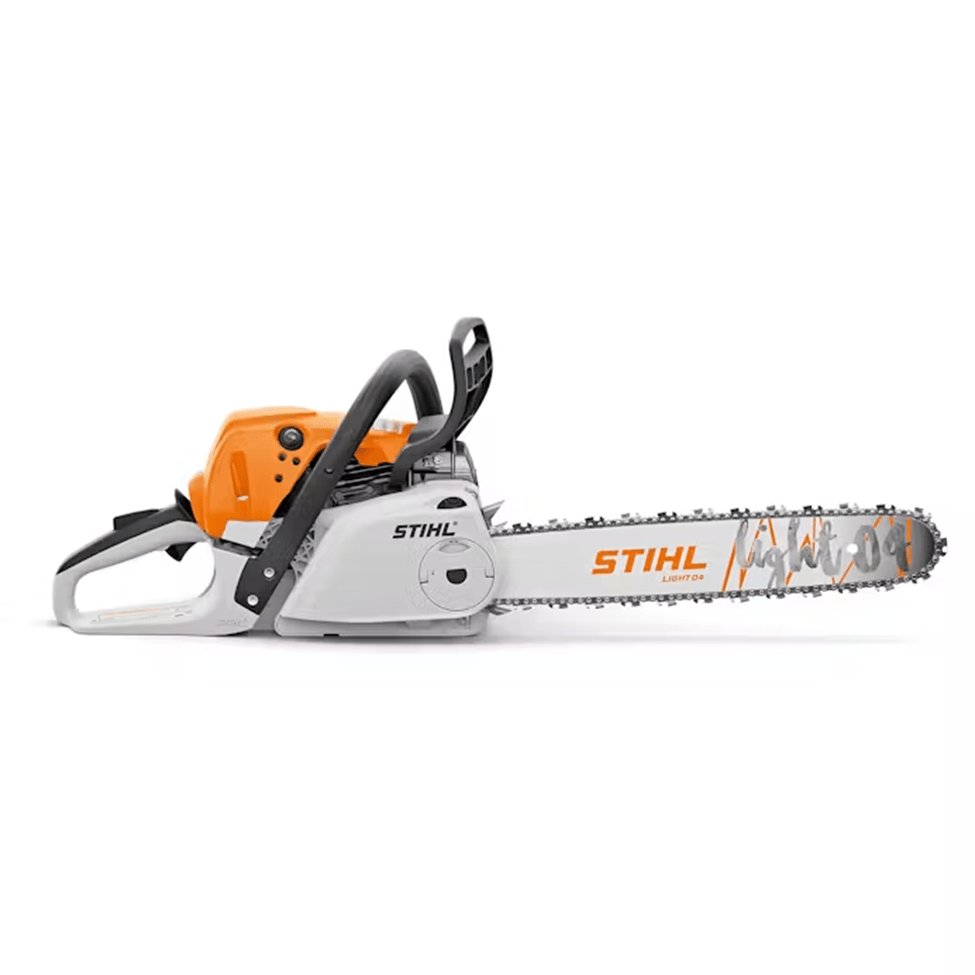
It’s a MS251 CB-E – same power as my old 250, slightly larger displacement, and the big E stands for Easy2Start. I’m on my fifth tank of gas, and it has been great to be able to start a chainsaw again (I have to bring my old 250 in alongside the woodstove and warm it up, and take two ibuprofens to get it to start . . . sometimes) It takes better tools to make up for the infirmities of old age – but it’s a wonderful world where those tools are available.
-
In the first two articles on this topic we’ve looked at geography – the community cut in two by Libby Dam and Lake Koocanusa – and the tax structure that has left the county split into the county seat and the unrepresented tax slaves of the north. Unfortunately there is a certain pale resemblance to The Hunger Games.
In this article, I’ll be describing the challenges of hiring managers for a rural county. We started with an elective process – hiring county commissioners, the county treasurer, the judge, the county clerk through an elective process.
We have a strong tendency to vote for people we like. The fact that I like someone doesn’t mean that he or she is a competent manager. We’ve had over a century of voting for likable people, then voting them out when the problems show up. Our county commissioners tend to serve for a single term, while our other county offices tend to be run by lifers. When the institutional memory isn’t so available to the commissioners as to their subordinates, function tends to be degraded.
In his first term, Trump ran up against the problem of having government employees who knew more about how to screw him up than he did about getting them to change their behavior. It’s the same here – there’s a whole lot more experience among the hired staff than the elected management.
In some cases, notably the road departments, county commissioners and county employees work well together. Historically, they have worked together. Law enforcement is blessed with standardized Peace Officer training, and a belief that the laws are to be followed.
We’re blessed with Lincoln County’s health department providing an example of how that department operates the green boxes. Now it’s important to realize that the health department has been making all the decisions on refuse for a long time. The problems grew from their earlier decisions – and their solutions have grown from their departmental tendency to view the public that pays their salaries as the problem. There’s something wrong when the commissioners have to ask the people who screwed garbage up to solve the problem. If solving the problem was within their departmental skill set, there wouldn’t be a problem.
A glance at the tax bill shows that I pay $150 per year for refuse for my house and another $150 per year for the old (uninhabited) service station. So if we take $300, and divide it by 12, we arrive at the county collecting $25 per month from me for refuse. The Hoop’s schedule shows that I’ll have the green box site open for 3 days/week. I guess I should consider myself lucky to get so much return.
The problem is, the county, advised by the health department, chose to solve an earlier refuse problem by locating the major landfill just outside of Libby, when EPA regulations forced closure of the landfill by Black Lake. Long-term thinking is not something we can expect from midwits (see The Coining of the Term: Midwit – Vox Popoli for explanation) .

Few people can come up with a solution that makes daylight savings time look as brilliant as this schedule does. Anyway, so long as the commissioners keep expecting the people who created the problem to solve it, and as long as those people regard the citizens they supposedly serve as the problem, county government won’t work. It’s not that the health department people are stupid – they’re just not as bright as they think they are. The task has proven to be beyond them.
I looked at the census, and found that it recognizes 11,027 housing units in Lincoln County. Josh Letcher said that number looked about right, and then supplied this budget that gives a better view of how our tax dollars are spent, along with this explanation:
“It all started going south(figuratively and literally) when the EPA regulations in the early 90s forced the closure of the county landfill on Black Lake Rd.
The county commissioners since then have been trying to make the decisions that are best at the time, but over time those decisions have been upended as well.
Contracting was a huge money savings until Evergreen bought up all its competition.”
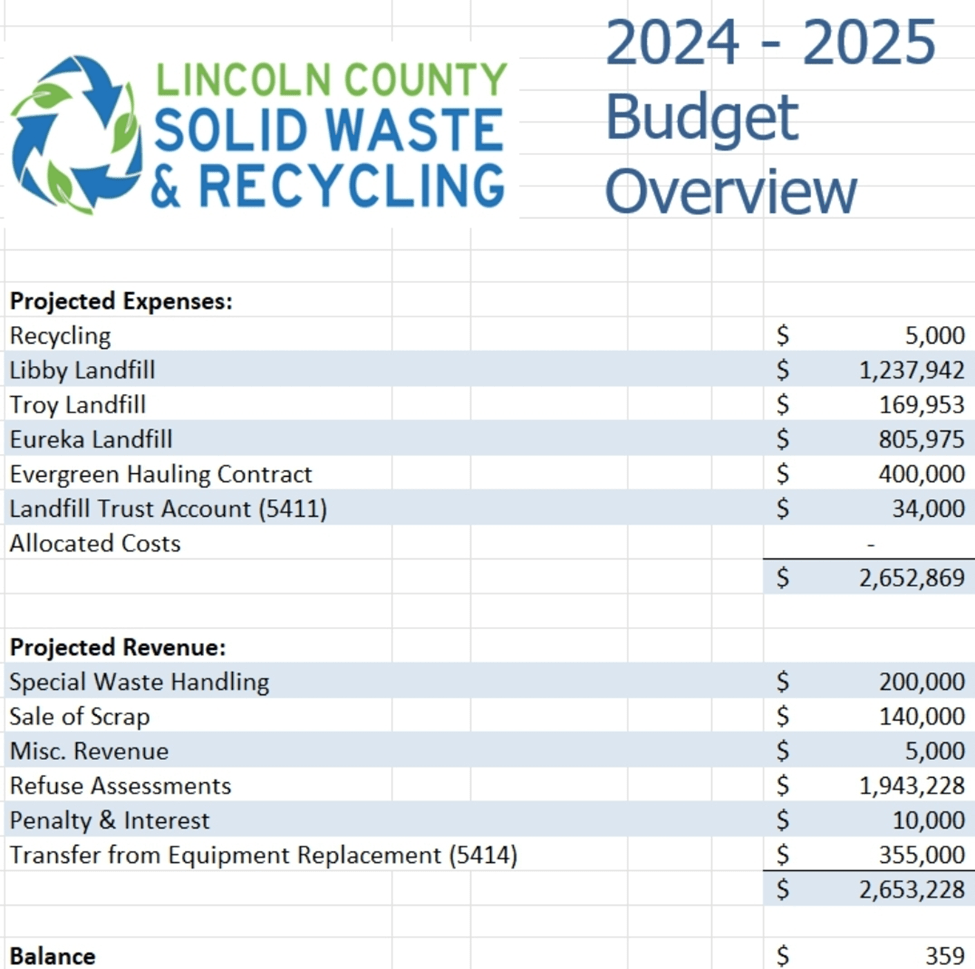

Now there’s legislation that makes it somewhere between hard and impossible to start a new garbage hauling business when someone else is established in the area – somehow our health department folks ignored that fact as they advised those long-ago commissioners. Midwits – above average intelligence, but not so far above as they think they are.
Part – or maybe all of the problem – is that our county health department employees are accustomed to directing people. They rule by law and taxation, and outlast any elected official who tries to limit their power and authority. Even a six-year term for county commissioners doesn’t compete with this local version of the deep state. When I started to write this series on why Lincoln County Government doesn’t work, can’t work, I didn’t expect them to give me such an outstanding example.
I’d like to see local government work – but I’ve watched Lincoln County for too long to ignore the structural weaknesses that condemn us to non-functional county government. The next, and final article, will discuss generalities of disfunction in elected officials and government employees – none of whom are necessarily bad people, most of whom I actually like.
-

Nobody likes feeling pressured. lechatnoir/E+ via Getty Images Sara Hanson, University of Richmond and Nathan B. Warren, BI Norwegian Business School
Have you ever hesitated at the register, uncomfortable as an employee watched you choose a tip? It’s not just you. The rise of digital tipping systems – from point-of-sale devices held by employees to countertop screens that clearly display your selection – is changing the dynamics of tipping, often in ways that make customers feel scrutinized.
As marketing professors who study digital tipping, we wanted to find out how customers respond to this sort of “tip surveillance.” So we conducted a field study analyzing 36,000 transactions and did four controlled experiments with more than 1,100 participants.
We compared tipping setups with less privacy – such as when firms use handheld payment systems, when employees are facing customers, and when apps immediately show tips to employees – with setups with more privacy, such as countertop payment systems, employees who face away from customers, and apps that disclose tips only after the service.
Our results were clear: High levels of surveillance are bad for business. Customers who felt watched while tipping were less likely to make a return visit or recommend a business. While privacy often made customers feel more generous and in control of their decisions, feeling scrutinized led to resentment and reduced loyalty.
Interestingly, research shows that people enjoy being watched when they donate to charity. So why does tipping feel different? Perhaps because tipping isn’t entirely voluntary – it’s often seen as an expectation. When customers feel pressured, they lose the sense of control that makes tipping a positive experience.
Welcome to the payment panopticon
While digital tipping can be convenient, it can also contribute to “tipflation” – the feeling that tipping expectations have gotten out of hand. If companies want to make sure customers keep coming back, our research indicates they would do well to give customers privacy to tip.
One issue might be that some employees think watching customers closely encourages them to tip generously. We didn’t find a straightforward relationship, however, between tipping privacy and tip amounts. While privacy empowers customers to tip less if they choose, we found it also often encourages them to feel more generous. These effects mean that customers tip similar amounts whether they have privacy or not.
For companies, striking the right balance between giving customers control and fostering generosity is crucial. A business that trains its employees to give customers privacy to tip – and makes sure to pay those employees fairly, so they don’t need to pressure customers in the first place – will likely develop a better reputation and a more loyal customer base.
The next horizons of tipping
Tipping can be a feel-good experience, enhancing feelings of generosity and social status. It can also be a source of anxiety. And for better or worse, digital technology is changing the way we tip. Today, people tip more money, for more services, and in more places than ever before.
As businesses, customers and even politicians debate how to best integrate digital tipping into our world, our research shows the importance of thinking holistically. In our view, the focus shouldn’t just be on boosting tipping revenue for employees but also on creating a positive experience for customers.
More broadly, customers, workers, businesses and society may want to consider how to create a system of tipping that protects workers’ rights and dignity while guaranteeing fair pay, and that allows customers and business owners to reward employees who contribute by providing great service.
Sara Hanson, Associate Professor of Marketing, University of Richmond and Nathan B. Warren, Associate Professor of Marketing, BI Norwegian Business School
This article is republished from The Conversation under a Creative Commons license. Read the original article.
-
I was pushing the cart through Walmart’s baking aisle when I was jostled, something hard hitting me below my left hip. It got my attention – the jostler was a fat lady, probably under 30, heavily tattooed arms, and a mouth and nostrils surrounded by piercings capped in pink plastic. The hard object was a Smith and Wesson snub holstered on her right side. I can’t say her right hip – she was too heavy for hips. Frankly, I wish I had a photograph to insert here – but I don’t.
My wife didn’t notice her. Obviously she was looking for baking products more than observing her fellow Walmartians – and while I think my situational awareness beats Renata’s, there was a bit of observational enhancement when I was jostled by the gun butt.
Now I don’t have a problem with open carry – or concealed carry either. Still, one of my thoughts has always been to look normal when carrying. A faceful of piercings tends to draw attention – on the other hand, it draws attention to the face, not the (unidentifiable) hip. The tattooed arm, on the other hand (so to speak) had a vine motif that drew my eyes down – to see the little Smith in the fabric holster.
My reaction was like driving with a tailgater – once she had jostled me with the Smith, and I observed her, I slowed to let her get well ahead of me, into a different aisle, as I thought about open carry in a crowded environment. It didn’t look like a retention holster – and if she was careless enough to bump the grip into me, I probably wasn’t the only one she jostled.
Concealed – like under a jacket – all I would have noticed would have been a bunch of pink plastic piercings, suggesting a slightly different esthetic taste than my own. Carrying in a cheap holster, that pushes the grips away from the body, incorporates the whole into a gestalt – the lady would have been off to side of normal, even if the revolver wasn’t there. Fortunately, Kalispell is a lot more accustomed to carrying while weird than other cities I have enjoyed.
I just don’t understand open carry of a sidearm that is small enough to be easily concealed. When I had a carry permit, I alternated between a pocket holster and a standard Bianchi that could be covered by an untucked shirt. On the other hand, it’s probably harder for a fat lady to carry concealed.
-
This YouGov survey shows how working class respondents felt about some issues. It may explain why the political experts/consultants aren’t hitting their predictions as well as they would like.

-
I think Pogo was supposed to be an opossum. He definitely didn’t look like an opossum, so I may be incorrect – but Pogo was a comic strip in the first third of my lifespan. Probably his finest moment was in this panel:
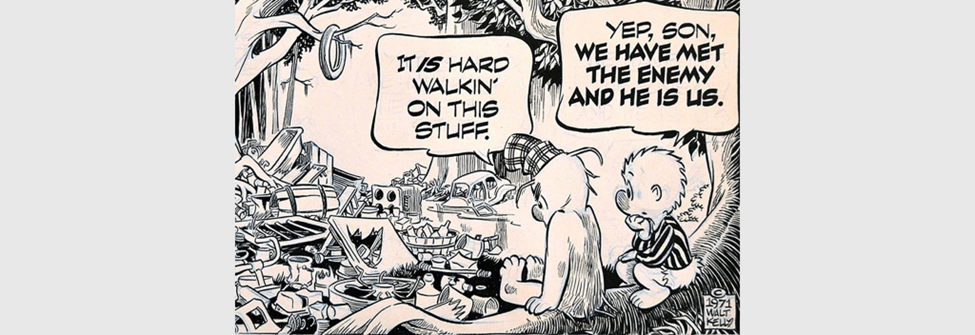
Pogo said it first: “We have met the enemy and he is us.” Nine words. Eight of them with only one syllable. The panel above showed up on the first Earth Day.
Obviously, Pogo’s Okefenokee Swamp was suffering from uncontrolled garbage dumping.
Here, we’re looking at running out of landfill area down Libby way in the next couple of years – and the narrative is that the problem is that Evergreen raised their garbage hauling rates, so the solution is cutting down the days people can fill the green boxes.

Creating a single landfill in Libby was a poor solution to a problem that occurred 30 years ago. And it was a problem that came out of the county health department . . . but it got the department a larger budget. Simply enough, that counts as 30 years of bureaucratic success – and we’re only looking at one failure. The thing is the solution – most people realize that they create garbage seven days a week, and that filling the green boxes three days a week won’t reduce the amount of garbage.
In Lincoln County, we rarely hire the best and brightest. Those that we do can find promotions by moving to different locations. Those who are left behind advance within their fiefs and find solutions to problems their predecessors created. If I remember correctly, the single landfill solution came up on Ron Anderson’s watch – and he’s older than I and has been retired longer.
“We have met the enemy, and he is us.” It isn’t enough to just raise cane when a midwit cuts dumping to three days a week. Politics affects all of us – but as taxpayers the elected officials have been unable to build a firewall that keeps our county department heads from building their own little fiefs.
Success, to a bureaucrat who is in charge of a mini-fief, amounts to putting the final crisis off until the week after his or her retirement. Right now, on garbage, the big problem is that the landfill in Libby is almost full. The narrative is that the garbage haulers got greedy. The proposed solution is to cut down access to the green boxes to three days per week.
-
I ran across a new website last week – well, new to me anyway. Just Facts Daily
The article I looked at explained why the FBI data on murder is low. I had always figured that murder data had to be the best data . . . except for Jimmy Hoffa, whose body was reportedly found in 2006 and in 2015, but is still missing. But most murders have bodies to go with them.
According to the article “death certificates provide “more accurate homicide trends at the national level than” FBI data because:
- the reporting of death certificates is “mandatory,” while the FBI relies on “voluntary” reports “from individual law enforcement agencies that are compiled monthly by state-level agencies.”
- death certificates include homicides that “occur in federal jurisdictions,” while the FBI rarely counts “homicides occurring in federal prisons, on military bases, and on Indian reservations.”
- death certificates include homicides caused by the deliberate “crashing of a motor vehicle, but this category generally accounts for less than 100 deaths per year.”
However, death certificates tend to overcount murders because they include:
- justifiable homicides by civilians acting in self-defense, which are not murders.
- some justifiable homicides by police, even though these are supposed to be coded as “legal intervention deaths,” not as homicides.
Time was when I regarded the FBI statistics as the gold standard – but as I have aged, I have learned that the reported statistics aren’t always that good.
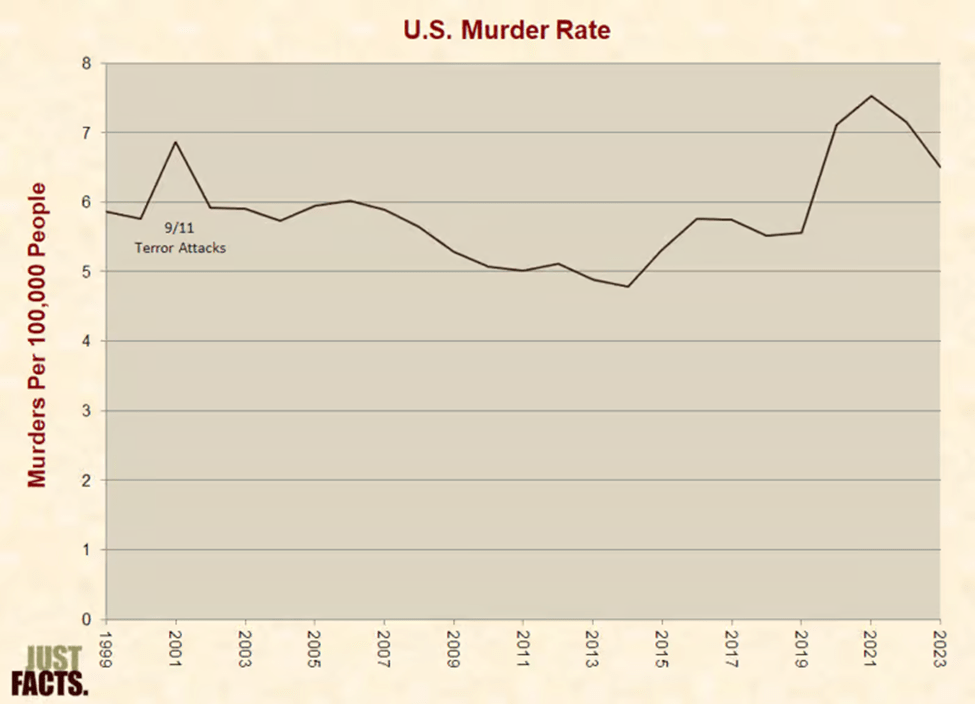
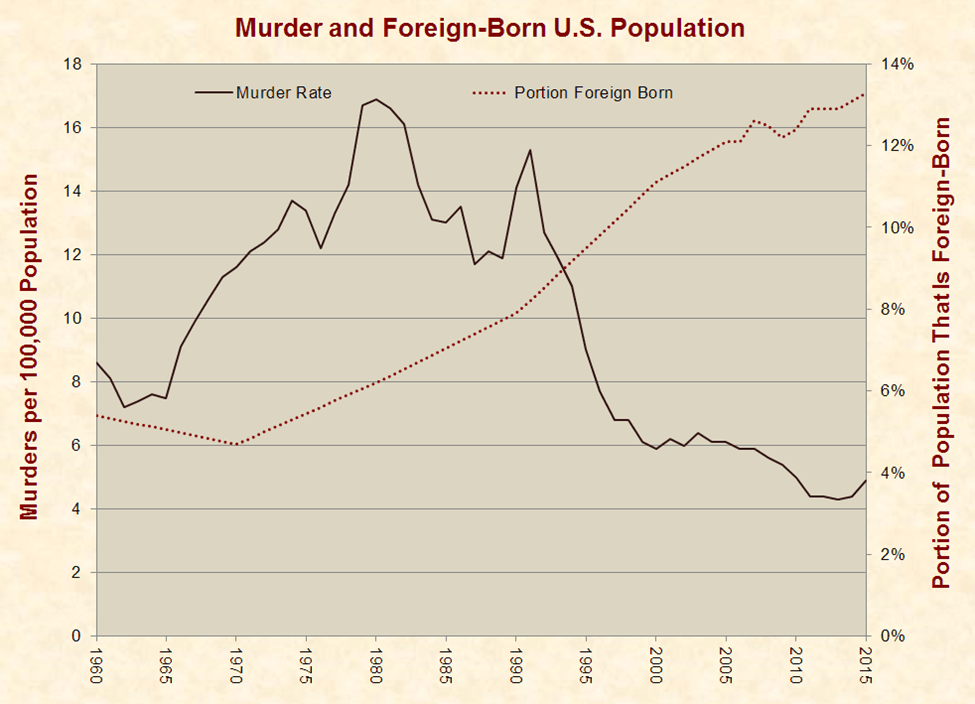
The graph shows that our murder rates – at least during this century have been fairly consistent – save for the bump on 9/11 2001 and another bump during covid.
This article matches data that I dug out before I retired: Illegal Immigrants Are Far More Likely to Commit Serious Crimes Than the U.S. Public – Just Facts Daily
The article includes these observations:
“First, U.S. Census data from 2011 to 2015 shows that noncitizens are 7% more likely than the U.S. population to be incarcerated in adult correctional facilities. This alone debunks the common media narrative, but it only scratches the surface of serious criminality by illegal immigrants.
Second, Department of Justice data reveals that in the decade ending in 2015, the U.S. deported at least 1.5 million noncitizens who were convicted of committing crimes in the U.S. (Table 41). This amounts to 10 times the number of noncitizens in U.S. adult correctional facilities during 2015.
Third, Department of Justice data shows that convicts released from prison have an average of 3.9 prior convictions, not including convictions that led to their imprisonment (Table 5). This means that people in prison are often repeat offenders—but as shown by the previous fact, masses of convicted criminals have been deported, making it hard for them to reoffend and end up in a U.S. prison.
In other words, even after deporting 10 times more noncitizens convicted of crimes than are in U.S. prisons and jails, they are still 7% more likely to be incarcerated than the general public.”
Their explanations for the data they offer seem pretty decent. I think I’ll read a few more of their articles.


Want to tell us something or ask a question? Get in touch.

Recent Posts
- Computer Repair by Mussolini
- Getting Alberta Oil to Market
- Parties On Economics
- Thus Spake Zarathustra – One More Time
- Suspenders
- You Haven’t Met All The People . . .
- Play Stupid Games, Win Stupid Prizes
- The Ballad of Lenin’s Tomb
- An Encounter With a Lawnmower Thief
- County Property Taxes
- A Big Loss in 2025
- Thinking of Clovis

Rough Cut Lumber
Harvested as part of thinning to reduce fire danger.
$0.75 per board foot.
Call Mike (406-882-4835) or Sam (406-882-4597)
Popular Posts
Ask The Entomologist Bears Books Canada Census Community Decay Covid Covid-19 Data Deer Demography Education Elections Eureka Montana family Firearms Game Cameras Geese Government Guns History Inflation life Lincoln County Board of Health Lincoln County MT Lincoln Electric Cooperative Montana nature News Patches' Pieces Pest Control Politics Pond Recipe School School Board Snow Taxes travel Trego Trego Montana Trego School Weather Wildlife writing
 Trego's Mountain Ear