-
Last week, the topic was geography – how a county that was set up to work easily in 1909 became unworkable when Libby Dam split it into two disconnected pieces. Essentially, the miles between Pinkham Creek and Jennings Rapids left the county disconnected. Today, the topics are outgrowths of that disconnect.
Let’s start with the county’s tax base. The simplest way to look at the tax base is the county’s three high school districts:

Obviously, with Lincoln County’s government located in Libby, but the largest portion of taxable land in north county, there is a natural tendency to take more taxes from the north county, and deliver more services to the county capital. If you recall The Hunger Games, you have a dramatized version of the problem. The county population, split between the three high school districts, amplifies the problem:
Zip Code Population City 59923 9,545 Libby 59917 5,001 Eureka 59935 3,505 Troy 59934 763 Trego 59930 697 Rexford 59918 625 Fortine 59933 21 Stryker Since Eureka, Trego, Rexford, Fortine, and Stryker are all in High School District 13, the relative populations are:
Libby 9545 (47%) Troy 3,505 (17%) LCHS 7,107 (35%)
There is an incentive for the Libby folks (47% of the population with 36% of the tax base) to take more and give less to the north county folks (LCHS has 35% of the population and 45% of the tax base). Essentially, the north part of the county is treated as a colony, to be a tax mine for the larger population in the south.
This isn’t to say that everyone in Libby and Troy wants to stick it to the folks in the north end of the county. But when push comes to shove, the folks who work for the county in Libby have a tendency to look out for their neighbors a bit more than the remote tax slaves they don’t see – again, glance at The Hunger Games – it’s a bit more dramatic than Lincoln County, but the drama shows the trend.
The north Lincoln County tax base has been growing faster than the south county’s tax base – and soon the north part of the county will be paying over half of the county’s taxes, while the lion’s share of the county employees live and work in Libby.
This year’s issues have been garbage and the library – in both cases the county government proposal has been to reduce services to the north end while keeping the cash cow of the north flowing money into the courthouse in Libby.
Since our commissioners are elected by all the voters in the county, the one commissioner who represents north county is elected by the voters of the southern portion. Basically, if he or she decides to “go along, get along” the north end will vote that commissioner back home after a single term. If the commissioner chooses to stand up to the courthouse, those folks will send him or her back home after a single term.
Our gut-shot county, with the lion’s share of the taxes taken from the smallest share of the population, is politically set up to benefit the county seat and exploit the north end of the county. If we had conscientious folks at the courthouse who worked at treating everyone equally, our county government might work – but that isn’t the way to bet.
-
I scored a copy of Dorothy Johnson’s book The Bloody Bozeman. It was published in 1971, and Don Boslaugh had a new copy – so I got to read a couple of chapters- but I was twenty-one with a lot of other priorities on my limited cash flow. Between cars, guns and tools, hardbound first edition books took a low spot on my purchasing agenda. Still, fifty plus years later, I have added Dorothy Johnson to the family library.
As I have boasted about this acquisition, I learned that the folks of Whitefish have, by and large, forgotten their old neighbor. While she was born in Iowa, she moved to Whitefish in 1913 at age 8 . . . one of our old timers, she wrote westerns, some of which you might watch on youtube – The Man Who Shot Liberty Valance, The Hanging Tree, A Man Called Horse come to mind.
Like many of us, Dorothy’s need to make a living took her from Montana for 15 years – hers were spent in the New York publishing industry – homesick on Long Island. In a Montana Magazine article by Rachel Toors she was described as “She was raised by her widowed mother, was married for about 15 minutes to a creep and spent most of her life as a character.” Her tombstone in Whitefish is marked “PAID” possibly referring to the years she spent paying off her ex-husband’s gambling debts.
But on to the book – The Bloody Bozeman tells of the early years of Montana’s gold fields – basically 1862 through the last use of the Bozeman trail in 1868. A time that included the Fetterman Massacre, and hanging the Sheriff in Bannock. The time of Red Cloud, the Vigilantes, and acting governor Thomas Francis Meagher. The time of the Hayfield Fight, the Wagon Box Fight, and the Crazy Woman Fight.
It seems strange to look at the original 1971 price tag of $9.95 and realize that the book was beyond my budget when it was first printed. I have it now – and a copy of Miss Johnson’s Bedside Book of Bastards to keep it company on the bookshelf.
-
I’ve been sharing pdf versions of Dunning and Kruger’s study “Unskilled and Unaware” for the past twenty years. After the hurricane damage to my relatives’ Appalachian home areas, I started following the NCrenegade blog. He has posted an abbreviated explanation of Dunning-Kruger on his blog at
https://ncrenegade.com/ that is very well done. Click the link for his entire commentary – but the nuts and bolts are printed here:
“from Grok:
The Dunning-Kruger effect is a cognitive bias where people with low ability in a specific area tend to overestimate their knowledge or competence, while those who are highly competent might underestimate their own abilities or assume tasks that are easy for them are also easy for others. Here’s a breakdown:
- Overestimation by the Incompetent: Individuals who lack skill in an area often fail to recognize their own incompetence. This leads them to rate their ability as much higher than it actually is. They might feel overly confident in making decisions or judgments in that area.
- Underestimation by the Competent: Conversely, people who are highly skilled might assume that everyone else can perform tasks at their level of expertise, leading them to underestimate their own abilities relative to others. They might think, “If this is easy for me, it must be easy for everyone.”
Key Points of the Dunning-Kruger Effect:
- Misjudgment of Ability: People who are unskilled in a domain are not only prone to making errors but also lack the very expertise needed to recognize how bad their performance is.
- Double Burden: According to Dunning and Kruger, the incompetent suffer from a dual burden: not only do they reach mistaken conclusions and make regrettable errors, but their incompetence robs them of the ability to realize it.
- Illusory Superiority: This is closely related to the effect where many people think they are above average, even when statistical norms would suggest that’s not possible for everyone.
Example:
- In a study, students who performed very poorly on a test of grammar and logic often believed they did well above average. Conversely, students who scored in the top quartile often underestimated their performance relative to others.
Implications:
- This effect can lead to significant errors in various domains, from everyday decision-making to professional settings, where overconfident individuals might take on tasks they’re not qualified for, or conversely, where highly competent individuals might not take on leadership roles or fail to recognize their own value.
- It underscores the importance of self-awareness, continuous learning, and seeking feedback, particularly in areas where one lacks expertise.
The Dunning-Kruger effect highlights a fundamental human flaw in self-assessment which can impact learning, decision-making, and social interactions. Awareness of this bias can foster more critical self-evaluation and encourage seeking out education or expertise in areas where one’s knowledge is lacking.”
Again, if you want the complete story, click https://ncrenegade.com/
-
For years, I couldn’t figure out a reason for Meriwether Lewis to commit suicide-yet the historical record shows that on October 11, 1809 he did. Only 3 years after he returned to St. Louis after leading the Corps of Discovery expedition across the continent and back.
Lewis is not just an historic figure and explorer of note – his apron is one of the Masonic lodge artifacts in Helena, attesting to his conducting the first lodge sessions in Montana. At the time of his death, he could well have been on track to become President. He was territorial governor of Louisiana.
NPShistory.com show why this young man, just turned 35, would see suicide as his only alternative. Dr. Ravenholt, reading Lewis’ journals, diagnosed him as suffering from neurosyphilis, and wrote that the disease, plus the use of mercury as a cure, was affecting Lewis’ mental health.
“ Venereal disease was already widespread in Indian country, especially in those communities regularly visited by European traders. Lewis and Clark knew the dangers that awaited their contingent of fit young men, but they also knew that two years of abstinence was too much to ask. Expedition members had sex with Indian women early and often. Indian women often were eager to have sex with the men of the expedition, although for reasons that the men could barely fathom. The sexual exploits of Clark’s black slave, York, became legendary. Sacagawea, inscribed on the dollar coin as a national heroine, seems almost certainly to have had a gonorrheal infection, contracted most likely from her husband Toussaint Charbonneau. Many, perhaps all, of the men received mercury treatment—the common prescription for syphilis—during the expedition. Lewis and Clark were extremely circumspect about their own sexual activities along the trail, but the stories about babies fathered by Clark in Indian communities and the mystery surrounding Lewis’ death are suggestive.”
https://muse.jhu.edu/article/219490“How could it be that nobody has put this (the syphilis theory) together?” asked Ravenholt. Sanitized accounts of the Lewis and Clark expedition, efforts to protect Lewis’ reputation and unfamiliarity by historians with the symptoms of syphilis have led scholars to overlook obvious clues, he said. “Clearly Thomas Jefferson and William Clark did their best to put this under the rug.”
“The biggest (health) trouble Lewis and Clark experienced was venereal disease,” Ravenholt noted, a point backed up by the explorers’ own journals. These mention treating the illness in their men at Fort Clatsop on the coast with doses of mercury, but do not explain the source of Lewis’ illness in late 1805.
Venereal disease is a possible cause of Lewis’ problems, said John Findlay, a professor of Pacific Northwest history at the University of Washington. Sexual relations between Indians and fur trappers were common before Lewis and Clark arrived.
Sexual relations between the “Corps of Discovery” and Native Americans were routine. Indians regarded it as a gesture of hospitality and a way to acquire some of the visitors’ power, while Lewis and Clark knew it helped cement relations with tribes and kept up the morale of their men, historians have written.”
Did Syphilis Lead To Darkening Despair That Caused Explorer Lewis To End His Life? | The Seattle TimesIt’s an answer that makes sense – most of us know that smallpox was particularly rough on the native American population. Fewer realize that measles was nearly as bad. In our era, where antibiotics are prevalent and available, we tend to overlook how serious bacterial infections were in the 19th and early 20th century.
Ravenholt described Lewis’ suicide as “we can truly empathize with him and fully admire his ultimate courage in facing the facts squarely and doing what had to be done to protect his reputation, his family and his friends.”
Hopefully, this article can get the reader to click the links and read the original researchers views.
-

Mars’ craters come from ancient collisions during the formation of the solar system. NASA/JPL-Caltech/Cornell University/Arizona State University via AP Joel S. Levine, William & Mary
NASA plans to send humans on a scientific round trip to Mars potentially as early as 2035. The trip will take about six to seven months each way and will cover up to 250 million miles (402 million kilometers) each way. The astronauts may spend as many as 500 days on the planet’s surface before returning to Earth.
NASA’s Artemis program plans to return humans to the Moon this decade to practice and prepare for a Mars mission as early as the 2030s. While NASA has several reasons for pursuing such an ambitious mission, the biggest is scientific exploration and discovery.
I’m an atmospheric scientist and former NASA researcher involved in establishing the scientific questions a Mars mission would investigate. There are lots of mysteries to investigate on the red planet, including why Mars looks the way it does today, and whether it has ever hosted life, past or present.

Studying Mars can tell researchers more about the formation of the solar system. J. Bell/NASA via AP Mars geology
Mars is an intriguing planet from a geological and atmospheric perspective. It formed with the rest of the solar system about 4.6 billion years ago. Around 3.8 billion years ago, the same time that life formed on Earth, early Mars was very Earth-like. It had abundant liquid water on its surface in the form of oceans, lakes and rivers and possessed a denser atmosphere.
While Mars’ surface is totally devoid of liquid water today, scientists have spotted evidence of those past lakes, rivers and even an ocean coastline on its surface. Its north and south poles are covered in frozen water, with a thin veneer of frozen carbon dioxide. At the south pole during the summer, the carbon dioxide veneer disappears, leaving the frozen water exposed.
Today, Mars’ atmosphere is very thin and about 95% carbon dioxide. It’s filled with atmospheric dust from the surface, which gives the atmosphere of Mars its characteristic reddish color.
Scientists know quite a bit about the planet’s surface from sending robotic missions, but there are still many interesting geologic features to investigate more closely. These features could tell researchers more about the solar system’s formation.
The northern and southern hemispheres of Mars look very different. About one-third of the surface of Mars – mostly in its northern hemisphere – is 2 to 4 miles (3.2-6.4 kilometers) lower in elevation, called the northern lowlands. The northern lowlands have a few large craters but are relatively smooth. The southern two-thirds of the planet, called the southern highlands, has lots of very old craters.
Mars also has the largest volcanoes that scientists have observed in the solar system. Its surface is peppered with deep craters from asteroid and meteor impacts that occurred during the early history of Mars. Sending astronauts to study these features can help researchers understand how and when major events happened during the early history of Mars. https://www.youtube.com/embed/Cww3yVQpcjY?wmode=transparent&start=0 Mars’ volcanoes tower over any of the highest mountains on Earth.
Asking the right questions
NASA formed a panel called the Human Exploration of Mars Science Analysis Group to plan the future mission. I co-chaired the panel, with NASA scientist James B. Garvin, to develop and assess the key scientific questions about Mars. We wanted to figure out which research questions required a human mission to address, rather than cheaper robotic missions.
The panel came up with recommendations for several important scientific questions for human investigation on Mars.
One question asks whether there’s life on the planet today. Remember, life on Earth formed about 3.8 billion years ago, when Earth and Mars were similar-looking planets that both had abundant liquid water and Mars had a denser atmosphere.
Another question asks what sort of environmental changes led Mars to lose the widespread, plentiful liquid water on its surface, as well as some of its atmosphere.
These questions, alongside other recommendations from the panel, made it into NASA’s architectural plan for sending humans to Mars.
How do you get to Mars?
To send people to Mars and return them safely to Earth, NASA has developed a new, very powerful launch vehicle called the Space Launch System and a new human carrier spacecraft called Orion.
To prepare and train astronauts for living on and exploring Mars, NASA established a new program to return humans to the Moon, called the Artemis program.
In mythology, Artemis was Apollo’s twin sister. The Artemis astronauts will live and work on the Moon for months at a time to prepare for living and working on Mars. https://www.youtube.com/embed/_T8cn2J13-4?wmode=transparent&start=0 The Artemis program plans to return humans to the Moon, in anticipation of eventually sending humans to Mars.
The Space Launch System and Orion successfully launched on Nov. 16, 2022, as part of the Artemis I mission. It made the Artemis program’s first uncrewed flight to the Moon, and once there, Orion orbited the Moon for six days, getting as close as 80 miles (129 kilometers) above the surface.
Artemis I splashed back down to Earth on Dec. 11, 2022, after its 1.4 million-mile (2.2 million-kilometer) maiden journey.
Artemis III, the first mission to return humans to the lunar surface, is scheduled for 2026. The Artemis astronauts will land at the Moon’s south pole, where scientists believe there may be large deposits of subsurface water in the form of ice that astronauts could mine, melt, purify and drink. The Artemis astronauts will set up habitats on the surface of the Moon and spend several months exploring the lunar surface.
Since the Moon is a mere 240,000 miles (386,000 km) from Earth, it will act as a training ground for the future human exploration of Mars. While a Mars mission is still many years out, the Artemis program will help NASA develop the capabilities it needs to explore the red planet.
Joel S. Levine, Research Professor, Department of Applied Science, William & Mary
This article is republished from The Conversation under a Creative Commons license. Read the original article.
-
What exactly is community decay? Who does this apply to?
The Community Decay Ordinance for Lincoln County (2018-05) reads “It is unlawful for any person to maintain conditions that contribute to community decay on property owned, occupied, or controlled by him or her on or adjacent to any public roadway within the county.”
At this point, one might breath a sigh of relief. “On or adjacent to any public roadway”- that can’t apply to very much of the county, right?
Ah, but this ordinance begins with definitions. Adjacent: “beside, next to, contiguous or nearby. Properties adjacent to any public roadway and properties within public view, as defined within this ordinance”
This is a rather broad definition of adjacent, and I’d encourage the reader to consider how many places they know of that are “beside, next to, contiguous or nearby” a public roadway.
Next. Public view: “any area visible from any point up to six feet above the surface of the center of any public roadway”
So now we have any property “beside, next to, contiguous or nearby” any public roadway and “any area visible from any point up to six feet above the surface of the center of any public roadway”…
I’d encourage the reader to imagine just how far one could see from six feet above the center of a public roadway on a hill.
But wait- there’s more! All this assumes that we know what a public roadway is (it’s a road- right? Not quite). Fortunately, the ordinance includes a definition. Public roadway- “any highway, road, alley, lane, parking area, or other public or private space adapted and fitted for public travel that is in common use by the public”
So, that leaves us with a rather broad idea of what sort of places community decay is not allowed. And we haven’t even gotten to what community decay actually is! More next time.
-
I was reading an article that described several reasons why the government doesn’t work. It was a generalized article, and as I thought of the additional challenges our three county commissioners have – beginning with the geographic challenges – I realized that it was time to develop a few articles that explain the challenges to good government that our county faces.
It isn’t that we have bad county commissioners – as I was retiring from SDSU and moving back home, Lincoln County had one of those rare elections for commissioner . . . one with two good candidates, Mike Cole and Steve Curtiss. Mike won – but whichever way the vote had gone, the county would have had a good commissioner. After a single term, Mike Cole lost his bid for reelection to Josh Lecher. This year, after a single term, Josh lost the primary to Noel Durum. And whether he does a good job or a poor one, Noel is unlikely to win reelection at the end of his first term.
To understand why Lincoln County’s government doesn’t work well requires a bit of study. I’m going to start in 1909, when Lincoln County was carved out of Flathead. Things started with a good, logical base. The problem in function came 60 years later, with a change in geography.
Lincoln County was created to duplicate the Kootenai’s drainage – and along with that, the county was connected by the railroad. In 1909, the county towns (excepting Yaak and Sylvanite) were connected by the railroad. A slow train, stopping at each station, connected what had been isolated communities. It wasn’t a bad idea.
Sixty years later, the gates at Libby Dam closed, and Ural, Warland, Rexford and Gateway were flooded. The railroad was relocated to a spot where it runs through Stryker, Libby and Troy, stopping only at Libby. Still, the railroad served as central to the county for a short time – but the link was the ranches and towns along the Kootenai. When Libby Dam was complete and Koocanusa filled, the commercial link between north county and south county was severed. J. Neils had linked lumber workers from Libby through Rexford for 60 years – but the Dam ended the railroad, the social linkages and the commercial timber connections.
For the past half-century, Lincoln County has been disconnected, with a nearly unpopulated area that exists from Jennings Rapids to the mouth of Pinkham Creek – connected by the lonely highway 37.
Next issue – why our elected county government lacks control over our hired bureaucracy.
-
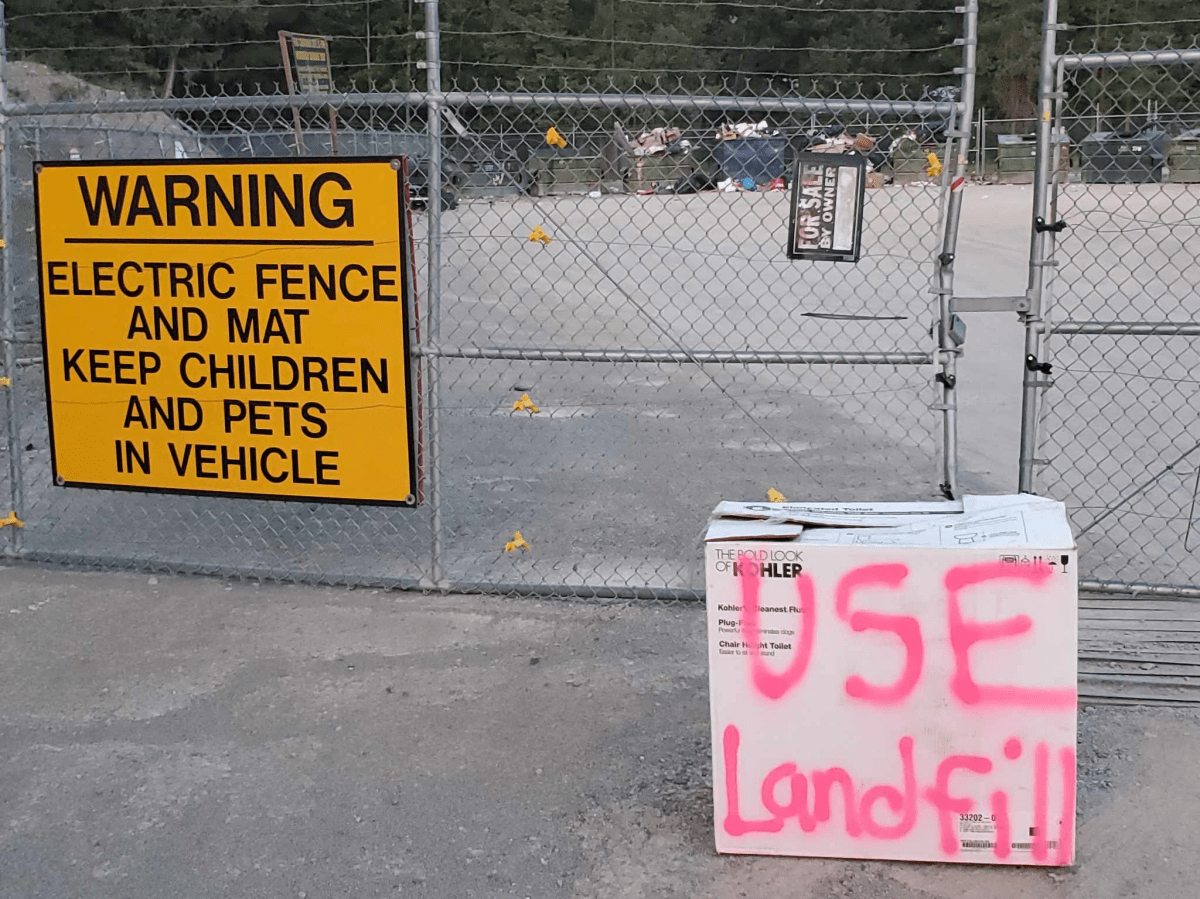
With the recent county commissioner’s meeting (and the wonderful job the TV news has done on reporting on the issue), it seems like it’s time to talk about trash again.
First- some history:
Thinking About Garbage
The green box issue – cutting down access to garbage removal services – in Lincoln County has me thinking about garbage. Basically simple facts about garbage over a lifetime – there have been a lot of changes since 1960. In 1960 there was a dump on Forest Service Land for Trego residents – less than a mile from where the green boxes are now. It had the collateral advantage of being the place to find bears. It was, fundamentally, trashy – but the old open dumps were cheap and accessible. A half-century earlier, when Tobacco Lumber had managed the dam…
Keep readingOne of the questions worth asking is ‘how do you start a waste-management/trash hauling company? Well, under current law, you’ll need a “Class D Motor Carrier Certificate Of Public Convenience And Necessity”. To get that, you must apply with the public service commision. The guidance for that is here.
The commission will advertise your application in the local newspaper and bill you for it. Then, they’ll have you pay a $500 application fee.
You are required to prove that existing service providers can’t or won’t do the job. There is a good chance that your application will include a formal hearing (if anyone, anyone at all, complains about your application. Even if they later withdraw the complaint). The commission is required to make a decision within 180 days.
Now, if you’re reading through that guidance- you’ll notice this additional turn of phrase: “For purposes of a Class D certificate (transportation of garbage), in addition to consideration of standards 1-4, a determination of public convenience and necessity may include a consideration of competition.”
Don’t assume that means the commission is in favor of competition. Why do I say that? Past behavior predicting future results, and all that: https://fee.org/articles/young-montana-entrepreneur-is-being-legally-barred-from-hauling-trash-because-established-players-don-t-want-the-competition/
-
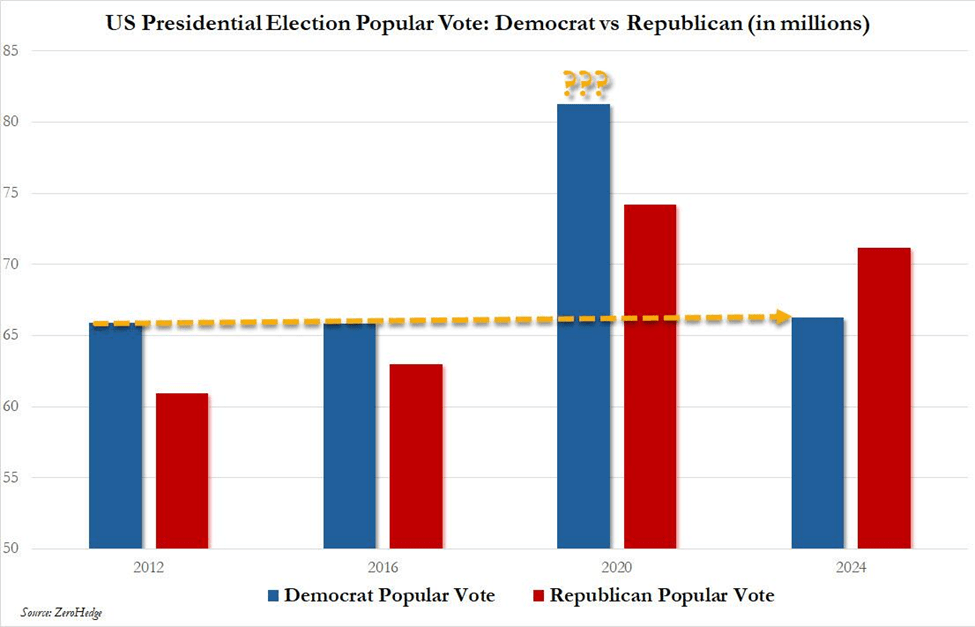
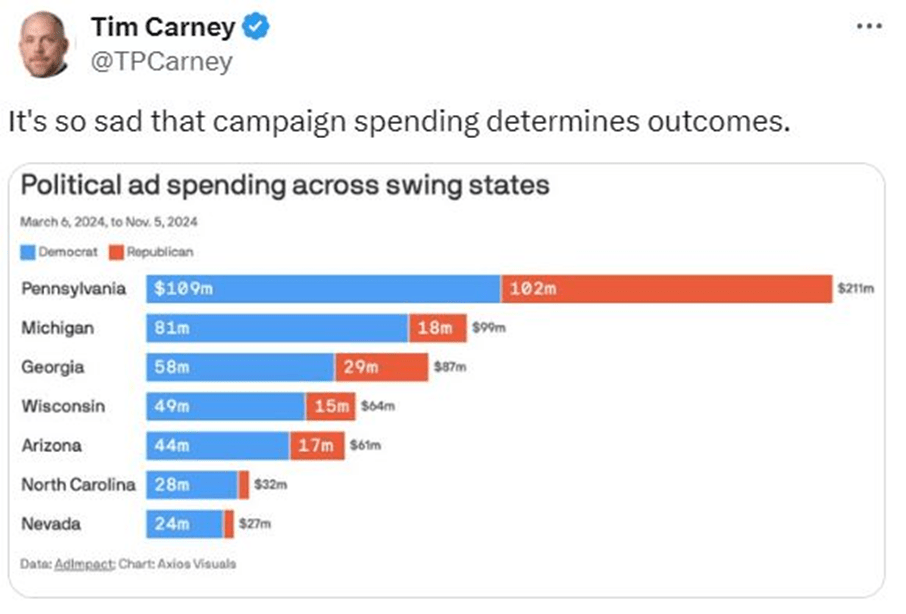
Historically, independent voters, and voters for minor third parties, do not get a large percentage of votes. Often, they’re considered “spoiler” candidates, who lose the election for someone by dra4wing critical support away during a close race. Or their thought of as simply “protest candidates” with no chance of winning.
In Montana, for the presidential race and senate race, there were very small percentages (0-2%) for third party candidates. But further down on the ticket, libertarians often carried 3-4% of the vote.
And there were some interesting exceptions. In the race for public service commissioner of district four, the contest was between a republican and an independent. The independent carried 45% of the vote.
This year, in the races for state senate, there were more contested elections than not. In the one race that had three parties (District 45- Mineral County), the independent carried 8%.
State representative races were less consistently contested. Thirteen were uncontested, all republican. There were two instances of three party races, and one contest between a libertarian and a major party. In Yellowstone County, the Libertarian running against a republican carried 42% of the vote.
As for Lincoln county, we had a higher percentage of votes for libertarian candidates at the state level, and a 28% vote for the independent public service commissioner of district four (significantly less than the 45% she carried across the district, but higher than the percentage usually won in our county by democrats in equivalent races).
Interestingly, in the race for county commissioner, the democrat candidate took 14% of the vote, while the libertarian carried 20%. Noel Duram, republican, carried only 66% of the vote. A majority, but a substantially smaller one than republicans have typically enjoyed.
This year, only three of our county positions were uncontested: Clerk of District Court, Clerk and Recorder, County Superintendent of Schools. Unfortunately, this is still a tremendous percentage considering how few county positions were up for election. These were the only partisan county elections, other than the race for county commissioner and state representatives.



Want to tell us something or ask a question? Get in touch.

Recent Posts
- Computer Repair by Mussolini
- Getting Alberta Oil to Market
- Parties On Economics
- Thus Spake Zarathustra – One More Time
- Suspenders
- You Haven’t Met All The People . . .
- Play Stupid Games, Win Stupid Prizes
- The Ballad of Lenin’s Tomb
- An Encounter With a Lawnmower Thief
- County Property Taxes
- A Big Loss in 2025
- Thinking of Clovis
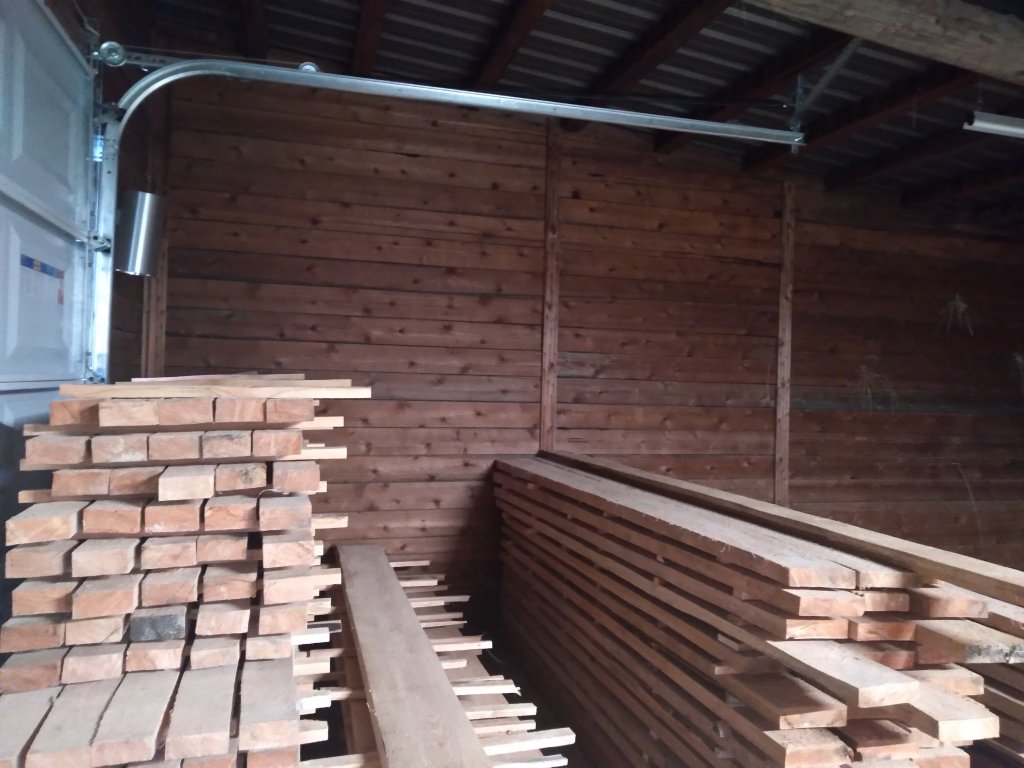
Rough Cut Lumber
Harvested as part of thinning to reduce fire danger.
$0.75 per board foot.
Call Mike (406-882-4835) or Sam (406-882-4597)
Popular Posts
Ask The Entomologist Bears Books Canada Census Community Decay Covid Covid-19 Data Deer Demography Education Elections Eureka Montana family Firearms Game Cameras Geese Government Guns History Inflation life Lincoln County Board of Health Lincoln County MT Lincoln Electric Cooperative Montana nature News Patches' Pieces Pest Control Politics Pond Recipe School School Board Snow Taxes travel Trego Trego Montana Trego School Weather Wildlife writing
 Trego's Mountain Ear