-
I’m noticing that the second would-be assassin is being charged with possession of a firearm with an obliterated serial number. It’s good for another five years in the crowbar hotel – but it brings back a memory of a Mauser pistol I had where someone had filed away the numbers and the Nazi proof stamps.
I was teaching at Trinidad State at the time – and the office across the hall from me was the cop instructor. Down the hill was the gunsmithing building, and betwixt and between was the finest college library on guns that I have ever seen. In other words, there was no better place to correct the problem.
The library came first – it turned out that the pistol had a unique placement for the grip screw – only the first 1,350 were made that way, and the first serial number was 700,001. Since there were about a quarter million of these little pistols made, just the uncommon grip screw location was actually enough to figure out the first three digits of the serial number . . . and the internal parts were still marked with the last three digits of the serial number. Since those internal numbers were above 500, and we knew the starting and ending numbers, the hard part of the research was essentially complete. A little library research, and I was ready to get the serial number restored. We did use the chemicals in the cop instructors stash to find the numbers – which confirmed the research, took the pistol down to the gunsmithing department, and one of the instructors restored the serial number.
The low grip screw variant:

The ‘standard’ variant:

About half of these first Mauser HSC pistols were purchased by the Kriegsmarine – and I have a hunch that mine went into Canadian hands when the HMCS Moose Jaw sank U-501. The Moose Jaw pulled 29 German sailors from the water, and, from ads for other Mauser pistols I’ve seen, I have this unverifiable suspicion that three or four wound up on the Moose Jaw and were sanitized by a sailor with a file. Can’t tell for sure – the records aren’t there, and it happened over 80 years ago. The pistol couldn’t describe its history.
The Gun Control Act of 1968 required that all new firearms would have serial numbers. I still have a couple of old 22 single shot rifles, made before GCA68, that were made without serial numbers. Not a problem – “Congress shall pass no ex post facto laws.”
On the other hand, I’d hate to have to explain why the SKS rifle that Routh had in Florida this month has an obliterated serial number. It almost has to have been defaced after 1968. And the law is pretty straightforward – it’s possession of the gun with a defaced serial number that is illegal . . . the law doesn’t care who obliterated the serial number. The lack of a serial number is no problem on the old 22 rifles that were made without them – but I suspect that Rauth will get a lot of time to think about obliterating the serial number on his SKS.
-
by Julia Tilton, The Daily Yonder
September 13, 2024In the era of Trump, there have been countless attempts to explain the conservative voting habits of small town America. Many rely upon taken-for-granted notions of rural backwardness, overrepresenting the views of the most extreme.
In the Daily Yonder’s recent podcast series, “Backroad Ballots: Rural Politics in 2024”, we sought to deconstruct oversimplified narratives about voters in America’s countryside. We asked rural scholars and organizers who the rural voter is, and what she cares about.
We compiled our conversations into four episodes to arm listeners with a nuanced framework for understanding the lead-up to the 2024 election in rural America. Beyond asking about what’s at stake, though, we also asked each guest to envision the country’s democracy in an ideal future:
“What’s one thing you would see in an America where rural people are more engaged and better represented?”
We’ve compiled their answers below, edited for clarity and length. You can listen to the full conversations and more on “Backroad Ballots.” Find it in the Rural Remix podcast feed, available on Apple Podcasts, Spotify, or wherever you get your podcasts.
Anthony Flaccavento, co-founder of Rural Urban Bridge Initiative
If five or ten years from now we were in a better place, part of it would be that rural people and the things we do – our occupations – feel and really are respected beyond our communities.
And, that city people and suburban people not only have more respect for rural people, rural values, rural occupations, farming, whatever, but also recognize much more than they do now the interdependence, that cities and suburbs absolutely need healthy, functioning rural places. Those of us who live in towns, cities and suburbs depend on rural people for most of our life. Our food, our fiber, our energy, our materials, etc., etc., etc. So, the one thing would be this greater acknowledgement of that: the interdependence. And with that, a respect for rural people and rural values.
Annie Contractor, policy director at Rural Organizing and the RuralOrganizing.org Education Fund
I think I wanna reject the premise that rural folks are not engaged. I think people everywhere are really engaged. When folks find that the work they do kind of goes into a black hole, they put their energy into something else, where it’s gonna have more impact. People in lots of rural communities are doing work, to create visions, to engage in planning processes, to create a sense of community around them.
I think the challenge is for our government structures to do a better job of recognizing the work that folks in rural communities are already doing to identify their priorities and their values, and to really wrap those into the programs that we design that are meant for rural communities, so that they can be completely integrated into this fabric of a rural-suburban-urban continuum of a municipal, county, state and federal government. That fabric, and the people involved in it, have a responsibility to recognize the engagement that’s already there, the priorities that are already identified, and the work people are already doing to build that sense of belonging around them. And to take down the blinders of, ‘we do that by being in the Democratic Party,’ or ‘we do that by being in the Republican party,’ but to say, folks create meaning and belonging for themselves all the time.
Let’s find where folks already feel like their voice is heard and impactful, and bring that into these systems meant to deliver results through tax-funded policy.
Chelsea Kaufman, associate professor of political science at Wingate University
I think many of us are aware that there are huge percentages of people that don’t participate in elections, and especially outside of presidential election years. I would love to see more research into the voter turnout gaps and the campaign participation gaps. If people care about their local community so much, making sure that they’re participating in state and local politics as well, that they’re voting in those elections, they’re informed on those elections.
And this can be such a problem because… sometimes, there’s very little media coverage of their specific local area. So focusing on those things in addition to the question of, ‘why are rural Americans voting so often for the Republicans on the national level’.
How can we get them participating in every election so that not just a subset of people – but everybody there – is being represented.
Nicholas Jacobs, assistant professor of government at Colby College and co-author of “The Rural Voter: The Politics of Place and the Disuniting of America”
In addition to this concern about local information being accessible, I’d also like politics to reflect more of the local concerns and the needs of different rural communities. Voters have very real, personal, community-oriented concerns and needs. And we need a politics that’s reflective of that. It’s a very low bar, but it’s a bar we’re going to have to clear before we get to the more beautiful world of rural participatory, emancipatory politics. I just want rural voters to have a choice in their politics.
And I say that – and I’m very clear – not because I think Democrats have the solution to rural problems or that progressives know how to fix the rural economy. I think oftentimes Democrats need to hush up a little bit more and check their grandiose ambitions and really try to understand the complexity of those problems and stop offering solutions that ain’t solutions.
As it relates to politics, it is a Democratic Party problem right now. It’s not a progressive problem. It’s a Democratic Party problem right now. Not showing up in hundreds of rural communities and not running candidates for office and not running quality candidates that stand a chance. Candidates that are from the rural community that can speak to specific localized, rural issues; candidates that don’t just treat rural communities as a stereotype and come into campaign and say, ‘Well, if I talk about guns, I’ll trick them yokels into thinking I’m one of them,’ but actually understanding the complexities of rural voters.
Right now, I think there are some forces within mainstream Democratic Party politics that are realizing that. The game that we’ve been playing since 2008 or 2010 is not a game we can win in the long run. I hold out a little bit of hope that that’s going to translate into changes in how rural candidates are supported. My hope is that it has an effect on how current representatives of rural America no longer feel compelled to take certain constituencies for granted. I hope, like Chelsea [Kaufman] does, that it brings out the disaffected. That’s where my thinking is at right now.
Keith Orejel, associate professor of history at Wilmington College
I think you need a reinvigoration of broad-based economic growth that has some mechanism of organizing the rural working class. We need to hit upon something that is the old urban industrial model: how is it if we get the rural economy growing, the people that come to work in these places can be mobilized in such a way as to become engaged in politics. In a similar way that you had with the New Deal industrial schema where this whole level of political engagement with the Democratic party and things like that would be the path forward.
The more the economic condition continues to deteriorate, the stronger the grip local elites are going to have. That tends to historically be the case.
The only way you’re ever going to have the politics of rural areas moderating and returning to something more like a competitive landscape is if there is economic growth. It brings in new groups, it empowers those new groups to then challenge the dominance of local elites. That would be the path I would see forward. The question is just if there’s any political will or stomach to undertake such a gigantic initiative, similar to what [the federal government] did in the sixties with all of the investment pumped in rural areas. Whether or not there is any political capital for such a gigantic reconstruction project is where I think this becomes less hopeful.
Nick Bowlin, freelance journalist and contributing editor with High Country News
A lot of the reporting I do focuses on natural resource industries broadly, whether it’s mining or oil and gas or land conservation, where the land itself is a desirable commodity. I’d be so interested to hear about a rural area that didn’t transition to something else, like an amenities- or service-based economy – recreation tourism – but also didn’t fall into the natural resource curse. You know, the poorest people are on the richest resources kind of a thing.
And I don’t know if that example exists, but I’ve got to think that the relationship between rural America and the rest of the country is going to be something along the lines of, resources need to come out of these areas. But, how is that done without destroying the land and no benefit returning to the people who live there. I have no idea what that is, but it’s just that. Figuring out a way to rework that relationship feels pretty fundamental.
This article is part of U.S. Democracy Day, a nationwide collaborative on Sept. 15, the International Day of Democracy, in which news organizations cover how democracy works and the threats it faces. To learn more, visit usdemocracyday.org.
This article first appeared on The Daily Yonder and is republished here under a Creative Commons license.

-
I had overslept, and was late for a dental appointment. I’ll talk about the reasons for oversleeping later – it’s a good thing. Going down the hill into Eureka, I saw the firetruck, and remembered Garth Erin Feeney – a man that I never met, but had been with my wife’s niece for a bit over 3 years when the bastards put a plane into the twin towers.
He was at the Windows of the World Restaurant, on the 106th floor of the North Tower. He had enough time to call his mother from a smoke-filled room, tell her he loved her, and that he wasn’t sure that he’d make it out. I had no idea who he was or what the connection was when I saw the news – a black woman, on the street below, horror written across her face and in her voice said: “My God! They’re jumping.”
Go ahead. Google “Garth Feeney” and get an idea of what the young man I never met was. Heck, just click these links:
Mother recounts horror of phone call
Garth Feeney Obituary (2001) – Legacy Remembers
Garth E. Feeney | Voices Center for Resilience
Accounts From the North Tower – The New York Times
Twenty-three years have passed (in another 5 years it will match Garth’s 28-year lifetime) since the lives of Garth Feeney and 2,976 other innocents crossed paths with 19 jihadists. A year and a half later saw the start of the second Iraq war – where 4,500 US Service members would die between 2003 and 2011. The war in Afghanistan started in 2001 and went on until 2021 – with another 2,420 US Service men and women dead.
Each of those casualties – on September 11, in Iraq, in Afghanistan – undoubtedly had stories that would have rivaled Garth Feeney’s history to their relatives and friends. I don’t have any answers to the big picture – just a thought of a young man’s life cut short by a double-handful of extremists. A young man who didn’t live to marry his fiancee. A young man who might have had the opportunity to climb at Stone Hill.
So I got to the dentists office – late – and spent the 23rd anniversary of Garth Feeney’s death thinking of a young man I would like to have known.
-
An unofficial discussion (there was not a quorum) on Trego Heritage Days was held at the regularly scheduled TFS Trustee Community Hall meeting on Sept. 10 2024. Several Heritage Days events were deemed a success. The round table discussions with long time Trego community members was well attended. Neighbors were able to come together to exchange information at the TFS Community Hall. At Blarney Ranch, Coffee with Cows and the children’s activities were well attended. The funds raised fell short of the $10,000 goal. The sparse paid attendance was attributed to warm weather with the accompanying bees (yellow jackets), competing events, and the parking pass requirement. It was noted some attendees avoided the paid parking by parking in lots adjacent to the TFS Hall. This is the first event in Trego’s recent history to require a paid parking pass. The monthly TFS Trustee Meeting has been rescheduled to Sept. 16, 2024. -Patches
-
I was following a bunch of posts on facebook about speeding and slow drivers on our roads. It started with comments about a black and white ‘stang passing someone on a 35 limit road, then moved onto another commenter complaining about old people driving below the speed limit on 93. In other words, the gripes were getting personal. Then, a couple days later, I saw a pickup stop on the road by the pond, followed by ravens.
The guy in the pickup had moved the dead fawn off the road. The ravens confirmed the body was there. Whoever hit the little animal didn’t stop – but left me with the task of picking up the body and moving it to a spot where it wouldn’t attract my dogs, or the neighbor’s dogs, onto the road.
See, the road that goes by me is a 35 mph road – but it’s also over ¾ mile of straightaway. It tends to get some drivers going by that are exceeding the speed limit. Unfortunately, Bambi doesn’t have much chance against a ton and a half of automobile making 35 miles an hour. Bambi’s chance goes down as the speed increases – and the chances of an old man having to go out and move the body for other animals’ safety go up.
So maybe my reasons for going along with the 35 mph speed limit are a bit selfish – I don’t get any particular enjoyment out of moving the dead deer off the road to keep them from attracting my (and other peoples) dogs. It’s just a task I have to do because others drive faster than their abilities to share the road with wildlife. Yes, one of those bodies left for me to pick up was left by the ambulance – and I can understand the willingness to indulge a heavy right foot on a long straight.
Depending on the rig I drive, I may be that old guy who isn’t making 70 on 93. My Suzuki has a small 4 cylinder – generally, if I turn north from Trego, it’s just before Grave Creek that I reach 70 mph. Acceleration isn’t its long suit. On the other hand, acceleration and speed are the Talon’s long suit – so I generally click on cruise control to keep it at 35 on the slow road and 70 on the fast road. Even cruising highway 93 at the legal limit, it’s surprising how often I get passed.
There are a lot more white crosses on 93 than there were when I started driving. I’ll pull off to let the traffic past when I’m driving north and planning a left across traffic to pull into Trego. Turning south with the Talon, I don’t worry – slow left hand turns across traffic are a lot more hazardous than right hand turns with a turbocharger.
There are crosses at Stryker that weren’t there when I started driving in the mid-sixties. The Highway department has added a flashing light – but they haven’t added extra lanes to make getting onto 93 any safer for folks leaving their homes in Stryker. They haven’t reduced the speed limit as you go around the corner at Stryker, to give the folks entering the highway a little better chance. This old man has hauled enough dead deer off a 35 mph road – the highway 93 corner at Stryker is one I take at the speed limit, or a bit less.
I began driving at a time when Montana’s speed limit was ‘reasonable and prudent’. The Supreme Court opinion differs with mine – I believe drivers should be capable of recognizing that there are times when you can speed up safely and times when prudent driving is slower than the posted limit.
I enjoyed watching the fawn grow – watching her learn to drink from the pond was a visual treat. She enjoyed running – all small animals seem to enjoy their amazing speed. I suppose that the privilege of watching her antics from birth should offset the irritation at being stuck with the task of hauling her little body off the road so that other small animals wouldn’t be put at risk of another driver exceeding his or her ability. On the other hand, as I look up from writing this, I see the doe in the field with no fawn. I recall a time when I had slowed for a flock of coots that were covering the road – only to be passed by a smartly dressed young lady in a beemer, flipping me off for slowing as she smashed 30 or more birds.
Maybe reminding people to look at the crosses that brought the flashing light to Stryker isn’t all that curmudgeonly.
-
Hello! My name is Chelsea Wertenberger and I’m 14 years old. I’ve always been passionate about writing, so I started my own monthly newspaper called “Small Town Vibes”. My main goal is to give local teenagers an open and accepting place to have their opinions published for the community to read. If you’re interested in reading the newest paper, find me on Facebook at “Small Town Vibes” or if you’d prefer a hard copy, I stock them in the Eureka Library, Montana market, Trego Pub, and the Trego Post
office. I absolutely love hearing opinions and encouragement from the community. Feel free to contact me using the email below with questions and ideas for the next edition. If you would like to enter an advertisement, I’m charging a fee of $15 for a 3-month term.
For articles, I’m currently searching for more opinionated and controversial pieces. If you are thirteen to eighteen and would like to submit an article, art, or photography to be published contact me by email at juniper4368@gmail.com-Chelsea Wertenberger
-
Echelon Insights ( Voter Cluster Analysis – Echelon Insights ) is a polling outfit that has learned that polling just doesn’t work right when you only look at the traditional right/left or conservative/liberal differences. When you click the link, you’ll see that it takes you to a 29 screen pamphlet that describes the eight political tribes they find necessary to identify to conduct reliable polls.
The second page offers this insight: the electorate is evenly split between pro and anti establishment – with conservatives being the most strongly anti-establishment.
Page 10 identifies the eight political tribes:
MAGA Conservatives – 14% of the electorate – staunch conservatives who are also anti-establishment.
Reagan Conservatives – 10% of the electorate – “social and economic conservatives who trust institutions”
Right-Leaning Populists – 14% – “disaffected culturally conservative voters who think the economy is rigged in favor of the wealthy, are pro gun, and see a role for government in the economy”
Big Government Populists – 12% – “Supports strong government actions on all fronts”
Apolitical Moderates – 10% -”Relatively disengaged, express more uncertainty across issues”
Disillusioned and Diverse – 12% -”A younger left-leaning group that expresses strong skepticism toward institutions”
Liberal Patriots – 14% – “Older liberals who believe America is the best country in the world, don’t believe America is racist, oppose defunding the police, and support an active foreign policy”
Staunch Progressives – 13% – “The most consistently left-leaning on social and economic issues, critical on what they perceive to be the failures of American democracy and society”
Page 11 states “MAGA + Populists far outnumber Reagan Conservatives among Republicans, Democrats evenly split between Staunch Progressives and Liberal Patriots.”
Some of the demographic information is interesting – for example the Big Government Populists score at 68% non-college, while the MAGA Conservatives score at 59% non-college.
I can’t say that their division of American voters into 8 groups is perfect – but it looks like it can explain more than just splitting the voters into groups of Trumpkins and Libtards.
-
As we approach fall, the Eureka Community Players are gearing up for their Fall Play (the Apple Tree), and the annual tour of the Eureka Cemetary.
As in the past actors will be positioned throughout the cemetery, in period garb, to represent a sampling of the dead and tell about their lives. Guides will accompany each tour and offer information about the cemetery itself and the symbolism to be found upon the gravestones and around the cemetery.
The cemetery tour will take place on Sunday, October 13th. Unlike previous years, the tours will be beginning in the early afternoon.
Actors have a fairly minimal commitment. One dress rehearsal and one performance, with no obligation to memorize their lines (reading from the script is perfectly acceptable).
If you have an interest in acting, driving a golf cart (tours will have the option for those who would have difficulty walking around the cemetery), guiding tours, or helping with setup, please contact the Eureka Community Players.
-
In 1869, the Supreme Court ruled (Texas v. White) that unilateral secession by a state was illegal. President James Buchanan, in 1860, argued that secession wasn’t legal, but that the federal government didn’t have the constitutional authority to prevent the southern states from seceding. It reads to me like General Grant made the decision that secession was illegal sometime around 1865.
The Constitution is kind of blank on the topic – and few people would condemn Robert E. Lee for violating a Supreme Court ruling 8 years before it was made. Still, it might be that the founding fathers missed another thought at the Constitutional Convention – How do we kick a state out of the union?
As I think about it, since South Carolina first threatened secession in 1776, the folks who wrote the Constitution had ample time to include it before writing the Bill of Rights. Jefferson Davis thought the topic covered by the tenth amendment: “The powers not delegated to the United States by the Constitution, nor prohibited by it to the States, are reserved to the States respectively, or to the people.” If that was the case, it seems that Buchanan and Jefferson Davis were right. Three states, New York, Virginia, and Rhode Island had included statements permitting themselves the option of secession when they ratified the constitution. On the other hand, by 1865, Yankee muskets and bayonets had made a fairly convincing argument that secession wouldn’t be tolerated.
So I’ve been reading opinions – usually stated as facts – that Confederate troops, bearing arms against Union armies, were traitors. But there was a strong opinion at the time that secession was legal.
I can’t really consider the war between the states a civil war. The southern states wanted to go their own way – but they didn’t want to take over the rest of the nation.
Andrew Jackson was President just 24 years before the War Between the States. He said, “After eight years as President I have only two regrets: that I have not shot Henry Clay or hanged John C. Calhoun.”
I reckon the point I’m trying to make is that our nation has been more divided, had more political animosity (or at least as much) in the past as we have today. Maybe the best answer is just to vote the bastards out and then conscientiously try to get along with our fellow Americans. After all, we should at least try to have a level of tolerance equal to Andy Jackson’s.


Want to tell us something or ask a question? Get in touch.

Recent Posts
- Computer Repair by Mussolini
- Getting Alberta Oil to Market
- Parties On Economics
- Thus Spake Zarathustra – One More Time
- Suspenders
- You Haven’t Met All The People . . .
- Play Stupid Games, Win Stupid Prizes
- The Ballad of Lenin’s Tomb
- An Encounter With a Lawnmower Thief
- County Property Taxes
- A Big Loss in 2025
- Thinking of Clovis
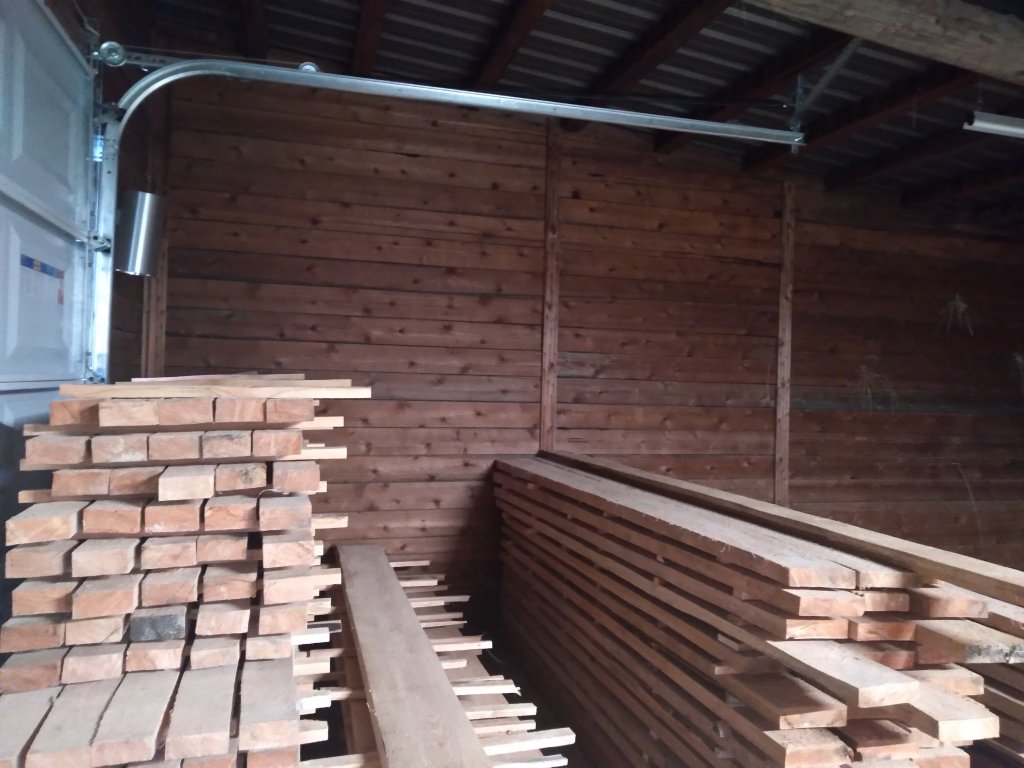
Rough Cut Lumber
Harvested as part of thinning to reduce fire danger.
$0.75 per board foot.
Call Mike (406-882-4835) or Sam (406-882-4597)
Popular Posts
Ask The Entomologist Bears Books Canada Census Community Decay Covid Covid-19 Data Deer Demography Education Elections Eureka Montana family Firearms Game Cameras Geese Government Guns History Inflation life Lincoln County Board of Health Lincoln County MT Lincoln Electric Cooperative Montana nature News Patches' Pieces Pest Control Politics Pond Recipe School School Board Snow Taxes travel Trego Trego Montana Trego School Weather Wildlife writing
 Trego's Mountain Ear