-
We’re still watching the latest hatch of geese – five goslings and two parents that haven’t gone into the flight training stage. Very different from the old gander, who brings his (second) mate north, and makes certain the nest site is clear and ready before the ice goes out and the island becomes the safest place to nest. He’s been mostly gone for over a month, taking his goslings and grand-goslings on flights to lakes and fields in the area. The last time he stopped by there were 43 geese landing. We expect an even larger entourage when he makes the final fall landing, impressing the concept of his home field on all of his followers.
Today, Saturday the 17th, the lone turkey hen showed up at lunch-time, accompanied by six day-old hatchlings. She had lost her original three hatchlings – although we have good habitat for little birds, that habitat is also good for predators. Probably the worst predator from the turkey perspective is the nest of ravens – but the coyote, the eagle, even the occasional feral cat all look for the smallest turkeys. Hopefully, she’ll be successful with this late lot.
We’re getting ready to put the sign on the driveway. We’ve had it a little less than 40 years, back when Renata won the gift certificate at some raffle, for Dave Clark to chainsaw carve a sign. It moved to Libby with us, then to SDSU and home when we retired. I’ve touched up the paint and varnish, and planned to use aluminum nails to put it on a tree next to the gate – under the theory that a sign that reads “Mike and Renata” essentially says the same thing as “Private Drive” but a whole lot more politely.
I got in the habit of using aluminum nails in trees when I surveyed for Cadastral – and getting my own mill has increased my bias against iron and steel in trees – my last encounter was in a blowdown alongside the old Fortine Creek Road where one of the insulators for the phone line between Ant Flat and the old dam had been placed. Nearly a century of growth had well concealed the iron after the insulator and line were gone, and naturally it was an almost new band I ran into it.
So I went shopping for long aluminum nails. Failed in Eureka. Failed in Kalispell. Got on the internet. Found them at a hardware store in Ohio. $9.00 gets me 10 5-inch aluminum nails delivered in about ten days. Hopefully we’ll have the project up by the first of September. As I approach 75, protecting the sign from the element seems increasingly less significant.
-
In the early seventies, a glance at GCA 68 showed how far the anti gun forces had moved legislatively in my college years. As percussion guns weren’t (and still aren’t) classified as firearms, I looked for a version of a revolving rifle to give me a repeater that I could carry if the gunbanners got even more legislation passed.
There was a carbine based on the Remington New Model Army revolver – an appealing little rifle, but limited by the capacity of the small cylinder. I still like the looks, but it seems a bit underpowered for deer. This photo is in the Midway Arms catalog, and they’re asking $609.99 for one today (and out of stock, to boot).

So, having rejected the Remington Replica, I opted for a variant of the Colt Third Model Dragoon. Colt had developed the Dragoon to replace the Walker, mostly because the Walker’s cylinders kept blowing up with 60 grains of black powder loaded. The Dragoon cylinders had held together for 40 grain loads through 3 variants. This photo, and description is taken from an ad at guns international:
“Armi San Marco produced this 1851 3rd Model Dragoon with an 18″ Barrel. It was marketed by both Navy Arms and EMF. It originally came with a steel hardware shoulder stock and holster. There were around 5000 produced. The production of the steel hardware shoulder stocks ceased in around 1974-75 The Dragoon stocks are very rare with either the brass or steel hardware. The last steel hardware STOCK sold was in April, 2013, for $1000. The Dragoon brass hardware stocks are in the $800+ range.”
Mine, with a 4200 range serial number supports this advertising story – it must have been one of the last made with a steel hardware stock. I will admit, I never figured that it would be worth $1,500. I bought it figuring it would be roughly equivalent to a model 1873 Winchester in 44-40. It definitely is far outclassed by the old 30-30. It has Express sights with 3 settings, but is probably, at best, a 50 yard hunting rifle. I’ve only used it on paper – and in the 50 years since I bought it, the gun banners have continued to lose in their attempts to ban handguns and rifles. It’s fun to shoot, and reasonably accurate.
-
Facebook would seem to indicate that everyone else is getting stung, bitten and otherwise mobbed by flying insects. Here’s the usual reminders:
‘Tis the Season for Wasps
With the weather warming and the insects coming out in force, it’s time to start thinking about wasps (and what to do about them)
Wasp control
I’d wanted to talk about how to read wasp body language this week, but that’ll be postponed. I couldn’t persuade any individuals to do threat displays this week – all live wasps were well-mannered, despite extreme invasion of their personal space. Most of the wasps I’ve seen around Trego are Polistes paper wasps. We have…
The time to start trapping wasps is now.
While winter isn’t quite done with us yet, we’ve had a good period of warmth recently. Wasps, as well as bears, are waking from their winter hibernation. I’ve seen a few queen paper wasps scouting for new nesting sites. With this in mind, if you want to control wasps in or around your property, the…
Wasps… they’re not always out to get us.
What says midsummer better than unexpected wasp nests? Buzzing uncomfortably overhead, nests full to bursting with developing young. Dreadful things, right? What would you say if I told you that aggressive wasps (think of your stereotypical Bald Faced Hornets) aren’t the only kind out there? Even within a single species, there are a wide variety…
Paper Wasp Body Language
If you know what signs to look for when you meet a wasp, it’s easy to avoid being stung. Have you ever been buzzed by a bee or a paper wasp? They dive bomb you, fly close to your face, even collide with you, but without stinging? Those were probably sentries for a nest, trying…
-
“Montana is an open range state” is a common response to folks complaining about cattle in places they’d rather cows were not. However, that simple statement is an oversimplification. Montana is not just an open range state.
Rather, our range laws stem from the need to address two separate issues. The first was addressing the needs of folks moving large herds of cattle across the plains. The second was addressing grain shortages made worse by damaged crops. Both issues can be solved by fencing, in one form or another, but how to find the balance?
In Montana, it’s a choice. We are not an open range state, not exactly. Rather, Montana is piecemeal, patches of open range nested among patches of “herd districts”.
In an open range district, cattle must be fenced out. In a herd district, cattle must be fenced in. What determines which an area is? Local choice. Specifically, landowner petition to the county commissioners. There’s a bit more detail to it- but go check Montana Code Annotated for the rest, and remember that sometimes the simple truisms aren’t quite true.
-
I was commenting on the school board that got Trego School built with the help of Senator Mansfield back in the mid-sixties when Libby Dam and the tunnel were coming. The board consisted of Dad, Yolanda Nordahl, and Earl Meier. The school clerk was Mrs. Ritter – and she didn’t type. Because I was taking the typing class in high school, their logical decision was to detail me to type every letter that went to the Senator.
I remember that Earl had a welder in 1960 – probably the only one in Trego. I’m not sure if he ever charged anyone for welding things back together – I know there was no charge for welding my bicycle back together when I was a kid – the weld may not have been beautiful, but it was hell for stout (that pronouncement came from Paul Nordahl).
A couple years later, I was typing the letters Earl wrote for the board to Senator Mansfield. They must have been convincing – Mansfield put the funding into some major piece of legislation, it passed, and the school was built. Earl got the duty of writing because he had the reputation of being the smartest man in Trego.
Thinking back, after so many years, I realize that Earl was something rarer than being bright. I’ve dealt with quite a few bright people over the years (and just getting a Ph.D. isn’t enough to prove you’re bright). Earl was probably the most logical, systematic thinker I have ever encountered. Bright is easy, and largely unearned – basically the right combination, essentially picking the right parents. Disciplined thinking is hard work.
Earl’s systematic, disciplined thinking was something that he had taught himself. As Trego moved into the construction boom town, the community was fortunate to have him working for its future.
-
by Lane Wendell Fischer, The Daily Yonder
July 26, 2024Editor’s Note: This interview first appeared in Path Finders, an email newsletter from the Daily Yonder. Each week, Path Finders features a Q&A with a rural thinker, creator, or doer. Like what you see here? You can join the mailing list at the bottom of this article and receive more conversations like this in your inbox each week.
Dr. Melissa Sadorf is a retired superintendent of the Stanfield Elementary School District in rural Arizona and author of the new book The Resilient Rural Leader: Rising to the Challenges of Rural Education.
In the book, Sadorf, who also serves as the executive director of the Arizona Rural Schools Association and president of the National Rural Education Association, draws on over three decades of dedicated service to rural education to address common misconceptions about rural school leaders, highlight their unique strengths, and discuss the multifaceted roles they play in their communities. She aims to inspire and equip rural educators and leaders to drive positive change and ensure the success of rural schools.
Enjoy our conversation about the importance of building strong support networks, advocating for rural education, and creating a supportive school culture to combat teacher and principal retention challenges.

Stanfield Elementary School in Stanfield, Arizona (pop. 457). (Photo credit: Susan Stropko) Lane Wendell Fischer, The Daily Yonder: Tell me a little bit about yourself. What led you to become a rural educator and superintendent?
Melissa Sadorf: I grew up in a rural community, so the values of close-knit relationships and community support are deeply ingrained in who I am. My journey in education spans over three decades, all of which I have dedicated to serving rural communities. I began my career as a classroom teacher in a rural school, where I quickly recognized both the unique challenges and the immense potential of rural schools. The strong sense of community, the deep connections with students and families, and the chance to make a significant impact motivated me to pursue leadership roles. Becoming a superintendent was a natural progression, enabling me to advocate more effectively for rural education and implement systemic changes to benefit both students and staff.
DY: What are the biggest misconceptions of rural school leaders? And what are their biggest strengths?
MS: One major misconception is that rural school leaders are less capable or less innovative due to limited resources. In reality, they are often incredibly creative and resourceful, finding ways to do more with less. Their biggest strengths include building strong, trusting relationships within their communities, having a deep understanding of local needs, and being able to adapt and multitask effectively. These qualities allow them to create a supportive and cohesive educational environment, driving progress despite challenges.

Photo courtesy of Dr. Melissa Sadorf. DY: The first chapter in your book suggests that rural educators and administrators serve as “high capacity” leaders who wear many hats. One rural superintendent, for example, might oversee managing the district, preparing the budget, serving and advising the school board, leading the community, and may even serve as a principal. What are the challenges and benefits of this rural reality?
MS: The challenges are significant. The workload can be overwhelming, leading to stress and potential burnout. However, there are also incredible benefits. Wearing many hats fosters a holistic understanding of the school and community, allowing leaders to make well-informed decisions. This deep involvement builds trust and collaboration with students, staff, and community members. Leaders in this setting become adept problem-solvers and innovative thinkers, qualities that are essential for driving their schools toward success.
DY: You identify school leaders as a key to expanding local access to broadband and combating food, healthcare, and housing insecurity. Why are district leaders so well-posed to tackle these issues and how can they find time to address these problems in the community on top of their already busy schedules?
MS: Rural leaders are often at the heart of their communities, with strong networks and a clear understanding of local needs. They can advocate for and coordinate efforts to address issues like broadband access and food insecurity because they see firsthand how these factors affect students’ ability to learn. To manage these responsibilities, it’s crucial to build strong teams, delegate tasks, and prioritize initiatives that will have the most significant impact. Partnering with local businesses, government agencies, and non-profits can also help mobilize resources and support, making it more feasible to tackle these challenges.
Finding time to address community issues amidst a demanding schedule requires strategic time management and prioritization. Leaders can set specific goals and timelines for initiatives, integrating them into broader strategic plans. Involving staff and community stakeholders to share the workload is essential; delegating tasks and empowering others ensures progress without overwhelming individuals. Leveraging technology, such as virtual meetings, can save time and increase efficiency by keeping projects on track without extensive travel. By prioritizing initiatives based on their potential impact, leaders can focus their efforts where they are most needed and effective.
DY: Teacher recruitment and retention is a perennial issue for many rural schools and has become a buzzword in the rural education sphere. Bottom line: what is the single most important thing school leaders should consider when combatting this issue?
MS: Creating a supportive and inclusive school culture is paramount because relationships are at the heart of rural communities. Teachers need to feel valued, supported, and part of a community. This involves offering professional development opportunities, recognizing and appreciating their contributions, and fostering a sense of belonging. When teachers feel connected to their community and supported in their professional growth, they are more likely to stay and contribute positively to the school environment. Additionally, highlighting the unique benefits of teaching in a rural setting, such as close-knit relationships and the opportunity to make a significant impact, can help attract and retain talented educators.
DY: A lesser-known problem you highlight in the book is a fractured principal-pipeline in many rural schools. Could you talk more about this side of recruitment and retention for those who might be unfamiliar?
MS: The principal-pipeline issue is critical because strong school leadership is essential for student success. In many rural areas, there are limited opportunities for aspiring leaders to gain the necessary experience and training to become effective principals. This can lead to a shortage of qualified candidates and high turnover rates. Addressing this requires investing in leadership development programs, creating mentorship opportunities, and providing aspiring leaders with hands-on experience in various aspects of school administration. By building a robust pipeline of well-prepared leaders, rural schools can ensure sustained leadership and continuity, which are vital for long-term success. For instance, mentorship programs that pair experienced leaders with new administrators can provide invaluable guidance and support, helping to cultivate the next generation of rural school leaders.
DY: Why is finding a support network so important for rural school leaders? What advice do you have for individuals searching for support?
MS: Leading a rural school can be isolating, and having a support network provides emotional support, professional advice, and a platform for sharing best practices. It helps leaders feel connected and less alone in their challenges. My advice for individuals searching for support is to actively participate in professional organizations, online forums, and local community groups. Building relationships with other educators, both locally and nationally, can provide invaluable support and resources. Additionally, engaging in ongoing professional development and attending conferences can help leaders stay informed and connected. I also recommend seeking out or establishing local networks where leaders can regularly meet to discuss challenges and share solutions, fostering a sense of camaraderie and collective strength. As any rural educator can tell you, we are stronger together!
One aspect I would like to emphasize is the importance of advocating for rural education at both the state and national levels. Rural schools face unique challenges that require tailored solutions, and it is crucial to have a voice in policy discussions. I encourage rural leaders to actively engage in advocacy efforts, share their stories, and collaborate with other stakeholders to ensure that rural education receives the attention and resources it deserves. Storytelling is a powerful tool to inspire and mobilize communities. By sharing the successes and innovations happening in rural schools, we can change the narrative and highlight the critical contributions of rural educators and leaders. It’s about fostering a broader understanding and appreciation of the vital role rural schools play in our society and ensuring they are well-equipped to continue making a positive impact.
This article first appeared on The Daily Yonder and is republished here under a Creative Commons license.

-
I don’t follow politics especially closely, and I’m seldom acquainted with the state level politics of anywhere far from home. So it was a bit of a surprise, when Mark Kelly came up as a possible VIP pick for Harris, that it wasn’t just a name I knew, but someone I had actually heard speak.
I’d say I don’t have anything against Mark Kelly, except that it wouldn’t be true. It would, however, be fair to say that it wasn’t precisely his fault. My university had taken to pulling in speakers from various places and advertising them. This was mostly uninteresting, right up until the signs said they were bringing in an astronaut.
This was around the time I’d discovered NASA had someone doing videos about daily life in space (how do you drink tea in space? Eat a sandwich? Use a toilet?). I was taking astronomy at the time, and I’d always thought space was cool, so, an astronaut? Several steps above the usual college speaker.
It was a very crowded auditorium. Everyone else had seen the signs about the astronaut too. So I went, hoping to at least hear stories about life in space. Mark Kelly was the half of a twin study that went to space, and NASA does some neat stuff.
It was, to be fair, not Mark Kelly’s fault that the university sold the attendees on “astronaut” when what he intended to deliver was “politician”. It was still the most disappointing college talk I attended.
I really didn’t have anything against the man personally, though I wasn’t thrilled with his stances on gun control, but I hadn’t come to hear about them. We had an astronaut on campus. He spent more time talking about gun control than outer space.
Most disappointing astronaut ever.
-
It looks pretty good for a 50-year-old percussion revolver. Dad bought me my first revolver – a 22 High Standard – but the 1858 Remington replica was the first handgun I bought for myself. I think the cost was $37.95 plus shipping – the top of the barrel reads Euroarms, Brescia, made in Italy. The left side reads 44 Cal New Model Army. 109,000 of the originals cost the Union Army $12 each.

This photo is of a Euroarms replica as it came from the factory – I replaced the front sight on mine with a taller sight, so that it would better match the bullet path at 25 yards. I figure the original front sight must have been set up for 100 yards.
Technically, mine is not an 1858 Remington, but is a New Model Army. There are slight evolutionary differences between the original Remington Beals, the Old Army and the New Model Army. My view at the time I bought it was that the New Model, with a second cylinder on hand, was the closest thing to a cartridge revolver for reloading speed. Fifty years has only confirmed that view.
The New Model can fire both roundball and conical bullets. The first mold I had didn’t produce the quality of conical bullets that gave good accuracy, so I stuck mostly with roundball. If I were to make the old revolver a main carry gun now, I’d get one of Lee’s new roundball loads and use only conicals. It is a rather progressive percussion revolver.
Power? My calculations a half-century ago were that it was about the same as a 38 special. I don’t see a need to get more specific than that. It was fifty years ago – the Gun Control Act of 1968 was recent history, and I really did expect a ban on short guns would come soon. I wanted an alternative, and my chemistry background was enough that I could, if necessary, make black powder and percussion caps at home. I’ve never needed to, and today’s Supreme Court makes those outright gun bans unlikely in my lifetime.
Changing to a second cylinder is easy – drop the loading lever, pull the cylinder pin, remove the empty cylinder and push the fresh one in from the right. Put the pin back, lift the loading lever back up, and you’re good to go. Go ahead and fill all six cylinders – part of the New Model’s appeal is a series of cuts between the cylinders where you can set the hammer down safely, not resting on a percussion cap – it was Remington, not Colt, that put the six in six-shooter.
Today, the same design is available online with adjustable sights – the revolver costs about ten times what I paid for mine, and the spare cylinder is about $60. Percussion caps are up, too – about $40 for a tin of 100. Throw in another $50 for a great conical mold, and you’re rolling for about $550. But there’s more – once you have your New Model in hand, if you get a Pietta or Uberti replica, you can get another cylinder that takes 45 colt cartridges – all available through mail order. I’m fairly sure they wouldn’t fit my older version.
I’m not sure that cartridges offer that much improvement in reliability. Someone developed a simple short synthetic sleeve that stretches over the percussion caps – holding them in place where recoil once knocked them off, and removing the possibility of cap fragments jamming the action. I suspect Josey Wales would have approved the improved reliability.
I must like the New Model Army – it’s been with me over half a century and never been traded off.
-
No one whom I have read sums up the libertarian stance half so well as the late L. Neil Smith. In his career as a science-fiction author and a libertarian activist, he wrote many comments that applied libertarian philosophy to specific instances. For example:
“We’re all a bunch of badminton birdies who just got batted from the Republican side of the court to the Democrat side. We’ll eventually get batted back again, of course, unless libertarians can manage to do something about it. If your principal concern, like mine, is freedom, there’s absolutely no discernable difference between the two ‘majors,’ and for all practical purposes, they’re one big party – the Boot On Your Neck party – pretending to be two.
Never Forget, even for an instant, that the one and only reason anybody has for taking your gun away is to make you weaker than he is, so he can do something to you that you wouldn’t allow him to do if you were equipped to prevent it. This goes for burglars, muggers, and rapists, and even more so for policemen, bureaucrats, and politicians.
The first and most important thing to understand about politics is this: forget Right, Left, Center, socialism, fascism, or democracy. Every government that exists – or ever existed, or ever will exist – is a kleptocracy, meaning “rule by thieves.” Competing ideologies merely provide different excuses to separate the Productive Class from what they produce.
We’re most likely to lose our rights when we allow ourselves to be persuaded to deprive others of theirs.
We are expected to believe that anyone who objects to the Department of Homeland Security or the USA Patriot Act is a terrorist, and that the only way to preserve our freedom is to hand it over to the government for safekeeping.
The Bill of Rights isn’t about us, it’s about them . It isn’t a list of things we’re permitted to do, it’s a list of things they aren’t allowed even to consider.
Taxes are a barbaric remnant of ancient times in which early farmers, tied to the land, no longer able to roam freely, unable to fight back with awkward agricultural tools the way they once could with hunting implements, became victims, first, of itinerant plunderers, then of bandits settling down beside them to become the governments we know today.
Reread that pesky first clause of the Second Amendment. It doesn’t say what any of us thought it said. What it says is that infringing the right of the people to keep and bear arms is treason. What else do you call an act that endangers “the security of a free state”? And if it’s treason,then it’s punishable by death. I suggest due process, speedy trials, and public hangings.
Government can only do two things: It can beat people up and kill them. Or it can threaten to do so. When it seems to be doing something else – for example, handing out money or, say, surplus cheese – what’s actually going on is that something has been taken away from one set of individuals by deadly force or the threat of deadly force, a hefty middleman’s fee deducted, and whatever is left thrown to peasants delighted to receive stolen goods.
Those who sell their liberty for security are understandable, if pitiable, creatures. Those who sell the liberty of others for wealth, power, or even a moment’s respite deserve only the end of a rope.
You cannot force me to agree with you. You can force me to act as though I agree with you but then you’ll have to watch your back. All the time.
No one’s ever been able to show me any difference between democracy and brute force. It’s just a majority ganging up on a minority with the minority giving in to avoid getting massacred.
Know when to give up a lost cause. Anyone who needs to be persuaded to be free, doesn’t deserve to be.
People in the mass media tend more and more every day to look and act like elected and appointed officials.
Socialism is, among other things, the political habitat of low self-esteem, incompetence, self-loathing, and a willingness to steal – or have stolen for you what you are unable or unwilling to work for. Socialism is a philosophy fit only for slugs, leeches, and mosquitoes.
Few things are more laughably pitiable than authority once it has been successfully defied.
America didn’t have a drug problem before it passed drug laws. While drugs were consumed by large numbers of people — the number of women habituated to the opium found in laudanum was, no pun intended, staggering — they were, for the most part, easily able to live their lives, do their jobs, and raise their families pretty much the way we do today.
Choose your allies carefully: it’s highly unlikely that you’ll ever be held morally, legally, or historically accountable for the actions of your enemies.
Any politico who’s afraid of his constituents being armed, should be. Leaders of the anti-gun movement (for the most part, politicians who enthusiastically advocate confiscatory taxation and government control of everything) realize that a populace is much easier to herd, loot and dispose of if it has been stripped of its weapons. The naked fraud and transparent fascism of victim disarmament must be eradicated through the repeal of all gun laws at every level of government.
Elections amount to little more than choosing between the scum that floats to the top of the barrel and the dregs that settle to the bottom.
A libertarian is a person who believes that no one has the right, under any circumstances, to initiate force against another human being for any reason whatsoever; nor will a libertarian advocate the initiation of force, or delegate it to anyone else. Those who act consistently with this principle are libertarians, whether they realize it or not. Those who fail to act consistently with it are not libertarians, regardless of what they may claim.
What I want to accomplish artistically amounts to nothing more than fulfilling the promise of the American Revolution.
Most libertarians agree that all rights are, in effect, property rights, beginning with this fundamental right to self-ownership and control of one’s own life. As owners of their own lives, individuals are completely free to do absolutely anything they wish with them provided, of course, that it doesn’t violate the identical right of others whether the people around them approve of what they do or not.
Economists tell us that the ‘price’ of an object and its ‘value’ have very little or nothing to do with one another. ‘Value’ is entirely subjective economic value, anyway while ‘price’ reflects whatever a buyer is willing to give up to get the object in question, and whatever the seller is willing to accept to give it up. Both are governed by the Law of Marginal Utility, which is actually a law of psychology, rather than economics. For government to attempt to dictate a ‘fair price’ betrays complete misunderstanding of the entire process.
A libertarian presidential candidate isn’t going to win anyway, so he can afford to say that all taxation is theft, and it isn’t the job of a libertarian presidential candidate to cook up new ways to commit theft.”
-
by Claire Carlson, The Daily Yonder
July 31, 2024Editor’s Note: This article was originally published in Keep It Rural, an email newsletter from the Daily Yonder. Like what you see? Join the mailing list for more rural news, thoughts, and analysis in your inbox each week.
A common complaint among my friends is that there are too many people who like to do the same outdoor activities that we do, and the places we visit are crowded.
This is true, in a way. Oregon, where I live, often feels like it’s crawling with Subaru-driving, mountain bike-toting, dusty modern-day hippies in Chacos (or nowadays, Bedrock sandals), who all flock to the same places: central Oregon’s Smith Rock State Park for rock climbing, the Columbia River Gorge for trail runs to breathtaking waterfalls, or the coast to park their second cars (a live-in van) at ocean view campsites for the weekend. Reservations for these places are filled months in advance and you can forget about parking if you arrive anywhere later than 8 a.m.
I experienced a new level of these crowds in Montana’s Glacier National Park last weekend. I spent four days on the west side of the park camped at the mouth of Going-to-the-Sun Road, and even that proximity wasn’t enough to beat the traffic that forms early in the morning at iconic locations like Avalanche Lake and Logan Pass.
This was the second time I’d visited the park but the first time I was there when the entirety of Going-to-the-Sun Road was open (snow keeps parts of it closed until late June most years), and I wasn’t the only one who wanted to see all that it had to offer.
On our first full day we drove toward Logan Pass, one of the most crowded places in the park, thinking there’d be parking spots open mid-afternoon. Instead, the pullouts a mile below Logan Pass were filled and the lot itself was completely packed. Cars idled in lanes waiting for parked cars to leave, and we quickly exited once we realized the stress of fighting for parking was not worth our sanity.

Logan Pass, Glacier National Park. (Photo by Claire Carlson) The National Park Service has implemented a vehicle permitting system for the west side of Going-to-the-Sun Road from 6 a.m.-3 p.m., May 24 through September 8, to abate some of the traffic. But, this means you either purchase a permit six months in advance or log into recreation.gov at 7 p.m. the night before to purchase the thousand-some tickets they keep available for last minute reservations, $2 per permit. This only works if you have data or an internet connection to get on the website, and once you’re there, you have to refresh several times because of “heavy user traffic” before you can get one of the permits.
Yosemite, Rocky Mountain, and Zion national parks are just a few others that also permit sections of roads to mitigate the hell that is driving through a popular national park in the middle of summer. Even Multnomah Falls in the Columbia River Gorge – not a national park but a national scenic area – requires timed use permits in the summer because of visitor volume.
You can take a shuttle in these areas, but the problem I discovered was convincing my travel companions to use them. These shuttles can be crowded and run late – no excuse not to use them, but I understand why people like their own vehicles.
It’s an objectively good thing that people want to spend time outside: one 2021 study showed time spent in nature leads to “increased perceived value for connectedness to nature and, subsequently, greater pro-environmental attitudes and behaviors.”
To speak anecdotally, the time in my own life that I’ve spent outdoors absolutely influenced my concern for the environment and desire to protect it. The majority of my oh shit, this is why I’m alive moments have happened outside, staring at a gurgling spring or spotting the Milky Way on a dark, clear night. Even the less obviously awesome moments – the time in a city park I watched a crow protect its nest by swooping at the head of every pedestrian who dared walk by, or the sunflowers I spotted in an otherwise barren alleyway – have been reminders of my love of the outdoors. The wonders of national parks take this awe a step further.
The “grandeur of the American West” is what inspired artists and scientists to urge Congress to create a national park system to preserve these glorious places, according to National Park Service archives. The artist George Catlin, who is most famous for his portraits of Native Americans, was one of the first people to suggest the idea. In 1872, the first national park – Yellowstone – was established.
Since then, a total of 63 national parks have been designated, and with them has come lots of visitation.
In 2023, the National Park Service reported 325.5 million recreation visits, a 4% increase from 2022. Of those millions of visits, 28% were to national parks. This makes sense – national parks have name recognition, and they’re stunning. Of course people want to visit them.
As Ojibwe author David Treuer wrote for The Atlantic in 2021, “parks, as they’ve existed for 149 years, have done a decent job of preserving the past. But it’s not clear that today’s model of care and custodianship best meets the needs of the land, Native people, or the general public. Nor is it clear that the current system will adequately ensure the parks’ future.”
The problem I’ve experienced in national parks is that while there are a lot of people, it’s the number of cars idling on narrow roads and the treatment of these places as items on a bucket list that make the whole experience feel icky and extractive. Treuer argues that giving national park land back to tribes would improve their management, while still guaranteeing access to all who want to visit. I’m not sure how this would fix the traffic problem, but maybe it’s a start.
Another possibility is encouraging dispersion. Glacier National Park is massive, consisting of about one million mostly roadless acres. We hiked to Otokomi Lake on the east side of the park and saw probably 20 people total during the 10-mile hike. Even though it wasn’t as popular, it was still beautiful: the trail followed Rose Creek across rocky mountain sides and wildflower-filled meadows. The trick to beat the crowds that day, it seemed, was to just keep walking.

A mountain goat walks on Hidden Lake trail, Glacier National Park. (Photo by Claire Carlson) Finding the places that are off the beaten path (and this might mean getting comfortable with an honest-to-god physical map) could be the solution for some. But I know that not everyone can hike 10 miles to find less people.
And, visiting a park’s most popular places is often worth it: early Sunday morning, we woke up at 5:15 a.m. to make it to Logan Pass by 6 a.m., and it was one of the most spectacular places I’ve ever visited. A mountain goat with half its winter coat still hanging on walked no more than 15 feet away, gazing at us with what felt like all the knowledge in the universe inside its brown eyes.
I don’t think there’s such a thing as too many people because in the outdoors, it’s pretty easy to spread out. But I do think there’s such a thing as overcrowding in one particular place, and our cars make it really easy to do this. Parts of national parks have become overcrowded. Maybe we need to remember that those aren’t the only beautiful places to visit.
Just a few days before visiting Glacier, I was in Missoula, Montana, where I used to live. The best part of this town is its proximity to the outdoors, a reality that anyone who’s lived in a small city or town probably knows well.
One night after work, I drove just 15 minutes to a fairly popular hiking spot in Rattlesnake National Recreation Area. I walked about one mile before reaching a small beach where the creek’s water was clearer than I’ve ever seen it and swallows darted into nests built into a rocky overhang. This was the perfect place to be, and no one was there.
This article first appeared on The Daily Yonder and is republished here under a Creative Commons license.




Want to tell us something or ask a question? Get in touch.

Recent Posts
- You Have To Beat Darwin Every Day
- Computer Repair by Mussolini
- Getting Alberta Oil to Market
- Parties On Economics
- Thus Spake Zarathustra – One More Time
- Suspenders
- You Haven’t Met All The People . . .
- Play Stupid Games, Win Stupid Prizes
- The Ballad of Lenin’s Tomb
- An Encounter With a Lawnmower Thief
- County Property Taxes
- A Big Loss in 2025
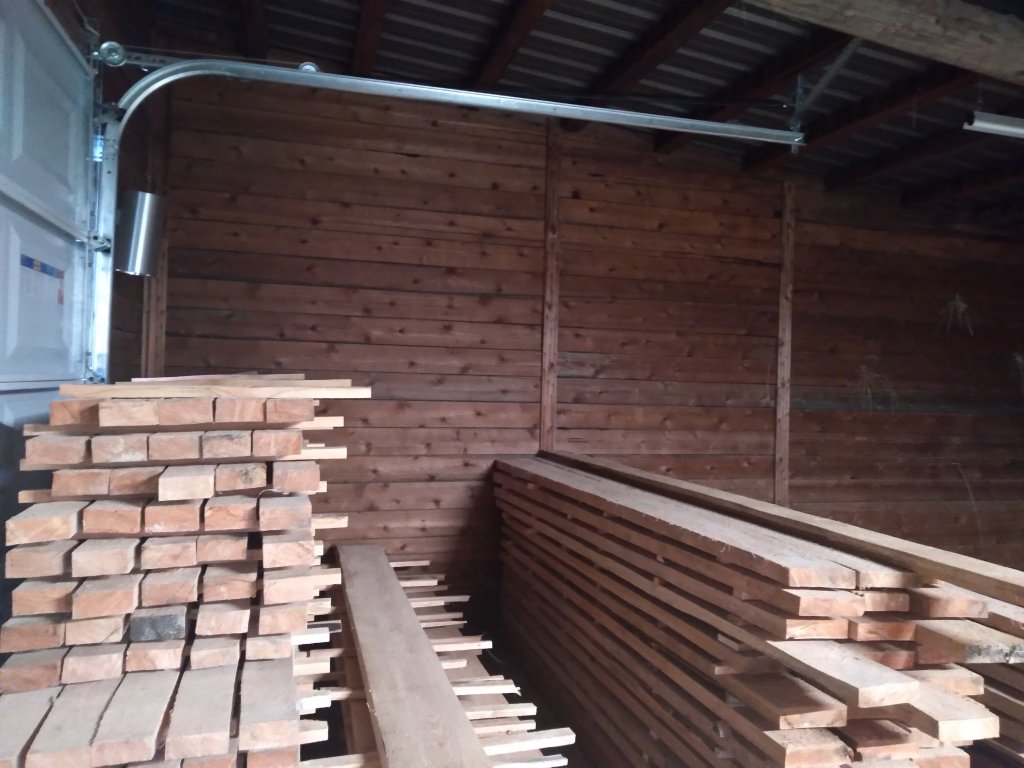
Rough Cut Lumber
Harvested as part of thinning to reduce fire danger.
$0.75 per board foot.
Call Mike (406-882-4835) or Sam (406-882-4597)
Popular Posts
Ask The Entomologist Bears Books Canada Census Community Decay Covid Covid-19 Data Deer Demography Education Elections Eureka Montana family Firearms Game Cameras Geese Government Guns History Inflation life Lincoln County Board of Health Lincoln County MT Lincoln Electric Cooperative Montana nature News Patches' Pieces Pest Control Politics Pond Recipe School School Board Snow Taxes travel Trego Trego Montana Trego School Weather Wildlife writing
 Trego's Mountain Ear