-
With sub-irrigated grass, the haying comes a little later for me. It’s been good this year . . . any year when you don’t encounter a fawn with a mower is a good year, and my drum mower is a bit safer for them than the old sickle bar mowers. This year I have one doe with twins and one with a single fawn to watch. On the hot days, the fawns head to the pond for a drink, at times best described as not of their mothers choosing.
As I raked, I watched Gander return with his flock – they’re still ragged on formation landings, but this time I realized he’s showing them how to lose altitude with a barrel roll on the approach. These years of watching him train and condition his goslings for the Fall migration have been educational for me.
As he came in with his mate, the bald eagle was in the tree, looking for a goose to pick off. Apparently he also recognizes Gander. I’m not sure how it is that the Gander doesn’t give off victim vibes – but the eagle watched the geese land, then flew away. Last year Gander and Goose II adopted 2 goslings whose parents had been killed by the eagle – but 3 goslings turned down the offer with a “You’re not my Mom” attitude. The amount of effort that goes into training and conditioning the goslings for the Fall migration flights is impressive to watch.
As I’m picking back up on this on Sunday, I notice that the youngest 2 batches of goslings and their parents are gone – now it’s just a question of finding out if they’ve joined the old gander for his flight training or if the parental geese are planning to home-school them before the migration.
The hay is all baled and put away. I guess it’s time to get back to work with the sawmill. There’s a bit of work tied in with retirement.
-
This weekend, Morgen Reynolds returned to Eureka to give a workshop on how to tell stories, which was held Saturday at the Episcopal Church. Sunday, she demonstrated the art at Timber’s Event Center, with a marvelously woven tale.
One of the storytelling techniques demonstrated involved weaving multiple stories together. With an hour long performance that left attendees stunned that it was already over, Mo Reynolds masterfully wove stories of her own journey to Eureka, her time growing up, raising a family, and finding a home, with an intricate and subtle retelling of Homer’s Odyssey.
As the audience trickled out, one had the sense that they could have sat spellbound for hours longer.
-
This Saturday, the Trego Pub hosted the 4th Annual Accordion Festival. As with previous years, it was hot. It was a sunny day with temperatures that swiftly rose beyond the cool of the morning. Tents provided shade, and several local vendors were present, as well as local bands.
Despite the heat, the accordion festival was well attended, with full parking lot and crowds.
-
by Will Wright, The Daily Yonder
July 22, 2024What are the best ways to nurture rural communities? How do perceptions of rural places affect the people who live there? What are the best ways to tell rural stories?
The Rural Assembly will explore these questions and more at Rural Assembly Everywhere on Thursday, August 1, from 1-3 p.m. EST. The virtual gathering will bring together a diverse range of panelists and participants from across the country — all focused on uplifting and understanding rural America.
Registration is now open to all: rural advocates, community leaders, journalists, artists and “everyone, everywhere,” according to the event organizers. Previous online gatherings of the Rural Assembly brought together hundreds of rural leaders, residents and advocates since its first gathering in 2020.
The Rural Assembly is part of the nonprofit Center for Rural Strategies, which also publishes the Daily Yonder.
The program kicks off with a discussion about what it takes to nurture thriving rural communities, hosted by Lead for America Co-founder Benya Kraus and Wahpetunwan Dakota artist, writer, and midwife Autumn Cavender.
That’s followed by a Democracy Panel, led by Center for Rural Strategies President Dee Davis and political scientists and authors Kathy Cramer and Hahrie Han. They’ll focus on the state of American democracy, the press, economics, and rural perceptions ahead of the November election.
“We’re thrilled to continue offering our annual event, Rural Assembly Everywhere, virtually so that we can join together live with our rural friends and neighbors from all around the country,” said Taneum Fotheringill, Rural Assembly’s director of programs and partnerships. “Over the past several years, Everywhere has been a platform to celebrate important work and imagine what’s possible in our communities.”
The program wraps up with a panel of four arts administrators who will discuss agency in storytelling and community voice. They are:
- Francisco Guajardo, chief executive officer of the Museum of South Texas History in Edinburg, Texas.
- Madeline Matson, executive director of the Columbia Pacific Heritage Museum in Ilwaco, Washington.
- Gwendolyn Trice, founder and executive director of the Maxville Heritage Interpretive Center (MHIC), a museum located in Joseph, Oregon.
- And Stephen Gong, executive director of the Center for Asian American Media.
“I look forward to Everywhere because from our evaluation we know that it generates a greater sense of possibility about what communities can do and that people feel a greater sense of belonging and connection both inside and outside of where they live,” Fotheringill said. “These are the antidotes we need in a time when we can so often feel discouraged and isolated.”
Since its inception in 2007, the Rural Assembly has brought together voices from across the country, including government officials, grassroots organizers, funders, and nonprofit and business leaders. It aims to amplify and empower rural people by sharing stories and challenging stereotypes.
This year, participants can also register for post-Everywhere workshops that will bring together the Rural Assembly and its partners and friends.
- Rural Urban Divide Training, August 6 from 2-3 p.m. EST: Hosted by the Rural Urban Bridge Initiative, this training focuses on the origins of the urban-rural divide, and teaches participants how to navigate and lessen the divide; where to find mutual understanding and common ground; and how to build solidarity across cultural and geographical backgrounds. Register
- Beyond the Clock Virtual Happy Hour, August 7 from 2-3 p.m. EST: Bring a beverage and dive deeper into the stories and lessons from Everywhere at this special edition of Beyond the Clock, co-hosted by the Department of Public Transformation and Voices for Rural Resilience. Register
- Story Circle on Nurturing Thriving Communities, August 8 from 2-4 p.m. EST: Join facilitator Ben Fink and your neighbors from around the country to share a story from your community and hear from others about what it takes to nurture our communities and why we should. This event has limited space, so register early before the circle fills up. Register
This article first appeared on The Daily Yonder and is republished here under a Creative Commons license.

-
Within our culture, each of us has something that offends us. It can be – it usually is – something, usually a freedom of behavior, that we want to take away from everyone. Less than five hundred years back, King James commissioned the English translation of the bible. He had a vested interest in the belief that kings ruled through divine right. My preference is to take away King James’ divine right, and that of King Charles, too.
There are people out there – otherwise rational people – who want to remove our right to keep and bear arms. Personally, I don’t understand them – but that’s besides the point. We disagree politically because they don’t see why removing the right to keep and bear arms is unacceptable to me and mine. The divine right of kings was important to King James – I suspect that it is considerably less important to the un-beheaded King Charles, and I know that losing it doesn’t bother me a bit.
The concept of private property is another spot for political disagreement. Whether Soviet or Hutterite, we have some folks who have a different belief about how desirable private property is. Since I kind of like having my own digs, my own car, my own revolver and so on, I’m likely to vote against people who want to take those from me. And they believe I can live as happily in a rental, disarmed and riding the bus. They don’t comprehend that the thought of a communally owned pocket knife terrifies me.
I’m pretty sure elections began as a substitute for combat. If I realize that 82% of the population are quite comfortable with taking whisky away from me, I’m not likely to go to war to keep my bourbon. It’s not worth going into a fight when I’m outnumbered four to one. (Other folks may calculate differently – but elections, where we have a real choice, do offer an alternative to fighting)
The folks on the right want to take away a different parcel of rights than the folks on the left – but both want to take something away from us. You have to go back to Abraham Lincoln, in August of 1861, to find a law authorizing the income tax. For four score years, it wasn’t necessary. In 1895, the Supreme Court ruled the income tax unconstitutional . . . so Congress passed the sixteenth amendment: “The Congress shall have the power to lay and collect taxes on incomes, from whatever source derived, without apportionment among the several States, and without regard to any census or enumeration.”
Interestingly enough, the progressives proposed it, the conservatives brought the amendment forward thinking it would never pass, and it did.
When we look at elections like 1964, where Goldwater received only 38.5% of the vote, or 1984, where Mondale got just 40.6%, the elections were decisive. In 2016, Trump won the election with 46.1% of the vote. When the winner doesn’t reach 50%, it’s easy to figure the election isn’t quite legitimate.
Of course, old King James didn’t have that problem – as a monarch by divine right, he had the only vote that mattered. But to those of us blessed with democracy, we get to choose which infringements we’re willing to accept – and some combination plates aren’t available. It’s hard to find a politician who supports abortion on demand and free access to automatic weapons.
If we were willing to protect the rights and properties our neighbors find valid, we would have a lot less political hostility.
-
I don’t tend to buy into conspiracy theories – generally, I view government as populated by well-meaning people who aren’t all that bright. I think it was George Carlin who advised, “Never underestimate the power of stupid people in large groups.” In general, stupidity is an adequate explanation. When it becomes inadequate, adding in a touch of venality or greed usually rounds the explanation out to my satisfaction. I don’t often need to include evil to find adequate explanation (though the KKK and the Nazis tend to shift my views to include evil).
I was looking at an article about car theft in Canada – the figures I remember were that just under 2,000 cars were stolen and just under 200 were recovered – a recovery rate of somewhere on the close order of one percent. The article described how new, high-end vehicles are stolen in Ontario, put into shipping containers, and shipped to new owners overseas. Seems to me that you don’t need to have the police on the payroll in this operation – you just need to have police who don’t check shipping containers being exported. I guess we can also add laziness and government rules as causes of explanation.
I think back a half-century ago, and I was sitting in a bar, drinking a beer, and an M-80 bounced off the wall behind me, bounced along my table, and exploded near me. I had missed the “three stupids rule” -Don’t go to stupid places with stupid people and do stupid things. So I wound up with the bouncer chewing me out for the explosion – it was a lot easier for him to spot the guy alongside the explosion than find the jerk who lit the firecracker and tossed it. That I could understand – but it still puzzles me that he got angry when I politely suggested that the two of us should try to find the jerk who threw the firecracker, and that it was dumb to yell at the victim just because he (the bouncer) wasn’t capable of finding the perp.
It’s why we have some problems with our legal system – since it’s hard to ferret out the guilty, it’s easier to pass laws that punish the much handier innocent – the guy who is sipping a beer, minding his own business, when someone blows up an m-80 alongside him.
In Relentless v Department of Commerce and Loper Bright Enterprises v Raimondo, the Supreme Court overruled the old Chevron Case – limiting regulatory agencies from writing rules that made the people in the fishing industry criminals if they didn’t fund a ride-along inspector to the tune of $700 per day – be kind of like a town making me pay for a police officer to ride with me as I drove through, ticketing me if I was dumb enough to speed with a cop in the passenger seat.
I’m pleased with the ruling – the problem is that the agencies want to catch the bad guys, but choose to write rules that turn the innocent into criminals. We watched the same thing with bump stocks – personally, all a bump stock would do for me is make an otherwise accurate rifle inaccurate. Still, the Supremes did the right thing, because a loose fitting stock doesn’t turn a semi-automatic rifle into a machine gun. But it’s a lot easier to catch Bubba with a bump stock than a guy who is building actual machine guns.
It might not mean as much if I hadn’t had that damn dumb bouncer chewing on me for a firecracker someone else had tossed out in the bar. Still, as I look back on it, I went to a stupid place with stupid people – and shouldn’t have expected a rational conversation.
-
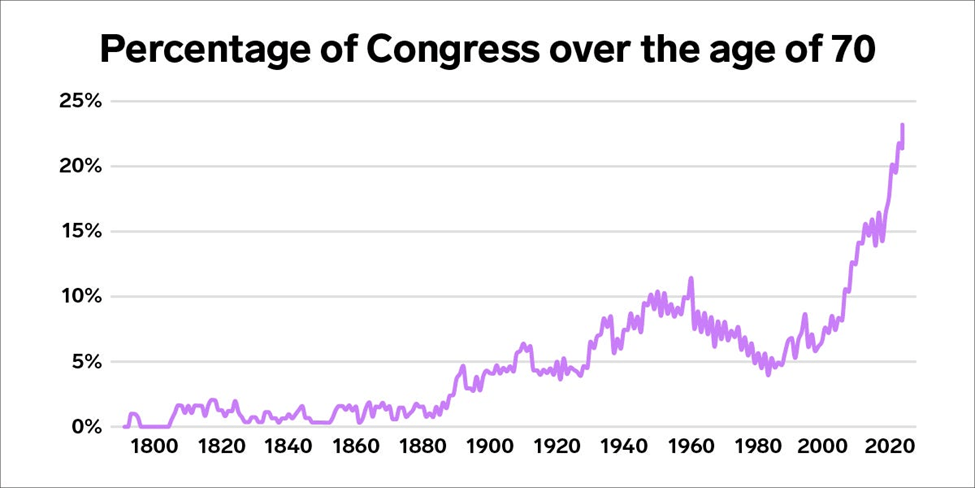
Spotted this one on instapundit: Too old, entirely too old.


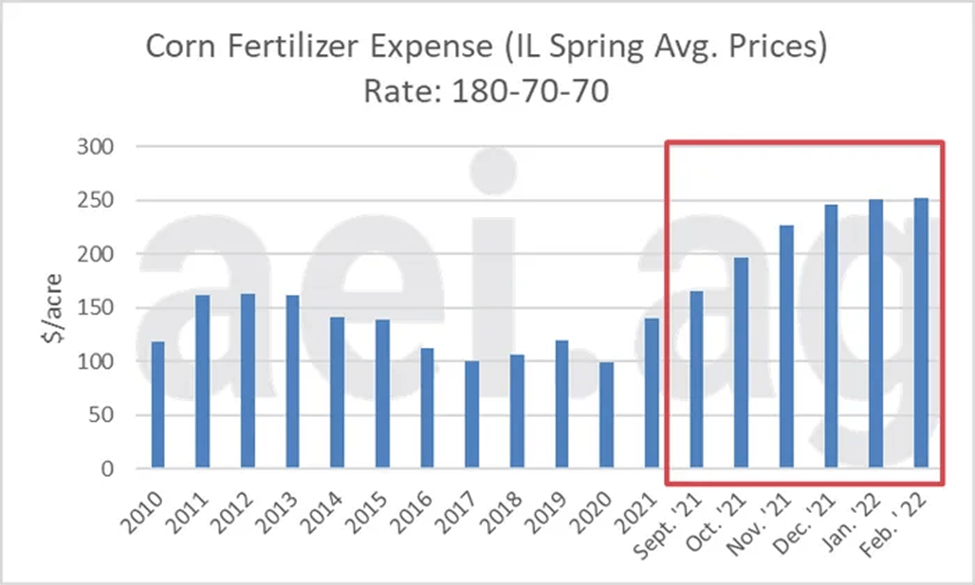
“Peruvian guano has become so desirable an article to the agricultural interest of the United States that it is the duty of the Government to employ all the means properly in its power for the purpose of causing that article to be imported into the country at a reasonable price. Nothing will be omitted on my part to accomplishing this desirable end.” — President Millard Fillmore in his Dec. 2, 1850, State of the Union Address, promising to bring down the market price of bird poop.

-
Things to know:
Changes to the bylaws: anyone over 18 living, or having property, in the TFS fire district is a voting member. This is a slight change from the nominal membership fee.
The Land Grant: It wasn’t a vote on settling the easement, per say, so much as it was a vote to entertain the offer. There were a lot of concerns about what allowing the easement might bring into our community: subdivision.
Meeting minutes can be found on the Hall’s website.
The next meeting will be Tuesday, August 13th. In the meantime, the conclusion seems to be that more research is needed. Does the hall really have the power to impact the size of the subdivision?
-
I was only 18 when the Convulsion happened. The Dems were in charge of every branch of government, yet Lyndon Johnson decided against running for reelection. So the Dems went into their convention much like today – with an incumbent President who couldn’t win . . . and he was facing Richard Nixon.
President Johnson was facing chants of “Hey, hey, LBJ, how many kids did you kill today” whenever he stepped outside . . . that may be an exaggeration. I’m sure he wouldn’t have heard that at the military academies. Anywhere else, though, the old bastard was fair game. He had ran for reelection in 64 stressing that his opponent, Barry Goldwater, was a warmonger who would start a nuclear war. By 1968, public opinion was that he was personally responsible for all the problems connected with Viet Nam.
I got this far in writing when Donald Trump was shot. Thinking about 1968 – it was June 6 when Bobby Kennedy was shot that year. I had just come home from my Freshman year at MSU. Martin Luther King was assassinated that April. I thought the 1968 Chicago Democratic Convention had similarities with what we’ll be seeing in 2024 . . . but as I write, I realize that Sam and Jed, at age 30, aren’t so familiar with political violence as I was at 18.
As a nation, we made it through until 1865 before a Democrat actor brought presidential assassination into our political process. Then President Garfield, President McKinley, and Teddy Roosevelt was shot while campaigning – but finished his speech before going to the hospital. I was in Freshman English when Mr. Lehman came back into the classroom with the announcement that President Kennedy had been shot.
So I have a nodding acquaintance with political violence. The 1968 Chicago Convulsion wasn’t just something on the news – a college friend returned for Fall quarter with stories about being a 19-year-old delegate and being tear-gassed by Chicago’s finest. To be fair, there were a lot of young protesters. On the other hand, a kid from Townsend in his first suit really didn’t look like a hippy protester.
None of our candidates for President were popular – I recall the comment: “Nixon, Humphrey, Wallace – Three Strikes and You’re Out.” Damn. I forgot the shooting of George Wallace. It was in the 1972 campaign when he was shot five times and paralyzed from the waist down. Didn’t particularly like George Wallace – but assassination isn’t the answer to political differences. Ronald Reagan – shot with a 22 by a nut who was trying to make points with an actress. That was 1981.
Heavens – I forgot Gerald Ford. Our unelected President had two assassination attempts – Squeaky Fromme and Sarah Jane Moore – during the two years and a smidgeon he served as President. As I think back, President Andy Jackson was probably the first to encounter an assassination attempt – it failed when both of the would-be assassin’s pistols failed to fire. Rainy day and flintlocks.
Few will remember the 1968 Chicago Democratic Convention. I liked the Sixties – probably all of us enjoyed the time when we went from high school to young adult – but I really didn’t remember how contentious the times were between my high school freshman year and the attempted assassination of Ronald Reagan.
-
It seems fairly obvious that if Joe Biden doesn’t have it together enough to continue his run for reelection he doesn’t have it together enough to continue as President. This is fairly easy for me to accept, since I’ve thought that since Dukakis ran against Bush I. It’s also easy for me to accept that, if Biden is incompetent, the lawful alternative is his vice-president, Kamala Harris.
Still, there are Dems who don’t like Kamala and want an end run to get someone else in office. And I remember when the votes of 17 Democrat senators kept Al Gore from the presidency. It wasn’t the hanging chads in Florida – it was the Clinton impeachment.
There were two charges against Bill Clinton – lying under oath and obstruction of justice. Since Clinton paid Paula Jones $850,000 – though he didn’t admit guilt – it seems likely that if the impeachment vote hadn’t been along party lines, well, I suspect that at least a third of the Dem Senators might have also been convinced that Bill was guilty . . . but they didn’t vote that way, and Al Gore went on to become a climate change huckster instead of a president.
Now, we’re looking at a President with dementia for the second time (first was Ronald Reagan’s second term). The obvious solution is to let Biden out and slide the vice-president in for the remainder of his term. That solution seems unsatisfactory because most of the Dem kingmakers don’t particularly like Kamala Harris – but the law on presidential succession and the 25th amendment seem fairly easy to understand (Fair warning – I am not an attorney nor have I ever played such a role on TV . . . or even in an amateur melodrama). Still, when I think of how different the world might have been had 17 Democrat Senators voted to convict Clinton and put Al Gore in the White House, I’m thinking it might be a good idea to just follow the rules. The bonus would be that we would have a woman president in my lifetime.
Want to tell us something or ask a question? Get in touch.

Recent Posts
- You Have To Beat Darwin Every Day
- Computer Repair by Mussolini
- Getting Alberta Oil to Market
- Parties On Economics
- Thus Spake Zarathustra – One More Time
- Suspenders
- You Haven’t Met All The People . . .
- Play Stupid Games, Win Stupid Prizes
- The Ballad of Lenin’s Tomb
- An Encounter With a Lawnmower Thief
- County Property Taxes
- A Big Loss in 2025
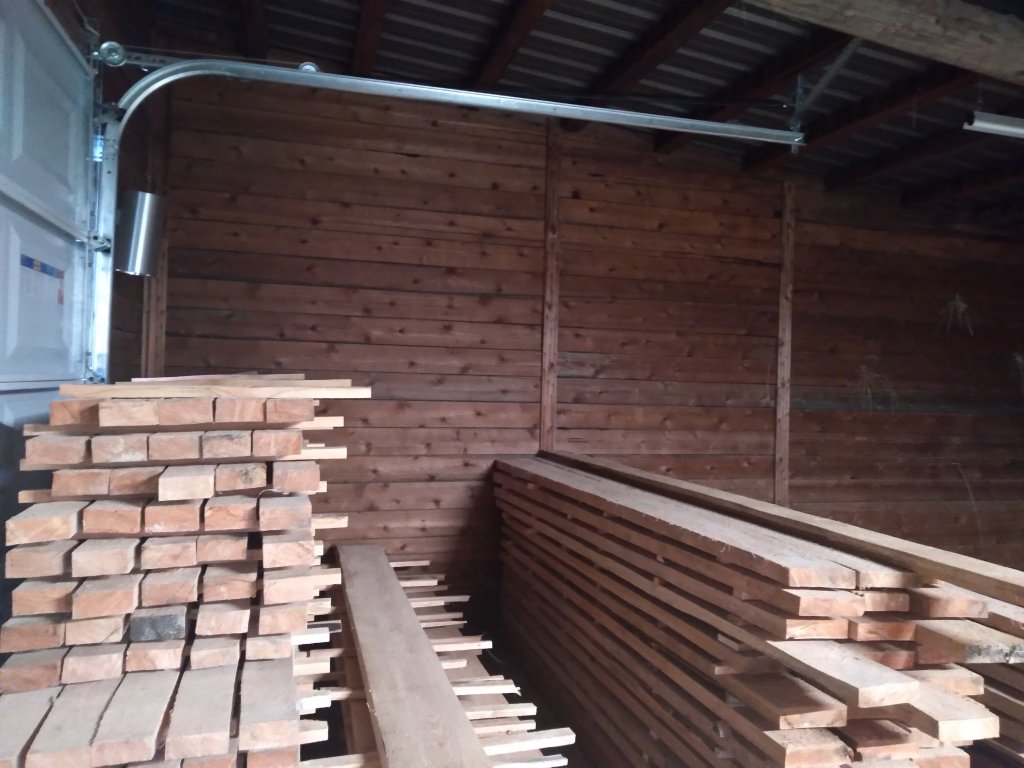
Rough Cut Lumber
Harvested as part of thinning to reduce fire danger.
$0.75 per board foot.
Call Mike (406-882-4835) or Sam (406-882-4597)
Popular Posts
Ask The Entomologist Bears Books Canada Census Community Decay Covid Covid-19 Data Deer Demography Education Elections Eureka Montana family Firearms Game Cameras Geese Government Guns History Inflation life Lincoln County Board of Health Lincoln County MT Lincoln Electric Cooperative Montana nature News Patches' Pieces Pest Control Politics Pond Recipe School School Board Snow Taxes travel Trego Trego Montana Trego School Weather Wildlife writing
 Trego's Mountain Ear