-
As the 75th year moves to the 76th, there are some actuarial thoughts that come to mind. Table 10 (Social Security Administration) gave me a life expectancy of 65 years and 3 months at birth – obviously, since 52% of my age cohort is still on the grass side (as opposed to the root side) we’ve made some long strides in medicine, health and life expectancy. It’s not until the 80th birthday that 50.7% of us will be gone.
That translates to a calculated mean life expectancy of 11.29 more years at my next birthday. On the other hand, if I’m still kicking for that 87th birthday, the table shows another 5.6 years – and nearly 30% of the original birth cohort will be there for the 87th birthday.
I suppose that living is kind of one of those habitual things. I can’t help feeling fortunate for the many advances that have occurred in my lifetime. So what do I plan to do with those next ten years? When I lived past the June, 2012 expiration date my oncologist gave me, I came to the conclusion that my best purpose was to look out for wife and daughter. It’s been a good purpose – but the next ten years are for my grandkids. I want to teach the little ones to sail – and I think I can do that on the pond, by combining a small lateen sail with a slow hull. I want to teach them marksmanship – and I will probably start with airguns and little steel chickens, pigs, turkeys and rams. If the health holds out, we’ll combine forest management with entrepreneurial attitudes as we continue thinning the woods. I may not ride a bicycle to their house – but I am sure that they will ride bikes to mine. Bicycles are a good place to develop mechanical skills – and seven speeds seem like plenty to me. There is a chance that we can rebuild the fences, and get a few Guernsey or Jersey cows. Remi already has his two little goats – and one watches his little crawling brother through the window. By the time a kid is ten, leading and brushing a dairy heifer is a reasonable task. At ten, a kid can learn the mechanics of a single or double barrel break in the middle gun. And, with any luck, I will be able to share the joy that can be found in mathematics, in reading, design and research. It is enough. Not everyone has a 76th birthday with so bright a future.
-
I’ve been thinking more of the implications of housing all Congresscritters in dormitories, much like college freshmen (who are often required to reside in university housing). This meme suggests building that dorm might make congressional service more accessible to the average American:

Part of the problem appears to be that congresscritters don’t want to leave DC once they get there. I can’t explain it – from the moment my plane hits the ground there, I feel that I’m “in the presence of mine enemies” and I want to go home. Dormitories aren’t places where you get so comfortable that you want to stay. Look at Jon Tester – he got to DC and stayed 18 years before the election results forced him back to Big Sandy. Compare him to Marc Racicot – who took a job in DC, then lobbied there, and then made up his own mind to move back to Montana. Think of Nancy Pelosi – 37 years in DC representing San Francisco. John Thune was running for Senate when I hired on with SDSU (2000). Admittedly he didn’t get to DC until 2005, but he hasn’t made it back to a home in Sioux Falls yet. His predecessor, Tom Daschle also served as senate majority leader, spent 26 years in DC, and when South Dakota’s voters sent Thune in, Daschle stayed in DC until a few years ago, when he moved to South Carolina. He has yet to make it back to Aberdeen to live. The list of people who get to Congress and never go home is long.
My proposal to counteract the incumbency advantage will work – every time an incumbent runs, he or she is limited to a campaign spending limit that is half of their previous election spending. Under that limit, Nancy Pelosi would have been down to three bottle caps, a subway token, and a half-stick of Wriggly’s gum for her last election.
A Congressional dormitory might help bipartisanship – but it would definitely make congresscritters more anxious to travel home for weekends and holidays – Dormies like going home. I recall AOC’s challenges in finding an apartment when she first went to Congress – the congressional dorm would eliminate that problem. Who knows – with affordable housing for congresscritters in Washington, and reform that would counteract the incumbency advantage, we might wind up with less than half of Congress being millionaires and more.
-
This story goes back about 40 years – Renata has encouraged me to get it down on paper, and as I think about it, the story still seems unreal, like it couldn’t have happened. But it did. At the time, I was teaching at Trinidad State Junior College, and driving a 78 Dodge Colt. Renata and I had finished shopping and were headed South from Pueblo, Colorado, on I-25. By today’s standards, the road was isolated, and cell phones hadn’t taken off yet – by our standards, accustomed to Montana, it was a four lane highway, and downright populated compared to the stretch from Wolf Point to Glendive. We had heard of travelers along this stretch of highway being pulled over, robbed and assaulted – but it was one of those things that couldn’t happen to us.
The back held our groceries and K-Mart purchases, and we hadn’t reached Walsenburg when six cycles pulled alongside and behind us on the left. The guy alongside pointed his hand to tell me to pull over. It didn’t look like a great location, and the crew on motorcycles didn’t look like Walsenburg’s Welcome Wagon, so I just shook my head and started wondering how many Harleys I could knock down with the little Colt if it was time to start playing bumper cars. He again pointed at the side of the road, so I looked for the easiest way (at 55mph) to explain that I had no intention of pulling over. I reached between the seats, still looking at the cyclist and driving with peripheral vision. I smiled my sweetest smile, and lifted a cocked and locked 1911 Colt with my right hand.
He returned my smile, waved a ‘follow me’ to his companions, and six motorcycles courteously passed the little Dodge Colt and quickly drove out of our lives. When I got back to campus, I shared the story with Walker, the cop instructor. He shared it with Ernie, second-in-charge of the town’s police force. Ernie showed up, asking why I hadn’t got the license plate numbers – “Because I didn’t think of it.” and telling me that this crew had a record of assaults on people who had pulled over – even introducing me to one student who had been robbed and beaten. He wanted them.
As I write it up, it still seems unreal. I still wonder how many Harleys I could have knocked down with the little Dodge Colt – that little car was my primary weapon. The 45 Colt only had 7 rounds in the magazine – and while I was shooting Bullseye competition at the time, six moving targets and eight rounds didn’t look like a good situation. (Renata remembers more cyclists – but my recollection is that I had only two spare cartridges.)
The little Dodge Colt (made by Mitsubishi, and the motivator to owning an Eagle Talon) looked like this:

I think it had about 85 horsepower in the overhead cam 4 cylinder.
-
Glock had some problems with anti-gun groups and the California legislature (I may be repeating myself there) because of a device known as the ‘Glock Switch.’ What it amounts to is a device that makes the Glock pistol go full auto – basically changing a semiautomatic pistol to a machine gun. Put simply, the device is illegal as all hell. It’s a combination of old gunsmithing skills and computer use to build interchangeable parts with a 3D printer. There is nothing particularly new about the idea – one of Dillinger’s guns, built by Hyman Lebman was a model 1911 converted to full auto – as this photo shows:

I don’t believe I would enjoy shooting this – but at the time Lebman was building them (and converting Winchester 1907 rifles to machine guns) the National Firearms Act was still a gleam in some politician’s eye. Unlike Lebman’s San Antonio operation (1933), Glock switches are sold on the internet – my personal recommendation is don’t even think about buying one. Ethics aside, the fines and prison sentences are too large. Even if the switch is advertised at only $13.
Anyway, with Everytown for Gun Bans and the California legislature closing in, Glock decided to redesign all of it’s handguns, and come out with a Glock V that wouldn’t take the switch. Intriguing enough, by the time the Glock V was moving in the supply chain, the new switch for the Glock was on the market.
Like I said before – I’ve never fired a Glock. I’ve never converted a semiauto to full auto. I have repaired a few semiautomatics that, because of one worn or broken part or another had problems with multiple discharges. The problem is that it looks technically easy to convert many semiautomatics to full auto. I can’t say for sure – the only work I ever did was to make sure semiautomatics didn’t go full auto. But it looks easy enough to me. I suppose, if you gave me the task of building a semiautomatic that couldn’t be converted to a machinegun, I’d start by making it hammer fired and double action only. That way, you still might make it go full auto, but you’d have to spend big dollars changing a whole lot of parts.
-
It isn’t that I’m some sort of a bigot – or perhaps it is. With a long double action trigger, I tend to shoot low and left. Not a big deal – with the SCCY, I took the sight pusher – a tool that uses a bolt thread to move the rear sight – and put the rear sight in a spot that corrects for my weakness. The SCCY is different from a Glock – a plastic frame and a stainless slide – and double action only – but what do I know? I’ve never fired a Glock. When Glocks first came out, I was learning the ins and outs of the 1911 – and it didn’t seem that good habits for the 1911 transfer seamlessly to the Glock.
As a kid, it was pretty much revolvers. Dad packed a Smith Victory model that he had salvaged from a sunken plane, and he started me with a High Standard Sentinel. Dad liked 4-inch barrels and double action revolvers. And I learned to use them single action. When I started teaching at Trinidad State, in the mid-eighties, they taught me that God carries a model 1911A1. I learned to hone the sear so I could have a 3 pound trigger pull (the other important changes were a fitted national match bushing in the front, and a tight link at the back. When the trigger doesn’t move far, and doesn’t take much pressure, it’s a lot easier to hit. And the model 1911 (like the 1873) is single action only.
I guess my first match quality pistol was Thompson Center’s Contender – I used it with a heavy 22 barrel when I hung out with a bunch that shot metallic silhouette. Renata medaled. I never did. In most of my competitive shooting I’ve been treated respectfully, but never had the ability to regularly finish at the top.
Glocks call their striker fired action ‘safe actions’. They may well be – but the early striker models (around WW1) depended on some cheesy safeties. So, as Glock was coming on, I was learning the 1911. I’m not bigoted against the Glock – it’s just that it came out in the mid-eighties, and it’s probably a bit too modern for me.
-
Time was when our phraseology suggests a belief in one idiot per village. Then came the internet and Facebook. The postings bring suggestions that we have more than one idiot per village. Fortunately, the internet is available, so we can hopefully download a measurable definition, and then use the old bell curve to find out if idiots are actually so common.
So a search for ‘clinical definition idiot’ led me to this website: https://www.languagehumanities.org/what-is-the-difference-between-a-moron-imbecile-and-idiot.htm This is the fourth sentence (emphasis added): “Those with an IQ of 0 to 25 (an IQ of 100 is average) were called idiots, 26 to 50 were called imbeciles and 51 to 70 were called morons. “
That makes idiots pretty darned rare – the likelihood of encountering an idiot is the same as that of encountering someone with an IQ of 175 or more. Using a 15 point standard deviation, the chance of encountering an idiot is 0.0000287105%. ( https://iqcomparisonsite.com/iqtable.aspx )
So, taking the definition and the probability, it doesn’t look like idiots are something we encounter daily, or even monthly. We don’t have a great increase in village idiots. I think the problem has to be village midwits – so here’s what I get for a definition of midwit: “Noun. midwit (plural midwits) (neologism, chiefly Internet slang, mildly derogatory) A person of middling intellect; someone who is neither particularly dumb nor notably intelligent, especially if they act as if they are smarter than they are.” Again the emphasis is added. I think the problem is that we have a lot more people who “act as if they are smarter than they are.“
So I assume midwittery begins with an IQ of 108 (half a standard deviation above the norm) the chart tells me that 30% of the population will score above 108. If I arbitrarily put the cap on at 115, I have a group that includes 14% of humanity – and that’s basically one out of every 7 people I encounter.
I don’t believe we have more village idiots than ever before – but we do have more opportunities for education. According to the Census:
“In 2022, the highest level of education of the population age 25 and older in the United States ranged from less than high school to advanced degrees beyond a bachelor’s degree.
9% had less than a high school diploma or equivalent.
28% had high school as their highest level of school completed.
15% had completed some college but not a degree.
10% had an associate degree as their highest level of school completed.
23% had a bachelor’s degree as their highest degree.
14% had completed advanced education such as a master’s degree, professional degree or doctorate.
When we add those numbers – 15, 10, 23 and 14 – we come up with a total between 62 and 63% of Americans (over 25) who have attended college. That’s five out of every eight people.
When 5/8ths of the adult population has attended college – and 47% hold one level of college degree or another – perhaps there is nothing particularly elite about attending college. Sometimes we’re just one more village midwit. I’m not certain that village idiots aren’t less harmful than village midwits.
-
So I get an email that tells me that Veteran’s Day sales have been extended. I’m not a veteran – I had to damn near beg the physician to get a 1Y deferment instead of a 4F. Really don’t know why it was important to me, but I suspect it was my mother’s tone of voice when she talked about 4F’s. Anyway, South Dakota has some very active Veterans coordinators in each county, and, so near as I can tell, the one in my county learned the clearance I had – since I had access to air photos that showed locations of missile silos as well as agriculture, and wanted to recruit me as a veteran. I’m not real sure of his motivation, and he was disappointed to learn I wasn’t eligible for his services. Somehow, I didn’t disappear off his list, and the American Legion offered membership. Again, I gave a polite thanks and explained that I didn’t qualify. And that ended the folks who were mistaking me for a veteran.
Until I wore an old T-shirt Dad had given me from the Kenneth Whiting’s 50th anniversary. The shirt was probably 20 years old, and I wore it into Great Clips. The hair stylist looked at me, looked at the shirt, and long story made short, I walked out with a high and tight haircut and a veteran’s discount. The next stop was Cabela’s – where the T-shirt and the haircut got an unsolicited 5% discount on a couple boxes of ammunition. Didn’t notice until I got home and looked at the receipt. Then Lowes, and a 10% discount. I now only wear the shirt around Trego. It’s too easy to be the accidental stolen valor kid. The closest I came to actual service was accompanying a National Guard officer to South America when I was an adjunct professor for the Navy grad school – I’m pretty sure academic rank doesn’t count – though Dad was pleased that I somehow got into his Navy.
-
In telling this story, I have to go back about 40 years, to my first time teaching college. Somehow, Colorado had gotten off on the idea of workfare – that people physically capable of work should have a job to qualify for welfare benefits.
The science building had a janitor – nice guy, worked a 4 to midnight shift, which meant that he had the time to clean the classrooms, labs and offices when they were empty. The building, built back in the sixties, had the janitor’s workspace located in the men’s room. I was a bit surprised at about 3:00 pm one afternoon, I headed for the head, and was greeted by a woman about my age and her 10-year-old daughter as I walked into the room. She explained she was there to help our janitor, I agreed that was nice – and then I walked down the hill to the restroom in the admin building. There was no point in warning my colleagues by sharing the story – they would have laughed at me.
Turned out, I should have said something. I was one of the younger faculty – I didn’t think much of an 80 yard walk, outside, to find a facility that didn’t have a pre-teen girl and her mother as observers. And, having moved to southern Colorado from northern Montana, there weren’t many afternoons when the trip required a coat. But a lot of my colleagues were in their sixties. Now I recognize the difference. Then I didn’t. When the college president realized the hardship on our old biology instructor – past 70 and with prostate problems calling for a lot of trips – well, our little school went out of being a site for the workfare program.
It probably seemed like a good idea – but reality has a way of showing the problems that come with good ideas. Single parents and the janitorial space located in the men’s room created a situation where working for the welfare benefits cost the school more in (male) faculty time than the help cleaning the building was worth. And unpaid labor didn’t leave her many options for childcare.
-
Today, I’m into the recovery stage after 13 days of a head and chest cold. I woke up breathing through my nose. It’s hard to find words to describe how good it feels to move into breathing that is only slightly impaired – and I realize how much I have learned to enjoy the body’s recovery from injuries and diseases. There are still the swollen sinuses, the lungs are still marginal, but the beginnings of recovery are there.
It has been a good year for recovery – the knee replacement has returned walking to my pleasures. Along with that, the drugs for the surgery and the mild opioid pain pills gave the stomach time to recover – and for the first time in several years, the pain of GERD is gone.
One of the good things about becoming elderly is how much enjoyment there is when strength and abilities return. The problem is that losing those strengths and abilities is also part of the aging process.






Want to tell us something or ask a question? Get in touch.

Recent Posts
- Thus Spake Zarathustra – One More Time
- Suspenders
- You Haven’t Met All The People . . .
- Play Stupid Games, Win Stupid Prizes
- The Ballad of Lenin’s Tomb
- An Encounter With a Lawnmower Thief
- County Property Taxes
- A Big Loss in 2025
- Thinking of Clovis
- I Started The Year With Optional Surgery
- We Still Have The Basic Rule
- Not Made in This Millennium
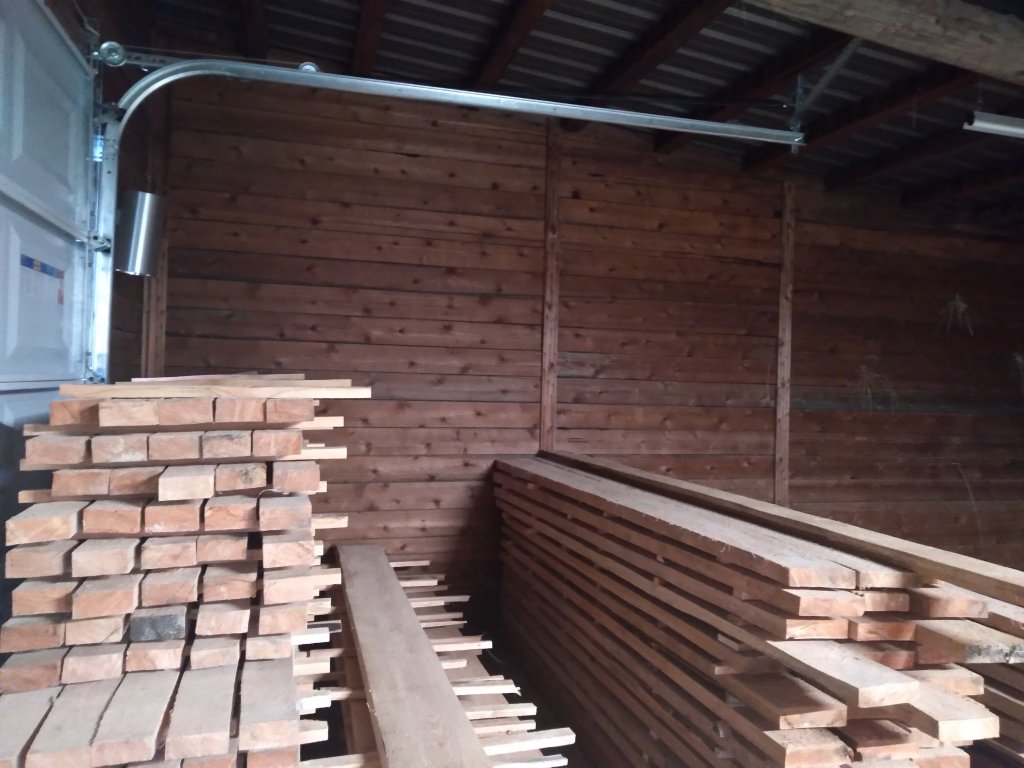
Rough Cut Lumber
Harvested as part of thinning to reduce fire danger.
$0.75 per board foot.
Call Mike (406-882-4835) or Sam (406-882-4597)
Popular Posts
Ask The Entomologist Bears Books Canada Census Community Decay Covid Covid-19 Data Deer Demography Education Elections Eureka Montana family Firearms Game Cameras Geese Government Guns History Inflation life Lincoln County Board of Health Lincoln County MT Lincoln Electric Cooperative Montana nature News Patches' Pieces Pest Control Politics Pond Recipe School School Board Snow Taxes travel Trego Trego Montana Trego School Weather Wildlife writing
 Trego's Mountain Ear