-
I’m looking at the ten day forecast – basically rain and above freezing. The precipitation side matches the NOAA long-term outlook, while the temperatures do not. Still, the national outlook suggests that the lines on NOAA’s map just wound up a few miles off. Weather forecasting is a science where errors are not uncommon – and climate is not constant. If it were, there would be glaciers north of Eureka covering the drumlins.
One of the consistencies is the adiabatic lapse rate – the decrease in temperature as a chunk of moist air rises. It’s not a perfect way of modifying a weather prediction for Eureka – but if I guesstimate that, because of the 3,100 feet elevation at Trego (opposed to 2,700 feet at Eureka) the temperatures will be 2 degrees (Fahrenheit) cooler than Eureka, it winds up fairly close. Right now, with lows around the freezing mark, I figure most of the snow will be gone before it gets cold again – and the pond will be full before it freezes a second time. The predictions call for daytime thaws until the solstice – and after the solstice, the days begin to get longer.
Ten thousand years ago the area went into an interglacial – a time when the glaciers went away. Technically, so long as we have polar (and Greenland) ice sheets, we’re in an ice age. Still, at the least, more melting can lead to a longer interglacial. This interglacial was the time when most (an argument could be made for all) of our food crops were developed. Warming may give us a longer growing season – but if our local precipitation stays the same, water, not growing degrees becomes the limiting factor.
But the management choices are the same – my hay needs to include water tolerant, drought tolerant, and salt tolerant species. As I can get out with the chainsaw, the timber needs to be thinned for better growth, for a return to grazing and for fire control. Climate, like weather, changes.
-
I was reading the Liberal Patriot. The first sentence was “Democrats must first come to terms with Americans’ strong distrust of government.” The third paragraph went a bit farther: ” Progressives by definition are supposed to be invested in making government work and proving the value of a more active state. For insurgents who have made it into office, the allure of attacking the system on the campaign trail has typically given way to the exigencies of preventing government from appearing more dysfunctional than it already seems—even when Republicans hold most of the cards.”
I was reminded of a grad student who was explaining that libertarians should never be elected because their basic belief is that government doesn’t work. If I were listening to his comments today, I’d be pointing out how well government worked in Minnesota, with a bunch of fraudsters ripping off billions. Or the Ukrainian bribes going to Hunter Biden. In my 76 years, I’ve seen many occasions where government was used for private financial enhancement.
The Liberal Patriot continues with this: “Democrats, primed to defend government from the right’s wrecking crew, still fail to see that a proper Tea Party of the left would indeed overhaul government bureaucracies, eliminate fraud and waste, and tame veto-wielding and rent-seeking interests in equal measure, precisely in order to make the state a nimble and credible agent of widening opportunity and national redevelopment.”
It’s enjoyable to read a dem author who is also in the middle of the road. Still, I don’t expect the Liberal Patriot to lead the Democrats with this sort of observations.
-
I saw these quotes and graphs on Instapundit: “Those born in a high social class and who have inherent low ability, and thus fall a social class, are the most resentful and vocal. They also are the least impactful people on long term trends, yet are deceptive in their overcrowding of the present zeitgeist.” Cremieux had posted these graphs taken from Finnish social scientists, commenting: “There’s a lot of truth to this. Wherever we have data, we see this repeated: Communists tend to be downwardly mobile. They are, always and everywhere, disproportionately likely to be their generation’s losers. Consider this Finnish data on the Red and White Guards:”
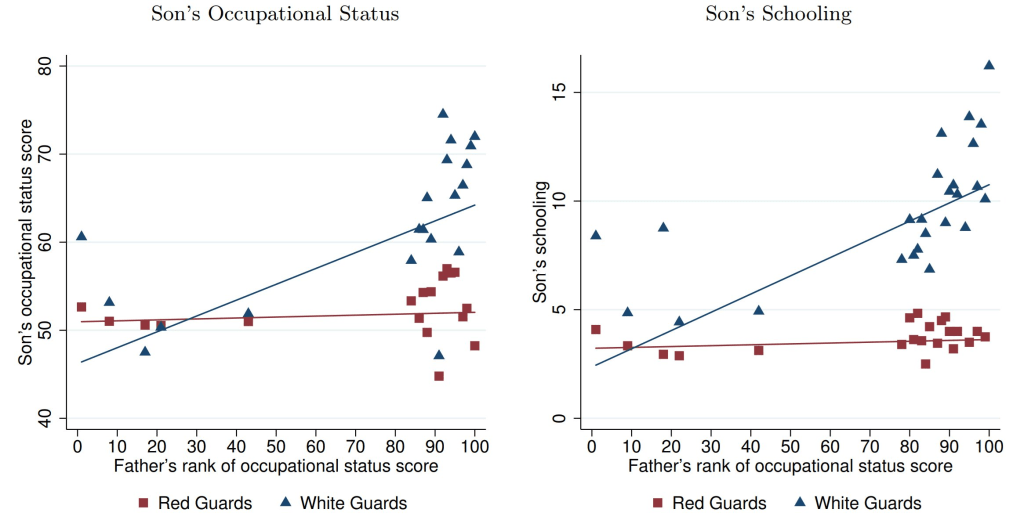
It just may make sense – the problem socialists have with Americans is that we all believe we’re middle class with a chance to be higher. I don’t know about folks with unemployable college degrees (and my degrees are in the much mocked field of sociology). I do like the Finn’s study of the Reds and Whites at the time of the Russian revolution.
-
It is amusing to listen to folks who seem to have all the answers on C02 and global warming, but have no concept of soil fertility and agriculture. My hayfield lacks carbon in the soil – and soil carbon has a very high correlation with soil fertility.
My field was a lake up until a bit over a hundred years ago. Before it was a shallow lake, it was a glacial lake. Before that, it was covered by really thick ice. That means the soil is all glacial silt and clay, and it doesn’t have much carbon. Back when they used dynamite to drain the lake, they probably thought it would be easy to make a field – fairly flat, no stumps to grub out, and few rocks. The problem was that there wasn’t much organic carbon, some of the clay was a calcium sulfate rich vertisol, and the soil is pretty marginal. Ideally, it would have been in small grain crops every year over the past century, with the straw plowed in – but it hasn’t been. The other problem with glacial silts is that the soil is pretty well compacted.
Basically, the field was covered by a glacier until ten thousand years ago, then covered by water until a hundred years ago. Modern technology (at the time dynamite) made it possible to drain the lake and turn it into a field. At the time, soil science was in its infancy – a hundred years later, we had a lot better understanding of the problems that I still face.
Low soil carbon means less microbial action in the soil – and this field never had the chance to accumulate organic carbon. It has needed systematic agri2cultural management to build more carbon into the soil – and perhaps, if it gets those treatments over the next century, we may be able to get the top six or seven inches of soil up to one or two percent organic carbon. Fortunately, the ground is flat, so erosion has not been a problem.
It’s sensitive to overgrazing – particularly in the dry, saline areas. I was lucky enough to encounter a Russian Wild Rye variant 40 years ago that wasn’t particularly susceptible to overgrazing by horses and cattle. It has spread, and, with a bit of encouragement, will continue to grow in the saline areas. In the wet ground, there is Reed Canary Grass – these two grasses aren’t preferred by cattle and horses, but we’re learning that goats really like the hay. There is definitely a learning curve to managing the soil that makes up my hayfield.
So I think I have it down – in some areas, Timothy. In others, Garrison Creeping Meadow Foxtail, Reed Canary, Wild Rye along with Wheatgrasses and Idaho Fescue. It’s looking like a mix that cattle will eat, but goats love.
Soil management in this case is a question of developing more organic carbon. After puttering with the field off and on over 65 years, my grandson introduced me to a key component – his two little goats love the hay we produce.
-
So I’m reading the Canadian Blog ‘Blazing Cat Fur’ at https://blazingcatfur.ca/2025/12/05/from-full-size-to-fun-size-trump-gives-kei-cars-the-green-light/ and I realize that Trump has instructed the folks who regulate the auto industry to “clear the path for the production and sale of kei vehicles in America, following his recent trip to Asia, where he saw pint-sized cars flooding the streets.”
In Montana, we’re used to seeing 25-year-old Kei cars on the street – federal laws make it easier to import those little white pickups (and vans, etc.) Now we have the President making it legal to build, and buy the little rigs new. I’m upbeat at the idea – of course I have already owned a couple of them, and did, 30 years ago, drive a Yugo.
Trump said “If you go to Japan, where I just left, and if you go to South Korea and Malaysia and other countries, they have a very small car—sort of like the Beetle used to be with the Volkswagen—they’re very small, they’re really cute, and I said, ‘How would that do in this country?’” Transportation Secretary Sean Duffy heard the message – and folks from the auto industry were also there.
So we may wind up with little cars that look like this Suzuki Jimny – not a lot different than the old Samurai (full disclosure: I had an old LJ10, and am still driving a Vitara):

Or a Daihatsu Copen (In Japan, Toyota is Daihatsu:

I was talking with a friend yesterday – each of us drives an old, high mileage pickup. Those 300 thousand mile pickups are paid for. The old, small pickups that we drove through the last 20 years of the Twentieth Century have disappeared. I’m hoping that, with Trump’s support, I’ll be able to write a check for an American built new pickup that looks something like this Honda:

-
It’s a little over a century since my grandparents bought the place in Trego. With the power outages, we’ve experienced a little of what their ordinary day and evenings were as the season moved toward Christmas – the wood stove keeping the house warm, and, for use, battery powered lanterns, where their light was kerosene. A kettle on the stove for coffee or tea – and no internet or electricity. I suspect we’re a lot less able to keep ourselves entertained during the long winter nights – but as I look at my stash of harmonicas, I realize it was my grandmother’s harmonica that led me to playing them – and that I can play harmonica in the dark as well as the light. Their power outages didn’t affect a refrigerator or freezer.
I have a shallow well – and I’m realizing that a solar panel on the south wall of the pumphouse, charging a 12 volt battery, can power an inverter, so that we can keep water running by going to the pumphouse, turning the inverter on, and taking the pump off the grid and plugging it into the inverter. Our record power outage, to date, is 18 hours – and keeping the water running, without having to start a generator, has some advantages.
The grill on the porch runs on propane – and it will take little effort to add a propane burner to handle a coffee pot or scramble eggs. Admitted, the top of the wood stove already does that – but it takes little to avoid the occasional return to pre-electric existence.
Still, I suspect we have lost a lot of the family social interaction with the luxury of rural electricity. I think of being a Trego kid in the early sixties, when there were only two Spokane TV channels – and reading the entire encyclopedia before finishing the eighth grade. If nothing else, it made high school a bit easier.
The connection with my grandparents is not strong – my grandfather died shortly after I turned 5. There were a lot of things that couldn’t be shared. But the occasional power outage does offer a little understanding of what their lives were like in the early days of Trego.
-
As I look at the trees, I see bending from the snow loads. Some have snapped, while others have gone over at the roots. It isn’t a complex decision – I’m about to re-block and re-level the sawmill, and the stuff that is too small to make a log will make next winter’s firewood. Douglas Fir tends to roll over as the roots fail, while the tap roots of the Ponderosa Pine leave them susceptible to snapping. Western larch seems to be (at my elevation) immune to the snow loads.
The midge spread diseases show a lot fewer whitetail deer browsing on the downed Fir trees. Last winter, if I started a chainsaw, a dozen or more deer would show up for the potential buffet. Now, many fewer deer. I suspect that the increased number of coyotes will likely also have problems by the time Spring rolls around again.
The ponds are frozen – our next influx of waterfowl will be in the Spring – yet the decrease in feral cats has led to a great increase in the little squirrels. At the house, my aging dog is almost totally deaf. She seems to be compensating for not hearing by barking more. I’m not sure how that works out.
As I look at the downed trees, I recall the idea that a properly thinned forest will produce the maximum timber and 80% of the grazing. My challenge is to get the cleanup and salvage moving along – not for me, but for the next generation. I have always planted fruit trees where i lived – someone will harvest the fruit, just as I have harvested the fruit from trees that landowners before me have planted.
It is winter – but soon Spring will return, with the fawns, the ducklings and the goslings. And I will putter indoors until Spring comes north again.
-
I haven’t traveled to Muslim areas, but a few years at TSJC, with an ESL program (English as a Second Language) and a couple hundred Palestinian students brought me in contact with the Banna family. It is a bit ironic that my experience with the group was in the center of the US. Dib was a student at TSJC, and a bit of a leader of the Palestinians, explaining that his uncle was Abu Nidal, and he could get me a spot on the Abu Nidal group’s hit list. I kind of laughed, until another Palestinian student told me I should take this seriously, and that the Banna family was significant in the terror world. So I did my homework.
Hassan al-Banna started the Muslim Brotherhood in Egypt – the year was 1928. After 20 years of being a problem to the Egyptian government, he was assassinated in 1949. From what I read, I could kind of understand the Egyptians’ attitude. Hassan bought into the Nazi schtick and had Hitler’s Mein Kampf translated into Arabic – in general, a man who really did like fascists. (https://english.alarabiya.net/features/2018/06/27/ANALYSIS-The-Nazi-roots-of-Muslim-Brotherhood for more information)
Abu Nidal was Sabri al- Banna – and I’ll take his description from Canada’s Mackenzie Institute at https://mackenzieinstitute.com/terrorism-profile-abu-nidal-organization-ano/ “The Abu Nidal Organization was founded by Sabri al-Banna, also known by his nom de geurre Abu Nidal, in 1974. Abu Nidal means “father of struggle.” The ANO has been on the United States’ list of terrorist organizations for 20 years but is largely considered to be inactive today. However, in the mid 1980’s it was thought to be the world’s most dangerous terrorist organization.
Many point to the ANO as having introduced fledgling terrorist groups and the rise of transnational terrorism to the world. The origins of the ANO are synonymous with Nidal’s life experience. Nidal’s entire experience as a mastermind terrorist can be seen as an extended effort to obscure his past, particularly those elements in it that he finds distasteful.
Nidal’s family was decidedly middle class; however, they had a history with terrorism. A member of the al-Banna family is cited as one of the founders of the Muslim Brotherhood in Egypt under President Nasser. Nidal’s radicalization began in 1947 after the vote to partition Palestine. This fight caused his family to fall from great wealth to abject poverty and his time spent as a refugee was foundational to his career as an international terrorist. The Ba’ath party, which had an office in Amman, Jordan, was the beginning of Abu Nidal’s radicalization to political violence. Due to his membership in the Ba’ath party he was expelled from Saudi Arabia. This expulsion serves to explain his later hatred for the country.
After his expulsion, Nidal arrived in Iraq in 1970. As the official delegate of the Palestine Liberation Organization (PLO) in Iraq he was sent to North Korea and China to study guerilla tactics, the use of explosives, and Marxist-Leninist ideology. He was encouraged by PLO leadership to make connections within the Iraq government. Ironically, by exploiting his Iraqi intelligence service connections he began to build his own independent power base.
On September 5th, 1973, Nidal took his first independent action. Five of his men occupied the Saudi Arabian embassy in Paris and held 11 members of the staff hostage. The Paris attack created a rift between the PLO central command and the Iraqi faction.
Nidal subsequently left the PLO, and Iraq, first maintaining headquarters in Baghdad, then Damascus, then Libya. At this time Nidal established a trade and investment company with headquarters in Warsaw. Until 1988 it sold East Bloc armaments to both Iraq and Iran. It is said that Libya brought out the worst in Nidal as he began developing extreme paranoia. As a result he massacred more than 150 of his best fighters demonstrating that the previous objective of the ANO – the destruction of Israel – had been supplanted by a greater hate. To this day he so fears assassination that he refuses to eat or drink anything served to him by others and he continues to believe his wife is a CIA-agent.” Admited, this is from an old article – but it does a heck of a job describing Sabri al-Banna.
Anyway, I’m not bothered by Trump declaring the Muslim Brotherhood a terrorist organization. Hasan and Sabri are both dead – and I figure Dib was more in to pointing out that his family once had major wealth. But Dib brought both groups to my attention when I was teaching in Colorado – and I can’t figure Trump’s decision doesn’t match what I saw.




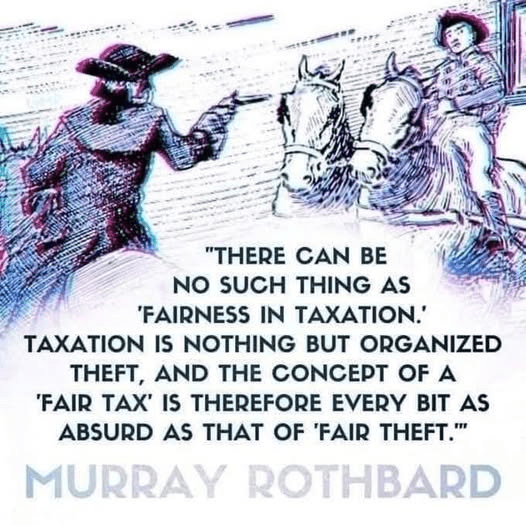
Want to tell us something or ask a question? Get in touch.

Recent Posts
- Thus Spake Zarathustra – One More Time
- Suspenders
- You Haven’t Met All The People . . .
- Play Stupid Games, Win Stupid Prizes
- The Ballad of Lenin’s Tomb
- An Encounter With a Lawnmower Thief
- County Property Taxes
- A Big Loss in 2025
- Thinking of Clovis
- I Started The Year With Optional Surgery
- We Still Have The Basic Rule
- Not Made in This Millennium
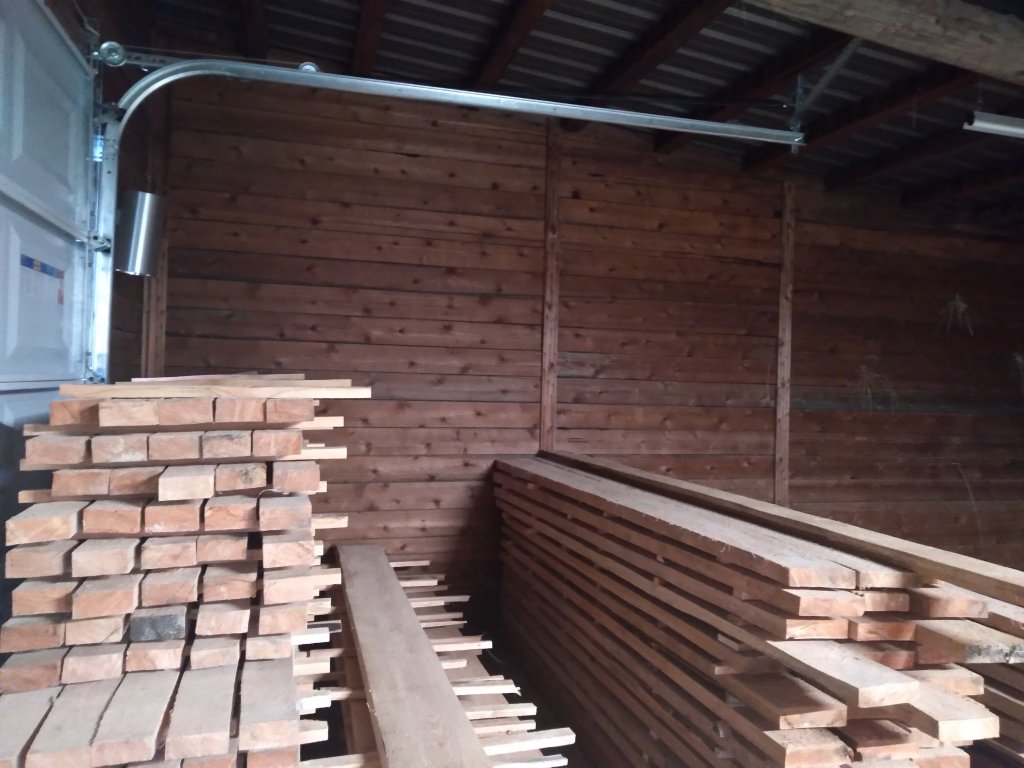
Rough Cut Lumber
Harvested as part of thinning to reduce fire danger.
$0.75 per board foot.
Call Mike (406-882-4835) or Sam (406-882-4597)
Popular Posts
Ask The Entomologist Bears Books Canada Census Community Decay Covid Covid-19 Data Deer Demography Education Elections Eureka Montana family Firearms Game Cameras Geese Government Guns History Inflation life Lincoln County Board of Health Lincoln County MT Lincoln Electric Cooperative Montana nature News Patches' Pieces Pest Control Politics Pond Recipe School School Board Snow Taxes travel Trego Trego Montana Trego School Weather Wildlife writing
 Trego's Mountain Ear