-
Like last year, the meeting took place at Lincoln County High School, and could be attended by car. Unlike last year, in person attendance was also possible. Voting for trustees had already been done (Exclusively by mail), though the results were announced at the meeting.
In a somewhat novel experience, there were (for one district) more candidates than vacancies, so the election had the possibility of making a difference. All three incumbents were reelected, including Tina Taurman (District 7). Taurman ran unopposed, with 335 votes.
With coffee, breakfast (Four Corners) and 75th Anniversary cake (Second Chance Bakery) available outside the auditorium (and a video stream of the stage), it was a very comfortable meeting. Attendees could choose between the easy to get out of chairs outside the auditorium (but no back support) or the chairs inside the auditorium that offered back support if perhaps a bit more difficulty in getting up. Of course, the food (and coffee) was outside the auditorium.

Folks were evidently pleased by the opportunity to be around friends and neighbors. It had the sense of after church coffee hour, if after church coffee happened during the service. Talking stopped for the pledge, and things were a bit quieter during the doorprize drawings, and much quieter for the luck of the draw scholarships. This year, the gift cards included one to Trego Pub.
I did try to get closer to the speakers, since the actual meeting content sounded interesting. Unfortunately, standing up gave neighboring tables a view of my service dog, and the whispering kept things just as hard to hear as when I had been seated.
So, having cake and hearing the meeting did not combine well. That said, I do still have at least some details to share. Ryan Hall (whose article can be found in the recent issue of Rural Montana) spoke about the efforts that Montana Electric Cooperatives’ Association (MECA) made to combat a feasibility study of breaching the Lower Snake River Dams. Replacing the Lower Snake River Dams with other clean-energy options would be very expensive, and, at least in the case of solar, impractical.
Dam breaching is proposed for environmental benefits, in this case restoring fisheries to benefit salmon is a major concern. The electric cooperatives consider the new proposed study to be part of a strategy by people that want the dams breached to keep ordering studies until one meets their needs. Members attending the meeting were encouraged to fill out postcards to be sent to the governor, supporting MECA’s aims with regards to the Lower Snake River Dams.
-
The 1910 fires left reminders on the mountainsides I watched as a kid in the sixties, and as a young adult in the seventies. Now, 110 years later, remnants still remain, identifiable because I knew them 50 years ago. Here are Edward Stahl’s writings about the fires of 1910.
Although forty years have passed since the time of the great forest fires in North Idaho the date is not easily forgotten.
On August 20, 1910, a forest fire raced unchecked for one hundred miles in two days, to devastate one million acres of wilderness in the Idaho Panhandle and northwestern Montana. Eighty-seven persons perished in the flames and countless numbers of forest creatures were destroyed.
If you could see a little black bear clinging, high in a blazing tree and crying like a frightened child you could perceive on a very small scale what happened to the forest creatures.
At twelve o’clock noon on August 10, 1910, Supervisor J.E. Barton at Sandpoint, Idaho, received a telegram from Fire Guard William Brashear at Cabinet: “Send a man to relieve me, fires out of control, men should be withdrawn to safety.” Brashear was in charge of several firefighting crews located south of Cabinet near the northern foothills of the Bitterroot Range. He had been a logging contractor with a background of experience that well qualified him for the job ahead.
Since this was before the time of autos and good roads, no action could be taken until the train went east at 5:00 p.m. Supervisor Barton asked me to go to Cabinet and take charge, since I was deputy Supervisor at the time. But before I left we received a second wire, this time from Brashear’s cook: “Brashear and ten men trapped in the fire, all assumed to be dead.”
John Keefe, Forest Ranger from Clark Fork, met me at Cabinet. We proceeded to the fire front, now within one mile of Cabinet. John was a tall, lanky lad of twenty from the Idaho State School of Forestry. He was quite an athlete and held the track record for his college.
We learned that Brashear, after sending the wire, decided that immediate action was urgent since the wind had increased to a gale. He returned to camp, turned his horse over to the cook with instructions to warn distant crews. Brashear then hurried up the mountainside on foot to warn an isolated crew of ten men.
The cook and about thirty men who were working east of Brashear’s party reached Cabinet safely after a mad race ahead of the flames. They had met a boy taking lunches on a pack horse to Brashear’s party, threw the boy on the pack horse, and turned him about to lead the race toward Cabinet. None of the men who had been in the big stampede would return to the fire front with Keefe and me, but we got six Finlanders who lived in the vicinity to volunteer.
We selected the intersection of two skid roads as a strategic location to try and check the fire. It had spent some of its force and slowed down at nightfall. I was acquainted with this locality and knew that one skid road led to the firefighters’ camp.
It was 2:00 a.m. when Keefe and I decided we could venture through the fire front in a race to the trapped men although the fire was still dangerous, burning intermittently through the tree tops. I had left an automatic pistol on the skid road with the Finns. Days later it was found with the breech clip blown out, cocked and locked solid, a souvenir of the fire. One man asked us to watch for his abandoned suit case. All that remained of it was the metal rim.
We would run awhile, then lie down at intervals to get fresh air. Continued exertion in the smoke and heat will cause a person to faint. We passed a dead porcupine in the road as we traversed a blackened area of death and destruction where no living animal or bird remained. I was reminded of a vast graveyard. The small fires flickering dimly in the darkness high in the blackened snags could be candles burning for the dead.
Upon reaching the spring near where the camp was located we shouted until our parched throats were hoarse but got no reply. Then we climbed out of the burned timber upon the ridge to the clearing. There in the darkness we saw the huddled forms. We thought they were all dead, but to our relief we found they were sleeping the sleep of exhaustion after their ordeal. Some had their heads covered with the charred remnants of coats and blankets.
Brashear’s dog lay dead in the clearing. Two men crazed with fear had bolted and perished in the flames.
The race with the fire had been hopeless and Brashear had led the men to the clearing, warning each man to soak his bedding in the spring and lie down under the wet covering. He knew this was their best chance to survive. Brashear was the only man to soak his blanket at the spring. Nothing could live at the spring since it was in a ravine in the timber. The spring was boiled dry when Keefe and I reached it.
Brashear had made a futile attempt to stop the two men who ran off. The rest of the crew were about to panic and run when he knocked a man down with a mattock handle and threatened to brain the first man to try and run. They lay down, heads toward the wind, as the fire raged past on each side of the clearing, flames hundreds of feet high fanned by a tornado wind so violent that the flames flattened out ahead, swooping to earth in great darting curves, truly a veritable red demon from hell.
At daybreak we found the charred bodies of the two men. Brashear’s eyesight was temporarily impaired. Several men were sent to the hospital for minor burns.
John Keefe remained to guide the men out by the best route while I returned in haste to Cabinet to reorganize the firefighting. This was quite a problem since tools, supplies and records had been destroyed in the fire.
This fire before being checked burned to the outskirts of Cabinet and fired the timbers in the railroad tunnel nearby.
The Forest Supervisor of the Coeur d’Alene Forest had lost all contact with a large party of firefighters located about seventy miles north of Wallace, Idaho. This area was accessible from Cabinet by a journey south of about twenty-five miles across the summit of the Bitterroot Range. I was delegated to go and investigate their fate.
A husky young graduate from Michigan University, named Gillis, accompanied me on this trip. We were about to start when a woman came to our camp asking for help. Her husband, during a drunken spree, had beaten up the family and smashed the furniture. We went to her home but the place was deserted. The doors were open and a little old pack pony had wandered into the house. We found him with his nose in the flour barrel. He was brown color and looked comical with his face decorated with flour. We appropriated the horse and a pack saddle, then with a light pack we started for the North Fork.
We stopped that night at a sheep camp just over the summit of the range. There was no trail beyond so we left the porgy there. As we descended into the valley we both suffered violent headaches from smoke. We were approaching the northern limit of a fire that had burned an area forty miles wide and seventy miles in length.
We found the abandoned campsite of the missing men and tracked them westward until we were assured that they had safely crossed the Coeur d’Alene Range to Lake Pend ‘Oreille. We were not acquainted with this area and did not carry enough food for such an extended journey. As darkness overtook us on the mountainside we stopped, made two fires and lay down between them. I had shot a blue grouse on the way. We cooked it on sharpened sticks and picked the bones clean. At first dawn, we went on, picked up the pony and returned to Cabinet.
By the time we had returned to Cabinet, the great fire was declared a National emergency. All efforts were directed to the protection of homes, towns and private property. Guards were placed at the entrance to mountain valleys and no unauthorized persons were allowed to pass.
After organizing the firefighting at Cabinet, I joined a party of forty laborers who were enroute from Spokane by train and guided them to a fire near Noxon, Montana. Men worked in relays all night, shoveling dirt to check the flames, and saved a homesteader’s buildings. His pasture fence had burned down and the calf was removed into the house.
I carried a small canvas tarp and got a little sleep that night for the first time in over fifty hours. This fire was in the Cabinet National Forest.
I returned to Cabinet to find a desperate appeal for help from a settler located across the Clark Fork River. I summoned the faithful Finns and started but the boat was on the wrong side of the river. The Finns carried a cedar telephone pole to the river for me and riding astride the pole I paddled across and got the boat. My feet and legs in the water acted as a stabilizer to keep the log from rolling.
The Cabinet Gorge is now a noted scenic attraction where the river is compressed to rush through a rock crevice so narrow that the river virtually runs on edge. It was here at the mouth of the gorge in a big eddy that I crossed the river.
We found the settler in desperate straits. The Finns worked all night and checked the advancing flames.
The greatest loss of life occurred on the Coeur d’Alene Forest to the south near Wallace, Idaho.
You may wonder what methods are used to check a forest fire. A forest fire usually slows down at night to travel on the ground. Our greatest efforts were made from 3:00 a.m. until noon. A scout goes ahead, marking the route for the fireline, followed by axemen who clear the way for men with mattocks and shovels. These men dig off all rubbish and leaf mold to form a shallow trench. When the fire is checked at the trench some standing snags with fire in the tops remain. These are called sparkers and are felled.
Firefighting methods are greatly improved today by the use of bulldozers, portable pumps and parachute jumpers. The greatest advance has been in fire prevention, catching them at the start, benefited by an improved network of trails and telephone lines and by use of lookouts, radio, and parachute jumpers.
The destruction of animal life in the forest fires, as noted by the writer, is not pleasant to contemplate. The clowning bear, the chattering squirrel, even the fleet-footed deer, all suffer death in the forest fire. The animals that escaped the flames and were seen near our camp were dazed. Squirrels and chipmunks could be picked up, deer fed near the camp.
Today, even with the improved methods of firefighting, a Forest Ranger carries a heavy load of responsibility for the safety of his men. Danger is ever present. Under certain conditions a small fire, started in a mountain valley, builds up pressure and explodes, just as the fire in your furnace or stove sometimes backfires with a minor explosion. The surrounding mountainsides are ablaze from bottom to top in an interval of minutes and a man located above the initial blaze is doomed. During the second stage the heat develops air currents which may be augmented by high winds to fan the fire into a racing, raging monster beyond control.
When nature goes on the rampage, man’s efforts are futile. I recall the legend of the young man who, while writing his Civil Service examination for Forest Ranger, came to this question, “What would you do in case of a crown fire and a head wind?” His answer: “I would run like hell and pray for rain.” Right.
(Note: The fire near Cabinet has been described by Elers Koch as the Dry Creek fire. After so many years, man’s memory is not always reliable, but the spring was not in the clearing at the campground; rather it was in the nearby timbered ravine. It may be there now, but was boiled dry by the fire. — EGS)
-
A few years ago, we had a small piebald whitetail buck on the place. He grew large enough to have spikes, then wandered off and didn’t return. There can be a lot of reasons for a small buck deer not to return – wolves, coyotes, cougars and even human hunters – but one of my students from TSJC kept reminding me that the piebald coloring pattern is often associated with health problems.

Our little guy didn’t show health problems – but he was pretty much isolated. I suspect he was rejected by some of the tough old does for looking different –

Spot was never a particularly friendly little deer – but it was fun to have him where we were able to watch him.
-
I noticed that New York’s legislative attempt to gerrymander 3 more democrat seats in congress has been called out of line by the court. Gerrymandering is a bizarre form of election chicanery – you basically try to put as many of the opposing party members in as few districts as possible while keeping your party in districts that are usually non-competitive, with 52 or 53 percent of those districts being your party.
Getting rid of gerrymandering would be simple – but we have rules that enshrine gerrymandering on racial lines. I can’t even disagree with them. But when you enshrine gerrymandering for one purpose, you make it easier to gerrymander for other purposes.
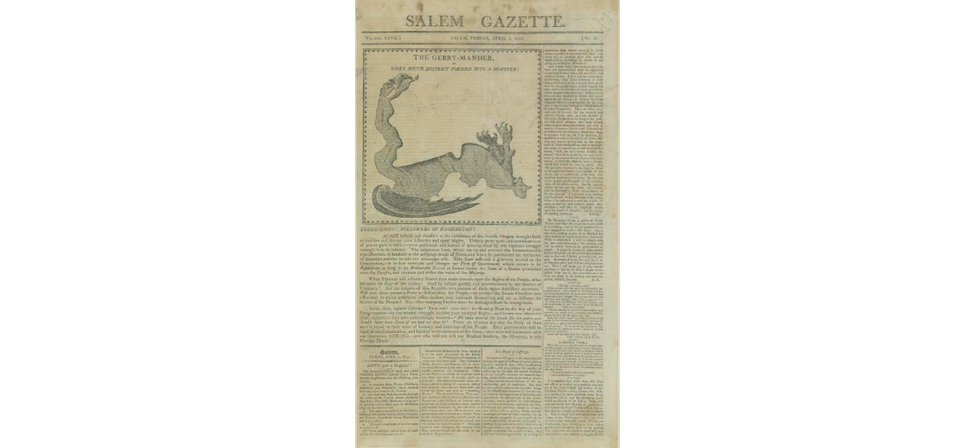
As the 1813 cartoon shows, when a district’s shape is downright strange, it’s time to look for gerrymandering. It may not be there – but it is time to look for it. Avoiding gerrymandering is easy – pick a corner of the state – northeast, southeast, northwest, southwest, and move in a single direction, drawing your lines as the population dictates. Easy and honest. If you want a long-term control, switch corners with each decennial census.
The challenge is that we have enshrined gerrymandering for racial equality. In the larger states we develop districts to ensure the representative is black. In the west, we make sure we don’t split up Reservations. I have no problem with this – but these exclusions keep us from the simple methods of establishing districts, and provide more opportunities for the folks who like to gerrymander.
Sometimes gerrymandering gets so bad even the courts notice it – and that’s what we are seeing in New York. You don’t need election fraud if you can skew the map in your favor. The original gerrymander was drawn to change partisan electoral advantage, not for any individual’s electioneering edge.
Elbridge Gerry was in many ways a principled politician, and a man deserving of the title “founding father”. He signed the Declaration of Independence and the Articles of Confederation. He refused to sign the Constitution because it did not include a bill of rights. He was the nation’s fifth Vice-President. Sometimes history provides us with a descriptor that doesn’t match our best behaviors.
If we ignore the partisan makeup of an area, and just follow the compass bearings, avoiding gerrymandering is easy.
-
We’ve made the first of April – and this is the time when it is possible to look at the data and say, “Our snowpack is well above normal.” The measurement on March 31 was 41.8 inches of water, 116% of average.

NOAA’s seasonal temperature outlook leads us to infer that this Spring will melt a bit slower, so we expect a cool Spring with normal moisture. Summer, of course, can’t be projected from this data.

-
I read that MIT is reinstituting standardized testing for admissions. I didn’t think much on standardized tests – the ACT and SAT specifically – when I was in high school. I did well, racked up some high scores, and went on my way. I made no attempt to understand what it was like for the guy with a low score.
Three people that crossed my path made me stop and examine what it is like – none of them failures in life, but each put in a bind by accomplishing more with a high work ethic than high test scores. One was a student who laboriously tried to memorize the order of operations to use his calculator to solve problems. He had done well before he wound up in my class – where he encountered the dreaded “story problems.”
The second was a nice lady whom I met but once – as we sat alongside each other, taking the GRE. I had missed sleeping the night before as a new puppy’s discomforts and whines murdered sleep. Exhausted, I asked her to wake me if I fell asleep in the GRE. She awakened me 4 times, and explained that she was taking the test for the third time – she had to score at the 25th percentile to be admitted to a graduate program in which she had successfully completed all of the required coursework.
The third was the valedictorian from a rural South Dakota school who had scored right at the 25th percentile on her ACT and was having a terrible time at the land grant university. As I looked at her academic record and test scores, she explained with anger – “The professors here just don’t understand that I’m smart.”
There may be flaws in the ACT and SAT – but I suspect it was valedictorians like this one that sent MIT running back to the college placement tests. Good personality, good work ethic, and she really was the valedictorian. Unfortunately, the ACT has become a near-universal test, and memory tells me that an IQ of 90 is mighty close to the 25% mark. That isn’t MIT material. Heck, it wasn’t land grant material – there was a reason her professors at State didn’t understand that she was smart.
My student at TSJC was attending a junior college – we had open admission for anyone with a high school diploma or GED. I doubt that his class standing would have been enough to get him into MIT even at a time when they weren’t using ACT or SAT – but he reminds me that, in today’s world, we lack places for our slowest. The nice lady, struggling to score at the 25% level on the GRE reminds me that the level for our slowest is moving up. There was once a place for the “low normals”. Those career paths are becoming more crowded.
As a school board member, I am a bit more concerned with test results. I’d like to see Trego as its own Lake Woebegone – where all of our students are above average. What bothers me is the difference a half-century makes – there are fewer and fewer jobs where a strong back and a solid work ethic can make a living for a lifetime.
That is a problem – but another problem exists when we collectively make a decision that placement tests are flawed because they do not produce politically correct results.

I copied this illustration on SAT scores and outcomes from freddiedeboer.substack.com It’s particularly interesting to an academic – the correlation of 700 scores with doctorates is well over 30%, while the correlation with tenure was down below 5%.
One of de Boer’s comments is “ I’m not super beat up about losing gifted and talented programs, as the students in them are going to be fine no matter what. They are, after all, gifted and talented.” The SAT and ACT basically test IQ first and academic preparation second. It isn’t surprising that the smartest kids are likely to do better in school.
Still, college is an industry. It has reached a point where at least part of the product is the “college experience”. If more students means more dollars, the way to increase the number of students is to become less selective, and recruit further left on the bell curve.
In reality, my Ph.D. actually says “He is trainable. He did acceptable research once.” If we look at juris doctorates, 50% of JDs graduated in the bottom half of their classes. That’s why they have the bar exams – to further trim them out after law school. And being at the bottom of your class isn’t that great a handicap – Custer was at the bottom of his class, and look at what he accomplished. Come to think of it, wasn’t Biden was pretty close to the bottom of his class?
-
It’s only about four and a half miles from downtown Trego to the Volunteer Fire Department for Fortine, which is where we used to go to vote. Going into Eureka (as per that letter we all received from the county) will increase the distance by about thirteen miles (according to google maps).
The distance I am supposed to travel to vote just got multiplied by a bit over 3. Of course, I live in downtown Trego, which means that my distance increased less than most.
Looking at a map, it looks like the furthest up Fortine Creek Road are now going to be traveling close to thirty miles. That’s one way. Sixty mile round trip. Just to vote.
That, in combination with gas prices, provides an incentive for mail in ballots, despite the risks associated with those. We’re also assured that ballot drop kiosks will “encourage high voter turnout”. Hopefully, they’ll avoid the kind of problems they had last time.
Why do this? To quote the county:
The decision to consolidate polling places is based on careful consideration of the following criteria:
-Increased Ballot Security
-Less Ballot Transport
-Number of Electors within the precinct
-Distance between polling locations
-Accessibility/ADA compliance of polling place
-Accommodations for social distancing
-Election Judge participation”Frankly, I can’t see anything that incentivizes mail in voting as increasing security. As for decreasing ballot transport? Sure. By putting the cost on the voters in the form of gasoline and time. We’ll pay the same amount in taxes, but it will cost us more to vote. It might save the county government money, but it doesn’t do anything for the voters.
As for Accessibility and ADA? Making someone travel an extra forty miles so they can go to a building that’s closer to code might be true to the letter of ADA, but it doesn’t feel true to the spirit. At the TFS Fire Department, our election judges were local. I don’t have any doubt that they would have done whatever they needed to in order to provide the accommodations someone needed to vote. And- because we’re smaller, they’d have been able to take the time to do it.
Want someone to thank? Email addresses for all three of our county commissioners, and the election administrator that recommended it to them are available on the county website.
-
Driving home from the ophthalmologist, I had the radio on, and heard an announcement that the greatest comorbidity factor in covid was obesity. So I checked the net, and sure enough, I found that CDC announced:
About 78% of people who have been hospitalized, needed a ventilator or died from Covid-19 have been overweight or obese, the Centers for Disease Control and Prevention said in a new study Monday.
Just over 42% of the U.S. population was considered obese in 2018, according to the agency’s most recent statistics. Overweight is defined as having a body mass index of 25 or more, while obesity is defined as having a BMI of 30 or more.
I think back, remembering that the BMI was first termed the Quetelet Index – named after the guy who developed the equation – Adolfe Quetelet – an early stats guy and sociologist (most of his work occurred between 1820 and 1855) who worked in meteorology, astronomy, stats, sociology, demography, and even criminology. A researcher who was spread out across a lot of topics – and all related in the use of statistics.
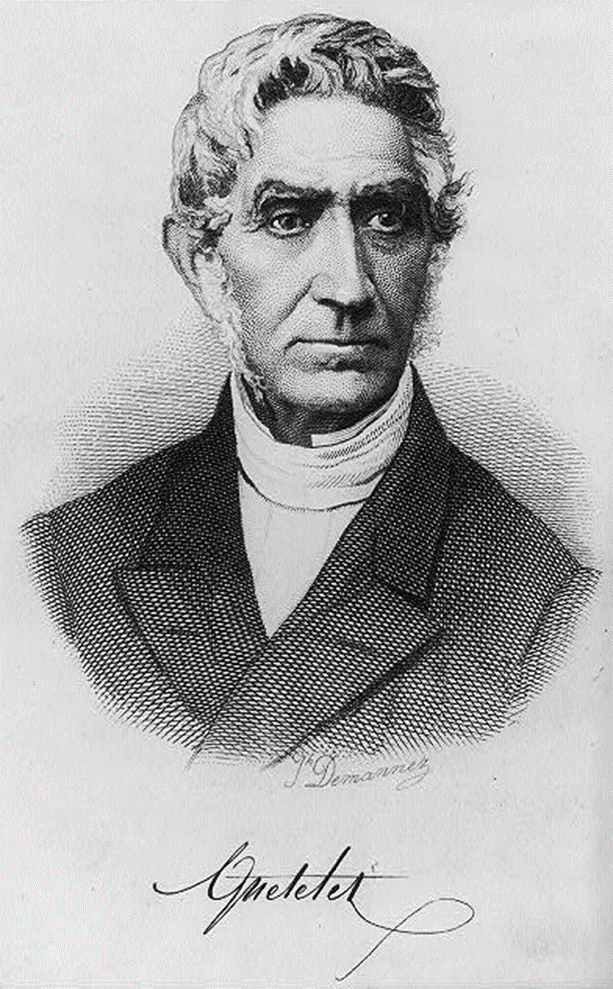
Quetelet’s index relates body mass to height, and the calculation is basically body mass divided by height squared. Obviously, flaws in the index will be exaggerated as you move away from the median – and Quetelet was a generation too early to be using fractional powers to correct that.
I see no reason to question the contention that 42% of the US population qualifies as obese, using the BMI . . . though I do question grabbing an pre-civil war equation and shifting it, unchanged to evaluate obesity. At any rate, if we’re looking at 42% of Americans as obese, it’s kind of hard not to figure another 36% might well be overweight – at 218 pounds, and 6’3” I come out overweight on the BMI. Muhammad Ali weighed in at 215 when he fought Frazier – and at 6’3” he too checked out as overweight. Neither man looks flabby to me. (Joe Frazier fought at 5’11” and 205 pounds – a BMI of 28.6)

I have a hunch that obesity is indeed the most significant comorbidity with covid. I just wish that Quetelet’s Index had been a better researched, more developed equation when it was renamed the BMI and became a standardized measurement.
-
I was 12 years old when I got glasses to correct my myopia – I needed them to see well at distance. Reading, not so much – and I held on until I was 50 before I had any use for bifocals. That’s a long time – and over time, when you do the same thing repeatedly, you develop habits.
At first I read with my glasses on. Then I started taking them off to read, and wandering around indoors without glasses. And now, after getting cataract surgery and replacement lenses, I find that my habits are counterproductive. I pick up a book without glasses, and have to hunt down the reading glasses to read. I put on reading glasses when I step outside, and the entire world blurs.
There is some humor to the problem. Habits that have made my life easier for the better part of 60 years now lead me into mistakes. When I needed glasses for distance vision, it was fairly easy to tell when they needed to be cleaned. With reading glasses, any time you put them on, the world blurs.
One of the more extreme challenges is looking outside with near perfect distance vision, and wanting better detail. Habit directs me to put on glasses, the reading glasses blur the universe, and I realize that I’m not thinking – I’m behaving habitually. And I hear my advisor’s voice from back in my master’s program saying, “Habits have a way of becoming habitual.” He was stressing that your outlook is a product of your thinking habits – upbeat thoughts lead to being happy, depression reinforces depression. The message got into my conscious mind – and now, with a physical example of my habits becoming habitual, 30 odd years later, his message has returned.
It is a great Spring to have good vision returned to me. The ice is leaving the pond. The geese and ducks are much more distinct and easy to watch. I can focus on the front sight of the 03A3. I’m looking forward to using the scope-free Reising 22. And I’ve been promised that in another month or so, the vision changes will be solid enough that I’ll be able to get by with a single prescription of reading glasses. And some new habits.
-
For seven years, we have watched Goose and Gander nest on their island in the pond, and successfully raise a hatch of five to nine goslings each year. I gained a lot of respect for the Gander when two eagles flew over, and he took to the air to distract them from the nesting goose, flying over the house where he could dive into friendly territory. His duties, in general, consist of patrolling around the island and intercepting threats. She took the physical damage of sitting on the nest for weeks, poor nutrition, and general physical decline accompanying the success of each new hatch. Last fall, as the flock flew away, we wondered if she would make it through the winter.
She isn’t back this Spring. Though it is hard to tell lesser Canada Geese apart by markings, she had recognizable posture after the hard years. Gander is back, and working at teaching the young replacement that he knows the safest, most defensible, absolutely best place for their nest. She is willing to accept his choice of our pond, but continues to look at every possible nesting site. The two Goldeneye ducks that nest alongside the old goose nest watch in puzzlement – life once went predictably, Goose would nest, and they would nest close by, where Gander would control access by water. Now, instead of a responsible goose, ready to start laying eggs and nesting as the last of the ice goes out, the little diving ducks have to wait on the new bride – who seems to be more interested in courtship than the responsible efforts needed for the next generation. Gander, lacking words and language, is more challenged than I have ever seen him.
He came back to the pond, leading all of last year’s hatch – I guess the first tip off that Goose was gone was that this year they haven’t been hanging around. I suspect step-mothers that are your own age are as hard to take for Canada geese as for people. It is going to be interesting to see how much Gander shares of the decision-making process. He demoted Goose from leadership when she led the little flock to an eagle who was making a dinner of a dead muskrat . . . though there is something unusual in seeing Gander get airborne to threaten a grounded eagle as the goslings flee back to the water.
I kind of miss the old goose – but I look forward to watching Gander’s future life.
Want to tell us something or ask a question? Get in touch.

Recent Posts
- Voting Yourself In
- A Few Charts and Trends
- The Density of Water Explains When Dickey Lake Freezes
- Watching Iran
- The Quality of Numbers
- Robert Treat Payne Had Traveled To Greenland
- 75 Years Ago in New York
- Recovery Time for a Retiree
- Venn Diagram and DSM
- When Castro Was Cool
- You Have To Beat Darwin Every Day
- Computer Repair by Mussolini
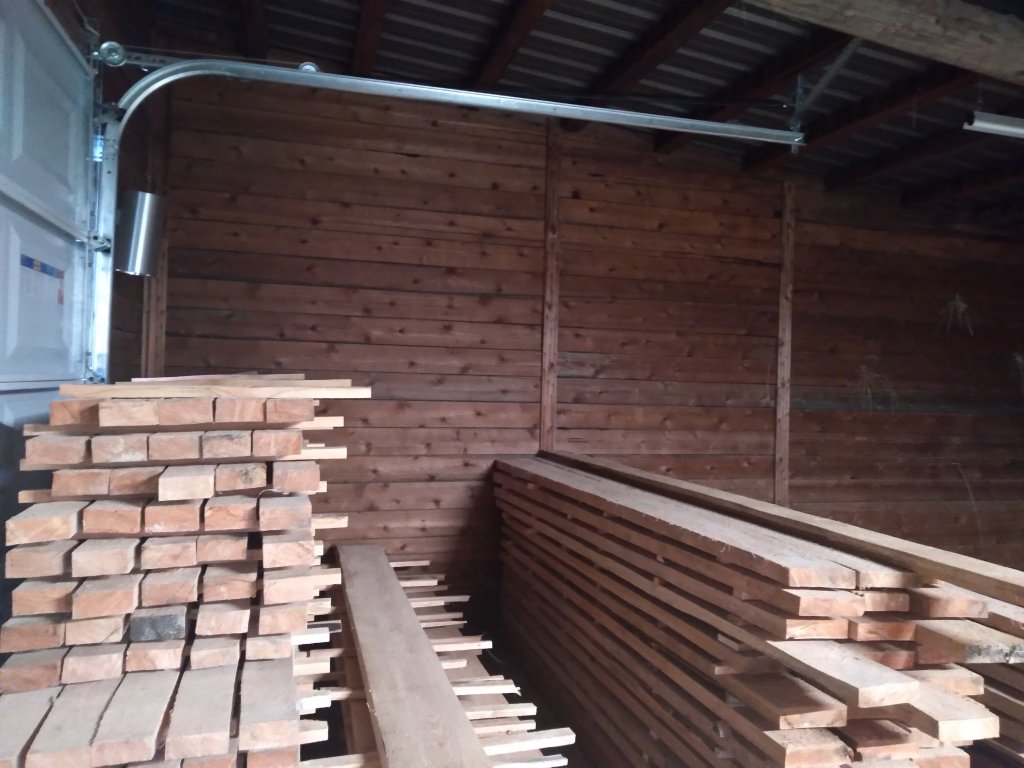
Rough Cut Lumber
Harvested as part of thinning to reduce fire danger.
$0.75 per board foot.
Call Mike (406-882-4835) or Sam (406-882-4597)
Popular Posts
Ask The Entomologist Bears Books Canada Census Community Decay Covid Covid-19 Data Deer Demography Education Elections family Firearms Game Cameras Geese Government Guns History Inflation life Lincoln County Board of Health Lincoln County MT Lincoln Electric Cooperative Montana nature News Patches' Pieces Pest Control Politics Pond Recipe School School Board Snow Taxes Teaching travel Trego Trego Montana Trego School Weather Wildlife writing
 Trego's Mountain Ear