-
There’s a balance to be struck between the hard facts of a textbook and the beguiling prose of historical fiction. That said, modern textbooks are increasingly less “dry”, and more conversational.
Some of that may be an acknowledgement to the attention span of modern readers (Not, actually, shorter than the average goldfish, as it happens. But research does suggest a possible decrease, beyond the anecdotal commentary of previous generations), but another aspect is the human fascination with stories.
We are better at learning stories than lists of facts- so much so, that “create a story out of it” is a memorization tool taught to teachers and students alike. It makes sense that we would be; stories have been with us a long time, much longer than the written word, and there’s an argument to be made that modern humans evolved with them.
Regardless, general observation would tend to indicate that children, and people in general, are more interested in stories than they are in dry lists of facts and summaries of theory.
Thus, literature-based curriculum. Once, the guidance would have been to supplement the dry textbook with related reading. Take Radium Girls as an example: include it as a suggested addition to a lesson on radioactive decay. Or perhaps tell the story of Thomas Midgley, an engineer with a greater inadvertent negative environmental impact than most could aspire to accomplish deliberately, as part of a lesson on toxins.
Literature-based curriculum takes this a step further. Start with the story. Then, teach the concepts, the facts, the details as part of that story. Because the parts of a story matter; the names for the various layers of the atmosphere…mostly don’t, unless you have a good reason to think they should.
This has the additional advantage of encouraging literacy, especially important when it’s an area that students struggle in.
Trego School has recently shifted to literacy-based curriculum, especially for the younger students, and benefited from a grant from the Montana Masonic Foundation to help support this. This March, the school received $1,500 towards expanding the literature available to support their literacy-based program. The additional books will allow for more customization to student interests and reading levels.

-
A bit after the Sandy Hook shootings (2012) a friend, Rick Holm MD, was working on an article that could do a rational job of describing the challenges of coming up with a good, effective gun control policy. The following is an email conversation that occurred over several weeks, with Rick’s questions in bold italics, followed by my answers. Since Rick’s television program was part of the university, I was at one of those enviable times when I could take the time to fully answer the questions – usually not an option when someone called the Data Center. In the first paragraph, you will note that a single industry, located in Brookings, SD, was larger than Colt.
The data is 12 years old – but offers a perspective that is not common on the topic. The links may, or may not still be valid, but they show where I located most of the data:
How big is the gun industry?
On Hoovers, I checked the sales for Brookings own Daktronics – it was listed as 489.53 million. When I searched for Colt, I had two entries –Cold Defense LLC at 208.81 million in sales, and Colt’s Manufacturing Company LLC at 24.3 million. Those were the only entries for Hartford, CT – home to Colt since before the war between the states – so it looks to me like Colt is about half the size of Daktronics. The Rainbow Play Systems facility in Brookings is shown at 29.2 million – so it’s actually larger than Colt’s Manufacturing. When Winchester shut down six or seven years ago, the layoff was less than 200 employees. Sturm, Ruger and Company showed up on Hoover as 328.82 million in sales. D&B Hoovers
Violence is actually decreasing, right?
Steve Pinker’s work shows that we’re living in the least violent time in human history. He identifies institutional changes that have decreased levels of life-threatening violence. The rise of states 5,000 years ago dramatically reduced tribal conflict. In recent centuries, the spread of courtly manners, literacy, commerce, and democracy have reduced violence even more. Polite behavior requires self-restraint; literacy encourages empathy; commerce switches encounters from zero-sum to positive-sum gains; and democracy restrains the excesses of government. Edge: A HISTORY OF VIOLENCE By Steven Pinker
Does that include these rampage killings like the elementary school in CT?
Probably – this is one of those spots where, if I cherry pick the data, I can assemble something that correlates with just about everything. The record in Africa is held by William Unek – but he did one in 1954 (killed 21 people with an axe), then did a repeat performance in 1957 with a bolt action rifle and an axe – he killed 36 more that time. The record for the Americas is held by Campo Elias Delgado, an English teacher and VietNam veteran who killed thirty people and wounded 15 with a knife and a 32 caliber revolver in Bogota, Columbia, 1986.
In the US, that same year, Pat Sherrill brought the phrase “going postal” into the language when he killed 14 co-workers and wounded 6. http://www.time.com/time/magazine/article/0,9171,144859,00.html
How do assault rifles figure in to make these rampage killings more lethal?
They haven’t yet – the restrictions on machine guns have been in place for nearly 70 years, and the only murder done with a registered machine gun was done by an Ohio police officer, Roger Waller in 1988. See, by definition, an assault rifle is fully automatic.
If we’re talking sloppy, about semi-automatic rifles that resemble assault rifles, we don’t have access to data that separates rifles into categories – we do know that, according to FBI statistics, In 2011, 323 murders were committed with rifles and 356 with shotguns. 496 were committed with hammers and clubs and 1,694 were killed by “knives or cutting instruments.” It does kind of put things into perspective. FBI — Table 20 Much as it pains me to admit it, about half the nation’s murders are done with handguns – but that doesn’t lead to a logical conclusion that if you get rid of the handguns you’ll cut the murder rate in half.
Why can’t we assume that getting rid of the weapon responsible for half of the murders will cut the murder rate in half?
We have two separate 50% categories – first, half the homicides are with handguns – but human beings are adaptable – there are a whole lot of things that can substitute – like a 12 gauge shotgun that encounters a hack saw . . . or a handgun that wasn’t registered. Or an increase in knives and hammers – remember, the crazed ex-con who was shooting firemen a few weeks back started with a hammer to kill his grandmother.
The second 50% category is racial – homicide rates for white males was 10.9 per 100,000 in 1980 – in 2007 it was 5.4 – basically cut in half over 30 years. The real wow is that we’re looking at 39.7 (per 100,000) black males in 2007. A Black man is more than 7 times more likely than a white man to be murdered – 2007 showed 8914 white homicide victims and 8870 black victims. Basically, an eighth of America accounts for half the murder victims, and half the murderers.
I think it’s rational to believe that if we could kick Chicago out of the USA, we could reduce homicides by 5 percent – but we don’t have a mechanism in the constitution to let us boot a city.
I can paint a statistical argument that we can reduce gun violence more by giving up the war on drugs than limiting firearms – but I’m a numbers guy, not a policy wonk. On the other hand, it’s hard to believe folks who recommend policies and ignore facts are as good as they think they are.
How about other countries that have fewer guns in private hands?
Absolutely – we are the best armed civilians in the world. On the other hand, other countries may not be as disarmed as we believe – a lot of Europe was fought over in WWII, and I’d hate to guess how many guns were stashed somewhere. The Small Arms Survey 2012 is available at http://www.smallarmssurvey.org/publications/by-type/yearbook/small-arms-survey-2012.html and we have versions going back to 2001. Among other things, 2007 shows:


Gary Mauser published this in 2006:
Again, the data is all over the map – but the second highest murder rate occurred in Luxembourg, where no guns are owned.
England banned guns, and now homicides are down, right?
Sure – gun homicides are much lower than in the US, and the homicide rate is just about half . . . remember those two 50 percent correlations . . . in the US about half of the homicides are committed with handguns, and about half the homicides occur with black victims and perps. England’s total crime rate is a little higher than in the US – I can correlate things, or I can admit I’m comparing apples and oranges. It isn’t that simple. The reality is that the homicide rate is dropping with or without gun control or bans – and that makes it really hard to compare different places. Japan has virtually no guns, very few homicides, and is racially extremely homogeneous. I could credit the low homicide rate on few guns, or on racial homogeneity – but neither call would be scientifically responsible. The Japanese, and the Brits, have always had lower levels of gun homicides . . . even before the bans. Suicide, on the other hand . . .
Former- president Clinton said that half the mass killings in the US have occurred since the Assault Weapons ban expired – what do the statistics say?
He has been pretty casual with the truth. This is a place where, if I pick a specific time span, and start late enough, I could probably make an argument that would support him. On the other hand, if you take American history, as he seems to be doing, that isn’t the case. The whole problem is that, if I cherry pick the data, I can show a correlation for either side of the argument . . . and probably associate gun ownership with natural disasters.
Can you sum up an answer?
Sure – let’s go back to the President’s initial idea – we want to reduce violence. Nationally, internationally we’ve been doing a great job – violence is way down. So we get folks who look at things logically, and say “If there weren’t any guns, nobody would get shot.” It’s true – but a gun is easy to build, the technology is there, and the knowledge is there. One of my friends built a single-shot pistol from a hospital bed in southeast Asia – he didn’t want to be unarmed there during the Tet offensive. We’re not talking rocket science here – I imagine you and I could wander through your hospital and pick up enough stuff to build a pistol just like Harold did – though he did have more skill than we do (despite being only a high school graduate) and the Viet Cong probably provided a little extra motivation. I know his trigger mechanism came from a ballpoint pen, and I think vitamin C tablets provided the basis for his propellant.
Anyone who wants to check the record of our great success in outlawing and banning marijuana and methamphetamine should be able to predict how well a gun ban would work. My point is that we have reduced violence. I suspect the shoot ‘em video games do condition players to look at people as targets. There are people who flat shouldn’t own guns – or dogs, or cats, or cars, or machetes.
***
Rick died (pancreatic cancer) a couple of years after I retired and moved back to Montana. I don’t know if he ever published the article he was working on. Still, this was a pleasant reminder of working with a friend to keep the science and data right on a controversial topic. Fair winds and a following sea, my friend.
-
Among my native students, occasionally I’d hear the comment “I’ve been assimilated” when another student would point out behavior that seemed inconsistent with the tribal background. The phrase got me wondering – just how much did the American Indian assimilate the European immigrants who moved to the New World in the seventeenth and eighteenth centuries.
In Appalachia, both the native Cherokee and the immigrant Scots had similar clan structures – sure, the Scots were patrilineal while the Cherokee were matrilineal, but both societies were otherwise similar. Sam Houston was a Scots-Irish kid who was pretty well assimilated by the Cherokee (he left home at 14 to live among the Cherokee, and, while a successful White American politician, Sam really didn’t socially resemble his European forebears.
Genetically, I assay out less American Indian than Elizabeth Warren. When I was working at SDSU, I had opportunities to check out the Dawes Rolls – and learned that the relative my Grandfather had in the Nations was an Elizabeth McCurry who had married into the Choctaw. Not a particularly unusual thing – Tecumseh was close to marrying a white girl. Assimilation works both ways – and that seems to be something that the folks who stayed in Europe don’t seem to recognize.
We white Americans have been assimilated by the Indians among whom we lived for generations. Our form of government was copied from the Iroquois Confederation – a grouping of five northeastern tribes that occurred in the 12th Century and strongly influenced the structure of the US government (just as a point of fact, the Iroquois Confederation has lasted longer than our Constitutional form of government – even if we count from 1776).
If you look at world history in terms of Wallenstein’s World Systems theory, I can make an argument that Europe became a group of colonies (American colonies that is) somewhere between 1939 and 1945. For the past 80 years, the US dollar has been the world currency. The British Empire really ended with the agreement that the American dollar was the world currency. France ended it’s claims to empire with the Franco-Prussian war in 1870, and World War 1 ended the fledgling German Empire, the Russian Empire, the Austria-Hungary Empire and the Ottomans. Thing is, while we benevolently treated our European economic colonies, we didn’t work at assimilating them.
So I kind of understand the European leaders being shocked that a change in American Presidents yielded a change in support for Ukraine – they look at the Donald and think “White like me.” They didn’t realize that even a New York real estate tycoon and reality TV star has been assimilated a bit.
I guess the fact that we speak English screwed up the Brit prime minister – but the English language shows how the Saxons assimilated the Norman French (who were actually Vikings that were assimilated by the French). Cultures assimilate both ways – and there’s still a touch of the American Indian cultures that shows up in American diplomacy.
-
If I ever thought I was a great teacher, the years I worked with Connie Malyevac showed me that I wasn’t. We worked in the Academic Reinforcement Center at Libby’s branch of FVCC – and, in general, Connie knocked my socks off.
Probably her training had something to do with it. Connie went to Gonzaga, and held certifications in high school math and English. The classics – reading, writing and arithmetic. Her task was to take students who had missed the “3 R’s” in high school and make them ready to operate as college freshmen. And she did it with amazing competence. Her memorial is in her students and their accomplishments.
It’s not that I was a bad teacher – but I stood on the backs of great teachers. For me to do a good job, I needed students who came out of high school with algebra down pat, and with the ability to write. Connie could ferret out the weaknesses and correct them. I couldn’t even understand how the kids made it through high school without understanding basic algebra.
Connie could teach both mathematics and English. Later, I renewed my acquaintance with English teachers – some of whom were award winning English teachers – who couldn’t do math. To be fair, I also ran across math teachers who couldn’t teach writing. Connie’s greatness was in being able to mix the two – and after years in the academy, I realize what an unusual combination that was, and the training at a Jesuit university was a large part of developing her ability.
I can’t show any awards – like being the state’s teacher of the year or something similar – for Connie. But I can say that I was a good teacher in the presence of greatness. And we need more great teachers.
-
Forty-odd years ago, I was tasked with developing a computer class for gunsmithing students. The gunnies weren’t dumb – but the traditional methods of teaching computer applications didn’t arouse much interest. Fortunately the library at TSJC was probably the best library in the nation – possibly the world – when it came to gunsmithing and shooting.
I wasn’t a better teacher than Charlene – but I was better at teaching gunnies. Back in those pre-internet days, a few of the students who came in for the one week NRA courses were playing with computer applications – and I met quite a few of them that Summer as I developed the course. Anymore, all the information is online – but then, combining the computer with gunsmithing education was new. They learned because I stocked the computers with applications that were useful to them.
So a couple weeks back, I got to wondering what would be the ballistic advantage of a 22 magnum in a handgun (over a 22 long rifle). I found a website called ballistics by the inch. It provided more information than I had asked for – with this cautionary note:
ATTENTION: Effective Sept 1, 2020, the BBTI Project is in “Archive Status.” No further tests will be conducted, but we will maintain this site and data for the use of the firearms community. Thank you.
It’s a great site. I can understand why the authors quit testing – they have covered most of the bases. For example, if I look at a 22lr, I come up with a muzzle velocity of 1101 feet per second from a six inch barrel. (CCI minimag).
The CCI 22 mag test shows 1484 fps – a 34% increase in velocity/energy.
This graph shows the differences between all the 22 ammunition they tested:

It intrigued me – years ago, I bought a Smith & Wesson Escort – mostly because it had a terrible reputation for jamming, and I wanted to see if I could beat whatever design flaws were in it. I filled the magazine with Aguila 60 gr SSS cartridges, and the little beast hasn’t jammed since – and this chart shows that it’s just a little over 40 foot pounds of muzzle energy. Ah, well, I solved the reliability problem – the problem of a 2 inch barrel’s lack of energy is a different story.
There is a lot of data available at http://ballisticsbytheinch.com/index.html . If you’re looking at the changed performance of 9mm cartridges, or 357 when they are fed through a carbine, it’s a good site to visit.
-

Memories and photos both can misrepresent the past. Westend61 via Getty Images Gabrielle Principe, College of Charleston
In 1990, George Franklin was convicted of murder and sentenced to life in prison based on the testimony of his 28-year-old daughter Eileen. She described seeing him rape her best friend and then smash her skull with a rock.
When Eileen testified at her father’s trial, her memory of the murder was relatively fresh. It was less than a year old. Yet the murder happened 20 years earlier, when she was 8 years old.
How can you have a one-year-old memory of something that happened 20 years ago? According to the prosecution, Eileen repressed her memory of the murder. Then much later she recovered it in complete detail.
Can a memory of something so harrowing disappear for two decades and then resurface in a reliable form?
This case launched a huge debate between memory researchers like me who argue there is no credible scientific evidence that repressed memories exist and practicing clinicians who claim that repressed memories are real.
This controversy is not merely an academic one. Real people’s lives have been shattered by newly recollected traumatic experiences from childhood. I’ve seen this firsthand as a memory expert who consults on legal cases involving defendants accused of crimes they allegedly committed years or even decades ago. Often the only evidence linking the defendant to the crime is a recovered memory.
But the scientific community disagrees about the existence of the phenomenon of repressed memory.
Freud was the father of repression
Nineteenth-century psychoanalytic theorist Sigmund Freud developed the concept of repression. He considered it a defense mechanism people use to protect themselves from traumatic experiences that become too overwhelming.
The idea is that repression buries memories of trauma in your unconscious, where they – unlike other memories – reside unknown to you. They remain hidden, in a pristine, fixed form.
In Freud’s view, repressed memories make themselves known by leaking out in mental and physical symptoms – symptoms that can be relieved only through recovering the traumatic memory in a safe psychological environment.
In the 1980s, increasing numbers of therapists became concerned about the prevalence of child sexual abuse and the historical tendencies to dismiss or hide the maltreatment of children. This shift gave new life to the concept of repression.
Rise of repressed memory recovery
Therapists in this camp told clients that their symptoms, such as anxiety, depression or eating disorders, were the result of repressed memories of childhood sexual abuse that needed to be remembered to heal. To recover these memories, therapists used a range of techniques such as hypnosis, suggestive questioning, repeated imagining, bodywork and group sessions.
Did recovered-memory therapy work? Many people who entered therapy for common mental health issues did come out with new and unexpected memories of childhood sexual abuse and other trauma, without physical evidence or corroboration from others.
But were these memories real?
The notion of repressed memories runs counter to decades of scientific evidence demonstrating that traumatic events tend to be very well remembered over long intervals of time. Many victims of documented trauma, ranging from the Holocaust to combat exposure, torture and natural disasters, do not appear to be able to block out their memories.
In fact, trauma sometimes is too well remembered, as in the case of post-traumatic stress disorder. Recurrent and intrusive traumatic memories are a core symptom of PTSD.
No memory ≠ repressed memory
There are times when victims of trauma may not remember what happened. But this doesn’t necessarily mean the memory has been repressed. There are a range of alternative explanations for not remembering traumatic experiences.
Trauma, like anything you experience, can be forgotten as the result of memory decay. Details fade with time, and retrieving the right remnants of experience becomes increasingly difficult if not impossible.
Someone might make the deliberate choice to not think about upsetting events. Psychologists call this motivated forgetting or suppression.
There also are biological causes of forgetting such as brain injury and substance abuse.
Trauma also can interfere with the making of a memory in the first place. When stress becomes too big or too prolonged, attention can shift from the experience itself to attempts to regulate emotion, endure what’s happening or even survive. This narrow focus can result in little to no memory of what happened.

A forgotten memory isn’t just waiting around to be rediscovered – it’s gone. malerapaso/E+ via Getty Images False memories
If science rejects the notion of repressed memories, there’s still one question to confront: Where do newly recollected trauma memories, such as those triggered in recovered-memory therapy, come from?
All memories are subject to distortions when you mistakenly incorporate expectations, assumptions or information from others that was not part of the original event.
Memory researchers contend that memory recovery techniques might actually create false memories of things that never happened rather than resurrect existing memories of real experiences.
To study this possibility, researchers asked participants to elaborate on events that never happened using the same sorts of suggestive questioning techniques used by recovered-memory therapists.
What they found was startling. They were able to induce richly detailed false memories of a wide range of childhood traumatic experiences, such as choking, hospitalization and being a victim of a serious animal attack, in almost one-third of participants.
These researchers were intentionally planting false memories. But I don’t think intention would be necessary on the part of a sympathetic therapist working with a suffering client.
Are the memory wars over?
The belief in repressed memories remains well entrenched among the general public and mental health professionals. More than half believe that traumatic experiences can become repressed in the unconscious, where they lurk, waiting to be uncovered.
This remains the case even though in his later work, Freud revised his original concept of repression to argue that it doesn’t work on actual memories of experiences, but rather involves the inhibition of certain impulses, desires and fantasies. This revision rarely makes it into popular conceptions of repression.
As evidence of the current widespread belief in repressed memories, in the past few years several U.S. states and European countries have extended or abolished the statute of limitations for the prosecution of sexual crimes, which allows for testimony based on allegedly recovered memories of long-ago crimes.
Given the ease with which researchers can create false childhood memories, one of the unforeseen consequences of these changes is that falsely recovered memories of abuse might find their way into court – potentially leading to unfounded accusations and wrongful convictions.
Gabrielle Principe, Professor of Psychology, College of Charleston
This article is republished from The Conversation under a Creative Commons license. Read the original article.
-
The Eureka Community Players undertook the challenge of writing plays and is presenting their new play on Sunday, March 23rd. Done in an anthology format, “Seasons on the Farm” – An Afternoon of 10-minutes Scenes Written by Local Writers, begins at 3:00 p.m. at the Timbers Event Center.
This is the second year that the Players have hosted a writers’ group. The group began with a workshop in October. In the workshop, we set certain parameters: 10-12 minutes with 2-3 actors all set in a mutually agreed upon space: a farm. The writers met every two weeks with the final script done in January. Auditions were held in February for actors and directors.
Last year’s play “The Waiting Room” was the Players first attempt at writing a play. “Seasons on the Farm” is our second and slightly different. The Waiting Room’s scenes each stood alone, only similar in that they were set in a waiting room. The Seasons on the Farm’s scenes are tied together by the Narrator / Farm Wife, beginning and ending with her moving away from the farm; and sharing friends and neighbors’ stories in between. The Narrator is played by Loree Campbell. Besides narrating the play, she is also the Grandmother in two of the scenes.
Act I includes “Memories or Grandma Magpie” by Sharon LaBonty; “Sunflower Seeds” by Noelle Nichols; “Who Can Work on a Farm” by Becky Gray; and “Farm Olympics: The Grains of Glory” by Adrian Miller. “Never Trust a Girl in a Hay Loft” by Mike Workman; “All in a Day’s Work” by Judy Russell; and “Fun on the Farm” by John LaBonty make up Act II. The afternoon ends with a talk-back / question and answer session with the writers.
People new to the ECP Writers Group this year were Noelle Nichols, Becky Gray, Mike Workman and Judy Russell. We also use this play as an opportunity for people interested in directing to try it out in a 10-minute format. New directors this year are Madeline Richards and Nancy Haugan. Returning directors are John and Sharon LaBonty, Adrian Miller, Lisa Priller, Kelley Comstock, and Rachel Lautaret Clear.
Many of Eureka’s favorite actors are bringing these original scenes to life. The actors include Alan Guderjahn, Danica Cate, Hugo “Four” Granados, John Priller, Judy Russell, Ethel White, Nancy Haugan, Emily Benge, and Rachel Clear. New faces on stage are Carolyne Snipes, Amy Currie, Devin Braaten, and Daniel and Isaac Lane.
The Players hope to continue this anthology writing as an annual event. The Eureka Community Players invite anyone that is interested to join us. As Sharon LaBonty, Coordinator, said, “Working together, supporting each other, has been fun!”. Just talk to Sharon or call/text her at 406 / 263-9208 for more information.
-
House Bill 567 has passed the house and awaits senate review. The bill is designed to incentivize increased cooperation between school districts at the county level.
Multi-District Agreements between districts take many forms: Curriculum cooperatives and special education cooperatives are a common means of resource sharing.
This bill increases the quality educator payment that districts receive in order for participating in a county level multi-district agreement. However, all of the districts in the county must participate for this to be the case. Quality Educator Payment is awarded based on the number of teachers, so this provides a larger fiscal incentive to larger school districts.
Essentially, the way the bill is worded, any of the little rural districts could refuse to participate and deny the rest of the schools in the county the payment increase.
Additionally, this isn’t designed to facilitate small agreements addressing single things:
The programs of the participating districts that are mutually administered must 15 include, at a minimum:
(A) administration functions, including budgeting, payroll, human resources, elections, and services provided in support of the board of trustees;
(B) custodial services;
(C) instructional services and support, including remote instruction, selection of textbooks, library and media services and curriculum development and implementation;
(D) K-12 career and vocational/technical education and work-based learning;
E) school food services;
(F) software licensing and other information technology;
(G) extracurricular activities;
(H) special education programs; and
(I) transportation for instruction and school activities.Some of these make a great deal of sense for school districts to cooperate on. It’s often a better deal, financially, to bulk purchase software. Special education has so many requirements for various specialists that small districts essentially have to join cooperatives, and extracurricular activities might benefit from resource sharing.
But one has to ask; How exactly is sharing lunch programs and custodial services going to be beneficial, across county schools? Can we simply send our staff to the same trainings, or does it need to be more complicated?
If this does get signed into law, I’ll run the numbers for how much it would increase the general fund budget of each of the local school districts. For now, however, it’s still “wait and see”
-
It seems more significant than the Trump tariffs. The predictions are that this week, the Hudson’s Bay Company will declare bankruptcy. The Bay company has been in business since 1670 – I think it is the longest continuously operating business in North America. Obviously it’s a coincidence that HBC is also an abbreviation for Here Before Christ – but the Hudson’s Bay Company is still a longtime institution.

The Bay Company doesn’t directly influence our local economy anymore – but Thompson Falls gets its name from David Thompson – the Company’s geographer who explored the West didn’t stay north of the 49th parallel.
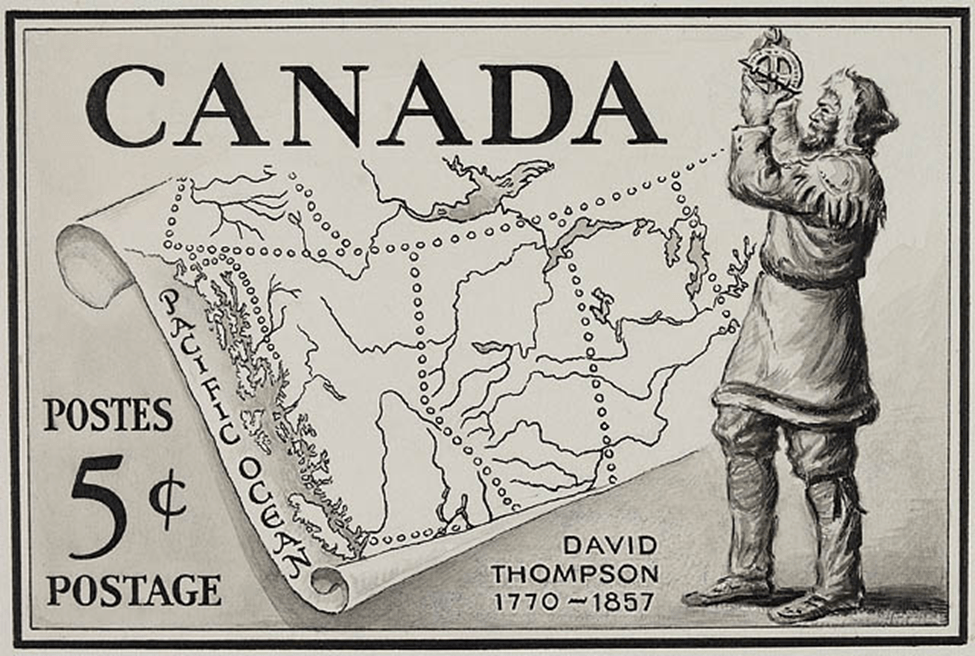
Neither did Peter Skene Ogden – whose name graces a city in Utah. One of Ogden’s evaluations from his labors for HBC describes him as ‘possibly the most unprincipled man in Indian country.’ And now, the Hudson’s Bay Company is looking at bankruptcy.
I’ve never made a purchase from HBC – but the history and the connection with the Rocky Mountain west make it relevant. Still, when the Bay Company has grown to include Saks Fifth Avenue in New York, it may have lost all connection with the rural areas and the fur trade. Still, I hope the company can turn around – after 350 years, I would hate to lose the name and history,
-
I was in high school when they passed Daylight Savings Time. Lyndon Johnson signed the Uniform Time Act of 1966 into law. To be brutally frank, I didn’t regard LBJ as one of our great presidents – there’s still a distant echo that translates to “Hey, hey, LBJ, How many kids did you kill today?”
A couple years ago, Marco Rubio proposed making Daylight Savings Time year around. If I’m remembering correctly, we went through that already back in 1974-75. Kind of sucked up here in the northern reaches – and it was probably worse for folks in Alaska. Still, with both Johnson and Rubio screwing with the clocks, we at least have evidence that both political parties want to shaft us.
I spent my first sixteen years without Daylight Savings Time, and I can’t say I ever woke up thinking that getting up an hour earlier would improve my life. Benjamin Franklin thought it might be a useful idea that would save on the cost of candles – but I’m modern and have electric lights. The other aspect of Daylight Savings Time is geographic – keeping Montana in a single time zone means that our time zone line has been moved a bit westerly. And we have it good compared to the Idaho folks:

I think that if the time zone didn’t follow our state boundaries, the point of change would be somewhere between Trego and Eureka – I’m not complaining about where the time zone is. I’m just pointing out that, from the perspective of when solar noon occurs, we’re essentially on year-round Daylight Savings Time already. It’s different for folks in Glasgow or Sidney or Havre. Montana’s a long state when you look at it from east to west.
I’ve lived with Daylight Savings for 80% of my life. I can handle a few more years of it. But the fact that Ben Franklin saved on candles in Philadelphia is offset by the fact that Philly is 9 degrees south of us. And just because Lyndon Johnson and Adolf Hitler both agreed that Daylight Savings Time was a good idea doesn’t make it so.
Spring ahead, Fall back.

Want to tell us something or ask a question? Get in touch.

Recent Posts
- Computer Repair by Mussolini
- Getting Alberta Oil to Market
- Parties On Economics
- Thus Spake Zarathustra – One More Time
- Suspenders
- You Haven’t Met All The People . . .
- Play Stupid Games, Win Stupid Prizes
- The Ballad of Lenin’s Tomb
- An Encounter With a Lawnmower Thief
- County Property Taxes
- A Big Loss in 2025
- Thinking of Clovis

Rough Cut Lumber
Harvested as part of thinning to reduce fire danger.
$0.75 per board foot.
Call Mike (406-882-4835) or Sam (406-882-4597)
Popular Posts
Ask The Entomologist Bears Books Canada Census Community Decay Covid Covid-19 Data Deer Demography Education Elections Eureka Montana family Firearms Game Cameras Geese Government Guns History Inflation life Lincoln County Board of Health Lincoln County MT Lincoln Electric Cooperative Montana nature News Patches' Pieces Pest Control Politics Pond Recipe School School Board Snow Taxes travel Trego Trego Montana Trego School Weather Wildlife writing
 Trego's Mountain Ear