-
Editor’s Note: Sometimes it is necessary to state, research, and publish the obvious. In this case, the obvious is that having a cannabis dispensary near a school is not a great thing. Unless there are more of them than google wants to admit to, the nearest one to Eureka Elementary is about half a mile.
I’ll suggest anyone still feeling 100% comfortable with marijuana consider reading about marijuana induced psychosis and the differences between marijuana now and what it used to be.
Middle schoolers are more likely to walk to school than their younger and older peers. Prostock-Studio via Getty Images Angus Kittelman, University of Missouri-Columbia and Gulcan Cil, Oregon Health & Science University
As more states legalize marijuana, researchers are examining the effects of legalization on society. Angus Kittelman, an assistant professor of special education at the University of Missouri-Columbia, and Gulcan Cil, a senior statistician at Oregon Health & Science University, decided to look at the effects of cannabis dispensaries being located near schools. They discuss their research in the following Q&A with education editor Jamaal Abdul-Alim.
Is it bad when a school is located near a dispensary?
Yes, it’s not good for a couple of reasons. When cannabis dispensaries are near middle schools, students are more likely to receive office discipline referrals for substance use. When students get sent to the office, they lose valuable instructional time in the classroom.
Adolescent cannabis use is also associated with many negative health effects, such as poorer cognitive functioning and increased risks for developing mental health or substance use disorders. Students who use cannabis are also less likely to complete high school or go to college.
With the legalization of recreational cannabis sales in many U.S. states, there are more cannabis outlets and greater access, which can be concerning for families and schools. In our recent study, for example, we found that the number of office discipline referrals for substance use increased in middle schools after legalization of recreational cannabis in the state of Oregon in 2015. But this increase was only when there were recreational outlets within a 1-mile radius of the schools.
Middle school students receiving an office discipline referral for substance use is relatively rare. An average middle school had three to four referrals of substance use per year. But those near an outlet experienced a 44% increase after legalization and had one to two additional referrals on average each year.
What’s causing the increase in referrals?
Great question. We analyzed student substance referrals after excluding referrals for tobacco and alcohol. We observed increases in substance referrals in Oregon schools after the statewide legalization of cannabis in 2015, compared with the trends in similar states with no legal cannabis at the time. We then examined whether having a cannabis dispensary within a 1-mile radius was associated with an increase in referrals.
We cannot say with certainty that the increase in all substance use referrals were from cannabis use. However, we know that cannabis is among the most common substances adolescents reported using. In a nationwide survey, for example, 8.3% of eighth graders reported using cannabis. That’s compared with 12% for vaping nicotine/tobacco and 15.2% for alcohol.
Besides potentially providing easier access to the product, when there are more legal cannabis stores in certain neighborhoods – and increases in signs and flyers advertising for it – it may make kids ignore or downplay the health risks. Increases in exposure to cannabis marketing is associated with adolescents being more likely to use cannabis.
Students often travel a mile or two to get to school. And those in middle schools are more likely to walk to school compared with students in elementary or high school. Therefore, even though adolescents are too young to legally buy cannabis themselves, having a cannabis outlet nearby makes it easier for them to obtain it from a friend or purchase it from a stranger.
What can be done?
Isn’t a 1-mile radius a rather large area?
We recommend that school staff look for patterns in student discipline referrals for substance use. If the substance use is occurring in certain school locations, such as playgrounds, hallways or bathrooms, staff can then supervise these areas better.
Schools may consider implementing proactive and preventive strategies to support students engaging in substance use. These can include having school counselors provide drug resistance skills training programs or programs that teach students how to manage emotions and to resist stressful situations.
Angus Kittelman, Assistant Professor of Special Education, University of Missouri-Columbia and Gulcan Cil, Senior Statistician, Oregon Health & Science University
This article is republished from The Conversation under a Creative Commons license. Read the original article.
-
Editor’s note: With recent events making waste disposal more interesting, I thought it worth reminding people of the ordinance the county health department enforces with regards to waste management.
One could be forgiven for assuming that community decay ordinances were the business of rather fussy municipalities in places other than here. One would, as it happens, be wrong on two counts. Lincoln County, Montana, has one.
Back in December of 2018 the Lincoln County Board of Commissioners adopted Ordinance 2018-05 “An Ordinance to Control Community Decay Within Lincoln County and to Establish Procedures for its Enforcement”.
So, this leaves us with several pressing questions:
- What exactly is community decay?
- Who does this apply to?
- Enforcement?
None of these have short answers, so I’ll discuss each in depth in later posts. For now, the quick summary:
- Community Decay
- “Anything that is injurious to health, indecent, offensive to the senses, or an obstructive of the free use of property so as to interfere with the comfortable enjoyment of life or property...” that affects multiple people. Unless it’s agricultural- then, it’s okay.
- Who does this apply to?
- Renters/Landowners on property in the county adjacent to a public roadway (We’ll discuss what exactly a public roadway is, for these purposes, at a later date)
- Enforcement
- Misdemeanor: Fine up to $500 and/or 6 months imprisonment (Each day of violation is a separate violation…)
-
I was listening to Victor David Hanson – and his comments suggested that Donald Trump’s MAGA coalition is becoming a working class coalition whose members are realizing that they have more issues in common with other working class folks than they do with folks that are ethnically or racially the same. It’s a thought – not since Baker’s Rebellion have we seen this sort of thing.
The very idea that Trump’s MAGA coalition could be a group composed of workers who are aware of, and act on their shared interest in living a better life would shock the grad student teaching the typical introductory sociology course. This could logically occur in grassroots labor movements – I’m writing from Trego, where some Wobbly organizing occurred – but to most people the idea of a Republican presidential candidate building a large movement based on their shared class consciousness doesn’t seem right.
Yet in those early days of the Republican party, there are times when it’s hard to tell whether a quote comes from Lincoln or Karl Marx. I’ve seen no references to Communists in Jeff Davis’ Cabinet, or Communist Confederate Generals – but Lincoln’s Union officers included Major General August Willich (who challenged Karl Marx to a duel because Marx was too conservative), Colonel Joseph Weydemeyer, Brigadier General Alexander Schimmelfennig, Major General Franz Siegel, and Brigadier General Louis Blenker. After listening to the Russia Collusion Hoax of 2016, there is a certain irony to seeing Trump take a few pages from the Manifesto and return the Republican Party to its Red roots.
To read a bit more on the connection between Karl Marx, the early Communists, and the beginnings of the Republican party, click Abraham Lincoln and the Ghost of Karl Marx – Abbeville Institute – the article explains
“In his first annual message—his first State of the Union address—in December 1861 he ends the address with a peroration on what the Chicago Tribune at the time called a meditation on “capital versus labor.” “Capital is only the fruit of labor,” Lincoln elaborated, “and could never have existed if labor had not first existed. Labor is the superior of capital, and deserves much the higher consideration.”
Those words could have come almost directly from Karl Marx, but they were spoken by Lincoln. Fascinating, since the sixteenth president was an avid reader of the father of Marxism and corresponded with him during the War Between the States. Abraham Lincoln was not a declared socialist, certainly not in the modern sense. But Lincoln and Marx — born only nine years apart — were contemporaries. They had many mutual friends, read each other’s work, and, in 1865, exchanged letters.”
Click the link and read more about the connection.
-
As a high school kid, I knew I was closer to being a Republican than a Democrat. In those long ago days, I would have described myself as fiscally conservative and socially liberal – and there was room in the Republican party for Rockefeller, McCloskey and me. In August of 1971, Nixon abolished the gold standard – and as a new adult, I realized that neither party was fiscally conservative. The two party system had left me politically homeless. Gold was no longer $35 an ounce. By 1980, it was $594.90 an ounce. I voted for Carter – once, and only once. Politically homeless or not, Reagan was a lot more fiscally responsible than Carter or Nixon.
As I write this, the spot price for gold is $2,738.27. And I’ve listened to Elon Musk talking about a new department – the Department of Government Efficiency. Perhaps we will again see a political party dedicated to fiscal responsibility – but the price of gold is now 78 times what it was when I started high school . . . or, more realistically, the value of a dollar, based on gold, is 1/78th what it was in 1963.
So I thought I had found a home with the Libertarian folks – they couldn’t win an election, but at least spoke the same language. In 2016, they nominated Gary Johnson, a former New Mexico governor. I was a bit disappointed – the only libertarian issue on his table was legalizing pot. Aside from that, Gary was just another damned statist, wanting more government and more control. I kept the libertarian philosophy, but the big L Libertarian party didn’t feel like home either.
In 94 I was on the mailing list for both parties – democrat and republican. I filed for office with the republicans, and found I couldn’t make it past the primary. Too liberal for the republicans, too conservative for the democrats. The term is middle-of-the-road. There are a lot less tires on the extreme right side and the extreme left side of the road.
So, as I approach my 75th birthday, I received a card asking me to respond to a questionnaire for five bucks. That’s a whole lot more appealing than a poll that uses autodialers and drops the slow respondents. It was an interesting poll – since I admitted voting Libertarian for president, it wanted to know who I would have voted for had the libertarian option not been available. I had to admit Trump seems better to me than Harris. The questions seemed to understand selecting the least bad candidate – voting to send Jon Tester back to Big Sandy doesn’t mean I have undying love for Tim Sheehy. I’m still politically homeless – and that’s not necessarily a bad thing.
-
It’s the gun I have most frequently traded off or sold – only to buy or assemble another one later on. This time, my carbine is a post-war manufacture, an Iver Johnson built in Arkansas, back in 1984 or 85. As you will note from the photo below, others have shared my appreciation for the carbine.
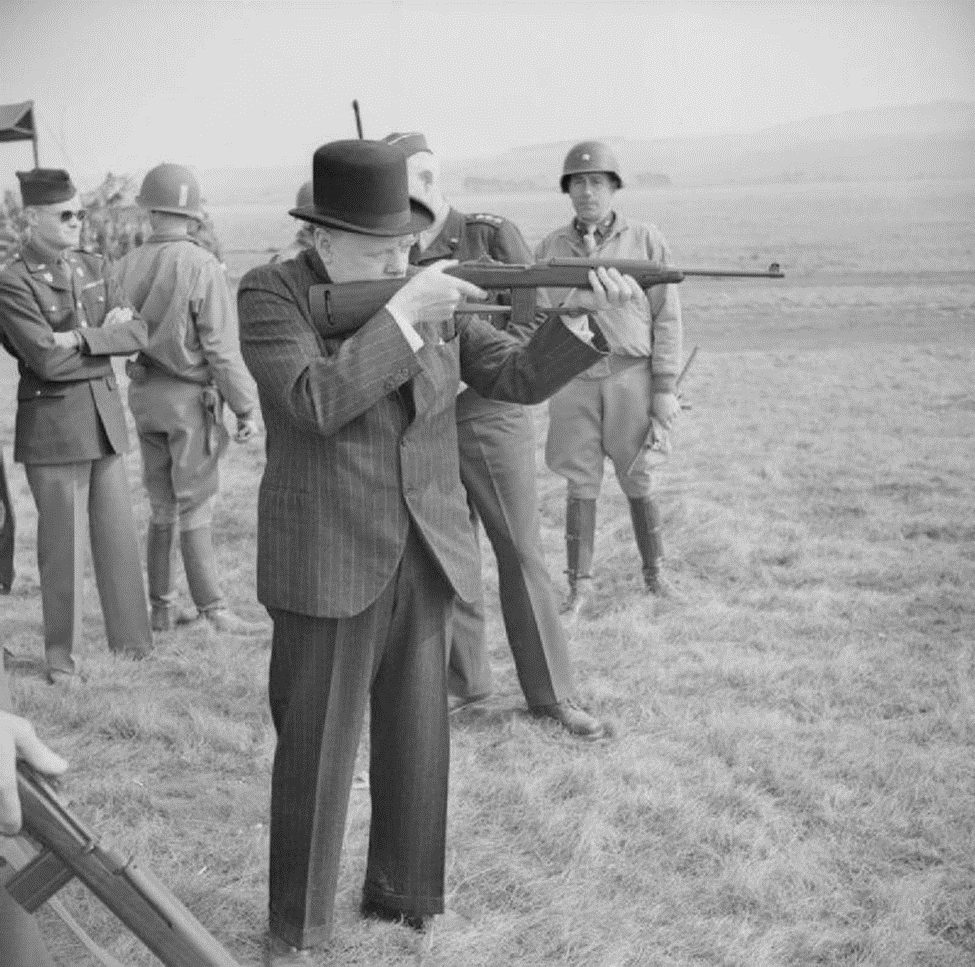
If you look at things from Robert Ruark’s perspective – Use Enough Gun – the carbine is kind of inadequate – which is probably why, over a lifetime, it has been my most traded off gun. There was always another one coming down the line – after all, over 6 million were manufactured during World War II. On the other hand, estimates of 20 million AR-15s privately owned in the US gives another way to look at the carbine – they aren’t making anymore, and I suspect the ones re-imported from Ethiopia will be the last returning.
Mine is a bit easier to sight since I replaced the traditional wood handguard with a metal stamping – probably because the stock is a bit short for me. Likewise, I’ve learned that a little glass bedding helps it group a little better. I had thoughts of entering one in a CMP 100 yard match – but I suppose that it just never made much sense. I’m not sure, but I suspect a lot of the carbine’s reputation for inaccuracy could be better attributed to poor marksmanship.
It’s light, easy to handle, and the cartridge is marginal for everything – which probably explains why it has been my most frequently traded gun. As I’ve gotten older, I’ve learned that shot for shot the little carbine just about matches the energy of the rifles that the Lewis and Clark expedition carried across the continent – and that isn’t a bad thing. It gives me a great appreciation for the Corps of Discovery when I realize that, with a 30 round magazine, I have as much firepower in a minute as the Lewis and Clark expedition did.
I suspect that I will keep the little Iver Johnson carbine. The cartridge produces just under 1000 foot pounds of muzzle energy (the Marlin 357 carbine checks in at just over 1000 foot pounds). While that seems a bit light for a rifle, I’ve listened to quite a few people who believe a 44 magnum is the right pistol to carry in Griz country – and that combination is in the same neighborhood.
My last carbine was built in Jacksonville, Arkansas, sometime between 1983 and 1986 – serial number dating kind of falls apart in those final years – on October 21, 1986, Iver Johnson filed for bankruptcy. By 1987, the remaining rifles were all marked AMAC instead of Iver Johnson. These markings show up on the first receivers made in Jacksonville, and apparently less than 500 were so marked – my carbine has this marking, but the serial number is over 2000 higher than the first Arkansas receiver. Apparently it sat, patiently, out of the way, until it was assembled.

The rarity of the receiver stamp doesn’t give the rifle the value that a World War II original would have, nor the collector’s interest. Just a small rifle that functions well and is very easy to identify.
And it doesn’t have the traditional Iver Johnson Owl Head stamped anywhere on it.
-
NOAA’s predictions for this coming winter look kind of brutal for those of us who stay home for the season. It looks like we’re in store for colder temperatures and more snow. On the other hand, our snowbirds can expect an easy winter in Arizona.
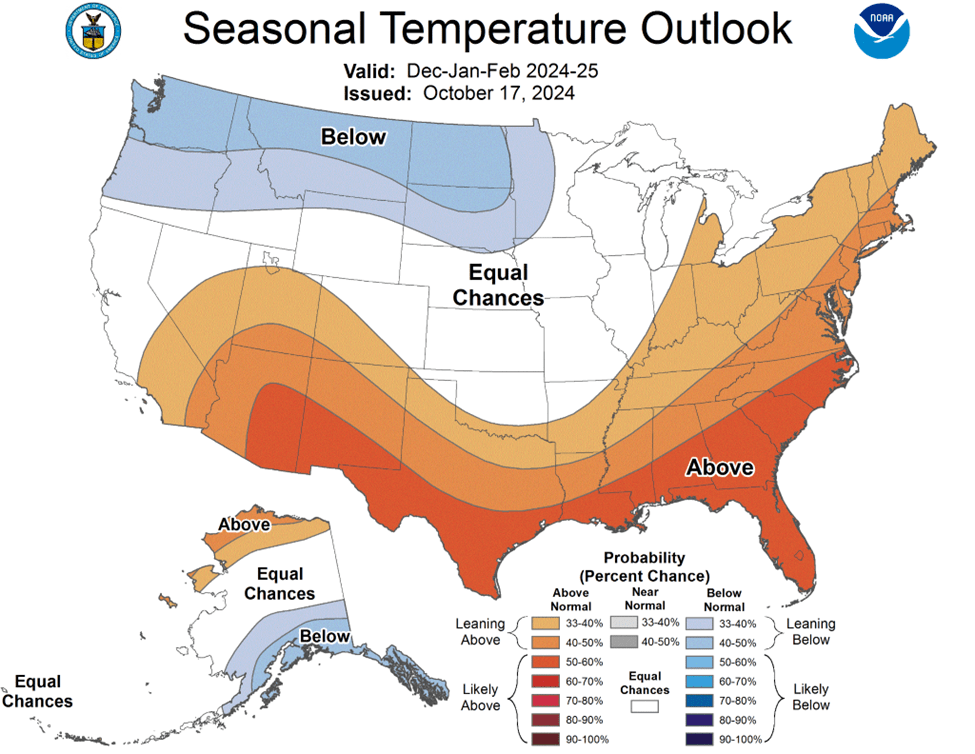
Predicting below normal temperatures.

Predicting above normal precipitation
-
Eureka Community Players will present The Apple Tree (sponsored by Interbel). The Apple Tree is a series of short plays, based each on short stories. The first act is based on Extracts from Adam’s Diary by Mark Twain, while act two is based on The Lady and the Tiger by Frank Stockton.
You can view the play at Timbers Event Center Friday night, Saturday night, or Sunday afternoon.

-
The Eureka Community Players is starting a writers group, similar to the one that resulted in our evening of 10-minutes scenes called “The Waiting Room” last year. The initial meeting is Saturday, October 26th at 3:00 p.m. in the Glacier Bank Community Room. The goal is to again write scenes for a performance. The ECP is inviting interested people to participate.
For more information, contact Sharon LaBonty at 406/263-9209.
The Waiting Room
Eureka Community Players (ECP) have undertaken a new challenge: writing plays. On Sunday, March 24th, these plays will be presented in an anthology format. Called “The Waiting Room” – An Afternoon of 10-minute Scenes Written by Local Writers begins at 3:00 p.m. at the Timbers Event Center. In September 2023, The ECP hosted a workshop presented by Maud Powell entitled “Calling All Writers”. Maud founded the Little Apple Playwriters Guild, a collaborative playwriting group. Annually, they write and produce Anthologies of plays. Her workshop in Eureka was to engage writers and others in the process of writing plays…
-
A friend commented that he didn’t like the choice between Zinke and Tranel – a lot of times the choice we have on the ballot is between a crap sandwich and a crap salad. When that’s all the menu offers, it’s reasonable to assume that whichever way you vote, you’ll get a crap candidate.
So it’s time to look at the ballot as a non-binary choice, figuring how to vote in your best interests regardless of how the establishment (Christi and company) have made write-in votes absolutely ineffective. Here are my thoughts on strategic voting.
At the top of the ticket is the choice for President. Donald Trump is going to get Montana’s electoral votes, with or without my support. A vote for the Libertarian candidate helps keep that third party on the ballot in the next election. The last time a third party came out of nowhere, the Republicans replaced the Whigs. We have a choice – Libertarian or Green. Trump will win with or without my vote or yours.
Jon Tester is behind Tim Sheehy in the balloting. Still, Jon is a master, proven and skilled, at negative campaigning. I’m not so positive as to say that Sheehy will win with or without my vote – but again, I have a Libertarian and a Green alternative if I can’t stomach Tester yet can’t get past the negatives.
My friend couldn’t stomach Zinke or Tranel – but has the option of Dennis Hayes, Libertarian. His vote can count by making it easier for Libertarian candidates to get on the ballot next time around.
Gianforte is going to beat Busse. So it’s another spot where it doesn’t cost anything to vote for the third party – this time it’s Kaiser Leib, again a Libertarian.
On Secretary of State, Christi epitomizes the worst the Republican party has had to offer – a pretty face, and a party hack. Fortunately, she has 2 opponents, a dem and a Libertarian. Unfortunately she will still win, regardless of which one I choose to vote for.
Attorney General is a binary choice – but I’m adequately pleased with Austin Knudsen’s performance.
State Auditor is another binary choice – James Brown has chaired the Public Service Commission, which tells me he’s a professional politician. Repke is from Whitefish. I expect a Republican tide will help Brown keep a government salary rolling in.
Superintendent of Public Instruction – the incumbent was term-limited out, and Susie Hedalen is the Republican heir apparent. O’Brien is the Dem candidate who might bring the OPI fief back to the Democrat party. I don’t have a feel for which candidate is best, so I don’t have a strategic vote.
Public Service Commissioner District 4 – I have a choice between Jennifer Fielder, Republican, and Elena Evans, Independent. A choice between a professional politician and someone without a party. We need to encourage independent candidates – both in this race and for county commissioner. As a matter of strategy, voting for the independent candidate makes a weird sort of sense. The Republicans are often called the stupid party, while the democrats are called the evil party. Occasionally they do something that is called bipartisan, which generally means it is both stupid and evil. There is a certain pleasure in voting against both parties.
State Representative – I have a choice between Neil Duram, who voted to screw Trego School and Trego taxpayers and Dakota Adams. I know nothing of Dakota Adams, and he has no record of voting to screw Trego. Some decisions are easy, even with only partial information.



Want to tell us something or ask a question? Get in touch.

Recent Posts
- Computer Repair by Mussolini
- Getting Alberta Oil to Market
- Parties On Economics
- Thus Spake Zarathustra – One More Time
- Suspenders
- You Haven’t Met All The People . . .
- Play Stupid Games, Win Stupid Prizes
- The Ballad of Lenin’s Tomb
- An Encounter With a Lawnmower Thief
- County Property Taxes
- A Big Loss in 2025
- Thinking of Clovis
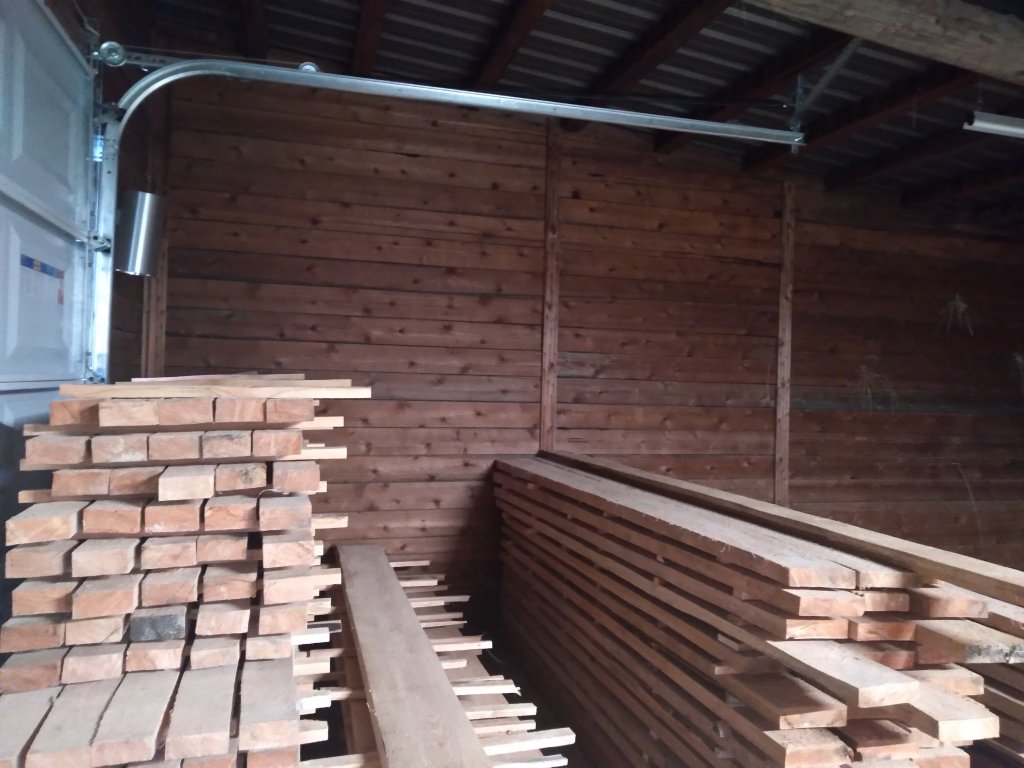
Rough Cut Lumber
Harvested as part of thinning to reduce fire danger.
$0.75 per board foot.
Call Mike (406-882-4835) or Sam (406-882-4597)
Popular Posts
Ask The Entomologist Bears Books Canada Census Community Decay Covid Covid-19 Data Deer Demography Education Elections Eureka Montana family Firearms Game Cameras Geese Government Guns History Inflation life Lincoln County Board of Health Lincoln County MT Lincoln Electric Cooperative Montana nature News Patches' Pieces Pest Control Politics Pond Recipe School School Board Snow Taxes travel Trego Trego Montana Trego School Weather Wildlife writing
 Trego's Mountain Ear