-
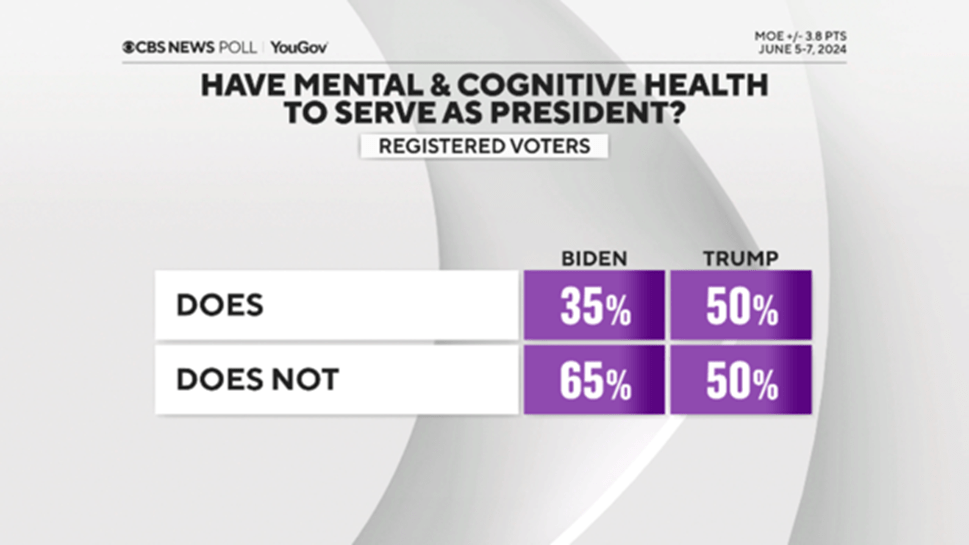
It’s bad enough when only half the voters think you have the mental health to serve as President . . . but when two-thirds are convinced you don’t have it, and you are the President, well, the nation could likely be better served by picking two names from the phone book.
-
L. Neil Smith defined it this way:
Who is a libertarian?
“Zero Aggression Principle”
A libertarian is a person who believes that no one has the right, under any circumstances, to initiate force against another human being for any reason whatever; nor will a libertarian advocate the initiation of force, or delegate it to anyone else.
The Zero Aggression Principle is a fairly simple concept. In some of Smith’s other writings, he described his purpose as “What I want to accomplish artistically amounts to nothing more than fulfilling the promise of the American Revolution.”
I’ve been asked about what constitutes a libertarian, and I have to admit that libertarians come in a lot of types – and probably the first thing to notice is the difference between big L libertarians and small L libertarians.
The big L identifies the party – sometimes it includes small l libertarians, like Michael Badnarik, the 2004 presidential candidate. Badnarik believed in a free market economy, where the government’s sole purpose was to protect individual rights from force and fraud. On the other hand, in 2012 and 2016, the party nominated Gary Johnson, who had been a Republican with a handful of libertarian leanings. There can be a lot of difference between libertarians. This year’s candidate is Chase Oliver – and his quote that comes to mind is that armed gays are harder to bash.
Part – possibly a large part of my libertarian perspective – comes from Max Weber’s definition of government:

Not all sociologists base so much of their theories on Weber as I do – but his matter-of-fact definition makes it hard to buy into anything beyond a limited government.
This chart shows libertarians as middle-of-the-road, with beliefs in common with both the right and the left:

This chart offers a little more perspective:

This site includes the world’s shortest political quiz – click the link, and find out if you have any disturbing libertarian tendencies:Advocates for Self-Government
-
I read a CNN article the other day:
“A grand jury has indicted two former Uvalde school police officers in the botched law enforcement response to the 2022 mass shooting at Robb Elementary school that left 19 children and two teachers dead, two Texas state government sources with knowledge of the indictment told CNN Thursday.
‘Former Uvalde Consolidated Independent School District Police Chief Pete Arredondo and former school police officer Adrian Gonzales were named in the indictments, which represent the first criminal charges filed in the school massacre.”
I’m impressed. Charges of child abandonment and neglect aren’t what I would have anticipated – but there is obviously a county attorney down Texas way who is willing to take whatever law he can find to put some sort of charges against a couple of cops who didn’t perform their duty.
In another story, from ThePrint, Alec Baldwin is due for his day in court:
“Washington [US], June 30 (ANI): Actor Alec Baldwin’s legal battle continues as a judge has ruled against his motion to dismiss the case stemming from the fatal shooting of cinematographer Halyna Hutchins on a movie set in Santa Fe, N.M.
The decision, handed down by Judge Mary Marlowe Sommer, ensures that Baldwin will face trial on July 9 for involuntary manslaughter, according to the reports obtained by Variety.
The controversy centres around Baldwin’s assertion that the FBI’s destruction of his Colt .45 revolver during testing obstructed his defence.”
I’m kind of looking forward to Baldwin’s trial – he has a long record encouraging gun control and bashing the NRA, and paying attention to the NRA gun safety rules would have kept him out of court.
-

Plastic water pipes may be cheaper, but they also come with risks. Mark Bernard/iStock/Getty Images Plus Rajpreet Grewal, University of Wisconsin-Milwaukee; Laodong Guo, University of Wisconsin-Milwaukee, and Melissa Scanlan, University of Wisconsin-Milwaukee
Flint, Michigan, made headlines in 2015 when tests revealed dangerously high lead levels in its drinking water. The city had switched its water supply to the Flint River a year earlier, and corrosive water had damaged aging lead pipes, exposing thousands of people to lead contamination.
The result was a human health crisis that residents are feeling the effects of to this day. And Flint was only the tip of the iceberg.
The EPA estimates that 9.2 million service lines that deliver drinking water to U.S. homes and businesses are made of lead. The federal government considers replacing these lead pipes a top priority and has launched a variety of initiatives to help, including the 2021 Infrastructure Law, which committed US$15 billion over five years to lead pipe replacement.
The EPA is now proposing to require the removal of lead pipes across the U.S. within 10 years. The agency has been silent, however, regarding what should replace lead.
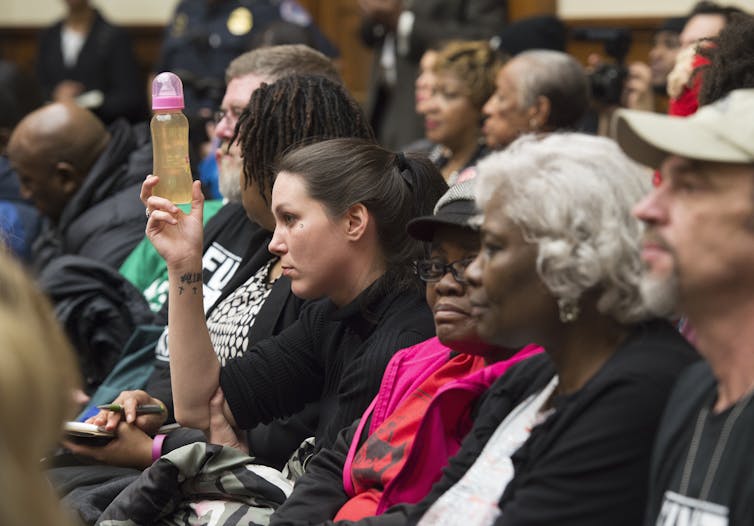
Jessica Owens holds up a baby bottle filed with water from her home in Flint, Mich., during a U.S. House Oversight and Government Reform Committee hearing on Feb. 3, 2016, to examine the city’s lead water crisis. AP Photo/Molly Riley We study water policy and water chemistry, with a focus on plastics and emerging contaminants, as well as on equitable access to clean water. We see concerns with a popular replacement material for lead pipes: plastic.
The buried legacy of lead pipes is concentrated in cities with large low-income populations. Seven of the 10 U.S. states with the most lead service lines are Great Lakes states, and our research shows the new federal funding will cover less than one-fifth of the costs of replacing known lead pipes in that region alone. These cities could unknowingly set up new environmental health risks.
The problem with lead pipes
There is no level of lead exposure considered safe for humans.
In children, lead exposure can affect their organs and brain development, causing decreased intelligence, behavioral disorders and learning problems. Adults are also vulnerable. Even low lead exposure can cause kidney problems and high blood pressure. A recent study estimated that 170 million U.S. adults were exposed to high levels of lead in early childhood.
Congress, in 1986, amended the Safe Drinking Water Act to prohibit the use of lead pipes in the installation or repair of any public water system, home or business that supplies drinking water.
But many communities already had lead pipes that they expected to last for decades longer, and replacing them is expensive. The EPA estimates that replacing each lead service line from a city water main to a home costs an average of $5,066.
Copper, iron and plastic are all common replacement materials for lead pipes. Plastic, particularly polyvinyl chloride or PVC, is an increasingly popular choice. Plastic tends to have an initial price tag that is lower than the others.
However, while most pipe materials have issues over long periods of time, there are potential hidden costs to using plastic pipes in drinking water systems that are raising serious questions and health concerns.
Hidden health costs of plastic
One type of plastic, PVC, was first used in U.S. water systems in 1955 and became widespread in the 1970s. Other types of plastic pipes include cross-linked polyethylene (PEX), high-density polyethylene (HDPE) and chlorinated polyvinyl chloride (CPVC).
Scientific studies have shown that plastic pipes can attract metals and leach out chemicals and micro- and nanoplastics, which are known to exacerbate kidney disease.
Over the past decade, researchers have documented the degradation of plastics and the release of chemicals from plastic polymers and additives in plastics and microplastics. A 2023 study found that pipe material and age can contribute to the release of microplastics in drinking water.
Biofilm – the layer of microorganisms that build up on surfaces in contact with water – can also cause problems in pipes. A 2023 study showed how this biofilm can collect heavy metals, such as lead, which can then be slowly released into the water over time. This accumulation is a problem with any pipe. Some studies, however, have reported that the release of organic substances from polymer-based pipes may promote the growth of biofilms, and plastic materials may promote the ability of pathogens to accumulate in pipes. Further studies are needed to evaluate whether biofilm is a more significant concern in plastic pipes.
Durability concerns
While PVC and other plastic pipe materials have a long life expectancy, they have had durability problems.
A study conducted in Dutch wastewater systems, where plastic pipes have been extensively used since at least the 1970s, found deformations, leaks and root intrusion. Some cities that installed plastic drinking water pipes in the U.S. have encountered similar problems.

Pipes, water meters and meter covers after wildfires destroyed them. Caitlin Proctor, Amisha Shah, David Yu, and Andrew Whelton/Purdue University, CC BY-ND Prescott, Arizona, started using PVC plastic pipes in the mid-1980s and began seeing durability issues in the 1990s. In 2023, citing problems with longevity and leaks, Prescott’s mayor announced a switch from PVC plastic to ductile iron.
Hamilton, Ohio, started seeing premature failures of HDPE service lines and water mains after only 20 years, despite HDPE’s estimated life span of 80 years. The city is now switching to iron and copper.
Fire can melt plastic, releasing toxic chemicals
Plastic is also vulnerable to fires. Studies have found that when plastic pipes are heated to high temperatures, they can both melt and release harmful chemicals.
The 2023 fire that swept through Lahaina, Hawaii, damaged plastic water pipes, contributing to a drop in water pressure when Maui firefighters needed it most. In the aftermath, residents were warned that plastic pipes could contaminate the water supply by leaching dangerous chemicals. Loss of pressure can create a sort of vacuum that sucks chemicals and bacteria into water systems.

Burned wires and PVC pipes sit on the side of the road in Lahaina, Hawaii, after a devastating wildfire in 2023. AP Photo/Lindsey Wasson Heating during fires can also cause plastic to release harmful chemicals. Water testing in California communities affected by wildfires in 2017 and 2018 found that water systems had been contaminated with volatile organic compounds such as benzene, a carcinogen.
Protecting the public
With billions of dollars in federal funding available, communities are deciding right now whether to invest in plastic pipes or other materials as replacements for lead. This is an historic undertaking.
However, we believe more research on the potential effects of plastic needs to be conducted to better understand both the short- and long-term risks to human health and the environment. All factors need to be considered: health, durability, longevity and fire concerns. The initial price tag is not always an indicator of the hidden costs.
Rajpreet Grewal, Water Policy Specialist, University of Wisconsin-Milwaukee; Laodong Guo, Professor of Aquatic Biochemistry, University of Wisconsin-Milwaukee, and Melissa Scanlan, Professor and Director of the Center for Water Policy, School of Freshwater Sciences, University of Wisconsin-Milwaukee
This article is republished from The Conversation under a Creative Commons license. Read the original article.
-
The Eureka Community Players announce auditions for the Summer Play. Auditions for The Charitable Sisterhood of the Second Trinity Victory Church a Comedy by Bo Wilson is scheduled for July 2nd at 7:00 p.m. at the Timbers Event Center. There are parts for five women, ages 20 to 60 years. Script pages will be provided for review prior to trying out.
The Richmond (Virginia) Times-Dispatch wrote, “The humorously unwieldy title … might suggest another church lady play, but the charitable sisters are more like the women of Steel Magnolias, with a few unexpected twists.”
Rehearsals of The Charaitable Sisterhood of the Second Trinity Victory Church will begin on July 8th and the Summer Play will be presented during Eureka Quilt Show weekend, August 2-4.
A copy of the script is at the Eureka Public Library if you would like to read the script prior to auditioning.
For more information about auditioning, contact either John or Sharon LaBonty at 406/230-0592 or 406/263-9209.
-
I am happy that we voted for a study commission. Now, my only fear is that the commission’s study will be too limited. Back in 1909, when Lincoln County was split off Flathead, it was (based on the technology of the time) a well planned structure for a county. Everything was supposed to flow into the Kootenai (ignore the slight blunder that included part of the Stillwater). The (then new) Great Northern Railroad connected the new county from Stryker to Idaho. The mail train paused twice daily at every tiny post office along the rail. Lincoln County was well planned – and that early planning served well for 60 years.
In 1909, nobody predicted that the Corps of Engineers would dam the Kootenai just upstream from Jennings Rapids. By 1970, the physical structure, the connections in Lincoln County had changed. I didn’t particularly notice – I worked for the Soil Conservation Service, across the county, and Highway 37 was new, and smooth, and easy driving for my shortbed government Chevy.
But the change was there. The town of Warland no longer exists. Kootenai Gardens was inundated. Rexford has moved to the high ground. The railroad no longer connects the county – it comes in at Stryker, curves past Trego, then thunders past a few Trego ranches that it maimed in the late sixties, and stops only in Libby for Amtrak. Neither the river nor the railroad connects the county anymore. For the past 50 years, Lincoln County has been two separate and different population areas.
It wasn’t such a big thing in the Seventies – despite the separated populations, the historical connection continued. J. Neils was gone, but the successor corporation continued to link employees and former employees from Libby to New Rexford. Libby was healthy, with the Mill, the Plywood plant, the Zonolite mine, the mine near Troy. And as the Eighties came to a close, so did the mercantile connections between North County and South County.
Politically, Libby had been pretty much a Union, Democrat town. When the mill closed, the mines shut down, it no longer had the industry for the unions to flourish. Instead of having an economy based on private corporations with Union employees, Libby became increasingly dominated by the regular jobs of public employment. Interestingly enough, it became a Republican stronghold. We can see it in the voting patterns – the Libby block tends to vote to reelect the county commissioner from North County, while North County tends to vote in favor of a new commissioner every six years. Not saying it’s good or bad – just that it’s a reality.
The study commission will need to look at the 500 pound gorilla (or sasquatch if you prefer). Our county has two separate populations – and the northern folks pay a disproportionate portion of the county’s taxes, while Libby is home to most of the folks whose livelihoods come from those county tax dollars.
In 1909, affordable housing meant enough cash to cover homestead filing fees and an ax, a hammer, and a froe to build a log cabin. In 2024, we’re looking at entry level homes on forty acres at half a million. The study question isn’t the same.
Long story short: we need a study commission that will look at the basic structural dysfunction of Lincoln County, and answer the hard question: Can we afford to continue business as usual, or do we need to look at splitting into two counties. The answer, like the voting patterns for countywide incumbents, is probably not the same in Libby as it is for the North County voters.
-
by Sarah Melotte, The Daily Yonder
June 10, 2024Rural America added 171,200 jobs last year but still hasn’t recovered the employment it lost during the pandemic. For that matter, it hasn’t replaced the jobs lost during the Great Recession 15 years ago.
According to a Daily Yonder analysis of new data from the Bureau of Labor Statistics, the number of jobs in rural (nonmetropolitan) counties grew by about 1 percent from 2022 to 2023, according to the 2013 OMB definitions of metropolitan statistical areas.
!function(){“use strict”;window.addEventListener(“message”,(function(a){if(void 0!==a.data[“datawrapper-height”]){var e=document.querySelectorAll(“iframe”);for(var t in a.data[“datawrapper-height”])for(var r=0;r
The increase in annual employment is part of a longer trend of recovery since the pandemic-related economic shutdowns in 2020. Rural counties have added jobs every year since 2020.
But last year’s employment was still 106,800 jobs shy of pre-pandemic employment. And post-pandemic job growth slowed last year, compared to 2021 and ’22.
Employment Gains Vary by Geography
Nationwide, employment improved by 1.44% last year, adding 2.3 million jobs to the market. Growth varied by geography, with counties of larger populations gaining more jobs than less densely populated ones.
This analysis is based on average annual employment numbers, which provide a way to look at longer-term changes in employment, as opposed to monthly jobs reports.
Jobs grew the most in major metropolitan areas, ones with more than 1 million residents. These counties gained 1.4 million jobs, a 1.57% increase over 2022.
!function(){“use strict”;window.addEventListener(“message”,(function(a){if(void 0!==a.data[“datawrapper-height”]){var e=document.querySelectorAll(“iframe”);for(var t in a.data[“datawrapper-height”])for(var r=0;r
In medium-sized metros, ones with populations of 250,0000 to under 1 million residents, jobs grew by 1.45%, a total of 462,600 new jobs.
Smaller metropolitan counties with fewer than 250,000 residents gained 187,200 jobs, a 1.37% increase over 2022.
Nationally, about 70% of all U.S. counties added jobs last year, but only 60% of nonmetropolitan counties saw an increase.
Pandemic Employment Recovery Lags in Rural Counties
The 2022 increase in jobs brought rural numbers to within 106,800 jobs of pre-pandemic employment, a 0.5% decrease since 2019. In the meantime, employment in metropolitan counties grew by about 2.1% since the pandemic. That represents an additional 2.9 million jobs since 2019.
While jobs grew in metropolitan counties as a group, there was variation based on the size of metropolitan areas.
In the nation’s largest cities, employment increased by 2.19%, adding 2 million jobs to their pre-pandemic employment numbers.
Medium-sized metros added 735,300 jobs to their pre-pandemic employment level, meanwhile, representing a 2.32% increase over 2019.
Small metros with populations of fewer than 250,000 residents added 707,300 jobs since 2006, a 1.35% increase over 2019.
Rural Jobs Are Still Behind Pre-Recession Levels
In the longer-term picture, rural counties still haven’t recovered the jobs they lost during the Great Recession of 2008, while metropolitan American returned to pre-recession employment more than a decade ago.
!function(){“use strict”;window.addEventListener(“message”,(function(a){if(void 0!==a.data[“datawrapper-height”]){var e=document.querySelectorAll(“iframe”);for(var t in a.data[“datawrapper-height”])for(var r=0;r
This graph above shows the relative change in employment in various types of metropolitan and nonmetropolitan (rural) counties compared to annual employment in 2006, the last complete year before the recession began in 2007. If this graph looks familiar, that’s because the Daily Yonder has been tracking this trend for years.
After nearly identical declines in 2009, rural and urban job performance began to follow different trajectories. Major and medium-sized metros bottomed out relatively quickly and started to bounce back in 2009. Small metros and nonmetropolitan (rural) counties didn’t hit bottom until 2010. After that, nonmetropolitan counties sputtered while the rest of the country saw much faster recovery.
By 2019, the year before the pandemic, rural counties were still well below pre-recession employment, while the rest of the country had moved on, with major metropolitan counties leading the way.
A less pronounced but similar trend occurred in the recovery from the pandemic. Both metropolitan and nonmetropolitan counties lost jobs at similar rates from 2019 to 2020. Since 2021, rural counties’ job recovery has been at a slower rate than the rest of the country.
The cumulative result of the recession and the pandemic is that nonmetropolitan America had 655,700 fewer jobs in 2023 than it did in 2006 – a 3.13% drop.
!function(){“use strict”;window.addEventListener(“message”,(function(a){if(void 0!==a.data[“datawrapper-height”]){var e=document.querySelectorAll(“iframe”);for(var t in a.data[“datawrapper-height”])for(var r=0;r
In metropolitan counties over the same time period, employment grew by 18 million jobs, a 15% increase.
Major metropolitan counties saw the greatest percent increase in employment since the recession, adding 14 million new jobs to the market, representing an 18% increase in employment.
Smaller metropolitan counties also saw improvements over 2006 employment, but not as much as the nation’s largest cities. In medium-sized metros, employment increased by 11% between 2006 and 2023. That’s equal to an additional 3.2 million jobs.
In small metropolitan counties, jobs grew by 5.38%, 707,300 more jobs than the 2006 levels.
To learn more about employment in your own county, use the search bar in the table below.
!function(){“use strict”;window.addEventListener(“message”,(function(a){if(void 0!==a.data[“datawrapper-height”]){var e=document.querySelectorAll(“iframe”);for(var t in a.data[“datawrapper-height”])for(var r=0;r
CORRECTION: A previous version of this table displayed the percentage change in employment incorrectly.
Notes:
For the sake of consistency, the Daily Yonder is continuing to use the OMB 2013 metro and nonmetro delineations, even though the updated 2023 list has been published. Using a consistent definition of rural allows us to easily track changes in rural economies over time.
In the OMB system, metropolitan areas are defined county by county. The entire county is either metropolitan or it’s not, based on the size of a city in that county or commuting patterns. The OMB considers all other counties to be “nonmetropolitan.”
This article first appeared on The Daily Yonder and is republished here under a Creative Commons license.

-
I drove my wife to the medicos in Kalispell this morning. I wound up parking next to a little rig that wore a bumper sticker reading McCain Palan. It’s been a long time since that election, and the bumper sticker was obviously more durable than the political partnership.
Still, we need to appreciate the politicians who lose – they’re the ones who give us choices. Without them, we’d see the words “win by acclamation.”
Lincoln County Election Results shows us this:
2024 Primary Election – Pre Results
Superintendent of Schools: Suzy Rios (Win by Acclamation), Clerk of Court: Tricia Brooks (Win by Acclamation), Lincoln County Conservation District Supervisor: Donald Crawford (Win by Acclamation), Lincoln County Conservation District Supervisor: Ed Braaten (Win by Acclamation), Precinct 1 Committeeman: Gregg Johnson (Win by Acclamation), Precinct 1 committeewoman: Jennifer Curtiss (Win by Acclamation), Precinct 4 committeeman: Neil Duram (Win by Acclamation), Precinct 7 committeeman: Mark Cratty (Win by Acclamation), Precinct 8 committeeman: John Boyke (Win by Acclamation), Precinct 8 committeewoman: Rhoda Cargill (Win by Acclamation), Precinct 10 committeewoman: Christie Silva (Win by Acclamation), Precinct 11 committeeman: Mike France (Win by Acclamation), Precinct 11 committeewoman: Katrina Newton (Win by Acclamation), Precinct 15 committeeman: John L. Stoken (Win by Acclamation), Precinct 15 committeewoman: Bobbie Stoken (Win by Acclamation).
Not to point out the obvious, but that’s a long list of people who were ‘elected’ that nobody voted for. Our elected politicians last session repealed subsection 7, eliminating the option of writing in a candidate where only one person had filed for the office. Oh, you can still write in a candidate -but a write-in candidate’s votes won’t be counted unless he, she or it has filed paperwork and written the county the required check. Thanks Neil. Thanks Mike. Zooey Zephyr has done a better job of representing Trego voters, and doesn’t even ask for our votes.
On March 26, 1989, voters in the Soviet Union participated in their first multiple candidate elections – for 70 years they had held single candidate elections. You know how their multiple candidate election turned out – The Union of Soviet Socialist Republics was formally dissolved as a sovereign state on December 26, 1991.
I’d like to get back to voting in multiple candidate elections – of course, I’d like to see a box alongside the phrase “none of these candidates are acceptable.”
-
Montana’s been receiving federal funding for preschool development. The state has turned that into programs to strengthen early childhood development. The most recent iteration of this is “Bright Futures: Birth to Five Project”.
On of the major issues with childcare availability is the lack of people working in childcare. It’s a complex issue, in part because it’s hard to work in childcare if you yourself are lacking care for your child. The state is hoping to rectify this with a childcare assistance program specifically for childcare providers.
The requirements to qualify are fairly broad, provided the person is working in childcare. Applicants can make up to 250% of the federal poverty line. For a family of four, that’s $6,500!
Of course, money for childcare is only useful if you have somewhere to spend it. For more information, check out this brochure published by the state, or find more on DPHHS’s website.
-
With the passing of the summer solstice, we’re into weather predicting season again. The usual question of when will the heat of summer, drought, and fire season arrive. NOAA, as always, has predictions. This summer is expected to by drier and hotter than average. Back in 2021, we found ourselves looking at record highs towards the end of June. By comparison, this year has still been relatively mind.
Climate in the Past 20,000 Years
The question is not whether human activities have altered the planet’s climate. The map below, gives a pretty decent interpretation of how wintry the planet looked 20,000 years ago – and glancing at my own little part of Montana shows a spot much less suitable for agriculture or gardening. In high school, I heard of the cyclic nature of ice ages – the explanations weren’t there, but evidence of the cycles was apparent. History.com provides this commentary: “There have been at least five significant ice ages in Earth’s history, with approximately a dozen epochs of glacial expansion occurring in the past…
Thermometers and Weather
Sir Thomas Allbutt invented the medical thermometer in 1867. The first attempts to use medical thermometers to analyze weather (that I have found) were physicians with Crook’s 1876 campaign following the Little Bighorn. Decent instruments, but misused – as I recall they were reporting sub-zero temperatures in September. The first use of a thermometer in Montana was with the Lewis & Clark expedition – they recorded temperatures daily until September of 1805, when the last of their three thermometers broke. Around 1900, thermometers started moving into homes and yards – usually advertising thermometers. By 1920, measuring the day’s temperature became…
The Weatherman Said
It looks like we’re into some near record or even record breaking high temperatures. Kalispell’s record high was 105 degrees back in 1961. I probably handled that by heading into the creek. Still, that’s fairly gentle, compared to Glendive in 1893, or Medicine Lake in 1937 – both of which saw 117 degrees. As I look at the predictions for the next few days, my mind goes back to the concept of growing degree days, and then to the temperature limits on plant growth. Corn, for example, doesn’t grow unless the temperature is at least 50 degrees, and anything over…



Want to tell us something or ask a question? Get in touch.

Recent Posts
- You Have To Beat Darwin Every Day
- Computer Repair by Mussolini
- Getting Alberta Oil to Market
- Parties On Economics
- Thus Spake Zarathustra – One More Time
- Suspenders
- You Haven’t Met All The People . . .
- Play Stupid Games, Win Stupid Prizes
- The Ballad of Lenin’s Tomb
- An Encounter With a Lawnmower Thief
- County Property Taxes
- A Big Loss in 2025
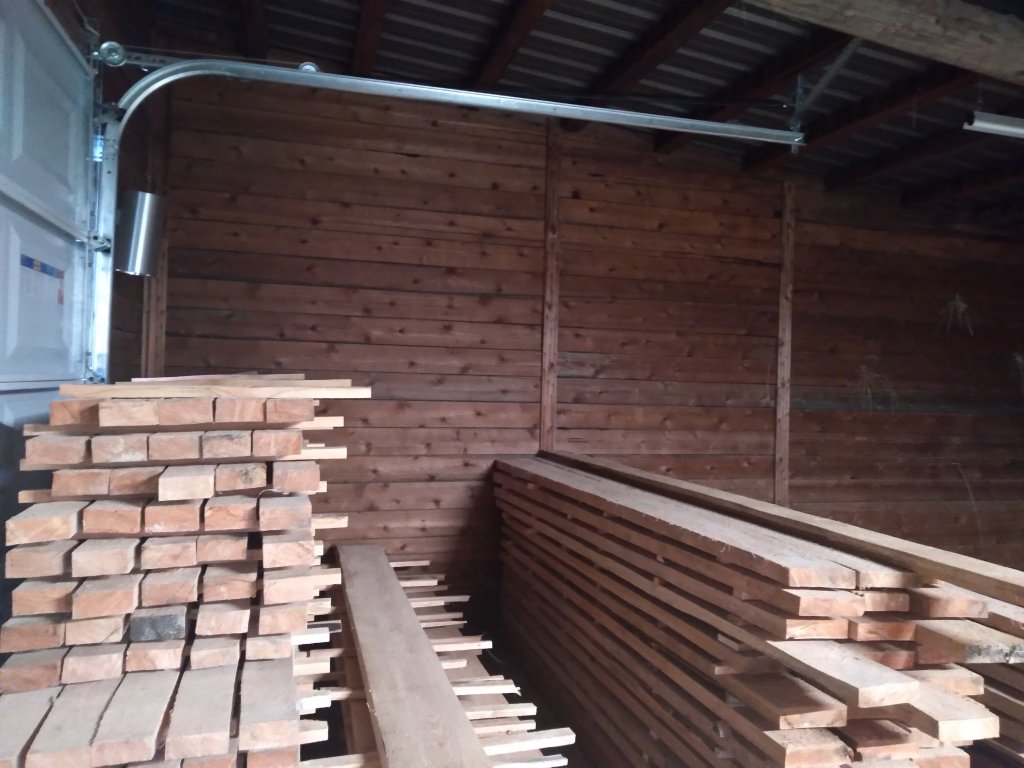
Rough Cut Lumber
Harvested as part of thinning to reduce fire danger.
$0.75 per board foot.
Call Mike (406-882-4835) or Sam (406-882-4597)
Popular Posts
Ask The Entomologist Bears Books Canada Census Community Decay Covid Covid-19 Data Deer Demography Education Elections Eureka Montana family Firearms Game Cameras Geese Government Guns History Inflation life Lincoln County Board of Health Lincoln County MT Lincoln Electric Cooperative Montana nature News Patches' Pieces Pest Control Politics Pond Recipe School School Board Snow Taxes travel Trego Trego Montana Trego School Weather Wildlife writing
 Trego's Mountain Ear