-
With the weather warming, the bird feeder (the cat’s equivalent of television) is showing more activity. These days, it’s mostly dark-eyed juncos.
The juncos are basically a sparrow, not exceptionally small for sparrows, and considerably easier to distinguish than sparrows typically are. Here, the juncos tend to be gray with dark heads and some white flashes among their tail feathers. They’re a common forest bird, which breed in upper Canada and can be found throughout the continental US.

-
by Claire Carlson, The Daily Yonder
April 24, 2024Editor’s Note: This article was originally published in Keep It Rural, an email newsletter from the Daily Yonder. Like what you see? Join the mailing list for more rural news, thoughts, and analysis in your inbox each week.
Every so often, I encounter a capital-E environmentalist – someone with an environmental academic degree and a job at one of the big nonprofits from which I’ve somehow accumulated dozens of ballpoint pens – who asks me (when really they’re telling me) about how it must be really hard to discuss the environment, or more specifically climate change, with rural communities.
I understand the thinking behind the “question” because I’ve been in classrooms and workplaces where rural perspectives on the environment were assumed to be both right-leaning and apathetic. But this misconception fuels a reductive narrative about who rural America is and risks excluding people from the vital task of taking care of our planet.
Many rural folks I talk to share deep concerns about the fate of their communities with me, even if they’re not using the language of a “typical” environmentalist. Usually, I interview people with multi-generation history in their community, and this generational knowledge of place comes with an intuition when things aren’t right.
Take Boardman, Oregon, for example: this community of just under 4,000 people in the eastern part of the state has been organizing for clean drinking water ever since their neighbors and family members started getting sick from tap water thirty years ago. Nitrate levels high enough to slowly kill a person were found in Boardman’s residential wells because of runoff from nearby corporate agriculture operations, and three decades later, little has been done to stop the pollution. Rural people of all ages, ethnicities, and political beliefs have been fighting for accountability with the corporations even as their state government failed to act.
Boardman residents care deeply about their environment because they understand how it affects their health, both individually and collectively. Rural people want to see their communities thrive, and environmental degradation does little to support this goal.
When I talk to rural people about the environment, I ask them about the specifics. I’m much less interested in their personal beliefs on climate change than I am in how last year’s heat dome affected their small business. A failing of capital-E environmentalists is that they get too caught up in the abstraction of our climate crisis: I, too, am deeply concerned about the existential threat we face, but existentialism doesn’t serve the average person. Specificity – here’s what warming temperatures are doing to your home – is a much more digestible concept.
Climate change denial has been dramatized as a maligned, depraved belief, and while I agree with this when it comes from politicians who do actually know the impact of carbon emissions but refuse to act because of powerful lobbying from the fossil fuel industry, when the denial is from a person whose carbon footprint is negligible, I worry less. If saying “climate change” will alienate somebody, I just won’t say it. Instead, I ask about the weather, because that’s all that climate change really is. And anyone can talk about the weather.
The environment wasn’t always a liberal issue: Former Republican president Richard Nixon created the Environmental Protection Agency and passed several pieces of consequential environmental legislation like the Clean Air Act that led to widespread reduction of air pollution, a trend that only in recent years has started to reverse because of pollutants from wildfire smoke.
In a 1988 campaign speech, George H. W. Bush said, “Those who think we are powerless to do anything about the ‘greenhouse effect’ are forgetting about the ‘White House effect’. In my first year in office, I will convene a global conference on the environment at the White House … We will talk about global warming.” (Of course, his promises didn’t play out during his presidency, but that’s another essay…)
Environmentalists should listen to rural perspectives because rural people often have intimate knowledge of the specifics of renewable energy, mining, and agriculture issues, to name just a few. These industries are often located in rural areas which means rural people see firsthand their effects, and can usually speak about them with more specificity than anyone else.
All this to say: the environment is not a Republican or Democratic issue, nor is it an urban or rural issue. Every single one of us is affected by the environment because it’s the very air we breathe and water we drink. Assuming that whole sections of the U.S. population don’t care about the environment creates chasms rather than bridges, and environmentalists would be wise to avoid this mistake.
This article first appeared on The Daily Yonder and is republished here under a Creative Commons license.

-
The ‘Belle of the Ball’ wasn’t the first performance of the year, but it was the first of the three plays that the players will perform this year. Earlier this year, the players put on a series of one-act plays written by local authors and a choir concert. It’s already time for auditions for the next play, which will take place the weekend of the Quilt Show.
This year’s seasonal program began with a letter from Eureka Community Players’ President, John LaBonte. In it, John announced that this will be his last year as President of the Players, though he will continue to remain involved with the theater. One of the difficulties that the Players’ are facing is finding volunteers for the off-stage positions that make everything possible. He provided a list of volunteer roles that the players are looking to fill. Anyone interested in helping out with makeup, set building, costumes, props, or lighting should contact the Eureka Community Players.
Belle of the Ball was excellent, very interactive, and with excellent audiences each day of the performance. The scene of the Ball was a toddler favorite, and Remi has learned to clap at the end of performances.
-
The quilt show was busy and colorful. There’s still time to get raffle tickets for the Scraps and Threads raffle quilt (drawing to be held at the fair). This year, quilt guild members could be seen in embroidered shirts. Visitors voted on their favorites in each category.

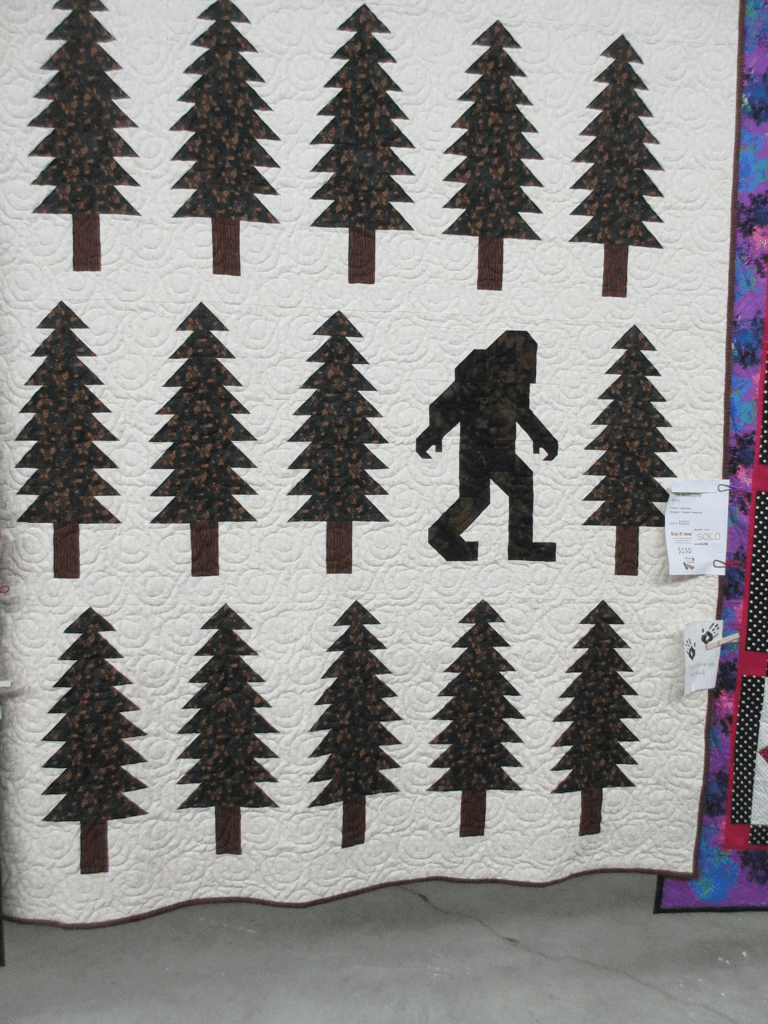
We admit that this one, “Jed’s Bug Jar” was our favorite. 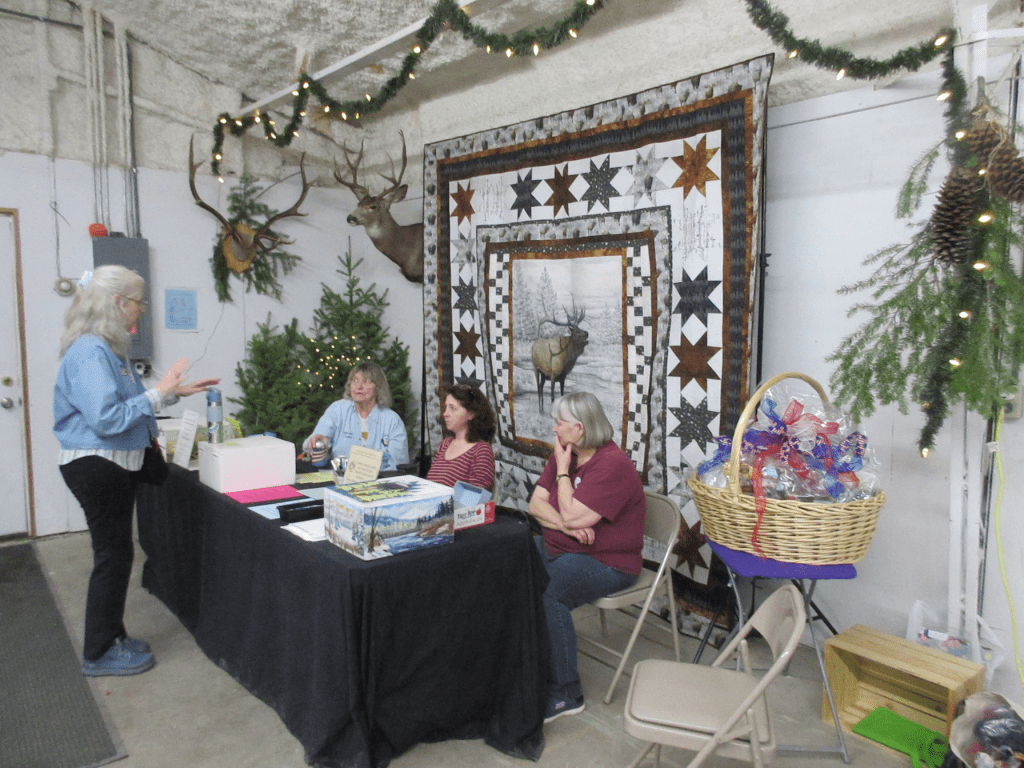
Guild Members collected ballots As in previous years, the quilt show was held at the fairgrounds, and was accompanied by venders in the neighboring building. Venders included various types of jewelry, plant starts, crochet animals, as well as baked goods. Coffee and tea were available.

-
An article in the Washington Examiner led me to Stockholm Research Reports in Demography. Now demography interests me – and Miska Simanainen also wrote an article contrasting Putnam’s views on Social Capital with Bourdieu’s that matched my thoughts – and he’s working on his dissertation at Stockholm.
His paper is available here – and I hope I’m not the only one to click the link and read it. The Finnish government funds some intriguing social studies, and this is one of them. I’ve lived my professional career in a world of work where treating women fairly has been a priority (and having both a wife and daughter that seems a good idea to me).
Simanainen’s study deals with birth rates – and demographic transition theory pretty much calls for birth rates to drop as societies move into modernity – which the Finns definitely have done.
The abstract reads: “The study analyzes how a guaranteed income program that significantly increases work incentives affects childbearing among previously unemployed women. Results from previous research indicate that improving individuals’ financial circumstances could increase fertility by compensating for the costs of childbearing. However, overall changes in cash incentive structures may create causal mechanisms with opposite effects. The study provides new empirical evidence on the effect of cash transfers on childbearing by using register data from the Finnish basic income experiment conducted in 2017–2018. The intervention aimed to increase returns from employment relative to unemployment but, at the same time, disincentivized childbearing in relation to competing activities, such as employment and studying. The experiment offers a unique opportunity to study the causal effect of changes in income and cash incentives on childbearing decisions. The results of the study indicate that the experiment had a negative effect on the probability of having children among women who received basic income and a positive effect among women whose spouses received basic income. The findings emphasize the importance of considering the overall changes in the cash incentives when reforming tax-benefit policies to avoid potentially undesired social consequences.”
Obviously, I highlighted the important part of the study – if you’re a government official wanting to increase the birth rate, the right approach is to provide men with more cash, not women.
You can read the whole study at the link. It reminded me to review Merton’s great paper “Unanticipated Consequences of Purposive Social Action.”
-
The illusion of choice reigns. Given the choice between Trump and Hillary, the choice between Trump and Biden, I had to choose Trump. Others are more down on Trump and had to choose Biden or Hillary. Voting against the worst candidate is a choice. The thing is, it’s a forced choice, an unnatural choice. How good it would be to be allowed to vote for the best candidate, instead of against the worst.
Here, I’m given a choice – vote for a special library district, or see library locations reduced to Libby. Again, my choice is crap sandwich or crap salad. I’ve done the math – north Lincoln County is the cash cow when it comes to property taxes, Libby is our feedlot for fattening county employees. When you look at 45% of the taxes coming from 35% of the population, it adds another dimension to the slogan “Taxation is theft.”
I see that RealClearPolitics lists Montana’s Senate seat as a ‘tossup’ – but when I look at the polling data, Jon Tester leads by 5 ½ percent. I figure that Tester is an easy guy to like, whether or not you like his voting record. Kind of the same thing for Neil Duram – last time around he ran as a nice guy. This time he voted to raise the school taxes for Trego. Actually it’s worse than that – his vote will force Trego’s trustees to add a special levy. While he doesn’t have a primary opponent (and he was one of the folks to vote to remove subsection 7, so if you write in an opponent it doesn’t count) we at least have a democrat candidate so we can vote based on Neil’s voting record. Face it, Zooey Zephyr came closer to voting for Trego School’s best interests and competitive elections than Neil did. Nice guy, good cop, but his voting record shows he didn’t think about screwing Trego taxpayers. (For the sake of consistency, Mike Cuffe’s votes on these issues were the same as Neil’s – but he has a 4 year term).
I’m not sure if I should classify the upcoming election as a crap sandwich or a crap salad – but I am solid on the main ingredient. I can vote for a library district that will benefit my distant Libbyan neighbors more than my north county neighbors, and the candidate who earned being voted against is unopposed in the primary.
-
It isn’t quite summer yet, but getting there and we’re due for a busy month in Trego.
- May 4th- Trego School Informational Meeting
- May 7th- School Election (turn in your ballots!)
- May 18th- Annual Bike-A-Thon (meet at the school. Lunch to be held at the Hall)
- May 21st- Friends of the Library Informational Meeting (in Eureka, but relevant)
- May 30th- Trego School Picnic and Last Day of school (community welcome)
Additionally the usual weekly events are taking place: A Community Tech Night on Mondays, the Learn and Play on Wednesdays (at least for a little while longer- it follows the school year and will pause for the summer months) and the Food Bank Distributions on Fridays.
Check out our local calendar and let us know if we’re missing anything!
-
Weather is warmer and everything is starting to come out again. Since I have an entomologist to pester- here’s what he’s had to say:
Wasp control
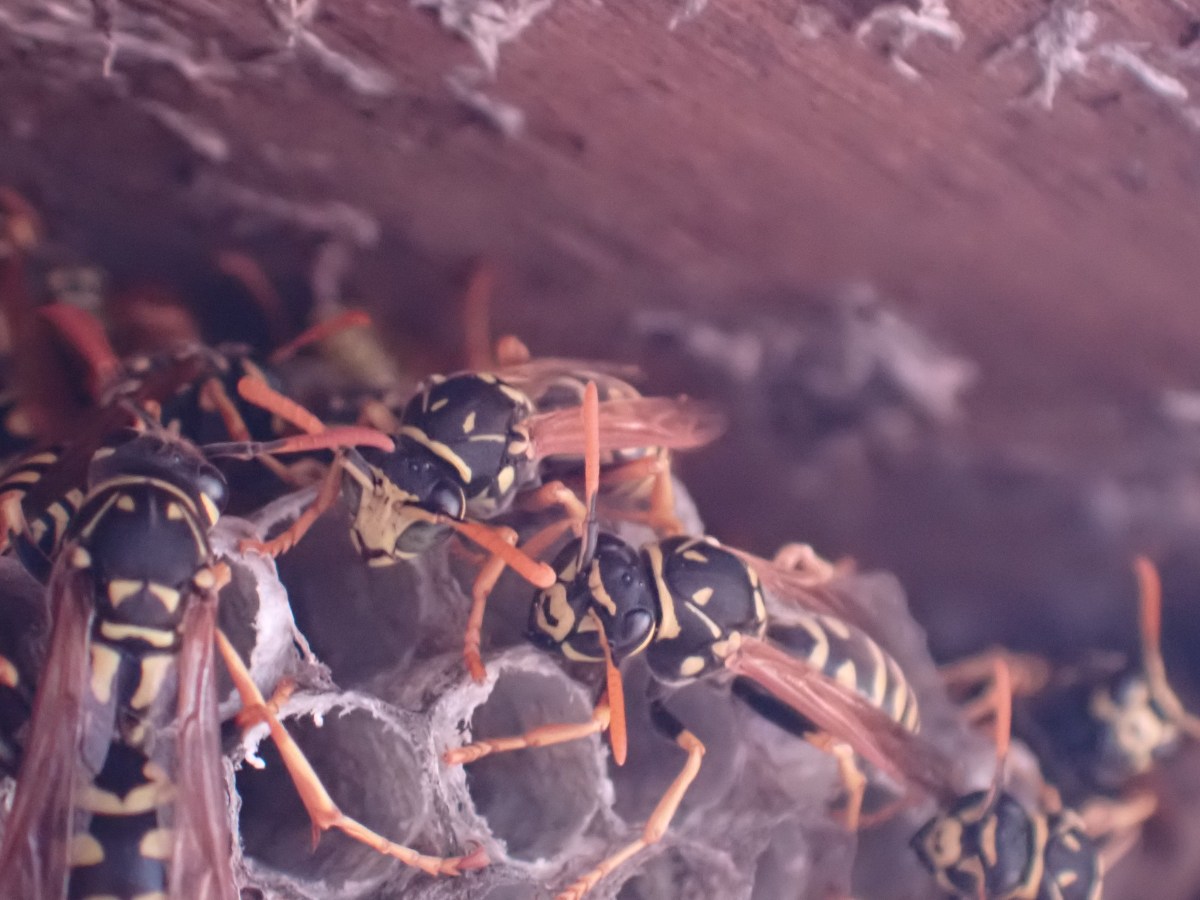
I’d wanted to talk about how to read wasp body language this week, but that’ll be postponed. I couldn’t persuade any individuals to do threat displays this week – all live wasps were well-mannered, despite extreme invasion of their personal space. Most of the wasps I’ve seen around Trego are Polistes paper wasps. We have two main species here – the invasive European Paper Wasp (Polistes dominula) and the native Golden Paper Wasp (Polistes aurifer). In our area, Golden Paper Wasps peak in July, while the European Paper Wasps peak in August. While both are still around, I’ve…
Keep readingTick diseases in Montana
Spring has sprung, and our first ticks are out and about.When folks start talking about illnesses transmitted by ticks, the first to come up almost always seems to be Lyme Disease. While Lyme Disease is the most common tick-borne disease among Montanans, you don’t need to worry about picking it up around here – it tends to be something folks pick up on vacation. The Black-Legged Tick, also known as the deer tick, is the primary culprit responsible for transmitting Lyme Disease. Black-legged ticks are not found in Montana – they are, however, found all across the eastern…
Keep readingMayflies
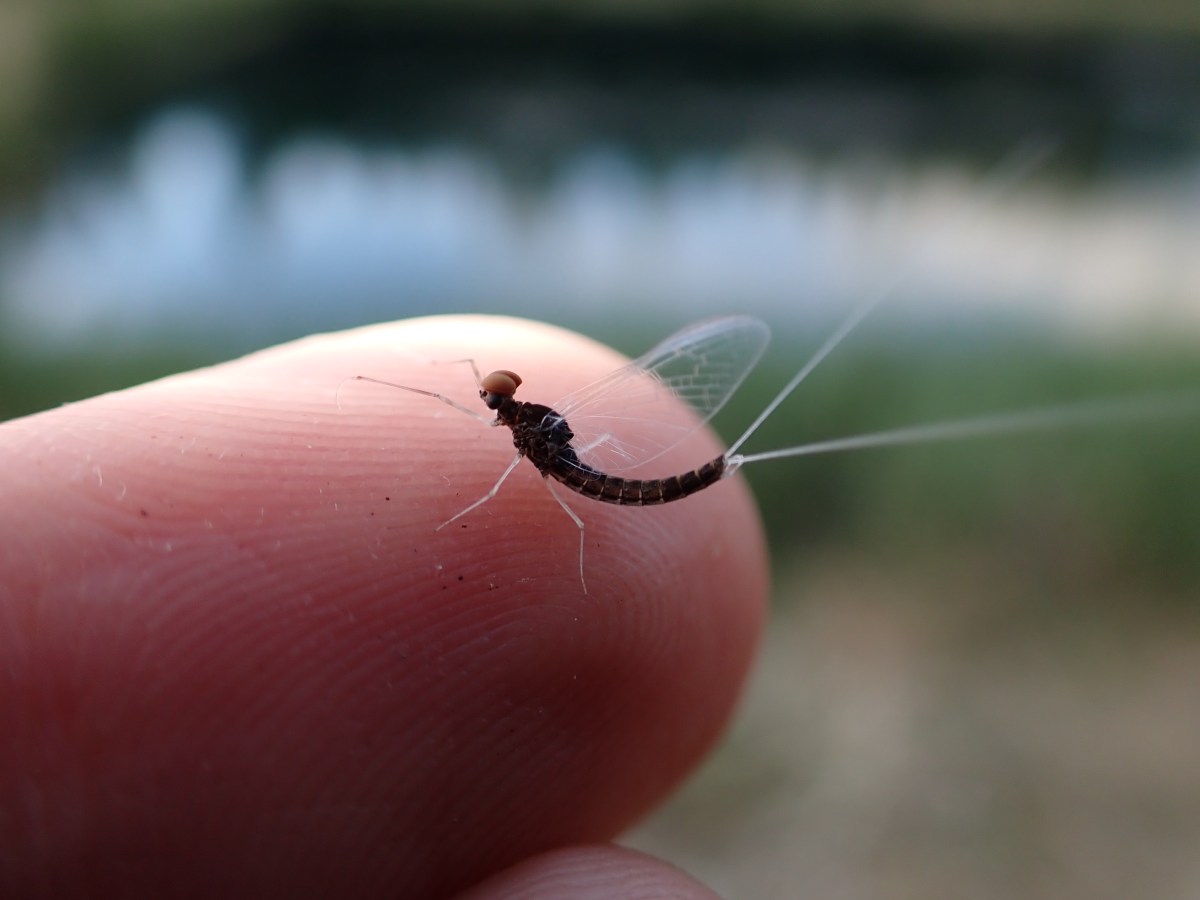
True to schedule, the mayflies have returned. Of course, the mayflies didn’t wait for May proper… they’ve been with us for the past month at least. Here’s the shed skin of one I watched emerging this past week. Note the three tail filaments – this is how you can tell it is a mayfly skin. Our pond tends to have the smaller species of mayflies in good abundance – primarily genus Callibaetis. Here are some higher-quality photographs of other mayfly nymphs, so you can get a sense of the variety. All mayflies belong to Order “Ephemeroptera”, which is…
Keep readingThatch Ants
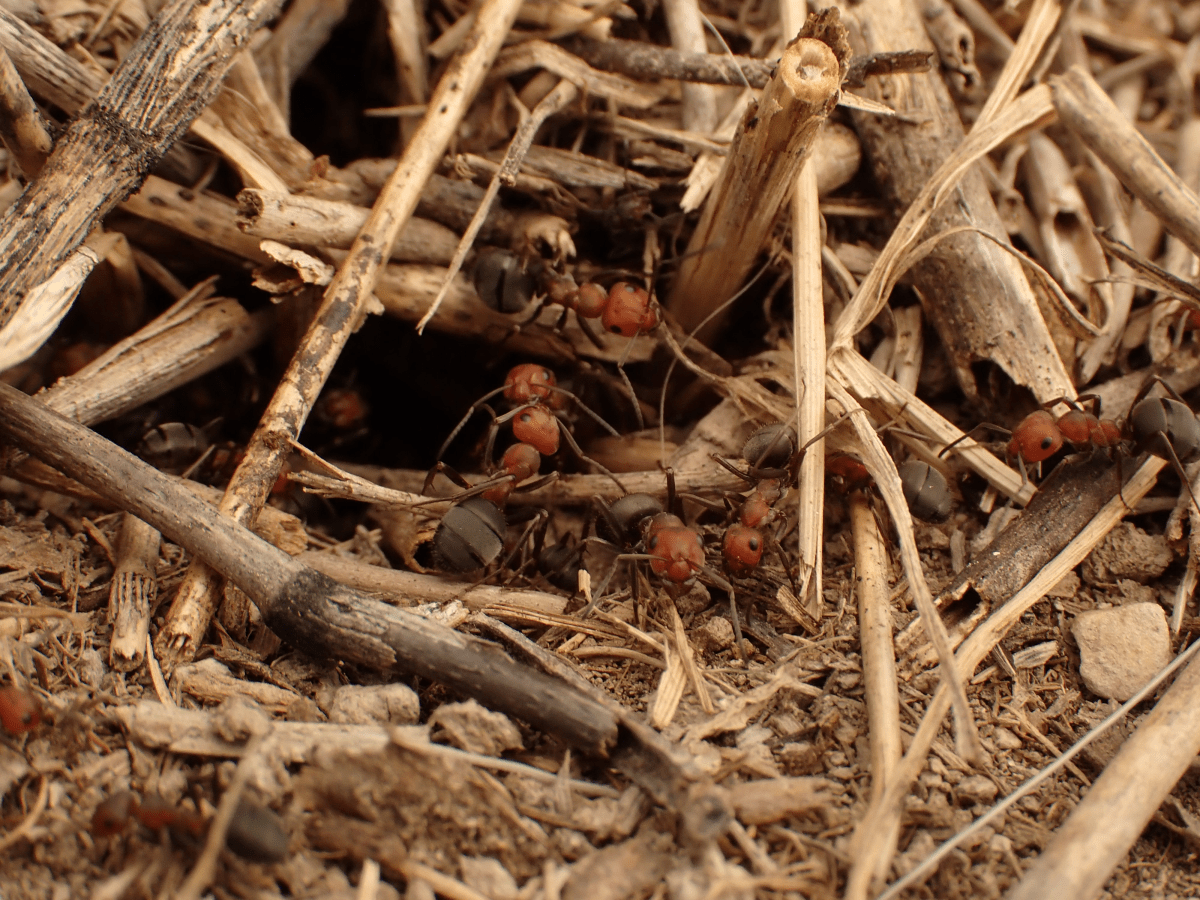
Our mound-building ants in this part of the country are Western Thatching Ants, Formica obscuripes.These ants are rather special because they generally have multiple active queens in a single colony – the young queens often help out and reproduce at home, instead of founding their own new colonies…
Keep readingPaper Wasp Body Language
If you know what signs to look for when you meet a wasp, it’s easy to avoid being stung. Have you ever been buzzed by a bee or a paper wasp? They dive bomb you, fly close to your face, even collide with you, but without stinging? Those were probably sentries for a nest, trying to keep danger away. Sentry wasps can be stationed 10 to 20 feet away from the nest they’re guarding, and circle back to it from time to time. These wasps are the ones you’re most likely to come into conflict with. Yesterday, I…
Keep reading -
This weekend is Eureka Rendezvous Days. The Eureka Chamber of Commerce has all of the details and schedule of events. As ever, it’s a busy couple of days. It’s worth checking for other events as well, because not everything fits on the poster. For example, the village vendors on Saturday coincides with the Friends of the Library Used Book Sale, though it’ll wrap up a bit earlier (3pm). And of course, there are three days to make the play, Belle of the Ball, performed by the Eureka Community Players.

About Rendezvous Past
Origins of the Word Rendezvous
One of the reasons that English is described as difficult to learn is the number of words- over 170,000! Of those, the majority are loan-words, words taken from other languages. The word Rendezvous is one such word. It was appropriated from the French, around 1600 (during a brief period in which Britain and France were not at war- as a result of competition with Spain). The original usage appears to be a verb: rendez vous meaning present yourselves. This then becomes the noun describing the place of meeting we are accustomed to. English has borrowed from…
2023 Rendezvous: view from the village
This year, my view of Rendezvous was from the historical village. It was a much warmer day, and very busy as time for the parade approached. Things were crowded, and much to my surprise we rarely heard the music from across the street at Riverside park over the hum of conversations. While the crowd seemed busy to me, and there seemed to be plenty of vendors (stretching up to folks with tables set up along the street), the recurrent conversation I kept hearing was about how much smaller things were. It was typically a nostalgic conversation,…
-
One of the fun things about earth day is that if you look for the origins of it in google search, google will prompt you to finish your search with the phrase ‘founder composted girlfriend’.
Which, yes. Sort of. This isn’t the senator, Gaylord Nelson, who got things rolling in 1970. Girlfriend composter was Ira Einhorn. There’s some debate as to whether or not he actually founded Earth Day, but none on the girlfriend front. He fled the country to avoid the trial in ’81, and was extradited to the US in 2002, when he was sentenced to life in prison.
Einhorn was an environmental activist and a speaker at the first Earth Day event in Philadelphia. He claimed to have been responsible for founding Earth Day, but the folks organizing the event stated that he wasn’t involved at all.
As for the Senator, Gaylord Nelson, his Earth Day is credited with prompting congress to create the Environmental Protection Agency. He went on to be involved with several large pieces of environmental legislation, such as the Clean Air Act and Clean Waters Act. He stayed involved in promoting the environment throughout his career, and doesn’t seem to have made any especially colorful headlines.
An aside: Many thanks to the folks out cleaning Fortine Creek Road this weekend.





Want to tell us something or ask a question? Get in touch.

Recent Posts
- You Have To Beat Darwin Every Day
- Computer Repair by Mussolini
- Getting Alberta Oil to Market
- Parties On Economics
- Thus Spake Zarathustra – One More Time
- Suspenders
- You Haven’t Met All The People . . .
- Play Stupid Games, Win Stupid Prizes
- The Ballad of Lenin’s Tomb
- An Encounter With a Lawnmower Thief
- County Property Taxes
- A Big Loss in 2025
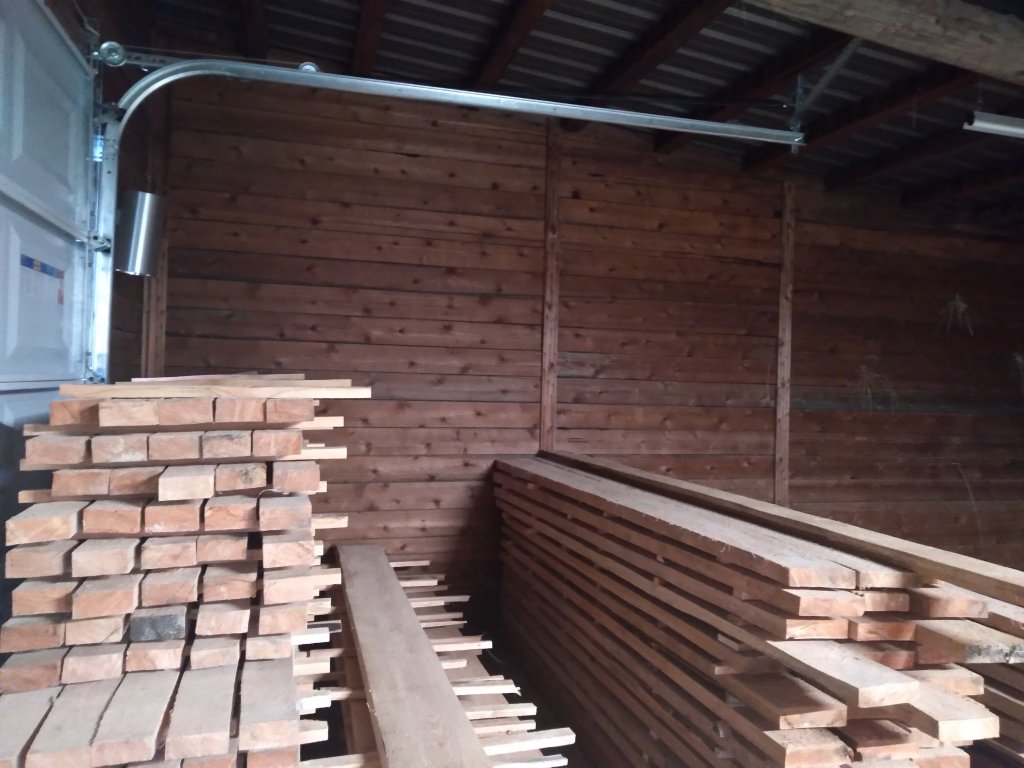
Rough Cut Lumber
Harvested as part of thinning to reduce fire danger.
$0.75 per board foot.
Call Mike (406-882-4835) or Sam (406-882-4597)
Popular Posts
Ask The Entomologist Bears Books Canada Census Community Decay Covid Covid-19 Data Deer Demography Education Elections Eureka Montana family Firearms Game Cameras Geese Government Guns History Inflation life Lincoln County Board of Health Lincoln County MT Lincoln Electric Cooperative Montana nature News Patches' Pieces Pest Control Politics Pond Recipe School School Board Snow Taxes travel Trego Trego Montana Trego School Weather Wildlife writing
 Trego's Mountain Ear