-
In Suriname, I saw the largest mosque in the Americas set peacefully next door to the country’s oldest synagogue. I was told that the parking lot is shared.

While I was there, the Hindu Holi Phagwa was going on – a festival of colors celebrated by tossing colored water and powders at each other. Knowing it was going on, I dressed in my grubbiest cut-offs and T-shirt . . . I don’t recall any Jews hitting me with color, but Hindus, Muslims and Protestants all seemed to take the Hindu practice with equal enthusiasm.
A photo of one of my graduate students and her daughters, taken recently in Hawaii, shows the Holi festival takes place in the US, too.
As I think of Israel and Gaza – a place we regard as the holy land – I remember that I have known tolerant people, in a spot where Christians, Muslims, Hindus, Animists and Jews can live together, in relative harmony, enjoying each other’s religious festivities.
I think of Bob Mendelsohn – Bob was Jewish, and he loved both Christmas – particularly the music -and deli ham. As I look at the Holy Land, I think of the actual tolerance I’ve seen and known in our country. Part of it is sharing the experience. I’ve been included in smudging by folks whose worship was directed to Wakan Tanka – and my best translation is “the great unknowable” or “the great mystery.”
And my thoughts go to Israel and Gaza – and my long ago Sunday school classes put Samson in Gaza. There’s a long history of strife and combat in that neighborhood. If I remember my Sunday school correctly, the Canaanites didn’t have a good time when Moses brought the children of Israel in.
Personally, if you’re happy with your religion, I’m happy for you. I’d just as soon not be victimized by missionaries – but different religious beliefs and practices just aren’t worth killing people over. Behavior is a different thing – on October 7, Hamas pulled some crap that earned them the hostility they’ve been experiencing. Rape and murder aren’t things a polite society should tolerate – whether the conflict is religion or not.
But I’m glad that I have seen the mosque and synagogue in Suriname – I know there is at least one place where the Abrahamic religions can get along.
-
So I’m reading this article in the Daily Montanan: Billings man pleads guilty to illegal gun possession inside school zone and, since my place borders the school, I wonder how the law could affect me.
In Billings, the article describes the guy who got busted: “Metcalf was charged and arrested late last August after he earlier in the month, on multiple occasions, was seen pacing his front yard and walking down the street with a .20-gauge shotgun, sometimes staring into traffic or at Broadwater Elementary School, which is across the street from the home he shares with his mother, according to court documents.
When Billings police talked to him after numerous complaints were made, he told them that his next-door neighbor and others were stalking him and that he believed the neighbor was working to place bombs in his yard.”
Okay – the dude is 49 years old, lives with his mother, and figures that his neighbor is stalking him. I probably don’t have a lot to worry about. Still, it doesn’t take long to review research someone else has provided. The Legality Of Carrying Within 1000 Feet Of A School Zone – Concealed Nation gives a few more answers. I’m fine on the place, because it’s my “private property, not part of a school zone.” On the other hand, there’s the road:
“School Zone — The area of 1,000 feet around a public, parochial or private school. 18 U.S. Code § 921 – Definitions (a)(25) This includes roadways, highways, and any ground not considered private property.
A school is defined as any state-defined location providing elementary and secondary education. This covers the arena, in most states, of grades K through 12.
It shall be unlawful for any individual knowingly to possess a firearm that has moved in or that otherwise affects interstate or foreign commerce at a place that the individual knows, or has reasonable cause to believe, is a school zone.”

Keeping in mind that an edited photo is not as precise as an actual survey, the red oval represents about 1000 ft perimeter around the school property. Okay – basically, we have about 2000 feet of Fortine Creek Road that is gun-free by federal law? How do we deal with that limitation?
“If you’re legally allowed to possess a firearm but not legally allowed to carry it onto school grounds, you’re still allowed to have it within your vehicle so long as it is unloaded and in a locked container — much the same as the rules that apply for interstate travel clauses for FOPA.”
So if I am reading that right, I need to have the gun unloaded and in a locked box for those 2000 feet of Fortine Creek Road. This may be Trego’s most frequently broken federal law. Heck, it may be violated more often than the 35 mph speed limit.
From the first article, I get the feel that a Montana Concealed Carry Permit doesn’t include permission to carry in a school zone – so here’s what you need to do to drive past Trego School legally:
“If your state (or the state you’re driving in) does not allow concealed carry in school zones then the 1,000 foot perimeter is enforced while on the property of the school and while traveling any road provided by taxpayer money. So if you’re traveling a public road, pull over, unload your firearm and lock it in the glovebox (or similar) until you drive past the radius of 1,000 feet.
After you have passed through the school zone, you may pull over, load your handgun, and put it back in your inside the waistband concealed carry holster.”
Like I said – I’m beginning to believe this is Trego’s most frequently broken federal law. I have no idea how many of my neighbors, or even how many hunters each fall habitually break this law – but, since I don’t see many people pulling over to unload the firearm and put it in a locked box, or taking it from that locked box, I suspect violations of the law are more common than not.
As always, click the links for more complete information. Federal Consequences of Possessing or Discharging a Gun in a School Zone explains the potential penalties:
“ A violation of possessing or discharging a firearm in a school zone is a misdemeanor under federal law (18 U.S.C. section 924 (a)(4)). However, punishment can be quite severe.
If you are convicted of violating gun-free school zone laws pursuant to 18 U.S.C. section 922(q), you face up to five years imprisonment and a maximum fine of $5,000.
Additionally, if you are convicted of a separate federal offense during the same criminal proceeding, the law expressly prohibits a conviction under the Gun-Free School Zone Act from running concurrently with any other sentence. If you are sentenced to a prison term, you would be required to serve this sentence in addition to and consecutive to any other term of imprisonment.”
Drive with care.
-
I’m having trouble summarizing this one, not least because I lost my notes. In short: The meeting did discuss prayer, but did not discuss a four day week.
About prayer: The discussion was specifically with regards to having prayer on the agenda as a part of each school board meeting. The result- no.
Community presence and involvement: High. It was a very crowded parking lot. For as heated a topic as it is, everyone was remarkably polite. Arguments did stray beyond the scope of ‘prayer in the board meeting’ to ‘prayer in school’ fairly frequently, and got a bit personal at times.
My impression: We are really fortunate in the community we have. Prayer in school is, to steal a phrase, “Trolling for Lawsuits”; It’s a legally risky topic.
But the people that would have grounds for the lawsuit were at that meeting asking the board not to do it. All they would have had to do to win a lawsuit (civil rights violations pay triple damages!) was do nothing, wait for the next meeting, and file. And they showed up to try to keep the school from making a mistake anyway. Wow.
Ina perfect world, you should walk out from a public meeting with the sense that everyone there is trying to do the morally correct thing. This one felt that way, though there were clearly some deep divides on what the morally correct thing was. In the end, the board decided to avoid having prayer on the agenda.
-
Since we’re having an election, I’ve written some questions for the candidates, and I’ll be asking them to everyone running. Since I’m running, I thought I’d start.
About You: I have more higher education than is really reasonable (two masters, one in education and the other in business), and five-years teaching experience. My family lives near the school, and I expect our son (currently one year old) will attend when he’s old enough.
Why are you running for school board? I chose to run for the school board because I believe that our community deserves elections and our school is important. At the time I filed, there were two candidates for two vacancies. By running, I could ensure an election. I chose to run for the three year term because it’s more important that the community have a vote on a longer term. I’m certainly willing to serve if elected, but it won’t hurt my feelings if I’m not; my purpose in running was ensuring that an election happened.
What’s the accomplishment you’re most proud of, from your time on the school board? If you haven’t ever been on a school board, what do you hope to accomplish? I’ve never served on a school board before. My hope is to ensure that we have a good school for my son to attend in a few years.
What do you think the first priority of a school board should be? I believe that a school board has a duty to the public to ensure that the school provides the best education possible with an efficient use of funds.
What do you think Trego Elementary brings to our community? Among other things- a very good sledding hill. In all honesty, I’d like to see our elementary school provide more for our community. I’d like to see a school/community library, for example.
What would the “perfect” elementary school look like? (classes offered, technology available, etc.?) It’s hard to describe the perfect school.
In terms of technology, I’d like students to have lessons on how to use it before being given free reign with it. My experience as an educator suggests that typing lessons, early (probably as soon as reading is fluid) are important, and that teaching Boolean logic and safe practices is essential. While I’d like technology to be present, it cannot replace a teacher, and I believe it should be only a small portion of the school day.
For classes offered, I’d like to see more electives. Trego has had some really neat classes at times. I would love, especially for older students, if there was more exposure to music, languages, and vocational classes. We have a community full of talented, creative people, and it would be nice if the school could take advantage of that for our kids.
I think Trego, as a small, multi-grade school, has the potential to combine some of the best features of public education. Small class sizes are great. Multi-grade is good in that it allows students to do more advanced work when they’re able, and lets them see where they are going. Older students can reinforce concepts by helping younger students.
-
School Digger has released its annual school rankings. This year, Sunburst (near the Sweetgrass Hills) rated #1 – a small school with only 40 students.
ACT scores were not included in this year’s rankings – a bit of a loss.
Our own Lincoln County High School ranked 85th of Montana’s 124 schools. On the Montana State Reading Test LCHS scored at 52.8% – a little above the state average. The score for mathematics was 15.3%, and science was 15.2%. That translates to the bottom sixth in math and science.
Whitefish ranked 9th, Libby ranked 13th.
Click the link to check the ratings for yourself. Words fail me.
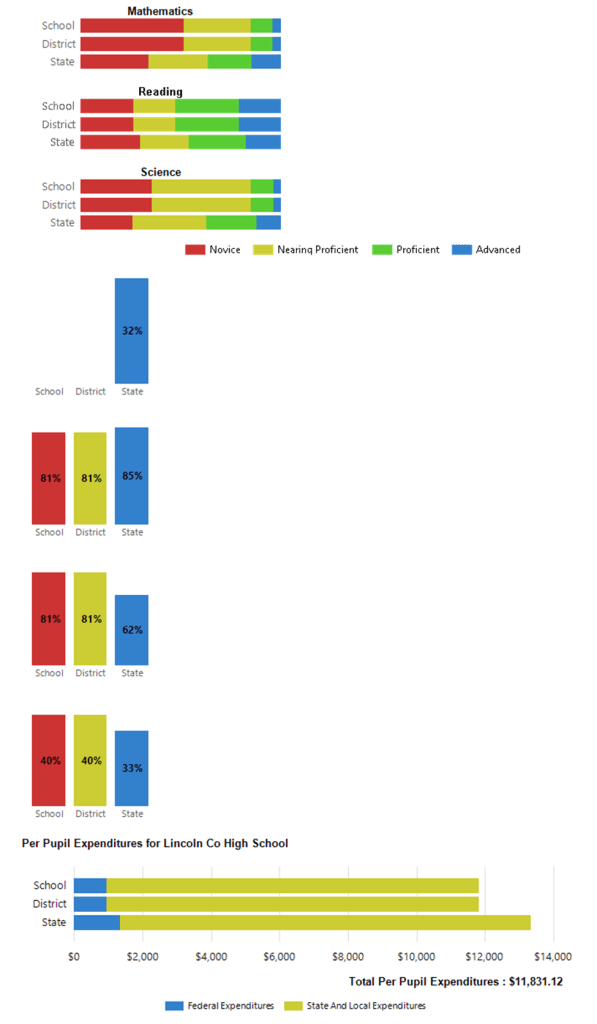
Sourced from OPI -
As I hauled an armload of firewood from the woodshed, the ducks on the pond got loud. Stopping to look, I watched the bald eagle fly low over the water, eventually moving to the top of a larch at the base of the hill. The ducks and geese abandoned the shore and moved to deeper water . . . I guess their assumption is that the bald eagle doesn’t want to swim. They seem to be correct.
Two days later, the marsh hawk has returned. His low level flight for voles along the edge of the pond has the ducks panicking again – but the lesser Canada geese remain on the shore, certain that he may be a predator, but is not a threat to them. In a couple of months, when they have goslings to protect they will have a different attitude.
The ice is gone from the main pond – and in the next couple of days it will be gone from the circle pond. The island will again be accessible only by water and air – and will again be the elite goose nesting place. We’re used to seeing a single goose nest on the island, but Gander is aging, and it looks like one of his goslings, along with her consort, has accompanied the parental geese back early in the Spring. We may have two nests on the island – which we can watch from the second floor windows or by walking around the pond. With increasing eagle presence, there may be a new predation problem.
The snow-free field now has a mob of crows searching through the short grass – I really don’t know what they could be finding. Definitely still too cold for insects. Possibly, I hope, the mob hunts voles.
It will be a while before the red-wing blackbirds return. Last year, Casanova, who earlier had five consorts nesting around the pond, didn’t return. He had been an aggressive little bird, harassing ravens away from his pond and nestlings. In 23, he had 3 replacements, but none so territorial against the larger predators.
And the larger species – the whitetail deer are grazing the grass as it begins to green up and start the Spring growth.
-

Maybe you have a drawer in your house that looks like this? Peter Fiskerstrand/Wikimedia, CC BY-SA Wesley Chang, Drexel University
If you’ve looked in your utility drawer lately, you may have noticed the various shapes, sizes and types of batteries that power your electronic devices. First, there are the round, non-rechargeable button cells for your watches and small items. There’s also the popular AA and AAA cylindrical batteries for calculators, clocks and remotes. Then you have the rechargeable lithium-ion batteries in your laptops and phones. And don’t forget about the lead-acid battery in your car.
I’m a professor who studies batteries and electrochemistry. To understand why batteries come in many different sizes and shapes – and serve many purposes – look to the past, at how batteries originated and how they have developed over the years.
The first batteries were made in the 1800s, and they were quite simple. One of the first demonstrations was a series of metal discs soaked in brine, which Italian scientist Alessandro Volta found created an electric current. The first lead-acid battery was made of a few pieces of lead in a jar of sulfuric acid. The modern versions are not that different. They’re just easier to manufacture and contain various additives to improve performance.
In all cases, batteries perform in the same manner: a voltage difference between two dissimilar electrodes produces an electric current, which can be discharged to power a device. Rechargeable batteries can then reverse this current to charge back up. Inside the battery, the electric current is accompanied by the flow of ions through a liquid, the electrolyte.
The passage of each electron in the current is accompanied by the transport of one ion through the electrolyte. Electrodes that can store more ions lead to batteries that can hold more charge and therefore last longer on a single charge. Electrodes that are engineered for faster ion storage lead to batteries that can discharge faster, for high-power applications. Lastly, being able to charge and discharge many times without degrading leads to batteries with long lifetimes.
Lead-acid batteries
The lead-acid battery was the first rechargeable battery invented back in 1859 by Gaston Plante, who experimented with lead plates in an acidic solution and found that the flow and storage of electric current could be reversed.
A lead-acid battery has to be big enough to provide enough charge to start a car. It also has to be usable in cold climates and last many years. Since the electrolyte is a corrosive acid, the external casing has to be tough to protect people and car parts from any possible harm. Knowing all this, it makes sense that modern lead-acid batteries are blocky and heavy.
Alkaline batteries
On the other hand, household devices like calculators and digital scales can afford to use smaller batteries because they don’t require a lot of charge. These are primarily non-rechargeable alkaline batteries that have been used for decades. The standardized cell sizes are AAAA, AAA, AA, C and D, as well as button and coin cells and many others. The sizes are related to how much charge they store – the bigger the battery, the more it holds – and the sizes of the devices they power.
Sometimes, you may find alkaline batteries sold in rectangular shapes, like common 9-volt batteries, but open the outer casing and you’ll find that they are simply a few cylindrical cells connected together inside. Cylindrical batteries have been around so long and used so widely that it just doesn’t make sense for the companies to manufacture anything different – it would require an investment to change their manufacturing facilities, something they’d rather not do. https://www.youtube.com/embed/L8nThJum77Q?wmode=transparent&start=0 Are 9-volt batteries as different from AAA batteries as you think? Take a look inside.
Lithium ion batteries
Nickel-cadmium batteries were the first widely used rechargeable batteries for household electronics and were popular through the end of the 20th century. But they had their pitfalls. Cadmium is very toxic, and the batteries suffered from a “memory effect,” which decreased their lifetime.
For many decades, lithium was studied for potential use in rechargeable batteries because of its unique properties as a lightweight metal that stores a lot of energy. Sony first commercialized the lithium-ion battery in 1991.
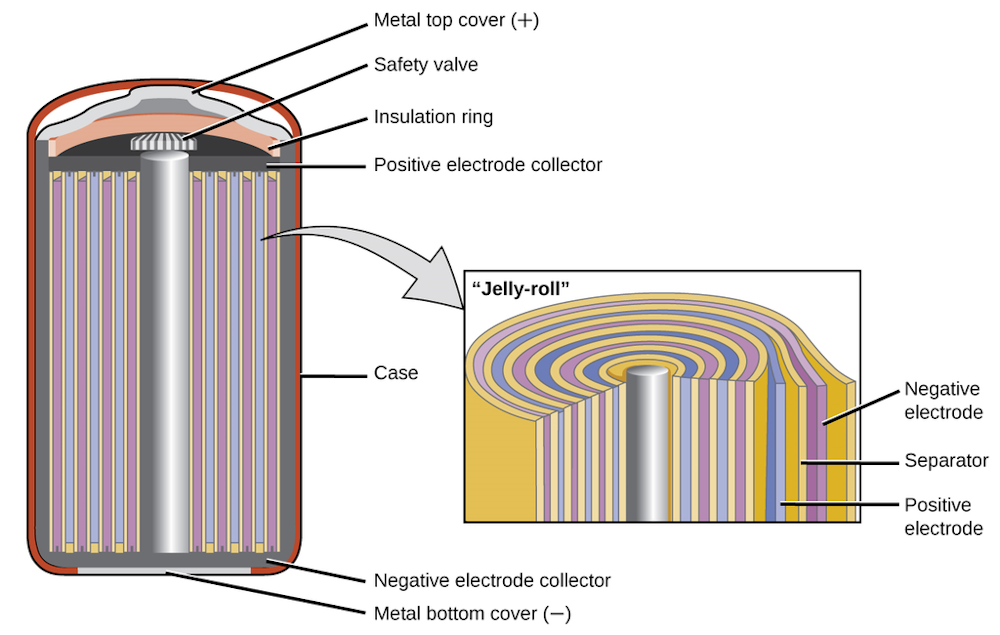
The company made cylindrical cells because these were the easiest to manufacture. In the 1990s, Sony was making lots of camcorders and tapes, and thus had lots of equipment for roll-to-roll manufacturing. It was natural to repurpose this equipment to produce rolls of battery electrodes, which are made by casting films on sheets of copper or aluminum and then rolling them up into a “jelly roll” cylinder.
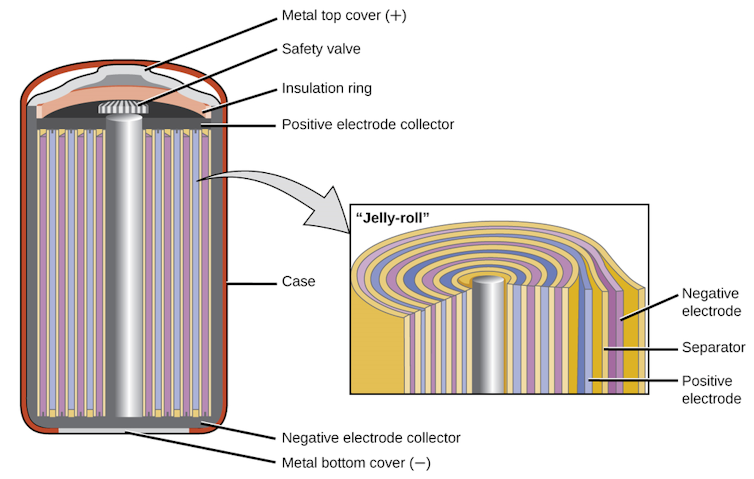
Cylindrical batteries are made of many thin layers rolled up like a jelly roll. OpenStax/Wikimedia, CC BY The thick casing of these cylindrical cells is mechanically strong, and to add another layer of safety they have a pressure relief valve. Very quickly, these early lithium-ion cells took over the portable electronics market, especially for laptops and cellphones, because they stored more energy and lasted longer than the nickel-cadmium rechargeable batteries.
Factors that shape batteries
Batteries are made in certain sizes and shapes for reasons of cost and manufacturability, but in other cases because of legacy manufacturing processes. Market demand also plays a role.
For example, electric vehicles didn’t take off until Tesla started making cars using cylindrical lithium-ion battery cells rather than the rectangular pouch or prismatic cells other EV makers have used. Pouch and prismatic cells can be packed closely together, but because cylindrical cells were already being mass-produced for portable electronics, Tesla was able to make lower-cost EVs in the 2010s.
What shapes and sizes batteries will take in the future depends not only on how much energy they store, but also on market economics – how easy it is to make each type of cell, how much it costs to make them and what they’re used for. And those factors are a mix of innovation and history.
Wesley Chang, Assistant Professor of Mechanical Engineering and Mechanics, Drexel University
This article is republished from The Conversation under a Creative Commons license. Read the original article.
-
Many thanks to ClaraMae Crawford, Kayla Morris and Fawnette Richard for running! The official election date is Tuesday, May 7th. Anyone registered to vote in the school district should receive a ballot by mail.
There are two vacancies on the school board- one 2 year term, and one 3 year term.
Running for the 2 year term are:
- Fawnette Richard
- Kayla Morris (incumbent- Kayla was appointed to the board earlier this year, replacing Dave Scott)
Running for the 3 year term are:
- ClaraMae Crawford (incumbent- current board chair)
- Sam McCurry
We’re having an election! So, please vote!
-
The proposed library district has me looking at taxation again. One of the great things about Lincoln County is that, with three high school districts, it’s easy to figure out which communities provide the funds that keep our county going.
Market Value Taxable Value Percentage Libby $1,687,186,708 $21,911,499 36.42% Troy $831,354,553 $10,966,329 18.23% Eureka $1,974,407,031 $27,280,980 45.35% County Total $4,492,948,292 $60,158,808 Data taken from Montana Certified Values The Census offers these population estimates from the American Community Survey (the ACS is not my preferred source, but we are 4 years past the census)
Zip Code Population City 59923 9,545 Libby 59917 5,001 Eureka 59935 3,505 Troy 59934 763 Trego 59930 697 Rexford 59918 625 Fortine 59933 21 Stryker Since Eureka, Trego, Rexford, Fortine, and Stryker are all in High School District 13, the relative populations are:
Libby 9545 (47%) Troy 3,505 (17%) LCHS 7,107 (35%)
Seeing that North County provides 45.35% of the county’s tax revenues, the first thought that comes to mind is that secession from Lincoln County would be a better option than voting for a county-wide library district. County 57, with 45.35% of Lincoln County’s tax base, could afford to be a little less efficient and still provide better service.
A library that served just the LCHS high school district, looking at the tax base (45%) and population (35%), could provide north county residents with a heck of a lot better service than the pittance historically provided to Eureka does.
I like libraries – as an academic, I’ve spent a lot of time in them on one lit review or another. Still, I don’t get much return on a library in Libby – and in the proposal for a countywide district, we’d cover nearly half the cost and probably get a sixth of the service.
I want a library – but I’m tired of being taxed to provide jobs and services for Libby. If I get an opportunity to vote for a better library, closer . . . well, perhaps the first stage of secession is a special library district that isn’t countywide.
-
‘Brain Gain’ in Rural America and Who Is Behind It
by Ilana Newman, The Daily Yonder
March 13, 2024For many people, leaving a rural place is a rite of passage. From higher education to looking for love, many think they have to leave to pursue the rest of their lives. This narrative contributes to the often repeated and not all true story that our rural communities are dying.
According to University of Minnesota researcher Ben Winchester, rural communities are actually gaining residents — mainly above the age of 35 – in a trend that he calls “brain gain”. Winchester also said the “brain drain” trend of 18 years olds leaving their home communities is not only a rural trend. Overall, between 40-60% of all kids end up leaving their hometown. “When you’re 18-25 you’re generally very individualistic,” said Winchester.
So who is choosing rural and why?
Ryan Haley graduated from Montezuma Cortez High School in 2011 and headed to Grand Junction, Colorado, for college, where he played football and discovered his future career — chiropractic care. Next, he went to Dallas, Texas, for Chiropractic school where he met his wife.
During school, Haley started talking to a chiropractor back home in Cortez about coming back and helping out with the practice. In 2018, he and his wife returned to Montezuma County with their first child, and started working at 4 Corners Chiropractic.
Haley sees Montezuma County as a preferable place to raise kids, and he appreciates the tight knit community that he finds less common in the larger urban areas he’s lived in.
“I’m part of a close community that uplifts each other, where I feel like in a city you do not get as much of that. It is kind of every man for himself,” Haley told the Daily Yonder.
Haley appreciates the way the Cortez community comes together when people are sick or need support. From chili fundraisers or auctions to a helping hand with a car project, they both see their home community as a place where people show up to help out.
The common refrain across interviewees for this story was that leaving their hometown was important, for the perspective that distance provides. Whether or not they returned home, or settled elsewhere, they found that trying something new taught them what their values are.
So how do rural areas continue the trend of “brain gain”, or older demographics returning or moving ro rural areas? How do rural areas continue to attract people who want to live there and contribute to the community — whether they are from the area or coming from elsewhere?

When 18 year old Stephen Candelaria thought about Cortez, Colorado, things that came to mind where: “No opportunities.” “This place sucks.” “There’s nothing for me here.” “I’m never coming back.” He eventually did leave the area to go to college at Colorado School of Mines in Golden, Colorado. (Photo by Ilana Newman / The Daily Yonder) “The trend I call the ‘brain gain’ really picked up in the nineties and filled up almost every vacant home in rural America. And then we’ve seen that trend continue for the past two decades,” said Winchester. He goes on to say that that trend has slowed down more recently, which could be because the rural housing stock is largely filled with older residents, retiring in place.
“This generation of seniors are staying in their homes longer than any previous generation. So it kind of slowed down this brain gain trend,” said Winchester. This also contributes to housing prices going up due to lack of housing stock in rural areas across the country.
“Even if you wanted to move to a rural community, you couldn’t because there is really literally nowhere for them to live,” he said.
Welcoming the Newcomers
Meanwhile, two states up and over to the east, in Otter Tail County, Minnesota, a rural rebound initiative coordinator has the job of welcoming and supporting newcomers to the community in an attempt to keep them in the community for longer. Through their Grab-A-Bite program, locals take newcomers out for a meal to help jumpstart the social network building process of moving to a new rural community.
Winchester emphasizes the importance of community support for new residents because it’s going to be the new residents that step up into leadership roles in the future. He said that returning adults already have the community infrastructure, and coming back to where they grew up is going to be a much easier transition than for someone new to a community.
Emily Spahn moved to Cortez in 2020 from Denver because she wanted to move to a place where the outdoors was more accessible. She loves to ski, mountain bike, and rock climb, and she found a place where she could do all of those things without going far. She soon found that the pace of life helped her slow down and get out of the competitive spirit that she felt while living in cities.
Spahn said that finding community in Montezuma County was a slow process, joking that the first year she lived in the area she was sure that she had invited everyone in the area under 40 to her birthday party. There were 7 people in attendance.
In many urban areas, it can be easy to get caught up in a bubble of people who have the same beliefs, said Spahn. But in Cortez, for better or worse, political beliefs and cultural backgrounds overlap. Spahn said that she has now become friends with people that she might never have met in a city because there are fewer options in a small town.
Three years after moving to the area, Spahn organized a gathering that had more than 20 friends in attendance.
Community Maintenance
To keep our rural communities alive and thriving, not necessarily growing, Winchester said that communities need a plan for turnover in leadership, whether that’s nonprofit boards, county commissioners, city council, or other leadership positions.

At 30, Candelaria is back in Cortez, running the family business, Candelaria Construction. “There’s a lot that I took for granted here that I didn’t realize was a luxury,” Candelaria admitted. “The community really takes care of one another here, and I think that’s really special,” he told the Daily Yonder. (Photo by Ilana Newman / The Daily Yonder) “Over 75% of rural homes are occupied by baby boomers and older. And when they turn over over the next 25 years, we’re gonna have the largest turnover of residents in our rural communities that we’ve almost ever seen,” he said. “Are we ready for these succession plans for leadership?”
Amorina Lee Martinez grew up in Mancos, Colorado, another town in Montezuma County. She said that school was a defining piece of her life, excelling in high school and then going to the University of Colorado Boulder on a scholarship. After graduating, she returned to Southwest Colorado before going back to Boulder for grad school, where she studied the Dolores River region. She spent 10 years in Boulder, but she always knew she would eventually want to return to Montezuma County.
“I want to take all this learning and all this big city stuff and bring it back to my community and give back. So that was the value or the motivation of coming back was that why not contribute my energy to the place that raised me,” said Lee Martinez.
She values the intergenerational connection to place and hopes to contribute to a community where she could choose to raise children someday. Lee Martinez is already taking on leadership roles in the community and plans to continue to support the community that raised her.
Rural is not one thing, said Winchester. “Our community constantly changes, our culture constantly changes. We’re not a melting pot. We’re a stew, and we are ladeling things out and we’re adding things in all the time.”
This article first appeared on The Daily Yonder and is republished here under a Creative Commons license.

Want to tell us something or ask a question? Get in touch.

Recent Posts
- When Castro Was Cool
- You Have To Beat Darwin Every Day
- Computer Repair by Mussolini
- Getting Alberta Oil to Market
- Parties On Economics
- Thus Spake Zarathustra – One More Time
- Suspenders
- You Haven’t Met All The People . . .
- Play Stupid Games, Win Stupid Prizes
- The Ballad of Lenin’s Tomb
- An Encounter With a Lawnmower Thief
- County Property Taxes
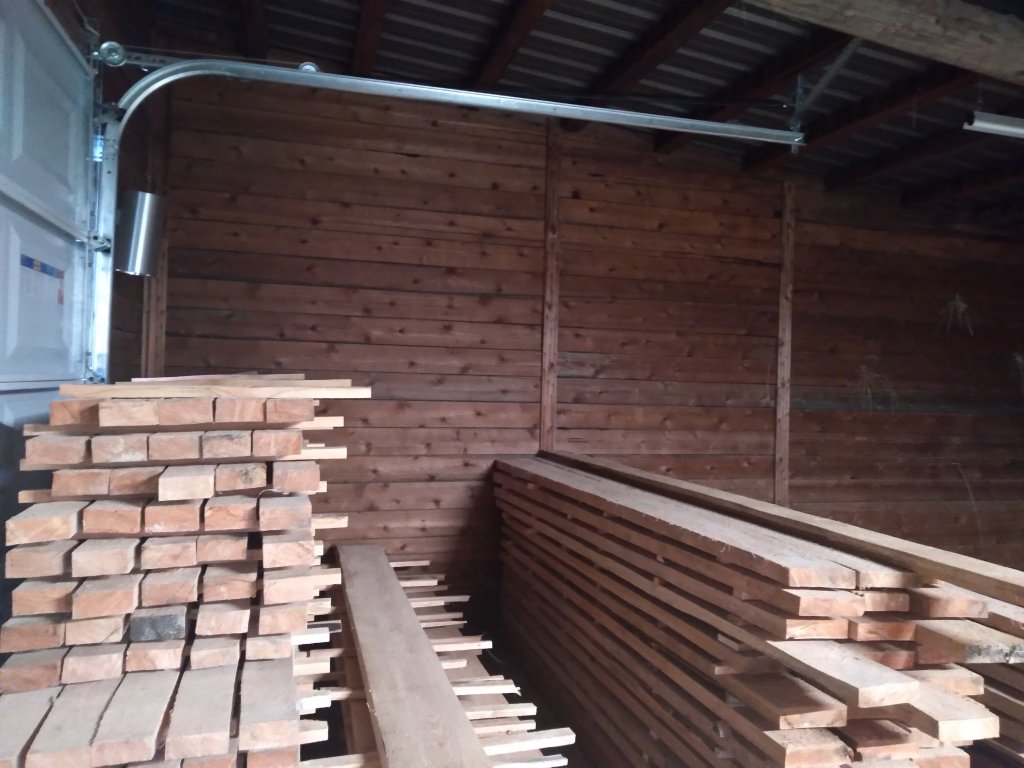
Rough Cut Lumber
Harvested as part of thinning to reduce fire danger.
$0.75 per board foot.
Call Mike (406-882-4835) or Sam (406-882-4597)
Popular Posts
Ask The Entomologist Bears Books Canada Census Community Decay Covid Covid-19 Data Deer Demography Education Elections Eureka Montana family Firearms Game Cameras Geese Government Guns History Inflation life Lincoln County Board of Health Lincoln County MT Lincoln Electric Cooperative Montana nature News Patches' Pieces Pest Control Politics Pond Recipe School School Board Snow Taxes travel Trego Trego Montana Trego School Weather Wildlife writing
 Trego's Mountain Ear


