-
Texas Governor Abbott invoked Article 1, Section 10 of the US Constitution, which apparently empowers Texas to resist invasion when the Federal government won’t do the job. Historically, Texas had an invasion by the Federal Government to resist back in 1836 – and since both 2024 and 1836 are leap years, it seems relevant to list the significant dates and events leading to Texas independence.
October 2, 1835 – Battle of Gonzales – loosely organized Texans win this battle and keep the cannon. This encounter is under a simple flag:

January 17 – Jim Bowie arrives at the Alamo
February 3 – William B. Travis arrives at the Alamo
February 8 – Davy Crockett arrives at the Alamo
February 17 – Travis sends his first letter asking for assistance
February 22 – Santa Anna arrives at San Antonio, demands the Alamo’s surrender
February 23 – Alamo is receiving cannon fire
February 24 – Travis writes and sends his ‘victory or death’ letter – Bowie is ill and Travis assumes full command of the garrison at the Alamo
March 1 – The 32 men of the Gonzales Ranging Company arrive at the Alamo
March 2 – Texas Declaration of Independence is signed.
March 3 – James Butler Bonham arrives with the message that reinforcements are not coming. Travis tells his command that they are free to leave. Three more Mexican battalions arrive.
March 5 – Mexican artillery stops shelling the Alamo
March 6 – Alamo falls – Brigido Guerrero survives, convincing the Mexican officers that he had been a prisoner for 2 months.
March 7 – Santa Anna sends Susan Dickinson, her daughter, and Joe (Travis’ slave) off to Sam Houston after having the Mexican Army parade in review. April 21 – Battle of San Jacinto
“Texas Revolution Battles: The Battle of Jacinto
Texas Revolution: Facts and Timeline for kids ***
The Battle of Jacinto was the final battle of the Texas Revolution fought on April 21, 1836. General Sam Houston led the Texan army in the battle that was fought by the San Jacinto River. Vince’s Bridge played a critical role during the Battle of San Jacinto. Vince’s Bridge was a wooden bridge constructed by Allen Vince over Sims Bayou near Harrisburg. Acting under the orders of Sam Houston Vince’s bridge was destroyed by Texan troops led by Deaf Smith. The destruction of Vince’s bridge prevented the arrival of re-enforcements to General Santa Anna’s Mexican Army (who had divided his force) and resulted in the decisive defeat of the Mexican army, effectively ended the Texas Revolution. The Battle of Jacinto was a rout, as hundreds of Mexican soldiers were killed or captured. General Santa Anna was one of those captured and on May 14, 1836 signed the peace Treaty of Velasco. The demoralized Mexican army, crossed the Rio Grande back into Mexico on June 15, 1836.”May 14 – Peace Treaty of Velasco signed.
I have no idea how the disagreement between President Biden and Governor Abbott will work out – but this is the timeline (predominately at the Alamo) and the results in 1836 were in Texas’ favor.
-
When I looked over the 1900 and 1910 Censuses, I was surprised at the detail involved – information that we have long quit recording. You can find a name, age, and the simple comment “insane” – which tells something. More impressive and common was the comment “cripple”.
Fortunately, I wasn’t at the start of my career – I had already had arthroscopic surgery on both knees. A century earlier, that surgery wasn’t available – in the censuses of 2000 and 2010, medical advances had reduced the need to mark the individual as “cripple.”
I’ve had one knee scoped three times and the other twice. The statistics show me that it correlates with size, and at 6’3” I suspect I’m in the top ten percent. Longer-lasting knees is a benefit to being on the short side.
Anyway, I wasn’t surprised Tuesday night when my left knee blew out again. I’m a high mileage unit, and need more maintenance. I hobbled to the drawer that holds old knee braces, put one on, hobbled through Wednesday, and on Thursday decided it was time to go to the walk-in orthopedic clinic in Kalispell.
I can’t say I walked in – hobbled in, limped in would be better descriptors. I had checked in, and barely managed to sit down before the guy showed up to take me to the X-ray machine. The X-rays showed that it wasn’t a cartilage tear – there is no cartilage left. I was shifted to a nurse practitioner who looked at the knee and the X-rays and came back with a long needle filled with painkillers and steroids. After the injection, a nice lady came by to fit me with a new brace that would fit better and keep the kneecap in place. Then (after Renata helped me put my shoe on) I walked out. I walked slowly, but I walked out.
The knee is still swollen, the steroids are causing sleeplessness as did the pain, but an injury that would have been crippling a century earlier had been reduced to a long day of disability.
I can handle that. Once more, with gratitude for the miracles of modern medicine.
-
Forest Service warns of budget cuts ahead of a risky wildfire season – what that means for safety
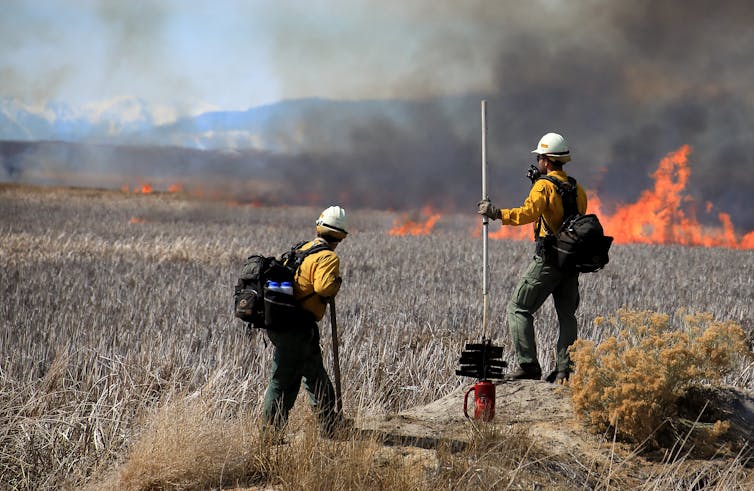
Members of the Snake River Hotshot crew monitor a prescribed fire near Roberts, Idaho. Austin Catlin/BLM Camille Stevens-Rumann, Colorado State University and Jude Bayham, Colorado State University
A wet winter and spring followed by a hot, dry summer can be a dangerous combination in the Western U.S. The rain fuels bountiful vegetation growth, and when summer heat dries out that vegetation, it can leave grasses and shrubs ready to burn.
In years like this, controlled burns and prescribed fire treatments are crucial to help protect communities against wildfires. Well-staffed fire crews ready to respond to blazes are essential, too.
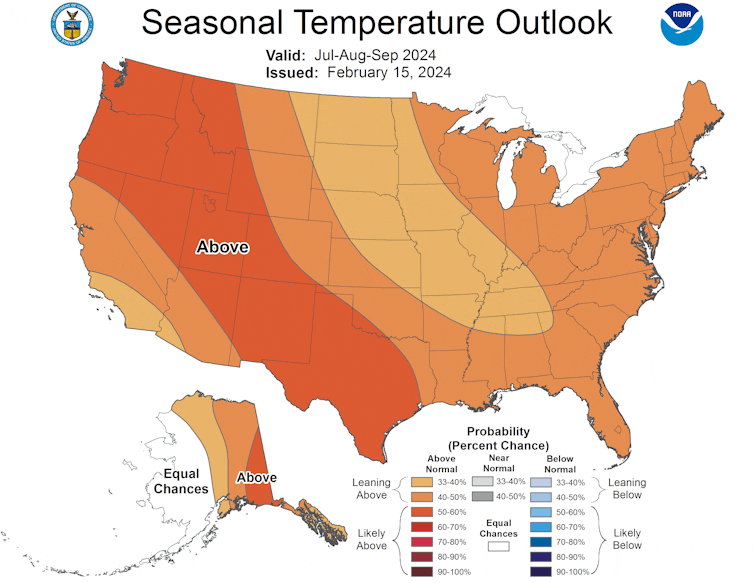
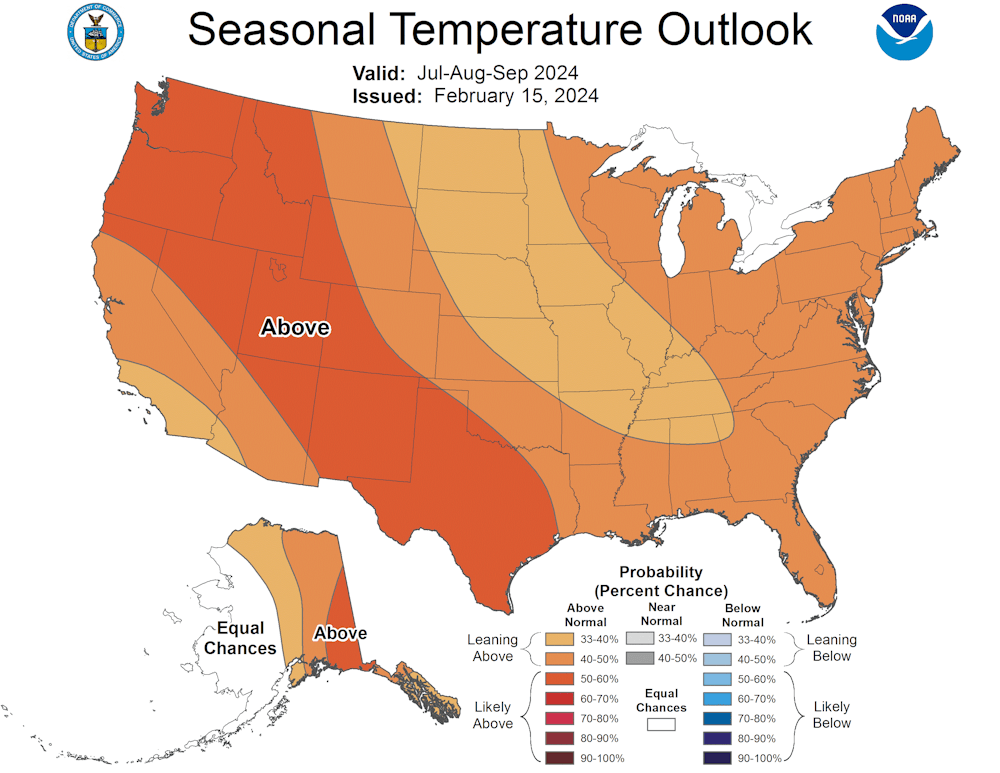
The National Oceanic and Atmospheric Administration Climate Prediction Center’s long-range seasonal forecast for summer 2024. NOAA These are some of the reasons why an announcement from U.S. Forest Service Chief Randy Moore on Feb. 8, 2024, is raising concerns. Moore told agency employees to expect budget cuts from Congress in 2024. His letter was thin on details. However, taken at face value, budget cuts could be interpreted as a reduction in the firefighting workforce, compounding recruitment and retention challenges that the Forest Service is already facing.
So what does this mean for the coming fire season? We study wildfire policy and fire ecology, and one of us, Camille Stevens-Rumann, has worked as a wildland firefighter. Here are a few important things to know.
The fire funding fix
While Moore’s letter raises concerns, the financial reality for fighting fires this year is likely less dire than it might otherwise be for one key reason.
The 2018 Consolidated Appropriations Act included what is known as the “fire funding fix.” It introduced a new budget structure, creating a separate disaster fund accessible during costly wildfire seasons. The fire funding fix allows federal firefighting agencies to access up to US$2.25 billion in additional disaster funding a year starting in 2020 and increasing to $2.95 billion in 2027.
Prior to the fire funding fix, fighting fires – suppression expenditures – consumed nearly 50% of the U.S. Forest Service budget. As bad fire years worsened, that left less funding for the agency’s other services, including conducting fuel treatments, such as prescribed burns, to reduce the risk of wildfires spreading.
https://datawrapper.dwcdn.net/DyoBq/2
The fix protects agency budgets, ensuring that a high-cost fire season will not completely consume the budget, and that allows more funding for preventive efforts and all the other programs of the Forest Service.
Prevention is a rising priority
The Forest Service has also made fire prevention a higher priority in recent years.
In 2022, it released a Wildfire Crisis Strategy and Implementation Plan that included ramping up fuel treatments to reduce the potential for large uncontrollable fires, as the West had seen in previous years. It called for treating up to an additional 50 million acres over 10 years.
That work won’t be completed before the 2024 fire season, but fuel treatments will be underway. They include prescribed burning to remove dry grasses, twigs, logs and other fuels in a controlled way and the use of heavy equipment to thin dense forest areas and create fire breaks by removing trees and vegetation.
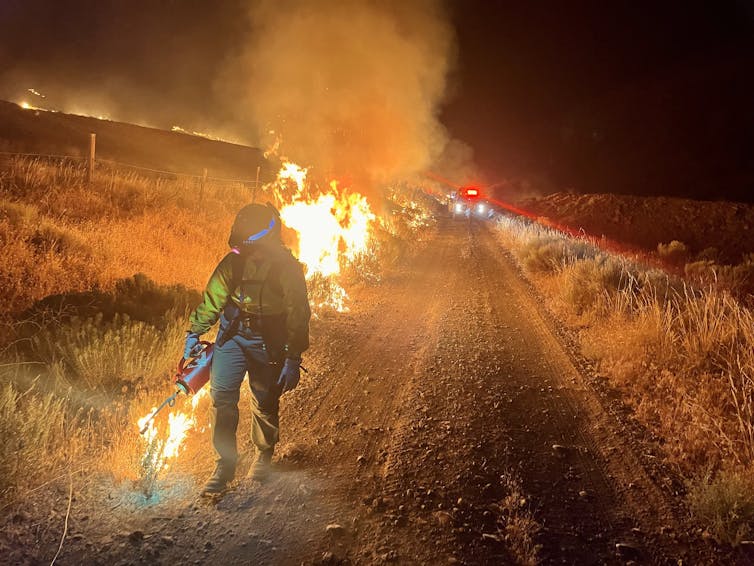
A wildland firefighter conducts a controlled burnout to help stop a fire near Spokane, Wash., in 2022. Sienna Falzetta/BLM Prescribed burning must be done when conditions are safe to limit the potential for the fire to get out of control, usually in the spring and early summer. However, climate change is expected to shorten the prescribed burning window in the western U.S.
Staffing is still a concern
Doing this work requires staff, and the Forest Service’s challenges in recruiting and retaining qualified firefighters may hinder its ability to accomplish all of its objectives.
In 2023, over 18,000 people were employed as federal wildland firefighters. While the Forest Service and Department of the Interior have not specified precise staffing targets, Moore has mentioned that “some crews have roughly half the staff they need.”
A recent Government Accountability Office report found that low wages and poor work-life balance, among other challenges, were barriers commonly cited by federal firefighting employees. The government boosted firefighters’ pay in 2021, but that increase is set to expire unless Congress votes to make it permanent. So far, firefighters have kept the same level of pay each time Congress pushed back acting on the 2024 budget, but it’s a precarious position.
The agency has started many initiatives to recruit and retain permanent employees, but it is too early to assess the results. A recent study involving one of us, Jude Bayham, found that highly qualified firefighters were more likely to remain with the agency after active seasons, during which they earn more money.
Everyone has a role in fire protection
Even with optimal funding and staffing, the firefighting agencies cannot protect every area from wildfire. Some of the defensive work will have to be done by residents in high-risk areas.
Homeowners can reduce the fire risk to their own properties by following defensible space recommendations.
These include keeping flammable vegetation away from buildings and reducing other fire hazards such as wood shingles, flammable debris in yards and pine needles in gutters. People should also pay attention to burn bans and avoid risky activities, such as leaving campfires unattended, setting off fireworks and using equipment that can spark fires on hot, dry, windy days. https://www.youtube.com/embed/VusWu3Y4cgY?wmode=transparent&start=0 Clearing away dead trees and brush within 100 feet of homes can help reduce fire risk.
The federal government and states have increased funds to help people reduce wildfire hazards on their property. The Bipartisan Infrastructure Law of 2021 included millions of dollars to support fire prevention on state, tribal and private lands. Several states also have programs, such as Colorado’s Forest Restoration and Wildfire Risk Mitigation Grant Program to support community investment in wildfire mitigation.
Recent disastrous wildfire seasons have shown how important it is to manage the fire risk. Consistent funding is crucial, and homeowners can help by taking defensive action to reduce wildfire risk on their property.
Camille Stevens-Rumann, Associate Professor of Forest and Rangeland Stewardship, Colorado State University and Jude Bayham, Associate Professor of Agricultural and Resource Economics, Colorado State University
This article is republished from The Conversation under a Creative Commons license. Read the original article.
-
One of my google search suggestions was ‘How long until a tooth infection kills you?’
Real concern? Actually, yes, though less so in the modern developed world. What makes a toothache dangerous is that an infection can spread to other parts of the body.
So you have a toothache… it’s either a temporary problem, or a permanent problem. How do you tell? Obviously, you wait and see. Unless, you’re showing other infection symptoms (fever/chills), in which case you should assume it’s an emergency and act as such.
Why does the tooth ache? Most likely because the pulp on the inside of the tooth is inflamed and pressing on your nerves. Why is it inflamed? Lots of reasons it could be- the most common is a cavity.
A cavity is basically a growing hole in the enamel that allows access to the inner pulp of your tooth. At this point, pain doesn’t have to be caused by an infection.
A cavity makes a tooth vulnerable to infection, though, and with that comes the risk of progression into sepsis. These days, few people in the developed world die of tooth aches. In the 1600s, toothaches were the 5th or 6th leading cause of death in England.
-
This first one shows the score as the Border Patrol continues the mandated catch and release program:

Then, onwards to the climate crisis:
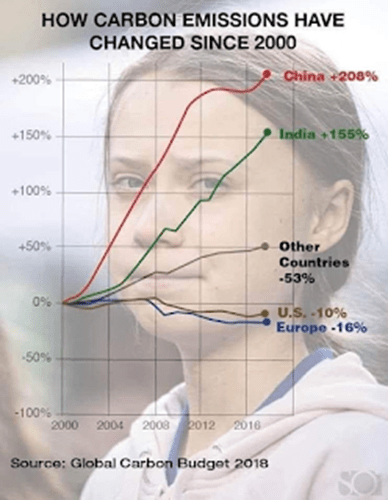
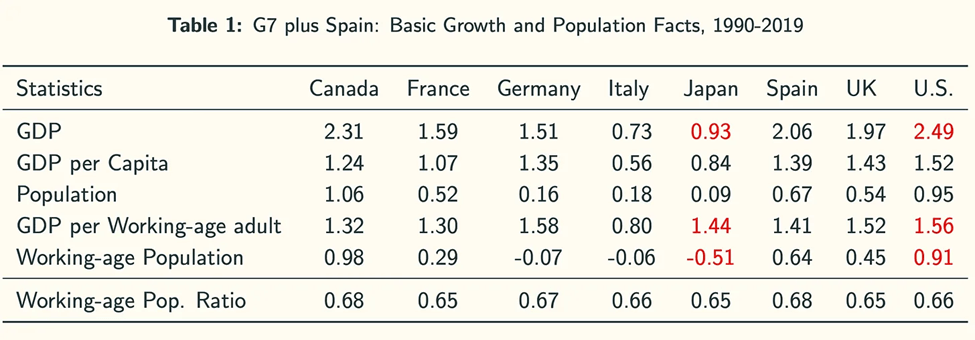
Editors Note: Being faceblind, I sort of hate this kind of graphic. For those of us to whom it’s less obvious, the backdrop of the graph is Greta Thunberg An interesting table pointing out a few economic facts, from the grumpy economist:
Robert Graboyes interpretation of our impending election – whichever candidate you look at, you’re reminded of the areas where his opponent is worse.

This one shows wage disparities – this time white men v Asian women:

And finally:

-
The historical accounts pretty much say the Great Depression sucked, and some reading of Montana’s history will suggest that it started sucking out west before the “dirty thirties”. So, things sucked, people were poor- but what was the exact cause of homelessness that drove the spread of “hoovervilles”?
What exactly was it people couldn’t pay? Rent, Mortgages, and Property Taxes (these are in a sense, much the same thing, with a mortgage being a lot like rent paid to the bank, and property taxes being a lot like rent paid to the government).
Rent has been increasing- this graph is for Missoula, but the trend should be similar throughout the state.

Mortgage rates seem to be rising as well, though the data is harder to find (to much noise in the search results from lenders saying ‘pick me’). And then, of course, there are property taxes:
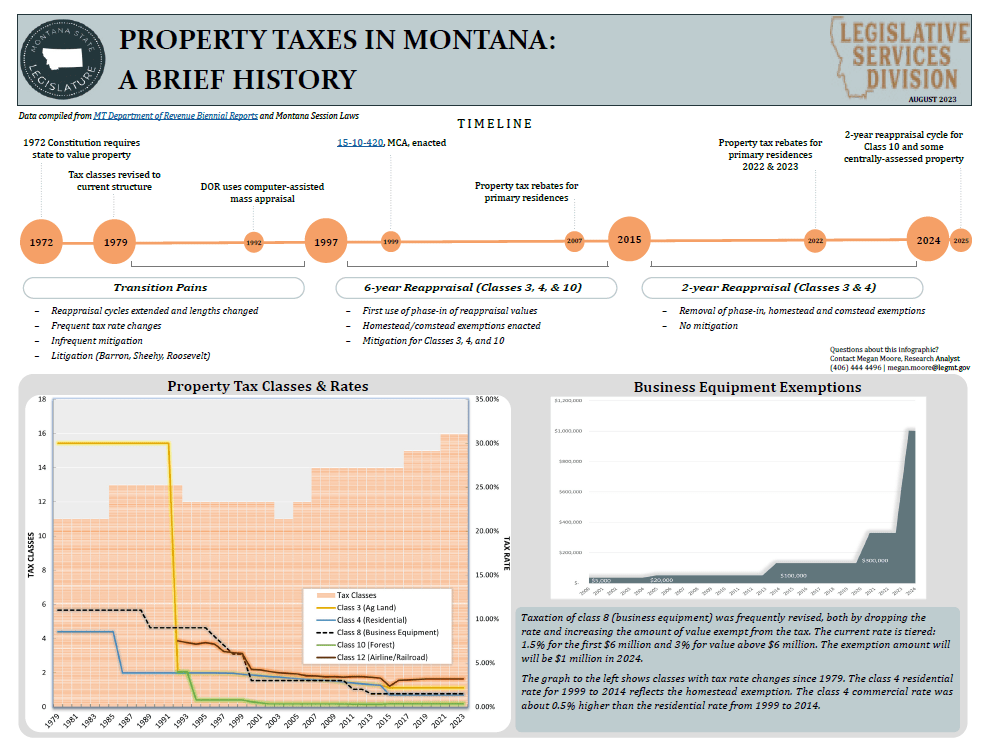
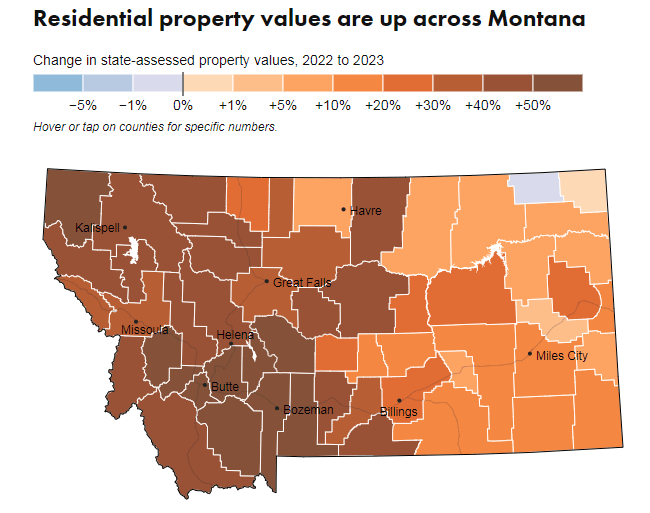
What the property tax timeline shows is that property tax rates haven’t increased especially. It excludes property values, however, which changed significantly in the last reappraisal. The Montana Free Press estimated that on average, property taxes went up 21%. This image (from the Montana Free Press) illustrates the significant increase in property valuations.
-
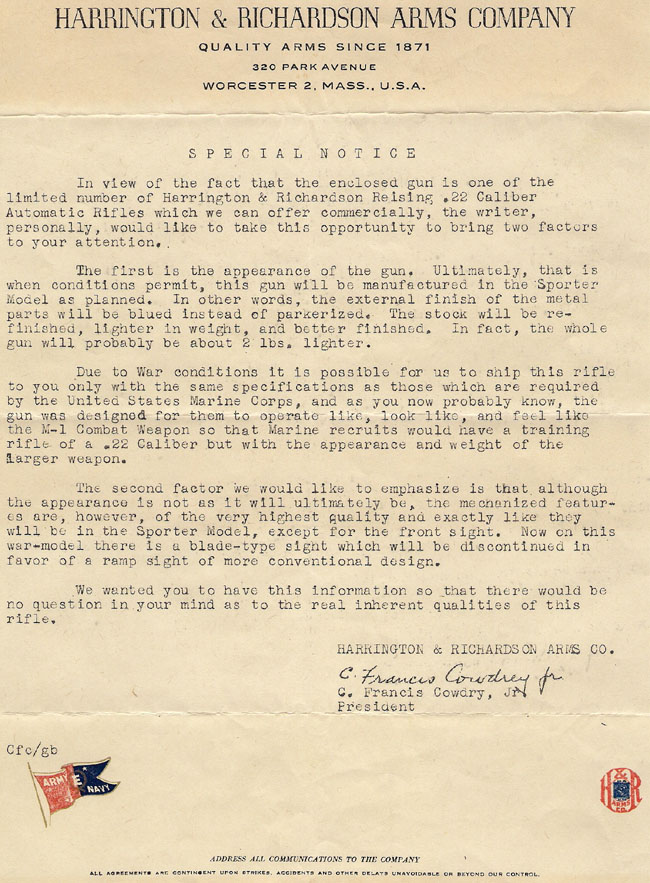
I went through the golden age of Hunter Safety – Danny On taught the wildlife section and Ed Ruhl taught firearms. Danny On was a forester whose intense hobby was wildlife photography – Ed Ruhl was a retired Marine Warrant Officer who had specialized in firearms throughout his career. Mr. Ruhl felt that the ultimate 22 rifle was the M65 Reising, built by Harrington & Richardson for the Marine Corps, and left me knowing that I needed one.
It wasn’t immediately possible – the Reising was semiautomatic. The only thing automatic on the single shot Remington Targetmaster that my mother bought for me was the safety. Remington made almost 560,000 Targetmasters. H&R made fewer than 10,000 Reising M65s . . . and the Marine Corps supposedly got the first 6,000. The Reising is a training rifle – built to match the weight of the M1 Garand, and the magazine can be limited to 8 rounds like the M1.
The Reising below showed up on a Rock Island Auction website in their catalog #69. They expected it to sell for $900 to $1,400. It brought $2,588. I’m not sure why the market has raised the value of the M65 so much – scarcity on one hand, and a rear sight that can be adjusted so that the 22 can hit the target at 500 yards are two drivers that I can see – but the big one seems to be that the folks who own M50 submachine guns want one of the 22 training rifles to accompany that collectible into the gun safe. (They made over 100,000 of the submachine guns.)

I was well past 50 when I finally got the opportunity to get a Reising. It was in Cabelas, in Mitchell SD – and the previous owner was obviously named Bubba. Bubba had removed the front sight, sanded down the barrel threads, and glued on a globe insert front sight designed for an air rifle. It looked bad – but that helped make it affordable. The sight was aluminum, and designed to take inserts like these:

Getting that sight off turned out to be easy – heating it a little with a propane torch, then taking the rifle outside into a very sub-zero night cracked the glue, and the sight was easy to drive off. It turned out that the front sights from the M-50 submachine gun were the same, and Numrich had bunches of them. The threads were still adequate to put one on, and after I had tightened it, the rifle again shot to point of aim.
I had no idea I was getting a collector’s item. There’s still a bright mark circling the barrel where Bubba’s sanding went too far. The sling is 8 or 9 years newer than it should be. The parkerized front sight I replaced clashes with the blued barrel. There’s a slight, non-structural crack to the stock – yet all in all, Bubba’s mistreatment shows up more to me than anyone else. I don’t know if my Reising did a tour with the Marine Corps before winding up as a Civilian – but the link shows the corporate letter sent with the few that didn’t wind up in Marine hands.
-
It’s just a matter of who we rent from. Some of us rent from landlords and some of us rent from the government. What is a property tax, except the rent you pay the government to live in your house? In fact, the only party that gets away without renting is the government.
Property is an interesting concept, especially digital property. I buy some software and suddenly, it’s unsupported and I can’t use it. Do I own the software? Effectively no, because someone else can take it away from me at will. I buy a movie, online. Do I own it? Probably not.
A fundamental trait of owning something, of it being mine, is that if someone walks up and takes it away from me, they are breaking the law.
If you realize that the government doesn’t think you own your home, a lot of the things it’s willing to do make a lot more sense. Of course, the government thinks it can tell you what sort of things you can have, or not have, on your the lawn. The government’s your landlord, and tenant protection laws need not apply.
The original phrase is not ‘life, liberty and the pursuit of happiness’ rather, it is ‘life, liberty and property’. Despite that, as with many aspects of our legal system, we inherited the property tax from England.
Property Tax in England began under William the Conqueror (though he was hardly the first to use the concept) and had a lot in common with a protection racket. Pay the king for the use of the land, or…consequences.
‘Life, Liberty and Property’ just doesn’t sound quite as catchy. We maintained the property tax as a relic of our time as a British Colony and never got rid of it, despite the right to property being a fundamental underlying principle on which our country was founded.
-
At school board meetings, we’ve been talking about putting a special levy on the ballot this Spring. My thoughts were that it would have two chances of passing – slim and none. But I had forgotten – I live in Trego, and my neighbors are some outstanding people.
It was Sunday morning – I had just poured the last cup of coffee from the pot, and decided it was warm enough that I didn’t need to nuke it – and the phone rang. It was a simple conversation – Would I be home to take a $20,000 check to cover next year’s budget shortfall, and keep the donor anonymous?
Obviously, the answer was yes. An hour later, I was holding a $20,000 check and a package of warm blueberry muffins. Monday afternoon, the check was headed for deposit – and I’m fairly certain the request for anonymity has been maintained.
I’m in Trego. The community works differently than most of the world. And I can express thanks publicly for the quality of my neighbors.



Want to tell us something or ask a question? Get in touch.

Recent Posts
- When Castro Was Cool
- You Have To Beat Darwin Every Day
- Computer Repair by Mussolini
- Getting Alberta Oil to Market
- Parties On Economics
- Thus Spake Zarathustra – One More Time
- Suspenders
- You Haven’t Met All The People . . .
- Play Stupid Games, Win Stupid Prizes
- The Ballad of Lenin’s Tomb
- An Encounter With a Lawnmower Thief
- County Property Taxes
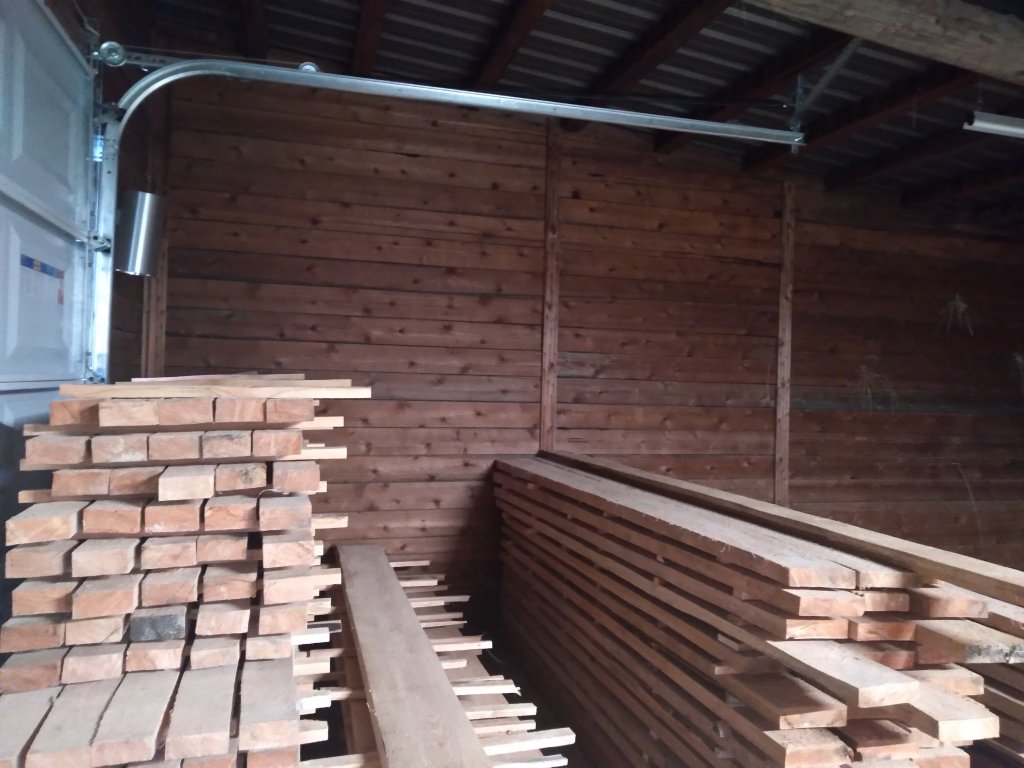
Rough Cut Lumber
Harvested as part of thinning to reduce fire danger.
$0.75 per board foot.
Call Mike (406-882-4835) or Sam (406-882-4597)
Popular Posts
Ask The Entomologist Bears Books Canada Census Community Decay Covid Covid-19 Data Deer Demography Education Elections Eureka Montana family Firearms Game Cameras Geese Government Guns History Inflation life Lincoln County Board of Health Lincoln County MT Lincoln Electric Cooperative Montana nature News Patches' Pieces Pest Control Politics Pond Recipe School School Board Snow Taxes travel Trego Trego Montana Trego School Weather Wildlife writing
 Trego's Mountain Ear