-
I found Sabato’s Crystal Ball . It’s the place where election predictions are made. Right now, it tells me that a year from now, 50 senators will be repugnants, 47 will be dims, and 3 are, at present, toss-ups. Since Sabato classifies Montana as a toss-up state, it means our votes can make a difference. Tester’s ads tell me that he’s a dirt-farmer, and Sheehy’s ads tell me that he was a Seal and started his own business. At least we have one Senate election where our individual votes can affect someone. So can folks in Arizona and Ohio.
Sabato doesn’t see any choice for western Montanans in the election for the House of Representatives – Zinke beat Tranel two years ago, and Montana’s first district leans Republican.
President? Right now, Sabado figures the 2024 election will be decided by Nevada, Arizona, Wisconsin and Georgia voters. A year out, and the money is that only 43 electoral votes are in play. If Georgia goes dim, we get a dim President. Today’s map shows that 3 out of four tossup states have to go red to deliver the presidency to the repugnants.
This article is short because it shows how firmly divided our nation is. The link is there to follow – and, it’s worth remembering that the United States has had one third party candidate elected President. His name was Lincoln.
-
Sir Thomas Allbutt invented the medical thermometer in 1867. The first attempts to use medical thermometers to analyze weather (that I have found) were physicians with Crook’s 1876 campaign following the Little Bighorn. Decent instruments, but misused – as I recall they were reporting sub-zero temperatures in September. The first use of a thermometer in Montana was with the Lewis & Clark expedition – they recorded temperatures daily until September of 1805, when the last of their three thermometers broke.
Around 1900, thermometers started moving into homes and yards – usually advertising thermometers. By 1920, measuring the day’s temperature became fairly common, even in the rural parts of the US. The difficulty of developing, then spreading thermometers across the nation is why our climate and weather data is, in general terms, recent.
We have long-term dating for first and last frosts – but you can tell if you have had a frost by watching your garden and a calendar. The first thermometers were developed in the 1600’s – but it took several centuries to refine the concept and get them in common use. By the 1890s, they were common enough to be showing up in some of our agricultural records – but other areas just show the first and last killing frosts of the year.
-
Back in 1916 (kind of early in the development of IQ tests) Terman published a rating of IQ test scores. His chart showed that a Stanford-Binet score of 140 or more translated to ‘near’ genius or genius. A dozen years later, Levine and Mars classified 50 to 74 as morons, 25 to 49 as imbeciles, and below 24 as idiots. The term ‘retarded’ came into the definitions to reduce the use of terms like idiot, moron and imbecile. It didn’t take long before the new term took on its own opprobrium.
That was the last of the nouns by IQ charts. Terman’s 1937 chart was more an adjective type thing – superior, average and defective. A couple of years later, Wechsler slipped in the word “normal” to replace average.
I suspect Richard Feynman, more than anyone else, demonstrates the problem of equating IQ test scores with genius. Feynman (if memory serves) scored 125 on his IQ test, yet went on to a Nobel Prize for his theoretical work in Quantum Physics. I may get a higher test score than Feynman – but he damned well outperformed me. There is more to genius than a simple test score can reflect. Thomas Edison is credited with the statement “Genius is one percent inspiration and ninety nine percent perspiration.” The challenge is that anyone can come up with the perspiration part – finding the inspiration is the challenge. It’s hard to test for Edison’s one percent.
On the other hand, the tests work fairly well at weeding out the folks who lack genius. James Watson, of DNA fame, tested at 124.
Generally, IQ test reliability drops off above 145 – basically 3 standard deviations above the norm.
In 2015, this e-book appeared online: The Genius Famine . There are few books I can link to that are free – Dutton and Charlton try to answer the specifics of what is a genius as well as pointing out a shortage of them.
Their first chapter focuses on the endogenous personality – what they see as the combination of factors required for genius: “In this short book, we will explore the Genius; the Endogenous type of personality including its exceptionally high intelligence. We will argue that the highly able Endogenous personality is indeed the archetypal genius; the engine, in particular, of the original innovations that are vital to civilization itself.”
Dutton and Charlton, as I read them, regard what they term as the ‘genius famine’ as something that goes hand in hand with an increasingly pervasive bureaucracy that selects for the ‘head girls’ instead of selecting for potential geniuses. Their description of the ‘head girl’ does it’s own job of pointing out that the ‘head girl’ is easier to be around:
“The stereotypical Head Girl is an all-rounder: performs extremely well in all school subjects and has a very high ‘Grade Point Average’ as it is termed in the USA. She is excellent at sports, Captaining all the major teams. She is also pretty, popular, sociable and well-behaved.”
Their book ends with these thoughts:
1. We need to recognize that support for genius is social self-interest – it is a risky investment, true; but when it pays off, a genius yields vastly more benefit than he costs.
2. The benefits yielded by genius are not obtainable in any other way.
3. Genius is born and not made. Training of non-geniuses will not yield more geniuses.
4. Genius can be identified, and may be encouraged and flourish; or alternatively genius can be ignored, thwarted, suppressed – and rendered irrelevant.
5. A genius is a difficult, eccentric, asocial person who – despite this – exists in order to promote the good of the group.
6. Yet, although strong in self-motivation, self-determination and autonomy – a genius is normally a sensitive and emotionally vulnerable person. He can be dismayed, demoralized, corrupted or driven to despair – and his potential will then be diminished or destroyed.
7. In future most genius will be ‘local’ (by our current standards), rather than international: a shaman rather than an Einstein. This is the best that can realistically be hoped-for – but a local genius is better than no genius at all.
-
The TFS Fire Department will be holding it’s annual meeting on Tuesday, at 7 pm in the Community Hall. The Fire Department requires a quorum to conduct business, which is a challenge for many of our local organizations. The Fire Department requires a quorum specifically of homeowners, though everyone served by the department is welcome to attend.
In addition to the usual programming (The Learn and Play and Food Bank), there will be a workshop on kindergarten readiness on Monday.

-
The battle over right to repair is a fight over your car’s data
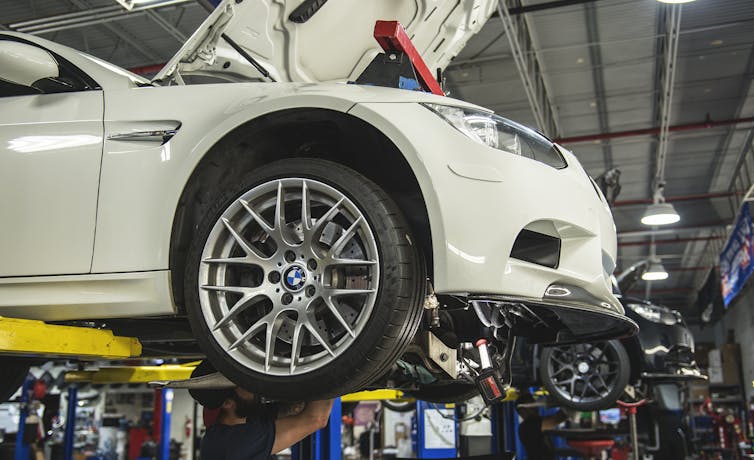
Independent repair shops are fighting for access to vehicles’ increasingly sophisticated data. Matthew P/Flickr Leah Chan Grinvald, University of Nevada, Las Vegas and Ofer Tur-Sinai, Ono Academic College
Cars are no longer just a means of transportation. They have become rolling hubs of data communication. Modern vehicles regularly transmit information wirelessly to their manufacturers.
However, as cars grow “smarter,” the right to repair them is under siege.
As legal scholars, we find that the question of whether you and your local mechanic can tap into your car’s data to diagnose and repair spans issues of property rights, trade secrets, cybersecurity, data privacy and consumer rights. Policymakers are forced to navigate this complex legal landscape and ideally are aiming for a balanced approach that upholds the right to repair, while also ensuring the safety and privacy of consumers.
Understanding telematics and right to repair
Until recently, repairing a car involved connecting to its standard on-board diagnostics port to retrieve diagnostic data. The ability for independent repair shops – not just those authorized by the manufacturer – to access this information was protected by a state law in Massachusetts, approved by voters on Nov. 6, 2012, and by a nationwide memorandum of understanding between major car manufacturers and the repair industry signed on Jan. 15, 2014.
However, with the rise of telematics systems, which combine computing with telecommunications, these dynamics are shifting. Unlike the standardized onboard diagnostics ports, telematics systems vary across car manufacturers. These systems are often protected by digital locks, and circumventing these locks could be considered a violation of copyright law. The telematics systems also encrypt the diagnostic data before transmitting it to the manufacturer.
This reduces the accessibility of telematics information, potentially locking out independent repair shops and jeopardizing consumer choice – a lack of choice that can lead to increased costs for consumers.
Also, these telematics systems fall outside the scope of the original Massachusetts legislation and the nationwide memorandum of understanding. Recognizing the pivotal role diagnostic data plays in vehicle maintenance and repair, 75% of Massachusetts voters approved a ballot initiative on Nov. 3, 2020, to amend the state’s repair legislation. The amendment aims to ensure that the switch to telematics does not curtail an effective right to repair vehicles.
Specifically, the new law requires manufacturers selling telematics-equipped vehicles from the 2022 model year onward to provide car owners and their chosen repair shops access to the vehicle’s mechanical data through an interoperable, standardized and open-access telematics platform. Access should also encompass the ability to relay commands to components of the vehicle, if necessary, for maintenance, diagnostics and repair. Voters in Maine overwhelmingly approved a similar measure on Nov. 7, 2023.
However, the Massachusetts law was the subject of a lawsuit in federal court shortly after voters approved it in 2020, and it was suspended until June 1, 2023.
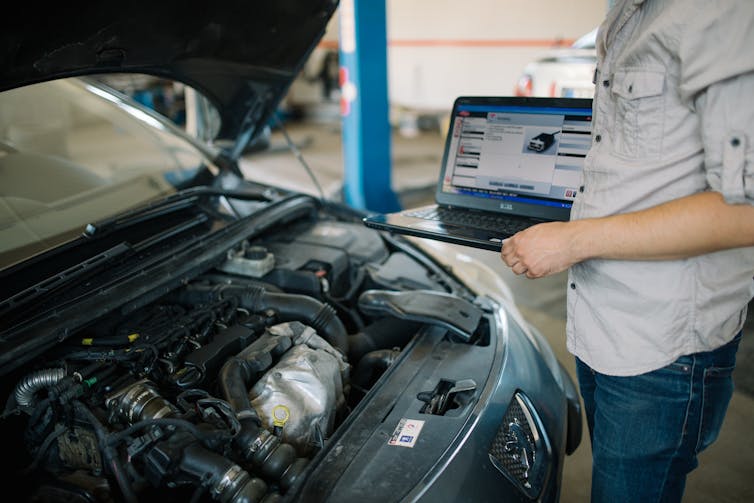
Repairing cars today is as much about data as it is nuts and bolts, but increasingly, carmakers are locking that data away from car owners and independent repair shops. Nenad Stojkovic/Flickr, CC BY Safety and privacy concerns
While the amendment makes significant strides toward creating a level playing field in vehicle maintenance and repair, the National Highway Traffic Safety Administration and car manufacturers have raised concerns about the legislation.
The National Highway Traffic Safety Administration’s main concern revolves around cybersecurity vulnerabilities with potential ramifications for vehicle safety, particularly the amendment’s provision for two-way access. A hacker could potentially take control of a car’s critical systems like accelerator, brakes and steering. Consequently, the agency recommended that car manufacturers not adhere to the law.
A related argument is that Massachusetts law is preempted by federal law. This forms the basis of a lawsuit filed in November 2020 by the Alliance for Automotive Innovation against Massachusetts’ attorney general.
The manufacturers assert that abiding by the state law would inevitably put them in breach of federal statutes and regulations, such as the National Traffic and Motor Vehicle Safety Act. This lawsuit was pending as of press time, although the Massachusetts attorney general declared the law effective as of June 1, 2023.
Critics also emphasize the privacy concerns associated with open access to telematics systems. Granting third-party access could expose personal details, especially real-time location data. Advocacy groups warn that this information might be used as a tracking tool by potential abusers and others aiming to exploit people.
Recent developments
The National Highway Traffic Safety Administration and Massachusetts’ attorney general appear to have reached a consensus on alterations to the law, and the administration has dropped its recommendation that manufacturers disregard the law.
The primary adjustment would mean a telematics platform would be in compliance with the right to repair law if it were accessible within close proximity to the vehicle – for example, via Bluetooth. The National Highway Traffic Safety Administration confirmed that this would be safer and align with federal law.
However, repair advocates have criticized this change as unduly restrictive. They argue that it gives authorized car dealers an unfair advantage over independent repair shops because the manufacturers allow the dealers to access the data remotely.
A new federal bill, the REPAIR Act, was recently introduced in the House, seeking to require vehicle manufacturers to provide access to in-vehicle diagnostic data, including telematics. This bill’s first hearing occurred on Sept. 27, 2023, and the bill passed out of subcommittee on Nov. 2.
Consumer Reports is among the organizations that support right-to-repair legislation. Who owns your car’s data?
One issue left unresolved by the legislation is the ownership of vehicle data. A vehicle generates all sorts of data as it operates, including location, diagnostic, driving behavior, and even usage patterns of in-car systems – for example, which apps you use and for how long.
In recent years, the question of data ownership has gained prominence. In 2015, Congress legislated that the data stored in event data recorders belongs to the vehicle owner. This was a significant step in acknowledging the vehicle owner’s right over specific datasets. However, the broader issue of data ownership in today’s connected cars remains unresolved.
Whether data should be subject to property rights is a matter of debate. If deemed property, it seems logical to award these rights to the vehicle owner because the vehicle creates the data while used by the owner. However, through contractual terms and digital locks, manufacturers effectively secure control over the data.
The question of ownership aside, the crux of the matter for right to repair is guaranteed access for vehicle owners to their vehicles’ data.
A way forward
While concerns surrounding the Massachusetts legislation have merit, we believe they should not overshadow the need to preserve a competitive space in the auto repair sector and preserve the right to repair. This matters not only for safeguarding consumers’ autonomy and ensuring competitive pricing, but also for minimizing environmental waste from prematurely discarded vehicles and parts.
The hope is that policymakers and the industry can strike a balance: upholding the right to repair without compromising safety and privacy. One possibility is developing tools that segregate sensitive personal information from mechanical data.
Ultimately, a successful implementation of the new law in Massachusetts may pave the way for a renewed nationwide memorandum of understanding, capturing the essence of the original memorandum of understanding and preserving the right to repair cars in the face of rapidly advancing technologies.
Leah Chan Grinvald, Professor of Law, University of Nevada, Las Vegas and Ofer Tur-Sinai, Professor of Law, Ono Academic College
This article is republished from The Conversation under a Creative Commons license. Read the original article.
-
Friday November 10th was Trego School’s usual Veteran’s Day lunch. As in previous years, there was food, a musical performance by the students, an opportunity for the students to say “What Veteran’s Day means to me”, and some words from some folks that had served.
The students performed the song “Thank a Veteran”, unexpectedly acapella as technical difficulties ended the accompaniment almost immediately. The students handled the change so well that it wasn’t immediately apparent that it wasn’t planned.
If you’re not familiar with the song- here’s a youtube version:
I missed Jim Carlton’s inspirational speech from last year, and the part where each student sought out a veteran to give a card to, but it was still very cute. There were some new faces in the crowd as well.
-
Comedy isn’t typically the first thing that comes to my mind when I think of Elon Musk. However, I found myself appreciating his sense of comedy and the absurd when he described some of the regulatory barriers his company faced.
So- seals? The short version is that in order to prove that launching rockets wouldn’t disrupt seal reproduction, they were required to play sonic boom sounds at an actual seal (thus “kidnap a seal”) and check for distress. Here’s a clip of the discussion:
The longer version includes a lot more, including several more regulatory issues (what’s the likelihood of hitting a shark with a rocket?) and a comparison of the experience of the seal to that of an alien abduction.
The long version (should start at the relevant section):
-
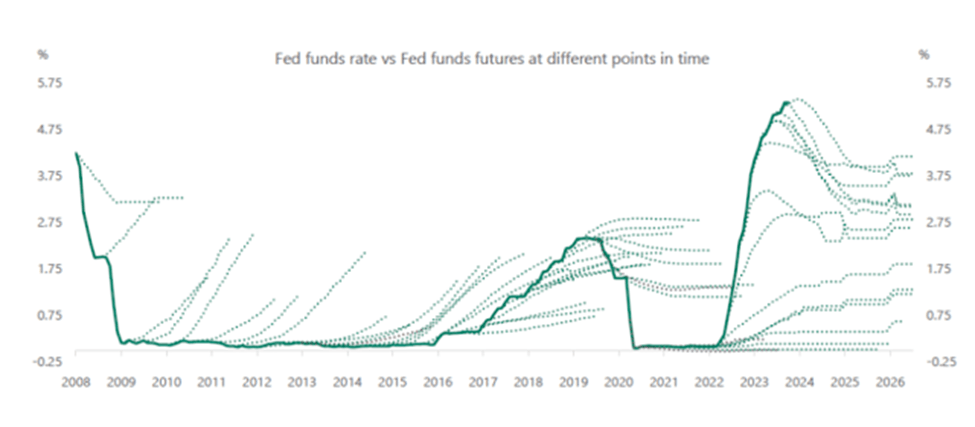
As always – no interpretations, no explanations. Just graphs that may give a little perspective.



-
This article starts with the Supreme Court agreeing to hear a case is known as Garland v Cargill. It’s a Trump regulation, not a Biden one. Not that Biden would have disagreed, but we need to recognize Trump’s accomplishments on banning bump stocks.
The bump stock ban has always seemed unreasonable to me – a bump stock is basically a device that lets a semiautomatic mimic full-auto fire by making it easier to pull the trigger quickly. Since I generally buy my own ammunition, it isn’t a feature that I desire. I can miss repeatedly with a bolt gun – I don’t need something to increase my number of misses (admitted, my standard for a good hit is simply the X ring – if your standards are larger, you may not reach the same conclusion.
Anyway, the argument that is headed toward the Supremes is that the Bureau of Alcohol, Tobacco and Firearms went beyond the limits of the Administrative Procedures Act when they banned bump stocks. The ‘shall not be infringed’ phrase isn’t going to come up.
Then another case showed up – on pistol braces. Britto v ATF orders a nationwide injunction against the BATF enforcing their final pistol brace rule. I’ve read the judge’s opinion and it makes sense to me – when BATF wrote the rule, they went beyond what they were authorized to do. Since BATF broke the rules when they wrote their final rule, the final rule isn’t legal, so can no longer be enforced. Again, infringement has nothing to do with it – it violated the Administrative Procedures Act.
The pistol brace rule is a little more personal to me – the brace makes it easier to hit the target, so I’m philosophically inclined to like the brace . . . it appeases my internal ammunition cheapskate. I figure that the issue may come back – BATF argued that the pistol brace made the pistol into a short-barreled rifle, but I figure this ban is out of play for several years – possibly for the rest of my lifetime.
Then came VanDerStock v Garland – this one shot down the order to treat 80% completed receivers as completed receivers, requiring serial numbers and purchase through Federal Firearms license holders. This new rule was put in without congressional input – and again, it isn’t a second amendment case. The legal question is basically, how much authority did Congress give the BATF. The law was struck down because Congress didn’t give BATF the authority to do what the agency did . . . and, since the rule exceeded BATF authority, the rule went down – “improper expansions of ATF authority.”
I’m kind of amazed – back in 1968, when I was 19 and they passed the Gun Control Act of 1968, I didn’t expect to see less gun control rules when I turned 74. It’s been a good week to watch court news at the national level.
-
Getting enthused about scientific theories might be a niche hobby, but this one is something special. The Fructose Survival Hypothesis is a unifying theory. Not the unifying theory- this one is diet/evolution specific.
In scientific fields, there are often a few mutually exclusive but otherwise apparently accurate theories. Physics is notorious for this, and still awaiting the one true theory that will unite the various incompatible fields.
Biology in general is less divided, but the subsection devoted to diet and nutrition is an exception. There are somewhat more fad diets than theories about nutrition, but probably not all that many more. Keto. Low Carb. Paleo.
What’s really neat about the Fructose Survival Hypothesis is that it ties together apparently mutually exclusive ideas about diet.
The paper that I will be paraphrasing by section is The fructose survival hypothesis for obesity was published earlier this year by The Royal Society (yes- that Royal Society- the one that published Darwin.) And- even better- it is not behind a paywall. Read the whole thing at the National Library of Medicine.
Abstract, paraphrased: The fructose survival hypothesis suggests that obesity might be caused by improper activation of a survival switch. That survival switch is supposed to be activated before a crisis (like, say, a famine). The survival switch, when activated will make people hungry, thirsty, more inclined to go look for food, and gain weight. It will also cause insulin resistance (diabetes), systemic inflammation and high blood pressure. This response is triggered by eating fructose, or by something that causes the body to make fructose. The response is supposed to be small and short- term, but the combination of some evolutionary changes and a diet with lots of foods that contain (or cause the body to make fructose) causes the switch to be activated much more often, to a much greater degree.
The authors propose that too much fructose explains a number of conditions we see in increasing amounts today: obesity, “diabetes, hypertension, non-alcoholic fatty liver disease, cancer’s associated with obesity, vascular and Alzheimer’s dementia, and even aging.” Additionally, the hypothesis unites current hypothesis on obesity. Reducing the activation of this survival switch might benefit health and lifespan.
Introduction, again, paraphrased: Scientists often don’t consider how nature and evolution have found solutions to problems, but looking at things that way can provide new insights. Evolution might also cause disease. Adaptations that are beneficial for a world with scarce resources might increase the risk for obesity and diabetes in a world with plentiful resources.
This study suggests that the survival switch is controlled by fructose. While glucose (a simpler form of sugar) provides immediate fuel, fructose seems to aid in the storage of fuel. This is because glucose and fructose influence the amount of energy available to cells differently.
This paper will talk about sources of fructose and will suggest two events that converted what should have been a helpful survival switch into something causing disease. The first event was gaining “thrifty genes” (genetics adapted for food scarcity), and the second event was the large increase in foods containing or producing fructose. Those two events cause the survival switch to be active far more than it should be, which the authors propose is driving obesity and other unpleasant modern health issues.
Sources of Fructose, The Trigger of the Survival Switch, paraphrased: Fructose is the main energy source in fruit and honey, but in the western diet it’s mostly in table sugar and high fructose corn syrup. These are a huge amount of people’s overall energy intake.
In the body, fructose can be made from glucose when the blood sugar is high, as it is with diabetes, eating “high gycaemic carbs” (carbs quickly converted to glucose) or from a diet high in carbohydrates. This happens at a higher rate when the body is stressed by lack of food, water, or oxygen. Salty foods and alcohol also cause this, as do foods that are savory. These can trigger fructose to be created in the liver, which turns on the survival switch. Fructose can be made in other organs as well.
Most animals control their weight pretty well. They’ll gain it if given extra calories, lose it if given too little, but as soon as their food supply normalizes their weight will correct itself. Fructose prevents this. It basically reduces the energy available to cells and also doesn’t let animals use the energy stored in their fat. Because of this, they have to eat more in order to have more energy available. While they do get the energy levels back up, they gain a lot of weight doing so.
Most studies on fructose produced by the body have been on lab animals, but there is evidence that feeding young, lean adults a high glycaemic (full of carbs that turn into sugar quickly) soft drink will greatly increase fructose production. The authors expect that fructose production will be higher in people with diets: high in salt, high in sugar, or with lots of high glycaemic carbs.
A Description of the ‘Survival Switch’ Induced by Fructose Metabolism, heavily paraphrased, as this section gets rather technical in places:
Giving a subject fructose can: replicate metabolic syndrome, cause weight gain, increase fat storage around the organs (“hidden fat”), cause insulin resistance, increased trigycerides, reduce “good” cholesterol, raise blood pressure, cause fatty liver, reduce levels of an important protein- Albumin, increases the amount of uric acid in the blood, and causes markers of systemic inflammation. This suggests that ‘metabolic syndrome’ is misnamed and would be more accurately called ‘fat-storage-syndrome’. All of these features are part of a survival response.
a) Search for food and water
Fructose causes changes in behavior that aid the search for food and water. These changes include: stimulating hunger and bingeing, stimulating thirst, impairing the ability to feel full, increasing exploratory behavior, impulsivity and movement. Studies suggest that some of these effects are caused by inhibiting the insulin-sensitive parts of the brain involved in self-control, memory and decision making.b) Increase fat and glycogen stores
In addition to causing excess calorie intake, fructose changes the intestines so that they absorb food more effectively. It also causes the formation of fat and reduces the removal of fat.c) Energy conservation
Even though the foraging behaviors require expending energy, this doesn’t result in lower fat gain because the resting metabolism falls to compensate. Fructose reduces the ability of insulin to signal to brain regions involved in self-control, decision making and recent memory. Because of this, foraging behavior is stimulated while energy is conserved.d) Preservation of key body functions
Animals in risky conditions need to have well functioning circulatory and excretory systems. Fructose causes an increase in blood pressure and increases the activity of the kidneys. It also stimulates the production of a hormone that tells the body to reabsorb water (vasopressin) and causes the kidney and gut to absorb sodium.e) Activation of the Immune System
Fructose increases the amount of uric acid, which activates inflammatory pathways (inflammation is the result of an active immune system). Immune system activation protects against infections.f) Entering low power mode
Fructose metabolism changes the behavior of the mitochondria, placing the body in low power mode and reducing oxygen needs. This is initially helpful in areas with inflammation and reduced blood flow, but is a problem long-term. Reducing mitochondrial function is a characteristic of diabetic kidney disease, which is caused by glucose being turned into fructose in the kidney. It seems like blocking glucose from being taken into the tissues (and thus being converted to fructose) might be a useful treatment. The effect fructose has on mitochondria provides an explanation for why cancer cells prefer fructose to grow in, and why cancer cell growth is increased by both fructose and uric acid.Role of Fructose Metabolism in the Obesity and Metabolic Syndrome Epidemics, paraphrased:
Obesity and Diabetes increased in the early 20th century. One likely cause is the dramatic increase in the amount of sugar people consume. Soft drinks and other liquids containing fructose are especially effective at activating the fructose survival mechanism. Speed of consumption appears related to the activation of the pathway, and the authors found that slowing down the intake of juice containing fructose reduced the activation of the pathway. Sugary beverage consumption correlates with the risk for obesity and metabolic syndrome. Similarly, the global increase in obesity and diabetes correlates with the increase in sugar intake. Also, people consuming more processed foods with lots of sugar and salt, as well as alcohol and high gycaemic carbs increases the amount of fructose.
There is evidence that humans are more sensitive to fructose. Mice and rats are generally fairly resistance unless large doses are given. In humans, there are two mutations that seem to increase the risk for fructose caused metabolic syndrome. The first is the mutation in vitamin C (humans can no longer make vitamin c). The second mutation was the uricase mutation (we can no longer make the enzyme that breaks down uric acid). This mutation was probably helpful during some points of human history, when it would have protected against starvation.
How does Fructose Cause Weight Gain, paraphrased:
Fructose increases food intake and lowers metabolism. Both of these should play a role in fat increase. Research with animals demonstrated that the weight gain is mostly caused by the increase in food intake.
The authors performed further studies to figure out what causes the increase in food intake. The sweet taste of fructose seems to help, but even mice without taste preferred fructose to plain water. Mice without the enzymes to metabolize fructose did not prefer it. The preference for fructose doesn’t seem to be causing the increase in food intake. Instead, the loss of the ability to feel full (leptin resistance) appears to cause the weight gain.
Animals getting read to hibernate show similar features to the survival switch, but right before they hibernate they reduce food intake. This might be because their metabolism is slowing, or it could be that they reach a weight that triggers a change in food intake. This mechanism does occur in humans, but can be overrun- possibly by continued exposure to large amounts of fructose.
a) Role of fat
Inability to feel full seems to be caused by fructose, while other foods (such as high fat diets) do not cause this. The inability to feel full (leptin resistance) causes a preference for high fat foods. The typical western diet likely includes enough sugar, salt, high gycaemic carbs and alcohol to induce some leptin resistance in most people. Testing the equivalent diet in mice resulted in aging changes for normal mice, but those that couldn’t metabolize fructose stayed healthy. This explains why the Inuit were able to stay lean on a high fat, high protein diet, and also why ‘low carb’ diets don’t cause weight gain even if they have high fat content. Lard (animal fat) doesn’t cause weight gain in mice unless they’ve been made unable to feel full by fructose.b) Role of glucose
Most of the fructose we eat also comes with glucose. Glucose can increase the absorption of fructose. There is some evidence that glucose alone can cause obesity and metabolic syndrome. High glycaemic carbs (those quickly turned into glucose) cause obesity and metabolic syndrome by causing the body to produce fructose. When insulin resistance is induced by fructose, there are high insulin levels even when fasting, which prevent fat metabolism. The hypothesis that glucose causes insulin resistance is supported, but with fructose as a middle step.c) Role of protein
Protein is important to maintaining lean body mass. There’s some evidence that low protein diets might cause increased energy intake. But, because most low protein diets are also high in carbohydrates, it’s difficult to tell which is more important.Some proteins may cause increased risk for illness. Umami generates uric acid, leptin resistance, obesity and metabolic syndrome similar to fructose. Blocking the uric acid production did prevent MSG (monosodium glutamate) causing obesity. While uric acid can directly activate the siwtch, it can also stimulate fructose production. Fructose is produced by glucose, which is why high protein diets without carbohydrates (glucose sources) do not cause obesity.
Fructose and Metabolic Syndrome: An Effect Independent of Excessive Calories, paraphrased:
Even when rats with the fructose survival mechanism activated were kept on a strict diet (preventing weight gain), they still developed the other effects of fructose. The rats developed fatty liver, insulin resistance and high blood pressure. This suggests that metabolic syndrome can occur even in thin individuals, especially if excess uric acid is present in the blood.
The Unexpected Role of Salt, Dehydration and Vasopressin in Obesity, paraphrased:
Water is very important, so it makes sense that fructose increases water retention. Vasporessin does more than just cause water to be reabsorbed in the kidneys. It seems to drive most of the features of the survival switch.
Fat is used as a source of water by marine and desert mammals, as well as animals that are hibernating. Salt intake can cause a dehydration-like state without actual dehydration, and this can cause the production of fructose (and thus activation of the survival switch). Drinking water, which reduces vasopressin levels, can partially stop or reverse the features of metabolic syndrome.
The Short and Long-Term Health Consequences of the Survival Switch, paraphrased:
Having the survival switch activated continuously has metabolic effects that may involve many of the common diseases occurring in western society. “This not only includes classic diseases associated with obesity such as diabetes, NAFLD and gout, but also hypertension, coronary artery disease, certain cancers, behavioural disorders and dementia.”
For example, adding fructose to the diet can cause Alzheimer’s features in laboratory rats, and fructose is increased in the brains of people with early Alzheimer’s.
One important discovery is that the fructose pathway is involved in the early disease. Over time, there is damage that results in the persistence of the disease. This suggests the best time for treatment is early, before conditions become irreversible. However, since much of the disease is caused by damaged mitochondria, trying to restore mitochondria is a good approach (Low fructose and low salt diets, also exercise, would be a good place to start).
Wow. There’s a little more -limits, predictions, a summary- but that’s the paper. A new biological mechanism (fructose survival hypothesis) potentially explaining a bunch of the diseases of modern life and suggesting a relatively simple means to begin treating/preventing them.
Want to tell us something or ask a question? Get in touch.

Recent Posts
- Recovery Time for a Retiree
- Venn Diagram and DSM
- When Castro Was Cool
- You Have To Beat Darwin Every Day
- Computer Repair by Mussolini
- Getting Alberta Oil to Market
- Parties On Economics
- Thus Spake Zarathustra – One More Time
- Suspenders
- You Haven’t Met All The People . . .
- Play Stupid Games, Win Stupid Prizes
- The Ballad of Lenin’s Tomb

Rough Cut Lumber
Harvested as part of thinning to reduce fire danger.
$0.75 per board foot.
Call Mike (406-882-4835) or Sam (406-882-4597)
Popular Posts
Ask The Entomologist Bears Books Canada Census Community Decay Covid Covid-19 Data Deer Demography Education Elections Eureka Montana family Firearms Game Cameras Geese Government Guns History Inflation life Lincoln County Board of Health Lincoln County MT Lincoln Electric Cooperative Montana nature News Patches' Pieces Pest Control Politics Pond Recipe School School Board Snow Taxes travel Trego Trego Montana Trego School Weather Wildlife writing
 Trego's Mountain Ear