-
Again I have watched a fourth largest town in Lincoln County grow with tents as a field filled with firefighters. It isn’t a new thing – when an August fire hits in a dry year, it’s people in yellow shirts that come in and buy time until the shorter, cooler days of Fall can extinguish the fire. Sometimes those shorter, cooler days get close to the winter solstice.
I had a good view of the scoop planes flying over the house and field after they had filled up at Dickey Lake and were returning to the fire. My own fire training was in 1968 – as best I recall it emphasized using a Pulaski and a sharpened shovel. The concept was simple – dig a line around the fire and hold it.
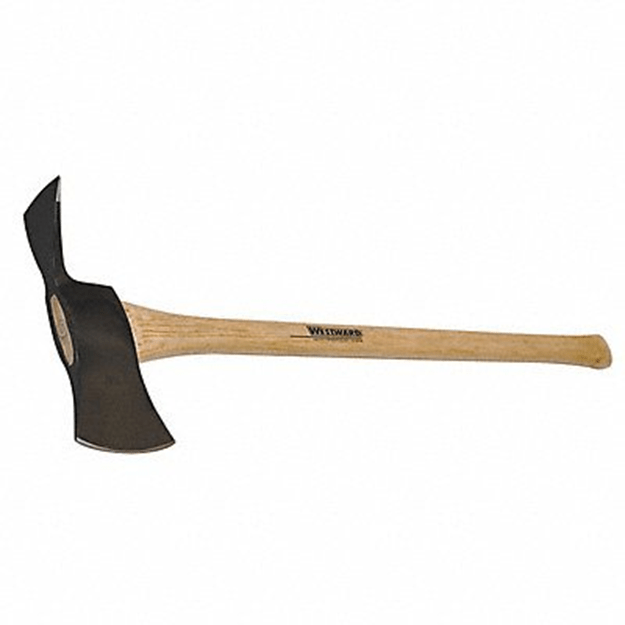
I learned that the Pulaski was invented by Ed Pulaski after the 1910 fires, and had been a firefighter’s tool of choice ever since. Pulaski’s own story of the 1910 fire is at Surrounded by Forest Fires It’s definitely worth a click and taking the time to read. Edward Pulaski tells more about the man, and the tool he developed.
Or maybe re-invented is a better description. The True Story of the Pulaski Fire Tool – Wildfire Today describes the story a bit differently than I learned it:
“The nickel-plated pulaski looks as good as new in its glass-fronted Collins Tool Company display case at the Smithsonian Museum of Arts and Industry in Washington, DC. Surrounded by equally shiny cutting tools of all description, the pulaski was first put on display at the Nation’s Centennial Exhibit in Philadelphia in 1876.
Conventional wisdom holds that the pulaski fire tool was invented by Edward C. “Big Ed” Pulaski in the second decade of the 20th century. Ed Pulaski, a descendant of American Revolution hero Casimir Pulaski, was a hero of the Great Idaho Fire of 1910, leading his crew to safety when they became imperiled. He was also one of a group of ranger tinkerers who struggled to solve the equipment problems of the budding forestry profession. However, the pulaski tool on display at the Smithsonian must have been made when Big Ed was no more than 6 years old!”
The article continues with the story:
“William G. Weigle, supervisor of the Coeur d’ Alene National Forest, thought of the idea-but not for firefighting (5). Rangers Ed Pulaski and Joe Halm worked under him (all three became heroes of the Great Idaho Fire) at Wallace, then headquarters for the Coeur d’Alene National Forest. At that time, plans were being made for some experimental reforestation, including the planting, pine seedlings. As Supervisor Weigle planned the job, he decided a new tool was needed to help with the planting as well as other forestry work. He decided on a combination of ax, mattock, and shovel. One day in late 1910 or 1911, Weigle sent Rangers Joe Halm and Ed Holcomb to Pulaski’s home blacksmith shop to tum out a combination tool that might replace the mattock that was then in common use for tree planting. Halm, with Holcomb helping, cut one blade off a double-bitted ax, then welded a mattock hoe on at right angles to the former blade position. He then drilled a hole in an old shovel and attached it to the ax-mattock piece by means of a wing bolt, placing it so the user could sink the shovel into the earth by applying foot pressure to the mattock blade.
The rather awkward device was not a success as a planting tool. Probably the whole idea would have been abandoned had not Ranger Pulaski been fascinated with the possibilities of the tool. He kept using it, experimenting with it, and improving it. He soon discovered that the bolted-on shovel was awkward and unsatisfactory. He abandoned the shovel part and also lengthened and reshaped the ax and mattock blades. It is too bad Pulaski did not know about the Collins Tool pulaski — it would have saved him a lot of time. Nevertheless, by 1913 Pulaski had succeeded in making a well-balanced tool with a sharp ax on one side and a mattock or grubbing blade on the other.
Pulaski use now spread throughout the Rocky Mountain region. However, it was used not for tree planting but for fire control. By 1920 the demand was so great that a commercial tool company was asked to handle production.”
I can’t bring myself to write great praise for the balance of a Pulaski – it builds a love-hate relationship when you dig line for 12 hours of night, then return to an open camp in a field to attempt sleep without shade through the heat of the day. Still, it must have been pure hell trying to beat forest fires before the Pulaski came into use.
-
I ran across this comment (explanation?) on Ace:
“A coup d’etat is when a small group of people suddenly try to take power and subjugate a nation by force. A coup du publique is when a small group of people already in power try to further subjugate an entire population by methodically taking away whatever rights they may have left.”
The thought guides my thoughts into an area where I am uncomfortable – kind of like the years of Carter and Reagan when the phrase “1984 is sooner than you think” kept showing up.
It led me to this article: What Is A Coup Du Publique? You’re In One Right Now I knew of the Coup d’etat. Heck, I even know of the Coup du Jarnac – Jarnac apparently preferred to go through life as a backstabber. Still, I needed a definition for a coup du publique – partially because my knowledge of French is downright minimal:
“But what if you flip that script just a tiny bit and make sure that – before any other planning, ally recruiting, etc., is even started – you made sure to quietly, incrementally take control of the information infrastructure first? A few years ago, that meant radio and television stations and phone company HQ – today that means the internet as it is all three in one.
And if instead of overthrowing a government, you did this to ensure a government’s survival and expansion – the public be damned. Then you would not have a coup d’etat but a coup du publique.
And that is what is happening in real time around the world right now. But this coup is not replacing the government – it is replacing the people.
It is replacing the right to speak with the right to be quiet. It is replacing the right to strive with the right to be taken care of. It is replacing the rights of the individual with the rights of the collective.”
It’s an interesting thought – and, like a lot of interesting thoughts, is probably easier to grasp if you’re into conspiracy theories. For the record, I’m not into conspiracy theories – I figure the best all-around explanation is the power of human stupidity. The author, Thomas Buckley , continues, using an example from the other side of the iron curtain:
In tracking the downfall of East Germany’s notorious Stasi secret police, Australian reporter Anna Funder asked a former agency official why so many people – formally at least 3% of the population of the country, informally possibly up to 25% — cooperated with the agency and informed on their neighbors. His response was chilling:
“Well, some of them were convinced of the cause. But I think it was mainly because informers got the feeling that, doing it, they were somebody. You know, someone was listening to them for a couple hours a week, taking notes. They felt that they had it over other people.”
Not sure I agree with his premise or conclusions – but he does offer a different way of looking at how government operates. Perhaps Charlemagne said it best: “If the populace knew with what idiocy they were ruled, they would revolt.”
-
I saw these AP Poll results, and copied the table. I didn’t have any more information on how the poll was conducted than the N shown in the chart. Still, even a poor poll, repeated five times, that shows (at best) 29% of the respondents want Biden to run for president in 2024 and 30% want Trump to run, says something about how our election process is a bit out of touch:

“Ostracism was a civil practice, in which pottery sherds, usually from broken urns or vases, were used as ballots to place a vote. These potsherds were called ostracon, which is where we get the word for ostracism.
The practice was fairly straightforward. In a yearly assembly, the Athenian people would determine whether it was necessary to have an ostracism.”
Ostracism – How the Athenians voted people out of office | The Vintage NewsWouldn’t it be nice to have an opportunity to vote both leading candidates off the island for the next ten years? We may see different candidates in November of 2024 – but right now this seems to be the choice that will be presented to us.
-
Screen time is contributing to chronic sleep deprivation in tweens and teens – a pediatric sleep expert explains how critical sleep is to kids’ mental health

When teens can’t sleep, they often scroll online well into the night, which only exacerbates the problem. ljubaphoto/E+ via Getty Images Maida Lynn Chen, University of Washington
With the start of a new school year comes the inevitable battle to get kids back into a healthy bedtime routine. In many cases, this likely means resetting boundaries on screen use, especially late in the evenings. But imposing and enforcing those rules can be easier said than done.
A growing body of research is finding strong links between sleep, mental health and screen time in teens and tweens – the term for pre-adolescent children around the ages of 10 to 12. Amid an unprecedented mental health crisis in which some 42% of adolescents in the U.S. are suffering from mental health issues, teens are also getting too little sleep.
And it is a vicious cycle: Both a lack of sleep and the heightened activity involved in the consumption of social media and video games before bedtime can exacerbate or even trigger anxiety and depression that warrant intervention.
I am the lead physician of the sleep center at Seattle Children’s Hospital, where I study various pediatric sleep disorders. Our team of physicians and providers routinely observe firsthand the negative effects of excessive screen time, and particularly social media, both of which affect not only sleep, but also the physical and mental health of our patients.
Relationship between mental health and poor sleep
Research has long shown a clear relationship between mental health and sleep: Poor sleep can lead to poor mental health and vice versa. People with depression and anxiety commonly have insomnia, a condition in which people have trouble falling or staying asleep, or both, or getting refreshing sleep. That ongoing sleep deprivation further worsens the very depression and anxiety that caused the insomnia in the first place. https://www.youtube.com/embed/YTVBs7ec1qY?wmode=transparent&start=0 A teen’s health, growth and emotional stability are linked to the quality and quantity of sleep.
What’s more, insomnia and poor-quality sleep may also blunt the benefits of therapy and medication. At its worst, chronic sleep deprivation increases the risk of suicide. One study found that just one hour less sleep during the week was associated with “significantly greater odds of feeling hopeless, seriously considering suicide, suicide attempts and substance use.”
And what do young people do when lying in bed awake, frustrated and unable to sleep? You guessed it – far too often, they get on their smart devices.
Studies across the world in over 120,000 youth ages 6 to 18 who engage in any sort of social media have repeatedly shown worsened quality and decreased quantity of sleep. This is happening across the globe, not just in the U.S.
The strong pull of screens and social media
Although social media has some benefits, I believe research makes it clear that there are significantly more downsides to social media consumption than upsides.
For one, scrolling social media requires being awake, and hence, displaces sleep.
Second, the light emitted from most hand-held devices, even with a night filter, a blue light filter or both, is enough to decrease levels of melatonin, the primary hormone that signals the onset of sleep.
When melatonin release is inhibited by staring at a lit device near bedtime, falling asleep becomes more challenging. For some people, melatonin supplements can help with inducing sleep. However, supplements cannot overcome the highly stimulating powers of internet content and light.
Third, and perhaps most problematic, is the content that young people are consuming. Taking in fast-paced imagery like that found on TikTok or video games before bedtime is disruptive because the brain and body are highly stimulated by these exposures, and require time to settle back into a state that is conducive to sleep. https://www.youtube.com/embed/qWb5ggc_-rs?wmode=transparent&start=0 Teens are often ‘night owls,’ which adds to sleep deprivation.
But it’s not just the speed of the imagery flitting by. Media content can disrupt both nondream and dream sleep. Have you ever fallen asleep watching a disturbing thriller or a horror movie and had scenes from that movie enter your dreams? And it’s not just dreams that are affected – the brain also may not sustain deep nondream sleep since it is still processing those fast-paced images. These intrusions in your sleep can be very disruptive to overall quality and quantity of sleep.
Worst of all, social media can contribute to FOMO – short for the fear of missing out. This can occur when a teen becomes enmeshed with an influencer or role model through posts, reels and stories, all of which are cultivated to reflect unrealistic perfection, not reality.
In addition, research has found a clear link between social media consumption and poor body image in kids and teens, as well as overall worse mental health and worsened sleep problems.
These issues are troubling enough that in May 2023, the surgeon general issued a statement warning of the dangers of social media and encouraging caregivers, teachers and policymakers to work together to create a safer online environment.
A state of chronic sleep deprivation
Making sleep a high priority is a cornerstone of overall health and mental health, and it is also key to staying alert and attentive during the school day.
Multiple professional medical and scientific organizations have recommended that teens sleep eight to 10 hours per night. But only 1 in 5 high schoolers come close to that.
Some of this is due to school start times that don’t align with the natural rhythms of most teens, so they don’t fall asleep early enough on weekdays.
Teens who don’t get enough sleep may suffer from weak academic performance, a lack of organizational skills and mediocre decision-making. Teens don’t have fully formed frontal lobes, the part of the brain that controls impulse and judgment. Sleep deprivation further impairs those behaviors. This, in turn, may lead to poor decisions regarding drug and alcohol use, driving under the influence, sexual promiscuity, fighting or the use of weapons, and more. And these behaviors can start in middle school, if not earlier.
In addition, sleep deprivation is directly linked with high blood pressure, heart attacks and the development of diabetes in adulthood. Lack of adequate sleep is also linked with childhood and adolescent obesity. Undesired weight gain occurs with sleep deprivation though a series of complex mechanisms, including shifts in metabolism, a more sedentary lifestyle and poor dietary choices.
A way forward
So what can be done to pry teens and tweens away from their screens? Keeping goals realistic is key, and sometimes it is helpful to start by focusing on just one goal.
Parents need to prioritize sleep for the entire household and model good screen time habits. Caregivers too often send mixed messages around screen time use, given their own bad habits.
Ultimately, parents and caregivers need to recognize the warning signs of sleep deprivation and progressive mood and anxiety disorders. Seek professional help for disordered sleep, troubled mental health or both, keeping in mind that finding mental health professionals can take time.
When it comes to digital media, the American Academy of Pediatrics recommends avoiding screens for at least an hour before going to bed and not sleeping with devices in the bedroom.
For older kids who have homework to do online, avoiding screen use right before bedtime can feel next to impossible. What’s more, this rule tends to lead to covert use of electronic devices.
So if one hour before bedtime is too stringent, then start by avoiding media for even 15 or 30 minutes prior to going to sleep. Or if some media is needed as a compromise, try watching something passive, like TV, rather than engaging in social media apps like Snapchat.
Remember that not everything has to be done all at once – incremental changes can make a big difference over time.
Maida Lynn Chen, Professor of Pediatrics, School of Medicine, University of Washington
This article is republished from The Conversation under a Creative Commons license. Read the original article.
-
Not everyone winds up with a good memorial. Charley White died at the battle of Slim Buttes on September 9, 1876 – the battle that shifted control of the Sioux Wars to the US Army after Custer’s defeat at the Little Bighorn. He was buried on the battlefield, then dug up by Lakota warriors. The final blow of fate was that his marker not only doesn’t stand over his grave – it has his name wrong.

Wikipedia describes Charlie White as Buffalo Bill’s childhood friend. Another origin legend is that Bill Cody paid for medical treatment for the former Confederate soldier, and Charlie became his sidekick. There are several descriptions of how he was given the name “Buffalo Chips.”
Findagrave gives this one: “Buffalo Chips received his name from 5th Cavalry troopers because of his habit of closely tailing Cody on Gen. Merritt’s campaign along Sage, Rawhide, and War Bonnet Creeks earlier in 1876.”
Wikipedia has this listed about Charlie White: “Buffalo Chips” White was a boyhood friend of Col. Cody and also a scout. He wanted to be like Buffalo Bill and acquired the sobriquet “Buffalo Chips” when Gen. Phillip Sheridan said he was more like Buffalo Chips than Buffalo Bill. Major Bourke described him as a “good-natured liar who played Sancho Panza to Buffalo Bill’s Don Quixote.” Gen. Charles King said he was a good man.”
Frank Grouard described Charley White’s death: “Buffalo Chips was standing opposite me. He was one of those long-haired scouts, and claimed to be a partner of Buffalo Bill’s. He thought it was a good place to make name for himself, I suppose, for he told Big Bat that he was going to have one of the Indians’ scalps. He had no more than got the words out of his mouth before he yelled, “My God, I am shot.” I heard this cry and looked around, Buffalo Chips was falling over into the hole where the Indians were hiding. Bat was looking into the cave where the Indians were, and about five seconds afterwards jumped out with an Indian’s scalp in his hand, telling me that he had scalped one of the redskins alive, which I found out to be true. He had seen the Indian that killed Buffalo Chips, and he jumped down onto him as the Indian was reaching to get White’s six-shooter. Bat had jumped right down on top of him and scalped him and got out of the cave before anybody knew what he was doing.”
An unrespected nickname, a desecrated grave, and the wrong name on a memorial stone. Let’s stick with General King’s analysis that Buffalo Chips was a good man.
-
The smoke was too thick to see Brimstone when I answered the phone – the question was “How are you doing?” It took a while to realize that the news had us threatened by fire. As I’m writing this, the fire is still a dozen miles to the south. I spent an hour inside Trego school – didn’t realize how well the hepa filters were working until I stepped outside again, with the smoke burning my eyes and sending a message to go for the asthma meds.
I remember Wylie Osler’s story – how, many years ago, Forrest Schroeder, MD, our Eureka doctor, had written a prescription for him to go to Spokane, rent a motel, and spend the weekend in an air conditioned unit where he wouldn’t step outside into the smoke-filled air. Those filters (purchased for covid) have done an outstanding job. I think of the many south county neighbors, with lungs weakened by the asbestos in the vermiculite, whose lives might have been improved by those filters.
At the school I met two public information officers – one of each gender – and asked them how many Pulaski motors they would have working that night. The male answered “Pulaskis don’t have motors – then realized the question was about the men and women digging line with Pulaskis and shovels. His response was “You mean people like me?” I let the topic drop – a half-century ago the guys on the fireline used the term Pulaski motor to describe themselves . . . and the folks who didn’t work the line were camp slugs. No need to offend with my old vernacular.
Again, I think of Aldo Leopold – most will remember his Sand County Almanac, but few will remember his death – an old man, retired from the Forest Service, grabbing his tools from his vehicle to pitch in on a fire on his neighbor’s place. When the fire was out, Aldo was found dead from a heart attack. An old man – younger than I am now, dead a long year before I was born.
This morning the thermometer reads 47 degrees, and I remember nights on the line, when the dark’s cooler temperatures let us dig line more effectively. I remember Browning 74 working alongside us . . . the 74 told that it was the 74th team recruited and sent out to fight fires from the Blackfeet Reservation. Sleeping in an open field through the heat of the day was difficult. You met your neighbors. I recall a convict crew from Deer lodge. I remember seeing a clean crew walking in to relieve us – how their clean green pants and yellow shirts contrasted with the ones we had been wearing for days. That day, Gary heard that there was new underwear at the camp store, and returned with his prize – in size 42.
I read “The Summer The Sun Turned Red: Canadians Wake Up To The Reality Of Climate Change Under A Veil Of Smoke” and I looked toward Stryker Peak. I can’t see it through the smoke, but in 1960 the view of the treeless mountainside was the same as my mother remembered from her youth in 1920. The article continues “Two arson incidents in Yellowknife, four people charged, two sought.”
In the field two remaining goslings have turned to adult coloring – the remnants of 6 goslings and two adults taken by the bald eagle. There is no shortage of Canada geese – but this year has shown the fragility of life with protected predators working the neighborhood.
The afternoon is filled with flights, north to Dickey Lake, filling up, then west, turning south and flying over the house to drop water on the East Fork Fire. A technique that didn’t exist when Spielberg filmed “Always” here 30-odd years ago.
And now Monday morning – the weather reports reads “Health effects can be immediately felt by sensitive groups. Healthy individuals may experience difficulty breathing and throat irritation with prolonged exposure. Limit outdoor activity.” then “A little rain from Tropical Rainstorm Hilary” The forecast shows “Mostly cloudy with a couple of showers; smoke from area fires will lead to poor air quality”
I remember Wylie’s prescription, and think of the great job the hepa filters are doing at the school. Technology has changed a lot of aspects of life in Trego.
-
There’s a fairly simple formula for indexing housing affordability. If you have the mean family income, and go to purchase a house at the mean cost, and qualify exactly for a mortgage, the index is 100. A higher number – say 110 – means that housing is more affordable. A lower number – say 90 – means that housing is less affordable.
It’s a simple calculation – and the National Association of Realtors keeps track of what homes sell for – making that information available to their members (and to everyone else, though there are copyright considerations in publishing their data).
This graph, taken from The Kobeissi Letter, shows how increasing affordability and decreasing affordability works . . . the GS stands for Goldman Sachs – folks who have a definite business interest in the topic:
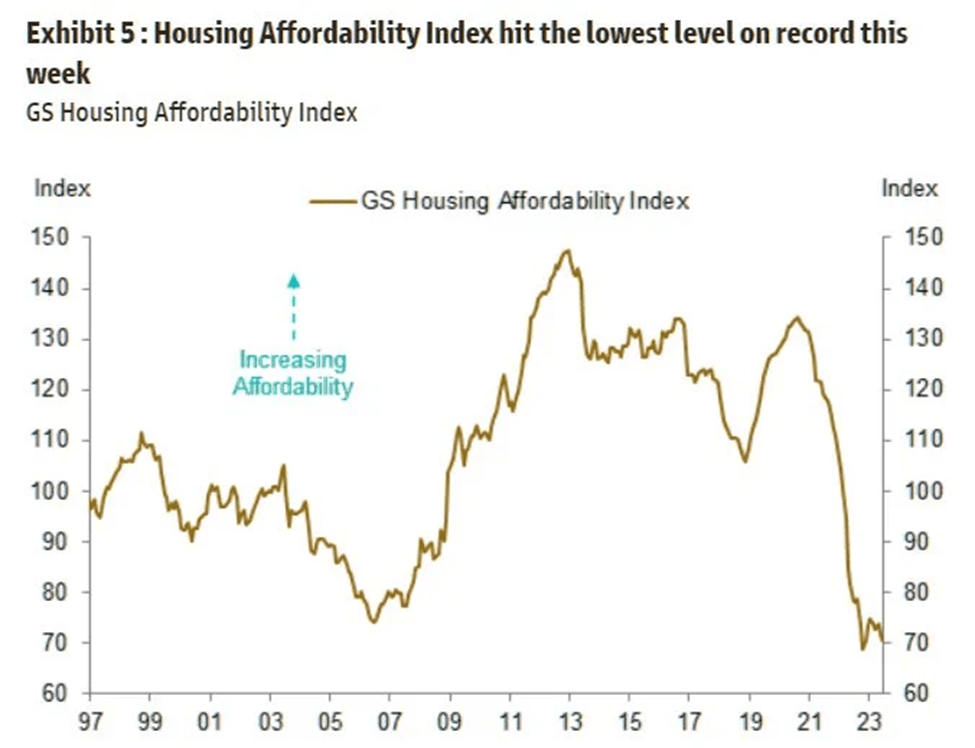
Basically, the index is determined by interest rates, house prices and family incomes. Simple equations are a lot easier to understand – and graphs are a lot more self-explanatory than lists of numbers.
So, if we check the American Community Survey, the mean household income for Montana was $63,249 in 2021 (2023 stats are due in September). Glancing at Zillow this morning showed the average home value for 59917 (Eureka ZIP code) is $520,698. Since that household income is lower than the national average, the chart above isn’t particularly relevant here – but the index does show a trend.
The US bond rating dropped from AAA to AA+. That’s not particularly frightening if you see that BBB is the break point between investment quality and junk bonds. An outfit called Fitch determines the bond ratings for governments – List of countries by credit rating – Wikipedia shows where most countries rate . . . Sweden and Switzerland held their AAA ratings, Ukraine is at CC, so seems a poor credit risk.
Inflation can – and often does – exceed interest rates, effectively making all bonds junk bonds. The problem is that the dollar’s purchasing power drops faster than the interest rate. US Inflation Rate by Year: 1929-2023 show most of the last century’s inflation (and deflation) by years with very brief explanations. It’s worth looking at.
The table below, taken from Current US Inflation Rates: 2000-2023 shows the annualized inflation rates over the past two Presidential administrations.

The past five years interest rates, in a chart taken from United States Fed Funds Rate – 2023 Data – 1971-2022 Historical – 2024 Forecast provide a perspective where you can visualize how inflation overcomes interest – basically forcing people to move from saving to speculating.

Unfortunately, most of our elected officials who are in positions to make financial decisions lack the skills to make good decisions.
-
The ability to livestream a meeting is a wonderful thing- when it works. The school has fiber optics and seldom has issues with connectivity during board meetings, so the connectivity issues were a bit of a surprise to those that chose to watch from home. The other lesson we learned is that when Inciweb is down, the best place for local fire information is the Facebook page of the Kootenai National Forest.
The video of the meeting is finally available- on youtube.
The inciweb link for the East for fire can be found here.
-
The lesser of two evils is still evil. I’m not sure how often I have voted for the lesser evil. In 2020, for sure. Definitely in 2016. Heck, the first election I could vote in was 1972 . . . choosing between Richard Nixon and George McGovern. Next time (1976) I could choose between Gerald Ford and Jimmy Carter.
It’s not that I’m bad at choosing the lesser evil – it’s that lesser evils are still evil, and that lesser evils add up. I’ve been voting for the lesser evil so long that I probably need an exorcist’s care and tending. Let me describe the results:
There was a clear choice between Ford and Carter – Ford had played too much football without a helmet, while Jimmy Carter was a Navy Academy graduate, an engineer, a farmer, and of high moral caliber . . . yet the economy tanked under Carter.
So 1980 showed up – and the choice was to keep Carter or replace him with Ronald Reagan. Hell, I had came into my teens watching Death Valley Days on black and white. I didn’t care if Jane Wynum was right. Ronald had to be better than Jimmy. Sure, he was old – but he promised to take senility tests . . . he probably just forgot. Definitely the lesser evil.
Then came 1988 – George Bush v. Michael Dukakis . . . In retrospect, the greatest thing Dukakis did for the nation was pushing Joe Biden out of the Dems primary by exposing his plagiarism – as it turned out later over half of America forgot. George Herbet Walker Bush – four names and once director of the CIA. Four years of the lesser evil?
Then came the choice of keeping George Bush or voting in Bill Clinton – you know how that worked out. After eight years of Clinton, we had a choice between Al Gore and the second Bush – Al Gore – like Joe Stalin and Cassanova, Al was a divinity school dropout. George Bush was the second of the Bush dynasty. Unable to hold my nose and vote for the lesser evil, I went third party. Eight more years of Bush. I hope he was a lesser evil than the divinity school dropout.
In 2008, we tried something different – we elected a president who had 6 years in Illinois politics and part of a term in the Senate. First it was Obama or McCain. McCain had been a fine junior officer in the Navy, and a long-term POW in VietNam. In general, he had done a commendable job. Then the Republicans ran Mitch Romney against Obama. In 2012, again we could choose the lesser evil . . . but 2016 was coming.
In 2016, my friend Bob Brown, a lifetime Republican, chose Hillary Clinton over Donald Trump and voted for what he saw as the lesser evil. Despising Hillary, I cast a ballot for the other lesser evil. Our differing votes didn’t affect our friendship – each voted for what he saw as the lesser evil. In 2020, we had a choice between Trump and Biden – think, if you will, what it says that neither of these men can manage to achieve a 50% approval rating, yet they are the top candidates (despite being too old, entirely too old). Lesser evil vs. lesser evil is still evil.
There are Republicans who don’t want Trump to run again. There are Democrats who feel the same way about Biden. The lesser evil is still evil. I would really like to have the choice between good and better, between good and great.
-
The serial number tells me that my Colt Trooper left the factory in 1954. When I got it, the grips were from the 1960’s, with gold medallions – so I didn’t see anything wrong with taking them off and replacing them with a set of Pachmayr grips. A lot of parts get changed on Colt revolvers – and the value is no different with my chosen grips than someone else’s replacements. It probably looked like this when it left the factory:

The old revolver shoots well – I can understand why the guy before me installed Colt second type target grips . . . but they had gold medallions. Only Pythons left Hartford with gold medallions. I figure my Trooper left with service grips – it still has the service hammer. When it was first sold, the suggested retail price was $71. This photo is of a later issue and different cartridge – but the gold medallion shows what my Trooper looked like when I got it:

My old revolver is an E frame – with the firing pin mounted on the hammer. In 1954, the top match revolver was the Colt Officer’s Model – also an E frame. Troopers and Officer’s models can’t be separately identified by their serial numbers – only by the barrel markings. Essentially, my old Trooper is just a cheaper version of the Officer’s model – and, with the Pachmayr grips, the difference doesn’t show up on targets.
I thought about replacing the 4 inch barrel with an 8 inch Python 38 barrel – but the revolver shoots too well. I still have the unused Python barrel – but I doubt if I’ll ever make the conversion. I saw one years ago, and heard it called a Pooper – and that just doesn’t sound like the sort of respect the old revolver merits.
When the recent heatwave brought the family decision to open windows at night, the old revolver moved to the bedside. I’ve known a few people who had bears enter open windows – and frankly, the plastic screen doesn’t look like it could discourage a cub . . . and we have had the occasional full grown griz come by the house.
There are arguments about the best pistol caliber for bear. Most of the cognoscenti tell me that 38 special isn’t using enough gun. It’s possible that they’re right. But I’m used to a Colt revolver, and if I need something on the nightstand, I want something familiar.
Want to tell us something or ask a question? Get in touch.

Recent Posts
- Recovery Time for a Retiree
- Venn Diagram and DSM
- When Castro Was Cool
- You Have To Beat Darwin Every Day
- Computer Repair by Mussolini
- Getting Alberta Oil to Market
- Parties On Economics
- Thus Spake Zarathustra – One More Time
- Suspenders
- You Haven’t Met All The People . . .
- Play Stupid Games, Win Stupid Prizes
- The Ballad of Lenin’s Tomb
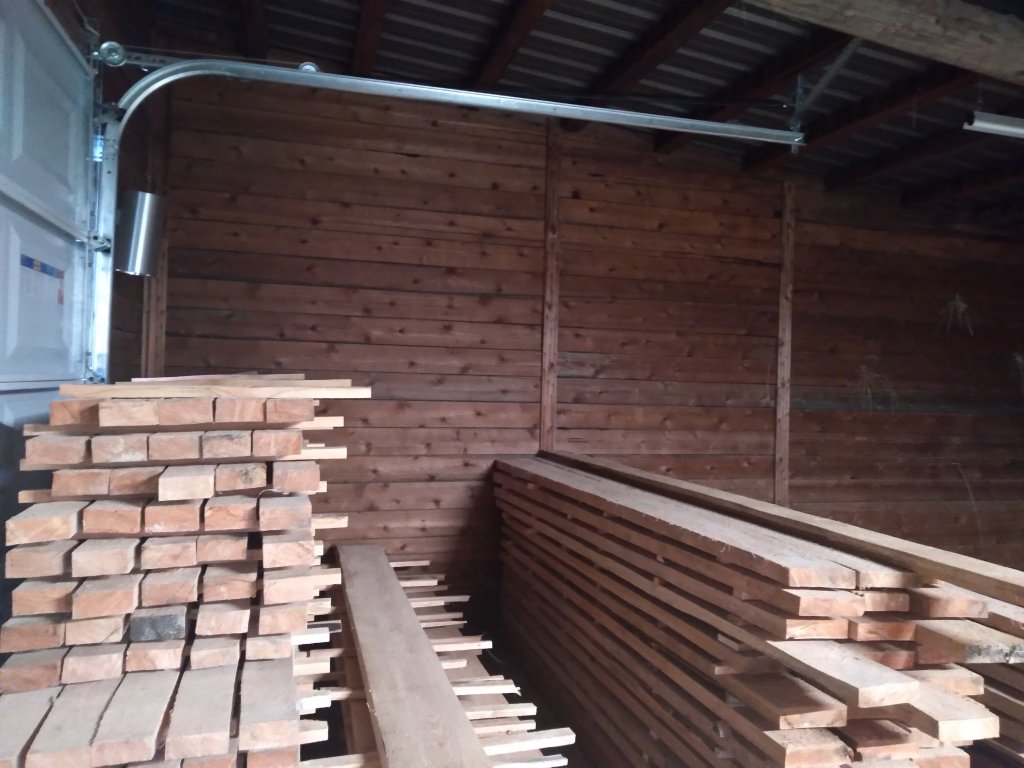
Rough Cut Lumber
Harvested as part of thinning to reduce fire danger.
$0.75 per board foot.
Call Mike (406-882-4835) or Sam (406-882-4597)
Popular Posts
Ask The Entomologist Bears Books Canada Census Community Decay Covid Covid-19 Data Deer Demography Education Elections Eureka Montana family Firearms Game Cameras Geese Government Guns History Inflation life Lincoln County Board of Health Lincoln County MT Lincoln Electric Cooperative Montana nature News Patches' Pieces Pest Control Politics Pond Recipe School School Board Snow Taxes travel Trego Trego Montana Trego School Weather Wildlife writing
 Trego's Mountain Ear