-
Occasionally I see articles explaining how the 17th Amendment – direct election of senators – conflicts with the intent of the founders. Years ago, I heard the argument that Senators represent the individual state’s sovereignty, rather than the residents (why the Senate is not based on population) and, if that argument is solid, there is an equally solid argument that taking the selection of Senators from the legislature does conflict with the ideas of the founders. A Democrat Senator from Montana, William A. Clark, had enough bribery and chicanery in getting into office that, at the least, he had a significant role in getting the 17th Amendment passed. Sharlot Hall Museum offers a few comments on our Senator Clark:
“Born in Pennsylvania in 1839, W. A. Clark served briefly in the Confederacy during the Civil War but deserted in 1862 to try mining, first in Colorado, then in Montana in 1863. After moderate success, Clark realized money could be made as a teamster transporting scarce groceries like eggs and tobacco to Montana mining towns. At a time when a miner’s monthly salary was four dollars, Clark’s eggs were three dollars a dozen and he made a tidy profit. . . . Back in Montana, Clark’s success attracted competitors, and soon Marcus Daly struck a seam of copper fifty feet wide and created the Anaconda Copper Company in Butte. The two men were economic and political rivals for years.
Both desired to become U.S. Senators after Montana became a state in 1889. Senators were chosen by the state legislature, so both Daly and Clark lobbied for votes. Neither won a majority, so Clark decided to simply “buy” the legislators. Proof of bribes was obtained by authorities in Washington, D.C., but the Montana legislators elected Clark anyway. The U.S Senate initially refused to seat Clark. This incident and others like it led to the 17th Amendment in 1914 mandating popular election of senators.”
Mark Twain said, “Clark is as rotten a human being as can be found anywhere….to my mind he is the most disgusting creature the American republic has produced since Boss Tweed’s time.”
William Clark is still in the official US Senate Records – with his own webpage: U.S. Senate: The Election Case of William A. Clark of Montana (1900) :
Background
In 1890 Montana copper mining czar William A. Clark failed in his first effort to become a United States senator. Undaunted, Clark continued to devote the full measure of his extensive economic and political power to achieving that goal. Enormous sums of money changed hands in Montana as Clark and his chief rival, Anaconda Company copper magnate Marcus Daly, sought to influence the economic structure of the state, the location of the capital, the direction of Democratic politics, and the selection of a United States senator. The blatant business and political competition between the Clark and Daly factions was but a continuation of the turmoil that had marred Montana politics since the organization of the state government in 1889.Statement of the Case
Nine years after his initial disappointment in 1890, William Clark won the Senate seat he so avidly desired, presenting his credentials on December 4, 1899. The Senate admitted him immediately, although on the same day his opponents filed a petition charging that Clark had secured his election through bribery. The memorial asserted that Clark had spent far more on his election than the $2,000 permitted by an 1895 Montana law aimed at controlling political corruption. The Senate referred the matter to the Committee on Privileges and Elections, which quickly asked for and received authorization to conduct a full investigation into Clark’s election.Response of the Senate
On April 23, 1900, after hearing extensive testimony from ninety-six witnesses, the committee returned a report unanimously concluding that William Clark was not entitled to his seat. The testimony detailed a dazzling list of bribes ranging from $240 to $100,000. In a high-pressure, well-organized scheme coordinated by Clark’s son, Clark’s agents had paid mortgages, purchased ranches, paid debts, financed banks, and blatantly presented envelopes of cash to legislators. In addition, the winning margin in Clark’s election had been secured by the votes of eleven Republican legislators under suspicious circumstances. Clark did not enhance his position when he admitted that he had destroyed all his personal checks that dealt with campaign transactions. The committee cited a number of previous bribery cases, especially that of Samuel C. Pomeroy and Alexander Caldwell in 1872-1873, as precedents for declaring an election void if bribery on behalf of the winner could be proved even if no proof was found that the candidate knew of the actions. The report also noted the precedent from the Pomeroy case that, if the winner “clearly participated in any one act of bribery or attempted bribery, he should be deprived of his office,” even if “the result of the election was not thereby changed.” While concurring in the committee’s conclusion, two members tried to reduce the impact of the anti-Clark testimony by pointing to the unlimited sums that his rival, Marcus Daly, had invested in an effort to block Clark’s election. That observation, however, did little more than confirm the way in which corruption totally pervaded Montana politics without exonerating Clark.On May 15, 1900, as the Senate prepared to vote on Clark’s right to retain his seat, the beleaguered senator rose to speak. Predictably, Clark complained about the procedures of the committee, the admissions and omissions of evidence, and the machinations of Marcus Daly. He contended that the Senate had lost sight of the principle of presumption of innocence and concluded that the committee had not shown that bribery sufficient to alter the election results had occurred. At the conclusion of his remarks, Clark, clearly aware that he did not have the necessary votes to keep his seat, resigned.
This did not conclude the Montana case, for on May 15 the acting governor of Montana immediately appointed Clark to fill the Senate vacancy. When the governor learned of this action on his return to the state three days later, he telegraphed the Senate that Martin Maginnis would fill the Clark vacancy. Credentials for both Clark and Maginnis were presented to the Senate, which ordered them to lie on the table.
Conclusion
In January 1901 a newly elected Montana legislature—in which most of the winning candidates had received financial support from William Clark—elected him to the Senate for the same term he had filled earlier. Marcus Daly had died in November 1900, and this time no charges of corruption were raised. On March 4, 1901, Clark appeared and was seated without objection.In this case, the Privileges and Elections Committee stressed that the Senate had a duty to itself and to the country to demonstrate by its action that senators cannot retain seats procured by corruption. It also saw an equal duty to Montana because the state had adopted the 1895 law in an effort to end corruption in its elections.
William Clark, having finally achieved his great ambition, served one term as United States senator. He retired from the Senate in 1907 and returned to his far-flung business ventures. While remaining notorious for the corruption of his 1899 election, Clark continued to add to his vast fortune. He died in 1925.
Source: Adapted from Anne M. Butler and Wendy Wolff. United States Senate Election, Expulsion, and Censure Cases, 1793-1990. S. Doc. 103-33. Washington, GPO, 1995.
His daughter, Huguette Clark, died in 2011, at the age of 104. With her death, the last fortune of the “Copper Kings” was disbursed/
-
How the pandemic helped spread fentanyl across the US and drive opioid overdose deaths to a grim new high
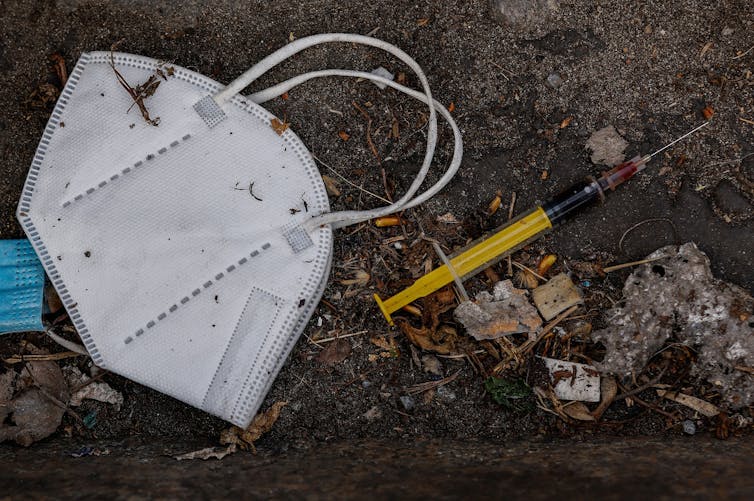
Emblems of America’s epidemics. David Gannon/AFP via Getty Images Andrew Kolodny, Brandeis University
For the past 20 years, I have been engaged in efforts to end the opioid epidemic, as a public health official, researcher and clinician. And for every one of those years I have looked on as the number of deaths from drug overdoses has set a new record high.
Yet even knowing that trend I was surprised by the latest tally from the CDC showing that for the first time ever, the number of Americans who fatally overdosed over the course of a year surpassed 100,000. In a 12-month period ending at the end of April 2021, some 100,306 died in the U.S., up 28.5% over the same period a year earlier.
The soaring death toll has been fueled by a much more dangerous black market opioid supply. Illicitly synthesized fentanyl – a potent and inexpensive opioid that has driven the rise in overdoses since it emerged in 2014 – is increasingly replacing heroin. Fentanyl and fentanyl analogs were responsible for almost two-thirds of the overdose deaths recorded in the 12 months period ending in April 2021.
It is especially tragic that these deaths are mainly occurring in people with a disease – opioid addiction – that is both preventable and treatable. Most heroin users want to avoid fentanyl. But increasingly, the heroin they seek is mixed with fentanyl or what they purchase is just fentanyl without any heroin in the mix.
While the spread of fentanyl is the primary cause of the spike in overdose deaths, the coronavirus pandemic also made the crisis worse.
The geographical distribution of opioid deaths makes it clear that there has been a change during the pandemic months.
Before the COVID-19 health crisis, the skyrocketing increase in fentanyl-related overdose deaths in America was mainly affecting the eastern half of the U.S., and hit especially hard in urban areas like Washington, D.C., Baltimore, Philadelphia and New York City. A possible reason behind this was that in the eastern half of the U.S., heroin has mainly been available in powder form rather than the black tar heroin more common in the West. It is easier to mix fentanyl with powdered heroin.
COVID-19 resulted in less cross-national traffic, which made it harder to smuggle illegal drugs across borders. Border restrictions make it harder to move bulkier drugs, resulting in smugglers’ increased reliance on fentanyl – which is more potent and easier to transport in small quantities and as pills, making it easier to traffic by mail. This may have helped fentanyl spread to areas that escaped the earlier surge in fentanyl deaths.
Opioid-addicted individuals seeking prescription opioids instead of heroin have also been affected, because counterfeit pills made with fentanyl have become more common. This may explain why public health officials in Seattle and elsewhere are reporting many fatalities resulting from use of counterfeit pills.
Another factor that may have contributed to the soaring death toll is that the pandemic made it harder for those dependent on opioids to get in-person treatment.
More than anything else, what drives opioid-addicted individuals to continue using is that without opioids they will experience severe symptoms of withdrawal. Treatment, especially with buprenorphine and methadone, has to be easy to access or addicted individuals will continue using heroin, prescription opioids or illict fentanyl to stave off withdrawal. Some treatment centers innovated in the face of lockdowns, for example, by allowing more patients to take methadone unsupervised at home, but this may not have been enough to offset the disruption to treatment services.
And maintaining access to treatment is crucial to avoid relapse, especially during the pandemic. Research has shown that social isolation and stress – which became more common during the pandemic – increase the chances of a relapse in someone in recovery.
In the past, one slip might not be the end of the world for someone in recovery. But given the extraordinarily dangerous black market opioid supply, any slip can result in death.
[You’re smart and curious about the world. So are The Conversation’s authors and editors. You can read us daily by subscribing to our newsletter.]
Andrew Kolodny, Co-Director of Opioid Policy Research, Brandeis University
This article is republished from The Conversation under a Creative Commons license. Read the original article.
-
It’s an authoritarian concept – if one person misbehaves, the powers that be will punish the entire group for that misbehavior. You’ve seen the movies – the punishment is usually accompanied by the promise that the punishment will be ended when the miscreant confesses . . . or when his peers narc on him.
History – recent history then – told of collective punishments being used by Nazis as they overran parts of Europe. My memory tells of the Nazis occupying Norway punishing the killing of a German soldier by rounding up ten Norwegian men and killing them – and a 1949 Geneva convention outlawed collective punishments. Look up Televag (a Norwegian town) if you want more details.
My own training in “collective punishment” occurred at Lincoln County High School in the mid-sixties. The first I learned of it was going to the heads between classes and finding the doors locked. The explanation was that some miscreant had crapped in the sink, and that the toilets would be locked until either that miscreant confessed or some other student turned him in. Not being the guy who crapped in the sink, nor knowing who did it, the lesson for me was that Roger Ranta and Hugh Bigger (superintendent and principal) were a pair of fascists. Face it, it’s fascist as all hell to punish 130 innocent high school boys for one guy’s misconduct.
Lacking the protection of the Geneva Convention, LCHS immediately shut down the toilets. My guess is that both administrators were intelligent enough to realize that the results of a long-term toilet shutdown would be worse behavior . . . but the authoritarian, faced with anonymous misbehavior, feels a need to use power and not consider how the punished will develop the next step. The trash cans were beginning to look like an alternative to the locked down urinals.
We are teachers Offers a teacher’s view of other collective punishments:
“. . . the school’s main tactic has been assigning ever-increasing numbers of lunch detentions to the entire class. I love my colleagues and my administration, and most of the time they get it right. But punishing an entire class or using collective punishment for the actions of a few is, for me, a big swing and a miss.”
She’s a nice lady, who goes into ways that she minimizes collective punishments. Perhaps she believes that she is less fascist, and that’s a good thing. In my own education, the day that LCHS locked the toilets was the day I realized that the school administrators were fascists. I mean, the freedom to pee is more basic than freedom of speech – and it takes a really rotten bastard to take that away from people – even if they’re students, minors, and can’t vote yet.
Seeing the gate locked at the green boxes brought back a couple of memories. I recall driving by Ranta’s home late on nights when I was in town, seeing dark windows, and hitting the horn. Like I said – folks who impose collective punishments don’t stop to consider that the punished have the ability to come up with their own responses. A government official who opts to take a little time to think about how to respond to a problem is going to create less animosity than one who chooses to punish everyone. I remember the old town cop, asking why the horn was blown after curfew, listening to my reasoning, then shaking his head, and ordering “Just get the hell out of town, and I don’t want to see you again tonight.” Frank would have been on the side of the Norwegians, not the Nazis.
What happened to get the toilets open again? A student confessed. The stories I’ve heard were that he wasn’t the guilty party – just a kid who wanted to drop out anyway. What became of the guilty party? Can’t say for sure, but the evidence is that he went on to a bachelor’s in psychology and retired after a career with a government agency. Collective punishment doesn’t necessarily worry about getting the perp – as Bonnie Parker wrote, “to bring the case to an end, just pin it on a friend, or blame it on Bonnie and Clyde.” The superintendent brought the case to an end, and opened the doors to the toilets.
-
The county health department has proposed several “solutions” to the problem of inappropriate materials being disposed of at the green boxes (see last week’s Tobacco Valley News). Two out of three of those “solutions” will remove the Trego greenboxes, while all three include a budget increase for the health department.
There are some issues with these, beyond the obvious “fewer services for more money”. First, none of the Health Department’s proposed solutions actually address the problem they are trying to solve. Second, they are trying to solve the wrong problem.
The problem the health department is trying to solve is essentially the misuse/exploitation of a common resource by the individual. It is, in other words, a classic tragedy of the commons. This type of problem comes from a mismatch between the cost/benefits to each individual and the cost/benefits to the group as a whole.
In this case, any individual gains from misusing the green boxes, as they save money (on gas) and time that would otherwise be spent on a trip to the dump. The group as a whole is harmed.
In order to solve a tragedy of the commons, that mismatch must be addressed. To do that, individuals misusing the green boxes must have personal consequences for doing so. Increasing security and fines is one method of doing so. Individual pickup at the end of each person’s driveway once a week would also do that. Removing the county green boxes and failing to replace them with an alternative, or reducing their available hours does not accomplish that.
However, none of this actually addresses the real problem, the one that the county health department should be trying to address. Because the right question isn’t “How do we stop people misusing the green boxes?”
The question they should be asking is “How do we make it easier for people to dispose of non-household waste?”
When government views the people as a problem, it has forgotten it’s purpose. The county health department has forgotten that its’ purpose is to serve.
-
The problem with partial duration series is that we wind up projecting from incomplete data. Cemetery sizes are larger in areas like the east coast, where towns have been present longer, than in Montana, where we’re just starting on our second century.
NOAA offers some perspective – not from models, but from evidence that geologists infer:
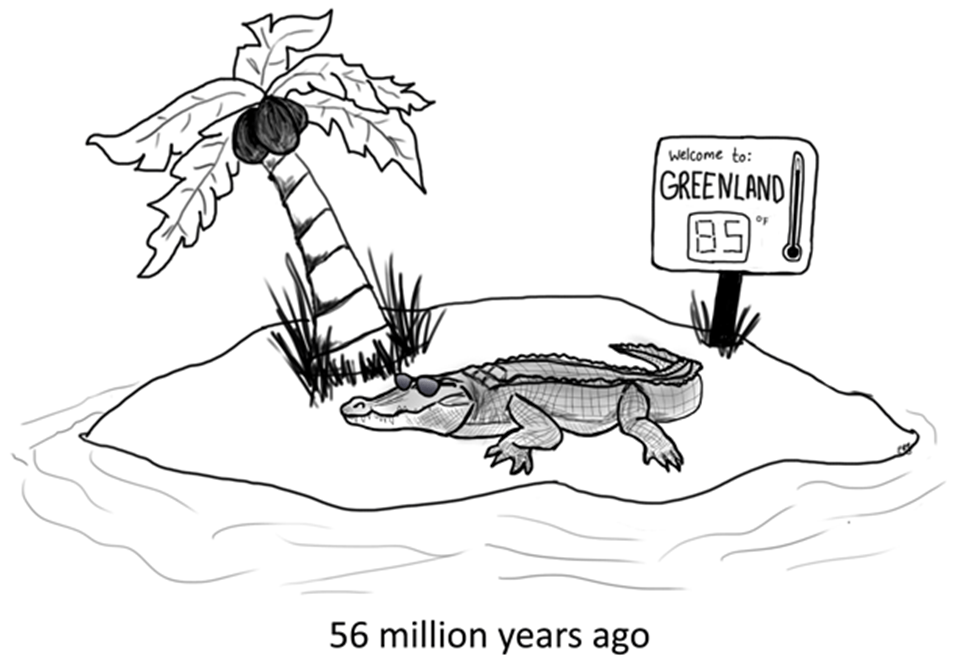
“A Smithsonian Institution project has tried to reconstruct temperatures for the Phanerozoic Eon, or roughly the last half a billion years. Preliminary results released in 2019 showed warm temperatures dominating most of that time, with global temperatures repeatedly rising above 80°F and even 90°F—much too warm for ice sheets or perennial sea ice. About 250 million years ago, around the equator of the supercontinent Pangea, it was even too hot for peat swamps!”
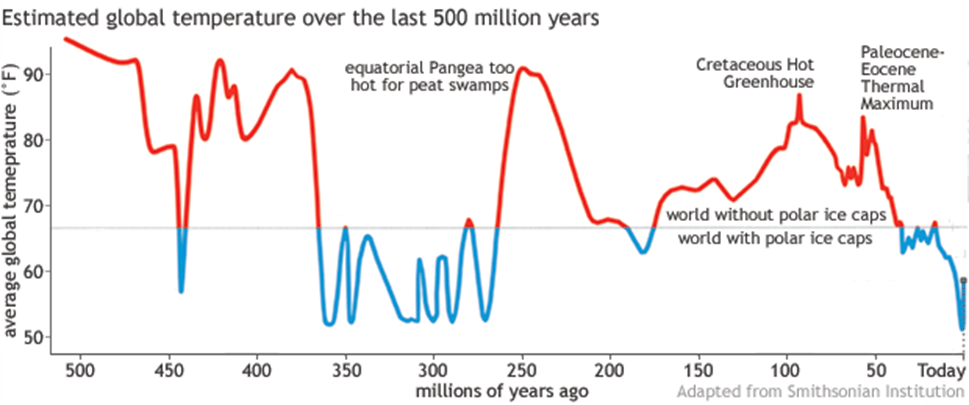
“Geologists and paleontologists have found that, in the last 100 million years, global temperatures have peaked twice. One spike was the Cretaceous Hot Greenhouse roughly 92 million years ago, about 25 million years before Earth’s last dinosaurs went extinct. Widespread volcanic activity may have boosted atmospheric carbon dioxide. Temperatures were so high that champsosaurs (crocodile-like reptiles) lived as far north as the Canadian Arctic, and warm-temperature forests thrived near the South Pole.
Another hothouse period was the Paleocene-Eocene Thermal Maximum (PETM) about 55-56 million years ago. Though not quite as hot as the Cretaceous hothouse, the PETM brought rapidly rising temperatures. During much of the Paleocene and early Eocene, the poles were free of ice caps, and palm trees and crocodiles lived above the Arctic Circle.”
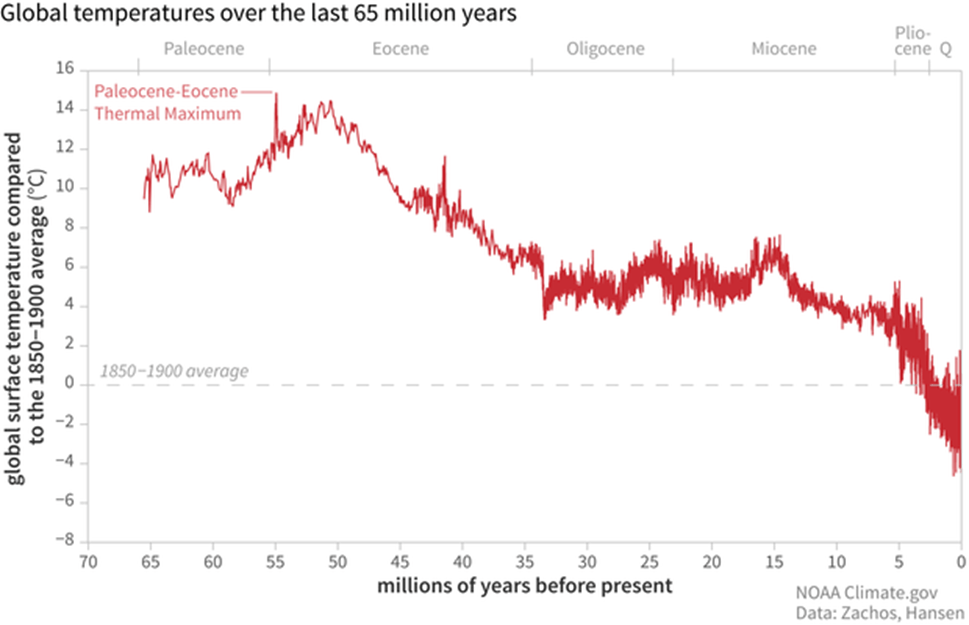
The article is worth the click and the time to read. It gives a bit of a different perspective on climate – with any partial duration series, the interpretation of data depends on when you start and end the data. One of the texts I read as an undergraduate (possibly Ardrey?) said that man is an interglacial species – that the ice ages would not have allowed the development we have had. All of our agricultural development (and our later industrial accomplishments) came after the continental ice sheets retreated.
Another article at NOAA continues the discussion with:
“Natural variability can explain much of the temperature variation since the end of the last ice age, resulting from factors such as changes in the tilt of the Earth’s axis. Over the past century, though, global average temperatures have “risen from near the coldest to the warmest levels” in the past 11,300 years, the 2013 study authors explain. Over this same period, emissions of heat-trapping gases from human activities have increased.
Given the uncertainty inherent in estimating ancient temperatures, the scientists conservatively concluded that the last decade has brought global average temperatures higher than they have been for at least 75 percent of the last 11,300 years. The recent increase in global average temperature is so abrupt compared to the rest of the time period that when the scientists make a graph of the data, the end of the line is nearly vertical.”
The models show us one thing – the geological data another. “Since when?” isn’t a bad question – or answer. Click the links and enjoy the articles.
-
Aging is complicated – a biologist explains why no two people or cells age the same way, and what this means for anti-aging interventions

While some people may be older in chronological age, their biological age might be much younger. FangXiaNuo/E+ via Getty Images Ellen Quarles, University of Michigan
You likely know someone who seems to age slowly, appearing years younger than their birth date suggests. And you likely have seen the opposite – someone whose body and mind seem much more ravaged by time than others. Why do some people seem to glide though their golden years and others physiologically struggle in midlife?
I have worked in the field of aging for all of my scientific career, and I teach the cellular and molecular biology of aging at the University of Michigan. Aging research doesn’t tend to be about finding the one cure that fixes all that may ail you in old age. Instead, the last decade or two of work points to aging as a multi-factoral process – and no single intervention can stop it all.
What is aging?
There are many different definitions of aging, but scientists generally agree upon some common features: Aging is a time-dependent process that results in increased vulnerability to disease, injury and death. This process is both intrinsic, when your own body causes new problems, and extrinsic, when environmental insults damage your tissues.
Your body is comprised of trillions of cells, and each one is not only responsible for one or more functions specific to the tissue it resides in, but must also do all the work of keeping itself alive. This includes metabolizing nutrients, getting rid of waste, exchanging signals with other cells and adapting to stress. https://www.youtube.com/embed/GASaqPv0t0g?wmode=transparent&start=0 Aging results from a number of physiological factors.
The trouble is that every single process and component in each of your cells can be interrupted or damaged. So your cells spend a lot of energy each day preventing, recognizing and fixing those problems.
Aging can be thought of as a gradual loss of the ability to maintain homeostasis – a state of balance among body systems – either by not being able to prevent or recognize damage and poor function, or by not adequately or rapidly fixing problems as they occur. Aging results from a combination of these issues. Decades of research has shown that nearly every cellular process becomes more impaired with age.
Repairing DNA and recycling proteins
Most research on cellular aging focuses on studying how DNA and proteins change with age. Scientists are also beginning to address the potential roles many other important biomolecules in the cell play in aging as well.
One of the cell’s chief jobs is to maintain its DNA – the instruction manual a cell’s machinery reads to produce specific proteins. DNA maintenance involves protecting against, and accurately repairing, damage to genetic material and the molecules binding to it.
Proteins are the workers of the cell. They perform chemical reactions, provide structural support, send and receive messages, hold and release energy, and much more. If the protein is damaged, the cell uses mechanisms involving special proteins that either attempt to fix the broken protein or send it off for recycling. Similar mechanisms tuck proteins out of the way or destroy them when they are no longer needed. That way, its components can be used later to build a new protein.
Aging disrupts a delicate biological network
The cross-talk between the components inside cells, cells as a whole, organs and the environment is a complex and ever-changing network of information.
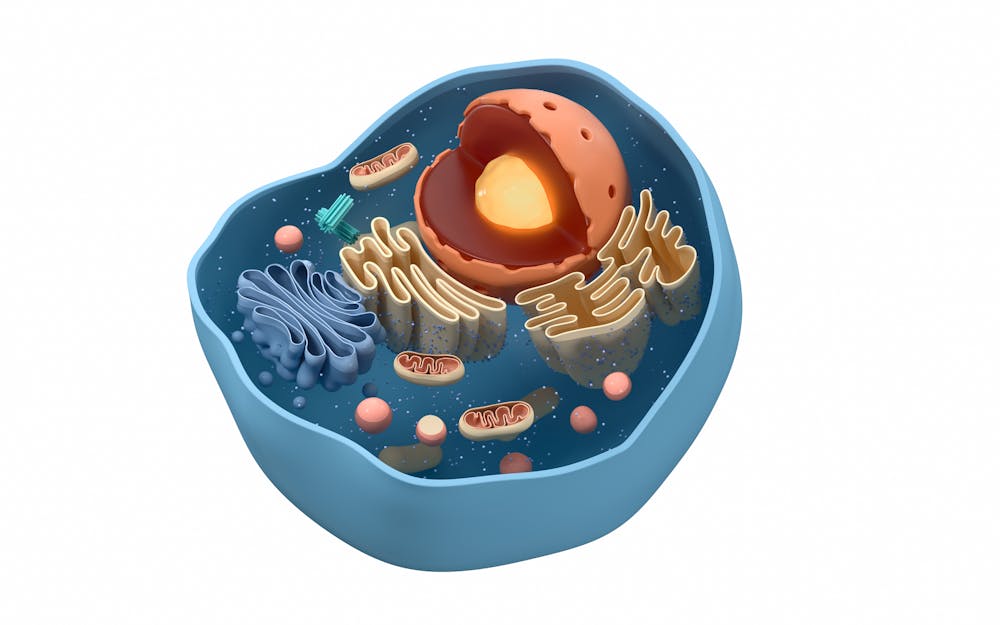
When all processes involved in creating and maintaining DNA and protein function are working normally, the different compartments within a cell serving specialized roles – called organelles – can maintain the cell’s health and function. For an organ to work well, the majority of the cells that make it up need to function well. And for a whole organism to survive and thrive, all of the organs in its body need to work well.
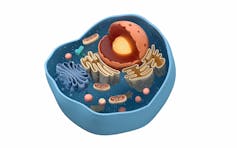
Each organelle within a cell carries out specific functions. Jian Fan/iStock via Getty Images Plus Aging can lead to dysfunction at any of these levels, from the sub-cellular to the organismal. Maybe a gene encoding an important protein for DNA repair has become damaged, and now all of the other genes in the cell are more likely to be repaired incorrectly. Or perhaps the cell’s recycling systems are unable to degrade dysfunctional components anymore. Even the communication systems between cells, tissues and organs can become compromised, leaving the organism less able to respond to changes within the body.
Random chance can lead to a growing burden of molecular and cellular damage that is progressively less well-repaired over time. As this damage accumulates, the systems that are meant to fix it are accruing damage as well. This leads to a cycle of increasing wear and tear as cells age.
Anti-aging interventions
The interdependence of life’s cellular processes is a double-edged sword: Sufficiently damage one process, and all the other processes that interact with or depend on it become impaired. However, this interconnection also means that bolstering one highly interconnected process could improve related functions as well. In fact, this is how the most successful anti-aging interventions work.
There is no silver bullet to stop aging, but certain interventions do seem to slow aging in the laboratory. While there are ongoing clinical trials investigating different approaches in people, most existing data comes from animals like nematodes, flies, mice and nonhuman primates.
One of the best studied interventions is caloric restriction, which involves reducing the amount of calories an animal would normally eat without depriving them of necessary nutrients. An FDA-approved drug used in organ transplantation and some cancer treatments called rapamycin seems to work by using at least a subset of the same pathways that calorie restriction activates in the cell. Both affect signaling hubs that direct the cell to preserve the biomolecules it has rather than growing and building new biomolecules. Over time, this cellular version of “reduce, reuse, recycle” removes damaged components and leaves behind a higher proportion of functional components. https://www.youtube.com/embed/WY5QQ-QjlFc?wmode=transparent&start=0 The effects of calorie restriction on aging are still under study.
Other interventions include changing the levels of certain metabolites, selectively destroying senescent cells that have stopped dividing, changing the gut microbiome and behavioral modifications.
What all of these interventions have in common is that they affect core processes that are critical for cellular homeostasis, often become dysregulated or dysfunctional with age and are connected to other cellular maintenance systems. Often, these processes are the central drivers for mechanisms that protect DNA and proteins in the body.
There is no single cause of aging. No two people age the same way, and indeed, neither do any two cells. There are countless ways for your basic biology to go wrong over time, and these add up to create a unique network of aging-related factors for each person that make finding a one-size-fits-all anti-aging treatment extremely challenging.
However, researching interventions that target multiple important cellular processes simultaneously could help improve and maintain health for a greater portion of life. These advances could help people live longer lives in the process.
Ellen Quarles, Assistant Professor in Molecular, Cellular, and Developmental Biology, University of Michigan
This article is republished from The Conversation under a Creative Commons license. Read the original article.
-
I am a sociologist – and it is difficult to look at any level of government without recalling Max Weber’s definition:

It is such a simple definition – possibly the simplest possible. Max continues with a definition of power: “Power is the chance to impose your will within a social context, even when opposed and regardless of the integrity of that chance.”
Phillip Bobbitt wrote “War is not a pathology that, with proper hygiene and treatment, can be wholly prevented. War is a natural condition of the State, which was organized in order to be an effective instrument of violence on behalf of society. Wars are like deaths, which, while they can be postponed, will come when they will come and cannot be finally avoided.” Bobbitt graduated highschool at 15, and spent the summer at the White House (Lyndon Johnson was his uncle). Bobbitt is bright – and his contribution to understanding today’s news can be condensed to the single sentence: “War is a natural condition of the State, which was organized in order to be an effective instrument of violence on behalf of society.”
Kind of fits in with Weber, and explains why our country, under the leadership of a long-term professional politician, is involved in war in Ukraine. If you accept Bobbitt’s premise, that the State is organized to be an effective instrument of violence, it all makes sense.
C. Wright Mills, a generation behind Max Weber, studied “the power elite”: “By the power elite, we refer to those political, economic, and military circles which as an intricate set of overlapping cliques share decisions having at least national consequences. In so far as national events are decided, the power elite are those who decide them.”
Another of Mills’ observations is: “A society that is in its higher circles and middle levels widely believed to be a network of smart rackets does not produce men with an inner moral sense; a society that is merely expedient does not produce men of conscience. A society that narrows the meaning of ‘success’ to the big money and in its terms condemns failure as the chief vice, raising money to the plane of absolute value, will produce the sharp operator and the shady deal. Blessed are the cynical, for only they have what it takes to succeed.”
He noted how corporations fit in with government: “For the corporation executives, the military metaphysic often coincides with their interest in a stable and planned flow of profit; it enables them to have their risk underwritten by public money; it enables them reasonably to expect that they can exploit for private profit now and later, the risky research developments paid for by public money. It is, in brief, a mask of the subsidized capitalism from which they extract profit and upon which their power is based.”
Why Do So Many Incompetent Men Become Leaders? Is worth reading as we consider who our leaders are:
“In fact, most leaders — whether in politics or business — fail. That has always been the case: the majority of nations, companies, societies and organizations are poorly managed, as indicated by their longevity, revenues, and approval ratings, or by the effects they have on their citizens, employees, subordinates or members. Good leadership has always been the exception, not the norm.
So it struck me as a little odd that so much of the recent debate over getting women to “lean in” has focused on getting them to adopt more of these dysfunctional leadership traits. Yes, these are the people we often choose as our leaders — but should they be?”
This is consistent with the finding that leaderless groups have a natural tendency to elect self-centered, overconfident and narcissistic individuals as leaders, and that these personality characteristics are not equally common in men and women. In line, Freud argued that the psychological process of leadership occurs because a group of people — the followers — have replaced their own narcissistic tendencies with those of the leader, such that their love for the leader is a disguised form of self-love, or a substitute for their inability to love themselves. “Another person’s narcissism”, he said, “has a great attraction for those who have renounced part of their own… as if we envied them for maintaining a blissful state of mind.”
When I was hiring people, my most frequent blunder was to accept that confidence for competence – I learned over a few years that presentation of self as competent doesn’t always correlate with top, or even average, performance, but mistaking confidence for competence stayed with me. If we really are electing ‘self-centered, overconfident and narcissistic individuals as leaders, it’s fairly easy to see why our leaders are failing us – as voters, we’re making the same mistakes I made (and make) on interview committees. As I look at our more recent presidents, the adjectives “self-centered, overconfident and narcissistic” don’t appear to be far wrong.
To end, with one more observation from C. Wright Mills: “All politics is a struggle for power; the ultimate kind of power is violence.” Our professional politicians spend lifetimes dealing with this – and we wonder why they make decisions that lead to unneeded wars. We may continue to vote based on their presentation of self – but we need to start voting against leaders whose performance sucks.
-
Saccharin is a “non-nutritive” sweetener– which means that while it tastes sweet, it provides the body with no nutritive value.
Saccharin was discovered and used commercially before 1900. This doesn’t make it the earliest of the artificial sweeteners; it was preceded by sugar of lead, which is just as unhealthy as it sounds. At any rate, it is the oldest of the modern artificial sweeteners.
How do you know something is sweet? You taste it, of course. So it should come as little surprise that a common story in the discovery of artificial sweeteners is that someone tasted something they really shouldn’t have, a situation chemists generally try to avoid.
In the case of Saccharin, the someone was Constantin Fahlberg, the lab was at John Hopkins University, and the year as 1879.
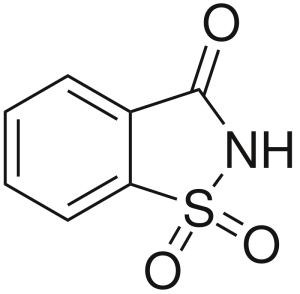
The chemical names for saccharin are sufficiently arcane to the non-chemist, that use of the common names such as benzosulfimide is preferable to the IUPAC name. It possesses a benzene ring, which is a six carbon ring of alternating single and double bonds, as well as a second, rather more interesting ring.
Saccharin became popular during World War I, due to sugar rationing.
Where is it found today? Saccharin is readily found in sweet’n low. It can be found in some medicines, chewing gum, drinks and baked goods. As it has something of an aftertaste, it has been replaced in some instances by other artificial sweeteners.
Is it safe? . As always, the rule in toxicology (the study of poisons) is the dose makes the poison. Anything in sufficiently high amounts is likely to be lethal. That being said, is saccharin dangerous in typical doses?
The earliest form of this question is something along the lines of does it cause cancer? And the answer is, in rats, absolutely. Bladder cancer specifically. It turns out that humans are somewhat different than rats, so if it does so, it certainly does not do so via the same mechanism. The cancer warning label was removed in 2000.
Not causing cancer is a pretty low bar to set for being healthy, though. There are some concerns that are applicable to pretty much all artificial sweeteners- and those I’ll talk about in another post.
There’s a study in which male rats were fed saccharine, saccharine and nicotine, and nicotine alone, then the resulting behavioral changes were studied in the male rats and their offspring. And they did see behavioral changes for just saccharine, and those changes did appear to be passed down from father to child. Now, rats are not exactly like people (as the cancer question has shown), but changes in working memory and hyperactivity certainly suggest reason for further research.
Another important question to consider is efficacy with regards to diabetes. Sugar substitutes are often promoted for diabetes patience as a way to reduce their sugar intake. For an artificial sweetener to be beneficial for insulin resistance, it would, presumably, need to not act like sugar for the body. The problem is that saccharine does taste sweet, and our taste receptors can regulate the release of insulin.
Saccharine does trigger the release of insulin. What’s the consequence of increased insulin (the hormone that tells our bodies to turn sugar into fat) without the presence of glucose? Short term, it should reduce blood sugar. Long term? It seems like insulin resistance would be the logical result, since Low blood sugar is dangerous and something our bodies prefer to avoid.
Are there studies supporting the idea that saccharine might contribute to insulin resistance (diabetes)? Yes, both regarding the mechanism just described and regarding changes in gut microbes as a result of saccharine ingestion. Do all the studies same thing? No, the results are pretty mixed. Some say that there is no effect, others say there is a significant effect.
-
We have Pom Collins to thank for the wonderful performances that were had on Sunday (raising money for the Trego School Music Foundation) and Wednesday (for the TFS Fire Department).
With over $250 dollars raised, Trego School will have some options for the upcoming year’s musical education. This past year, the school had a trimester devoted to harmonicas, after which the students were able to keep the instruments, and also devoted time to guitar. The top student in class was able to keep their practice guitar. This should allow the school to continue to foster the musical talent of its students (after all, having an instrument is a pretty vital first step!) in the upcoming school year.
The shows were a good time as well as effective fundraisers. Performances were lovely, and we even had a few locals join in. Shirley Jacobs appeared in a ventriloquism act and Dr. Collins was evident in a juggling performance. It was a good deal of fun and laughter.
-
John Lott has written a post relevant to Montana’s legislation that permits, for the first time, charter schools. The entire article is at the link above – and here’s an excerpt that may get you to click the link:
“Montana is one of the last states without charter schools, but that may be about to change. Gov. Greg Gianforte signed a pair of bills into law that establish separate and distinct charter school systems in the state — one widely embraced by Republican legislators and advocates of past charter school efforts, and the other supported by the bulk of Montana’s public education organizations as well as a bipartisan coalition of lawmakers.”
Lott cites The National Charter School Study III 2023 (accessible at: https://ncss3.stanford.edu/wp-content/uploads/2023/06/Credo-NCSS3-Report.pdf
The report is some 82 pages, and the summary of findings begins with
“Looking at year-to-year academic progress from 2015 to 2019, the typical charter school student in our national sample had reading and math gains that outpaced their peers in the traditional public schools (TPS) they otherwise would have attended. We report these differences as marginal days of additional (or fewer) days of learning on a learning benchmark of 180 days of learning each school year for matched TPS students. In math, charter school students, on average, advanced their learning by an additional six days in a year’s time, and in reading added 16 days of learning. Figure 1: Annual Academic Growth of Charter School Students, Reading and Math ** Significant at p ≤ 0.01 Figure above originally appears as Figure 1.7 in CSP31. These average effects are across all students, all schools, for all time periods. There is considerable variation around these averages and this variation forms the foundation for additional analyses and findings in our two papers.”
The report suggests that some charter schools do a better job than others:
“School Management – students who attend a charter school that is part of a charter management organization (CMO) experience significantly accelerated growth compared to students enrolled in standalone charter schools (SCS). Even so, CMO schools and SCS provide stronger learning than TPS in reading, and CMOs do so in math. CMO-affREADING Worse Same Betteriliated students advanced by 27 additional days in reading and 23 more days in math over TPS, both of which are statistically significant. Stand-alone charter schools still grew significantly more than TPS in reading by 10 additional days of learning, but were no different in math. Given that SCS serve two-thirds of all students enrolled in charter schools, soft math performance in these schools taints the otherwise decisive results in other parts of the study.”
Since Charter Schools will be coming to Montana, taking the time to read the report just might be worthwhile.
Want to tell us something or ask a question? Get in touch.

Recent Posts
- 75 Years Ago in New York
- Recovery Time for a Retiree
- Venn Diagram and DSM
- When Castro Was Cool
- You Have To Beat Darwin Every Day
- Computer Repair by Mussolini
- Getting Alberta Oil to Market
- Parties On Economics
- Thus Spake Zarathustra – One More Time
- Suspenders
- You Haven’t Met All The People . . .
- Play Stupid Games, Win Stupid Prizes

Rough Cut Lumber
Harvested as part of thinning to reduce fire danger.
$0.75 per board foot.
Call Mike (406-882-4835) or Sam (406-882-4597)
Popular Posts
Ask The Entomologist Bears Books Canada Census Community Decay Covid Covid-19 Data Deer Demography Education Elections Eureka Montana family Firearms Game Cameras Geese Government Guns History Inflation life Lincoln County Board of Health Lincoln County MT Lincoln Electric Cooperative Montana nature News Patches' Pieces Pest Control Politics Pond Recipe School School Board Snow Taxes travel Trego Trego Montana Trego School Weather Wildlife writing
 Trego's Mountain Ear