-
Forestry publications tell me that there are about 200 species of insects that prey on Ponderosa Pine. The woodpeckers that are successfully debarking a Ponderosa south of the house, and a couple of Western Larch to the north, have convinced me that some sort of bark beetle has successfully reproduced and left grubs working under the bark.

The NRCS publication on Ponderosa Pine is available at this link PONDEROSA PINE.Western larch is a Canadian publication that can be accessed with a click.
Idaho has a publication on bark beetles at Come spring, bark beetles may attack trees damaged in winter storms – Department of Lands
“Bark beetles are a group of insects that spend almost their entire life beneath the bark of trees. They tunnel in the moist inner bark, lay eggs and these develop into larvae or grubs. The tunneling kills trees by girdling them (cuts off the supply of nutrients). Adults emerge later to infest other trees in late spring or early summer. For more information, please see the IDL bark beetle fact sheet.”
With the work around a new house, the dense timber that is just now being thinned, and last year’s hot, dry summer, the trees are stressed – and obviously, the insects are moving in on the stressed trees. Fortunately, the little sawmill is ready (well, it will need the Spring leveling) to turn these stressed trees into lumber, and there is always the option of firewood.

-
Last week’s article showing the dawn of Naval aviation 8 years before Dad was born made me realize – I can show the ships, and their ages, that he served on in the second World War. The first two were coal burners, both launched in the 1890s, both having served in the Spanish American War, in World War I and in World War II.
As the US entered World War II, he was a First Class Petty Officer on the Hannibal. I’ve selected this photo, because Hannibal had been a tender for submarine chaser during the first World War. Dad’s time on the Hannibal in the late 1930’s prepared him for his career, largely because, as a survey ship in the Caribbean, Hannibal still had a YP (Yard Patrol) boat attached.

The YP boat was, essentially, a scaled down ship, where a petty officer could develop all the requisite skills for a deck officer – the next photo is a YP boat, but not the one where Dad learned shiphandling.
Hannibal was launched in March, 1898, as the Joseph Holland, and purchased by the US Navy in April, 1898, then renamed Hannibal.
These sub chasers were of the class that Hannibal tended – after World War I, they went to the Coast Guard for duty enforcing prohibition and intercepting rum runners. By the time Dad was surveying in the Caribbean, the remaining boat was reclassified YP – and, unlike the Hannibal, was powered by an internal combustion engine.

The Hannibal was pulled back from survey duties and set up to degauss (demagnetize) both Navy and Civilian ships to make them less susceptible to mines (which had magnetic triggers). While the ship kept that duty, Dad was sent to Dover, as the ship’s Chief Petty Officer and Boatswain.

Renamed Dover when Dad reported aboard, this ocean going gunboat had an impressive service record. She had steamed to Eastern Peru, traveling up the Amazon. When World War I was declared, she was a river gunboat in China – when ships of belligerent nations were ordered to be interned, Wilmington steamed to the Philippines, to take up her place with the fleet. She was the smallest ship to sail round the world with Teddy Roosevelt’s Great White Fleet. She was commissioned in 1897.
With the coming of World War II, she steamed out of the Great Lakes and down to Louisiana, to be used as a gunnery training ship for junior reserve officers who were assigned gunnery duties on merchant ships crossing the Atlantic. Bill Shelley, Lincoln County’s long-time SCS District Conservationist, came to Dover for his training in gunnery. The conversations I heard as a kid were about “the little ship.” The next photo shows how she looked when Dad and Bill served aboard “the little ship.”

After his one year spent as a chief petty officer, Dad was promoted to Warrant Officer and transferred to the seaplane tender Kenneth Whiting, and moved to the Pacific Fleet.
It was quite a change, moving from ships launched in 1897 and 1898 to brand new ship, burning oil instead of coal, launched in December 1943. Dad said that only three of the ship’s officers had been to sea before when he reported for duty – which is even more impressive when I read that the ship’s complement was 113 officers and 964 enlisted.

In June, 1946, the Whiting participated in Operation Crossroads – where a pair of atomic bombs were tested at Bikini. Whiting, as a seaplane tender without seaplanes had berths available for the nuclear scientists observing the tests. Dad described the protective gear issued to him – a pair of sunglasses.

The Korean Conflict provided two more ships for his career – first the Japanese Koan Maru, launched in 1937 as the world’s first air conditioned ship. As the only US Navy officer aboard this leased transport, Dad had the finest quarters of his career . . . his own suite. The Maru had operated as a transport through World War II for the Imperial Japanese Navy.

As the Korean conflict moved along, Dad went to his last ship – the USS General Breckenridge – transporting soldiers to and from Japan and Korea. A smaller crew than Whiting, but designed to transport around 4,000 soldiers. Launched late in World War II, the war ended with Breckenridge in the middle of the Atlantic on her first trip.

-
I ran across a reference to an article on accommodations allowed under IDEA (the Individuals with Disabilities Educational Act). I’m used to it as part of the working conditions of teaching – whether college or elementary. The article, titled Accommodations, Certifications and Standards is well written, makes sense, and yet doesn’t completely convince me.
The author wrote:
“In order to make students with disabilities more likely to have the same outcome, they are granted accommodations. These accommodations can vary. It can mean that they are granted extra time, or are allowed to test in a private room with no one watching them, or that they are even give multiple choice tests with one or more of the wrong choices eliminated. Furthermore, the law goes on to say that there can be no mention of the accommodations on the student’s transcript, diploma, or other certifications. Don’t want them having the stigma of people thinking they had it easier than other students, you see.”
He continued:
“As a result, not every student is being evaluated by the same standard. This means that a diploma is no longer a certification, as there is no guarantee that two students who have received that diploma were measured against the same yardstick. Remember that next time you are having your hair cut or being treated by a healthcare professional.
There was a student in my nursing class who received the accommodation of testing in a private room, and was also allowed to have her cell phone in the room with her. She graduated with a 94% test average, the highest in the class. I wonder why. No one on staff could challenge her on it, or she would scream about IDEA and racial discrimination.”
In some ways he’s correct. On the other hand, I’ve done well on tests most of my life – excepting the grade school years when I needed glasses, and the undergraduate year when we discovered my glasses needed to be corrected for astigmatism. These were my times as a slow reader . . . at least by my standards.
With cataract surgery completed, my distance vision is great – but I’m wearing 2.50 correction reading glasses for close-up work. That translates to 2 ½ power magnification for each eye – and my reading speed has dropped to about 600 words per minute. It’s OK – I’m retired and don’t need to read fast . . . but my reading speeds were always above 1,200 words per minute. I am pretty sure that my corrected vision gave me an advantage in the academy . . . I think the average person reads at 300 words per minute.
I may actually be smarter than folks who scored lower on the standardized tests – but I have a hunch that my higher scores occurred because fast reading gave me more time to select the answer and more time to check my work. I think that accommodations for slower readers might just have taken my fast reading privilege away from me. I can’t say reading 4 times faster than average was the whole advantage – but I know it was helpful.
I worked for a dyslexic dean – definitely brighter than I, but his weakness was slow reading. It kept him from checking his source documents as much as I do. If someone gave him bad information, he was kind of stuck with it. On the other hand, I am a ‘let’s look it up’ guy. When my dyslexic dean was right, he was faster than I – and he was right a lot of the time. He had better recall than I.
So the message is doubled – I want kids to be able to read fast with good recall and understanding of the information. But accommodations to make up for less than perfect vision and processing isn’t a bad thing. It doesn’t guarantee equal outcomes, but it does help us keep students from dropping through the cracks.
-
Noah Rothman’s article at commentary.org brought my thoughts back to the 1970’s when I researched the possibility of ranching fallow deer. Rothman wrote about whitetail deer in New Jersey: “In Western New Jersey, a population-dense state with an equally high concentration of whitetail deer, the problem is an increasingly urgent one. “Sustainable levels of deer should be 5 to 15 individuals per square mile,” one local arboretum fretted in 2021. “New Jersey averages 112 per square mile, with some areas as high as 270.”
He goes on to describe deer as “positively delicious” and then describes how the retail market for venison: “But you can’t buy deer meat at your local grocer or often even at upscale food purveyors. This NPR reporter found venison loin selling for a staggering $40 per pound. And about 85 percent of all deer meat sold in American restaurants is imported from New Zealand.”
That took me back to the seventies – when I looked into the idea of raising fallow deer commercially. The price per pound was lower back then, but so was the cost of fuel. I pencil-whipped it out – distribution would have required a van with refrigeration, much like the folks who come from the west coast with frozen fish. And fallow deer have been a domestic animal since the days of Julius Caesar:
“When kept in parks or enclosures, Fallow Deer can become remarkably tame and are generally undisturbed by the presence of people. However, this belies the secretive and timid ways of wild living animals.”
https://worlddeer.org/fallow-deer/
What wasn’t there to like – recreating the research trail is far easier now with the net available than it was in Trego in the seventies:
“For thirty years I’ve been raising fallow deer,” says Bob Strange as he gazes across an open pasture filled with the creatures.
Fallow deer are medium-sized deer, which typically weigh less than 200 pounds. Known for their large, webbed antlers, the bucks can be quite popular for hunting. These creatures can vary in color, ranging from black, brown and white, and most keep their spots forever. These unique characteristics are what drew Strange to raising them.
“I just really liked the looks of them,” Strange says, “so I figured I’d try it out.”
Thirty years ago, his herd started with three. Today, he now raises nearly 200 fallow deer near Mount Ayr, Iowa. During the summer, his herd doubles, as fawns are born between June and July. Strange typically sells the animals for hunting purposes, and sometimes for meat.
“I pretty much just sell them to anyone who wants one,” says Strange.
Fallow deer are fairly easy to care for. They do not contract disease as easy as whitetail deer, and don’t require large amounts of food. Strange raises his on pasture, hay, and corn.”
https://www.agriculture.com/family/living-the-country-life/raising-fallow-deer -
I ran across some photos of the first plane landing on a Navy warship – eight years before Dad was born. Since his WWII service on the seaplane tender Kenneth Whiting left him as one of the Warrant Boatswain’s closely connected with Naval Aviation, and I can’t share the photos with him, I’m sharing them here.



Wrapped around Ely’s upper torso are bicycle inner tubes – his flotation device in case he had to ditch.


The seaplane that has been lifted onto the Whiting in World War II gives a perspective to over 40 years of development in Naval Aviation. The ship’s records show that Commander Lyons was the Whiting’s first captain. Dad was her first bos’n.
-
This winter seems a good time to check on the value of a woodshed in keeping firewood dry. I’ve made it in far enough that I can sample wood that has been in the shed since last April, and I still have some firewood stacked out to dry from late fall – tarped, but not so well protected from the elements.
Now the half-dozen blocks that I’ve moved inside the house might as well have done their time in a dry kiln – my harbor freight moisture meter checks them out at 5 or 6% moisture.
The wood that is half-way back in the woodshed, protected from rain since April, is checking out at 11 or 12% moisture – the data suggests that a woodshed with three walls does a lot to keep the firewood dry – atmospheric humidity doesn’t seem to be causing much change inside the wood as rain does. All this wood did have the benefit of being undercover through a hot, dry summer, and having a couple rows of wood between it and the outside during the rains we did get.
In stacks outside – all set up between October and the end of November, things aren’t quite so dry.
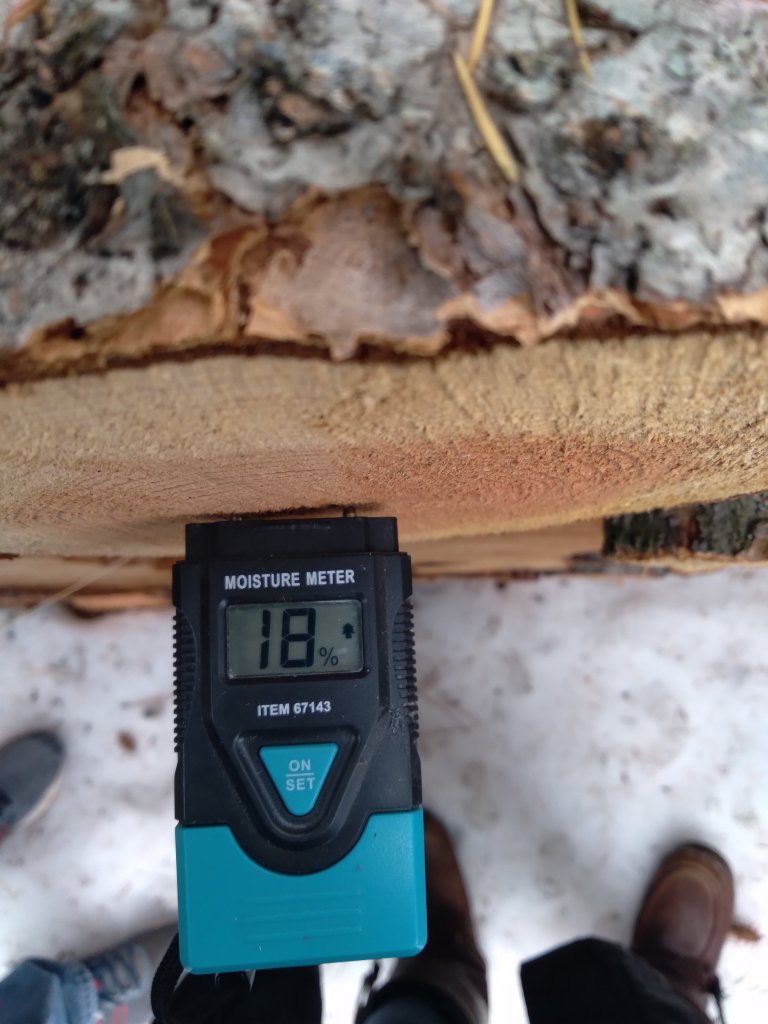
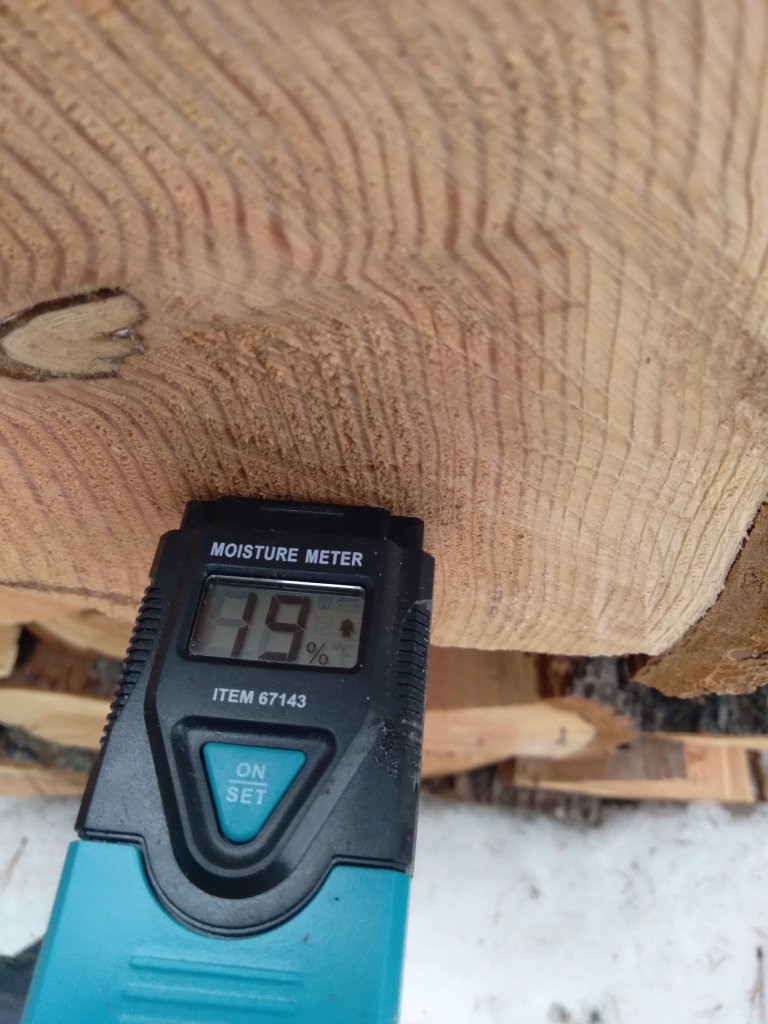
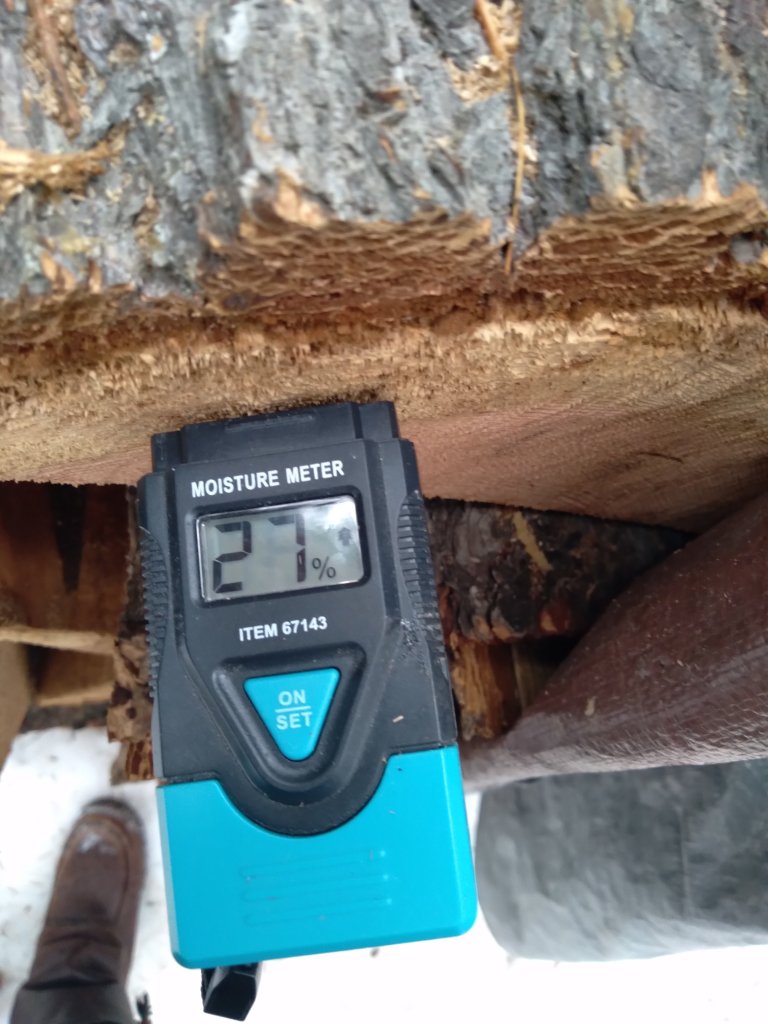
The books say that firewood moisture should be between 15 and 20%. From that perspective, the outside stacks are still pretty good . . . but it is kind of a luxury to start the fire with the really dry wood that comes from the woodshed.
-
On October 21, 2021, Alec Baldwin fired a single-action revolver and killed Halnyah Huchins and wounded Joel Souza. On January 19, 2023, Baldwin was charged with involuntary homicide. From what I read, he plans to fight the charges. It’s going to be an interesting case to watch. In 2018, Baldwin spoke for a “No Rifle Association Initiative” politically going after the National Rifle Association. I suspect the NRA firearm safety rules are going to come up in his trial
When handling a gun, follow these three fundamental rules:
- ALWAYS keep the gun pointed in a safe direction.
This is the primary rule of gun safety. A safe direction means that the gun is pointed so that even if it were to go off it would not cause injury or damage. The key to this rule is to control where the muzzle or front end of the barrel is pointed at all times. Common sense dictates the safest direction, depending on different circumstances. - ALWAYS keep your finger off the trigger until ready to shoot.
When holding a gun, rest your finger on the trigger guard or along the side of the gun. Until you are actually ready to fire, do not touch the trigger. - ALWAYS keep the gun unloaded until ready to use.
Whenever you pick up a gun, immediately engage the safety device if possible, and, if the gun has a magazine, remove it before opening the action and looking into the chamber(s) which should be clear of ammunition. If you do not know how to open the action or inspect the chamber(s), leave the gun alone and get help from someone who does.
As near as I can see, Baldwin missed 3 for 3 on following these safety rules (though he has asserted he didn’t pull the trigger, I’d hate to need to convince a jury on that claim). The involuntary manslaughter case, as I understand it, deals not with intent, but negligence. His assistant director, David Halls, signed a plea agreement to the charge of negligent use of a deadly weapon, and has 6 months probation and a suspended sentence. Hannah Guitterez-Reed (the set armorer) is charged with the same crime as Baldwin – and it basically boils down to negligence.
Baldwin’s attorney has his own comments: “a terrible miscarriage of justice,” said Luke Nikas, Baldwin’s attorney. “Mr. Baldwin had no reason to believe there was a live bullet in the gun – or anywhere on the movie set. He relied on the professionals with whom he worked, who assured him the gun did not have live rounds. We will fight these charges, and we will win.”
I would hate to be in Baldwin’s shoes. Over fifty years ago, I rolled a car, and came to in the wreck to find my passenger thrown out. I was lucky – Barb was virtually uninjured – she landed on both feet with only a quarter-inch cut from broken glass on her hand. I only had five or ten seconds believing that I had killed a friend – and that horrible thought is still with me over half a century later. I feel for the man. Still, despite the right A-frame failure on my car, I was the guy at the wheel.
Baldwin has a record of calling for the elimination of the organization that provided and taught the gun safety rules. He has denied pulling the trigger, and neither the prosecutor or I find that claim credible (my opinion doesn’t count). The case should be interesting.
- ALWAYS keep the gun pointed in a safe direction.
-
There has been a bit of traffic on the net about banning gas stoves. I didn’t pay a lot of attention to the bans until I retired, came home, and started a bunch of retirement careers. As I started on building a new house, I encountered the bans. My toilets are all 1.6 gallon flushers – but that’s an old change. My showers are low water use. The dishwasher – a poor, fragile beast, is designed to run for long periods and minimize water use. My gas cans have been modified to spill more as they protect the environment from evaporating fuel. Some states and provinces are setting deadlines for the last internal combustion engines in automobiles.
I don’t mind having safe products. I don’t particularly mind being protected. I do mind it when half-wits are making my decisions for me. Unfortunately, there are a lot of half-wits who want to limit what other people can do.
Let’s talk about groundwater – Dickey Lake’s water surface is shown at 3,111 feet above sea level. I’m living at about 3,180 feet, a little over a mile away. Amazingly enough, the water level in our drilled wells is somewhere around 70 feet deep when they aren’t being pumped. I’ve taken a couple of courses in hydrology – and that doesn’t make me an expert. Still, I think my evaluation of the water supply, depth and my needs is probably better than the political decisions of urban dwelling bureaucrats and politicians. Perhaps it’s just an ego thing.
I have neighbors who live off-grid. That propane stove qualifies as a near-necessity to them. I suspect that none of the gas stove banners live off-grid. Propane stoves, water heaters and clothes dryers are part of bringing life off-grid close to living on the grid.
The fifth circuit overturned the ban on bumpstocks – so they’re not legal in my neighborhood, but they’re legal again in Texas. Even if they get back to being legal in my neighborhood, they’re not a problem to me as long as I’m not buying the ammunition. I watch the pistol brace laws with fascination – what the Bureau of Alcohol, Tobacco, Firearms and Explosives (sounds like a C-store in a tough neighborhood, no?) declared as a pistol brace in 2012 is now a stock for a short-barreled rifle. I anticipate the Supreme Court will get rid of a bit more ambiguity.
“Political tags — such as royalist, communist, democrat, populist, fascist, liberal, conservative, and so forth — are never basic criteria. The human race divides politically into those who want people to be controlled and those who have no such desire. The former are idealists acting from highest motives for the greatest good of the greatest number. The latter are surly curmudgeons, suspicious and lacking in altruism. But they are more comfortable neighbors than the other sort.”
Robert Heinlein -
My new harmonica came with some sort of songs and tablature that I can’t read – fortunately, the website listed 江苏天鹅乐器有限公司 – and when I type it in, google offers to translate from Chinese. So my latest harmonica – a Swan Tremolo harp in C and G is a Red Chinese import.

I’m not particularly surprised – tremolo harps are more an Asian thing than American – the standard we measure against is the old Marine Band and the Chrometta – my grandmother got me into the Chromettas

and I don’t know who it was that turned me on to Marine Bands and Blues harps

Still, years ago, I found out that I like the Tremolo harp. The Swan Both Sides flips over to shift from the key of C to G . . . and I’ve been using a standard single-sided Tremolo harp (well, a couple of them, really) for over 20 years. This article at harmonicatunes.com describes using them . . . and I still need the standard harmonicas for blues.
The Tremolo Harmonica
“In recent years I’ve become part of the Asian harmonica scene, due to a Chinese harmonica lesson website I launched in 2006 with a Chinese partner. While the site has over 70000 members, most Asians don’t play 10 hole harmonica, the subject of my lessons. Instead, many play the Tremolo.
I was initially unimpressed with the Tremolo. I’ve changed my mind.
The Tremolo has either 21 or 24 holes. The comb has a divider down the middle which doubles the number of holes. The Tremolo is actually two harmonicas, tuned slightly apart and played in unison. The beating which occurs between the notes creates the Tremolo sound, not unlike a piano accordian. It’s an acquired taste, I’m starting to like it.
This double reed layout means that two notes are played at once. It also means that notes can’t be bent (actually, single tremolo notes can be bent a little, not the double ones however). Unlike the diatonic, each hole has one note only, either a blow or a draw. This takes getting used to, applying air at the wrong place means no sound. Also, no bending limits options for blues.
However the Tremolo is great for tunes. It’s also (kind of) laid out like a diatonic, as the diagram shows. The top holes in the diagram are the blow ones, and make a C chord, just like a diatonic. Each note is doubled, so the space in the diagram above the first hole D has another D reed, the space below the second hole C has another C and so on.”
From “Harmonica World” Oct-Nov 2010Foy the rest of the article, click the link above . . . but if I haven’t turned you on to the tremolo harp already, the challenges are:
“The problem is that the draw notes change position. The diagram shows higher draw notes to the left of the blow notes in the bottom octave. The middle octave has the higher notes one space to the right of the lower ones. In the top octave the higher notes are 3 spaces to the right of the adjacent lower notes.
Hard to remember, hard to play. At least for me. Initially I kept missing notes in the bottom and top octaves, especially the top. However, the feel of the two reed plates working (almost) together is nice.”
Personally, I like the tremolo harp – and I don’t mind buying an instrument from China.
-
Do car seats prevent the birth of children? In the case of car seat laws, the statistics suggest that they do. This is a case where the law of unintended consequences applies.
The law of unintended consequences, often cited but rarely defined, is that actions of people—and especially of government—always have effects that are unanticipated or unintended. Economists and other social scientists have heeded its power for centuries; for just as long, politicians and popular opinion have largely ignored it.”
The Library of Economics and LibertyCar seat laws are relatively recent; It was only in 1986 that all 50 US states required car seats. Over time, the age and size requirements for car seats has gone up. Jordan Nickerson of the University of Washington and David Solomon argue that car seat laws have prevented 145,000 births since 1980.
How? One possible explanation is that it is very difficult to find a car that will fit three car seats in the backseat, and purchasing a new car can be cost prohibitive (having a child isn’t exactly inexpensive in the first place). Certainly Nickerson and Solomon make a good case for it- they found that the likelihood of having a third child in any given year was .73% lower (small- but significant considering that the baseline likelihood is only 9.36%) for women that already had 2 children in car seats.
Small percentage- but cast it over all of the women considering having a third child in the US during a given year, and the number looks larger. Their study estimates that in 2017 car seat laws saved 57 lives and prevented the birth of 8,000.

Yes, this is our cat. Human occupant anticipated in April. In Montana, car seats (child restraint systems- so booster seats included) are required if a child is under the age of 6 and less than 60 lbs. Montana does not require children ride in the backseat. So even in Montana, the argument that women are likely delay (or opt against entirely) a third child until having one doesn’t require three children in car seats has face validity.
Whether or not Nickerson and Solomon are right about the reason (and their research looks fairly solid to me), they are certainly correct in observing the decline in birth rate and fertility in the United States, though car seat laws are probably only one among many contributing factors.
Want to tell us something or ask a question? Get in touch.

Recent Posts
- The Density of Water Explains When Dickey Lake Freezes
- Watching Iran
- The Quality of Numbers
- Robert Treat Payne Had Traveled To Greenland
- 75 Years Ago in New York
- Recovery Time for a Retiree
- Venn Diagram and DSM
- When Castro Was Cool
- You Have To Beat Darwin Every Day
- Computer Repair by Mussolini
- Getting Alberta Oil to Market
- Parties On Economics
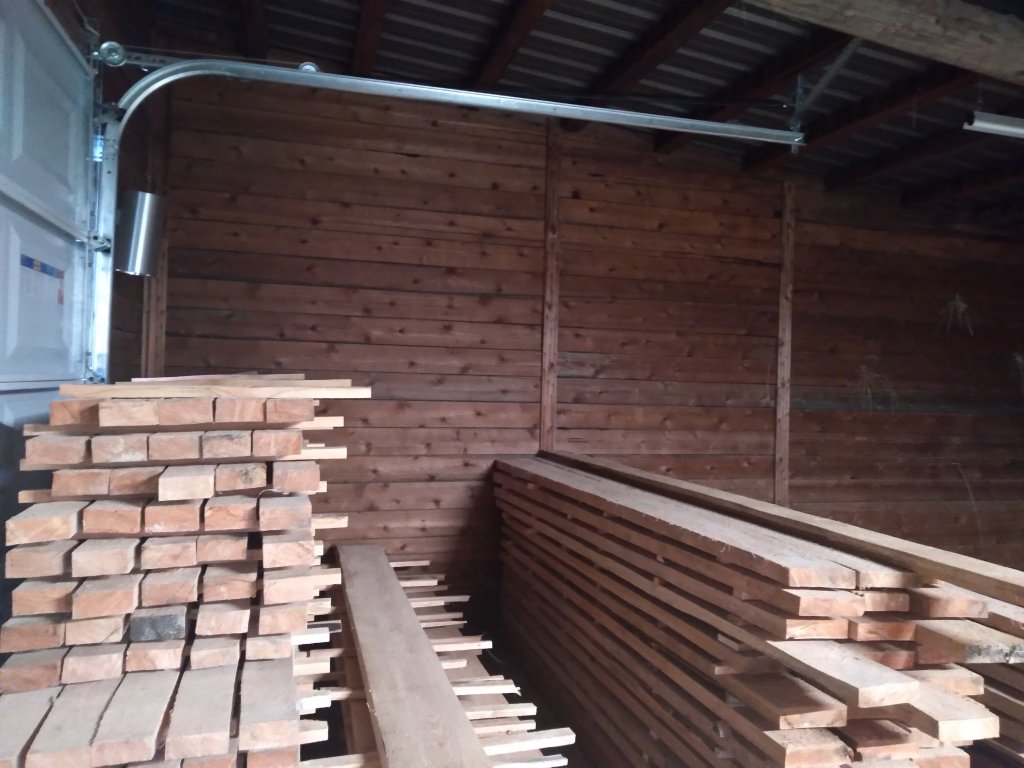
Rough Cut Lumber
Harvested as part of thinning to reduce fire danger.
$0.75 per board foot.
Call Mike (406-882-4835) or Sam (406-882-4597)
Popular Posts
Ask The Entomologist Bears Books Canada Census Community Decay Covid Covid-19 Data Deer Demography Education Elections family Firearms Game Cameras Geese Government Guns History Inflation life Lincoln County Board of Health Lincoln County MT Lincoln Electric Cooperative Montana nature News Patches' Pieces Pest Control Politics Pond Recipe School School Board Snow Taxes Teaching travel Trego Trego Montana Trego School Weather Wildlife writing
 Trego's Mountain Ear